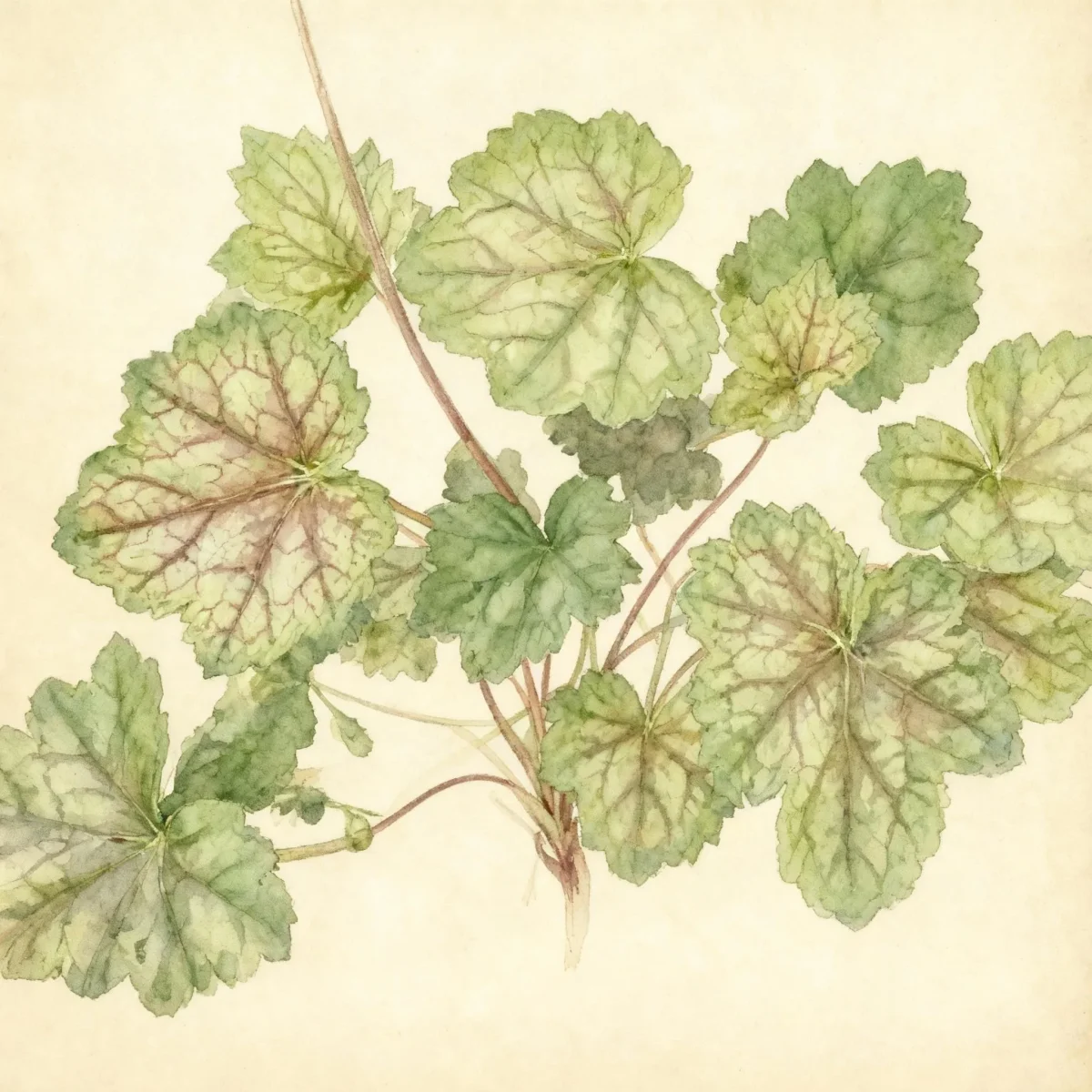
Coral bells (Heuchera 'Plum Pudding')
Heuchera 'Plum Pudding' Coral bells provide deep, silvery, plum-purple foliage ideal for borders and woodland settings in USDA Zones 4-9.
Scroll down to discover growing tips, care requirements, companion plants, and more
Complete Plant Information
Overview
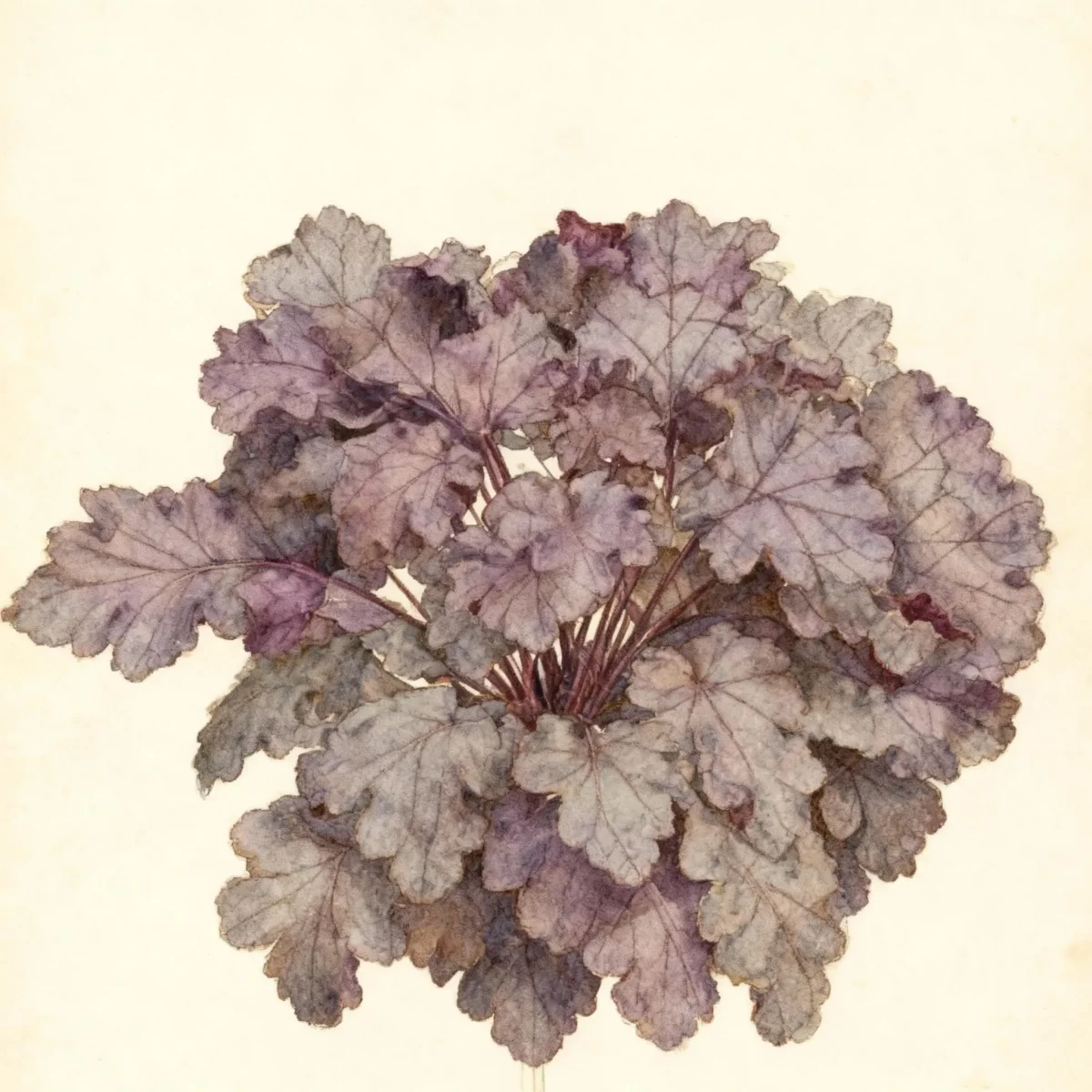
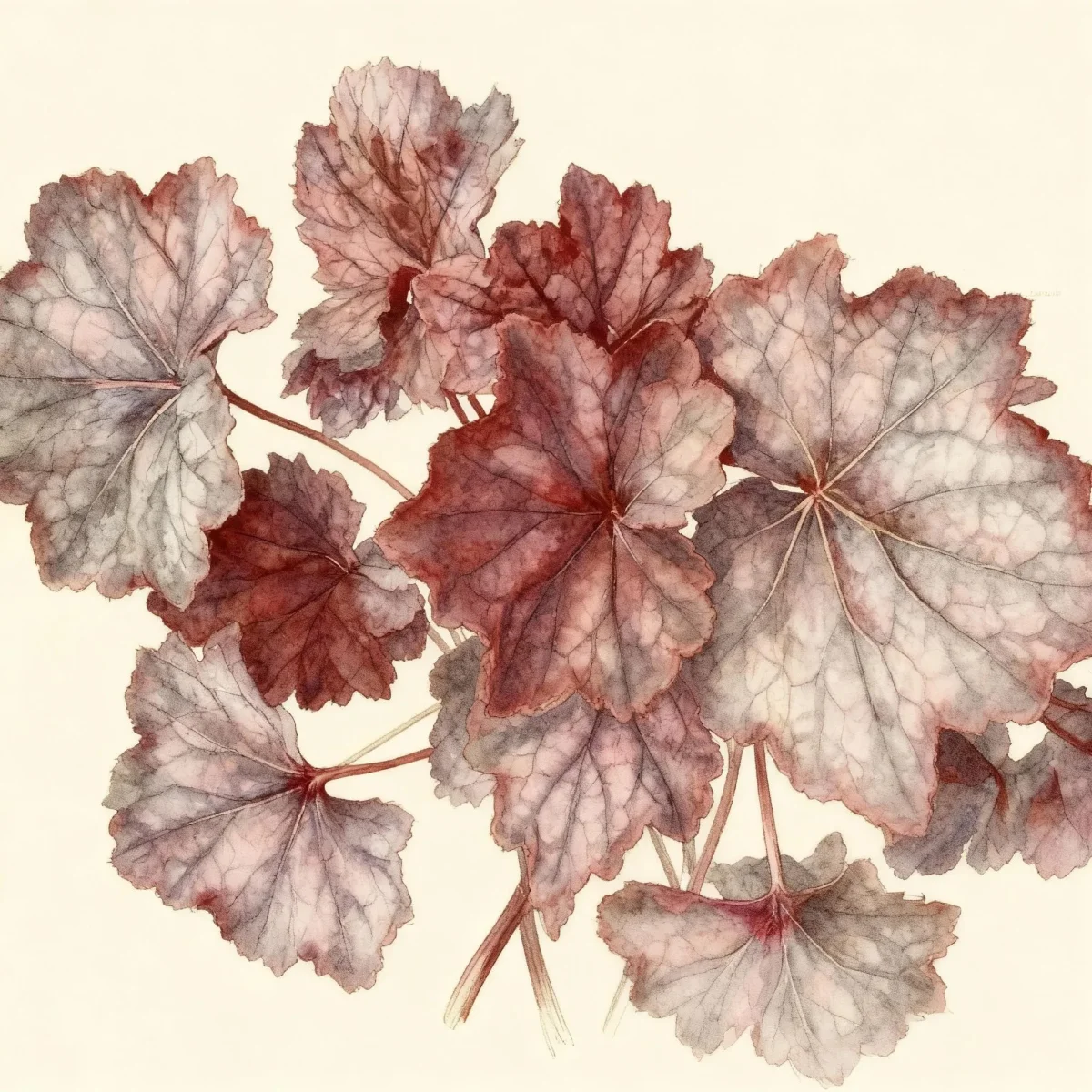
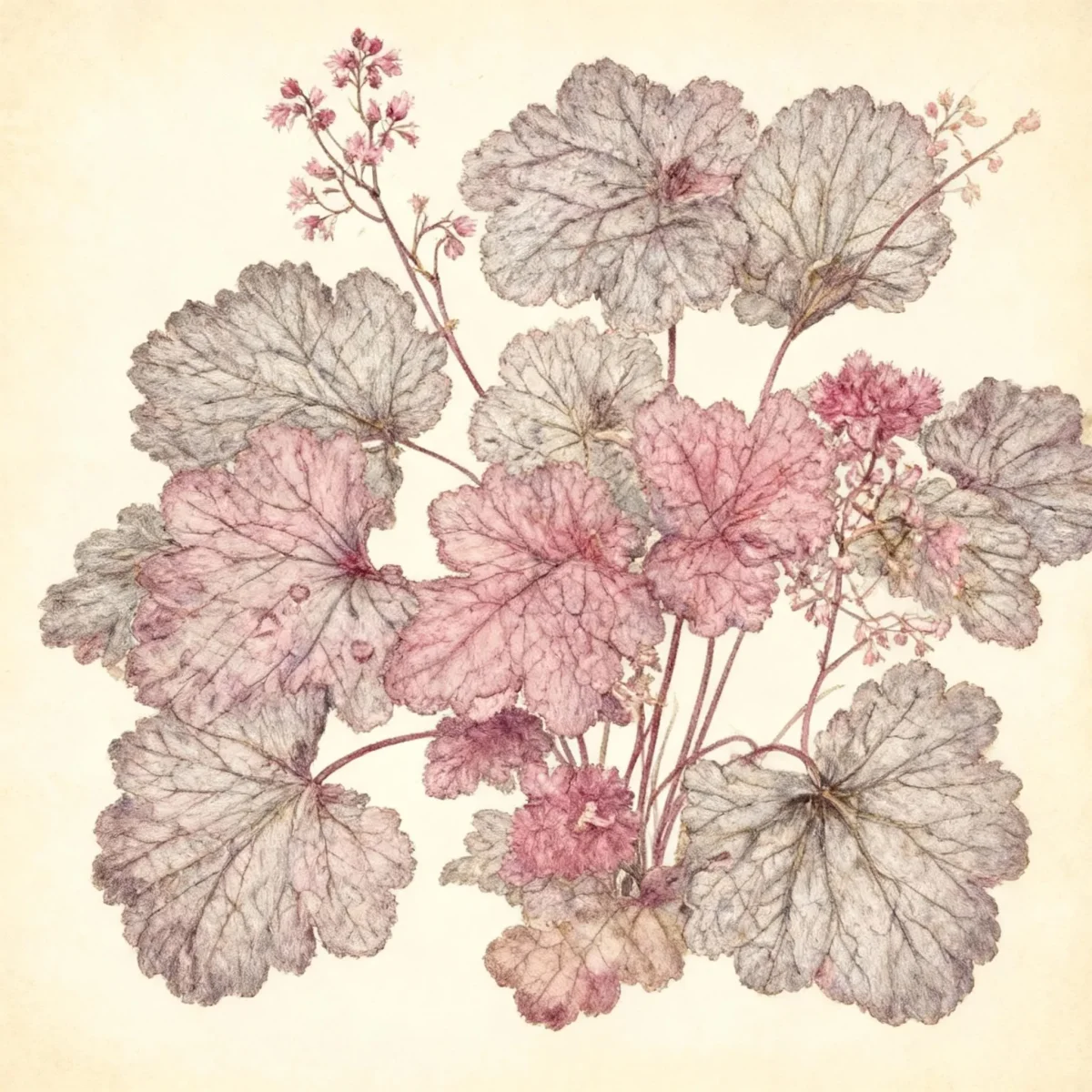
Heuchera ‘Plum Pudding’, a popular cultivar of Coral bells, is highly valued by gardeners for its stunning, year-round foliage display. This variety forms a dense, basal mound defined by large, shiny, plum-purple leaves intricately marked with dark-purple veining. Growing this cultivar offers reliable texture and color contrast in shadier garden spaces where many other perennials struggle.
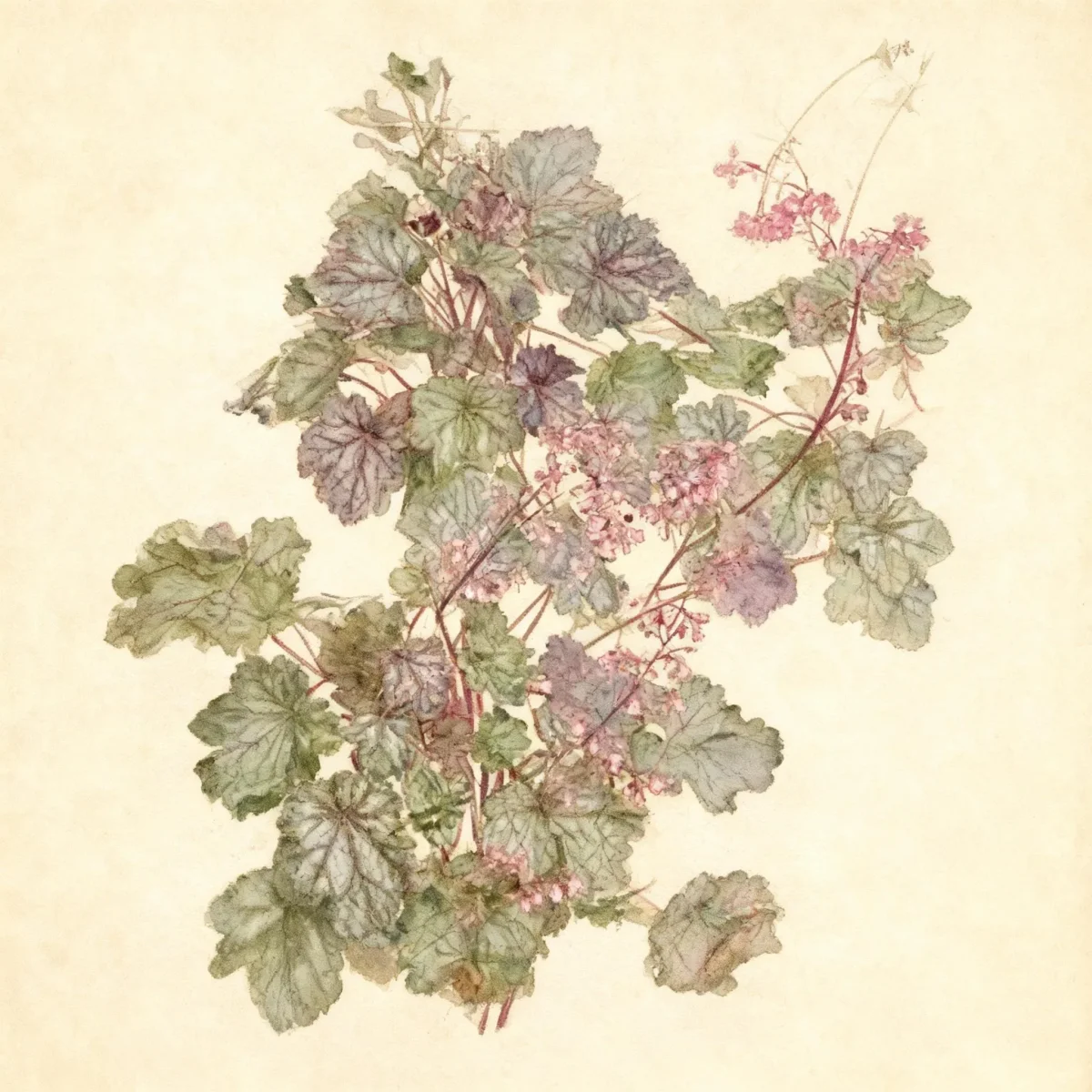
As an evergreen to semi-evergreen herbaceous perennial, Heuchera ‘Plum Pudding’ maintains visual interest even through cold winters, especially in milder climates. While it produces inconspicuous white flowers on wiry stems in early summer, the plant is primarily grown for its robust leaf performance rather than its blooms.
This North American native hybrid adapts well to various uses, serving as an excellent texture provider in borders or woodland edges. Successful cultivation of Heuchera ‘Plum Pudding’ hinges on providing rich, well-drained soil, mimicking its native woodland environment.
Fast Facts
- Plant Family: Saxifragaceae
- Plant Type: Herbaceous perennial
- Hardiness Zones: USDA Zones 4-9
- Size at Maturity:
- Height: 1-2 ft
- Spread: 1-1.5 ft
- Bloom Time: June to July
- Bloom Description: White
- Sun Exposure: Full sun to part shade
- Water Needs: Medium
- Maintenance Level: Medium
How to Grow
Planting your Heuchera ‘Plum Pudding’ should occur when the soil is workable, ideally in spring or early fall. These Coral bells thrive best in organically rich, humusy soils that maintain medium moisture levels but drain exceptionally well. While parentage dictates exact needs, most hybrids prefer partial shade, needing protection from harsh afternoon sun, especially in warmer regions where excessive heat can cause leaf scorch.
Consistent moisture is critical, particularly if you choose a location receiving full sun, which is sometimes tolerated in cooler northern climates. Never allow the soil to completely dry out, as this severely impacts the health of the foliage. No heavy feeding is usually required; an annual top-dressing of compost after the ground freezes can improve soil structure and prevent root heaving in winter.
Pruning is minimal for this variety outside of tidying. Remove the spent flower stems after blooming finishes to encourage any residual flowering, though the primary visual appeal remains the leaves. In colder zones, foliage retention may diminish; apply a winter compost mulch once the soil freezes solid to insulate the roots.
For long-term health, divide mature clumps of Heuchera ‘Plum Pudding’ every three to four years during the spring. This rejuvenation process helps maintain vigor and prevents the center of the clump from dying out, ensuring the vibrant coloring of your Coral bells remains strong season after season.
Landscape Uses
Heuchera ‘Plum Pudding’ offers exceptional versatility in landscape design due to its dense, colorful mound that resists fading. These plants are highly effective when massed together to create drifts of deep purple color that transition beautifully between bright sun and deep shade areas. They perform admirably as an edger, providing a neat, crisp line along pathways, driveways, or the front of perennial borders where their color can be easily appreciated.
For woodland gardens, place them beneath the dappled canopy of larger shrubs or deciduous trees, where they thrive in the filtered light alongside ferns and hostas. In rock gardens, the compact size of Heuchera ‘Plum Pudding’ allows them to nestle between stones, offering rich contrast against gray or cream-colored rock textures.
Consider planting companions that complement the deep plum tones without competing for attention. Light greens, silvers, or chartreuse foliage plants create stunning visual tension against the dark leaves of these Coral bells.
Standout Features
Flower Qualities
- Showy
Noteworthy Characteristics
Heuchera, commonly called coral bells or alumroot, is a genus consisting of about 55 species of evergreen to semi-evergreen herbaceous perennials which are all native to North America. Plants grow in a variety of different habitats including woodland areas, Appalachian seeps, prairies, rocky cliffs and alpine slopes. Leaves of hybrid plants are available in an expanded variety of colors including various shades of green, blue-green, violet, purple, maroon, bronze, silver-black, orange-yellow, yellow, or red, but often with a streaked, mottled or marbled variegation which sometimes includes bold contrasting veins. ‘Plum Pudding’ is a hybrid coral bells cultivar. It is a clump-forming perennial which features large, shiny, silvery, plum-purple leaves with dark-purple veining and conspicuous but non-showy whitish flowers.
Tolerances
No specific tolerances were listed for this cultivar.
Potential Problems
Frost heaving of roots is a primary concern, often occurring when winter temperatures fluctuate widely, pushing the shallow roots out of the soil. Prevent this where possible by ensuring excellent soil drainage and applying a protective layer of mulch after the ground freezes.
Potential disease problems associated with this genus include powdery mildew, rust, and bacterial leaf spot, usually exacerbated by high humidity or poor air circulation. Ensure adequate spacing between plants and avoid overhead watering late in the day. Watch for weevils and foliar nematodes, which can attack the foliage or roots; proper cultural care is the best defense against these pests.
Frequently Asked Questions
What hardiness zones is Coral bells suitable for?
Heuchera ‘Plum Pudding’ is widely adaptable and performs well in USDA Hardiness Zones 4 through 9.
How large does Heuchera ‘Plum Pudding’ grow?
This cultivar typically reaches a height between 1 and 2 feet, spreading to a width of 1 to 1.5 feet, forming a neat basal mound.
What sun exposure does Heuchera ‘Plum Pudding’ need?
This plant prefers full sun to part shade, though it generally benefits from afternoon shade, especially during the hottest part of the summer.
When does Coral bells bloom?
The flowers appear from June into July, presenting as small, inconspicuous white blooms carried on slender stems above the foliage mound.
Conclusion
Heuchera ‘Plum Pudding’ stands out as an indispensable perennial for adding rich, dark color and reliable texture throughout the growing season. The deep, plum-purple foliage of these Coral bells provides dramatic contrast in mixed plantings. Before planting, confirm that your garden location offers the medium moisture and well-drained soil necessary for this stunning cultivar to thrive.
Propagation Tips
Propagating Heuchera ‘Plum Pudding’ is straightforward, as this hybrid reliably responds well to division. This practice should be performed in the spring every 3 to 4 years to maintain the plant’s vigor and prevent the central crown from deteriorating. Gently lift the entire clump using a garden fork, taking care not to damage the root ball unnecessarily.
Once unearthed, carefully separate the clump into smaller sections, ensuring each new division has a reasonable amount of healthy crown and root structure attached. Replant these divisions immediately into the prepared, humus-rich soil at the same depth they were growing previously. Keep the newly divided Coral bells consistently moist during the establishment period following separation.
Design Ideas
The rich, nearly black-purple coloration of Heuchera ‘Plum Pudding’ makes it an exceptional choice for creating dramatic, high-contrast scenes in the garden. Use it alongside plants featuring bright yellow or lime-green foliage, such as certain hostas or Hakonechloa grass, to maximize the visual pop of both textures. It works perfectly as a ‘punctuation mark’ plant in mass plantings due to its dark base color.
Consider using this cultivar in containers where its dense mounds can spill slightly over the edge, anchoring a mixed arrangement. If you are designing a contemporary color palette focusing on jewel tones, place Heuchera ‘Plum Pudding’ near blues, deep reds, or deep pinks to create a moody, sophisticated display that relies heavily on foliage impact.