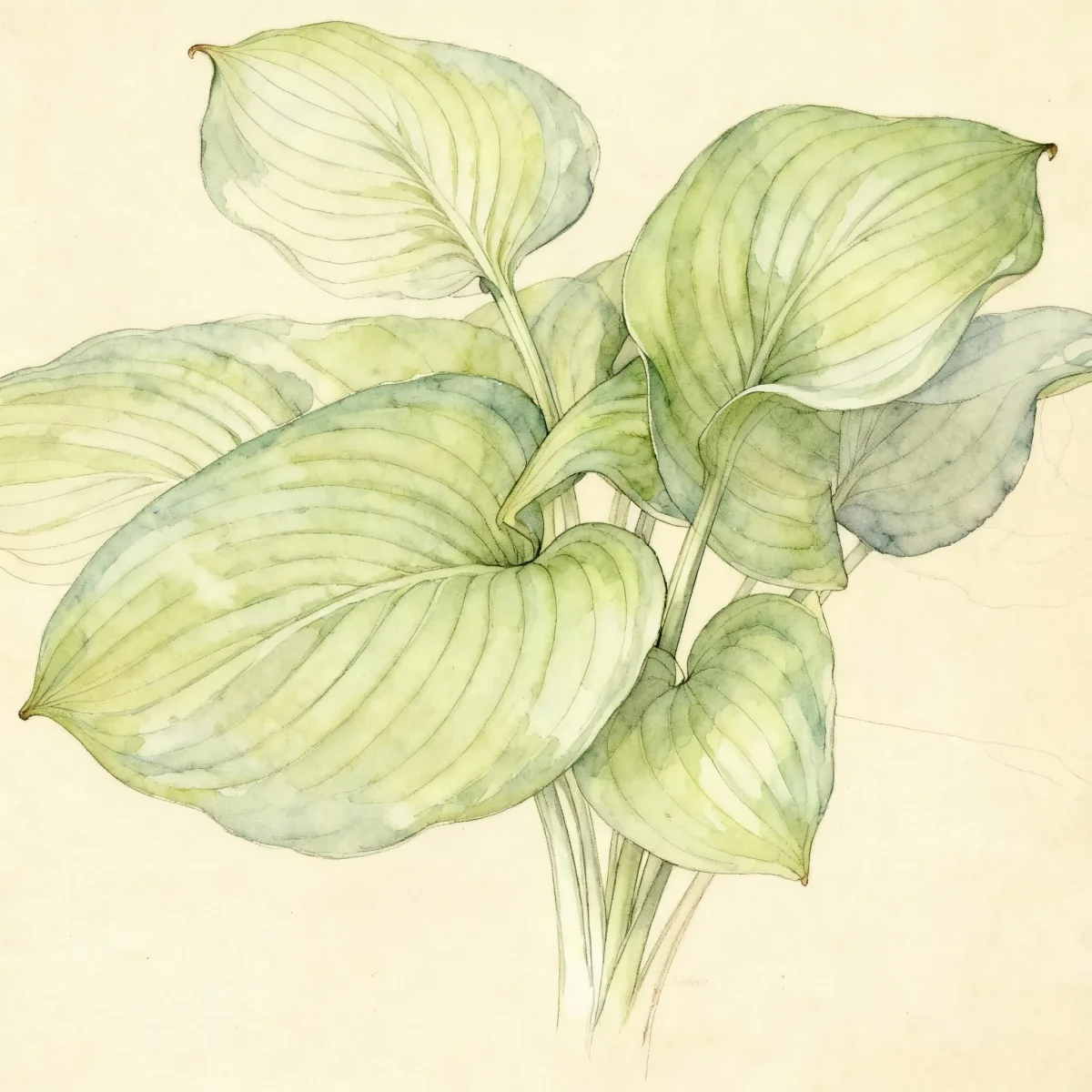
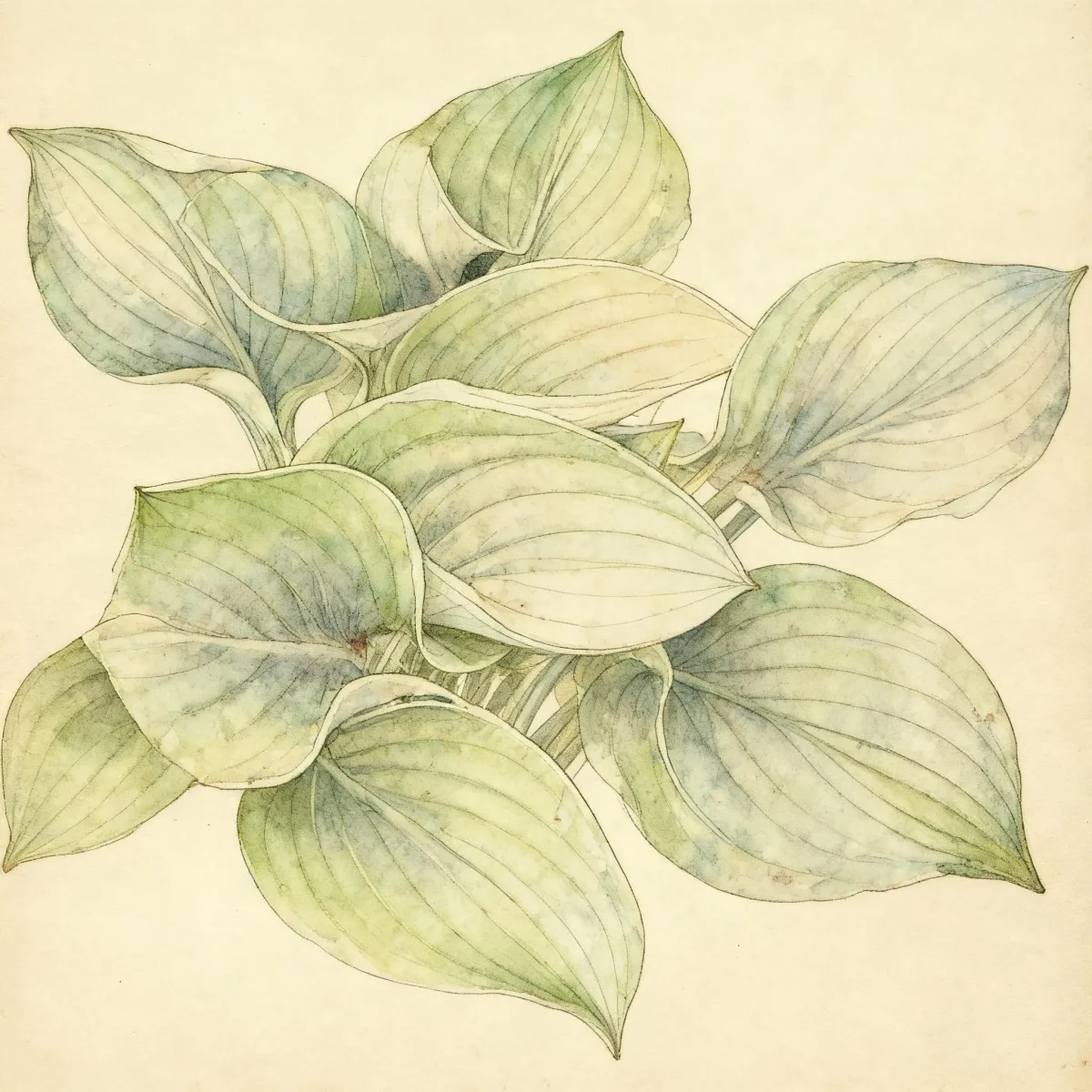
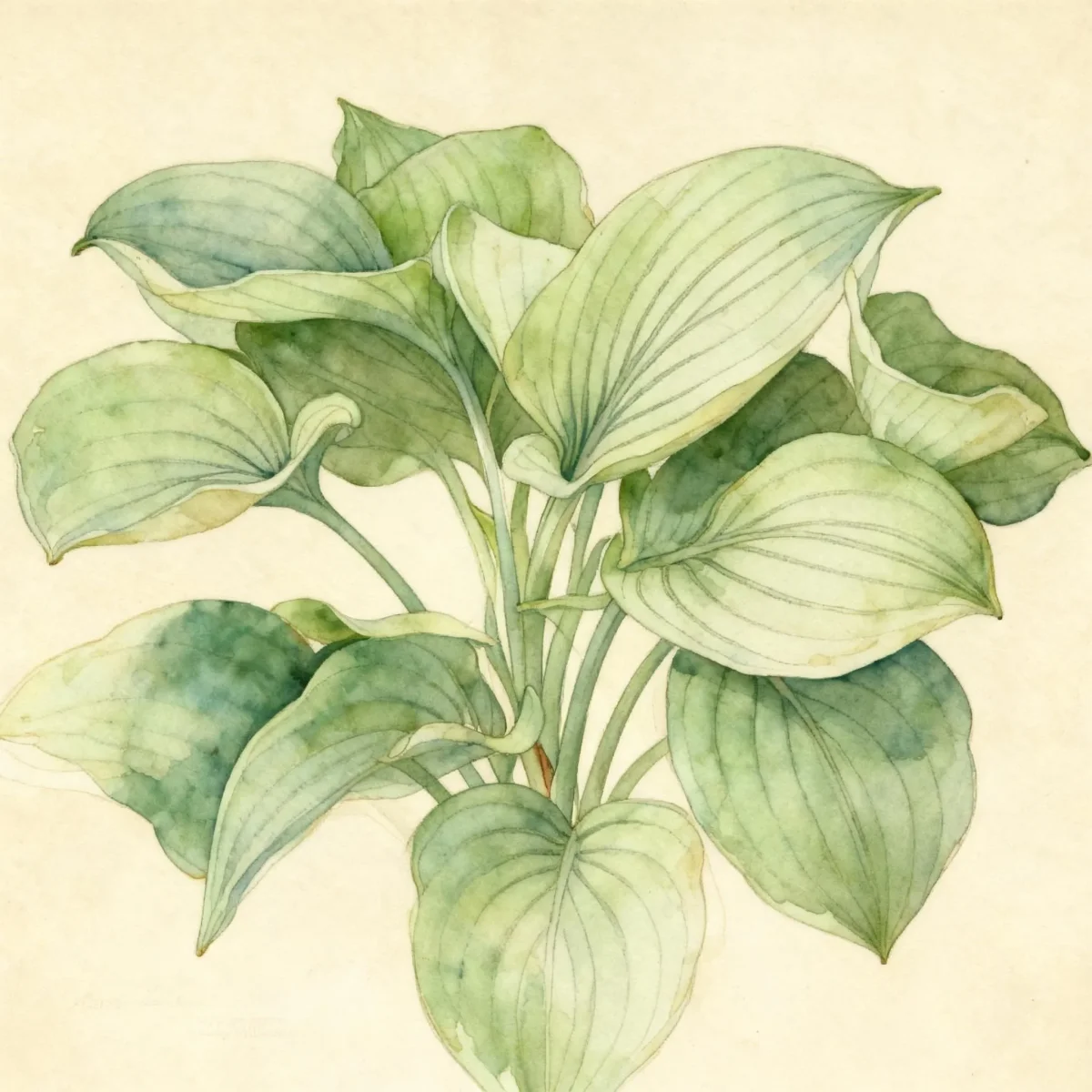
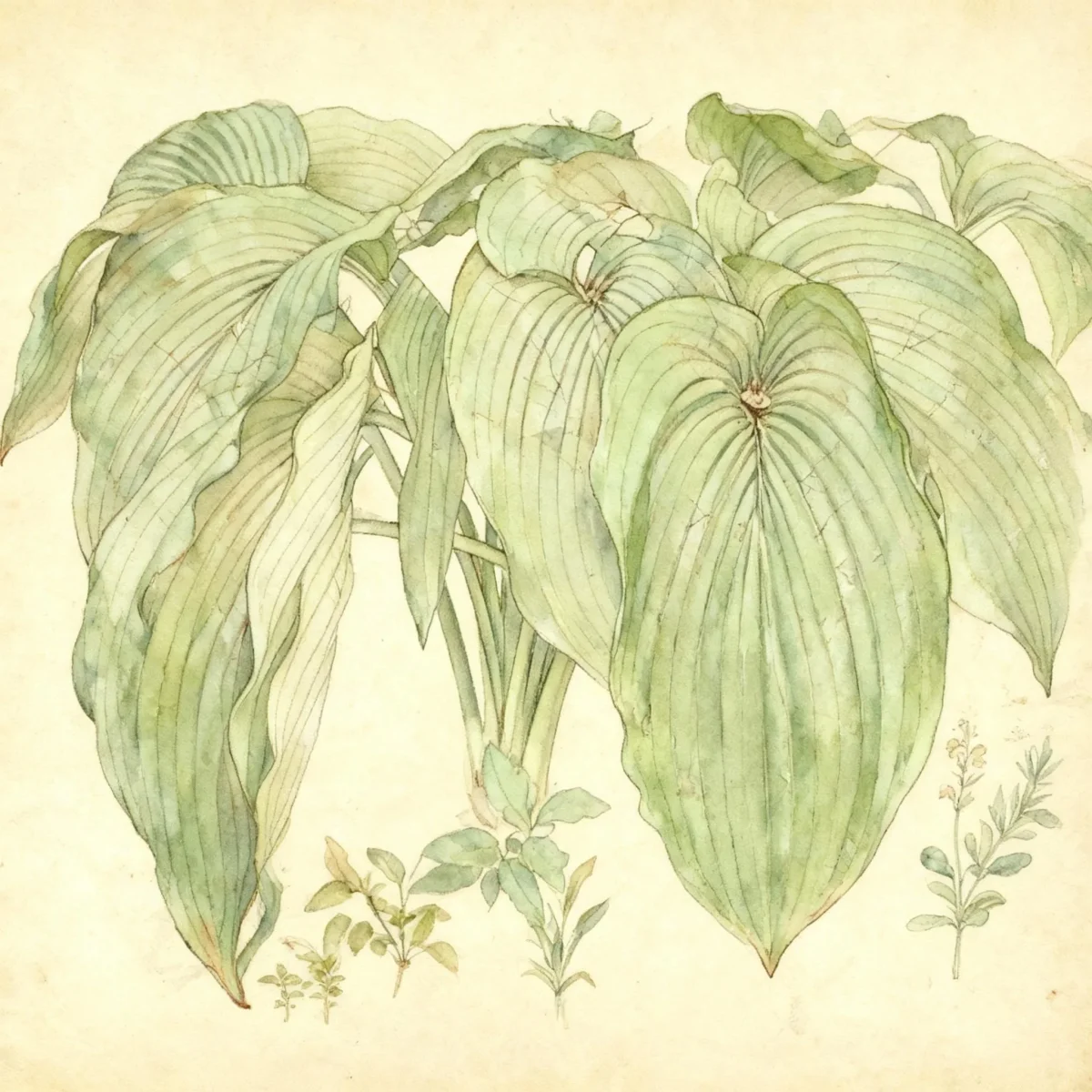
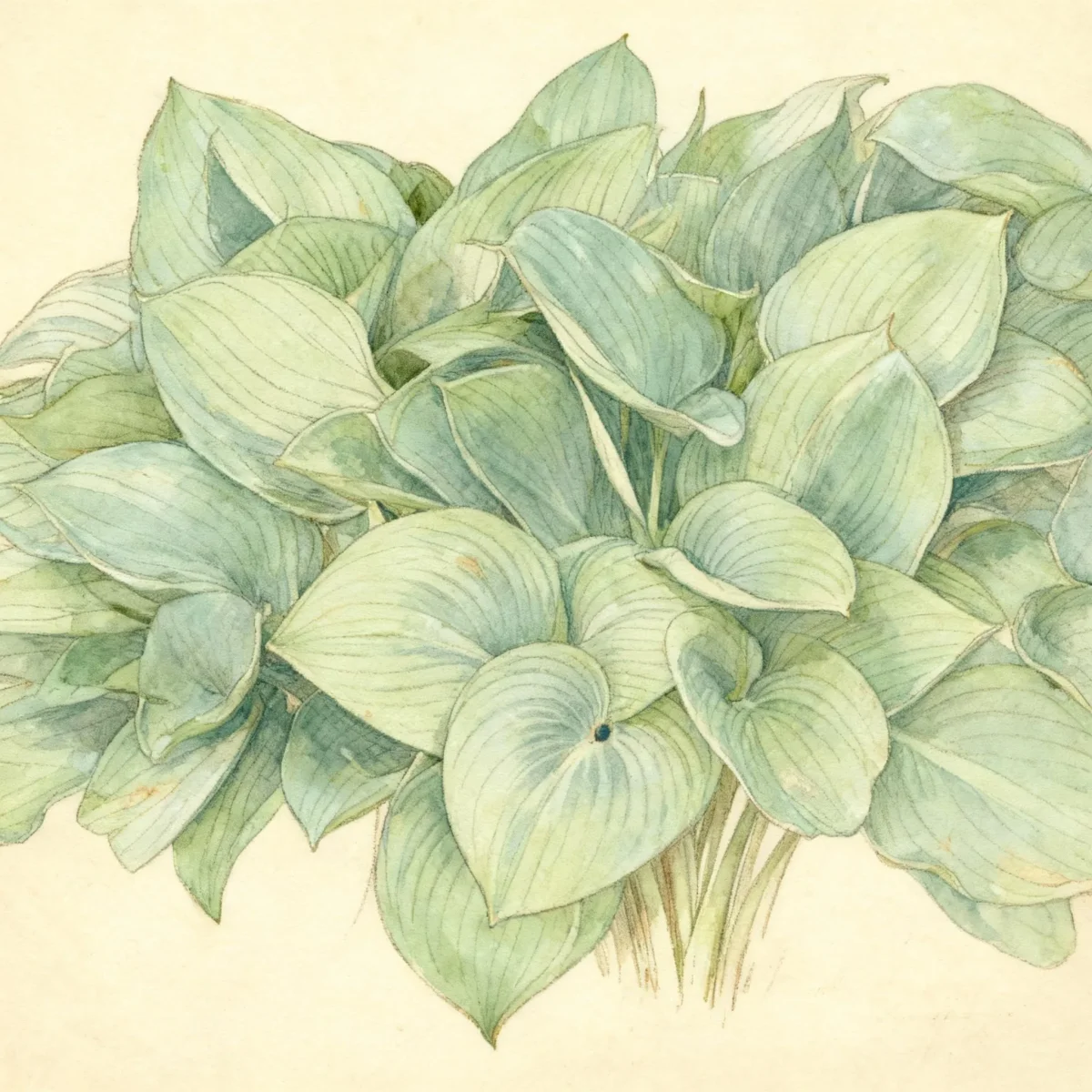
Hosta (Hosta 'Betcher's Blue')
Hosta 'Betcher's Blue' offers dense, blue-green, heart-shaped foliage and low maintenance, thriving in deep shade.
Scroll down to discover growing tips, care requirements, companion plants, and more
Complete Plant Information
Overview
Hosta ‘Betcher’s Blue’ is highly valued by gardeners for delivering exceptional texture and color contrast in the darkest corners of the landscape. This herbaceous perennial forms a dependable, rounded mound primarily grown for its dense, heart-shaped, blue-green ornamental foliage which retains its color well into hot summer months. As a member of the Hosta genus, this cultivar offers versatility and resilience in deep shade environments.
This Hosta variety establishes itself as a robust, low-maintenance groundcover, effectively crowding out unwanted weeds once established. While it does produce summery white flowers, the true appeal of Hosta ‘Betcher’s Blue’ lies in its robust, year-round foliage display, making it an indispensable structural element in shade gardens.
Growing Hosta ‘Betcher’s Blue’ successfully involves providing consistently moist, richly organic soil in protected locations. Its ability to tolerate very heavy shade and even the encroachment of Black Walnut roots makes it a highly practical, solution-oriented plant for challenging woodland margins and deep borders.
Fast Facts
- Plant Family: Asparagaceae
- Plant Type: Herbaceous perennial
- Hardiness Zones: USDA Zones 3-8
- Size at Maturity:
- Height: 1-1.5 ft
- Spread: 1.5-2 ft
- Bloom Time: July
- Bloom Description: White
- Sun Exposure: Part shade to full shade
- Water Needs: Medium
- Maintenance Level: Low
How to Grow
Planting Hosta ‘Betcher’s Blue’ is best done in spring or autumn when soil conditions are conducive to root establishment. Locate it in areas receiving morning sun or dappled light, as this cultivar excels in rich, well-drained soil. Ensure the site offers protection from wind, which can damage the foliage.
Consistent moisture is key to achieving the full size and best quality foliage for your Hosta. Water should be applied directly to the soil beneath the leaves whenever the soil surface begins to dry, though established plants show some tolerance for dry shade if they possess thick leaves. Fertilizing is rarely necessary if the soil is organically rich, consistent with the low maintenance profile of this Hosta.
Division of Hosta ‘Betcher’s Blue’ clumps can be performed as needed typically in early spring before the leaves fully emerge, making separation easier. Gardeners should remember that Hostas are generally considered extremely reliable perennials, requiring very little seasonal intervention beyond monitoring for pests.
Landscape Uses
Hostas are the cornerstone of successful shade gardens, providing essential structure and color where few other ornamentals thrive. Hosta ‘Betcher’s Blue’ is particularly effective when massed together to create a uniform carpet of blue-green texture or used in groups for high contrast against lighter-leaved companions.
This cultivar works perfectly as a foreground border plant or as an effective background element in woodland settings. Consider pairing its cool tones with the bright greens of ferns or the darker foliage of Japanese forest grass to highlight its distinct blue hue. The dense foliage matures to offer excellent edging along shady paths.
Standout Features
Flower Qualities
- Showy
- Good Cut
Noteworthy Characteristics
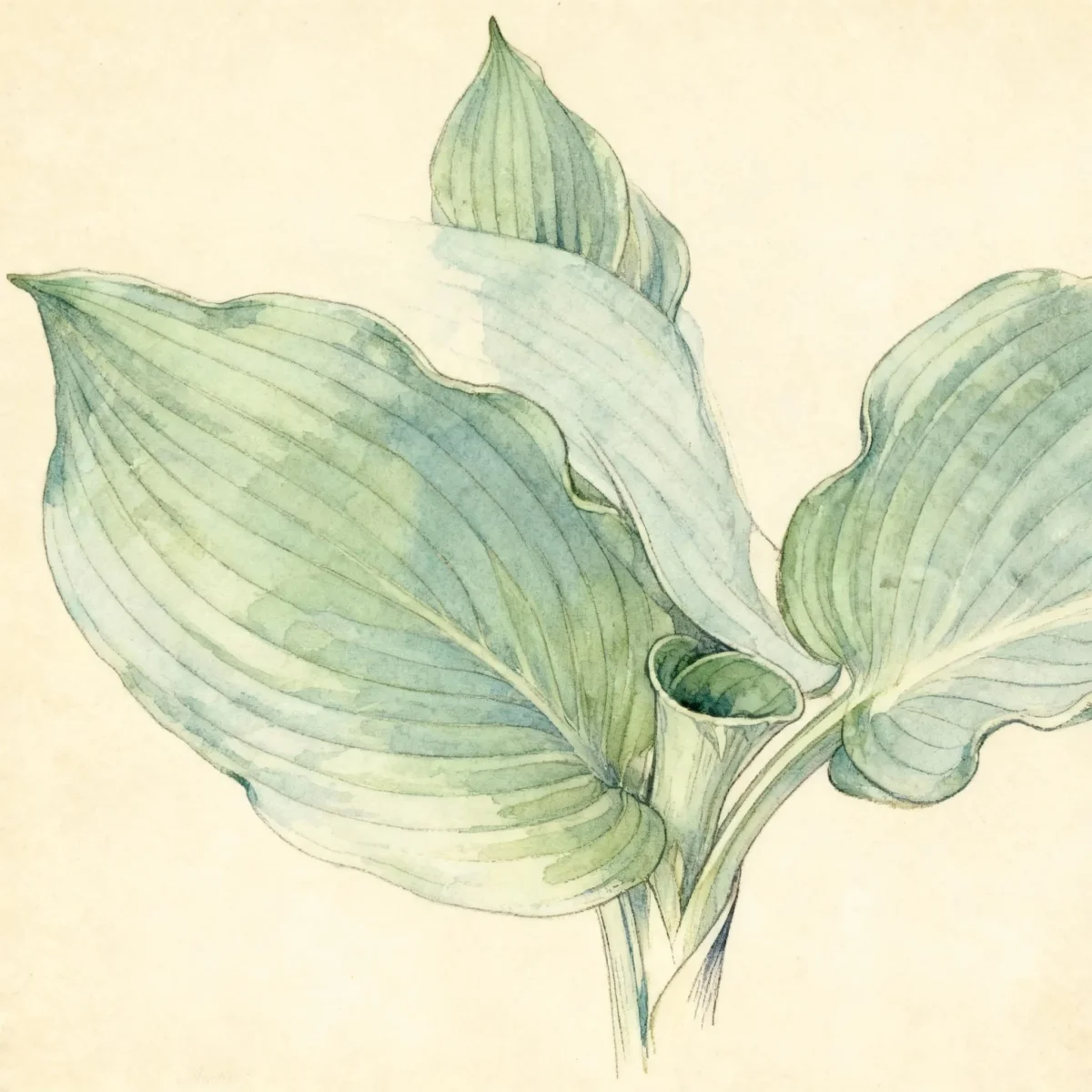
Hosta is a genus noted for shade-loving, rhizomatous perennials primarily cultivated for their diverse, ornamental foliage. ‘Betcher’s Blue’ specifically stands out with its rounded, heart-shaped, blue-green leaves, topped by racemes of near-white, globular flowers on scapes that slightly exceed the leaf mound. This cultivar is highly valued as a dependable perennial that brightens shaded spaces and maintains strong color even as summer temperatures rise.
Tolerances
- Heavy Shade
- Black Walnut
Potential Problems
The primary adversaries of any Hosta, including Hosta ‘Betcher’s Blue’, are slugs and snails, which chew unsightly, jagged holes in the leaves. Proactive, consistent management is necessary to prevent serious defoliation, especially when the plant is young.
Watch closely for foliar nematodes, which cause interveinal browning across the leaf surface. While leaf spots and crown rot are less common, gardeners must immediately remove and destroy any infected plants showing signs of viruses like HVX to protect the rest of the garden. Notably, this specific cultivar is known among Hosta enthusiasts for its improved resistance to slugs compared to many other blue varieties.
Frequently Asked Questions
What hardiness zones is Hosta ‘Betcher’s Blue’ suitable for?
Hosta ‘Betcher’s Blue’ is reliably hardy in USDA Zones 3 through 8.
How large does Hosta ‘Betcher’s Blue’ grow?
This Hosta typically reaches a height between 1 and 1.5 feet and spreads to 1.5 to 2 feet wide at maturity.
What sun exposure does Hosta ‘Betcher’s Blue’ need?
This variety thrives best in part shade, appreciating protection from intense afternoon sun, though it tolerates full shade well.
When does Hosta ‘Betcher’s Blue’ bloom?
The bloom time for this Hosta is generally in July, producing white flowers.
Conclusion
Hosta ‘Betcher’s Blue’ remains a staple in landscapes demanding reliable, colorful, and low-maintenance ground coverage for shady environments. Its attractive blue-green foliage ensures that this Hosta provides excellent textural contrast throughout the growing season. Before finalizing your design, confirm that your growing location falls within USDA Zones 3-8 and offers the consistent moisture this superb perennial requires.
Companion Planting in Shade
When integrating Hosta ‘Betcher’s Blue’ into a shaded border, selecting companions that complement its blue color and texture is crucial. Ferns, such as Japanese Painted Ferns or Autumn Ferns, offer delicate, contrasting fronds that beautifully set off the broad, sturdy leaves of the Hosta. For brighter seasonal interest beneath a woodland canopy, consider pairing it with Hellebores (Lenten Rose), which bloom earlier in the spring before the Hosta fully emerges.
Another excellent pairing involves plants that thrive in the same medium moisture and heavy shade conditions. Bleeding Hearts (Dicentra) provide arching blooms early on, while Astilbes offer feathery plumes of color later in the summer when the Hosta flowers are fading. These combinations ensure year-round garden interest while satisfying the shared cultural needs of deep shade gardening.
Seasonal Care Calendar for Hosta
Spring is the critical time for preparing Hosta; divide overcrowded clumps or apply a slow-release fertilizer if soil fertility is low. Focus on clearing away old winter debris just as the new shoots of Hosta ‘Betcher’s Blue’ begin to push through the soil. Regularly inspect new growth for the first signs of slugs or snails during this tender stage.
Summer care centers on moisture management. Because Hosta ‘Betcher’s Blue’ performs best with consistent water, supplemental irrigation may be required during dry spells, always targeting the soil beneath the foliage canopy. Once established, maintenance remains low, requiring only occasional removal of spent flower scapes if desired, although the white flowers offer a nice vertical accent.