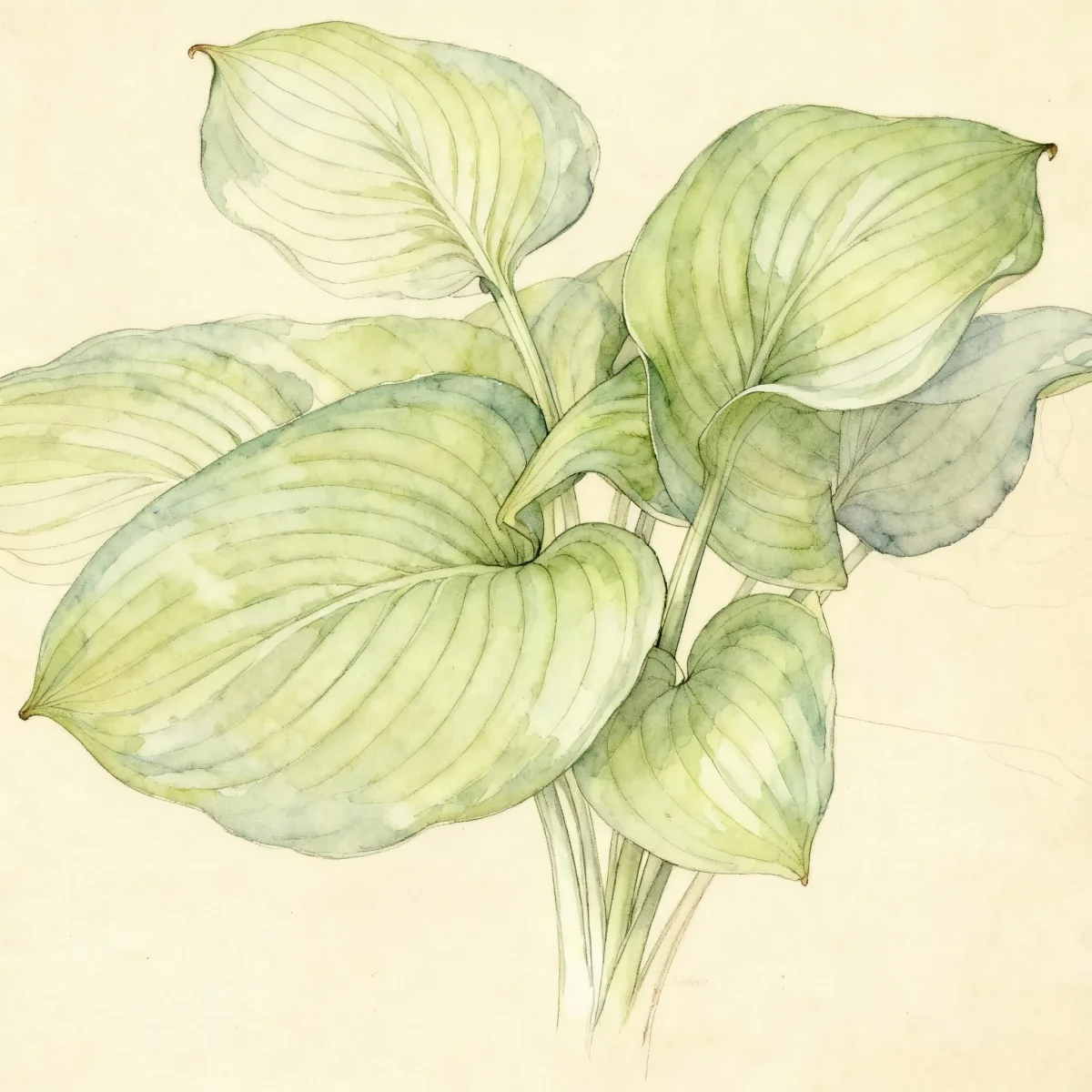
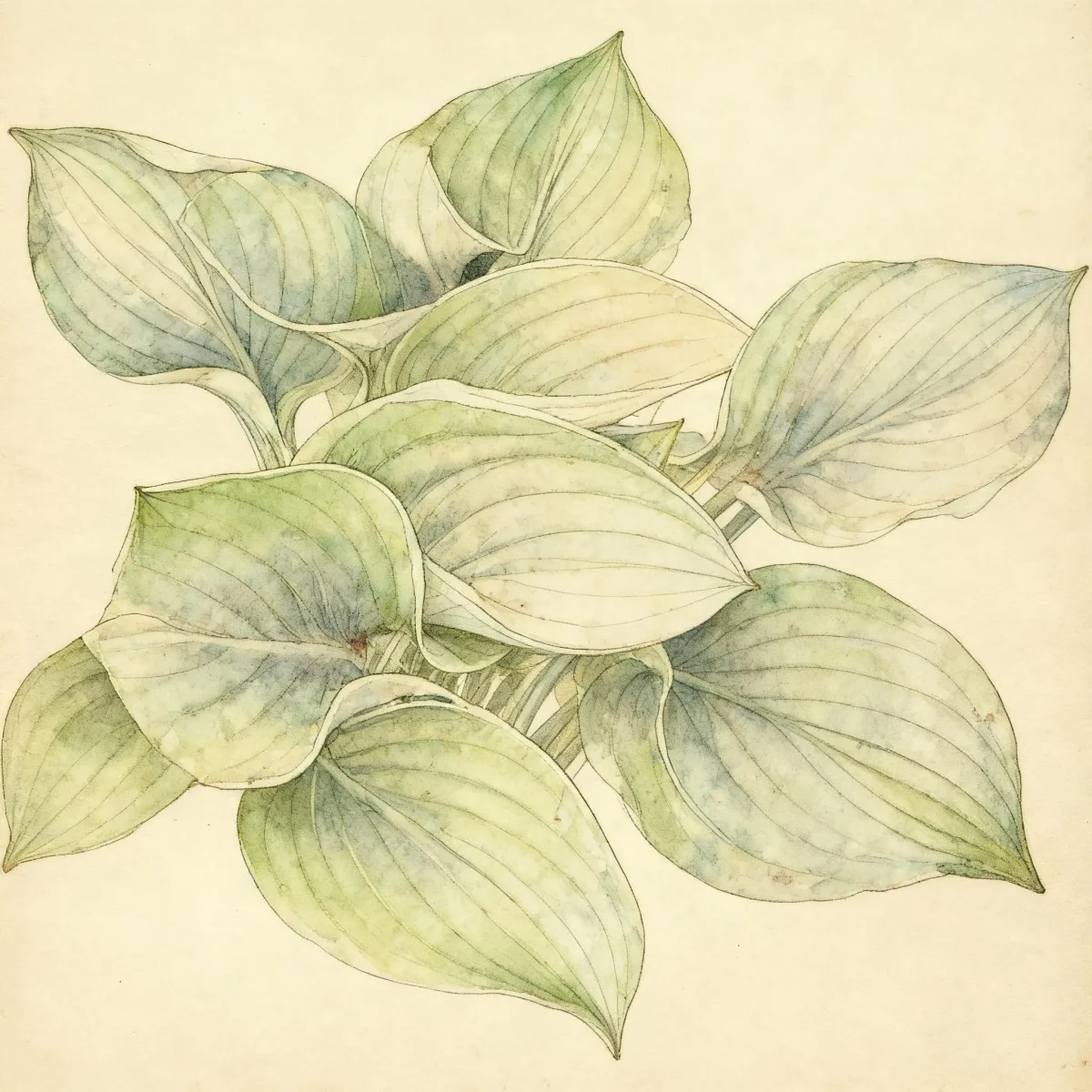
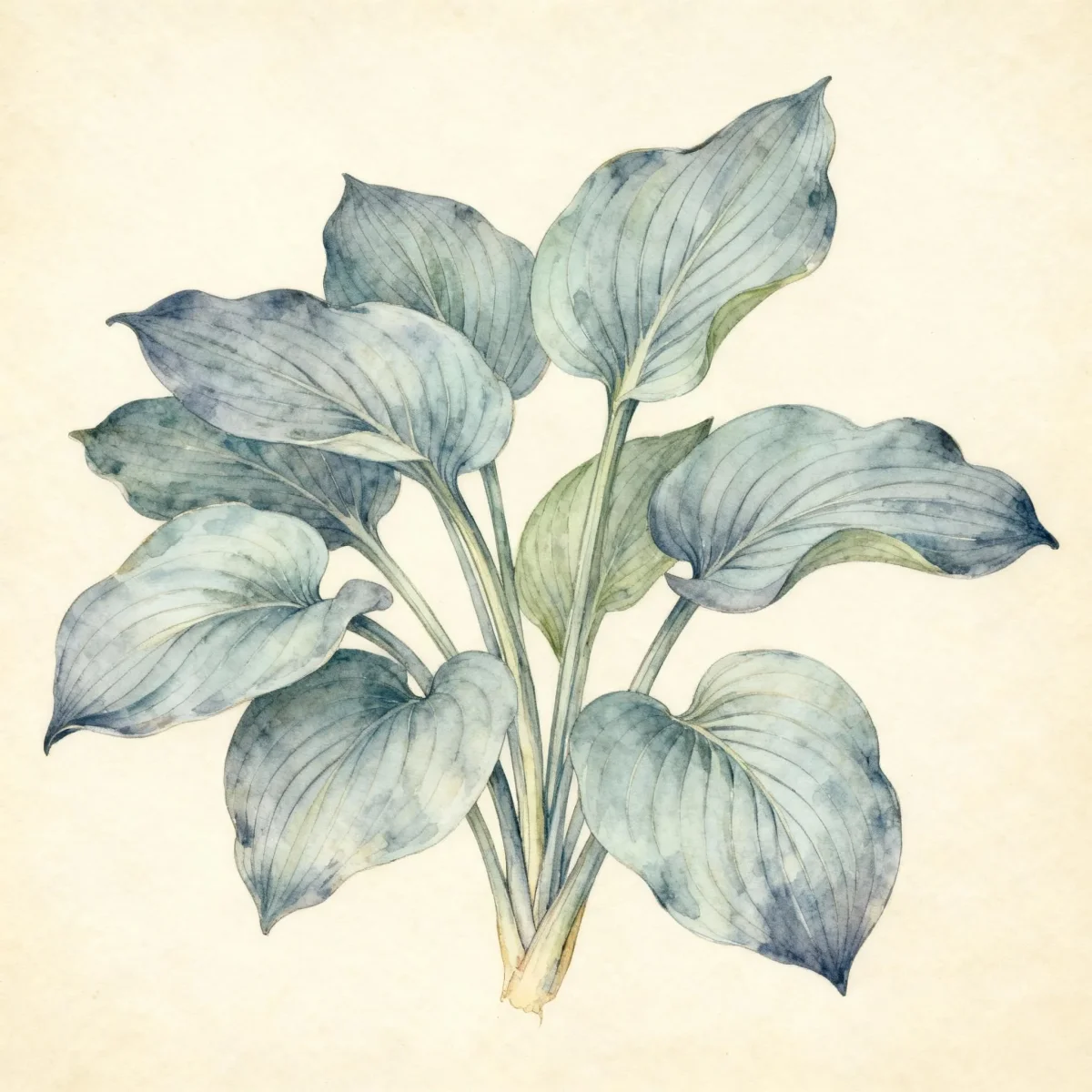
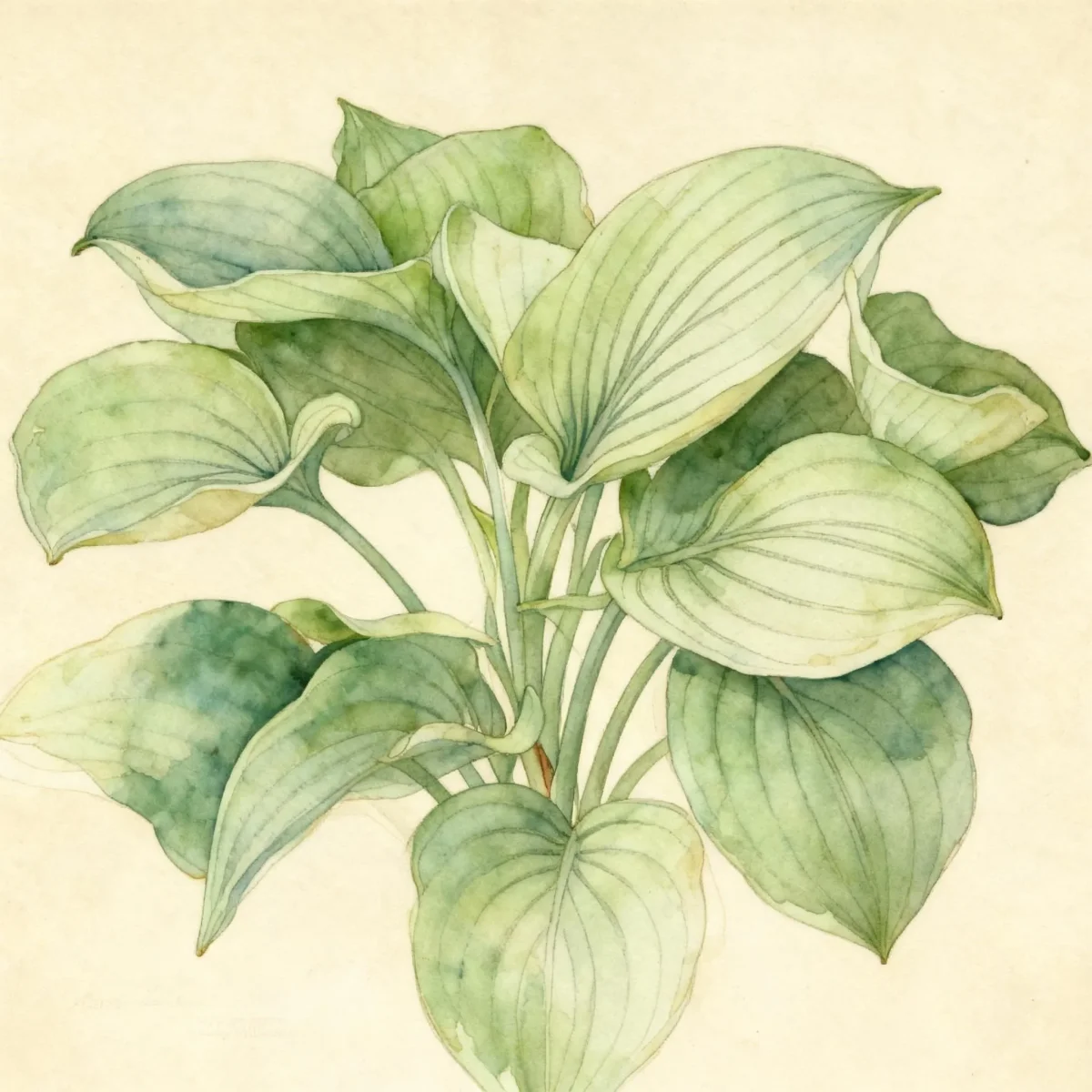
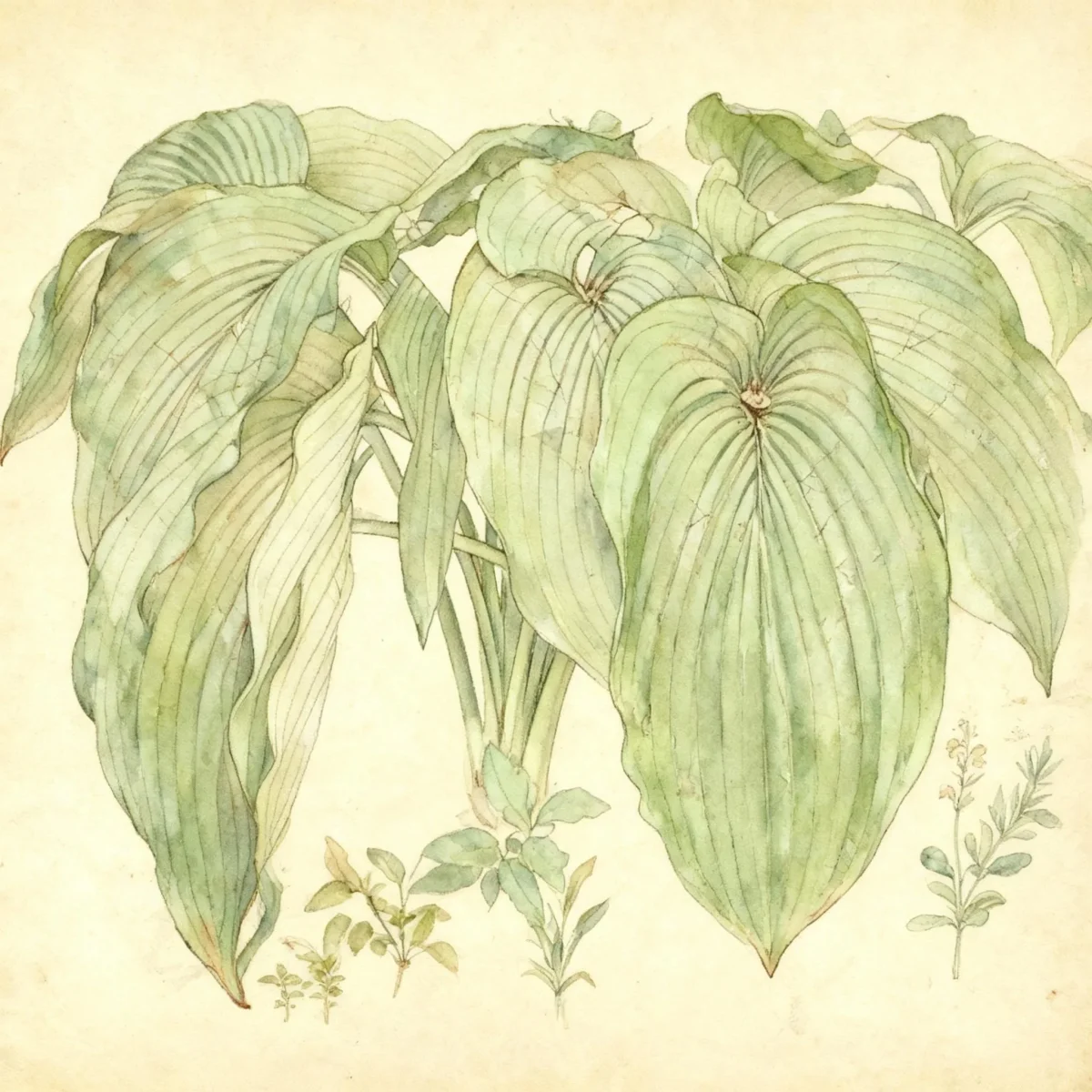
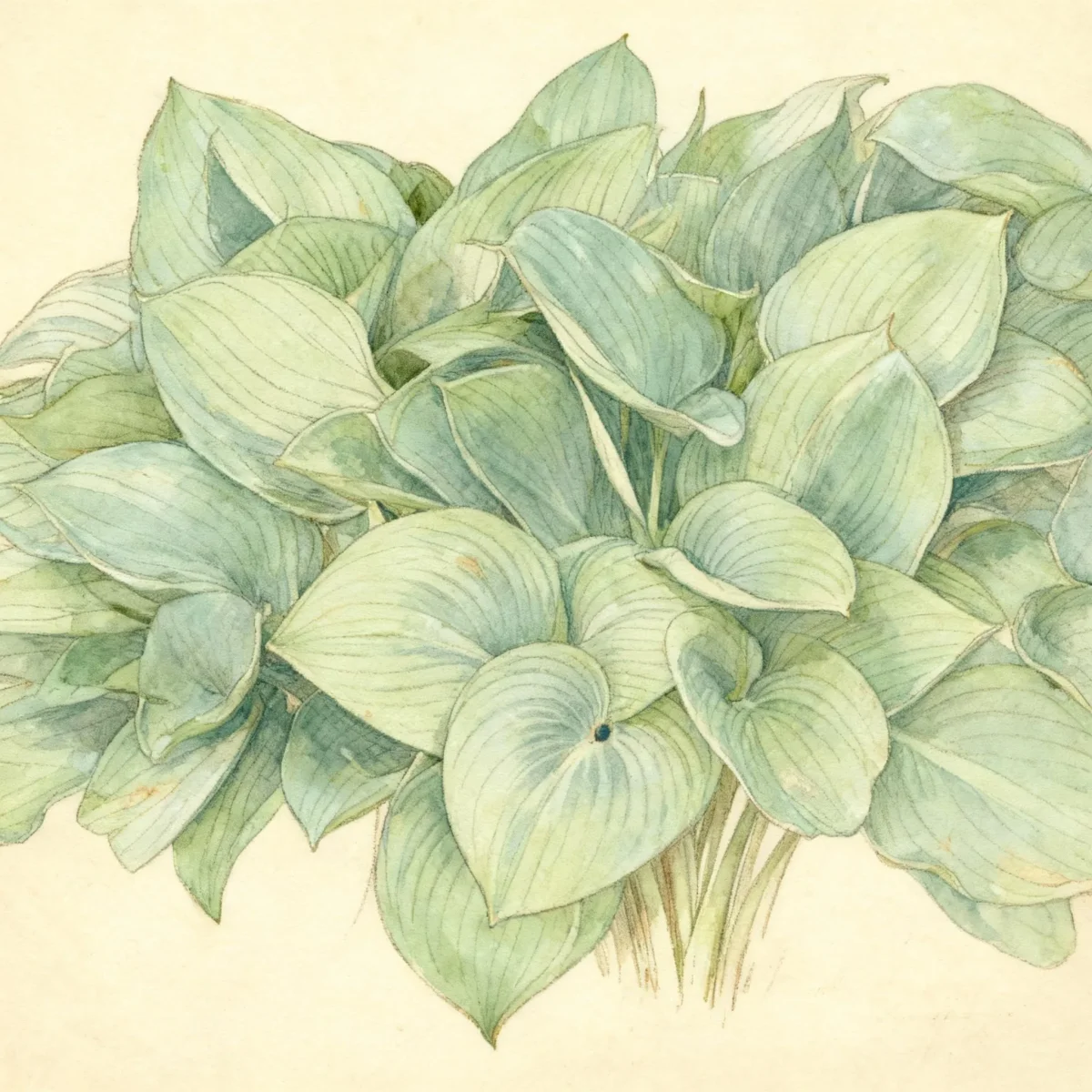
Hosta (Hosta 'Blue Mammoth')
Discover Hosta 'Blue Mammoth', a giant, low-maintenance herbaceous perennial renowned for its thick, powder blue foliage and shade tolerance.
Scroll down to discover growing tips, care requirements, companion plants, and more
Complete Plant Information
Overview
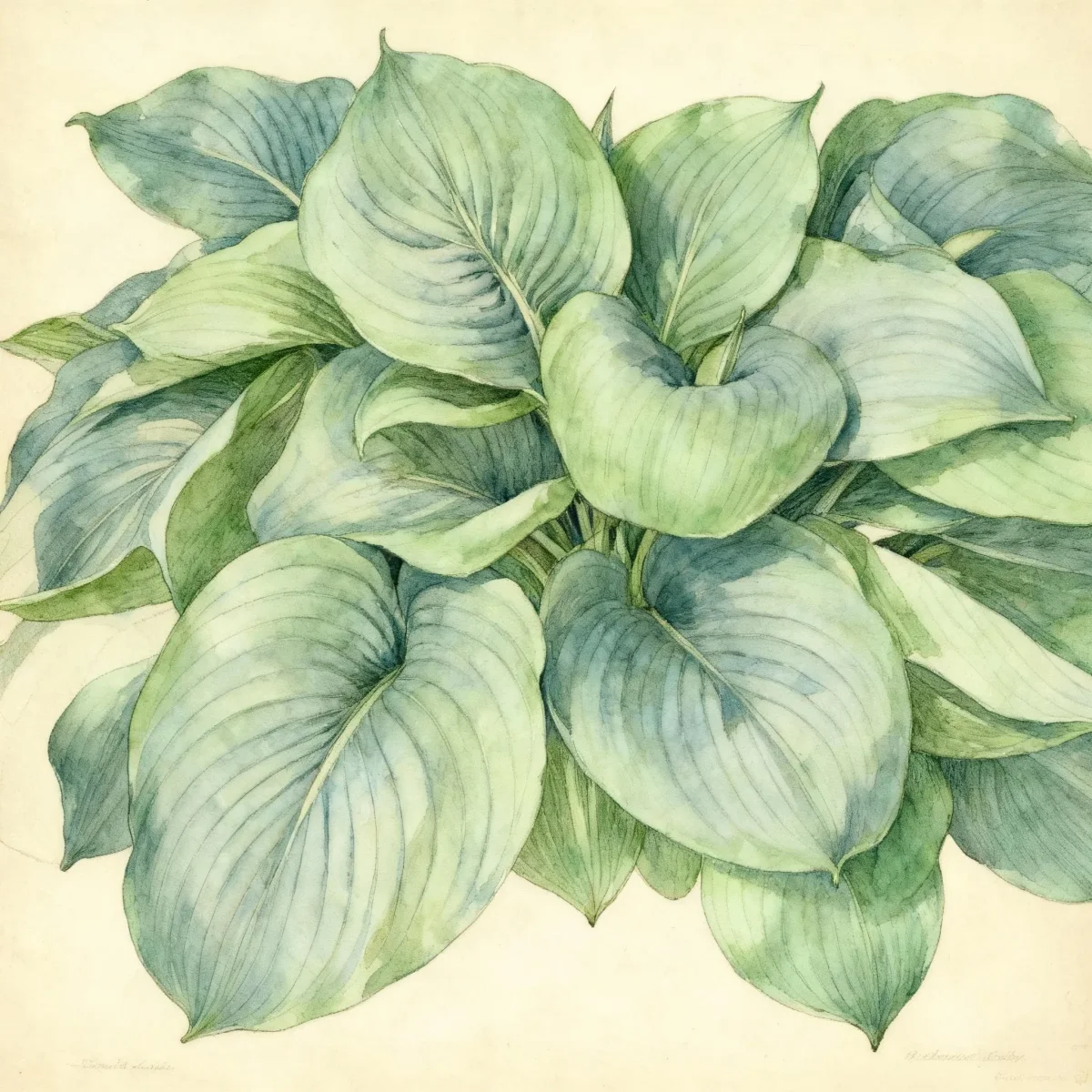
Hosta ‘Blue Mammoth’ stands out as a spectacular specimen for deep shade gardens, prized primarily for its immense ornamental foliage. This variety is a giant among hostas, forming substantial mounds of thick, heavily-corrugated, powder blue-green leaves that provide powerful texture and color contrast throughout the growing season. As a vigorous herbaceous perennial, Hosta offers reliable, low-maintenance performance perfect for woodland settings.
Originating from hybridizing efforts, Hosta ‘Blue Mammoth’ inherits excellent vigor and size, making it a staple in perennial borders and shady landscapes. While it produces attractive white to pale lavender flowers in mid-summer, its true garden value lies in its durable, impressive mound that requires minimal intervention once established. Gardeners seeking substantial impact in challenging low-light areas rely on robust cultivars like this Hosta.
The successful culture of Hosta ‘Blue Mammoth’ centers on providing consistent moisture and appropriate shade levels to maintain its desirable blue coloration. Its mature size—reaching up to three feet tall and four feet wide—demands thoughtful placement where its impressive scale can be fully appreciated without overcrowding neighboring shade lovers. Planning for this large Hosta variety ensures decades of dependable, large-scale foliage interest.
Fast Facts
- Plant Family: Asparagaceae
- Plant Type: Herbaceous perennial
- Hardiness Zones: USDA Zones 3-8
- Size at Maturity:
- Height: 2-3 ft
- Spread: 3-4 ft
- Bloom Time: July to August
- Bloom Description: White to pale lavender
- Sun Exposure: Part shade to full shade
- Water Needs: Medium
- Maintenance Level: Low
How to Grow
Begin planting Hosta ‘Blue Mammoth’ in spring or autumn when soil temperatures are moderate. Optimal conditions involve evenly moist, organically rich, well-drained soil. Although this magnificent Hosta tolerates heavy shade, achieving the best blue foliage color requires light shade or conditions where it receives some dappled morning sun. Avoid exposing this plant to hot afternoon sun, as this can scorch the leaves or wash out the attractive blue coating.
Maintain consistent moisture for best results; established plants tolerate dry shade better than newly planted ones, but allowing the soil to dry out completely will compromise the plant’s full size and quality. Water should be directed straight to the soil beneath the foliage rather than overhead to help prevent fungal spotting. Maintenance is generally low; this Hosta is a reliable perennial that rarely needs fertilizer if the soil quality is adequate.
Division of Hosta clumps, necessary every few years once they become overcrowded, is easiest performed in early spring before the large leaves have fully unfurled. Site your Hosta ‘Blue Mammoth’ where it is protected from strong winds that can tear or bruise the large leaves. Since this plant is generally low maintenance, your primary focus remains moisture management and siting it correctly away from root competition if possible.
Landscape Uses
Hostas are the foundational element of any successful shade garden, and ‘Blue Mammoth’ serves perfectly as a monumental anchor plant. Its size makes it highly effective when massed or planted in large groups to create a consistent, uniform groundcover beneath mature trees or along north-facing borders. Given its substantial presence, this Hosta excels as a background plant, allowing smaller, brighter-leaved shade perennials to stand out in front of its blue mounds.
Consider pairing Hosta ‘Blue Mammoth’ with plants that offer textural or color contrast, such as the fine, airy foliage of Japanese Forest Grass (Hakonechloa) or the broad, deep green leaves of Rodgersia. In woodland garden designs, allow it space to spread naturally, enhancing the informal, layered look typical of these environments. Its substantial volume also works well defining the edge of a shady border leading into a woodland path.
Standout Features
Flower Qualities
- Showy
Noteworthy Characteristics
Hosta is a genus of about 70 species of shade-loving, rhizomatous, clump-forming, herbaceous perennials which are native to open woodlands, woodland margins and glades in Japan, Korea, China and eastern Russia. ‘Blue Mammoth’ is specifically noted as a giant derived from H. sieboldiana ‘Elegans’, featuring thick, heavily-corrugated, wide-oval leaves up to 16” by 12” that exhibit excellent undulations. This cultivar is one of the largest blue-leaved hostas available, producing impressive height and spread when grown in its preferred light shade conditions.
Tolerances
- Heavy Shade
- Black Walnut
Potential Problems
Slugs and snails pose the most significant threat to Hosta ‘Blue Mammoth’, readily chewing jagged, unsightly holes into the large, attractive leaves. Be vigilant at the beginning of the season; preventative measures like slug bait (iron phosphate preferred), beer traps, or physical barriers are often necessary. Serious foliage damage can occur rapidly if populations are unchecked.
Foliar nematodes can cause interveinal browning, and leaf spot diseases can emerge in overly damp, stagnant conditions. Always water at the base of the plant to keep foliage dry. Furthermore, deer and rabbits frequently find hosta leaves delicious, so protection may be necessary in suburban or rural settings. Immediately remove and destroy any plant showing signs of viral infection like Hosta Virus X (HVX) to prevent spread.
Frequently Asked Questions
What hardiness zones is Hosta ‘Blue Mammoth’ suitable for?
Hosta ‘Blue Mammoth’ is well-suited for cultivation across USDA Zones 3 through 8, offering reliable perennial performance across a wide climatic range.
How large does Hosta ‘Blue Mammoth’ grow?
This plant is classified as a giant Hosta, reaching mature heights between 2 to 3 feet and spreading widely between 3 to 4 feet.
What sun exposure does Hosta ‘Blue Mammoth’ need?
This specific Hosta variety thrives best in part shade to full shade conditions; ensure it receives only light or dappled sun to maintain that stunning powder blue leaf color.
When does Hosta ‘Blue Mammoth’ bloom?
The blooms typically appear from July through August, presenting as attractive funnel-shaped flowers ranging from white to pale lavender atop tall scapes.
Conclusion
Hosta ‘Blue Mammoth’ offers unbeatable scale and texture for gardeners wrestling with shady spots, rewarding minimal maintenance with massive, blue foliage displays. This robust Hosta variety is a cornerstone of shade gardening, perfect for creating bold, structural statements in the landscape. Before planting, confirm your soil provides consistent moisture and check that your region falls within USDA Zones 3-8 for optimal success this season.
Companion Planting
When planning the understory for Hosta ‘Blue Mammoth’, focus on plants that thrive in similar moist, shady environments but offer contrasting textures. The fine, weeping habit of Japanese Forest Grass (Hakonechloa macra) creates a beautiful textural foil against the thick, corrugated leaves of the Hosta. Similarly, ferns like the Japanese Painted Fern (Athyrium niponicum) add delicate, silvery accents near the base of large blue mounds.
Another excellent pairing involves shade-loving woodland ephemerals that emerge early before the Hosta fully expands; Spring Ephemerals like Snowdrops or varieties of Trillium provide early spring interest. As summer progresses, plants like Astilbe, with their bright, airy plumes of color, contrast beautifully with the solid, cool blue of the Hosta foliage, creating depth in shady borders.
Seasonal Care Calendar
Spring: The primary task is cleaning up any remaining debris after the Hosta emerges. Divide overcrowded plants early in this season before leaf-out, ensuring divisions receive consistent watering immediately after transplanting. Monitor closely for slugs emerging with the new growth.
Summer: The focus shifts entirely to watering; maintain consistent soil moisture to ensure the large leaves of Hosta ‘Blue Mammoth’ develop fully. Little maintenance is required beyond deadheading faded flower scapes if you prefer a tidier look, though the flowers do add subtle vertical interest.
Autumn: As temperatures cool, reduce watering slightly, allowing the plant to prepare for dormancy. Leaves will naturally die back. Avoid heavy mulching directly over the crown late in the season, as this can encourage rot over winter.