Hosta (Hosta (Tardiana Group) 'Blue Wedgwood')
Hosta (Tardiana Group) 'Blue Wedgwood' offers cupped, blue-green foliage and pale lavender blooms, ideal for shade gardens.
Scroll down to discover growing tips, care requirements, companion plants, and more
Complete Plant Information
Overview
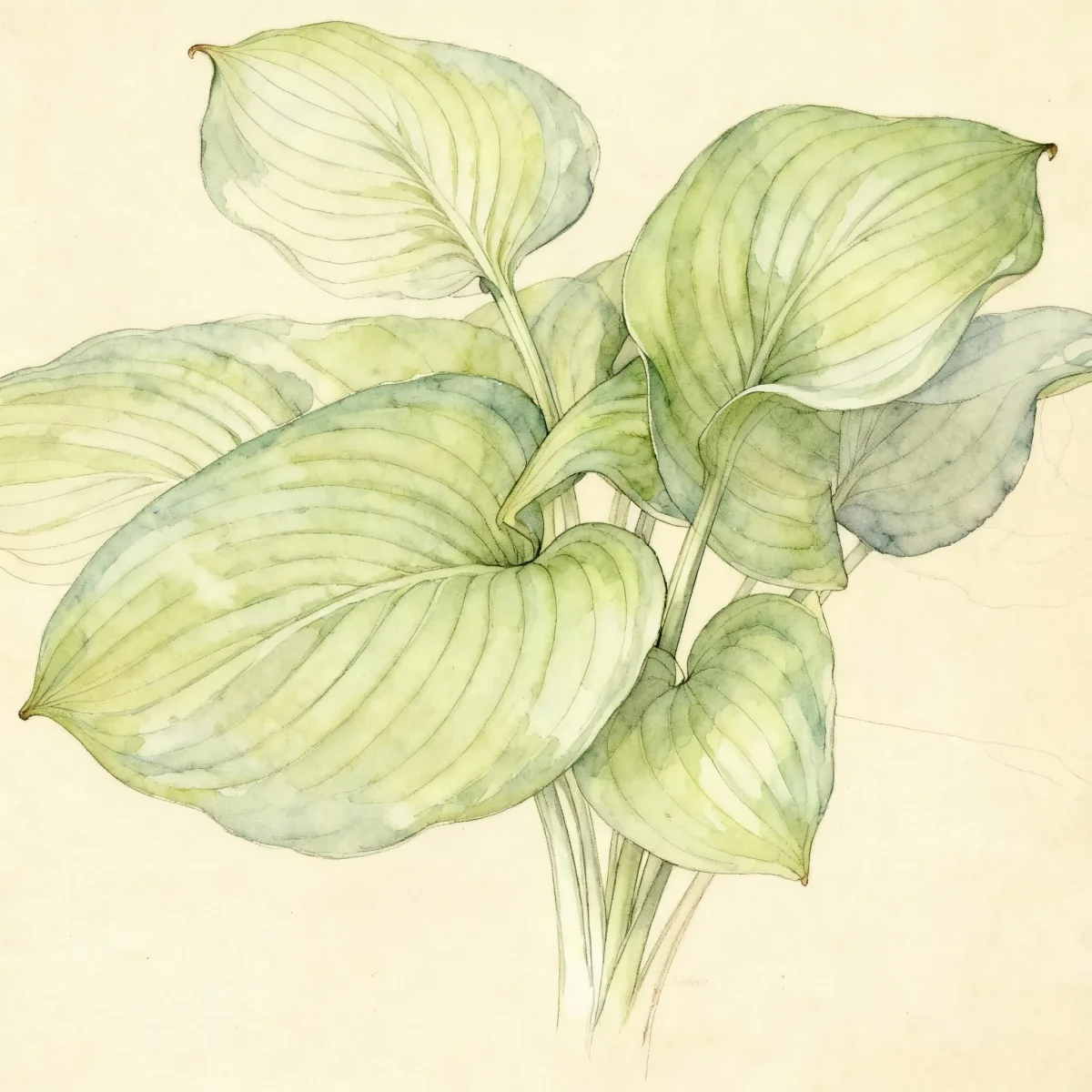
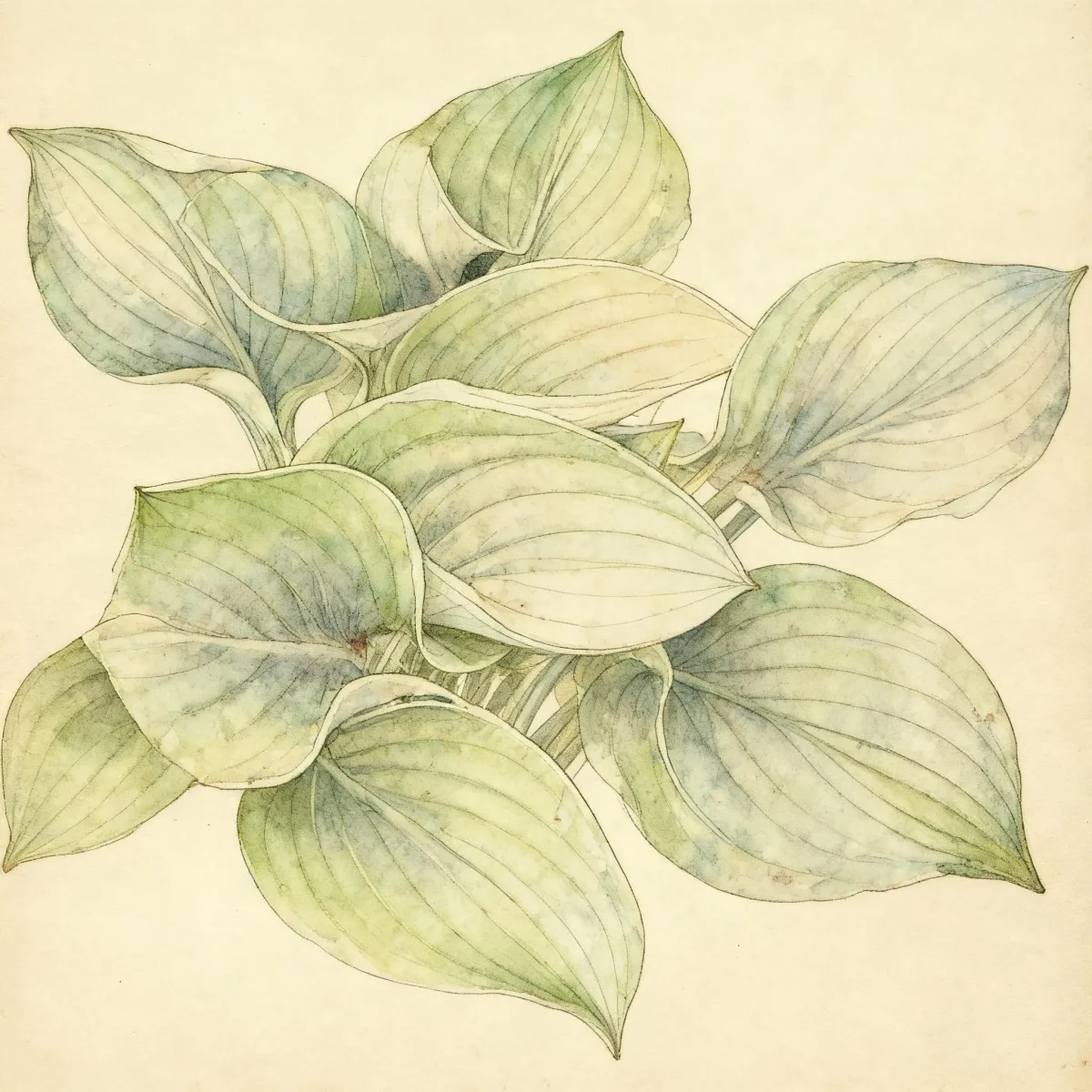
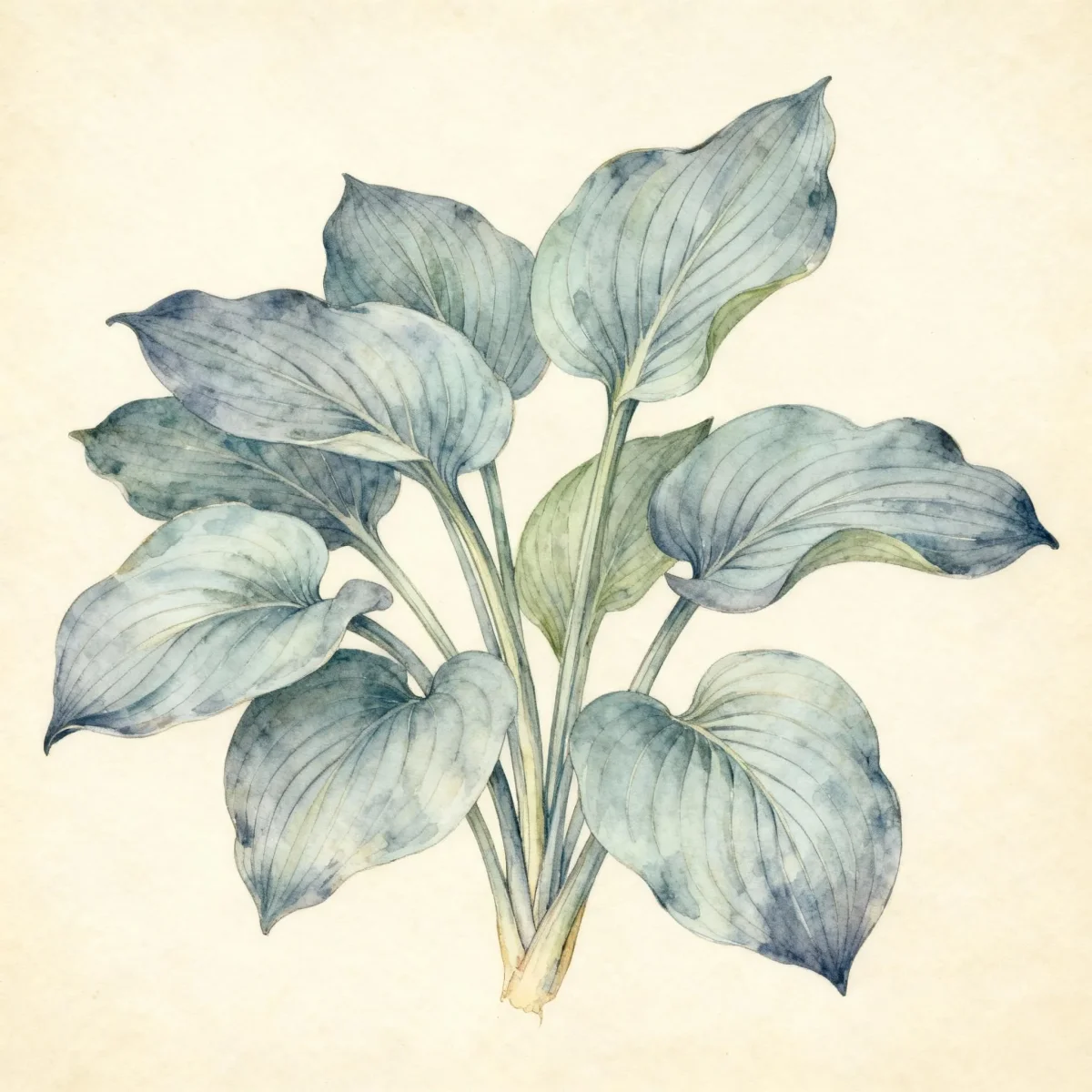
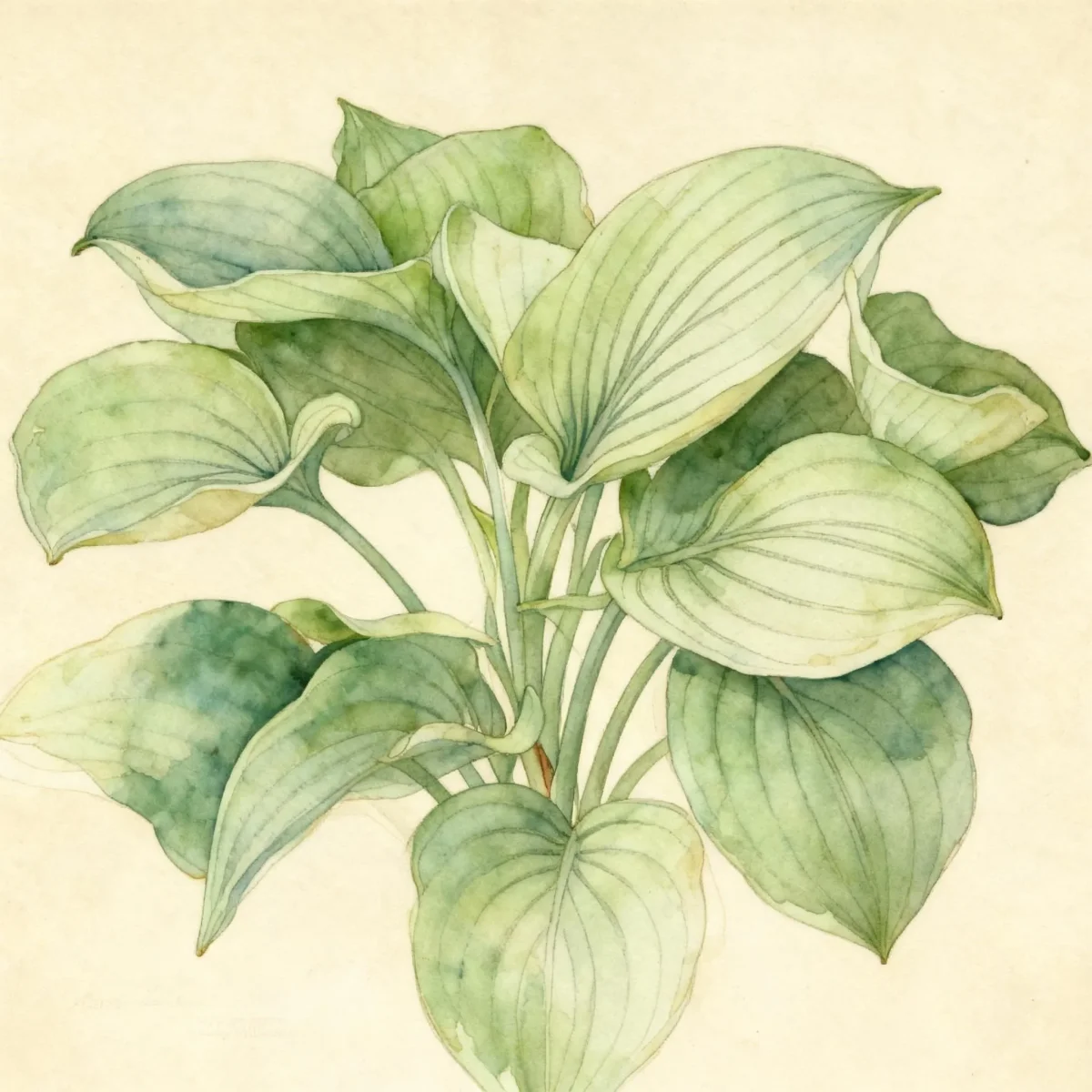
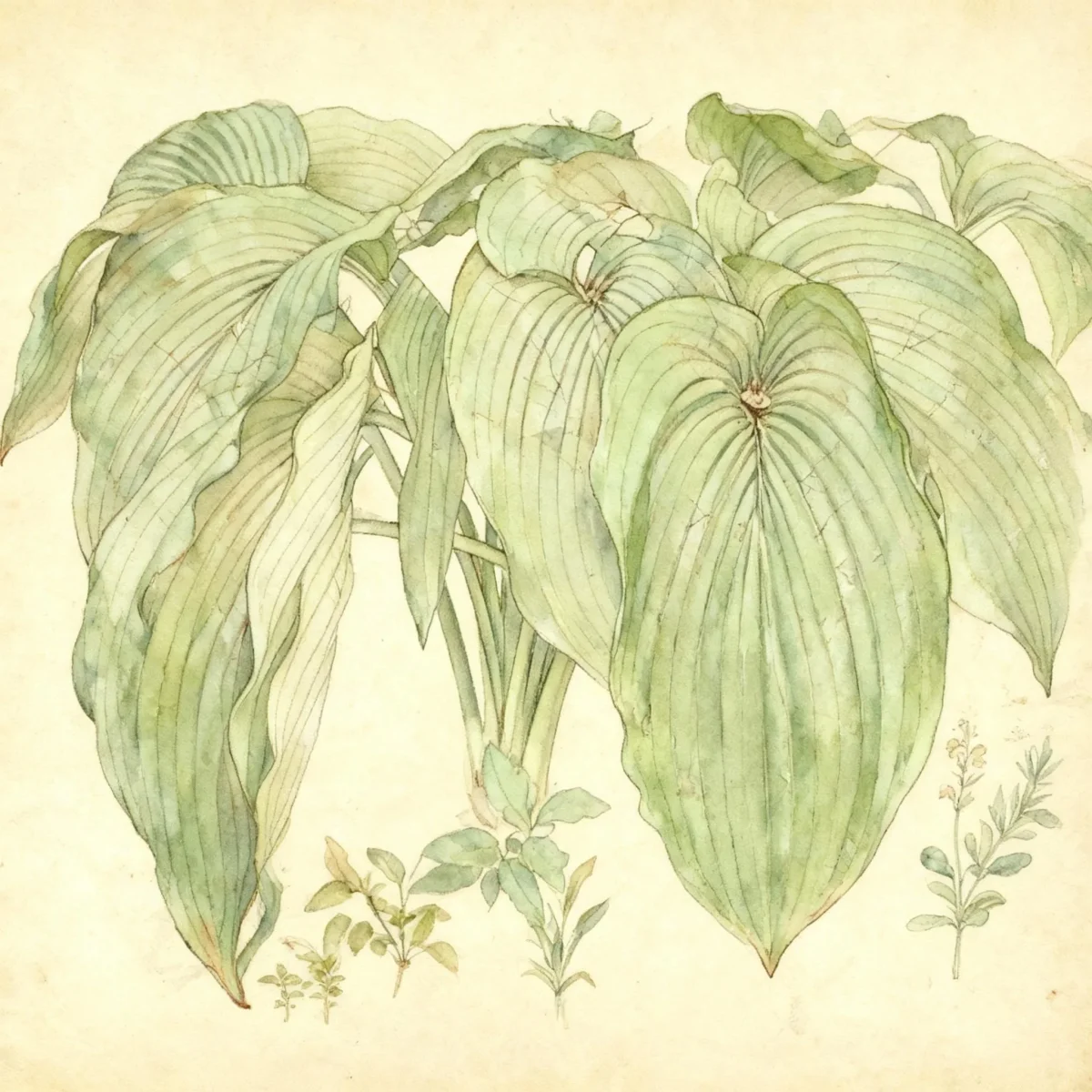
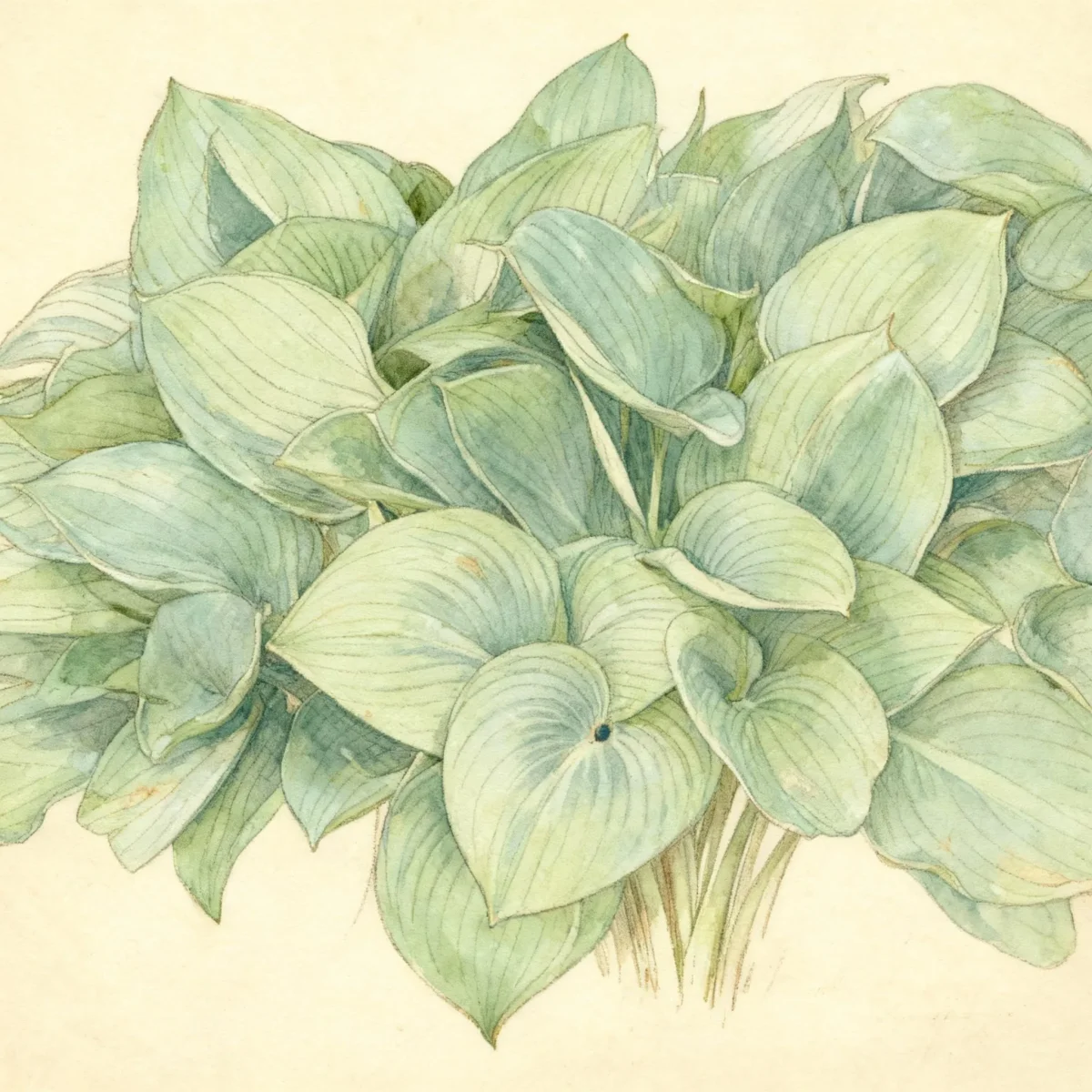
Hosta (Tardiana Group) ‘Blue Wedgwood’ is a highly valued herbaceous perennial, cherished primarily for its striking ornamental foliage that brings necessary color and texture to shaded landscapes. This specific Hosta cultivar forms a dense, attractive mound of wedge-shaped, cupped leaves which carry a distinctive blue-green hue throughout the growing season. As a member of the Tardiana Group, Hosta (Tardiana Group) ‘Blue Wedgwood’ offers dependable performance and low maintenance, making it a staple for gardeners looking to brighten dark corners of the yard.
This cultivar grows to a manageable medium size, typically reaching 1 to 1.5 feet tall with a spread of 2 to 2.5 feet. While the foliage is the main attraction, the plant also sends up scapes in June bearing bell-shaped, pale lavender flowers that are considered showy and are good for cutting. Its resilience and ability to thrive where many other plants fail secure its place as an essential shade garden anchor.
Hosta (Tardiana Group) ‘Blue Wedgwood’ establishes easily, providing years of reliable groundcover effect. Its dense leaf structure naturally helps suppress weed growth beneath its canopy. Gardeners should focus on providing consistent moisture and appropriate shade to ensure the heaviest blue color and best form are maintained yearly.
Fast Facts
- Plant Family: Asparagaceae
- Plant Type: Herbaceous perennial
- Hardiness Zones: USDA Zones 3-8
- Size at Maturity:
- Height: 1-1.5 ft
- Spread: 2-2.5 ft
- Bloom Time: June
- Bloom Description: Pale lavender
- Sun Exposure: Part shade to full shade
- Water Needs: Medium
- Maintenance Level: Low
How to Grow
Planting the Hosta (Tardiana Group) ‘Blue Wedgwood’ is best done in spring or autumn when dividing older clumps, or in spring when setting out new nursery stock. Optimal location choice is crucial; aim for part shade, ideally receiving some gentle morning sun or dappled light, though this Hosta tolerates heavy shade well. It requires organically rich, well-drained soil with consistent moisture applications for the best results and fullest size.
Care requires diligence regarding water, especially during establishment. Although established specimens exhibit some tolerance for dry shade, Hosta should never be allowed to dry out completely, as consistent moisture directly to the soil below the leaves encourages superior leaf quality. As a low-maintenance perennial, heavy fertilizing is rarely necessary, but amending the soil with ample organic matter annually improves structure and moisture retention.
Divide plants as needed to maintain vigor or propagate new specimens. Division is easiest in the very early spring before the leaves begin to emerge, allowing you to lift the clump and separate the rhizomes cleanly. Because wind can sometimes physically damage the broad leaves, especially when they are young or exposed, plant Hosta (Tardiana Group) ‘Blue Wedgwood’ in locations that offer some protection from harsh winds.
Landscape Uses
Hostas are the backbone of virtually any shade garden design, and Hosta (Tardiana Group) ‘Blue Wedgwood’ excels due to its reliable cool blue-green coloration. These perennials are very effective when planted in groups or massed together to create a coherent carpet of blue foliage beneath towering trees or along the north side of structures. Their substantial leaf mound makes them excellent for defining shady borders.
Due to their strong clumping habit and ability to crowd out weeds, they serve a dual purpose: aesthetic appeal and functional groundcover. Pair the blue tones of ‘Blue Wedgwood’ with contrasting textures, such as the finer, brighter leaves of Japanese forest grass (Hakonechloa) or the silvery, broad leaves of Brunnera for maximum visual impact. They thrive in woodland garden settings where they mimic their native woodland margin habitat.
Standout Features
Flower Qualities
- Showy
- Good Cut
Noteworthy Characteristics
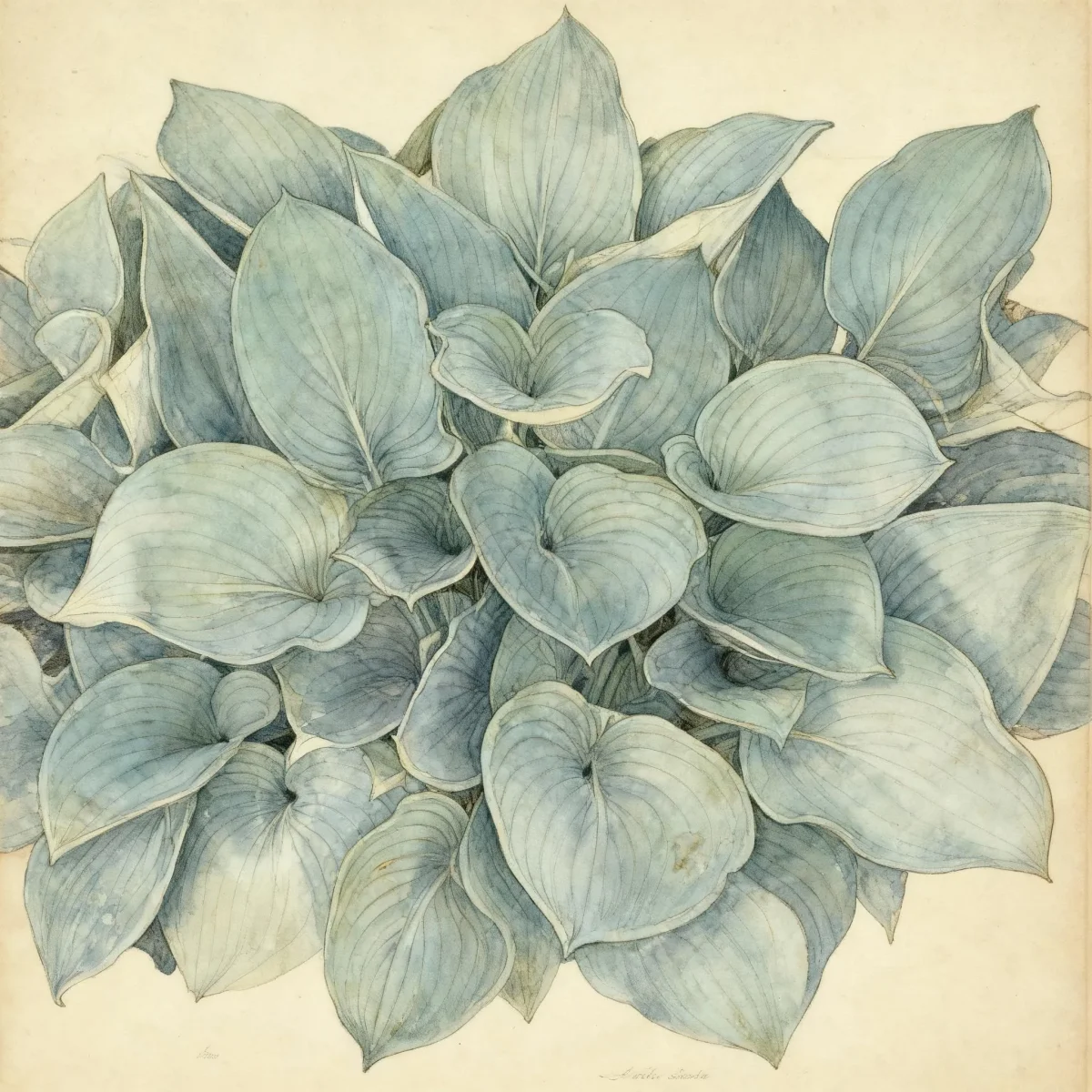
Hosta is a genus primarily celebrated for its ornamental foliage, featuring conspicuously-veined, dense basal leaves that form a rounded mound. Hosta (Tardiana Group) ‘Blue Wedgwood’ is specifically noted for its erect habit, reaching about 14 inches tall with heavily searsuckered, blue-green leaves, topped by scapes bearing pale lavender flowers in summer. This cultivar is a fast grower and provides excellent textural contrast, with its dense foliage effectively shading out most competing garden weeds.
Tolerances
- Heavy Shade
- Black Walnut
Potential Problems
Slugs and snails represent the most common threat, notorious for chewing jagged holes in Hosta foliage, potentially causing severe aesthetic damage rapidly. Monitor vulnerable leaves closely and employ relevant slug control measures early in the season. Other potential issues include foliar nematodes, which cause interveinal browning, and less frequently, leaf spot or crown rot, often linked to poor drainage.
To protect your investment, immediately remove and destroy any plant showing signs of specific viruses like Hosta Virus X (HVX). Furthermore, be aware that deer often relish Hosta leaves, sometimes eating them voraciously; siting plants where deer cannot easily access them is advised. Hail storms can also shred unprotected leaves.
Frequently Asked Questions
What hardiness zones is Hosta (Tardiana Group) ‘Blue Wedgwood’ suitable for?
This dependable perennial is suited for USDA Zones 3 through 8, offering wide adaptability across various climates.
How large does Hosta (Tardiana Group) ‘Blue Wedgwood’ grow?
Hosta (Tardiana Group) ‘Blue Wedgwood’ typically reaches a mature height between 1 and 1.5 feet and spreads outward to 2 or 2.5 feet.
What sun exposure does Hosta (Tardiana Group) ‘Blue Wedgwood’ need?
This Hosta variety prefers part shade but will successfully grow in locations receiving full shade, making it highly versatile for dark garden areas.
When does Hosta (Tardiana Group) ‘Blue Wedgwood’ bloom?
The plant comes into bloom during June, featuring attractive racemes of pale lavender, bell-shaped flowers.
Conclusion
Hosta (Tardiana Group) ‘Blue Wedgwood’ remains a primary choice for shade gardeners due to its tough constitution, ease of care, and exceptionally attractive blue-toned, textured foliage. This dependable Hosta provides essential structure and contrast that few other plants can match under difficult lighting conditions. Verify that your planting site falls within USDA Zones 3-8 and ensure consistent moisture to enjoy years of beautiful, weed-suppressing performance from your Hosta.
Companion Planting
Selecting appropriate neighbors is key to maximizing the visual appeal of Hosta (Tardiana Group) ‘Blue Wedgwood’ in shaded environments. Focus on companions that contrast in color or texture, as blue foliage absorbs light. Consider ferns, such as the Japanese Painted Fern or Autumn Fern, whose fine structure balances the broad leaves of the Hosta.
To add bloom interest where Hosta flowers are brief, incorporate plants like Astilbe or Tiarella (Foamflower), which offer reliable flowering in similar part shade to full shade conditions. Since this Hosta requires medium water, select other moisture-loving shade perennials to create a cohesive, thriving understory planting palette.
Seasonal Care Calendar
Spring is the time for preparing beds, ensuring the soil is rich with compost before the leaves of your Hosta (Tardiana Group) ‘Blue Wedgwood’ fully emerge. This is also the easiest time to divide any overcrowded clumps. During the summer growing season, focus strictly on consistent watering applied directly to the soil; avoid overhead sprinkling when possible.
In late summer and early autumn, deadhead spent flower scapes if desired, although many gardeners leave them for structure. Minimal cleanup is required in fall; cut back the dead foliage only after it has completely withered, as the leaves can provide some winter protection to the crown. Protection from late and early frosts is rarely necessary due to the robust nature of this Hosta cultivar.