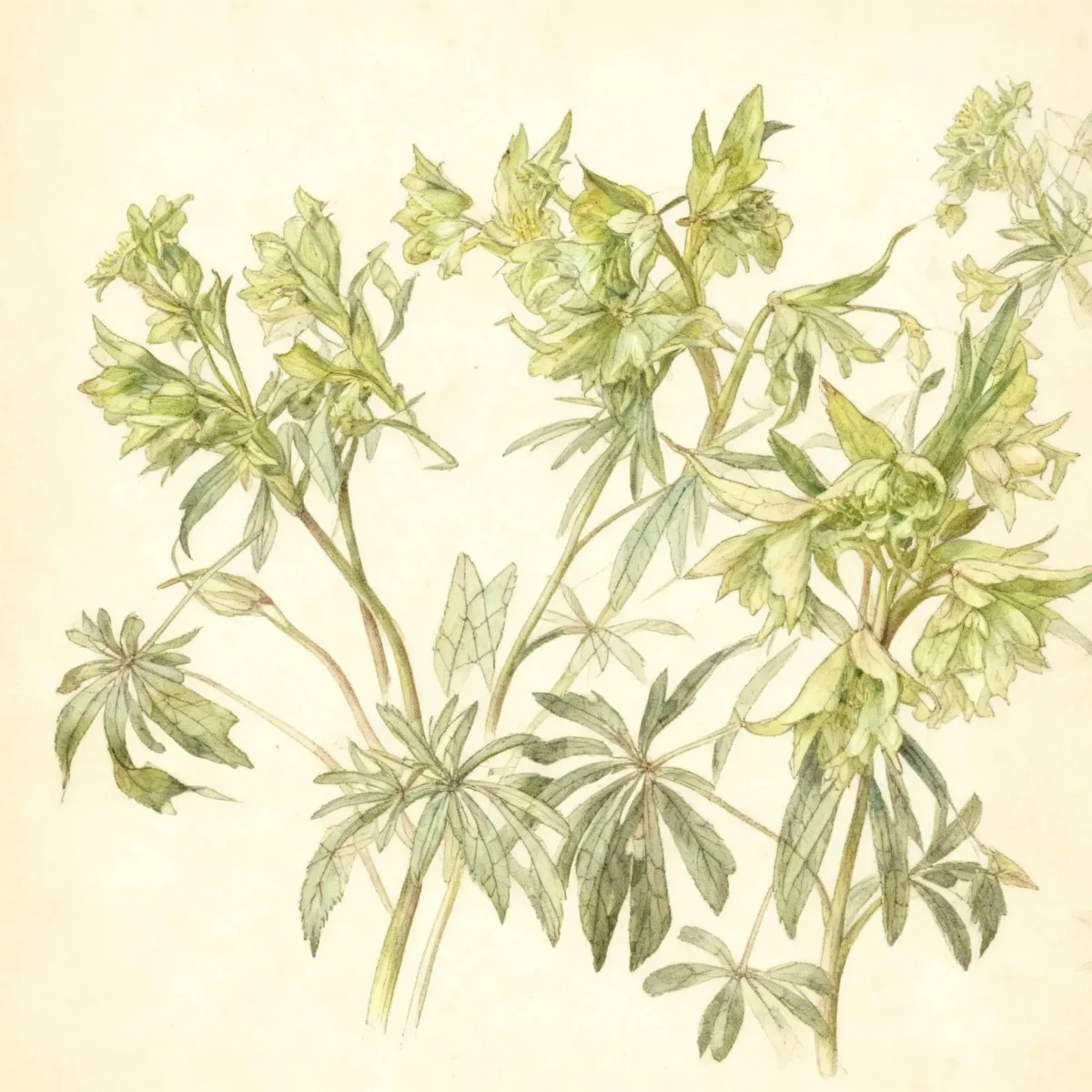
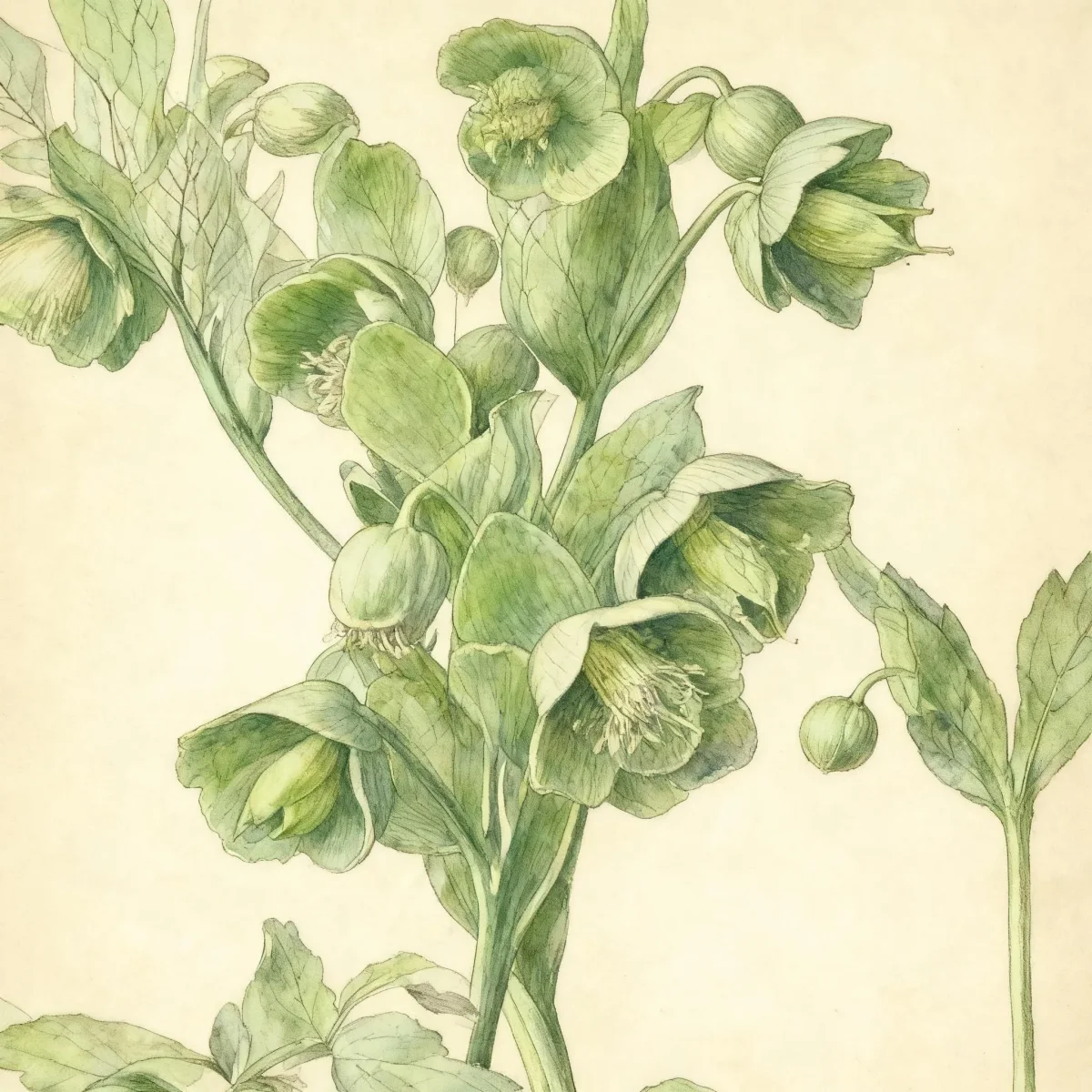
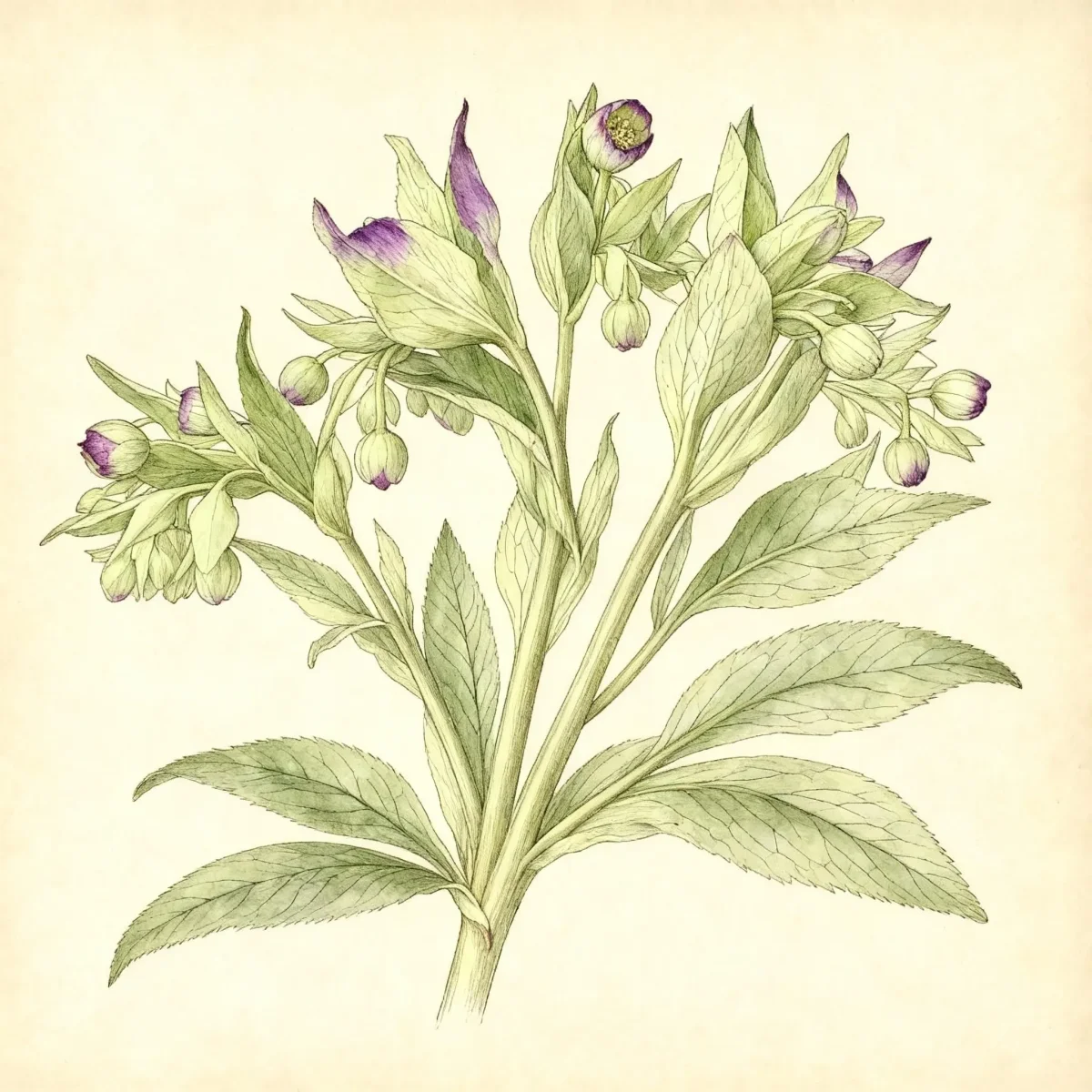
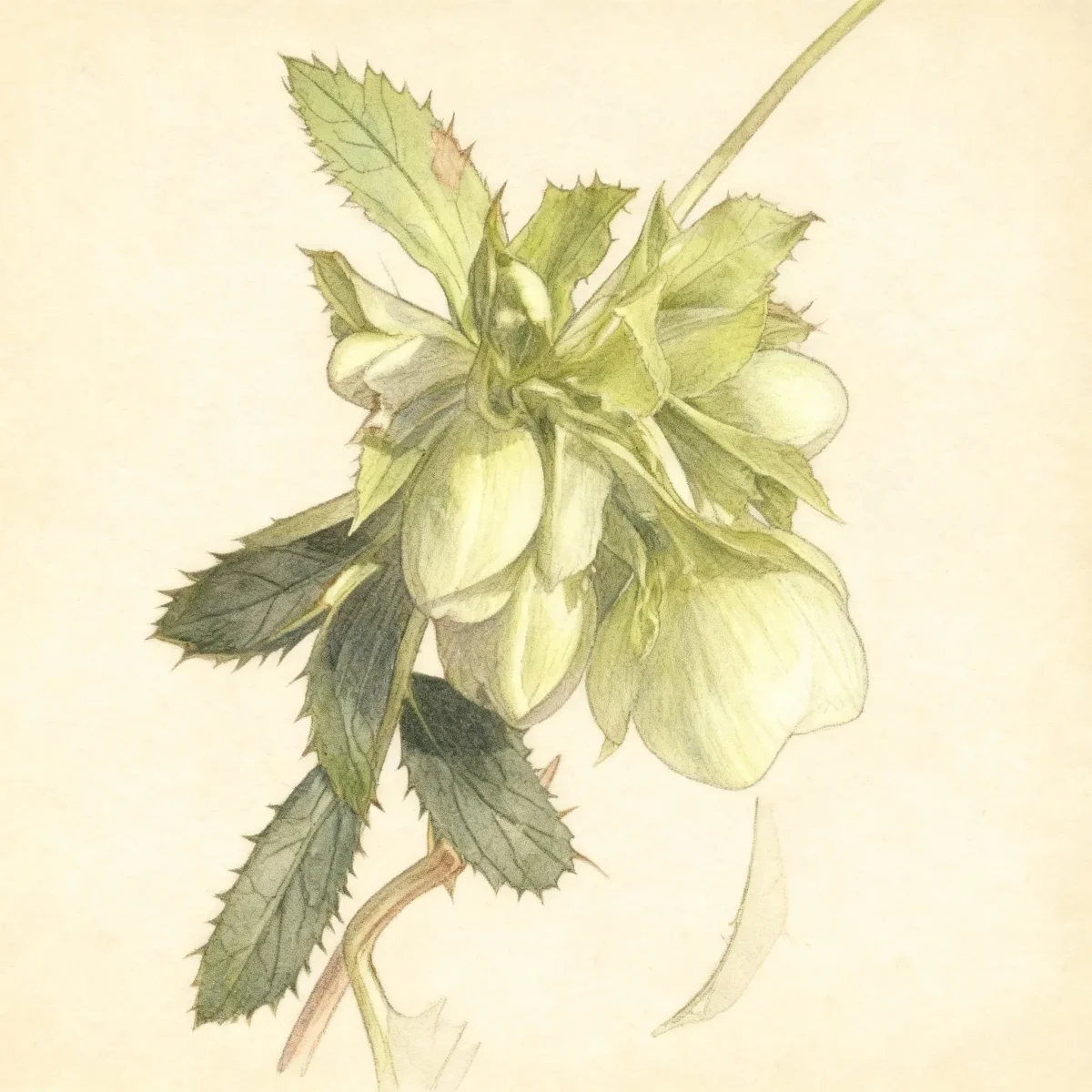
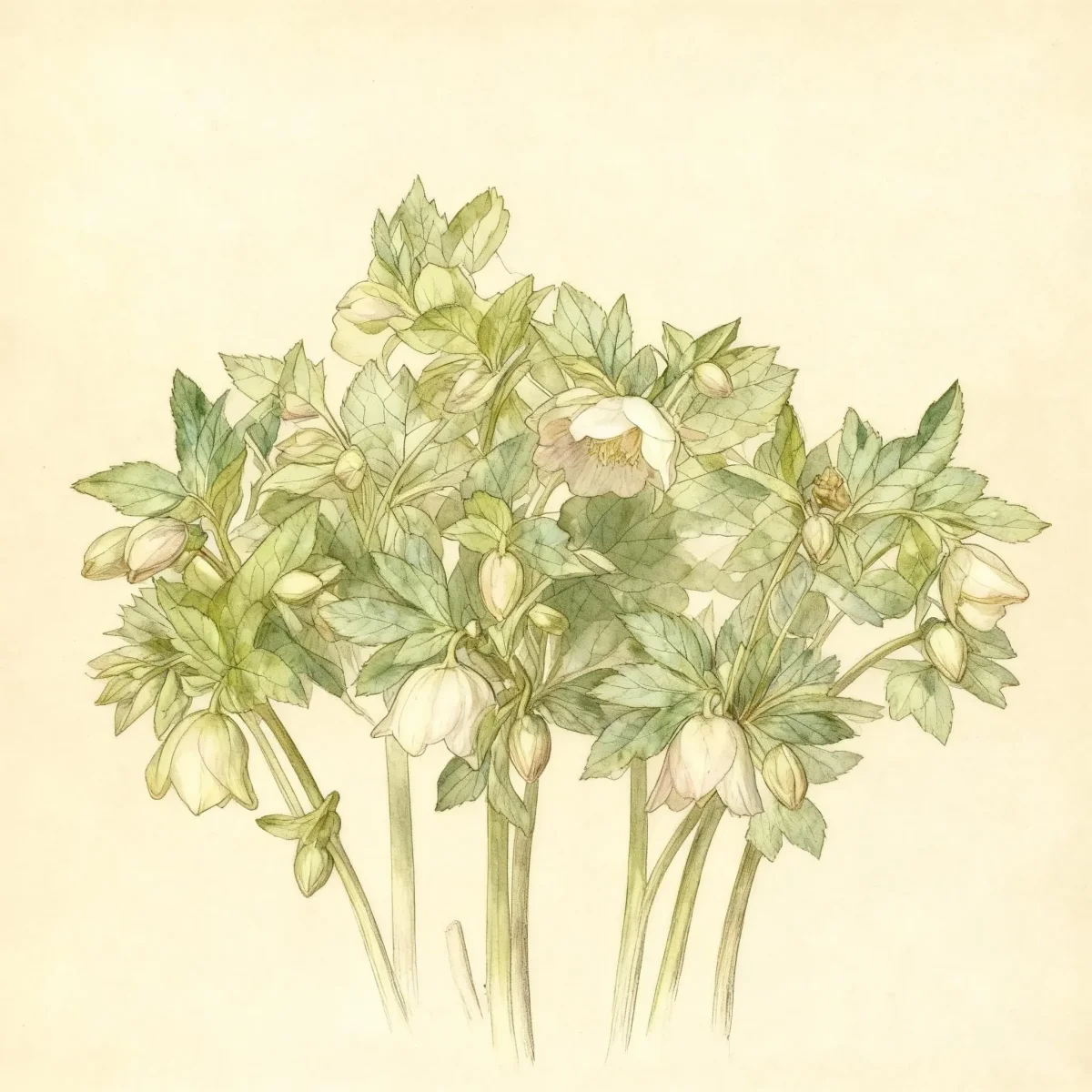
Stinking hellebore (Helleborus foetidus 'Sienna')
Helleborus foetidus 'Sienna', the Stinking hellebore, offers evergreen foliage and blooms from February to April and is low maintenance.
Scroll down to discover growing tips, care requirements, companion plants, and more
Complete Plant Information
Overview
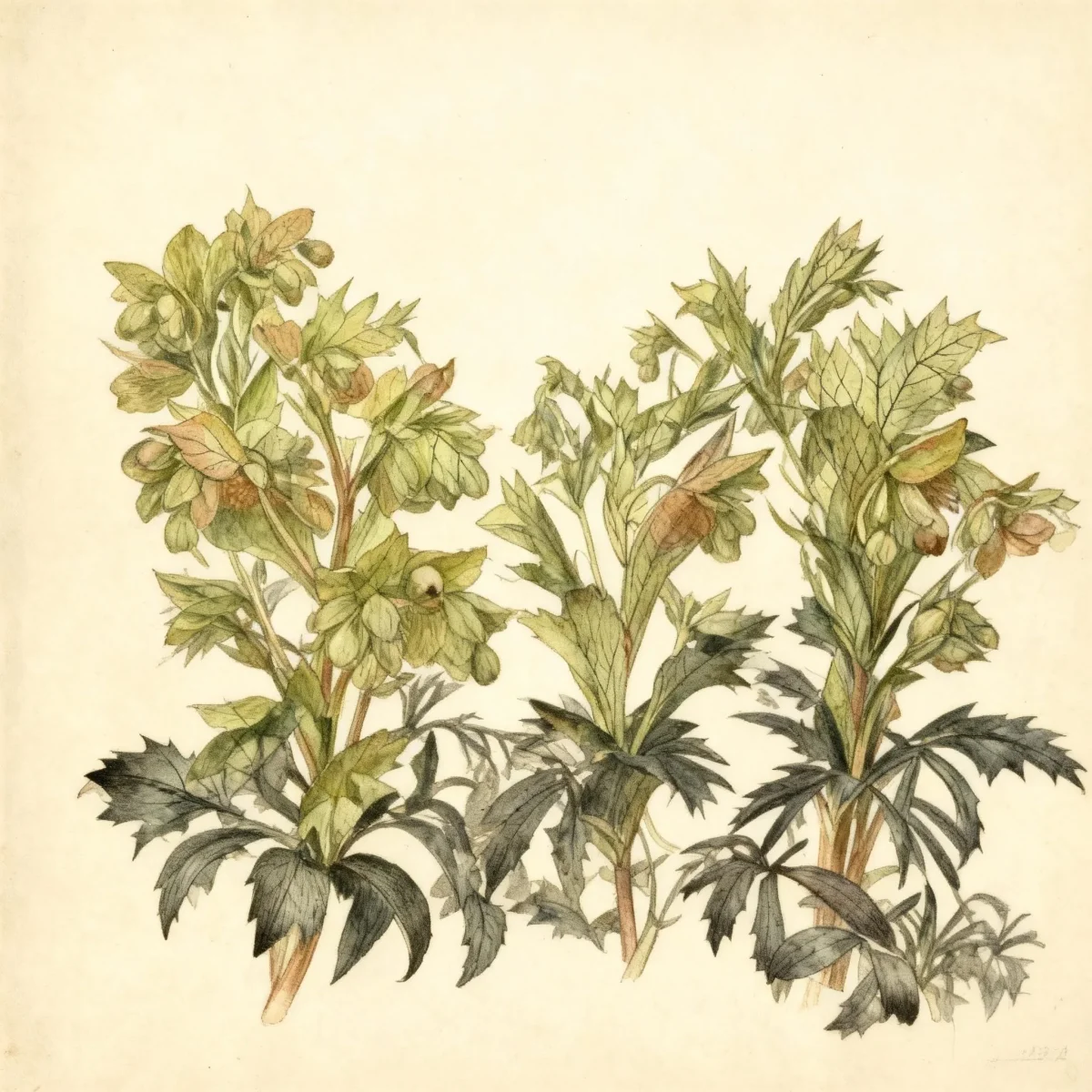
Helleborus foetidus ‘Sienna’ is a distinctive evergreen perennial prized for its early season flowering interest, often appearing when little else is active. This cultivar of the Stinking hellebore offers deeply divided, almost blackish-green foliage that provides excellent structure throughout the year. Gardeners value this plant for its ability to thrive in shade, offering reliable color when many other perennials are dormant.
This specific selection, Helleborus foetidus ‘Sienna’, typically reaches 1 to 2 feet tall and maintains an equally modest spread. While the species name implies an unpleasant scent, the primary draw remains its deep evergreen texture and unique, bell-shaped, greenish-white flowers that signal spring long before the frost has fully retreated. It is valued as a low-maintenance addition to woodland settings.
Due to its evergreen nature and early bloom time, incorporating the Stinking hellebore into your garden plan ensures visual interest even during harsh winters. While poisonous if ingested, its deer tolerance makes it a practical choice for partially shaded areas where other shrubs might be browsed. Plan for its slow establishment, as plants grown from seed may take two years to reach blooming maturity.
Fast Facts
- Plant Family: Ranunculaceae
- Plant Type: Herbaceous perennial
- Hardiness Zones: USDA Zones 5-9
- Size at Maturity:
- Height: 1-2 ft
- Spread: 1-1.5 ft
- Bloom Time: February to April
- Bloom Description: Greenish white
- Sun Exposure: Part shade to full shade
- Water Needs: Medium
- Maintenance Level: Low
How to Grow
The best time to establish Helleborus foetidus ‘Sienna’ is when the plant is dormant or just beginning its growth cycle, though established plants are quite resilient. Locate these plants where they benefit from part shade to full shade, aiming for areas that receive light to moderate shade. Soil must be organically rich, humusy, and retain medium moisture while remaining well-drained; they especially appreciate alkaline soil conditions.
Once established, this Stinking hellebore requires medium watering; avoid overly wet or soggy conditions, which can promote crown rot. Maintenance is generally low. After the late winter bloom period concludes in April, cut back the spent flowering stems to encourage fresh, vibrant foliage growth, helping the evergreen leaves look their best.
Protecting Helleborus foetidus ‘Sienna’ from harsh winter winds is recommended, especially in cooler parts of its range (Zone 5). While it may self-seed gently once happy, remember that this perennial can take two seasons to flower from seed. The evergreen foliage, while stunning, can sometimes appear scorched or tattered after severe, snowless winters.
Landscape Uses
Helleborus foetidus ‘Sienna’ excels where year-round evergreen texture is desired in shady spots. Due to its early bloom, placing clumps near a well-used patio, walkway, or kitchen window allows gardeners to fully appreciate the harbinger-of-spring blooms. These plants look superb when grouped under the canopy of larger trees or interspersed within naturalized woodland garden settings.
Consider massing the Stinking hellebore to create an attractive, evergreen ground cover that slowly expands via self-seeding. Because they thrive in consistent shade, they pair well aesthetically and culturally with ferns, hostas, and other shade-loving woodland natives that emerge later in the spring. The clumping habit of the Helleborus foetidus ‘Sienna’ makes it excellent for defining the edge of a shaded border.
Standout Features
Flower Qualities
- Showy
Noteworthy Characteristics
Helleborus foetidus, commonly called stinking hellebore, is an evergreen perennial that typically grows to 24” tall and is noted for its deeply divided dark green foliage and late winter to early spring bloom (February - April). Clusters (cymes) of drooping, bell-shaped, greenish-white flowers bloom at the tips of leafy stems commencing in February. The specific cultivar ‘Sienna’ is noted for its dark, deeply-cut, greenish-black foliage, making this Stinking hellebore a standout performer that offers visual interest long before other perennials wake up.
Tolerances
- Deer
Potential Problems
This plant generally suffers from few serious insect or disease issues, contributing to its low maintenance profile. The primary concerns relate to cultural factors, specifically overly moist soil conditions. Ensure excellent drainage to mitigate the risk of crown rot. Occasional leaf spot fungal issues can sometimes appear, usually exacerbated by poor air circulation or excessive wetness on the foliage.
To prevent these occasional issues, ensure proper spacing when planting Helleborus foetidus ‘Sienna’ to allow air to move around the clump. Promptly remove severely affected leaves if leaf spot is identified and avoid wetting the foliage during overhead watering, focusing moisture directly at the base of the plant.
Frequently Asked Questions
What hardiness zones is Stinking hellebore suitable for?
Helleborus foetidus ‘Sienna’ is generally hardy across USDA Zones 5 through 9, though extra protection may be required in the colder end of that range.
How large does Helleborus foetidus ‘Sienna’ grow?
This herbaceous perennial typically achieves a height between 1 and 2 feet and spreads to a width of 1 to 1.5 feet, maintaining a compact, bushy form.
When does Stinking hellebore bloom?
The characteristic bloom time for Helleborus foetidus ‘Sienna’ spans from early February all the way through April, presenting its greenish white flowers during the late winter transition.
What sun exposure does Helleborus foetidus ‘Sienna’ need?
This plant performs best when provided with part shade to full shade conditions, preferring protection from harsh afternoon sun.
Conclusion
The Helleborus foetidus ‘Sienna’ offers exceptional value as an evergreen perennial providing crucial winter and early spring color in shaded landscapes. Its low maintenance needs and deer resistance make the Stinking hellebore a reliable favorite for challenging garden spots. Before planting, confirm your garden falls within USDA Zones 5-9 and plan for an organically rich, well-drained soil location to ensure success with your Helleborus foetidus ‘Sienna’.
Companion Planting in Shade
When designing a spring garden featuring the early bloom of the Stinking hellebore, consider pairing it with plants that emerge slightly later to create a succession of interest. Ferns, such as Japanese Painted Ferns or Autumn Ferns, emerge soon after the hellebores fade, providing contrasting texture as the foliage matures. Similarly, early-blooming native bulbs like snowdrops (Galanthus) or spring ephemerals that tolerate alkaline soil can share the same space, enhancing the woodland feel.
The cultural requirements of Helleborus foetidus ‘Sienna’—shade and rich, humusy soil—allow for excellent companionship with shade mainstays like hostas and bleeding hearts (Dicentra spectabilis). Since the Stinking hellebore’s bloom is brief, ensure companion plants have attractive foliage to carry the visual interest through summer and fall.
Seasonal Care Calendar
For successful year-round performance of your Helleborus foetidus ‘Sienna’, focus activity immediately following the bloom season. In early spring (late February through April), observe and enjoy the greenish-white flowers, keeping the area protected from harsh winds. After flowering is finished, prune back the spent flower stalks slightly above the base to direct energy into maintaining the evergreen foliage.
Summer maintenance is minimal, revolving around ensuring consistent, medium moisture, especially during dry spells, and avoiding heavy fertilization, which can encourage weak growth. In late fall or early winter, inspect the foliage; if it appears ragged from the previous year, you can cut back the entire clump before the new flowers emerge, though this is not strictly necessary for this particular cultivar.