Hosta (Hosta 'Sum and Substance')
The immense Hosta 'Sum and Substance' offers glossy yellow foliage, thriving in sun to part shade, ideal for low-maintenance shade gardens.
Scroll down to discover growing tips, care requirements, companion plants, and more
Complete Plant Information
Overview
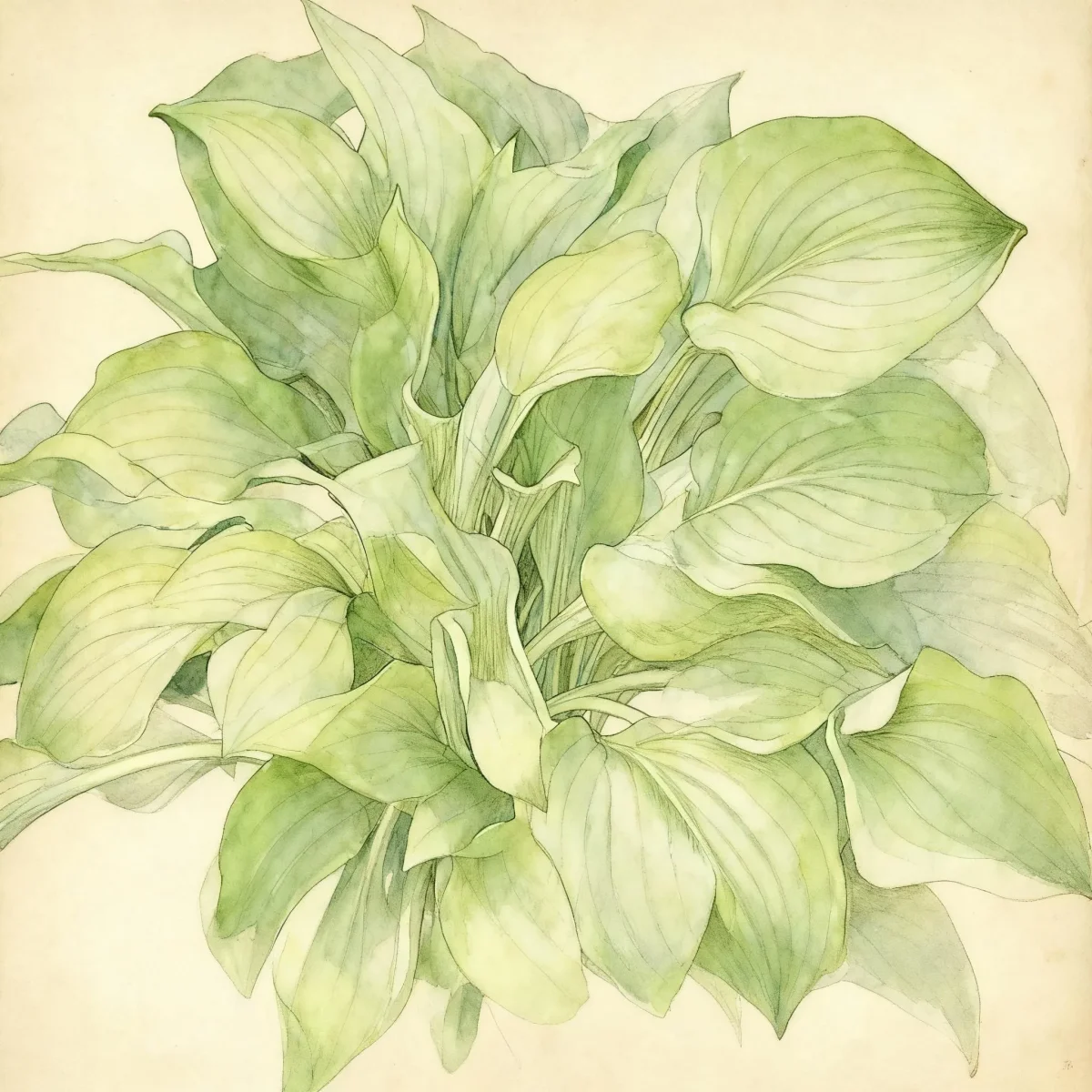
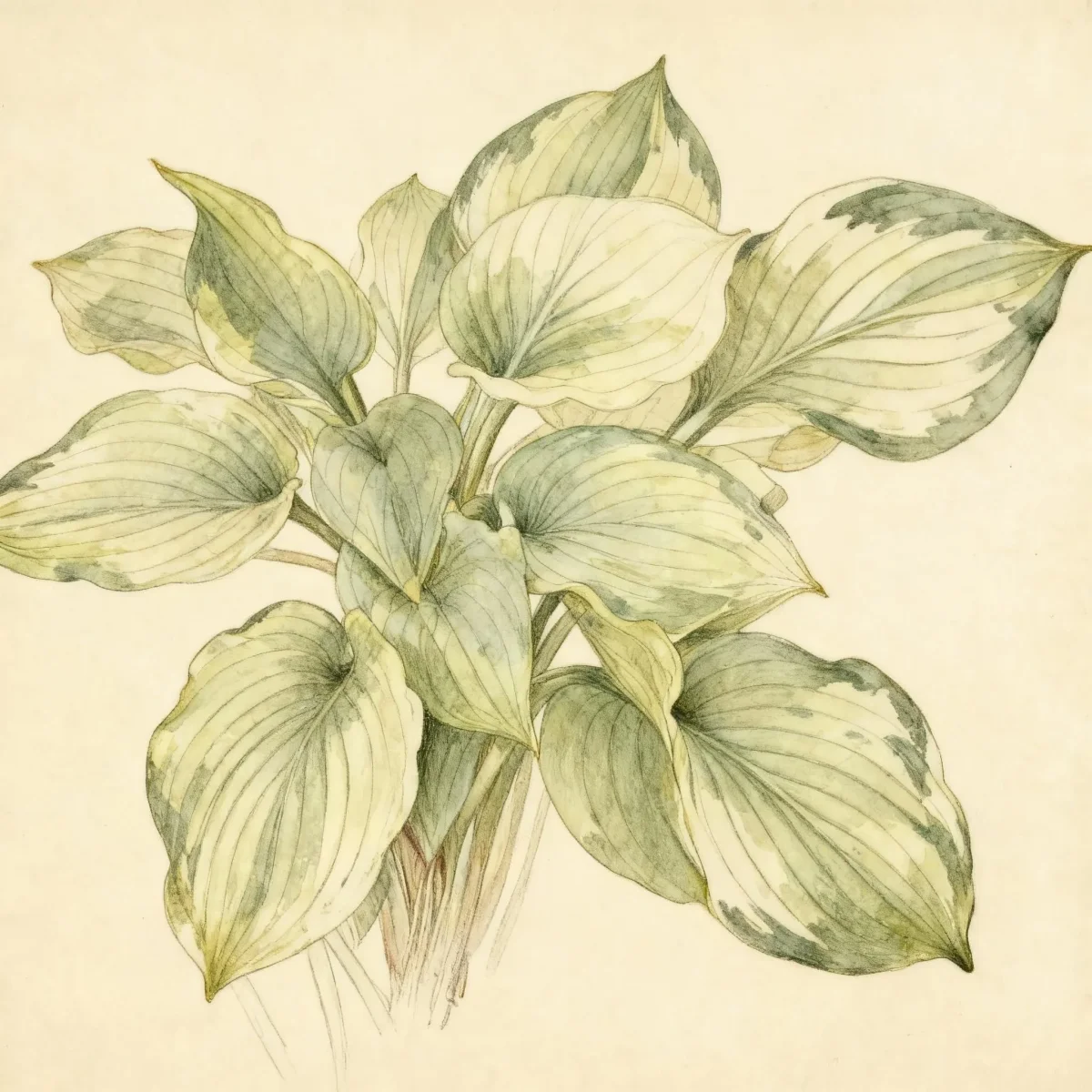
Hosta ‘Sum and Substance’ is renowned for its truly immense size and striking, glossy, heart-shaped foliage that emerges chartreuse and matures to a brilliant gold with adequate light. This cultivar provides unparalleled texture and color contrast, making it a focal point even in mature shade gardens. As a dependable herbaceous perennial, this Hosta forms a large, rounded mound, capable of crowding out unwanted garden weeds with its dense growth habit.
This specific Hosta cultivar generally requires minimal care once established, often classified as low-maintenance, provided its core needs for consistent moisture are met. While it gracefully handles heavy shade, providing it with some morning sun helps bring out the best golden tones in the leaves. Hosta ‘Sum and Substance’ is prized not just for its substantial aesthetic impact but also for its resilience across a wide range of hardiness zones.
Gardeners value the genus Hosta generally for its architectural foliage, and ‘Sum and Substance’ exemplifies this benefit on a grand scale. Whether used as a specimen planting or massed for dramatic effect, this plant offers long-lasting garden performance through its foliage, enhanced by summer blooms of lavender flowers.
Fast Facts
- Plant Family: Asparagaceae
- Plant Type: Herbaceous perennial
- Hardiness Zones: USDA Zones 3-8
- Size at Maturity:
- Height: 2-3 ft
- Spread: 3-5 ft
- Bloom Time: August
- Bloom Description: Lavender
- Sun Exposure: Full sun to part shade
- Water Needs: Medium
- Maintenance Level: Low
How to Grow
Hosta ‘Sum and Substance’ performs best when planted in the spring or fall in locations protected from harsh winds. Ensure the planting area has organically rich, well-drained soil. Although this Hosta is versatile regarding soil quality, consistent moisture is key to achieving the largest full size and richest color expression for this outstanding specimen.
Watering should be consistent, aiming for evenly moist soil, though established plants show some tolerance for dry shade, especially those with thick leaves like this one. Water is most effectively delivered directly to the soil beneath the foliage canopy rather than overhead spraying. As a low-maintenance perennial, heavy fertilization is usually unnecessary, but rich soil preparation aids establishment significantly.
For renewal or propagation, divide established clumps either in early spring before the leaves unfurl, or alternatively in autumn. This division process is generally much easier in the early spring season. While Hosta ‘Sum and Substance’ handles significant sun exposure for a Hosta, remember that full size and the brightest golden color are best achieved with some morning sun or dappled shade conditions.
Landscape Uses
Hostas are foundational plants for shadier garden spaces, and Hosta ‘Sum and Substance’ excels as a statement piece due to its enormous size. It is highly effective when used as a specimen plant, contrasting beautifully against finer-textured, smaller perennials native to woodland settings. These large mounds create excellent structure in perennial borders or naturalized areas.
This massive Hosta can also serve as a strong background plant in partially shaded beds. Due to its density, massing several plants together effectively crowds out undesirable garden weeds, offering a clean, uniform groundcover in large shaded drifts. Furthermore, planting Hosta ‘Sum and Substance’ on slopes can offer excellent visual impact while helping stabilize the soil structure against erosion.
Consider pairing this golden-leaved giant with plants that feature deep green or blue foliage for maximum visual contrast. Companions like ferns, Astilbe, or dark-leaved Heuchera will allow the bright, glossy leaves of Hosta ‘Sum and Substance’ to truly glow throughout the growing season.
Standout Features
Flower Qualities
- Showy
- Good Cut
Noteworthy Characteristics
Hosta is primarily cultivated for its vast array of ornamental foliage, featuring basal leaves that rise to form a substantial rounded mound. Cultivar ‘Sum and Substance’ is an immense Hosta, reaching considerable diameter, defined by its large, thick-textured, glossy yellow leaves which intensify to golden hues with proper sun exposure. A distinctive feature of this cultivar is its dependability and low care requirements, making it a highly awarded and versatile perennial choice.
Tolerances
- Heavy Shade
- Black Walnut
Potential Problems
The primary concern for Hosta foliage, including the large leaves of Hosta ‘Sum and Substance’, involves pests attracted to tender greenery. Slugs and snails are voracious feeders, leaving characteristic jagged holes in the leaves quickly if unchecked. Management should focus on preventative measures like baiting or creating barriers early in the season before extensive damage occurs.
Be vigilant for foliar nematodes, which cause discoloration between the leaf veins, leading to browning. Less frequent, but possible, issues include leaf spots or crown rot, often related to overly saturated soil conditions. Additionally, while Hosta is generally deer and rabbit resistant in theory, these animals may still feed on the leaves, particularly if the plant is exposed and other food sources are scarce. If viral diseases like HVX are suspected, immediately remove and destroy the infected plant to prevent spreading.
Frequently Asked Questions
What hardiness zones is Hosta suitable for?
Hosta ‘Sum and Substance’ is reliably hardy across USDA Zones 3 through 8, offering flexibility for many northern and temperate gardens.
How large does Hosta ‘Sum and Substance’ grow?
This immense cultivar is known to reach heights between 2 and 3 feet, spreading widely to become an impressive clump 3 to 5 feet in diameter.
What sun exposure does Hosta ‘Sum and Substance’ need?
This Hosta variety performs well in full sun to part shade, although it needs some direct sun exposure to develop its signature golden foliage color fully.
When does Hosta bloom?
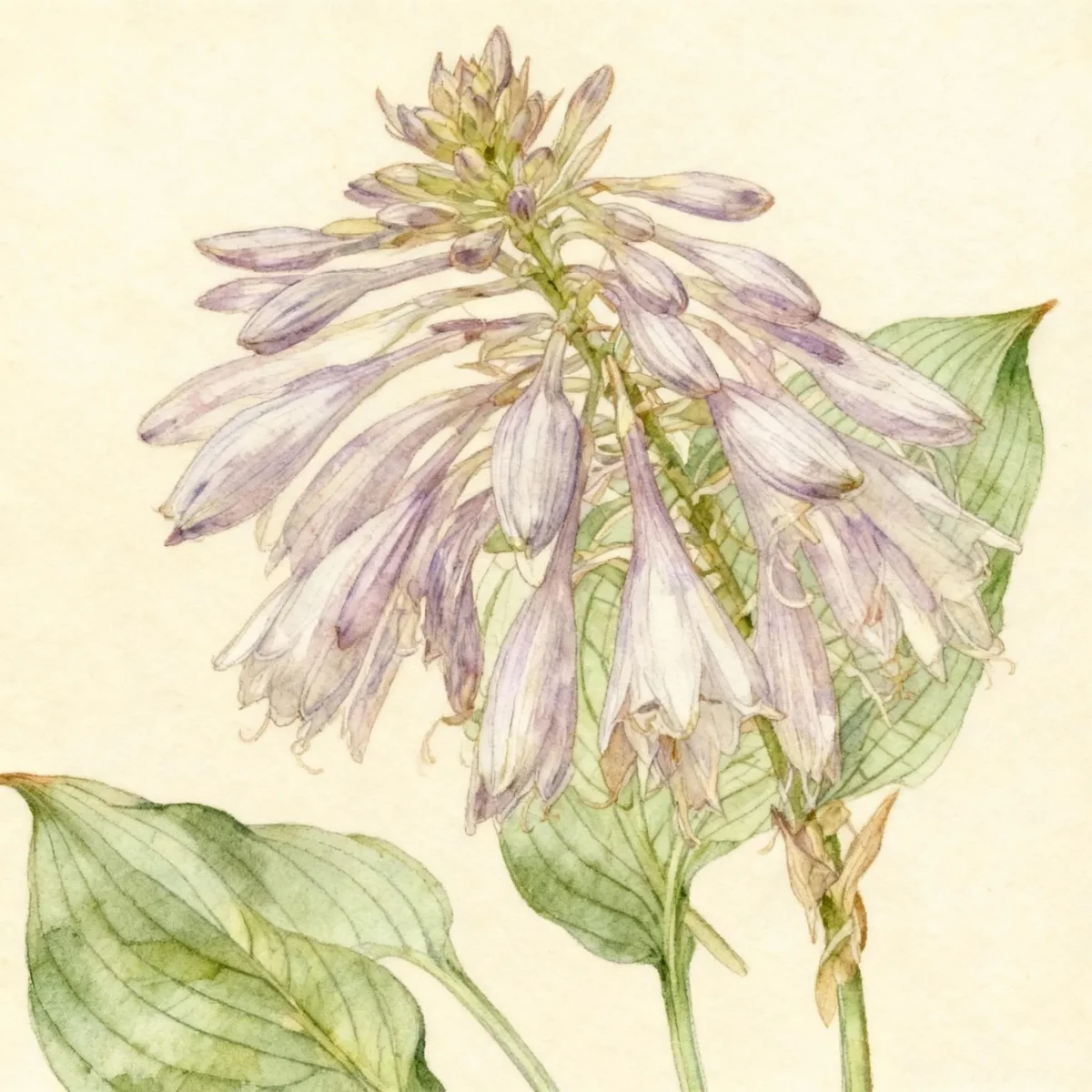
The blooms of Hosta ‘Sum and Substance’ typically appear in August, presenting as racemes of lavender, bell-shaped flowers atop tall scapes.
Conclusion
Hosta ‘Sum and Substance’ remains a cornerstone plant for gardeners seeking dramatic, low-maintenance impact through superior foliage. Its large golden leaves provide unmatched color and texture throughout the season, solidifying the genus Hosta’s role in landscape design. Before planting, confirm your local climate falls within USDA Zones 3-8 and ensure a location where it receives consistent moisture to maximize the splendor of Hosta ‘Sum and Substance’.
Companion Planting
Given the substantial size and cultural needs (part sun to shade, consistent moisture) of Hosta ‘Sum and Substance’, selecting appropriate companions is easy. Focus on plants that offer textural or color contrast without competing aggressively for underground resources. Ferns, particularly Japanese Painted Ferns or Autumn Ferns, thrive in similar moist, shaded conditions and offer delicate, upright foliage that beautifully offsets the broad, thick leaves of the hosta.
For areas receiving more morning sun, consider pairing this Hosta with shade-tolerant flowering perennials like Brunnera ‘Jack Frost’ for its silver-splashed leaves, or Lenten Rose (Helleborus). These choices maintain an appealing aesthetic throughout the spring while the Hosta is developing its full canopy, resulting in a layered, rich woodland garden feel.
Propagation Tips
The primary method for increasing your stock of Hosta ‘Sum and Substance’ is division, which is best performed when the plant is dormant or just beginning its spring growth flush. While it is easier to divide when the spring melt has occurred, wait until the unfurling eyes are just visible before carefully digging around the clump and separating sections, ensuring each new division retains several healthy roots and viable growth points.
If attempting seed propagation (which will not breed true to the parent cultivar), collect the seed capsules after the lavender flowers have faded, usually later in the summer or early fall. Sow the seeds in moist, sterile medium in a cool environment or start them indoors several weeks before the last frost date. Be aware that growing Hosta from seed takes several years to achieve the impressive size characteristic of Hosta ‘Sum and Substance’.