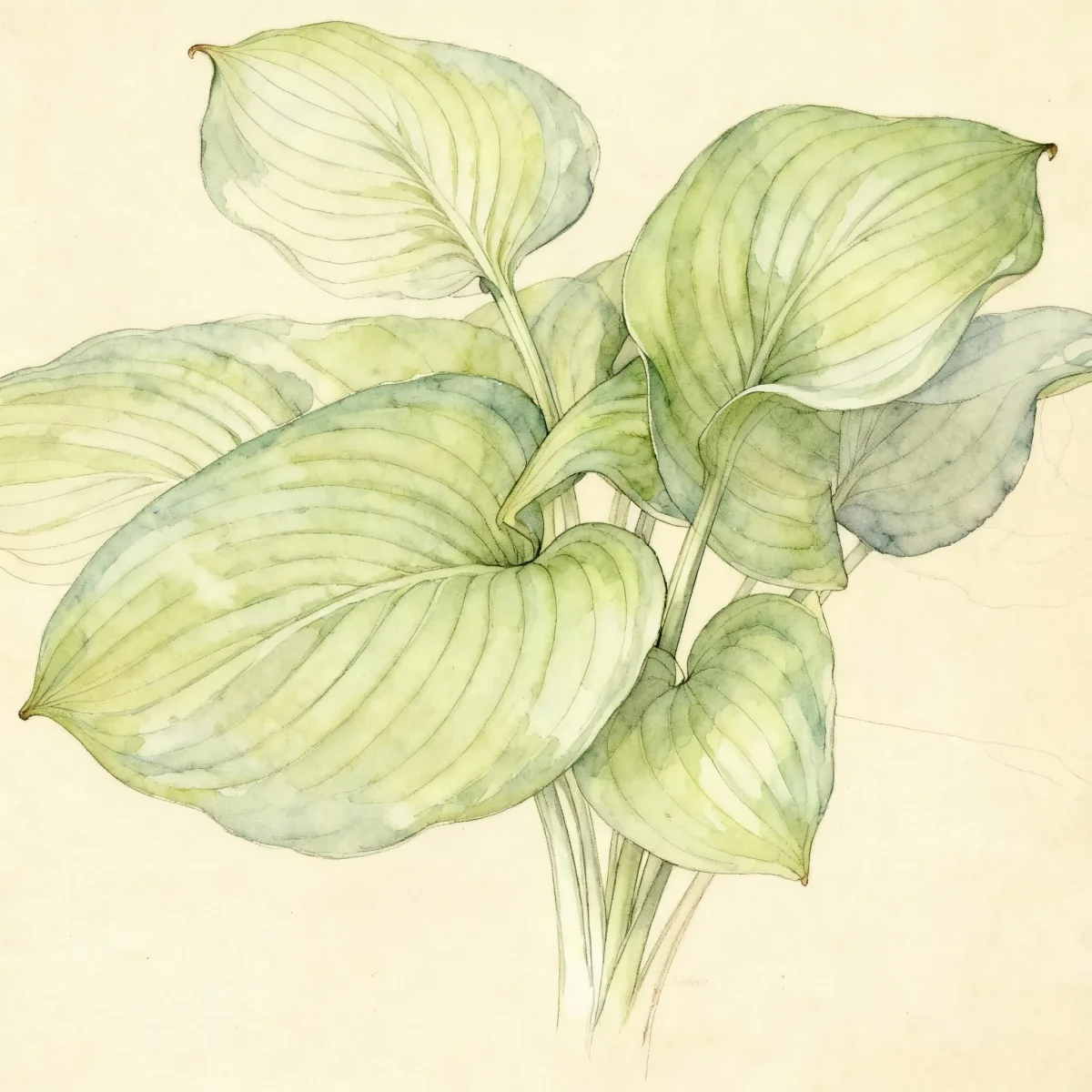
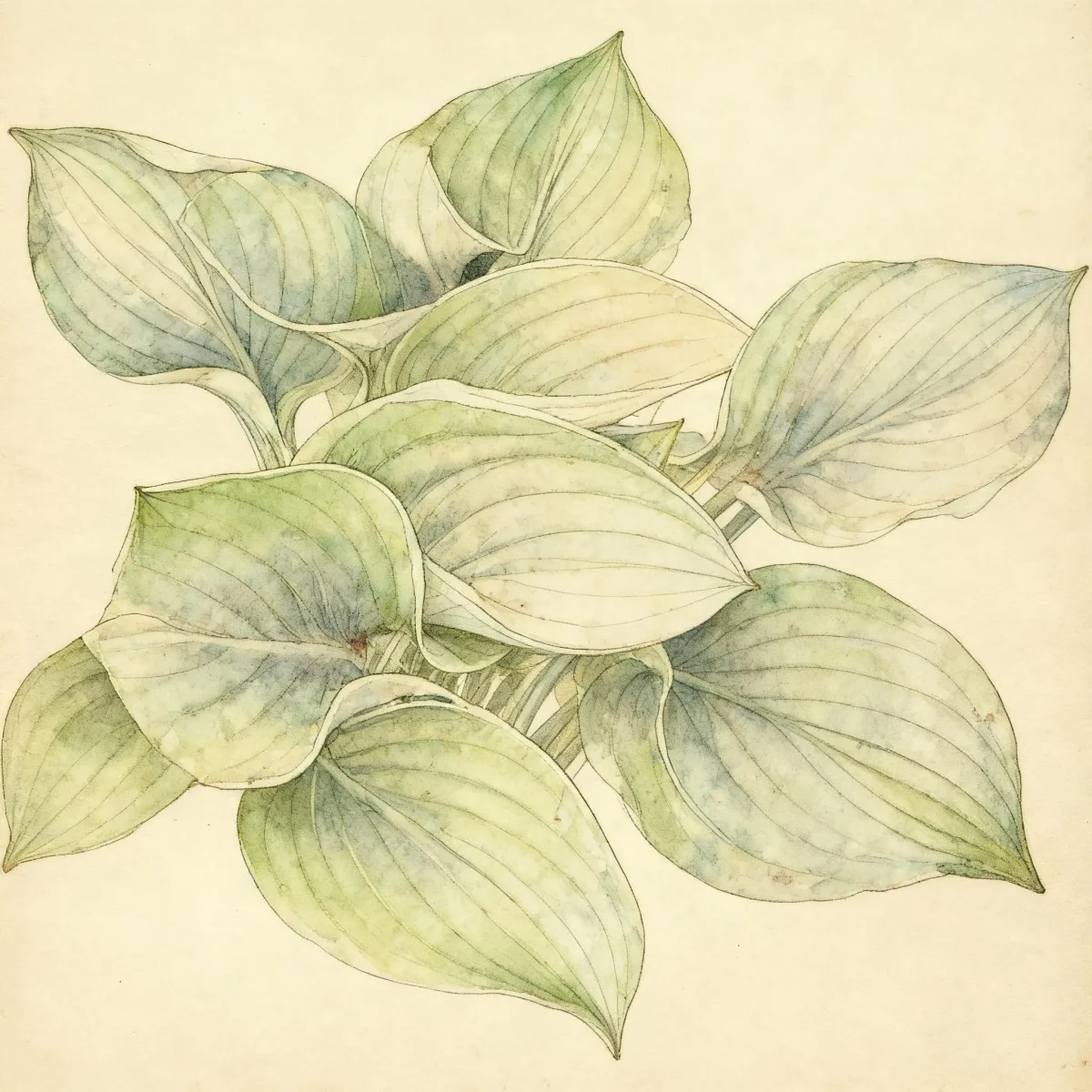
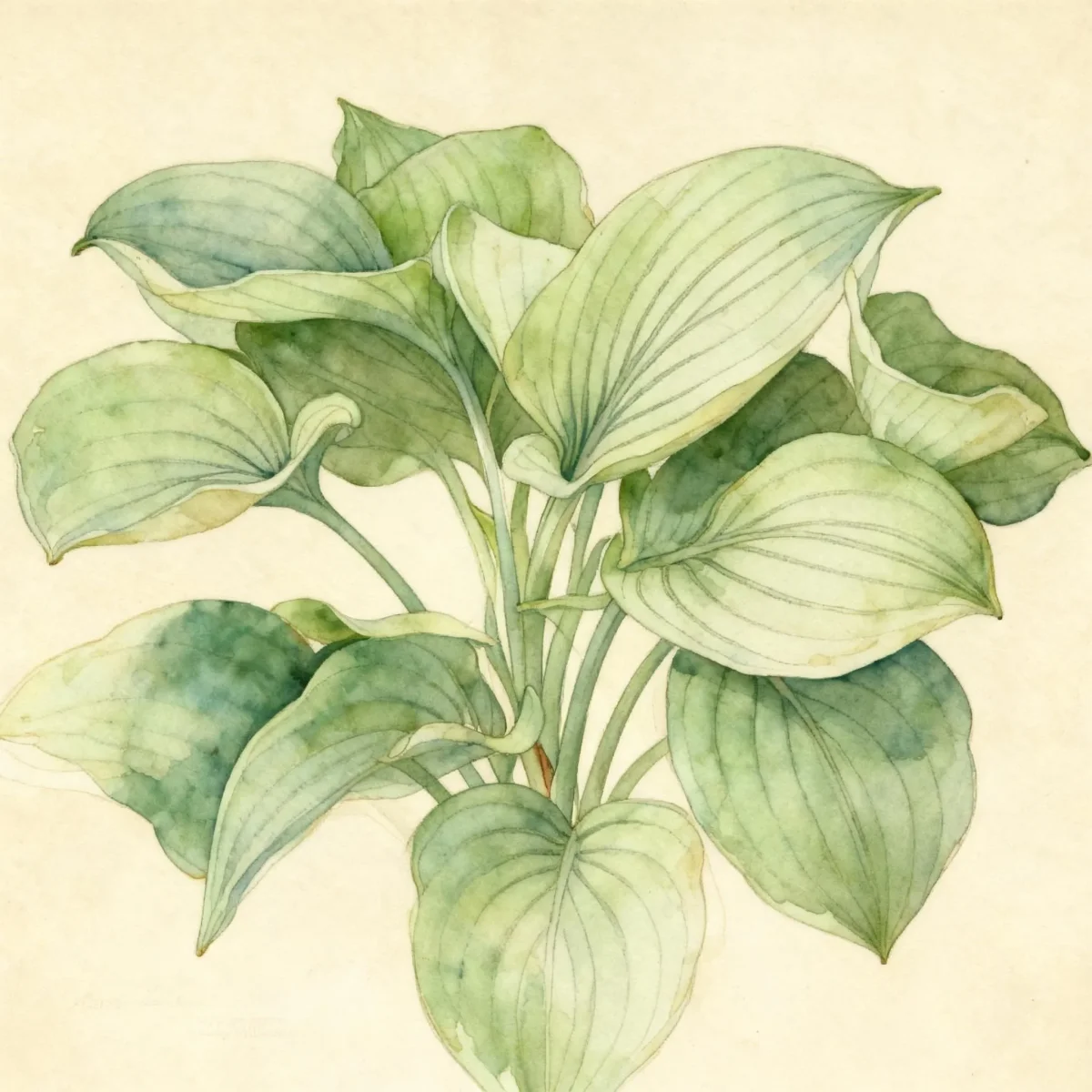
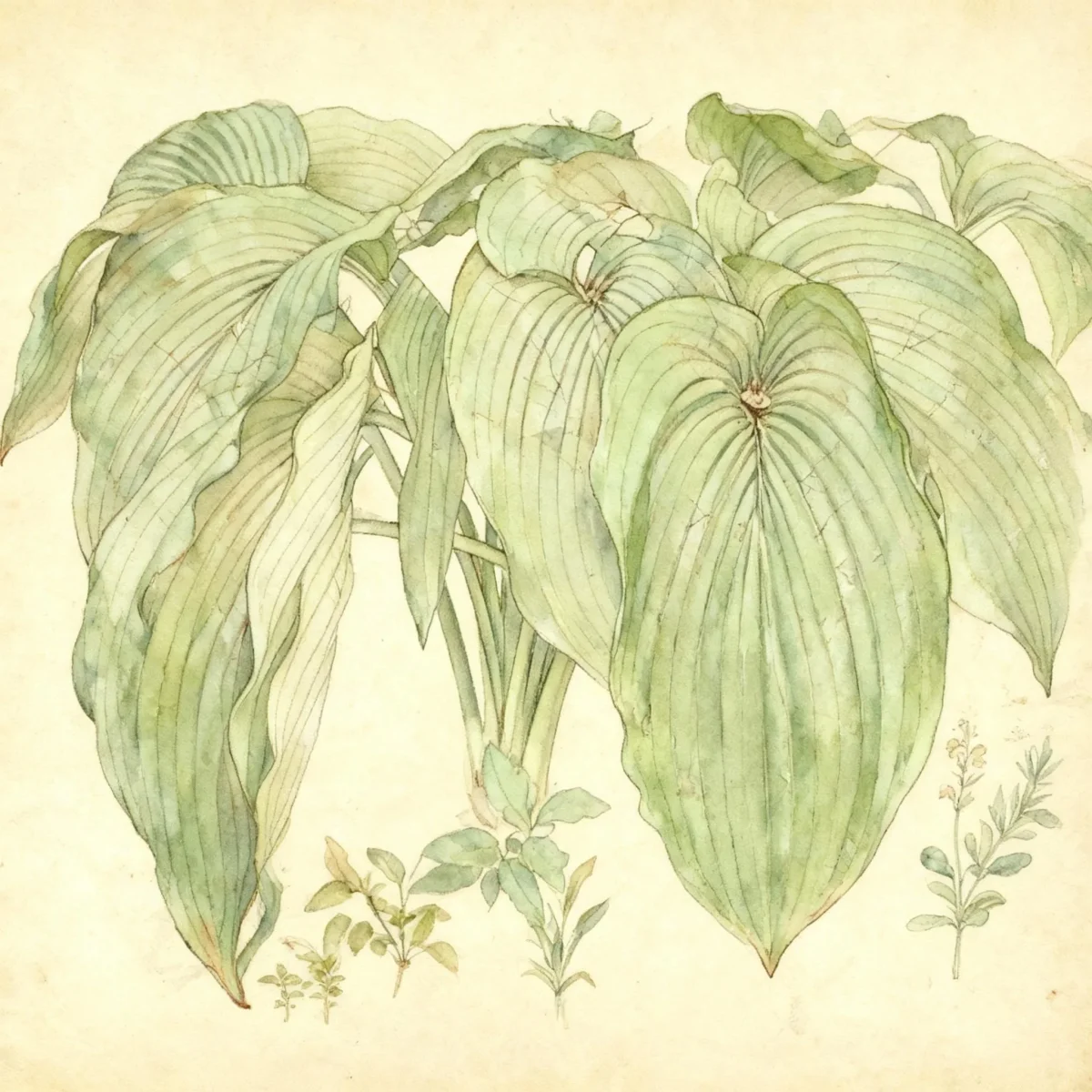
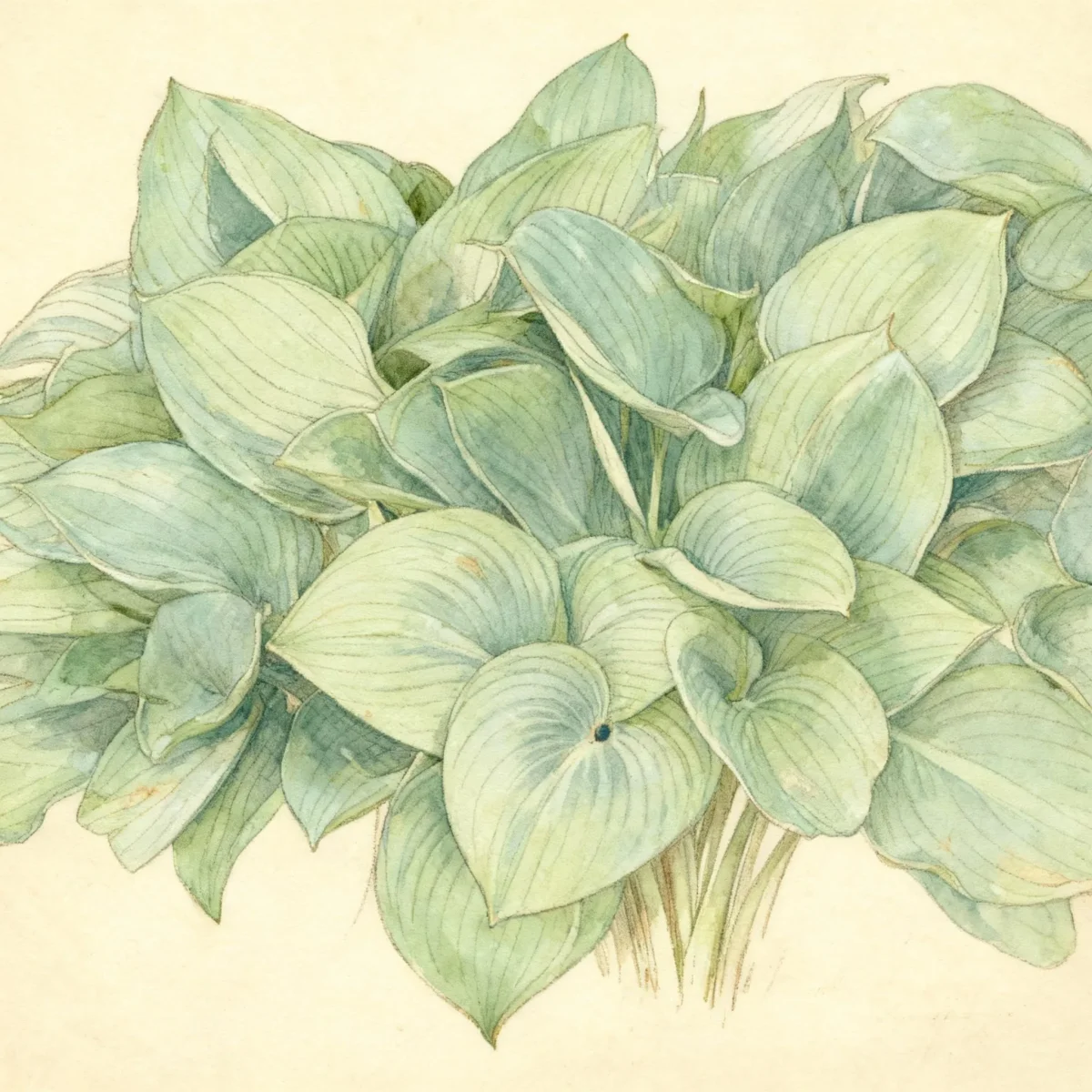
Hosta (Hosta 'Temple Bells')
Hosta 'Temple Bells' is a dependable perennial for shade gardens, featuring dark green foliage and showy purple flowers in mid-summer.
Scroll down to discover growing tips, care requirements, companion plants, and more
Complete Plant Information
Overview
Hosta ‘Temple Bells’ is a quintessential choice for gardeners cultivating deep shade areas, prized primarily for its ornamental, mound-forming foliage. This variety contributes excellent texture and contrast, making the perennial a cornerstone of woodland and shade-side plantings. Hosta plants are recognized globally for thriving where sunlight is scarce.
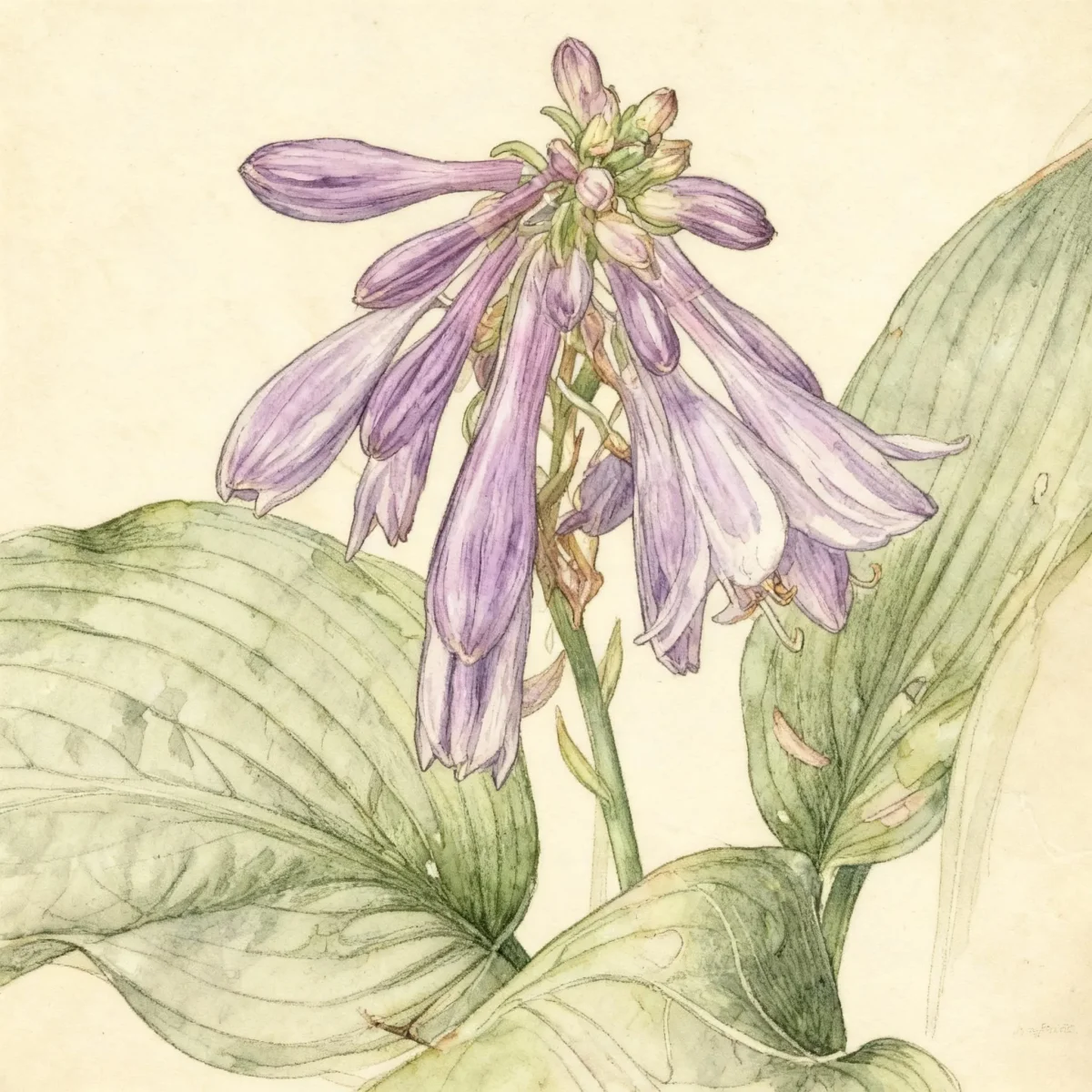
This specific cultivar, Hosta ‘Temple Bells’, provides a dense cluster of flat, lance-shaped, dark green leaves that effectively suppress small weeds beneath its canopy. Throughout the summer, tall scapes emerge bearing sprays of purple, bell-shaped flowers, enhancing its appeal beyond just foliage.
As a low-maintenance herbaceous perennial, Hosta ‘Temple Bells’ establishes easily and requires minimal intervention once sited correctly. Its dependability in challenging shady spots ensures reliable, season-long performance, cementing the value of the Hosta genus in landscape design.
Fast Facts
- Plant Family: Asparagaceae
- Plant Type: Herbaceous perennial
- Hardiness Zones: USDA Zones 3-8
- Size at Maturity:
- Height: 0.5-0.75 ft
- Spread: 1-1.5 ft
- Bloom Time: July to August
- Bloom Description: Purple
- Sun Exposure: Part shade to full shade
- Water Needs: Medium
- Maintenance Level: Low
How to Grow
Planting Hosta ‘Temple Bells’ is best done in spring or autumn. Choose a location that receives even moisture and rich organic soil that drains well. While they tolerate heavy shade, the best color and quality are achieved with some protection from intense afternoon sun; morning sun or dappled light locations are ideal.
Care centers primarily around consistent moisture, especially when establishing or during dry spells. Water should be applied directly to the soil beneath the leaves to avoid spotting the foliage. Hosta maintenance is generally low; established plants show some tolerance for dry shade, but prolonged dryness stunts growth.
Divide plants as needed, typically in early spring before new leaves unfurl, or in autumn. Always situate your Hosta away from strong winds, which can physically damage the leaves. Because Hosta are low-maintenance, dedicated fertilizing is rarely necessary if the base soil is rich.
Landscape Uses
Hostas are a mainstay of shade gardens. Notwithstanding the often showy flowers produced, hostas are primarily grown in shady areas for the ornamental excellence of their foliage. Hosta ‘Temple Bells’ works beautifully massed together to create a solid carpet of deep green texture.
These plants are extremely versatile, serving as excellent material for shady borders or softening the woodland edge. Massing Hosta creates a powerful structural element, providing good background texture against lighter or taller shade-loving specimens like ferns or astilbes.
Use Hosta ‘Temple Bells’ effectively along pathways or beneath the canopy of mature trees. Their dense nature means they are very effective in grouping, where their uniform size (1 to 1.5 feet spread) allows for predictable massing displays.
Standout Features
Flower Qualities
- Showy
- Good Cut
Noteworthy Characteristics
Hosta is a genus of about 70 species of shade-loving, rhizomatous, clump-forming, herbaceous perennials which are native to open woodlands, woodland margins and glades in Japan, Korea, China and eastern Russia. Hostas are primarily grown for their ornamental foliage. ‘Temple Bells’ features a mound of flat, lance-shaped, dark green leaves with racemes of purple flowers on 30” scapes. This dependable Hosta variety provides excellent texture and contrast to the landscape.
Tolerances
- Heavy Shade
- Black Walnut
Potential Problems
The primary adversaries of Hosta ‘Temple Bells’ are slugs and snails, which enthusiastically chew jagged holes in the foliage, potentially causing significant cosmetic damage quickly. Control these pests proactively using bait, beer traps, or manual removal.
Watch carefully for foliar nematodes, which cause unattractive interveinal browning on the leaves. Less frequent issues include leaf spots and crown rot, which are often linked to poor drainage or overly wet conditions. Always isolate and destroy plants showing signs of viral infection, such as Hosta Virus X (HVX).
Deer and rabbits frequently browse Hosta foliage, sometimes voraciously. If wildlife pressure is high, physical barriers or strong deterrent sprays may be necessary to protect your Hosta planting.
Frequently Asked Questions
What hardiness zones is Hosta ‘Temple Bells’ suitable for?
Hosta ‘Temple Bells’ is well-suited for USDA Hardiness Zones 3 through 8.
How large does Hosta ‘Temple Bells’ grow?
This Hosta variety typically reaches a height between 0.5 and 0.75 feet tall, spreading to a width of 1 to 1.5 feet at maturity.
What sun exposure does Hosta ‘Temple Bells’ need?
This Hosta variety prefers part shade to full shade conditions for optimal health and leaf quality.
When does Hosta ‘Temple Bells’ bloom?
Hosta ‘Temple Bells’ produces its purple, bell-shaped flowers throughout the summer, typically from July to August.
Conclusion
Hosta ‘Temple Bells’ offers unmatched reliability and aesthetic value in dimly lit garden spaces, primarily through its attractive dark green foliage and resilient nature. As a truly low-maintenance Hosta, it requires minimal input once established. Ensure you check your local hardiness zone and plant early in the season for the best establishment results.
Companion Planting for Shade Gardens
Because Hosta ‘Temple Bells’ thrives in moisture and shade, select companions that share these requirements to create a cohesive planting scheme. Consider broad-leafed ferns, such as Japanese Painted Ferns, to complement the Hosta’s uniform texture with delicate fronds.
Lungwort (Pulmonaria) offers contrasting colors, often featuring silver markings or blue flowers that peak earlier in the season before the Hosta fully develops its summer form. For vertical interest, Astilbe works exceptionally well, providing feathery plumes that rise above the mounding Hosta foliage.
When planting companions, remember the space requirements of Hosta ‘Temple Bells’; avoid overcrowding to ensure adequate air circulation, which helps mitigate potential fungal issues, and allow enough room for the Hosta to reach its full 1.5-foot spread.
Seasonal Care Calendar
Spring is the critical time for Hosta care; divide any overcrowded clumps now before the leaves unfurl, which makes the job much easier. Apply a balanced, slow-release fertilizer only if your soil is notably poor, focusing application beneath the foliage.
During the summer growing season, the focus remains on consistent watering, especially if rainfall is sparse, ensuring the soil around Hosta ‘Temple Bells’ never completely dries out. Deadhead the spent purple flower scapes only if the foliage display is more important than allowing seeds to mature.
As autumn approaches, allow the foliage to naturally die back rather than cutting it down immediately. Wait until the leaves have completely withered or turned brown before clearing them away to allow the plant to fully store energy for winter dormancy.