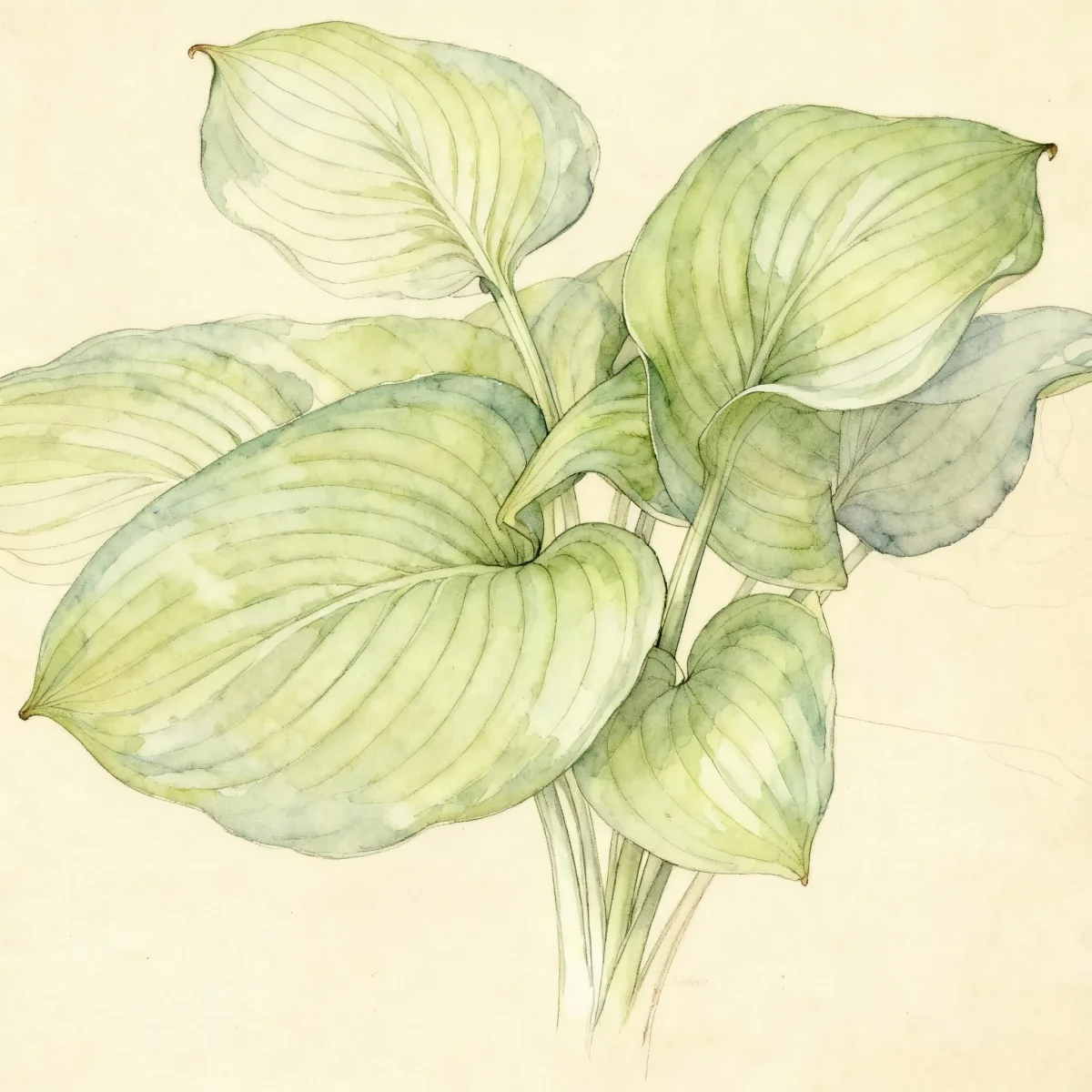
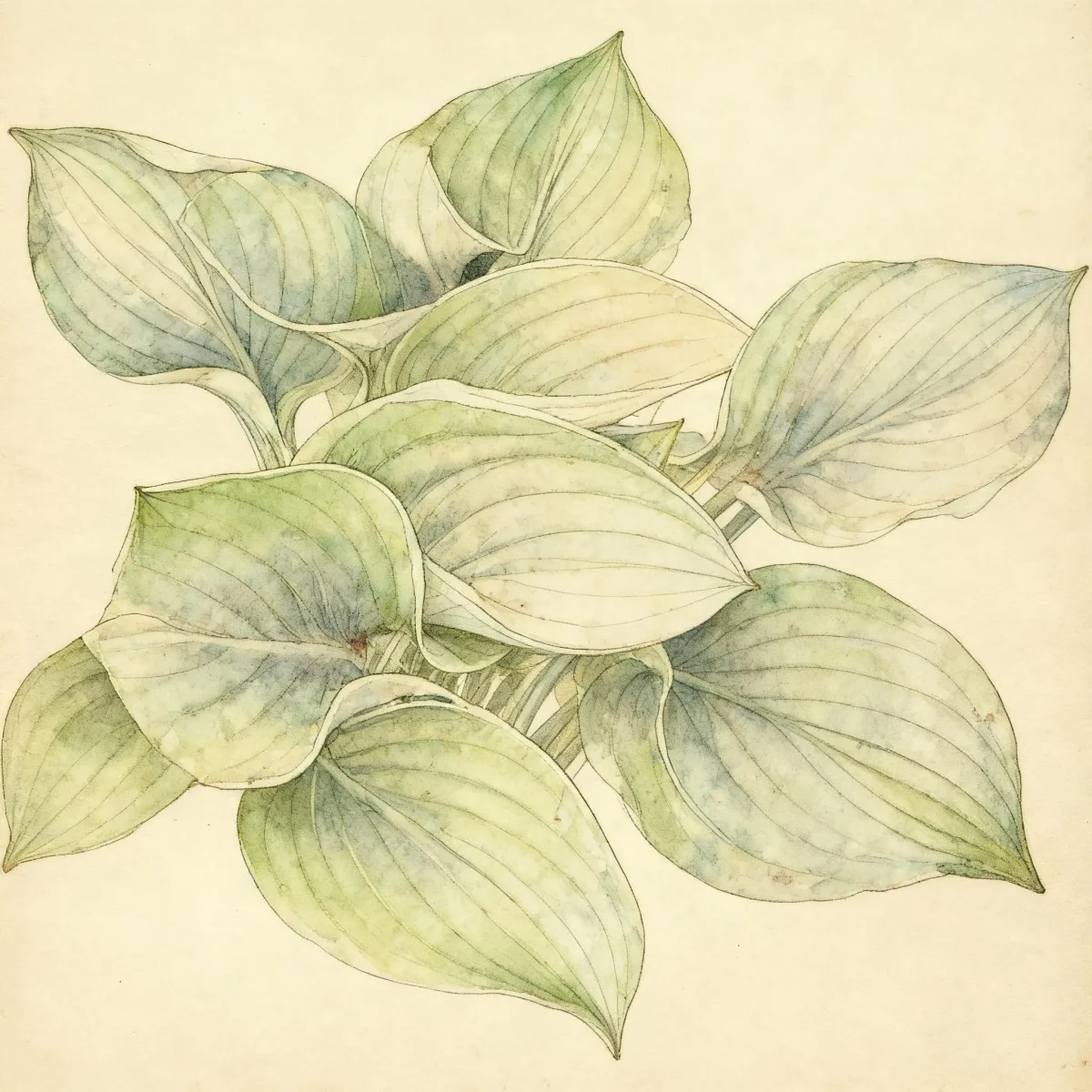
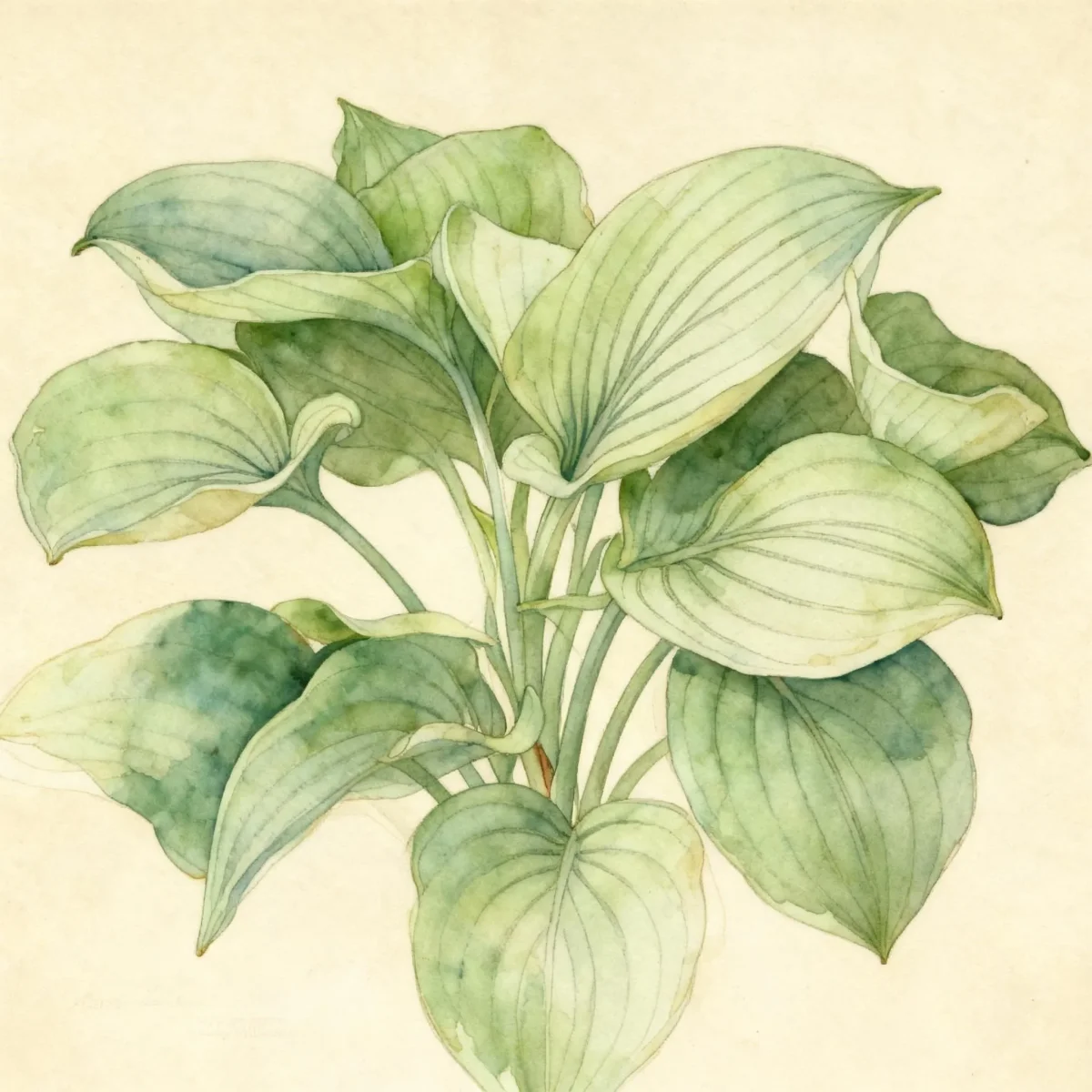
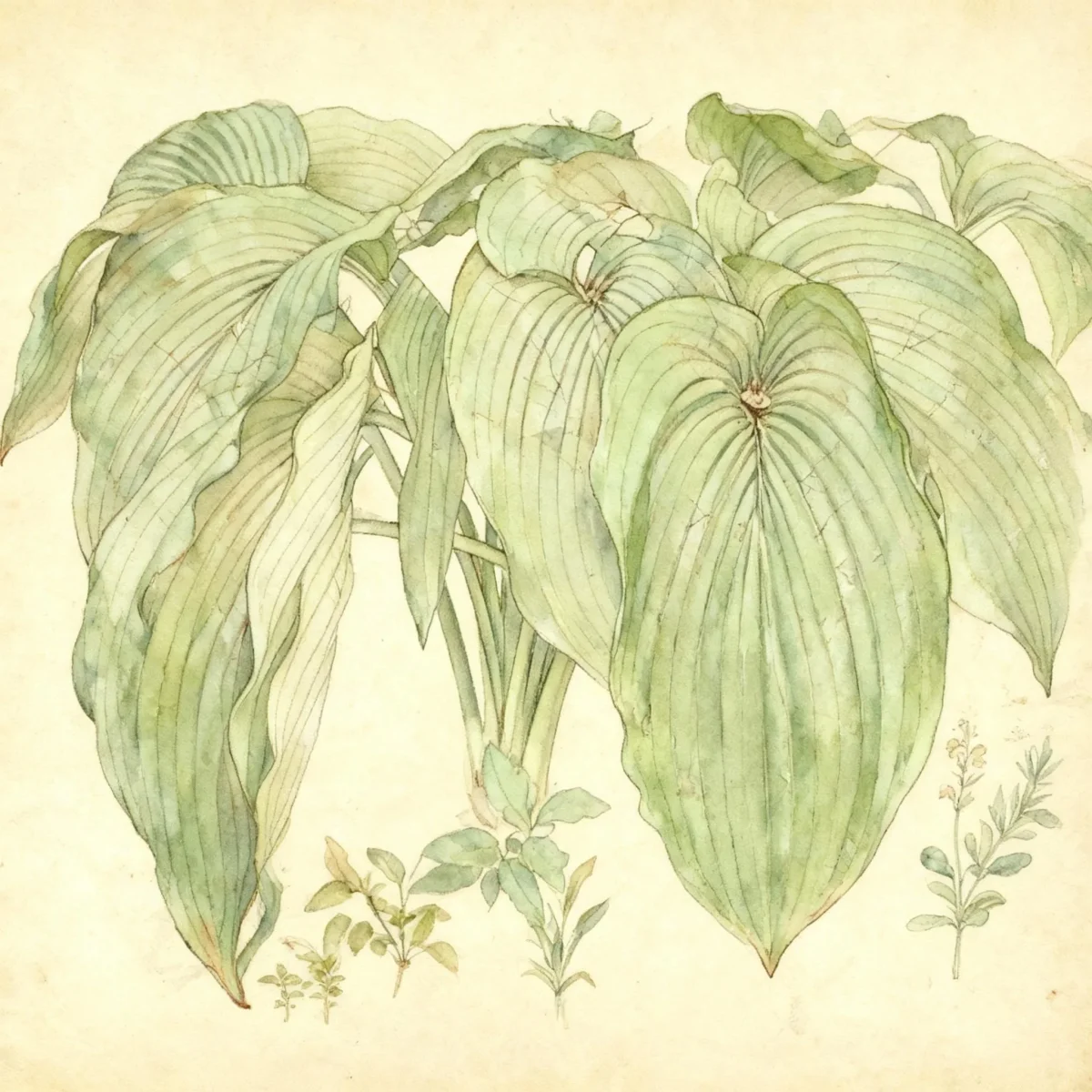
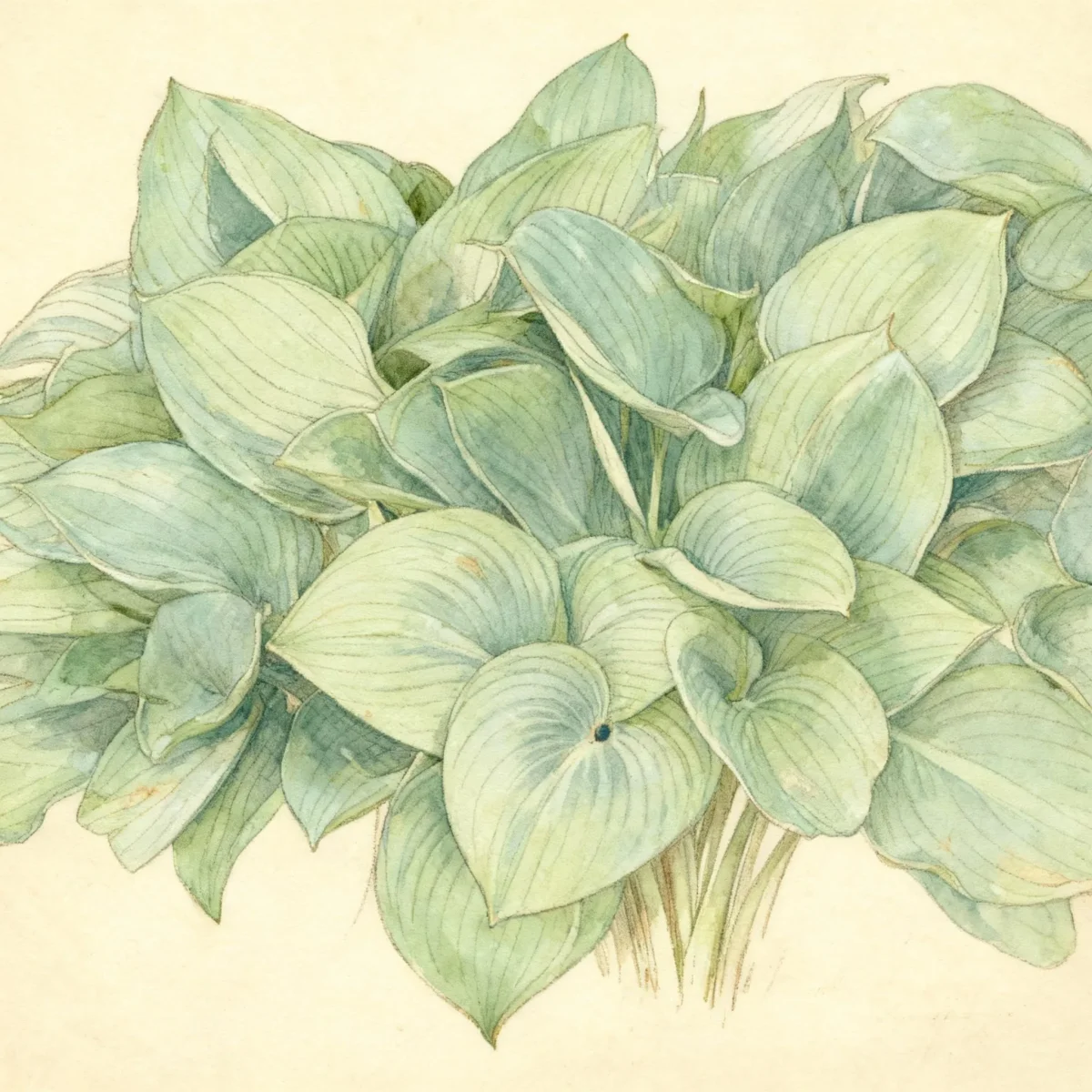
Hosta (Hosta 'Wide Brim')
Hosta 'Wide Brim' offers striking variegated foliage, perfect for adding texture to shade gardens. Low maintenance and shade tolerant.
Scroll down to discover growing tips, care requirements, companion plants, and more
Complete Plant Information
Overview
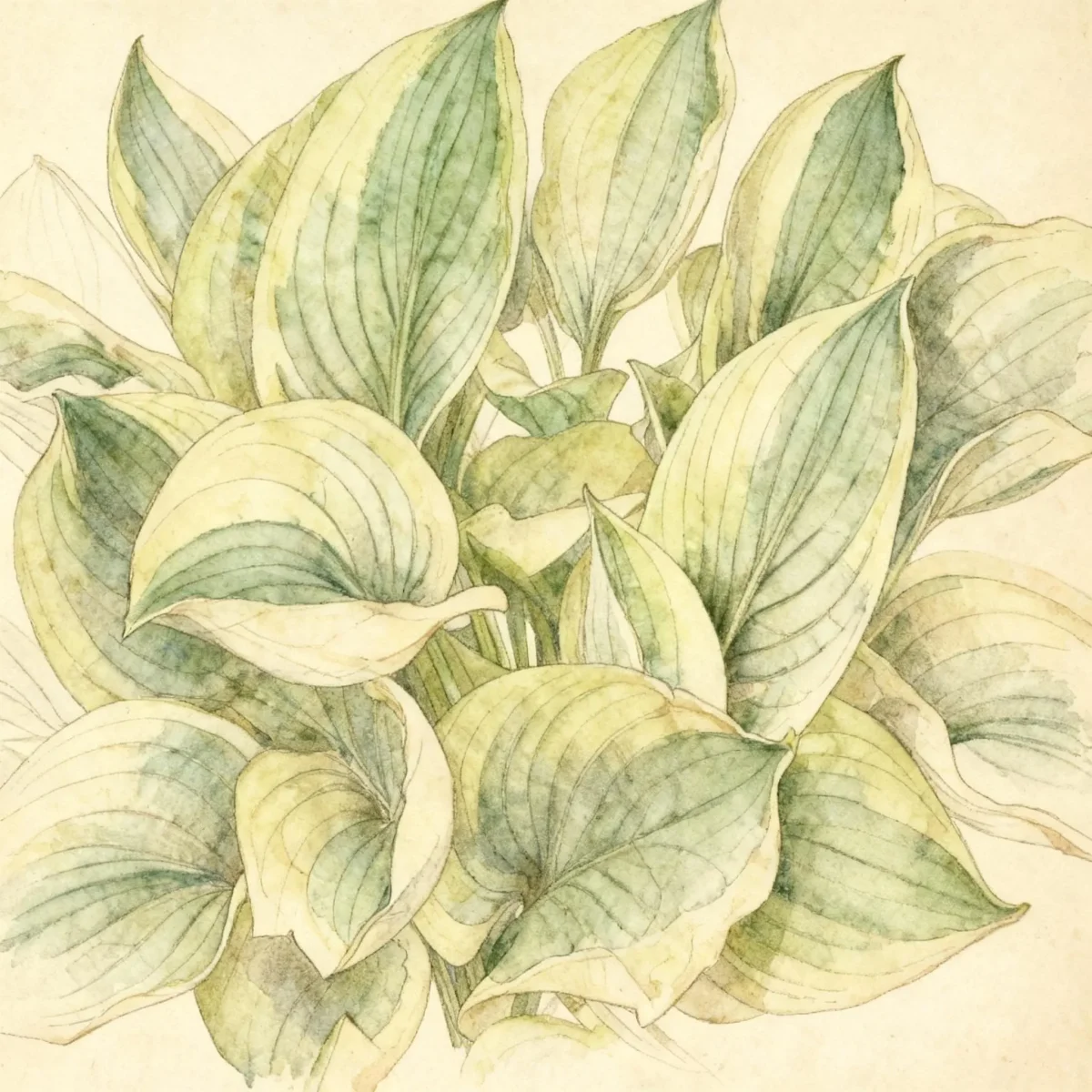
Hosta ‘Wide Brim’ is a highly valued perennial, primarily celebrated for its robust, ornamental foliage that brightens deep shade locations. This cultivar features broad, dark green leaves accented by irregular, creamy white to pale yellow margins, creating excellent visual contrast in the garden. As a typical Hosta, it forms a dense, rounded mound, providing structure throughout the growing season.
This herbaceous perennial thrives best when given consistent moisture and protection from intense afternoon sun, making it an essential component of woodland or shady borders. While primarily grown for its leaves, Hosta ‘Wide Brim’ also sends up spikes of pale lavender, funnel-shaped flowers in mid to late summer.
Gardeners appreciate Hosta ‘Wide Brim’ for its low maintenance requirements once established, coupled with its reliable performance in less-than-ideal light conditions. It excels at filling empty spaces under trees or along shaded walkways where few other plants establish successfully.
Fast Facts
- Plant Family: Asparagaceae
- Plant Type: Herbaceous perennial
- Hardiness Zones: USDA Zones 3-8
- Size at Maturity:
- Height: 1-1.5 ft
- Spread: 2-3 ft
- Bloom Time: July to August
- Bloom Description: Pale lavender
- Sun Exposure: Part shade to full shade
- Water Needs: Medium
- Maintenance Level: Low
How to Grow
The best time to plant Hosta ‘Wide Brim’ is in spring or autumn, ensuring the fibrous roots establish before the extremes of summer heat or winter cold. These plants require evenly moist, organically rich, well-drained soils for optimal growth. While they tolerate heavy shade, they achieve their best quality and color in part shade, such as areas receiving gentle morning sun or dappled light throughout the day.
Consistent moisture is key to maintaining the impressive size and quality of the foliage on Hosta ‘Wide Brim’. Water should be applied directly to the soil beneath the leaves, avoiding overhead watering which can encourage fungal issues. Although established plants show some tolerance for dry shade, do not let the soil dry out completely.
Dividing your Hosta clump is straightforward and usually best performed in early spring before the new leaves fully unfurl, or else in autumn. Always ensure planting locations offer some protection from harsh winds, which can physically tatter the large leaves. Generally, Hostas are considered very low-maintenance additions to the landscape.
Landscape Uses
Hostas, and specifically cultivars like Hosta ‘Wide Brim’, are the definitive backbone of any successful shade garden. Their value lies squarely in their ornamental foliage, which provides year-round structure where flowers might falter due to lack of sun. They are highly effective when grouped or massed together to create sweeping textural carpets under high canopy trees.
Consider utilizing Hosta ‘Wide Brim’ in shady borders where its variegated edges can catch available light, drawing the eye through the landscape. Due to their sturdy, mounding habit, they work wonderfully as informal edging plants or as a solid background component against taller shrubs or woodland plantings. They pair beautifully with ferns, bleeding hearts, or astilbes that share similar moisture and light requirements.
Standout Features
Noteworthy Characteristics
Hosta is a genus primarily grown for its ornamental foliage—dense, basal leaves rising from a rhizomatous crown form a rounded mound. Specific to ‘Wide Brim,’ this medium Hosta displays rugose, wide-oval, dark green leaves up to 8 inches long, heavily edged with irregular creamy white margins. Funnel-shaped, pale lavender flowers bloom atop scapes rising to 24 inches tall in mid to late summer.
Tolerances
- Heavy Shade
- Black Walnut
Potential Problems
Slugs and snails represent the most significant threat to the foliage of Hosta ‘Wide Brim’, leaving behind characteristic jagged holes that quickly mar the aesthetic appeal. Monitor foliage regularly, especially after rain, and apply molluscicides (pellets, diatomaceous earth, or beer traps) proactively, particularly early in the season before the hosta fills out.
Fungal leaf spots and, less frequently, crown rot can develop if the plant experiences poor air circulation or excessively soggy conditions. In addition to pests and diseases, be mindful that deer and rabbits often find the succulent leaves quite palatable, requiring protective measures in vulnerable areas. If you notice severe mottling, inspect for viruses like HVX, requiring immediate removal of the infected Hosta.
Frequently Asked Questions
What hardiness zones is Hosta suitable for?
Hosta ‘Wide Brim’ is reliably hardy in USDA Zones 3 through 8.
How large does Hosta ‘Wide Brim’ grow?
This cultivar typically reaches a height between 1 and 1.5 feet tall, spreading nicely to a width of 2 to 3 feet.
What sun exposure does Hosta ‘Wide Brim’ need?
This Hosta performs best in part shade to full shade; avoid harsh, prolonged direct sun exposure.
When does Hosta ‘Wide Brim’ bloom?
You can expect the pale lavender flowers of Hosta ‘Wide Brim’ to appear from July through August.
Conclusion
Hosta ‘Wide Brim’ remains a staple for transforming challenging shady spots into lush, vibrant areas using its highly attractive variegated foliage. This low-maintenance Hosta ensures textural beauty and reliable form year after year. Before planting, confirm your site’s light levels and ensure consistent moisture to help your new Hosta thrive.
Companion Planting
Selecting compatible neighbors is crucial when designing a shady border featuring Hosta ‘Wide Brim’. To complement the mounding, horizontal habit of the Hosta leaves, look for plants that offer fine texture or an upright vertical accent. Ferns, such as Japanese Painted Ferns or Autumn Ferns, provide excellent contrast in texture while sharing the love for humus-rich, moist soil.
Consider combining Hosta ‘Wide Brim’ with shade-loving flowering perennials like Astilbe or Dicentra spectabilis (Bleeding Heart). These companions offer seasonal flower color against the backdrop of consistent green and cream variegation provided by the Hosta. Grouping them ensures that the entire area benefits from the medium water needs and organic soil preference common to this shade community.
Seasonal Care Calendar
Spring preparation involves a gentle cleanup of any residual dead or damaged foliage from the previous season once new growth begins to emerge. This is the ideal time for division if you wish to propagate your Hosta or manage overcrowding. During the summer growing season, focus entirely on watering; ensure the soil remains evenly moist, especially during dry spells, aiming water directly at the soil surface.
In late summer or early autumn, you can allow the foliage to naturally decline, which signals the Hosta is preparing for dormancy. In colder regions (Zones 3-5), ensure a layer of mulch is applied after the ground freezes to help insulate the crown of the Hosta from extreme freeze-thaw cycles throughout winter. Low maintenance truly means performing essential, proactive care early rather than intensive intervention later.