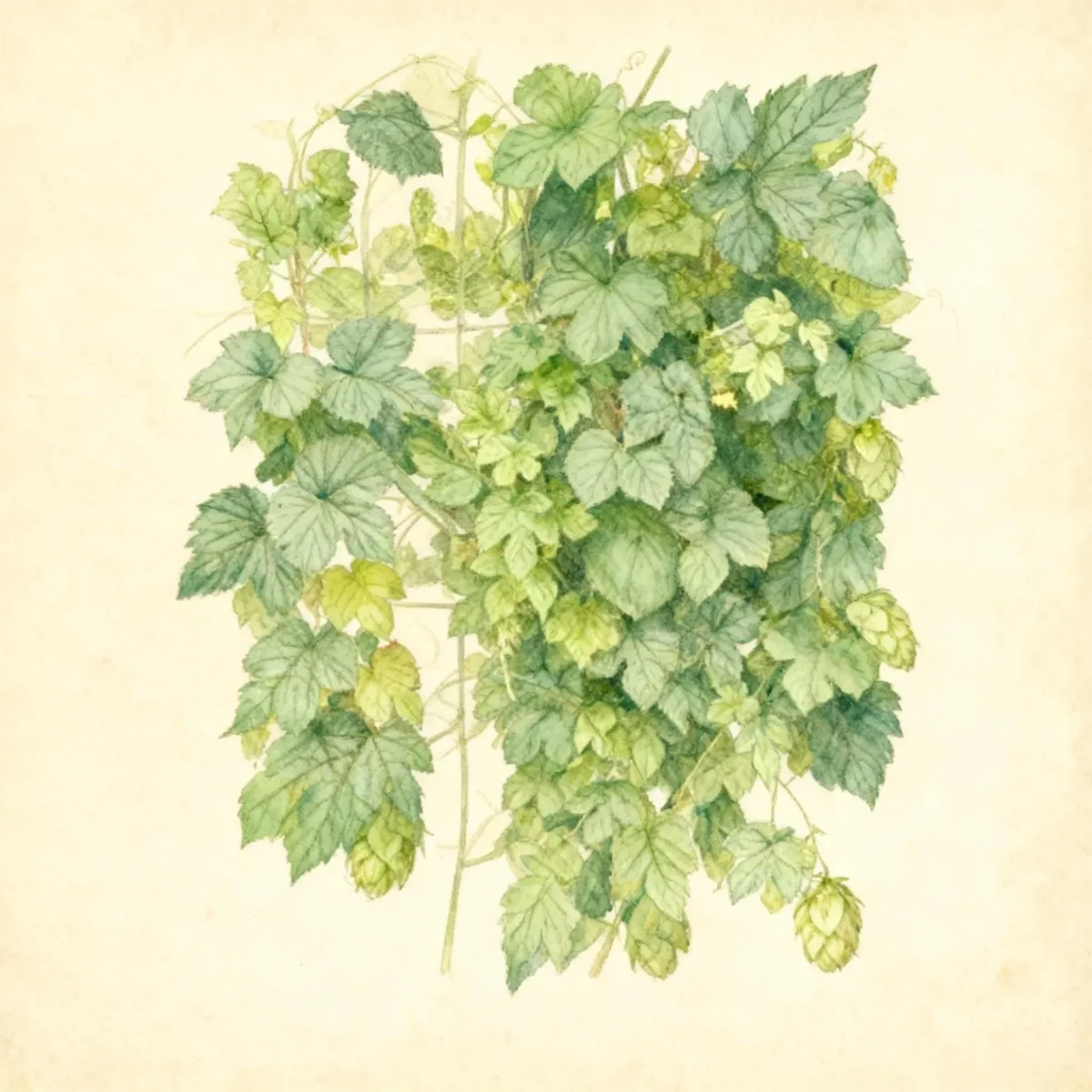
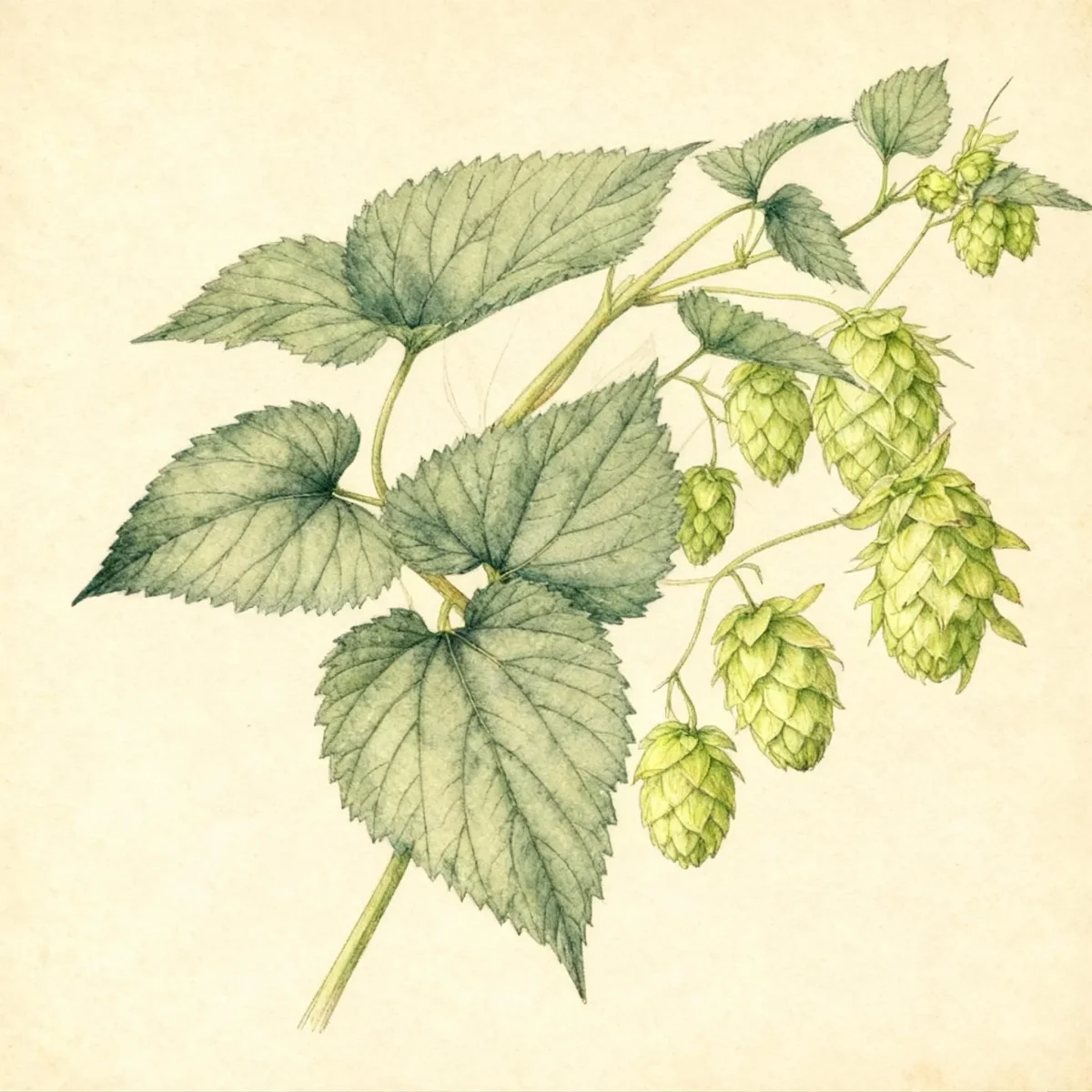
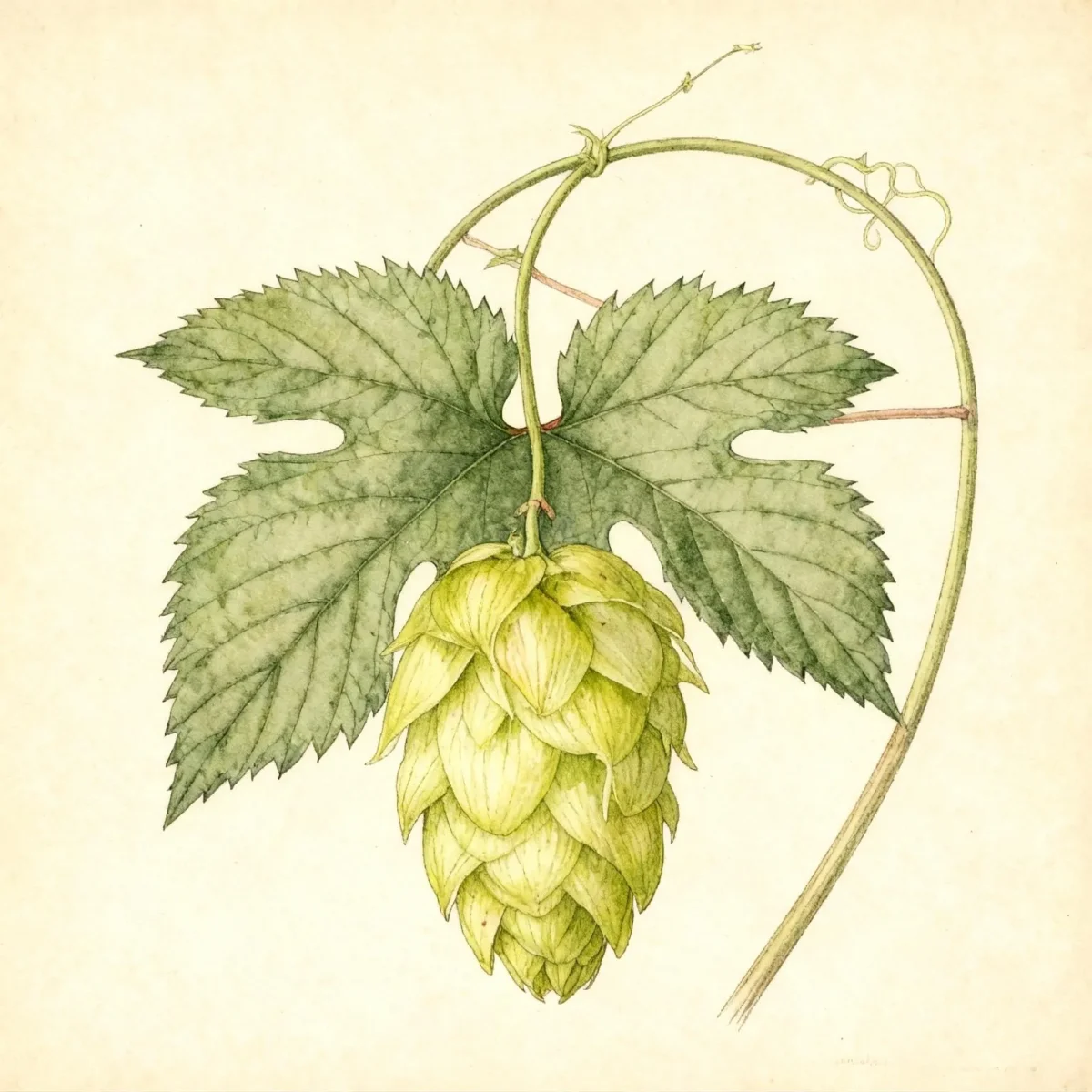
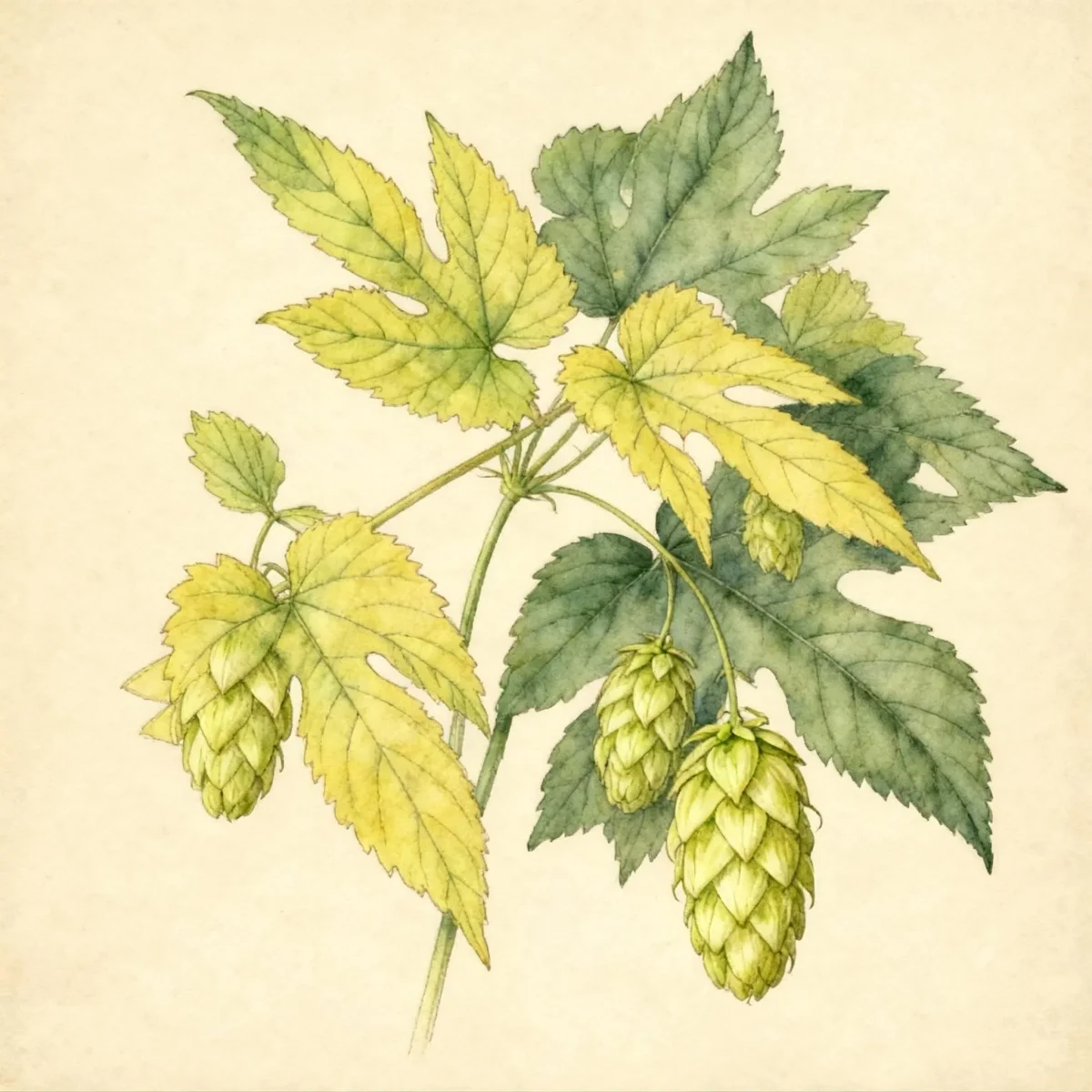
Common hop (Humulus lupulus 'Aureus')
Humulus lupulus 'Aureus', the Golden Common hop, is a vigorous, chartreuse-leaved vine perfect for screening on arbors and pergolas.
Scroll down to discover growing tips, care requirements, companion plants, and more
Complete Plant Information
Overview
Humulus lupulus ‘Aureus’, often known as Golden Common hop, offers dramatic, rapid vertical growth highlighted by its distinctive bright chartreuse foliage throughout the summer. This vigorous climber is exceptionally useful for quickly screening unsightly structures or covering substantial supports like pergolas and tall trellises. As a rhizomatous perennial, the common hop dies back completely in winter but reliably returns from its roots each spring with renewed energy.
The appeal of Humulus lupulus ‘Aureus’ lies in both its aesthetic value—the vibrant yellow-green leaves contrast beautifully against dark green backgrounds—and its functional uses, stemming from the traditional hop plant. While grown for ornamental impact here, remember that this is the same genus historically prized for brewing.
Despite its rapid growth, the common hop is surprisingly adaptable and low maintenance once established, thriving in average soils. Gardeners must recognize that this is a dioecious plant, requiring male plants nearby if seed production is expected on the female cones, though ornamental value does not depend on fruiting.
Fast Facts
- Plant Family: Cannabaceae
- Plant Type: Vine
- Hardiness Zones: USDA Zones 3-8
- Size at Maturity:
- Height: 15-25 ft
- Spread: 3-6 ft
- Bloom Time: September to October
- Bloom Description: Green
- Sun Exposure: Full sun to part shade
- Water Needs: Medium
- Maintenance Level: Low
How to Grow
Planting the common hop is best done in spring after the danger of hard frost has passed, allowing the perennial roots to establish themselves quickly. Hops require well-drained soils, favoring locations offering medium moisture and rich organic content for optimal growth. Full sun is ideal for achieving the brightest chartreuse leaf color in Humulus lupulus ‘Aureus’, though it tolerates partial shade.
Watering should be consistent, especially during establishment or dry summer periods; while the variety exhibits drought tolerance once roots penetrate deeply, it thrives best with medium moisture. Maintenance is generally low, as the plant naturally dies back annually. After a hard frost in autumn signals dormancy, stems of Humulus lupulus ‘Aureus’ can be safely pruned to the ground.
Propagate new plants by taking cuttings from runners emerging near the crown in the spring. A crucial growth note is the absolute necessity of a robust support structure; these vines twine rapidly and will seek out any available surface, making them ideal arbors or porch screen material.
Landscape Uses
Humulus lupulus ‘Aureus’ excels as a dramatic, fast-growing vertical element in the landscape. Its vigorous nature makes it an excellent choice for creating an immediate, dense green screen to obscure utilitarian areas or create secluded outdoor rooms when trained over pergolas or arbors. The bright, golden foliage distinguishes it instantly from typical green vines.
Incorporating this common hop into an herb garden offers a visually interesting, towering element alongside traditional culinary or medicinal herbs. For structural impact, train the vine across high trellises or wires spanning between posts, capitalizing on its ability to reach 25 feet quickly.
Designers should utilize the contrast between the chartreuse leaves of Humulus lupulus ‘Aureus’ and darker-leaved neighboring shrubs or perennials to maximize visual pop during the growing season.
Standout Features
Flower Qualities
- Showy
- Fragrant
Noteworthy Characteristics
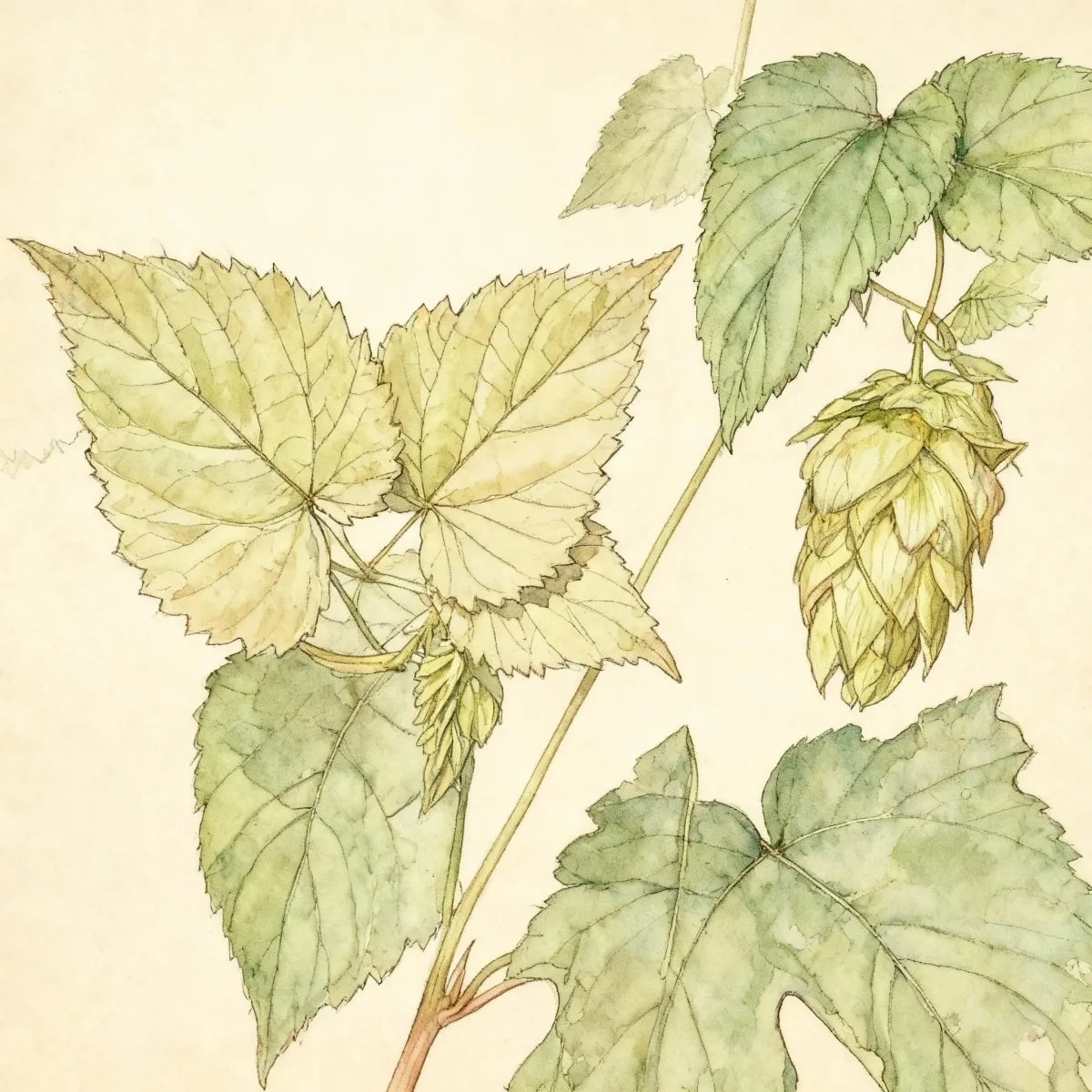
Humulus lupulus, commonly known as common hop, is a dioecious, rhizomatous, twining perennial vine that is grown commercially for harvest of female fruits which are used by breweries to preserve and flavor beer. It is also an easy-to-grow ornamental plant that can be grown on a variety of support structures. The cultivar ‘Aureus’ shines with coarsely serrate, 3-5 lobed leaves which emerge bright chartreuse in spring but may green up slightly as the season advances.
Tolerances
- Drought
Potential Problems
This vine generally experiences no serious insect or disease issues, which contributes to its low maintenance rating. The primary practical consideration is ensuring adequate structural support, so plan for tall trellises or wires before planting. Gardeners handling the stems should be aware that skin contact with the foliage or stems of the common hop may cause dermatitis in sensitive individuals.
Frequently Asked Questions
What hardiness zones is Common hop suitable for?
Humulus lupulus ‘Aureus’ is reliably hardy across USDA Zones 3 through 8.
How large does Common hop grow?
This vigorous vine can reach heights between 15 and 25 feet tall, with a spread of 3 to 6 feet wide.
When does Common hop bloom?
The greenish flowers of Humulus lupulus ‘Aureus’ appear relatively late, typically blooming from September into October.
What sun exposure does Common hop need?
For the best performance and most vibrant chartreuse coloration, this plant prefers a location receiving full sun to part shade.
Conclusion
The chartreuse foliage of Humulus lupulus ‘Aureus’ provides exceptional seasonal color and rapid coverage, making the common hop an indispensable choice for large vertical accents or swift screening needs. Its low cultural demands and robust perennial nature ensure reliable performance year after year. Assess your available support structures and plan to plant early in spring to enjoy this magnificent growth throughout the coming season.
Propagation Tips
Propagating Humulus lupulus ‘Aureus’ is straightforward using simple vegetative cuttings taken from the runners that emerge from the crown in spring. These cuttings root easily, allowing gardeners to create new specimens true to the golden color of the parent plant. This method bypasses the complexities of seed collection and avoids the necessity of growing both male and female plants simultaneously unless cone production is desired.
Successful propagation hinges on timing; ensure the cuttings taken have some undeveloped nodes and are placed in a well-draining propagation mix under consistent moisture schedules. Due to the vine’s aggressive nature, asexual reproduction ensures you maintain the desirable ‘Aureus’ mutation rather than relying on potentially variable seedlings.
Companion Planting
Because this rapid-growing vine requires substantial nutrients and consistent moisture to achieve its massive size, pairing it with plants sharing similar medium water needs is beneficial. Consider growing the common hop near robust, moisture-loving perennials like Baptisia or large ornamental grasses which won’t compete aggressively for light near the base of the support structure.
Avoid placing slow-growing, delicate woodland perennials near the base of the golden common hop. The dense canopy and rapid spread of Humulus lupulus ‘Aureus’ can quickly shade out smaller plants, preventing them from receiving the necessary sunlight to flourish throughout the summer months.