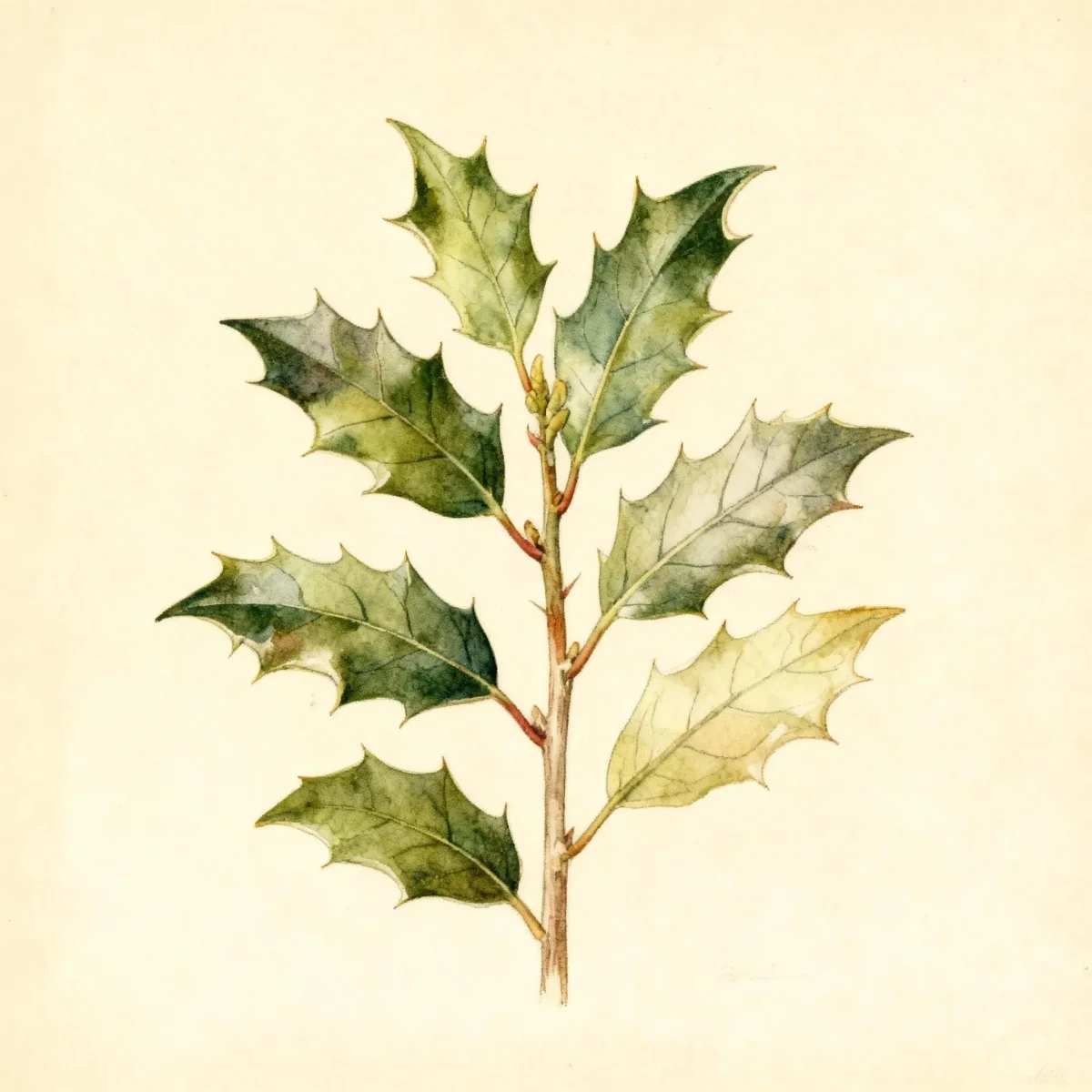
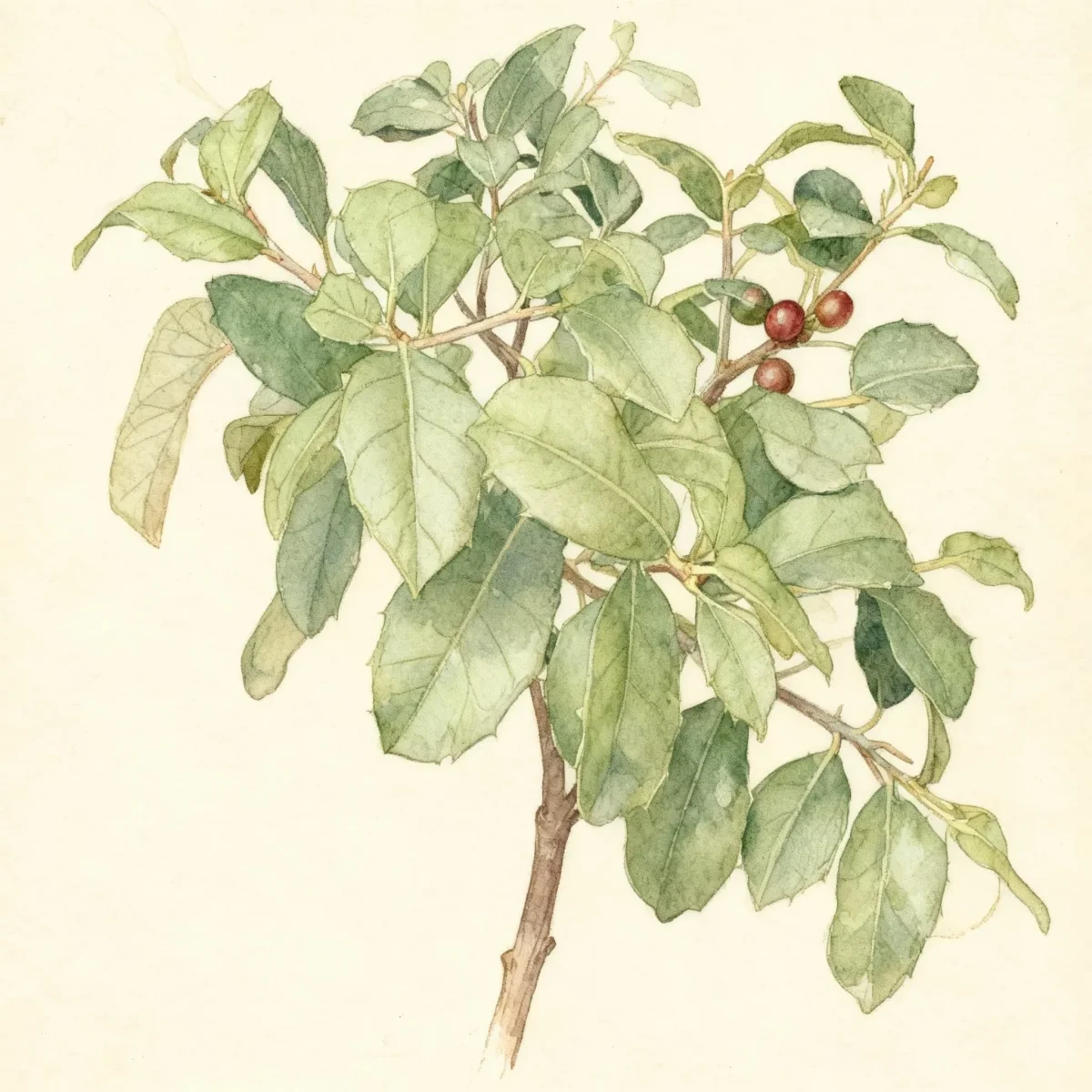
American holly (Ilex opaca 'Chief Paduke')
The Ilex opaca 'Chief Paduke' is a dense, low-maintenance American holly prized for its evergreen foliage and winter berries.
Scroll down to discover growing tips, care requirements, companion plants, and more
Complete Plant Information
Overview
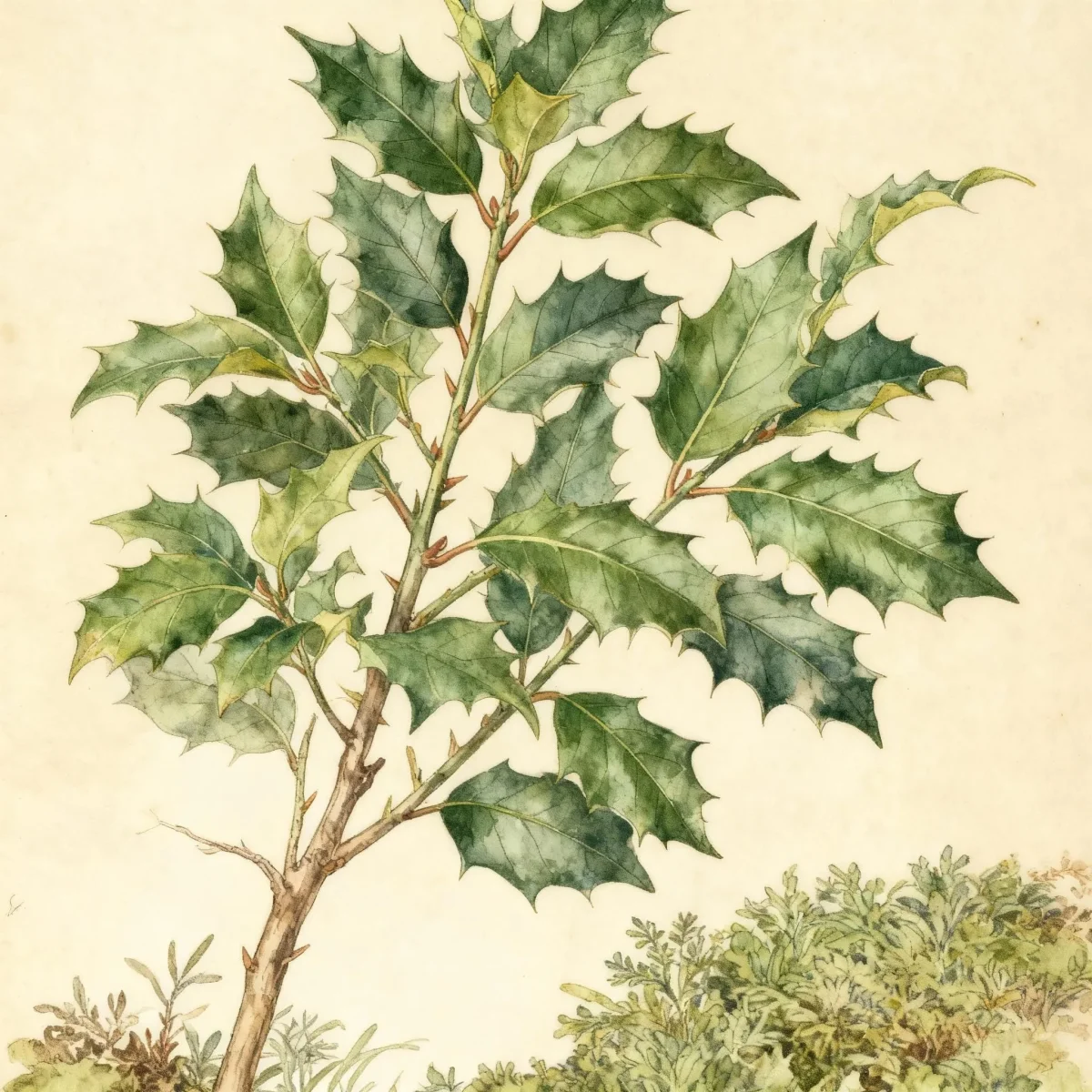
The Ilex opaca ‘Chief Paduke’ is a superior cultivar of the native American holly, valued highly for providing dense, year-round structure and vibrant winter interest in the landscape. As a broadleaf evergreen, it maintains its stature and deep green, spiny leaves even when deciduous trees are bare, making it crucial for winter definition. This particular variety, ‘Chief Paduke’, is known for its upright, pyramidal habit, offering excellent screening capabilities.
Gardeners appreciate the low maintenance required for this American holly once established, combined with the seasonal reward of striking red berries on pollinated female trees. It anchors foundation plantings and acts as a handsome specimen, offering a distinctly native texture that pairs well in woodland or traditional garden settings throughout USDA Zones 5 through 9.
Fast Facts
- Plant Family: Aquifoliaceae
- Plant Type: Broadleaf evergreen
- Hardiness Zones: USDA Zones 5-9
- Size at Maturity:
- Height: 15-30 ft
- Spread: 8-20 ft
- Bloom Time: May
- Bloom Description: Greenish-white
- Sun Exposure: Full sun to part shade
- Water Needs: Medium
- Maintenance Level: Low
How to Grow
Planting the Ilex opaca ‘Chief Paduke’ should ideally occur in spring or early fall when temperatures are moderate. Ensure the location offers full sun to sufficient part shade; remember that too much shade will cause the foliage density of this American holly to diminish over time. The most crucial factor is soil quality: the soil must be consistently moist, acidic, and, most importantly, well-drained. Avoid any spot prone to flooding, as poorly drained soils are quickly fatal to this species.
Watering needs are medium; aim for consistent moisture, especially during the first few years as the root system establishes. Fertilize lightly according to soil tests, keeping in mind that leaves will yellow (chlorosis) if planted in high pH, alkaline soils. For optimal performance, site ‘Chief Paduke’ where it is somewhat protected from harsh, cold winter winds, which can cause leaf scorch.
Landscape Uses
The natural, upright pyramidal form of Ilex opaca ‘Chief Paduke’ makes it an extremely versatile screen or specimen planting. It excels as a foundation plant, softening harsh architectural lines while providing excellent winter presence, a key characteristic of American holly. Cuttings from its berry-laden boughs are highly sought after for holiday decorations.
Use this cultivar as a formal hedge where privacy is needed, or group several together to create a striking border. In woodland garden designs, it contrasts beautifully with deciduous textures, providing deep color year-round. Since it is a female cultivar, ensure a nearby male pollinator is present if you desire the ornamental, bird-attracting red fruits.
Flower Qualities
- Insignificant
Fruit Qualities
- Showy
Noteworthy Characteristics
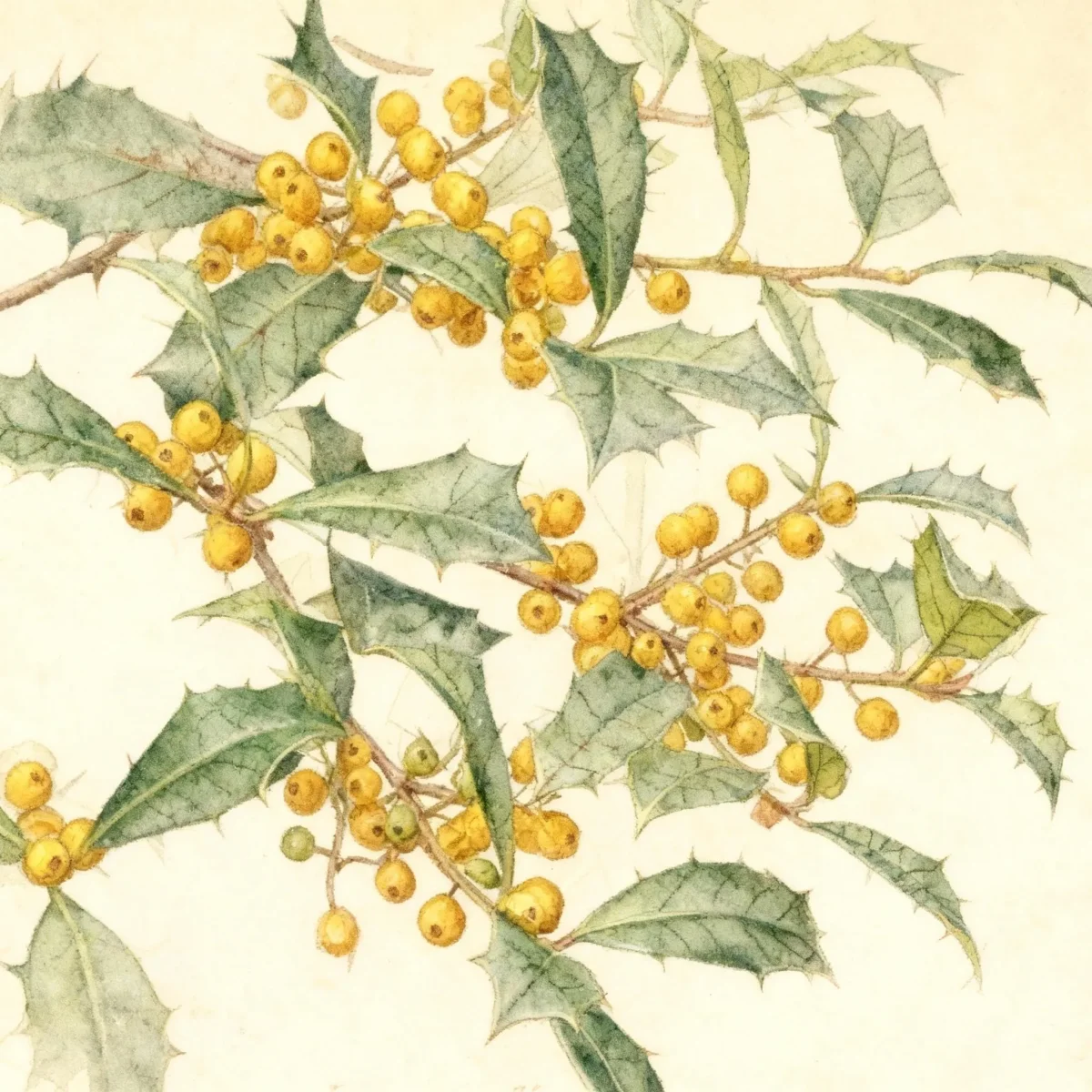
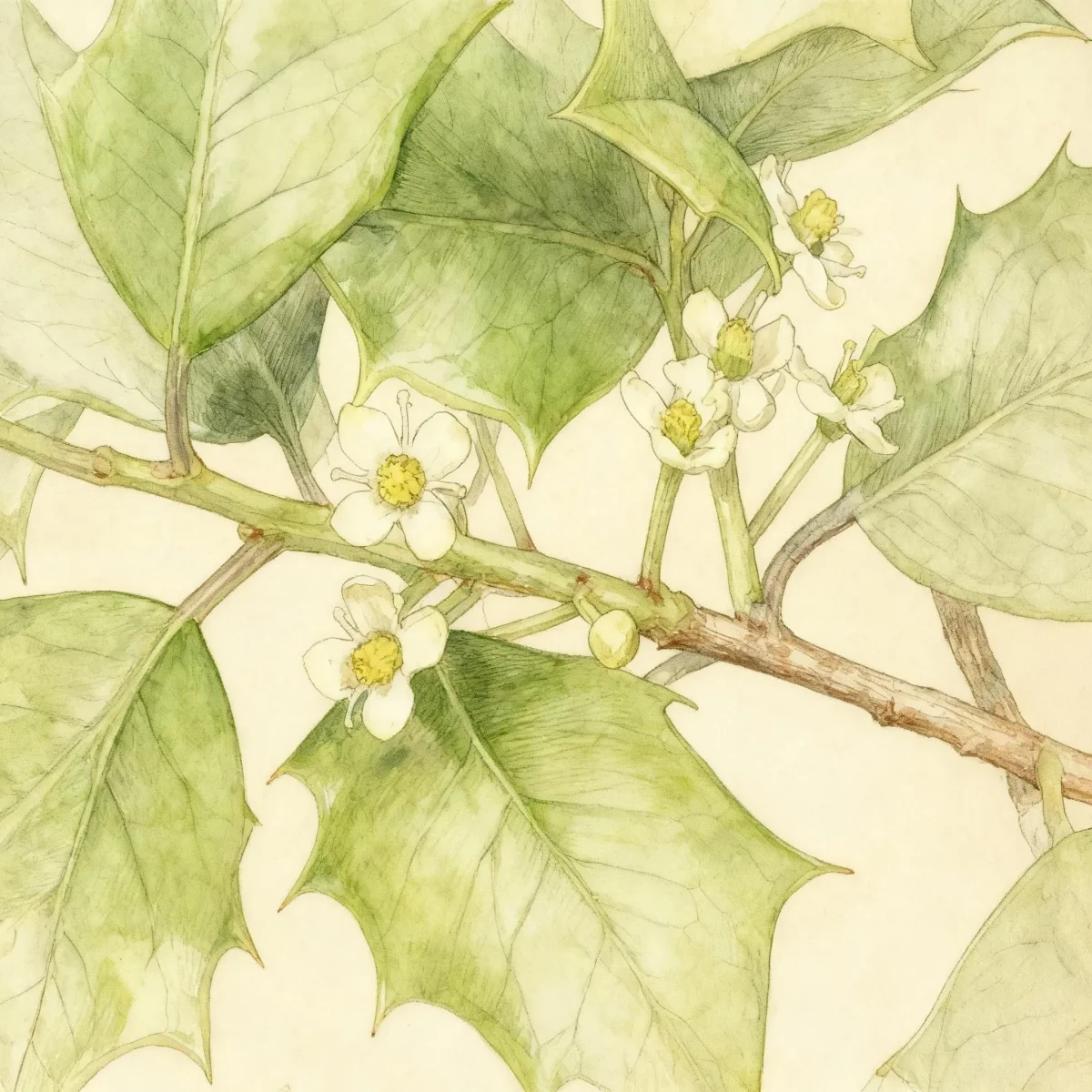
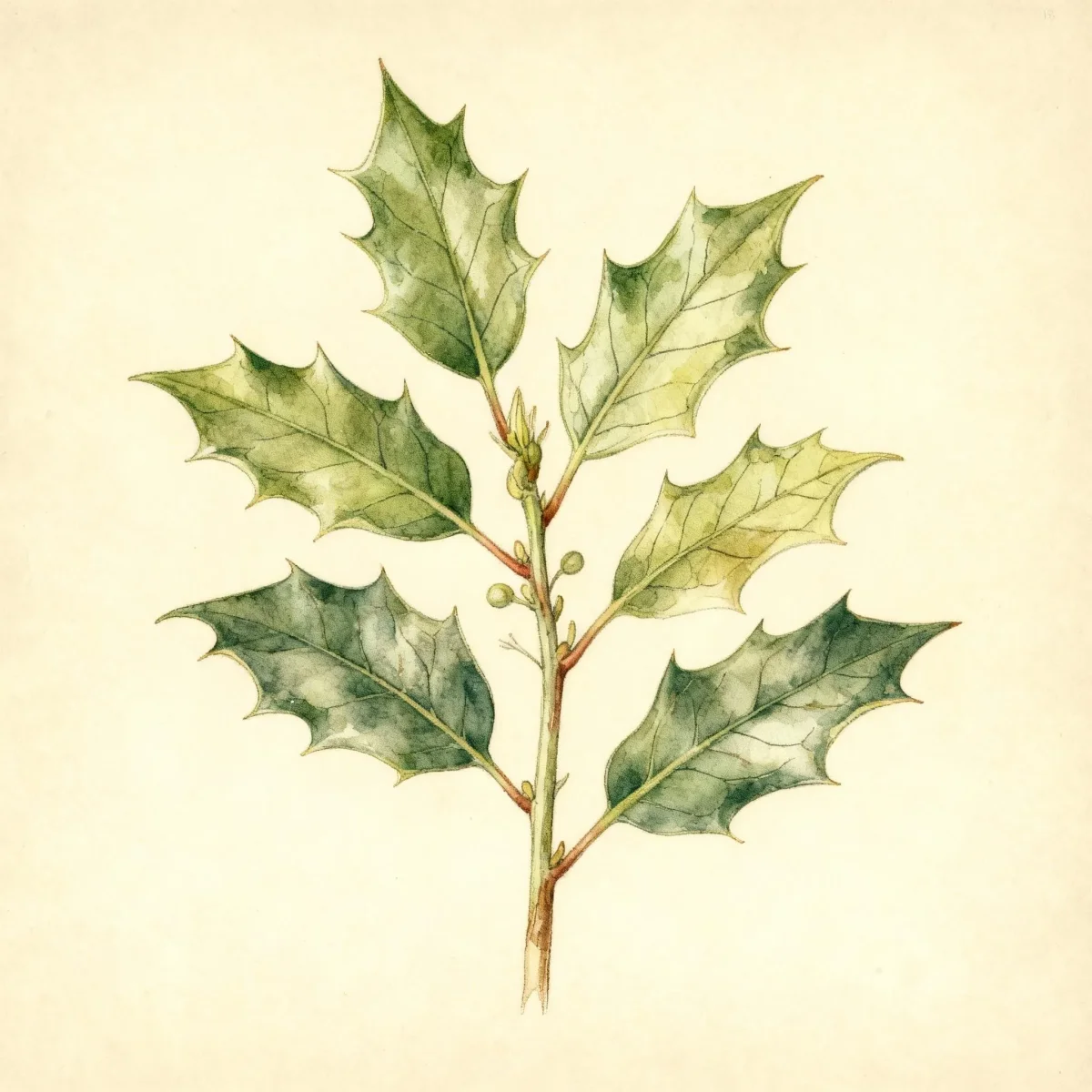
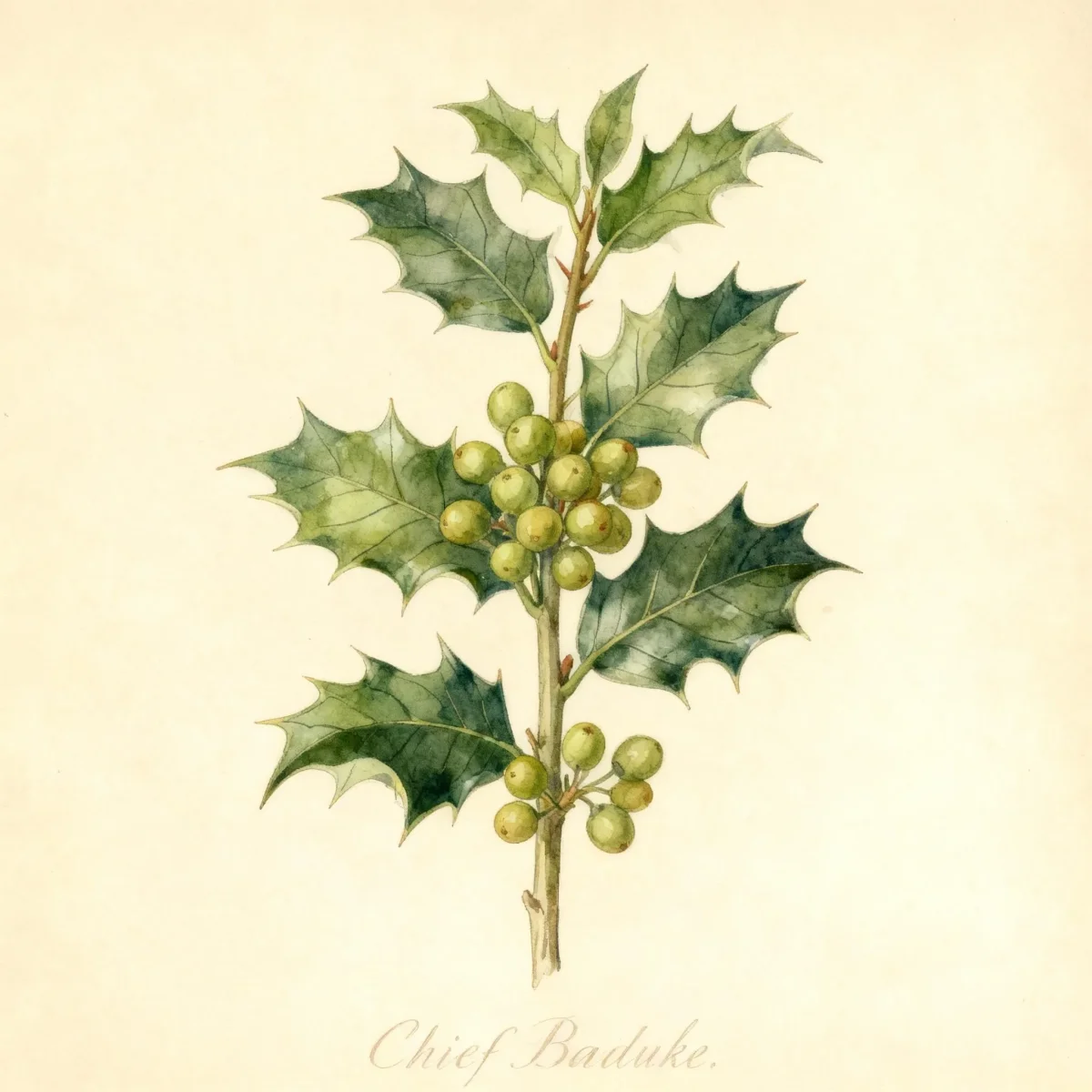
Ilex opaca, commonly called American holly, is an upright, pyramidal, evergreen tree that slowly matures to 15-30’ in cultivation, but may reach 50’ tall in the wild. It is native to the eastern and central U.S., most frequently found in moist woods, forest bottomlands and swamp peripheries plus some coastal dunes (e.G., Cape Cod down the Atlantic Coast) from Massachusetts to West Virginia to Ohio to southeastern Missouri south to Texas and Florida. This species is easily identified because it is the only native U.S. Holly with spiny green leaves and bright red berries. This is the Christmas holly whose berry-laden boughs are typically collected at Christmas time each year for ornamentation (“decking the halls” as it were). Thick, leathery, deep green leaves (2-4” long) have spiny marginal teeth. Species is dioecious (male and female flowers are on separate trees). Greenish-white flowers bloom May-June (male flowers in 3-12 flowered clusters and female flowers solitary or in 2s or 3s). Bright red or orange fruits (drupes to 1/4- 1/2” diameter) ripen in fall on pollinated female trees, and persist on the tree through winter. Birds love the fruit.Genus name comes from the Latin name Quercus ilex for holm oak in reference to the foliage similarities (holm oak and many of the shrubs in the genus Ilex have evergreen leaves).Specific epithet means opaque or dull, in reference to the non-lustrous leaf surfaces of species plants (many of the cultivars have more lustrous foliage).‘Chief Paduke’ is a dense, upright American holly cultivar that typically grows to 7-8’ tall over the first 10 years, but over time may eventually grow to 20-30’ tall. ‘Chief Paduke’ was reportedly discovered growing in Paducah, Kentucky.
Tolerances
- Deer
- Clay Soil
- Air Pollution
Potential Problems
Potential insect problems include holly leaf miner, spider mites, whitefly and scale. These pests can cause cosmetic damage to the evergreen foliage of the Ilex opaca ‘Chief Paduke’. Systemic insecticides or horticultural oils are often necessary for severe infestations, particularly scale.
Disease issues commonly involve leaf spot, leaf rot, tar spot, and powdery mildew, often exacerbated by humidity or poor air circulation. Ensure proper spacing between plants to encourage airflow, which aids in disease prevention for your American holly. Watch closely for signs of leaf drop, scorch from winter winds, or significant yellowing, as these indicate cultural stress, usually related to improper soil pH or moisture levels.
Frequently Asked Questions
What hardiness zones is American holly suitable for?
Ilex opaca ‘Chief Paduke’ is well-suited for USDA Hardiness Zones 5 through 9.
How large does Ilex opaca ‘Chief Paduke’ grow?
This cultivar typically matures to a height of 15 to 30 feet tall with a spread ranging from 8 to 20 feet wide.
What sun exposure does Ilex opaca ‘Chief Paduke’ need?
This American holly performs best with sun exposure ranging from full sun to light part shade.
When does Ilex opaca ‘Chief Paduke’ bloom?
Flowering occurs in May, producing small, greenish-white blooms on the female parent plant.
Conclusion
For reliable, dense evergreen screening and essential winter color, the Ilex opaca ‘Chief Paduke’ remains an outstanding choice, offering the classic beauty of American holly with a manageable growth habit. Its tolerance for clay soil and pollution adds significant practical value for urban and challenging perennial gardens. Before planting, always verify that your growing conditions align with its preferred acidic, well-drained soil requirements.
Wildlife Benefits
Since Ilex opaca ‘Chief Paduke’ is a female cultivar, it provides excellent late-season food support for local bird populations once the bright red berries mature in the fall and persist through winter. Birds readily consume the fruit, making this a valuable addition to habitat gardening schemes. The dense evergreen structure also offers secure shelter and nesting spots for overwintering birds seeking protection from cold winds and predators.
Companion Planting
Because the American holly thrives in acidic, moist soils, thoughtful companion planting can enhance the aesthetic and cultural success of your planting area. Pair ‘Chief Paduke’ with other acid-loving shade or partial-shade perennials such as Rhododendrons, Azaleas, or native woodland ferns like Christmas Fern (Polystichum acrostichoides). These companions share similar soil pH preferences, simplifying soil amendments and ensuring consistent long-term health for your evergreen screen.