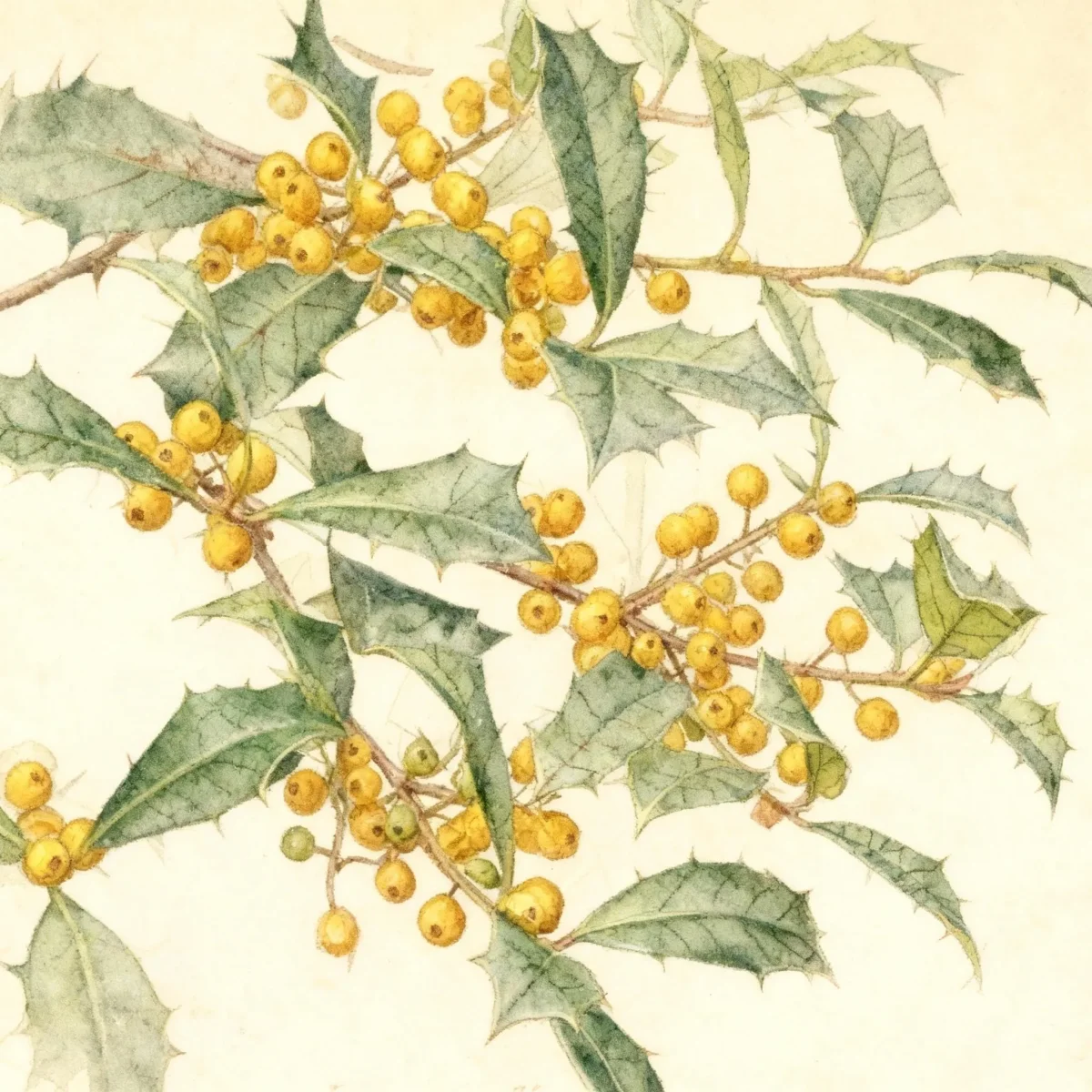
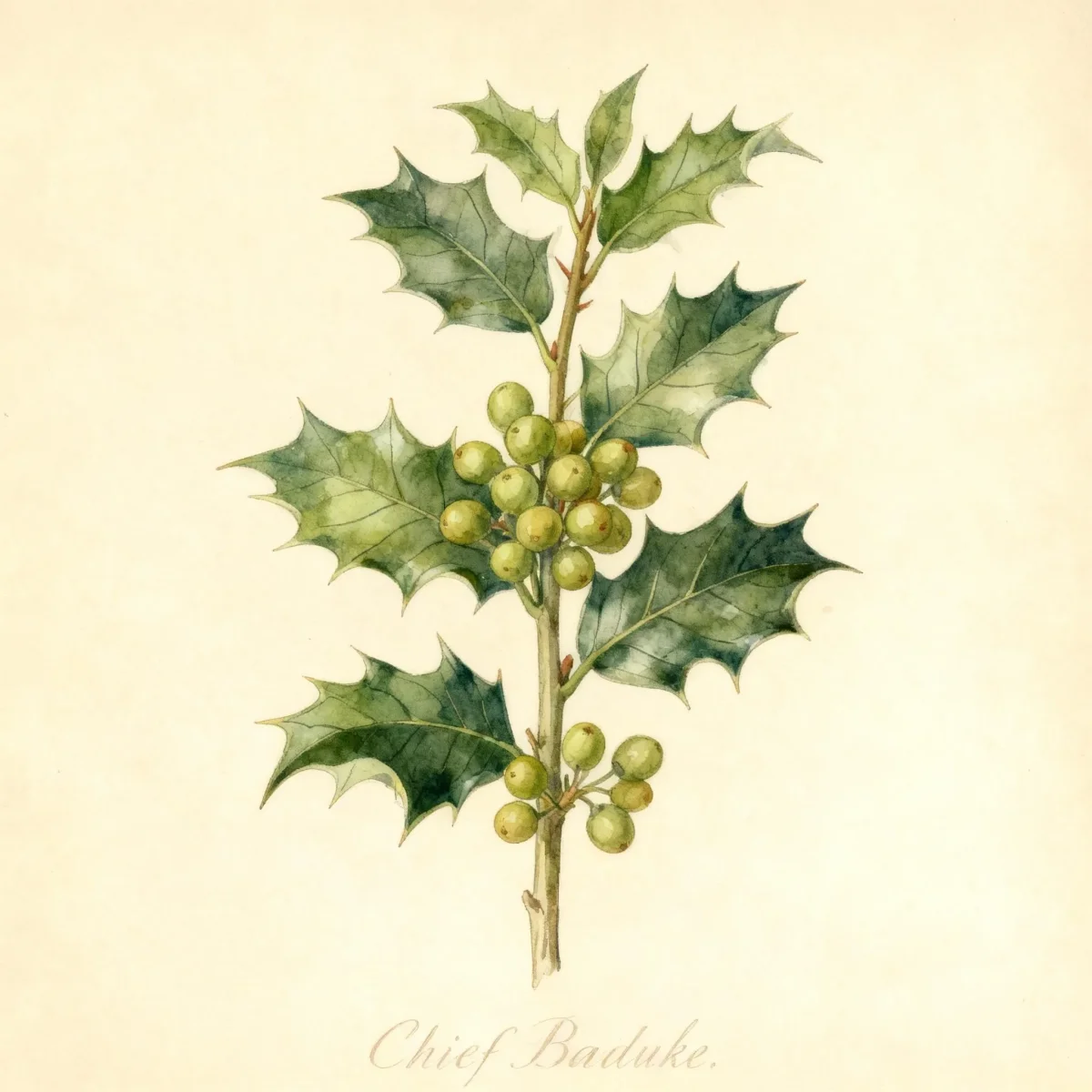
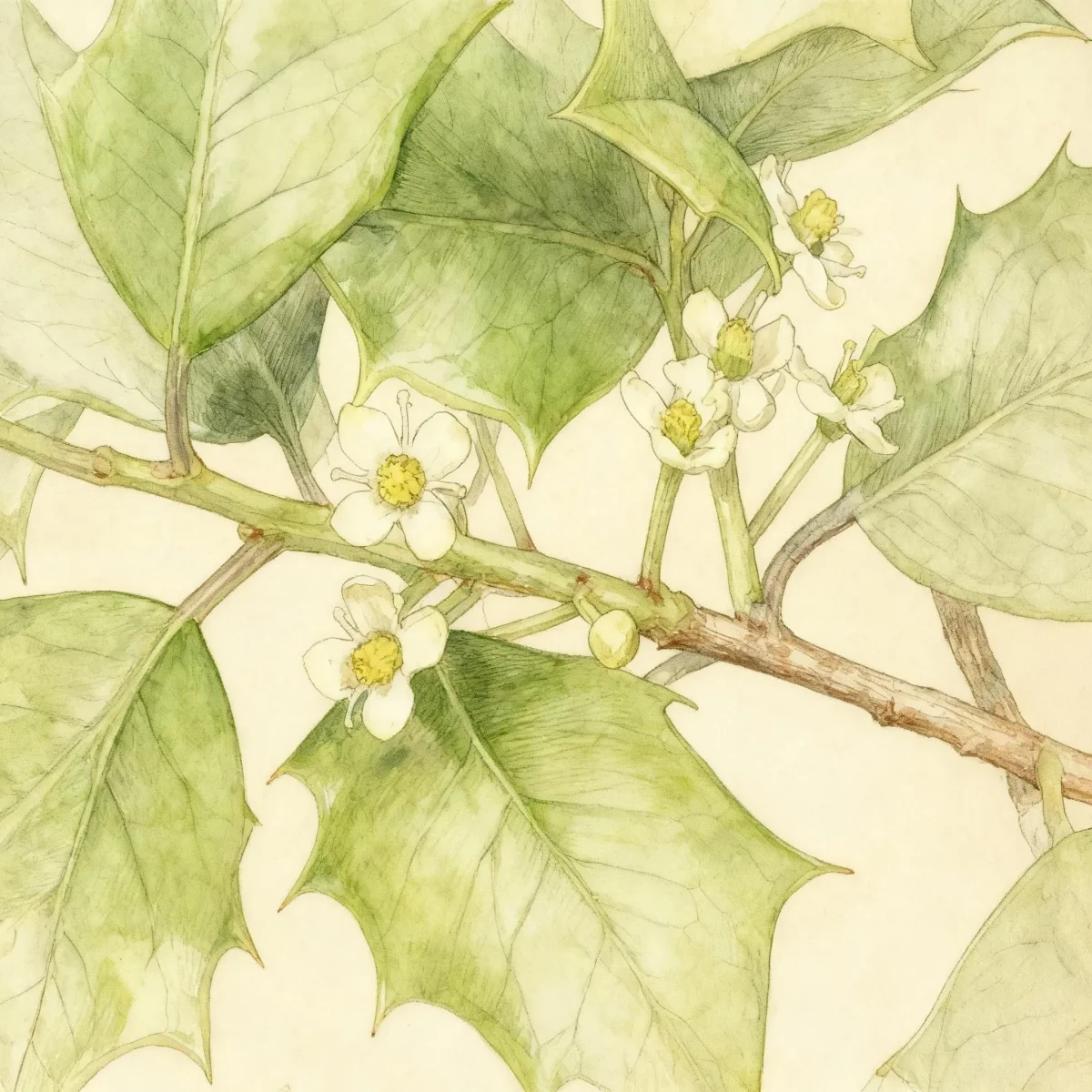
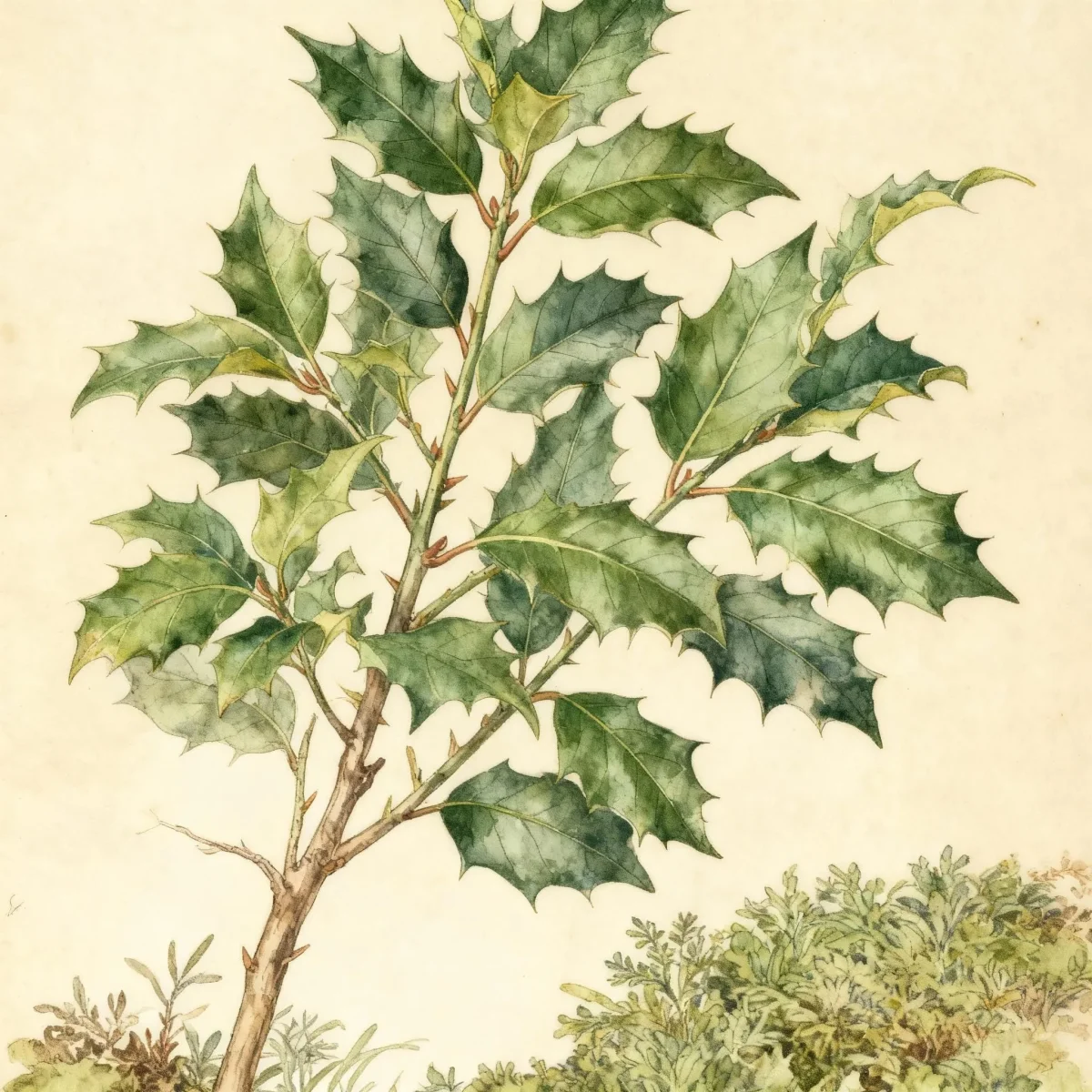
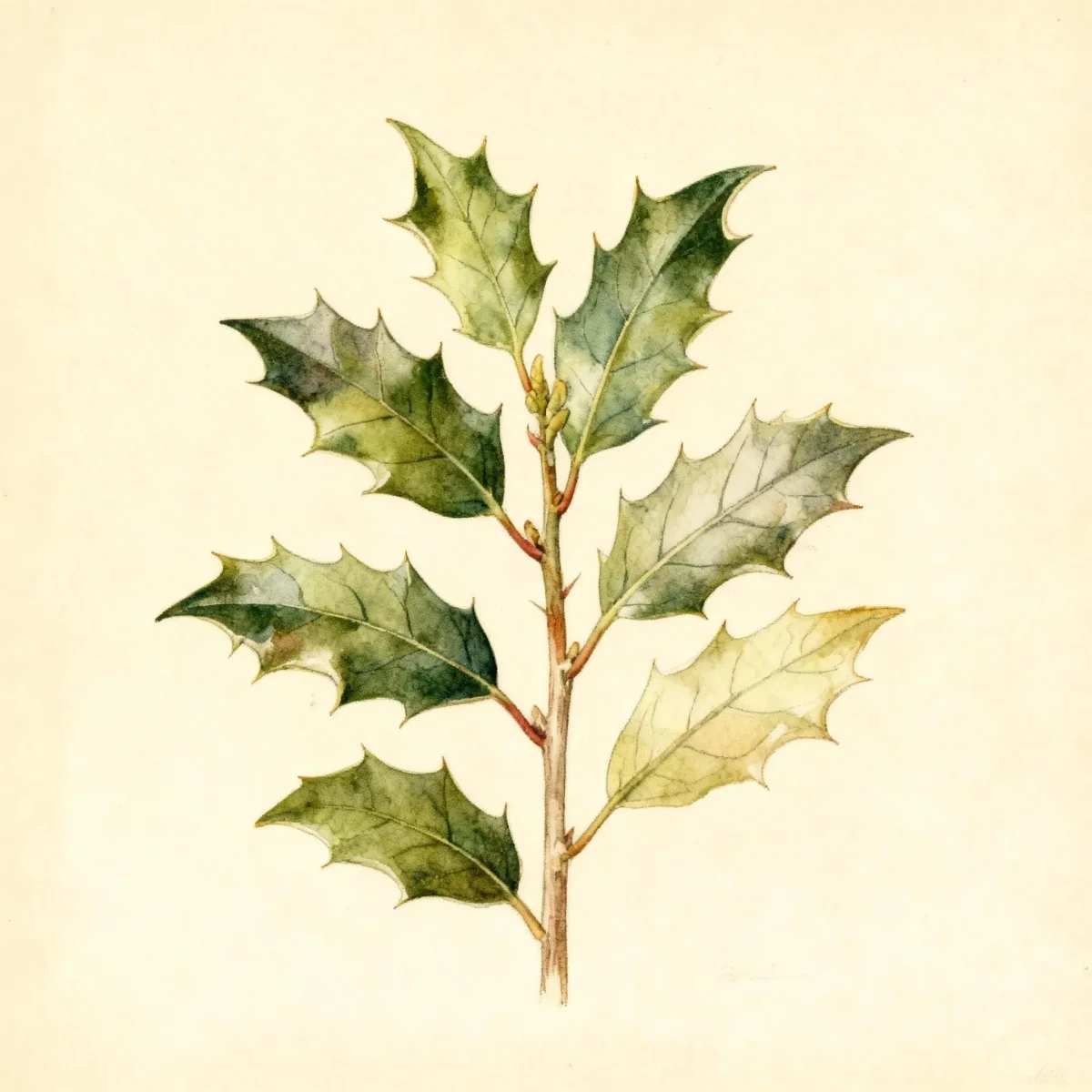
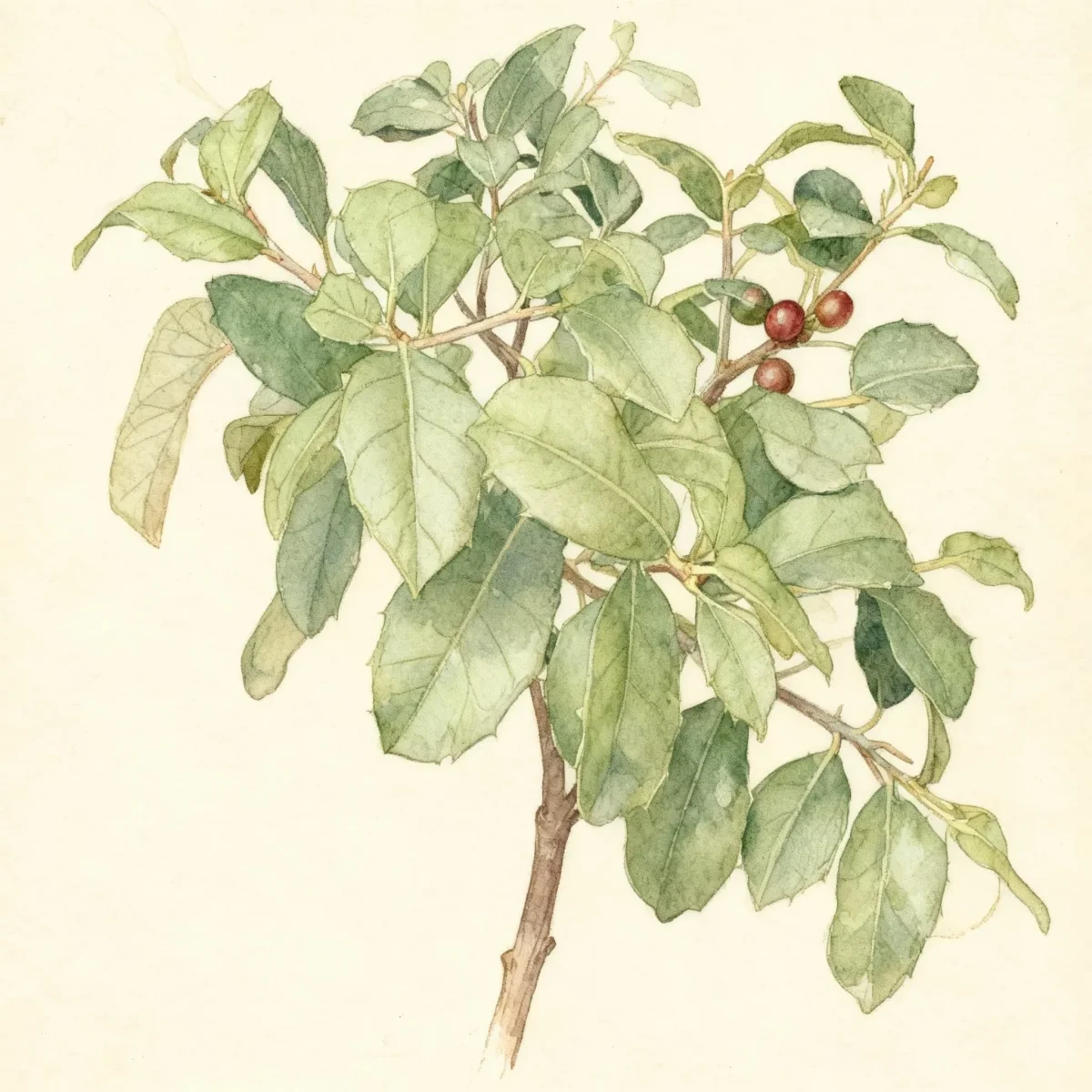
American holly (Ilex opaca 'Jersey Knight')
Ilex opaca 'Jersey Knight' is a dense, upright American holly providing year-round evergreen structure and winter interest.
Scroll down to discover growing tips, care requirements, companion plants, and more
Complete Plant Information
Overview
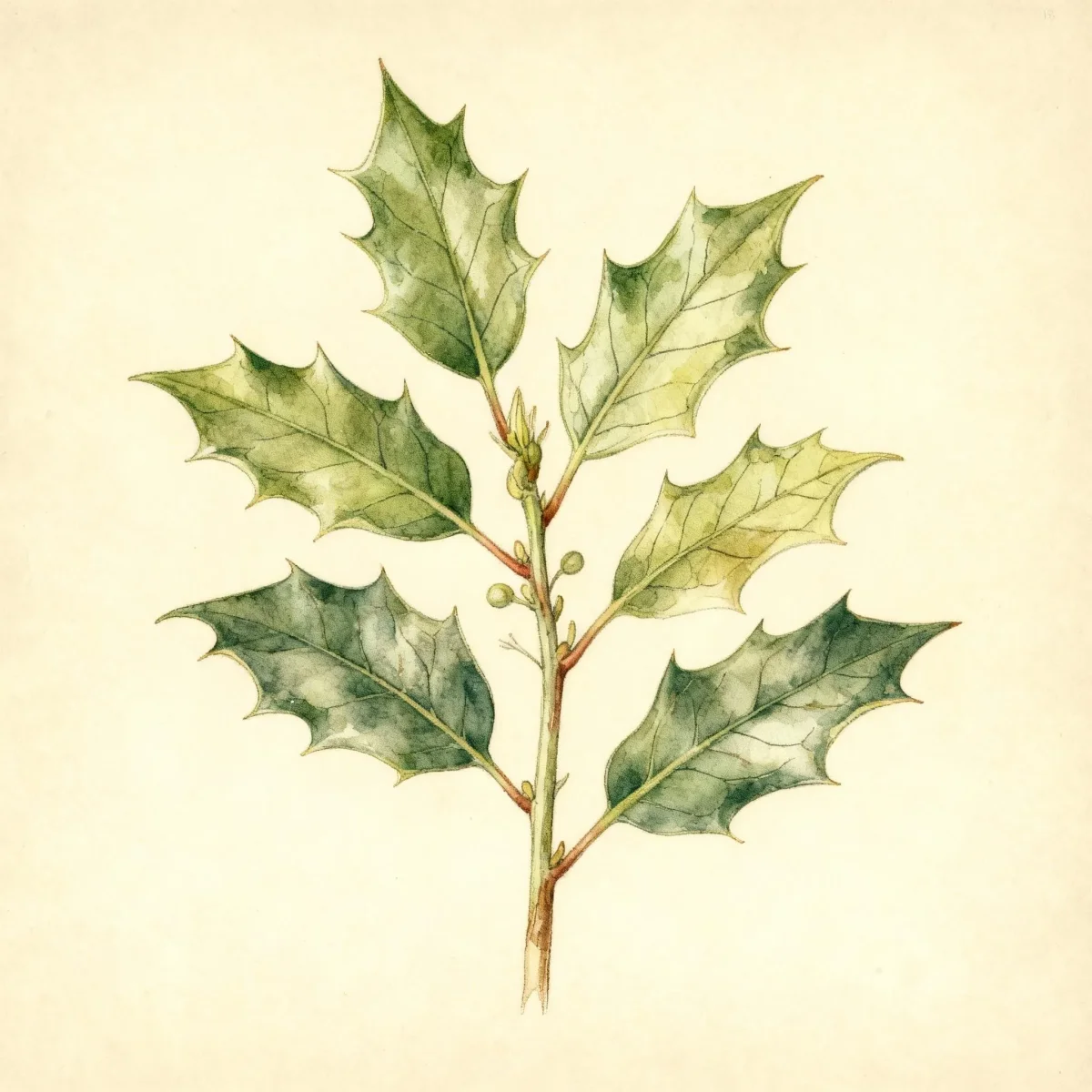
The American holly, especially the cultivar Ilex opaca ‘Jersey Knight’, is a foundational component for creating robust, year-round structure in the landscape. As a dense, upright broadleaf evergreen, this cultivar offers excellent screening ability and provides the iconic spiny foliage associated with native hollies. Gardeners value this specimen for its reliability and its low maintenance requirements once established.
This particular cultivar is noted for maintaining good density as it matures into a significant tree, suitable for use as a specimen or for creating deep, textured hedges. While the species is dioecious, the Ilex opaca ‘Jersey Knight’ is a male selection, commonly used specifically as a reliable pollinator for nearby female hollies to ensure abundant red fruit display on those surrounding plants.
Beyond its structure, the significance of planting American holly lies in its seasonal appeal. The leathery, dark green leaves persist through winter, offering vibrant contrast against snow or bare branches of deciduous plants. Furthermore, cuttings from the foliage are traditional elements in holiday decorations, making Ilex opaca ‘Jersey Knight’ a truly year-round landscape asset.
Fast Facts
- Plant Family: Aquifoliaceae
- Plant Type: Broadleaf evergreen
- Hardiness Zones: USDA Zones 5-9
- Size at Maturity:
- Height: 20-30 ft
- Spread: 8-20 ft
- Bloom Time: May
- Bloom Description: Greenish-white
- Sun Exposure: Full sun to part shade
- Water Needs: Medium
- Maintenance Level: Low
How to Grow
Planting Ilex opaca ‘Jersey Knight’ should ideally occur in spring or fall when temperatures are moderate, allowing the developing root system to establish before summer heat or deep winter freezes hit. This American holly thrives in average, consistently moist, acidic, well-drained soils. It is crucial to avoid any location prone to flooding or prolonged soil saturation, as hollies will quickly fail in poorly drained areas.
Watering should remain consistent, especially during the first few growing seasons. Once established, the plant requires medium water input, though it is notably tolerant of various soil conditions, including clay, once drainage is adequate. Since Ilex opaca ‘Jersey Knight’ is a male cultivar, fertilization should focus on promoting healthy foliage, but be aware that leaves tend to yellow (chlorosis) if planted in highly alkaline soils.
Site your American holly where it is protected from harsh, cold winter winds, which can cause leaf scorch or excessive leaf drop. In hot summer climates, providing some part afternoon shade can buffer the intensity, although planting in too much shade will lead to a significant loss of foliage density, compromising the desired screening effect. Pruning is generally minimal, focusing only on shaping or removing errant branches, as this cultivar naturally forms a pleasing pyramidal outline.
Landscape Uses
The dense, upright habit of Ilex opaca ‘Jersey Knight’ makes it extremely versatile for formal and informal landscape designs. It excels when used as a specimen tree, anchoring corners of a property or providing a focal point against lighter-colored structures. Due to its evergreen nature, it is highly effective for year-round foundation planting where consistent green structure is desired near buildings.
This cultivar can also be leveraged to create stately hedges or screens, offering excellent noise and visual buffering throughout the year. When planted near female holly varieties, it actively supports their fruit production, turning a foundational planting into a wildlife asset, as the ensuing red berries are a favored winter food source for birds. Its deep green foliage also serves as an excellent backdrop for colorful spring-flowering bulbs or summer perennials.
Standout Features
Flower Qualities
- Insignificant
Noteworthy Characteristics
The standard American holly (Ilex opaca) is an upright, pyramidal evergreen tree, often reaching 50 feet in the wild, famous for being the only native U.S. holly with spiny green leaves and bright red berries often used for Christmas decoration. The specific cultivar, ‘Jersey Knight’, is characterized as a dense, upright American holly introduction discovered in New Jersey in 1945, which grows reliably toward a mature height of 20-30 feet in cultivation. As a male selection, it is widely utilized in landscapes specifically to ensure excellent pollination for nearby female holly trees.
Tolerances
- Deer
- Clay Soil
- Air Pollution
Potential Problems
Manage potential insect issues proactively, as Ilex opaca ‘Jersey Knight’ can be targeted by pests such as scale insects, spider mites, holly leaf miner, and whitefly. For fungal diseases like leaf spot, tar spot, or powdery mildew, ensure good air circulation through proper spacing and avoid overhead watering late in the day, which keeps foliage wet. Be vigilant for symptoms of chlorosis (yellowing leaves); if observed, test your soil pH, as this almost always indicates the soil is too alkaline for this acid-loving American holly.
Frequently Asked Questions
What hardiness zones is American holly (Ilex opaca ‘Jersey Knight’) suitable for?
This robust American holly cultivar is suitable for USDA Hardiness Zones 5 through 9.
How large does Ilex opaca ‘Jersey Knight’ grow?
This selection typically matures to a height between 20 and 30 feet, with a spread ranging from 8 to 20 feet wide, offering significant screen potential.
What sun exposure does American holly need?
For optimal growth and density, Ilex opaca ‘Jersey Knight’ requires full sun to part shade conditions. Avoid deep shade, which results in sparse foliage.
When does Ilex opaca ‘Jersey Knight’ bloom?
The greenish-white flowers appear in May, though as a male plant, its primary function is pollination rather than fruit production.
Conclusion
Selecting Ilex opaca ‘American holly’ ‘Jersey Knight’ guarantees a hardy, low-maintenance evergreen backdrop that anchors the winter garden structure. Its utility as a dependable pollinator enhances the ornamental value of female hollies nearby, ensuring a classic Northeastern winter scene. Before planting, confirm your site offers acidic, well-drained soil and adequate protection from severe winter winds to establish this long-lived beauty successfully.
Wildlife Benefits
The primary wildlife benefit provided by planting the Ilex opaca ‘Jersey Knight’ lies in its role as a pollinator. Although this male cultivar produces no red berries itself, it is essential for fertilizing nearby female American hollies. Once fertilized, those females produce the bright, persistent drupes coveted by many bird species throughout the harsh winter months, providing a vital winter food source.
Furthermore, the dense, broadleaf evergreen foliage of the American holly offers essential year-round refuge and nesting cover for small songbirds escaping weather or predators. Establishing a cluster of male and female hollies creates a resilient habitat corner in the garden that is functional across all four seasons.
Companion Planting
When designing a planting scheme around Ilex opaca ‘Jersey Knight’, it is beneficial to pair it with plants that also prefer acidic, well-drained soil and thrive in full sun to part shade. Consider pairing it with broadleaf evergreens like Rhododendrons or Azaleas, which share similar cultural requirements and create rich, layered evergreen texture when sited beneath the taller canopy of the holly.
For seasonal contrast in the foreground, spring-flowering bulbs such as Daffodils (Narcissus) provide bright color just as the hollies begin to awaken from dormancy. As the summer progresses, anchor the base plantings with shade-tolerant perennials like Hosta or Ferns, maintaining a rich, cool understory beneath the filtered sunlight that penetrates the holly’s canopy.