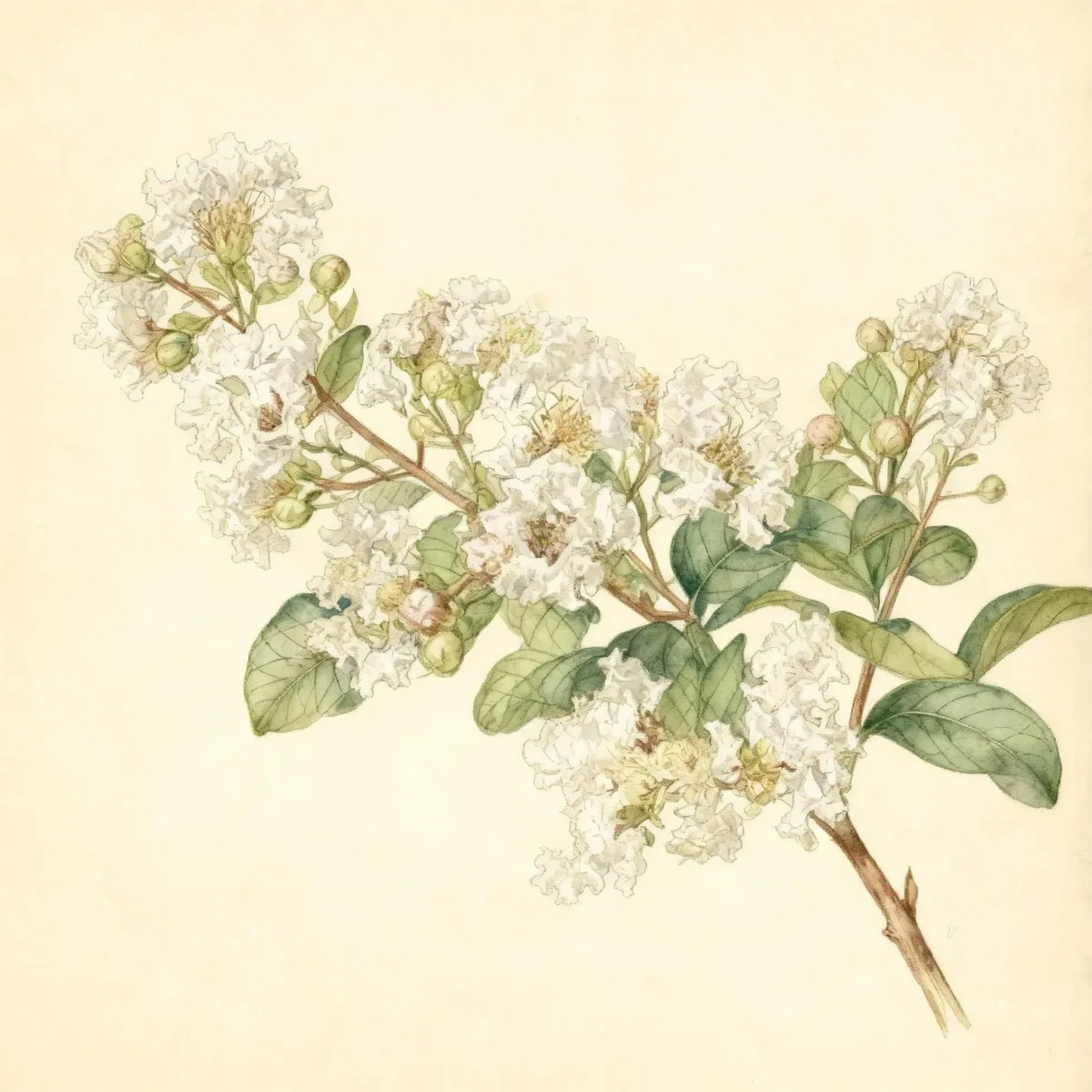
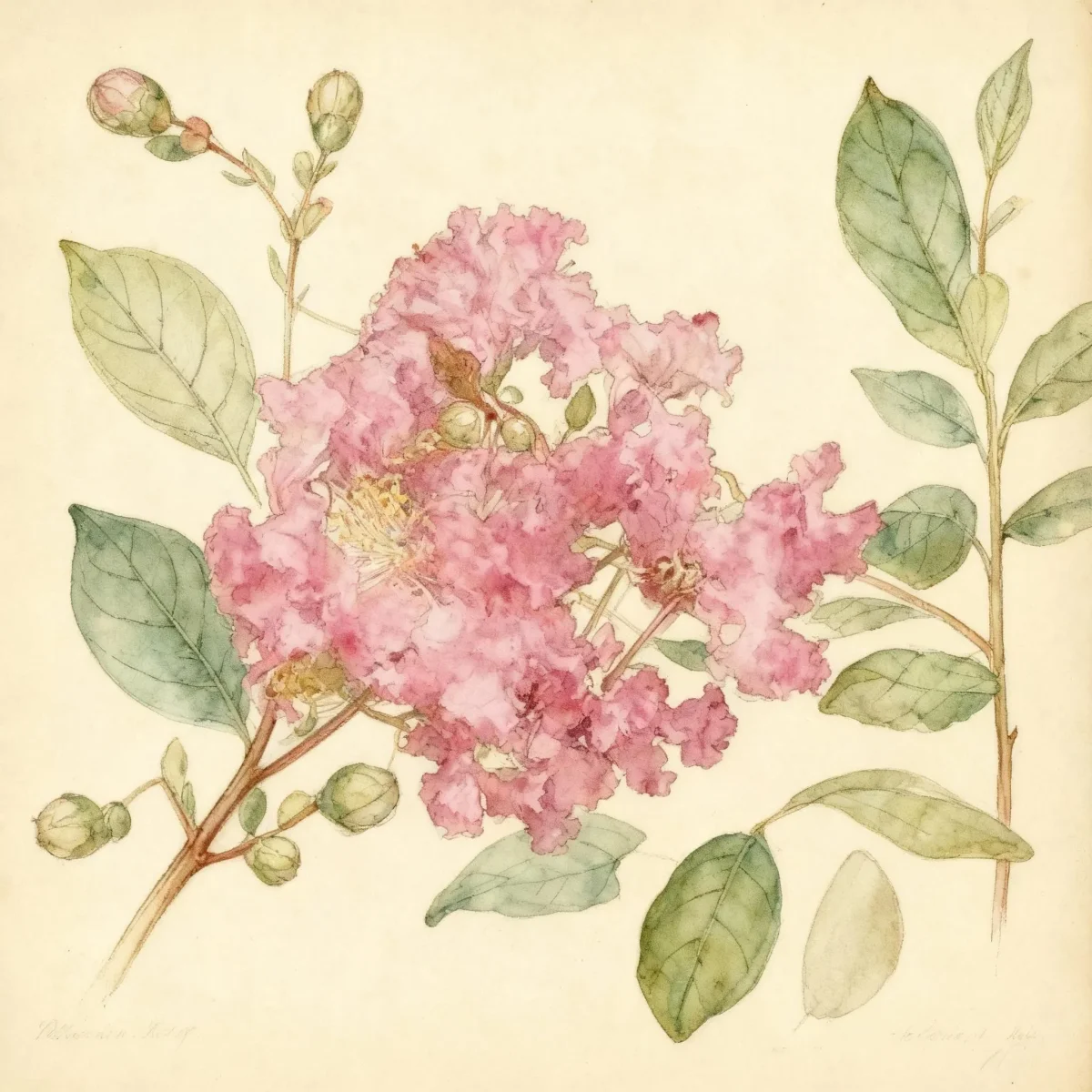
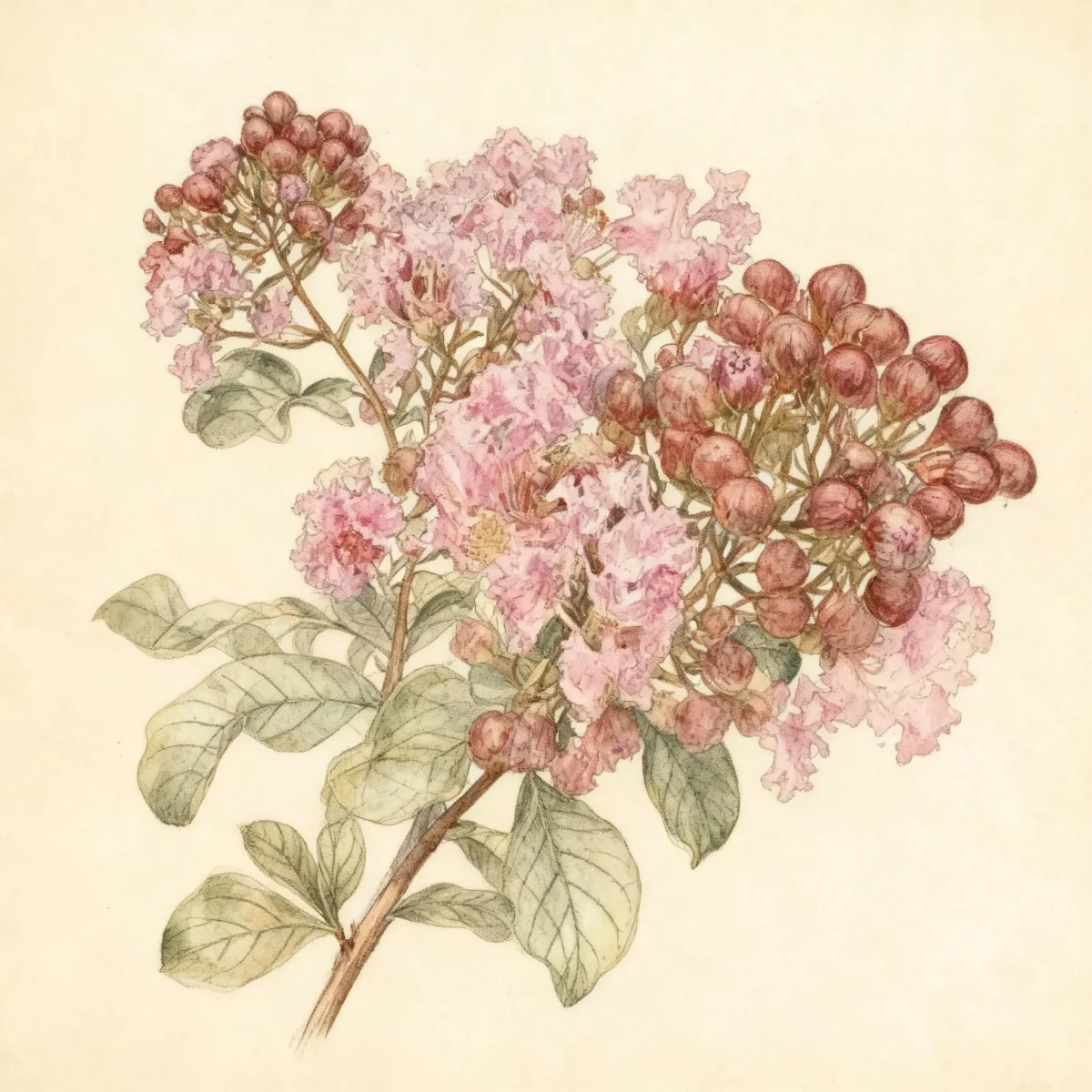
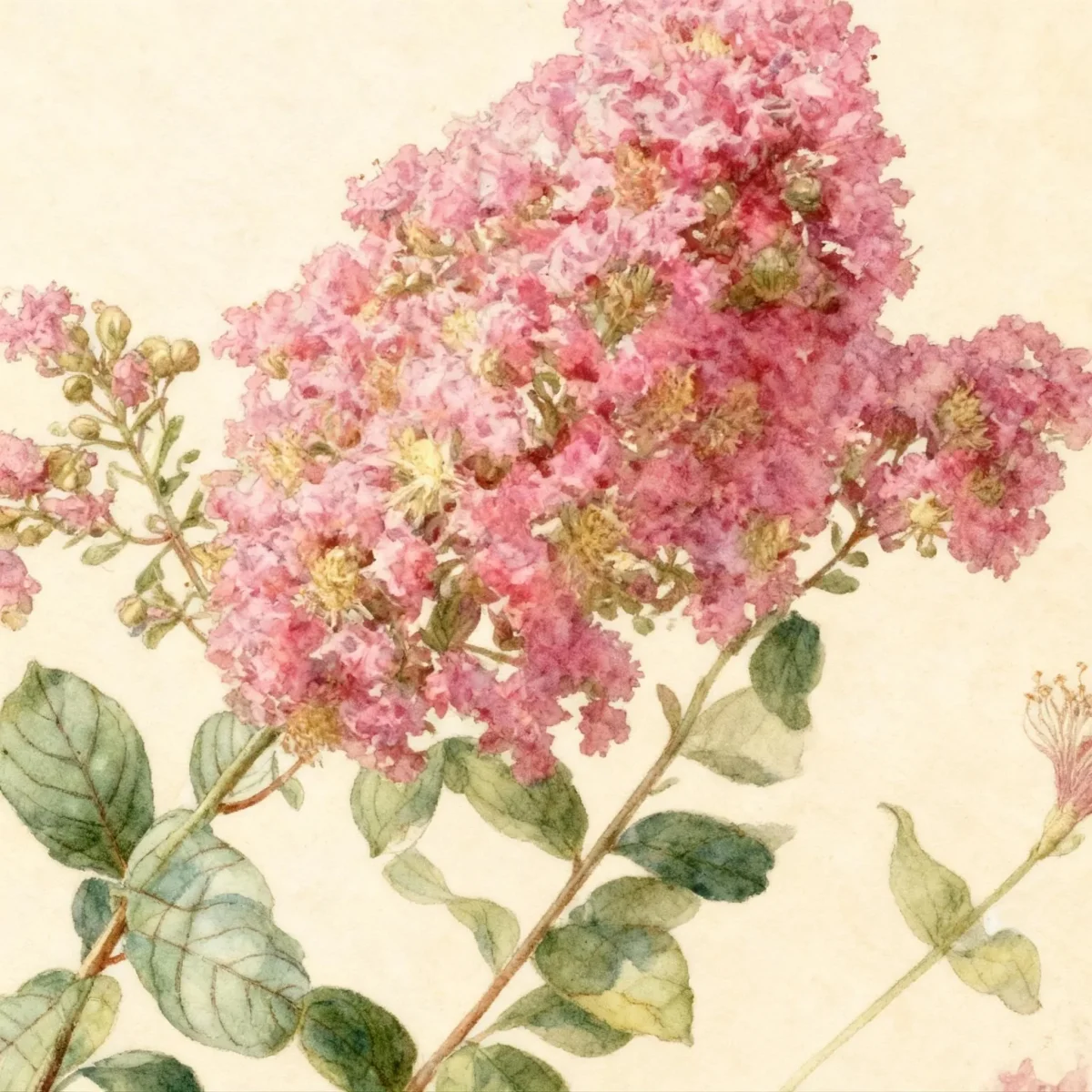
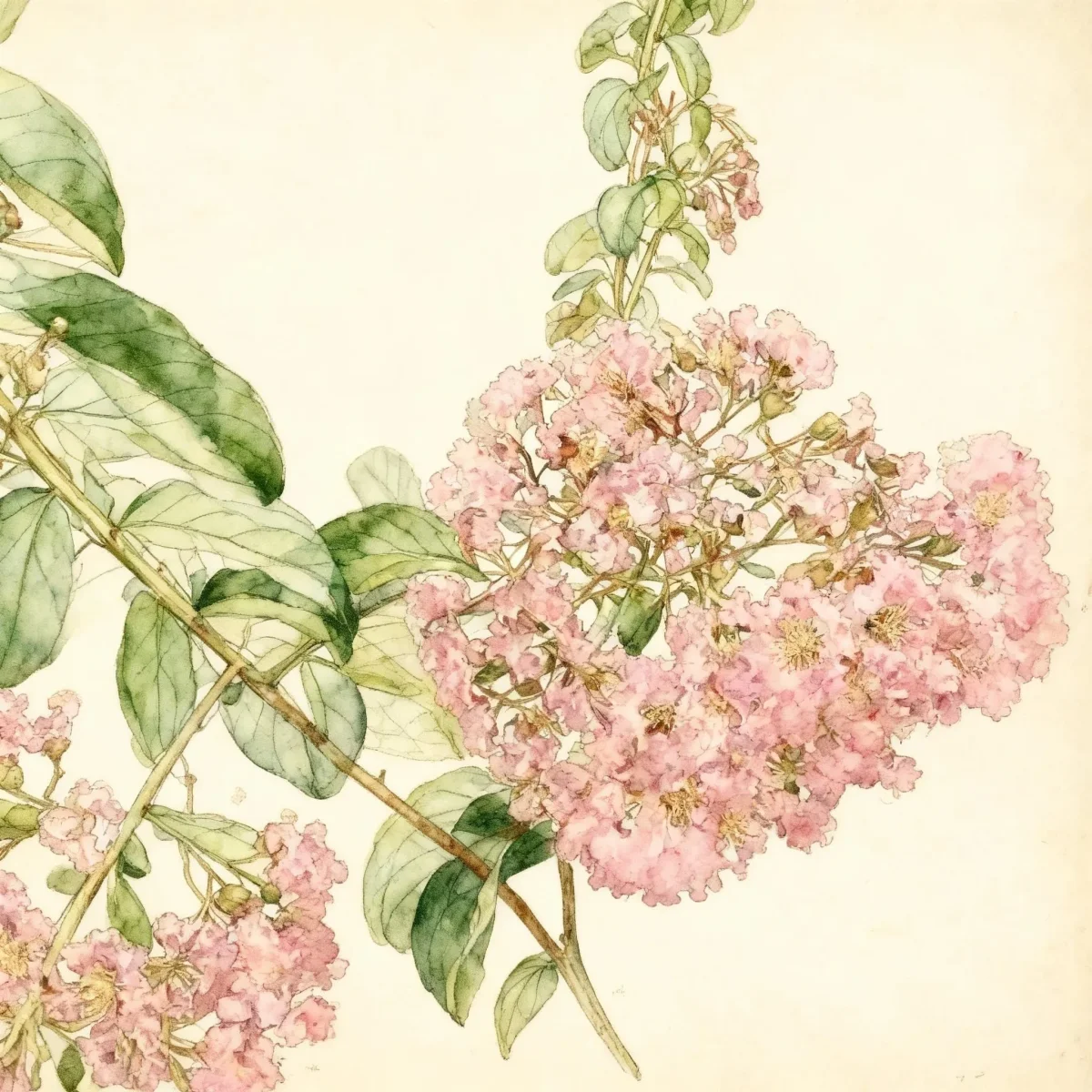
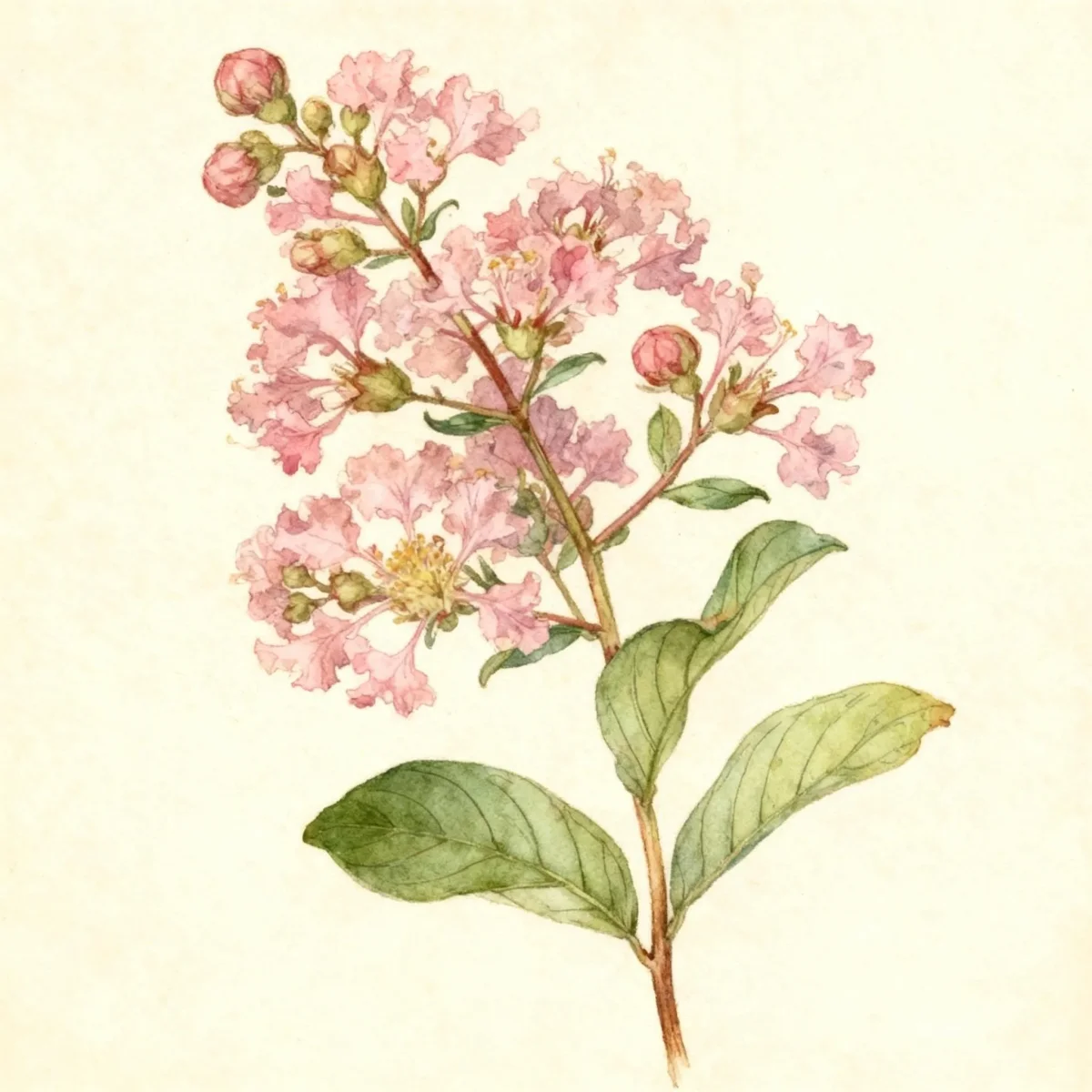
Crape myrtle (Lagerstroemia 'Bicolor')
Discover Lagerstroemia 'Bicolor', a compact Crape myrtle shrub offering reddish-pink and white summer blooms. Low care for Zones 6-9.
Scroll down to discover growing tips, care requirements, companion plants, and more
Complete Plant Information
Overview
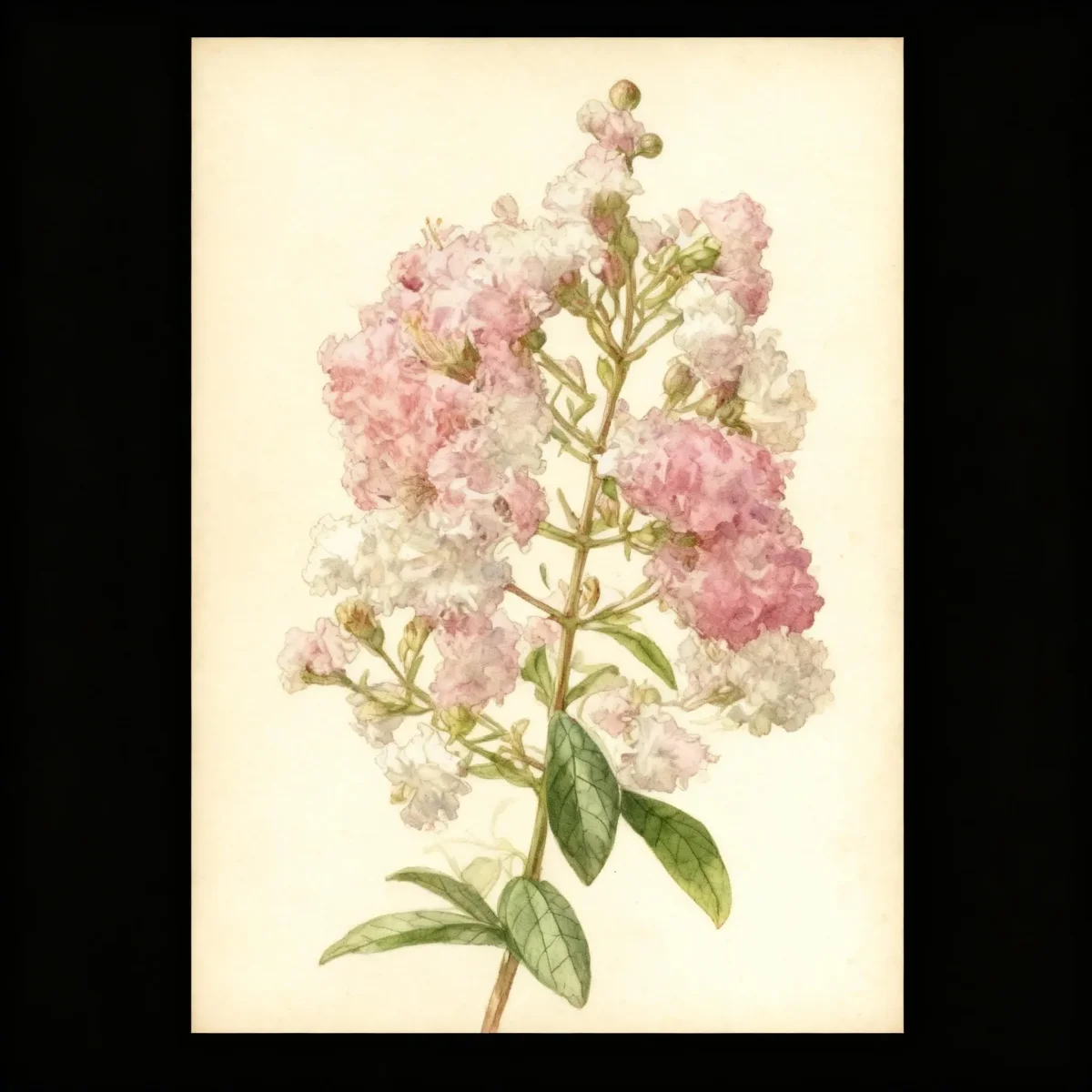
Lagerstroemia ‘Bicolor’ is a treasured cultivar of Crape myrtle, celebrated for its compact size and unique summer floral display. This cultivar features densely branched, upright growth adorned with crepe-papery flowers that showcase a striking mixture of reddish pink and white bicolored petals, providing long-lasting seasonal interest. As a deciduous shrub, it offers structure during the dormant season while delivering brilliant color from early summer well into autumn.
This particular Crape myrtle variety is valued for its adaptability, thriving where many large crape myrtles might dominate a space. It is an excellent choice for gardeners seeking a lower-maintenance flowering shrub that can tolerate challenging soil types, including clay, and withstand periods of dryness once established. Proper siting ensures the best performance from this attractive Lagerstroemia ‘Bicolor’.
Fast Facts
- Plant Family: Lythraceae
- Plant Type: Deciduous shrub
- Hardiness Zones: USDA Zones 6-9
- Size at Maturity:
- Height: 2-4 ft
- Spread: 2-4 ft
- Bloom Time: June to September
- Bloom Description: Reddish pink and white (bicolored petals)
- Sun Exposure: Full sun
- Water Needs: Medium
- Maintenance Level: Medium
How to Grow
The best location for Lagerstroemia ‘Bicolor’ is where it receives full, unimpeded sun throughout the day. Plant this Crape myrtle in average soils, ensuring they are medium in moisture and, critically, possess good drainage. It performs well even in loamy or clay soils, provided water is not allowed to sit around the root zone.
For consistent flowering and good health, water deeply during dry spells, focusing irrigation at the base of the plant and avoiding wetting the foliage, which can encourage fungal issues. A slow-release fertilizer application can benefit growth, but be cautious; overly rich soil promotes excessive leaf growth at the expense of blooms and can decrease winter hardiness.
Winter care is crucial, especially in the colder edge of its range (Zone 6). Plant in a protected location and apply a layer of winter mulch. Gardeners in areas prone to severe freezes (like St. Louis) often manage this shrub by cutting all stems back to about 8 inches in early spring, allowing new wood to grow and flower heavily the same year.
Landscape Uses
As a miniature and compact Crape myrtle, Lagerstroemia ‘Bicolor’ offers tremendous versatility in small-scale landscaping. Its manageable 2-4 foot stature makes it ideal for grouping or massing along garden borders where larger shrubs would become untidy. It serves excellently as an accent specimen in rock gardens or tucked into foundation plantings where year-round structure is desired.
This shrub also excels as a large container plant for patios or decks, allowing gardeners to control soil conditions precisely and move it to a more protected area during harsh winters. Use it to create layered plantings against privacy screens or fences, providing a bright, colorful mid-layer beneath taller trees or background shrubs.
Standout Features
Flower Qualities
- Showy
Noteworthy Characteristics
The genus Lagerstroemia is renowned for contributing vital color to the summer landscape, often flourishing where other woody plants struggle. Lagerstroemia ‘Bicolor’ is specifically a miniature weeping variety, densely branched, and distinguished by its terminal panicles of bicolored flowers mixing reddish pink and white hues. This compact Crape myrtle typically reaches 3-4.5 feet tall in warmer regions, offering reliable summer interest.
Tolerances
- Drought
- Clay Soil
- Air Pollution
Potential Problems
The primary concerns for Crape myrtles involve fungal diseases: powdery mildew and fungal leaf spot. To mitigate these, ensure excellent air circulation by providing the required full sun exposure and avoiding wetting the leaves during watering—water the roots only. Foliage may turn yellow if planted in soil with an overly alkaline pH, a condition known as chlorosis.
This cultivar, Lagerstroemia ‘Bicolor’, fortunately has a reputation for good disease resistance compared to some other varieties. However, susceptibility to common pests like aphids and scale warrants monitoring, especially during active growth periods. As mentioned in the culture notes, winter injury to the top growth is significant in Zones 5 and 6, necessitating the protective pruning or mulching strategies discussed previously.
Frequently Asked Questions
What hardiness zones is Crape myrtle suitable for?
This specific Crape myrtle cultivar, Lagerstroemia ‘Bicolor’, is reliably hardy in USDA Zones 6 through 9. Gardeners in Zone 6 should exercise extra caution regarding winter protection for the upper branches.
How large does Lagerstroemia ‘Bicolor’ grow?
This compact variety typically matures to a height between 2 and 4 feet, with a similar spread size of 2 to 4 feet, making it perfect for smaller spaces.
What sun exposure does Lagerstroemia ‘Bicolor’ need?
This plant absolutely requires full sun exposure to achieve its best flowering performance and maintain robust health, as insufficient light can decrease blooming and increase disease susceptibility.
When does Crape myrtle bloom?
This variety bursts into bloom from June, continuing its display throughout September, showcasing its characteristic reddish pink and white bicolored petals.
Conclusion
Lagerstroemia ‘Bicolor’ stands out as an outstanding, low-profile flowering shrub perfect for brightening borders and containers throughout the long summer season. Its unique bicolored blooms and tolerance for clay soil make this resilient Crape myrtle a reliable choice for many gardeners. Before planting, confirm your USDA zone compatibility and ensure you can meet its full sun requirements to maximize the beauty of your new Lagerstroemia ‘Bicolor’.
Companion Planting
Choosing appropriate neighbors is key to creating an attractive, low-maintenance garden around your Crape myrtle. Since Lagerstroemia ‘Bicolor’ requires full sun and tolerates clay soils, pair it with other sun-loving drought-tolerant perennials or low-water shrubs that share similar cultural needs. Good companions include ornamental grasses that offer textural contrast, such as Muhly Grass (Muhlenbergia capillaris), or Coneflowers (Echinacea species), which bloom later and tolerate drier conditions once established.
Avoid heavily watering border companions, as the medium water requirement of the Crape myrtle means consistent overwatering can lead to root issues. Utilizing materials like gravel mulch around the base can help regulate soil temperature and further improve drainage, complementing the existing tolerance structure of this hardy shrub.
Pruning Strategies for Compact Growth
Effective pruning determines whether Lagerstroemia ‘Bicolor’ functions as a dense shrub or succumbs to winter dieback. If winter damage is anticipated or experienced (common in Zones 5-6), the easiest strategy is ‘renewal pruning’ or hard cutting back to 8 inches above the ground in early spring. This forces the roots to send up numerous new, vigorous stems that will flower on new wood by summer’s end.
For gardeners in warmer areas (Zones 7-9) where winter dieback is less of a concern, pruning should focus on shaping and deadheading spent blooms. Always prune only the top growth back to live wood in spring; never prune in late summer or fall, as this can stimulate tender new growth that will be fatally damaged by the first hard frost. Light skirting is sometimes necessary to maintain clearance for walkways.