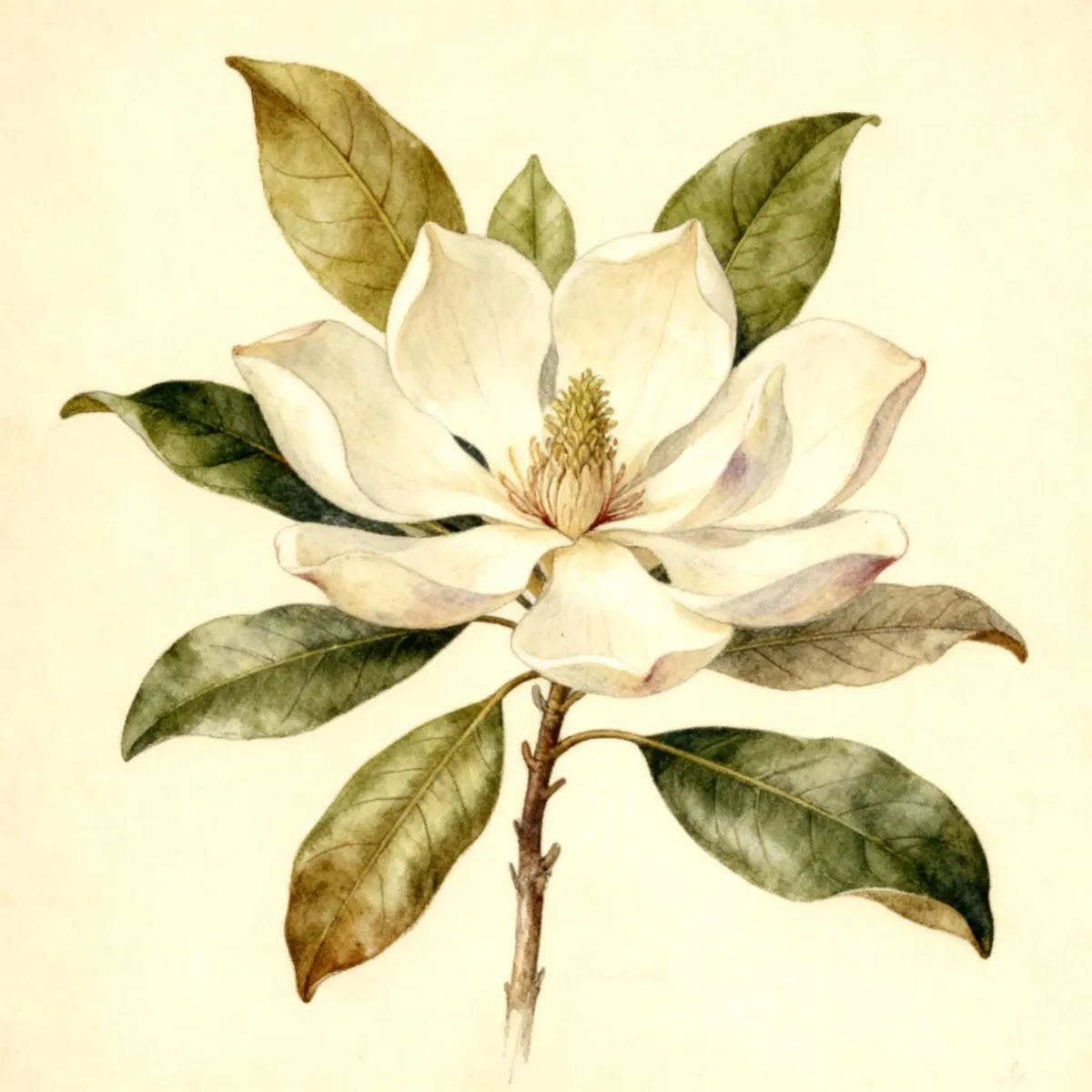
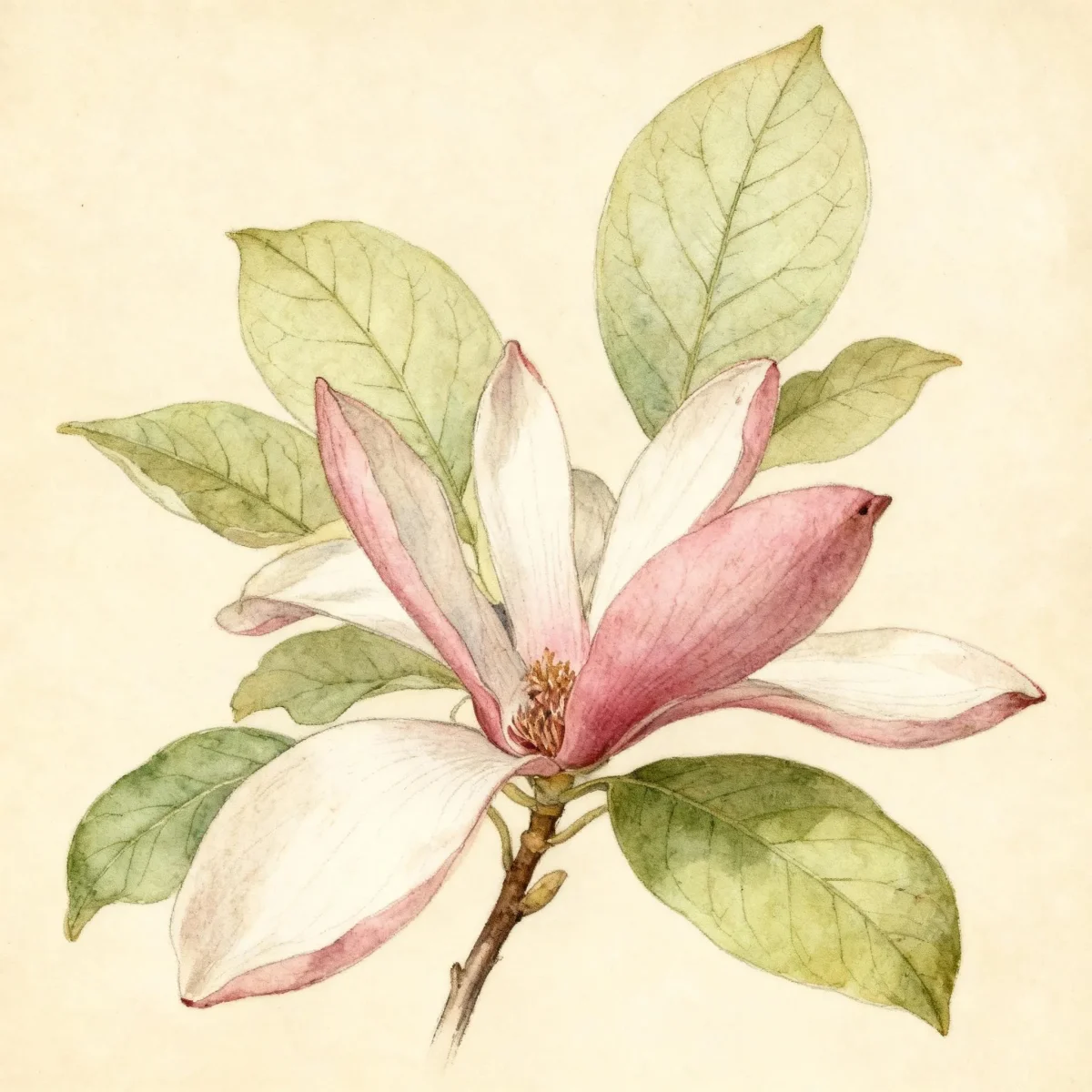
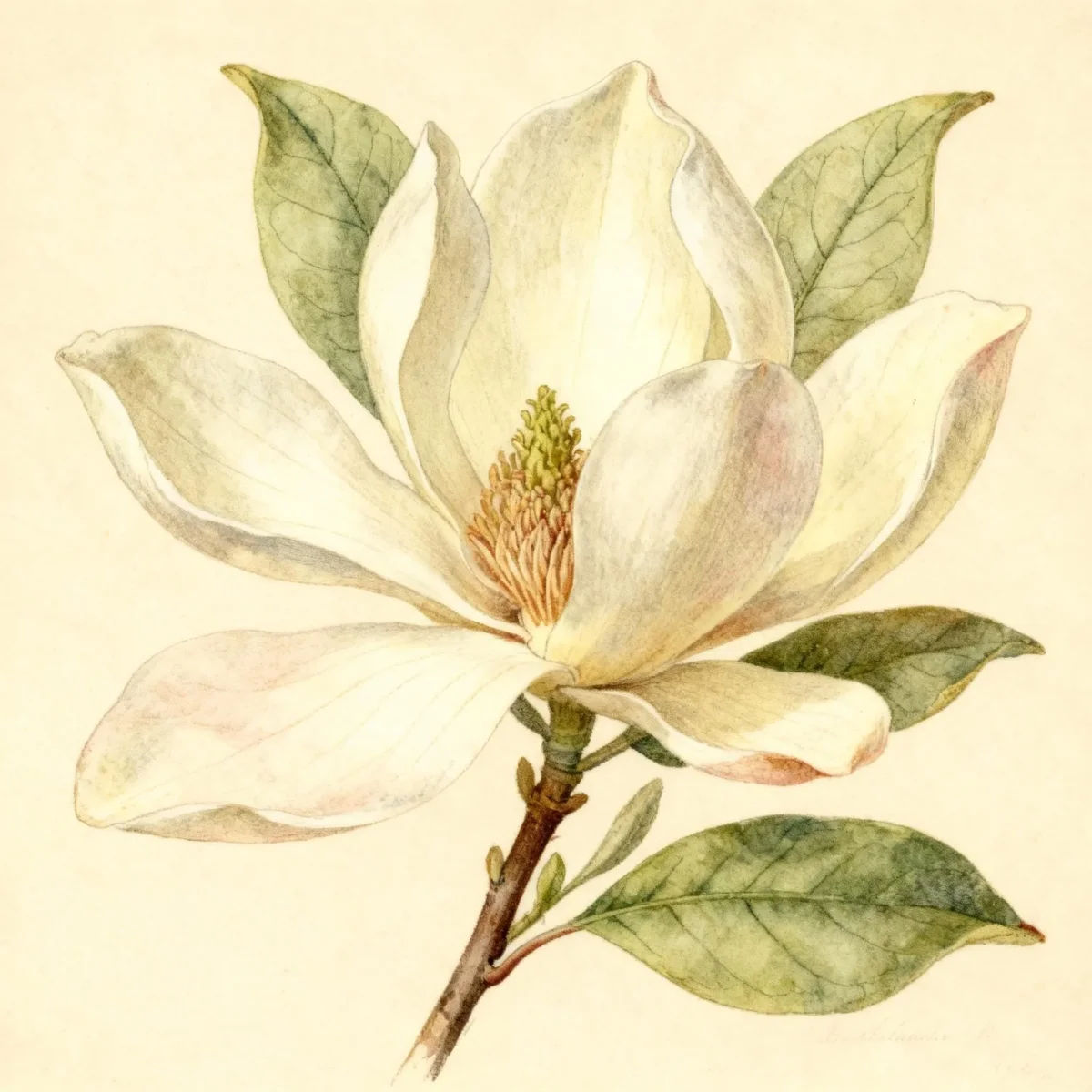
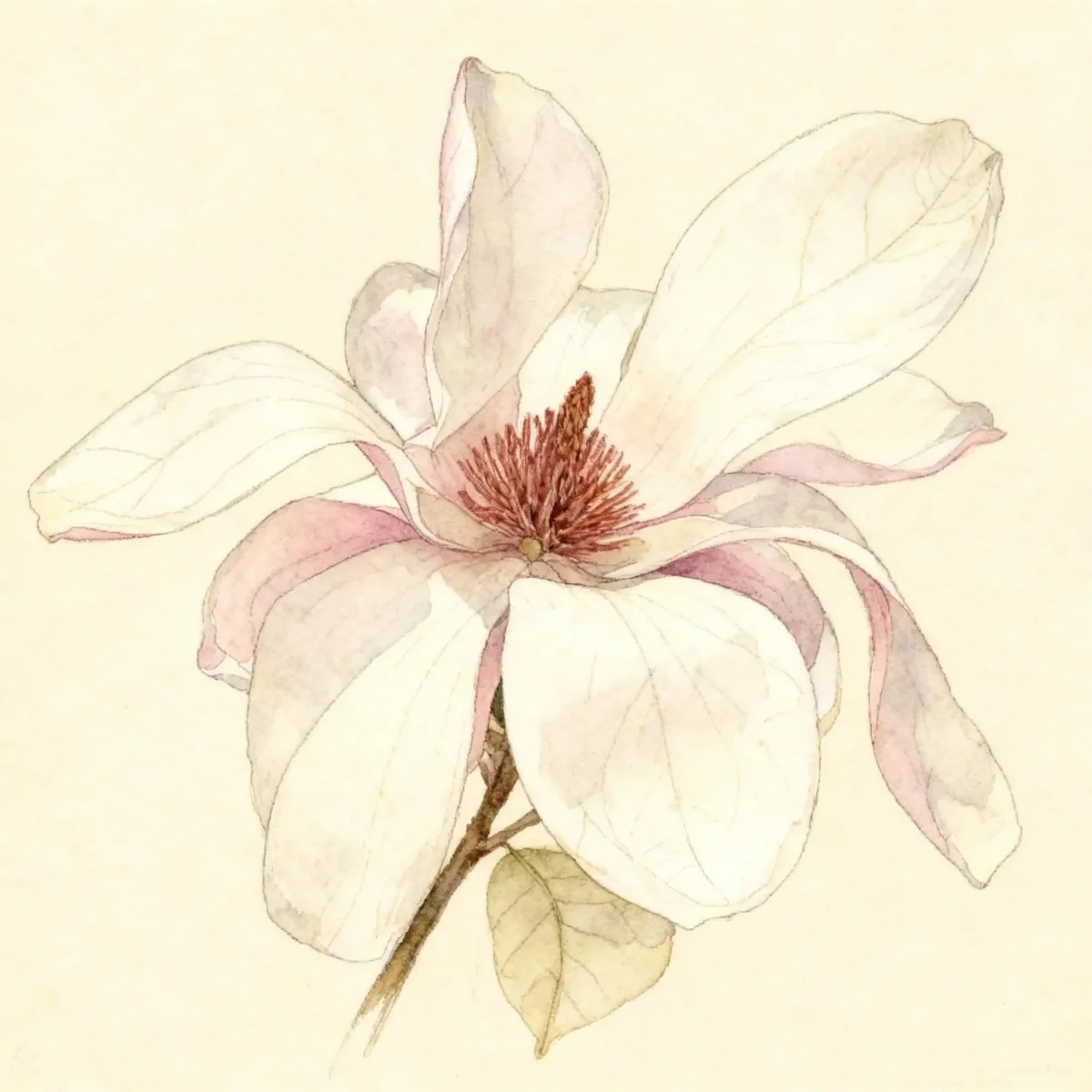
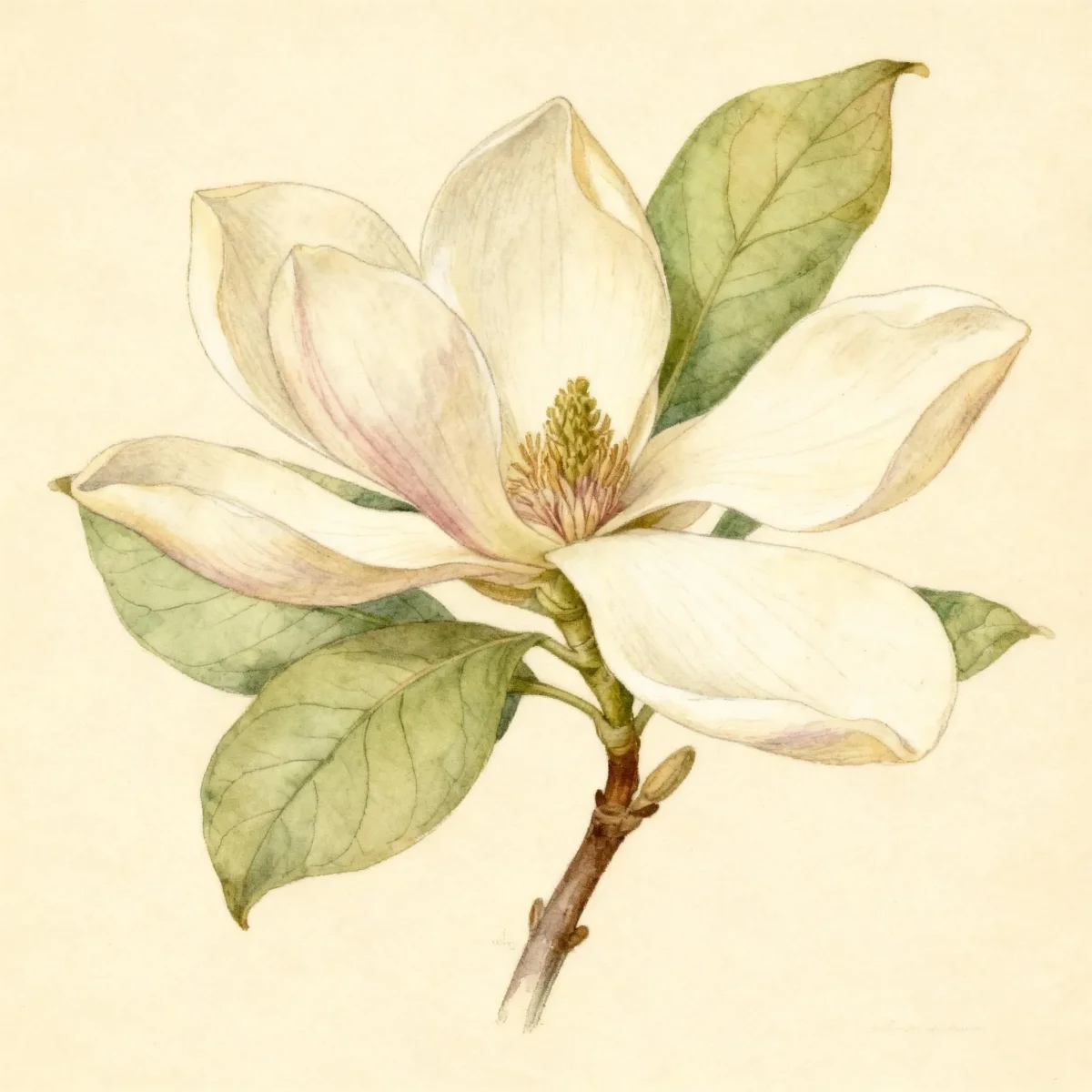
Southern magnolia (Magnolia grandiflora 'Bracken's Brown Beauty')
Magnolia grandiflora 'Bracken's Brown Beauty' is a compact Southern magnolia, offering showy, fragrant white flowers and distinctive dark green foliage that resists urban pollution.
Scroll down to discover growing tips, care requirements, companion plants, and more
Complete Plant Information
Overview
The Magnolia grandiflora ‘Bracken’s Brown Beauty’ cultivar provides the grandeur of the Southern magnolia in a more manageable scale, making it an excellent choice for modern landscapes. This broadleaf evergreen is prized for its dense, narrow crown and striking bi-color foliage—glossy dark green above and rusty-brown underneath. Gardeners value this selection for its reliability in colder zones (hardy to Zone 5b under protection) compared to the species, while still delivering the massive, highly fragrant white blooms characteristic of the Southern magnolia.
Unlike the towering species which can reach 80 feet, ‘Bracken’s Brown Beauty’ typically remains a compact tree reaching 20 to 30 feet tall, perfect for near decks or in smaller lots. Its low maintenance level and tolerance for some air pollution increase its appeal for urban and suburban settings where classic Southern beauty is desired without excessive upkeep.
This evergreen provides year-round structure and visual interest. The showy flowers bloom from May into June, followed by attractive, cone-like fruit clusters, ensuring seasonal appeal that few other large shrubs or small trees can match. Planting Magnolia grandiflora ‘Bracken’s Brown Beauty’ ensures a stately focal point that retains its broadleaf evergreen character even through the colder months.
Fast Facts
- Plant Family: Magnoliaceae
- Plant Type: Broadleaf evergreen
- Hardiness Zones: USDA Zones 5-9
- Size at Maturity:
- Height: 20-30 ft
- Spread: 15-25 ft
- Bloom Time: May to June
- Bloom Description: White
- Sun Exposure: Full sun to part shade
- Water Needs: Medium
- Maintenance Level: Low
How to Grow
Planting the compact Southern magnolia, Magnolia grandiflora ‘Bracken’s Brown Beauty’, should occur during temperate times, ideally spring or fall, to allow root establishment before temperature extremes. Select a site offering full sun to partial shade, recognizing that part shade often performs best, especially in hotter climates. This tree thrives in moist, organically rich, well-drained loams, and growers must avoid locations prone to extremes, whether overly wet or severely dry.
Once established, the water needs for this tree are medium. Ensure consistent moisture, particularly during dry spells, but monitor drainage carefully, as saturated soil is not tolerated. Maintenance is generally low; pruning is usually minimal, mostly intended to remove dead or crossing branches to maintain the dense, narrow, pyramidal-oval crown form of the ‘Bracken’s Brown Beauty’ cultivar.
While highly regarded for its hardiness down to Zone 5b, growers in the cooler end of its range (Zone 6) should site the tree in a protected location, away from harsh winter winds. In extremely cold periods, be aware that the plant may experience partial leaf drop, acting somewhat deciduously until warmer weather returns. This specific cultivar is an improvement over the species regarding winter hardiness in northern areas like St. Louis.
Landscape Uses
Magnolia grandiflora ‘Bracken’s Brown Beauty’ excels where a small, refined evergreen flowering tree is needed as a specimen. Its relatively contained size (20-30 ft tall) makes it an excellent focal point in lawns or near patios, allowing enjoyment of its fragrant flowers without the overwhelming scale of a full Southern magnolia. Furthermore, its screen-like density and evergreen habit lend themselves perfectly to creating living screens or hedges along property lines.
Consider integrating this cultivar into foundation plantings where space allows, or utilizing it as a standout small street tree where overhead power lines dictate size constraints. Because of its robust nature and strong vertical habit, it pairs well with broad-leafed evergreens that offer contrast in texture, such as hollies or camellias, provided those companions share its preference for rich, well-drained soil.
For those with limited space or those seeking dramatic container specimens, the compact form of Magnolia grandiflora ‘Bracken’s Brown Beauty’ is well-suited for large urns or tubs on decks or near entrances, offering imposing structure year-round.
Standout Features
Flower Qualities
- Showy
- Fragrant
Fruit Qualities
- Showy
Noteworthy Characteristics
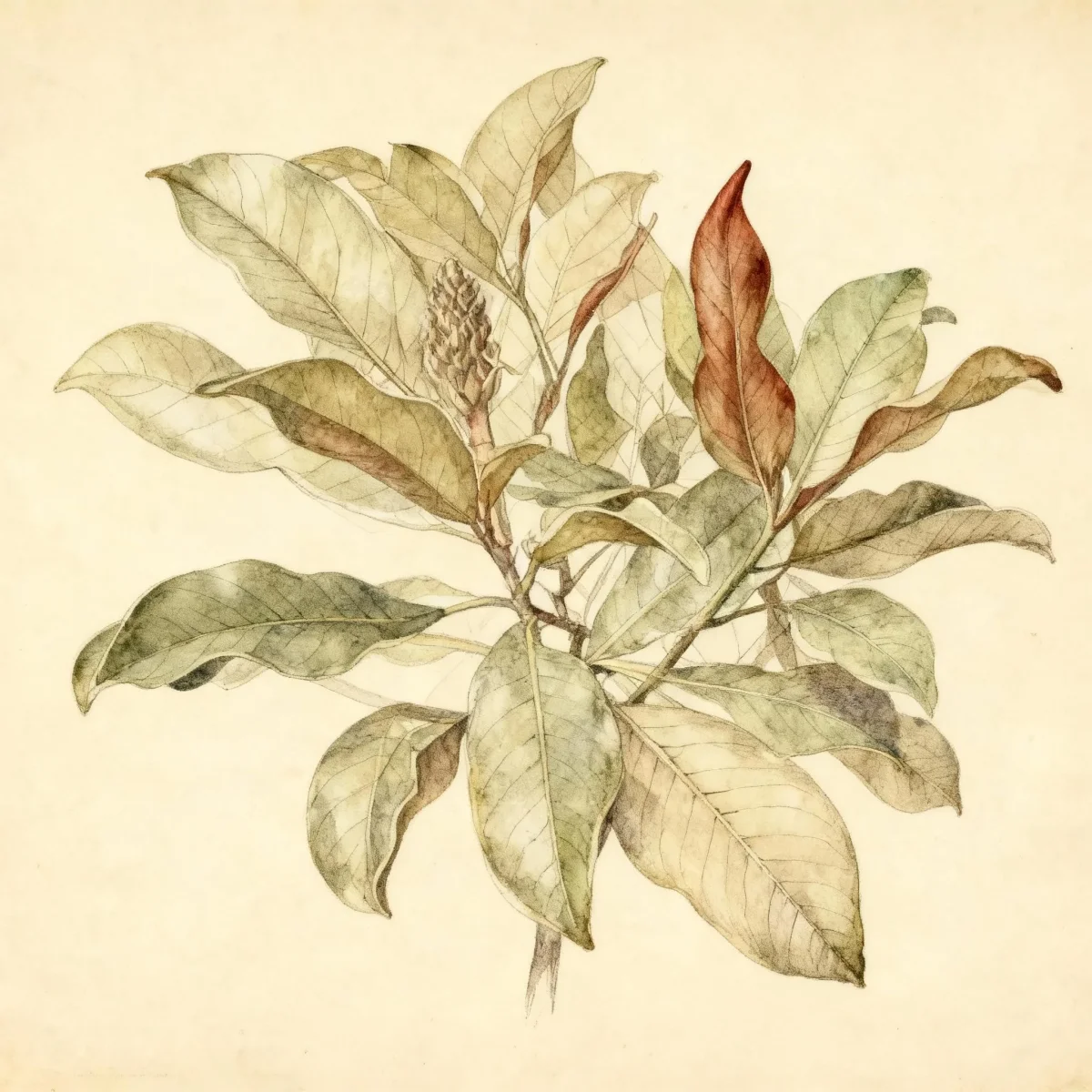
Magnolia grandiflora is a broadleaf evergreen tree that is noted for its attractive dark green leaves and its large, extremely fragrant flowers. This specific cultivar, ‘Bracken’s Brown Beauty’, is valued as a compact selection, usually topping out around 30 feet tall with a dense, narrow crown. A key identifier is its leathery evergreen leaves, which are glossy dark green above and distinctly rusty-brown beneath, creating a beautiful bicolor display visible when breezes move the branches.
Tolerances
- Air Pollution
Potential Problems
This plant boasts a favorable reputation concerning pest and disease management, generally suffering from no serious insect or disease problems requiring intensive chemical control. Healthy specimens situated in appropriate sites are remarkably resilient. Cultural issues, such as poor drainage or planting in overly harsh, exposed sites, are the most common source of stress rather than endemic pests.
To ensure the best performance and low maintenance, adhere strictly to the cultural needs—moist loam and protection from harsh winter winds in colder zones. Avoid planting where water pools, as this is the primary condition that stresses the root system of the Southern magnolia.
Frequently Asked Questions
What hardiness zones is Southern magnolia suitable for?
Magnolia grandiflora ‘Bracken’s Brown Beauty’ is reliably hardy in USDA Zones 7-9, though it can be successfully grown in protected locations within Zone 6 or even Zone 5b.
How large does Magnolia grandiflora ‘Bracken’s Brown Beauty’ grow?
This compact cultivar typically reaches a mature height range of 20 to 30 feet tall and spreads between 15 and 25 feet wide, featuring a dense, narrow crown.
What sun exposure does Southern magnolia need?
This beautiful evergreen prefers full sun to part shade. For the very best results, especially in hot summers, providing some afternoon partial shade can be beneficial.
When does Magnolia grandiflora ‘Bracken’s Brown Beauty’ bloom?
The spectacular, fragrant flowers of this Southern magnolia cultivar appear mainly from May to June, often followed by sporadic blooming continuing sparsely throughout the summer months.
Conclusion
The Magnolia grandiflora ‘Bracken’s Brown Beauty’ successfully marries the imposing, classic beauty of the Southern magnolia with a manageable size and improved cold tolerance. Its showy, fragrant flowers and unique rusty-backed foliage ensure year-round landscape interest with minimal required maintenance. Ensure you check your local USDA growing zone and select a well-drained site before planting this magnificent evergreen tree.
Companion Planting
When planning a landscape featuring Magnolia grandiflora ‘Bracken’s Brown Beauty’, select companions that appreciate similar moist, well-drained, organically rich soils and appreciate bright light without scorching afternoon sun. Consider underplanting with acid-loving evergreen foundation plants like Rhododendron or Azalea species; their fine texture contrasts beautifully with the coarse leaves of the magnolia. For groundcover nearer the base, use shade-tolerant perennials such as Hellebores (Lenten Rose), which provide winter and early spring color before the magnolia begins its major summer bloom flush.
Seasonal Care Calendar
For optimal performance of your evergreen Magnolia grandiflora ‘Bracken’s Brown Beauty’, focus efforts around soil moisture and vigilance against winter stress. In spring, apply a slow-release fertilizer formulated for acid-loving plants if the soil is not inherently rich, and lightly remove any dead foliage left over from winter. Summer care centers primarily on deep, infrequent watering to encourage strong root growth, especially when temperatures are consistently high. Winter preparation is crucial in Zones 5 through 7; apply a thick layer of organic mulch around the base (keeping mulch away from the trunk flare) and ensure the tree is well-watered before the ground freezes hard to help mitigate winter desiccation.