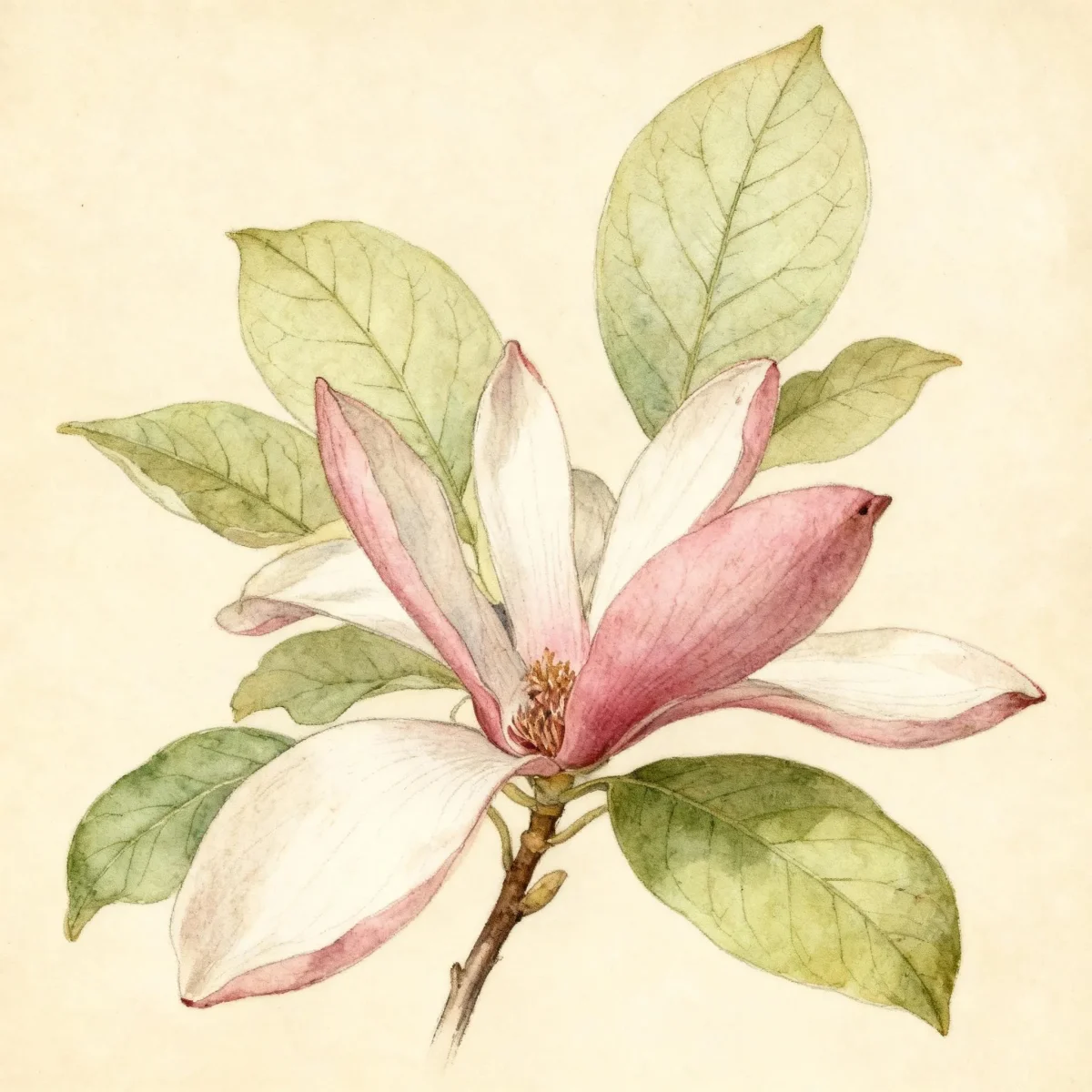
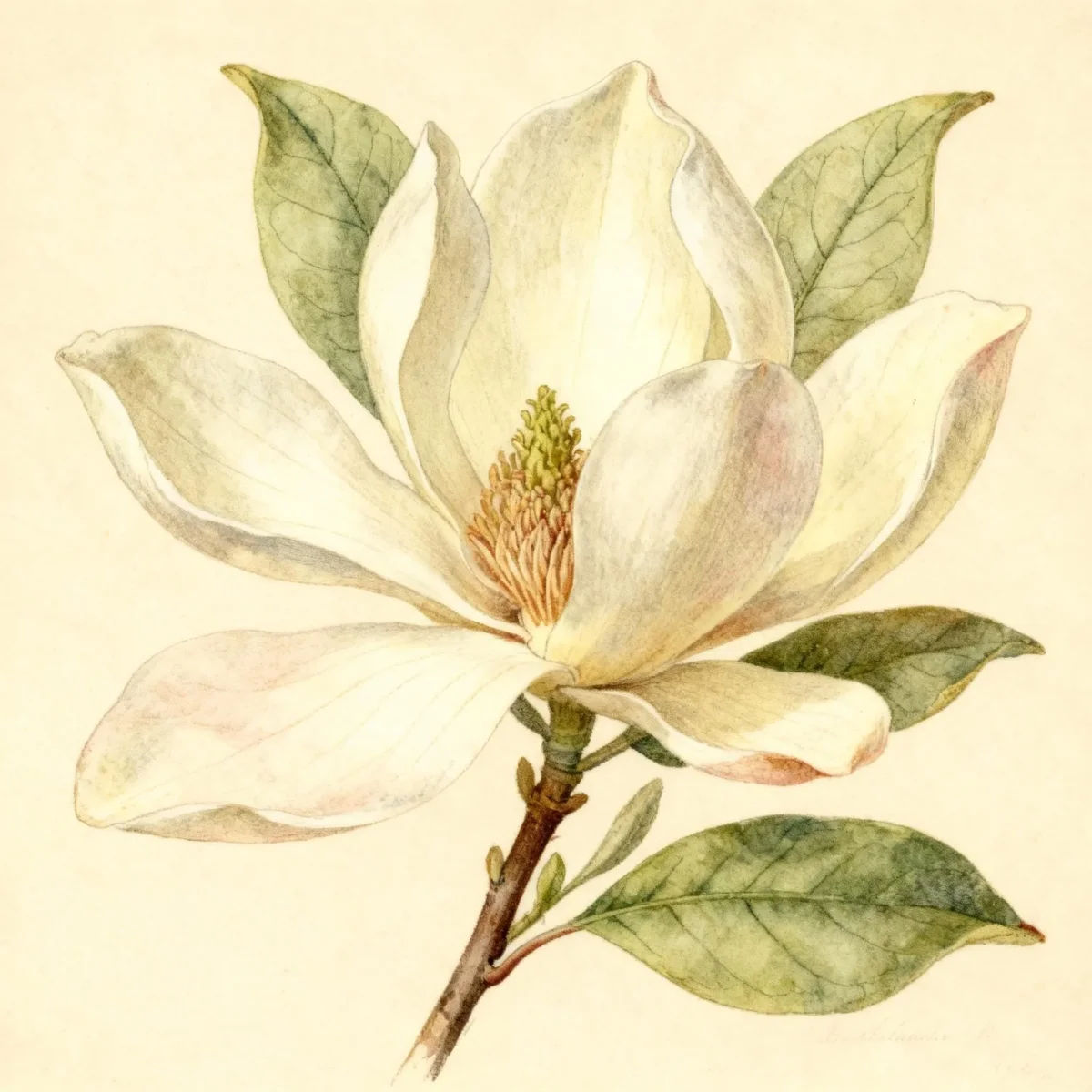
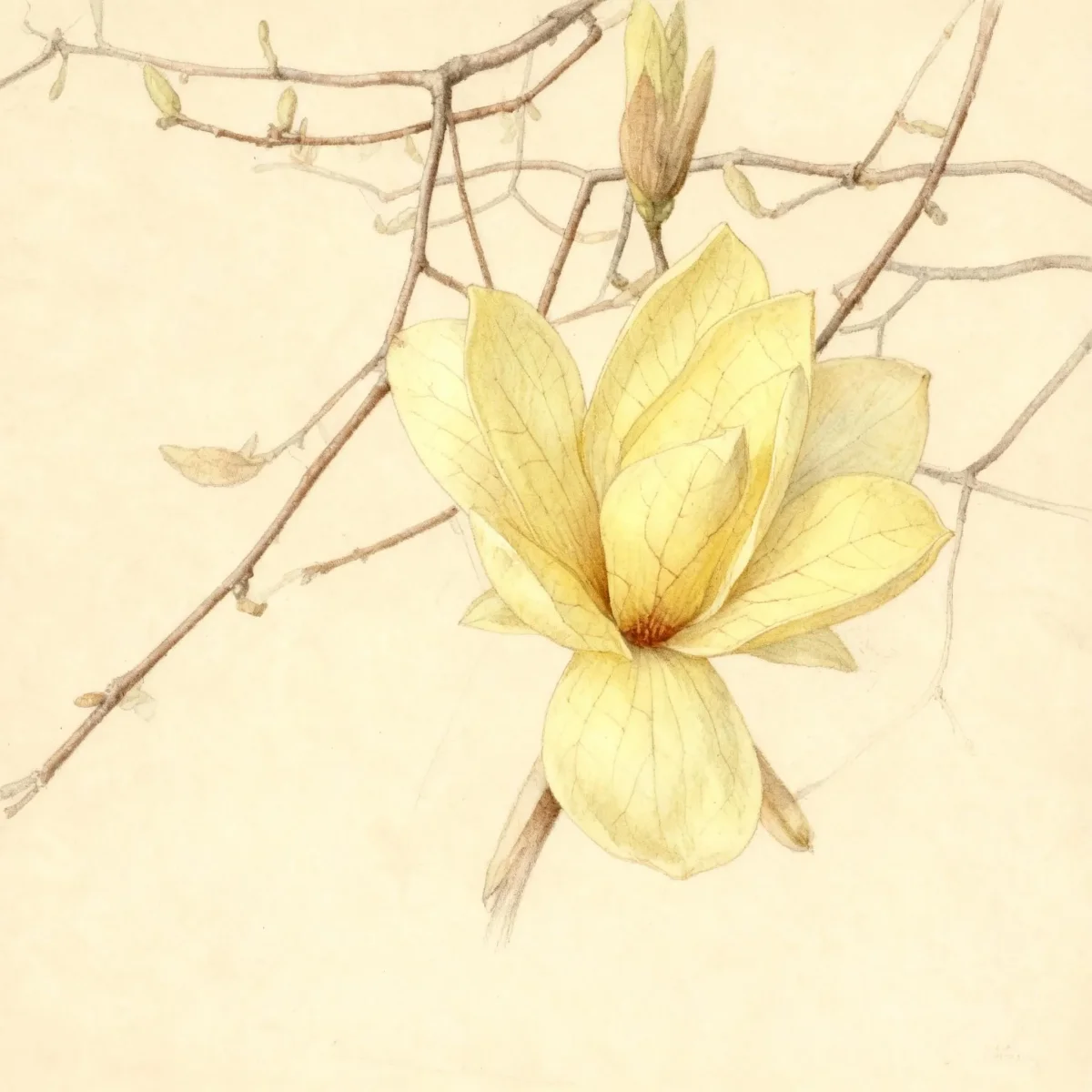
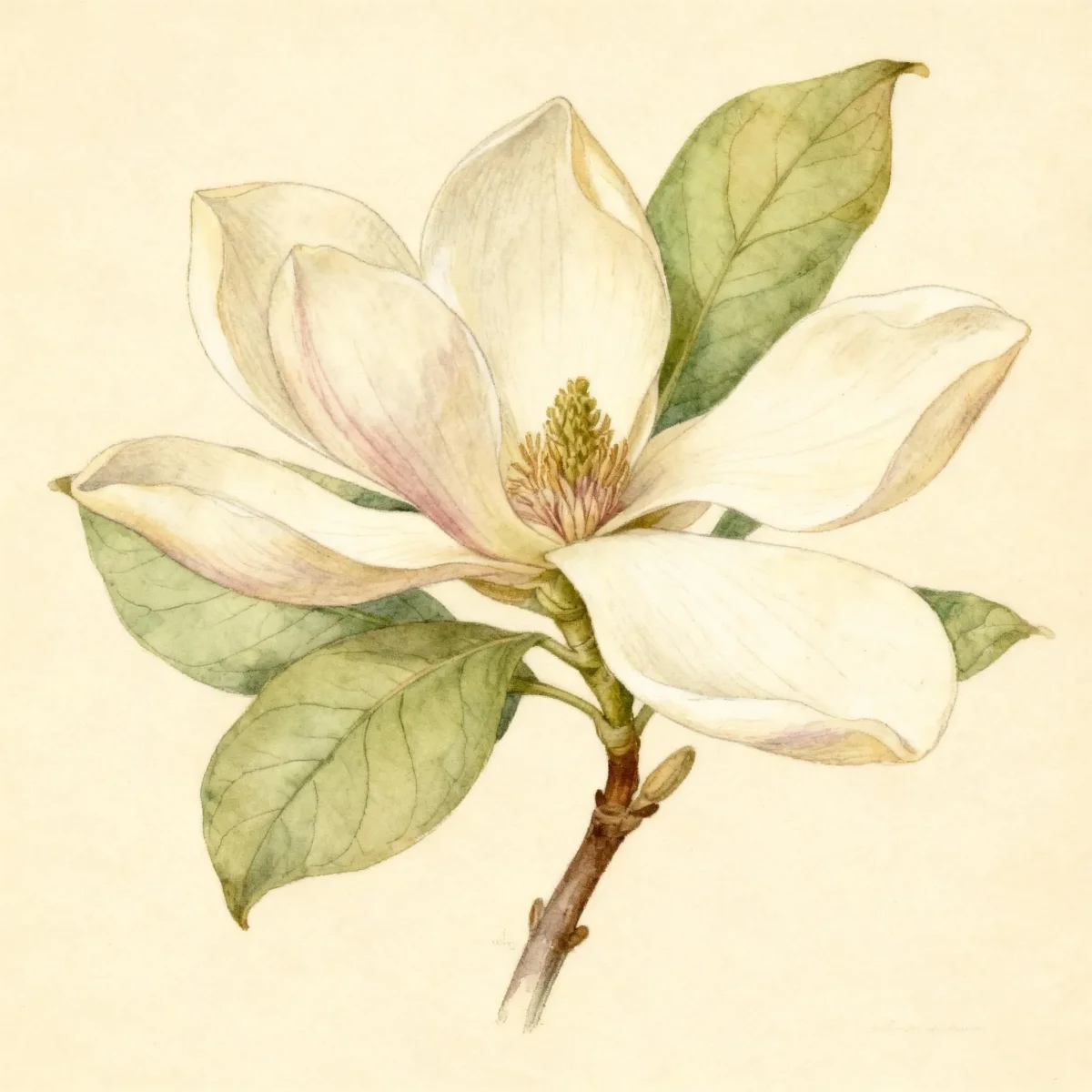
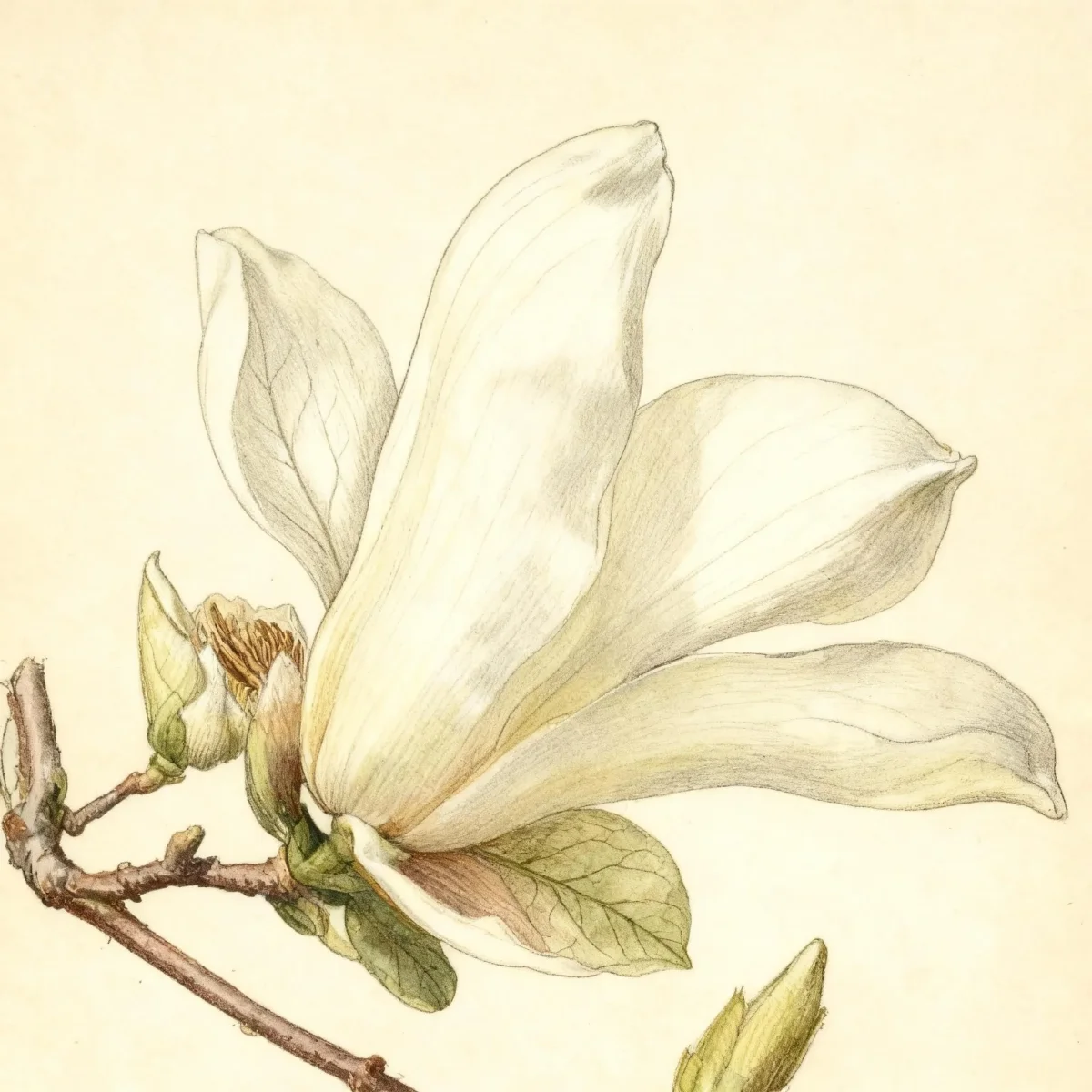
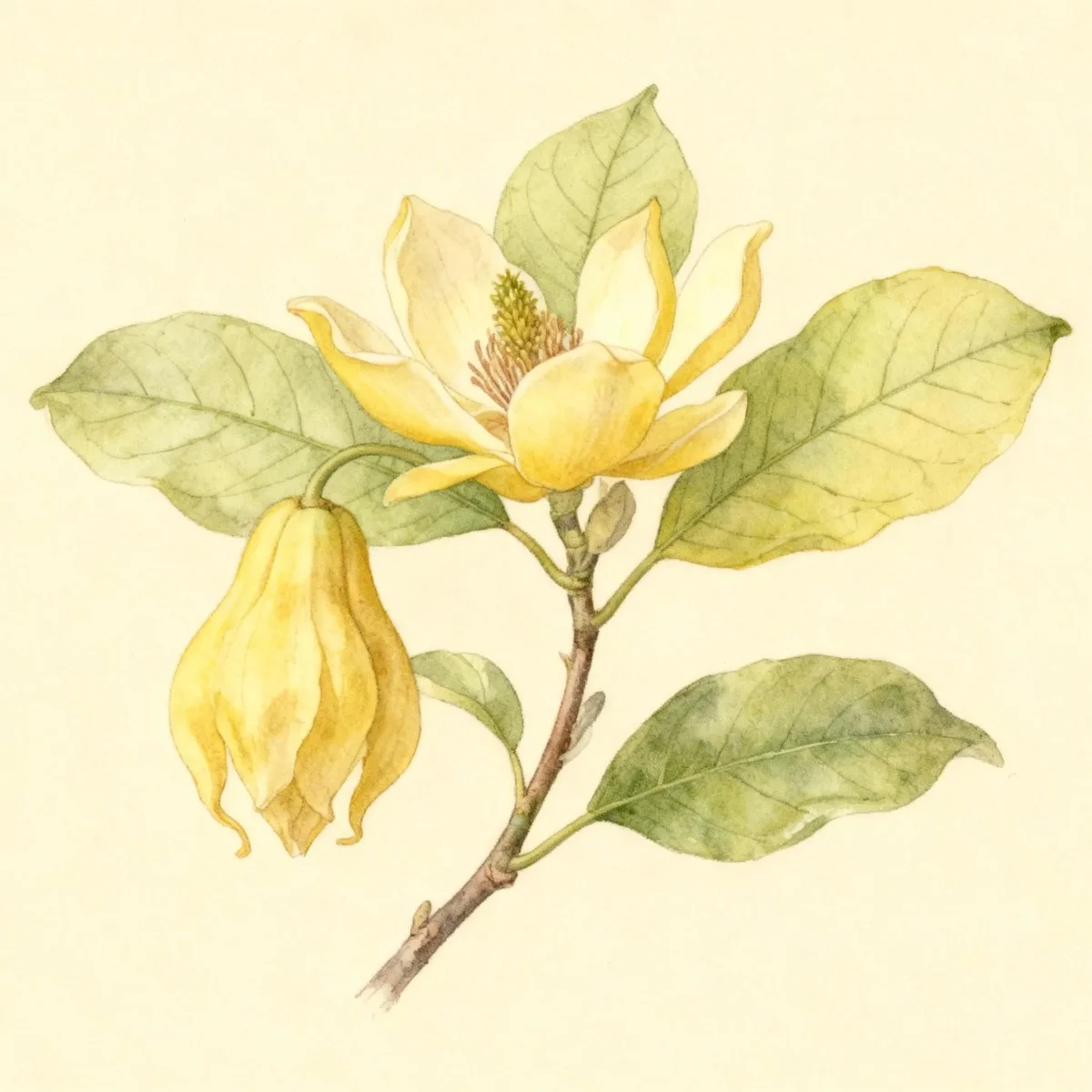
Magnolia (Magnolia × brooklynensis 'Woodsman')
Magnolia × brooklynensis 'Woodsman' is a low-maintenance, deciduous tree prized for its unique, multi-hued spring blossoms.
Scroll down to discover growing tips, care requirements, companion plants, and more
Complete Plant Information
Overview
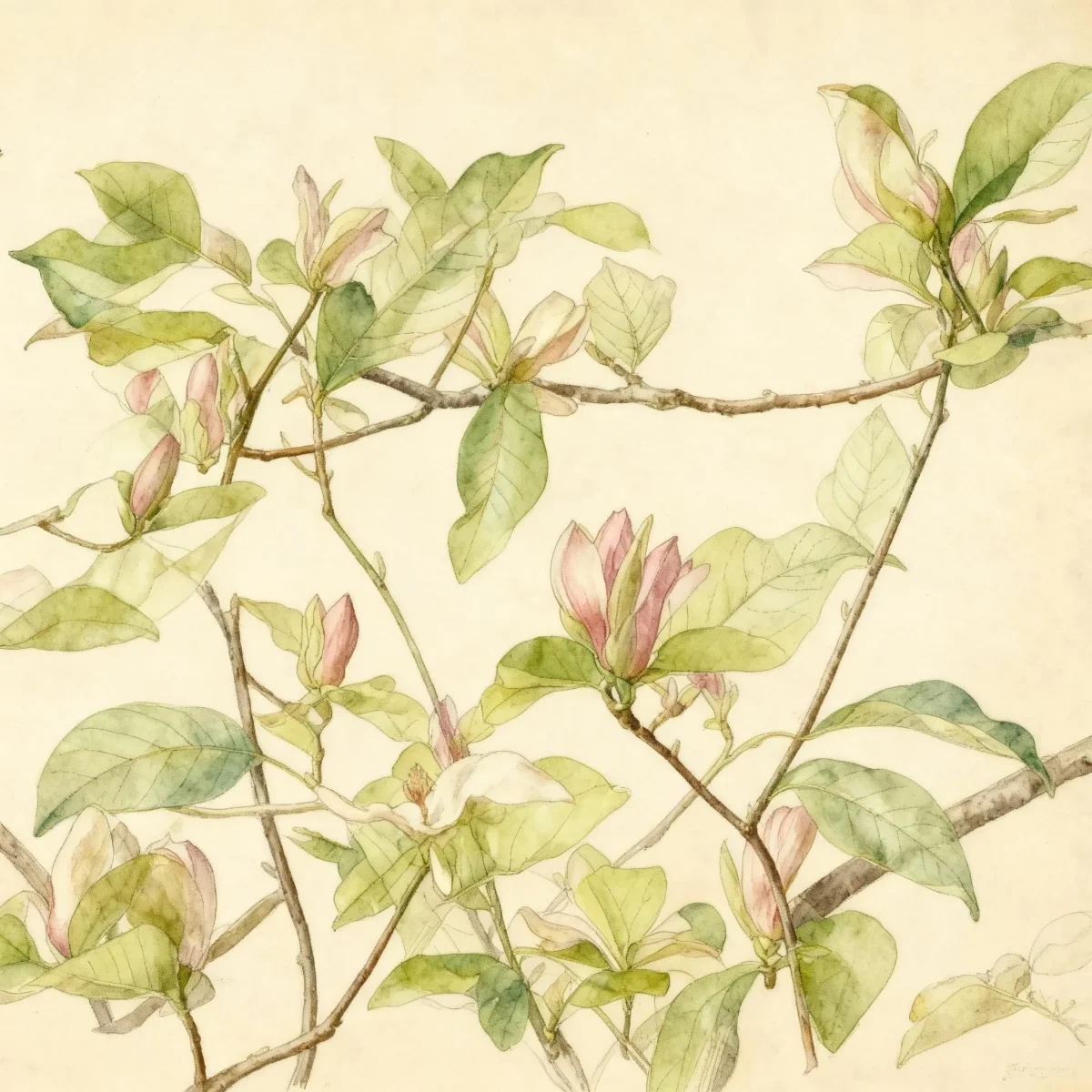
Magnolia × brooklynensis ‘Woodsman’ is a highly valued deciduous tree, celebrated for its unique, multi-toned floral display in late spring. This hybrid Magnolia offers gardeners an often low-maintenance option that matures into a substantial specimen tree, providing both structure and seasonal interest. Its unusual bloom colors—a combination of green, yellow, pink, and purple—set it apart from more traditional white or pink flowering Magnolias.
Originating at the Brooklyn Botanic Garden, this cultivar exhibits good vigor, developing into a striking feature in the landscape. While its growth rate is commendable, Magnolia × brooklynensis ‘Woodsman’ requires consideration regarding siting to ensure protection from harsh spring weather that might prematurely force buds.
Gardeners seeking a resilient, relatively easy-to-care-for flowering tree that offers significant visual impact should consider the Magnolia × brooklynensis ‘Woodsman’. Its mature size makes it suitable as a small shade tree for sunny areas where its spring color can be fully appreciated before the canopy fully leafs out.
Fast Facts
- Plant Family: Magnoliaceae
- Plant Type: Tree
- Hardiness Zones: USDA Zones 5-9
- Size at Maturity:
- Height: 20-30 ft
- Spread: 12-20 ft
- Bloom Time: May
- Bloom Description: Combination of green, yellow, pink and purple
- Sun Exposure: Full sun to part shade
- Water Needs: Medium
- Maintenance Level: Low
How to Grow
Planting should occur during the dormant season—either early spring or fall—in a location protected from strong winds. The ideal environment for Magnolia × brooklynensis ‘Woodsman’ requires moist, slightly acidic, organically rich, well-drained loams. Avoid southern exposures near buildings, as reflected heat can prematurely trigger bud break, leading to frost damage on the developing flowers.
Consistent moisture is crucial for the successful establishment and long-term health of this Magnolia. Plants are intolerant of soil extremes, meaning they neither like to dry out completely nor sit in soggy conditions. Ensure regular watering, especially during dry spells, and apply a thick layer of mulch over the root zone to help moderate soil temperature and retain moisture.
Maintenance for this low-maintenance hybrid is generally minimal once established. Pruning should be done sparingly, usually only to remove crossing or damaged branches. Be aware that the Magnolia × brooklynensis ‘Woodsman’ develops deeply and does not transplant well once mature, so select the final location carefully during planting.
Landscape Uses
As a flowering tree, Magnolia × brooklynensis ‘Woodsman’ excels as a specimen planting where its unique spring performance can be the focal point of the garden. Its eventual height and spread make it an excellent candidate for a small shade tree, providing dappled cover in sunny areas of the yard. Consider placing it where it can be viewed from a window or near a patio, allowing appreciation of the detailed, four-colored blooms.
This particular Magnolia variety works well as an accent plant against evergreen backdrops, which accentuate the unusual flower tones. While it may be the star of its own show, pairing it with spring-flowering bulbs planted beneath the canopy, such as daffodils or tulips, can extend the spring color sequence before the tree’s foliage fully develops.
Standout Features
Flower Qualities
- Showy
Noteworthy Characteristics
Bred by J. C. McDaniel and introduced in 1975, Magnolia × brooklynensis ‘Woodsman’ matures into a spreading tree reaching up to 30 feet tall. It features cup-shaped flowers up to 4 inches across, displaying an unusual yet complementary mix of green, yellow, pink, and purple hues, blooming profusely in late spring when the Glossy green leaves are emerging.
Tolerances
No specific tolerances were listed in the provided data, but cultural requirements suggest intolerance of soil extremes (dry or wet).
Potential Problems
This specific Magnolia hybrid experiences few serious insect or disease issues when sited correctly, contributing to its low maintenance rating. Gardeners must remain diligent regarding potential late spring frosts, as these events can severely damage the flower buds or newly opened blossoms, wiping out the seasonal display. Protecting the plant from wind exposure is also beneficial to prevent physical damage to the developing flowers and foliage.
Frequently Asked Questions
What hardiness zones is Magnolia × brooklynensis ‘Woodsman’ suitable for?
The Magnolia × brooklynensis ‘Woodsman’ thrives in USDA Hardiness Zones 5 through 9.
How large does Magnolia × brooklynensis ‘Woodsman’ grow?
This tree typically matures to a height between 20 and 30 feet tall, with a spread ranging from 12 to 20 feet wide.
What sun exposure does Magnolia × brooklynensis ‘Woodsman’ need?
It performs best when situated in full sun to areas receiving partial shade.
When does Magnolia × brooklynensis ‘Woodsman’ bloom?
This Magnolia variety blooms in May, offering its characteristic combination of green, yellow, pink and purple flowers.
Conclusion
The Magnolia × brooklynensis ‘Woodsman’ stands out as an exceptional specimen, delivering a low-maintenance commitment coupled with a visually stunning, multi-colored floral show each spring. If you are looking to incorporate this unique cultivar into your garden, ensure you provide the necessary protection from harsh winds and focus on consistent soil moisture management for your new Magnolia.
Companion Planting
When selecting companions for Magnolia × brooklynensis ‘Woodsman’, prioritize plants that share similar preferences for slightly acidic, organically rich, moist, well-drained soil. Smaller, shade-tolerant shrubs or groundcovers work well beneath the canopy once the tree matures, provided they do not compete aggressively for surface moisture. Consider planting acid-loving, shade-tolerant plants like Azaleas, Rhododendrons, or Hellebores near the base.
Ensure that any companion choices placed too closely do not require deep cultivation, as the Magnolia roots can be shallow and sensitive to disturbance, especially once established. Utilizing a deep layer of organic mulch over the root zone will help suppress weeds while maintaining the cool, moist conditions that the Magnolia requires to flourish.
Seasonal Care Calendar
Spring preparation is paramount for this plant; ensure the site is protected from wind and monitor late frost forecasts closely to gauge the risk to flower buds. After bloom finishes, apply a layer of organic mulch around the root zone, extending out to the drip line, but keep mulch away from the trunk itself.
Summer care revolves primarily around consistent watering. Since the overall culture emphasizes regular moisture, homeowners should institute a deep, regular watering routine, especially during heat waves, as the Magnolia cannot tolerate dry soil for extended periods. Avoid high-nitrogen summer fertilizers, which can encourage weak, late-season growth susceptible to winter damage.
Fall is the ideal time to check the placement of any new plantings or make final structural pruning decisions before dormancy sets in. As the tree is deciduous, autumn cleanup should focus on removing large fallen leaves if desired, although decomposed leaves contribute positively to soil organic matter.