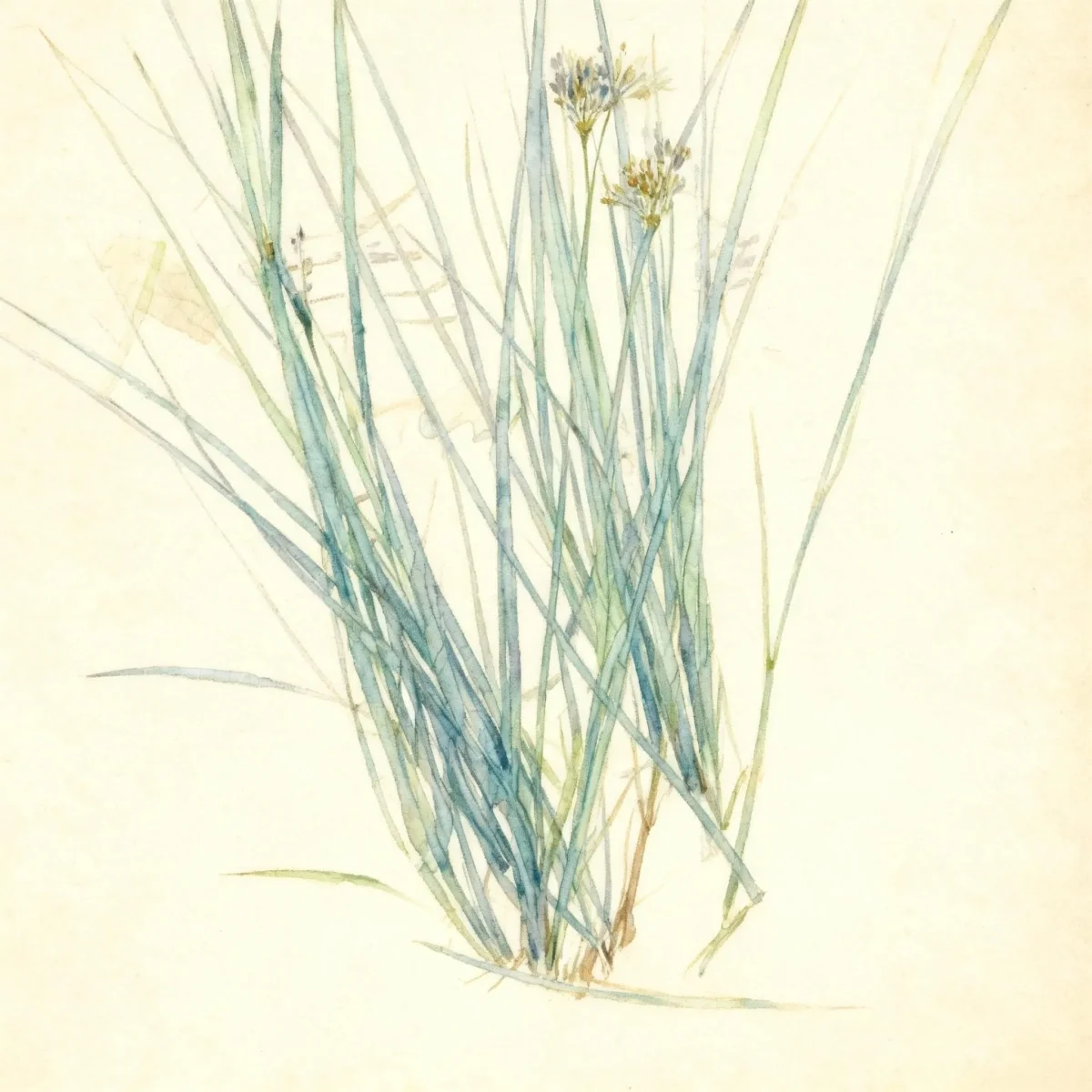
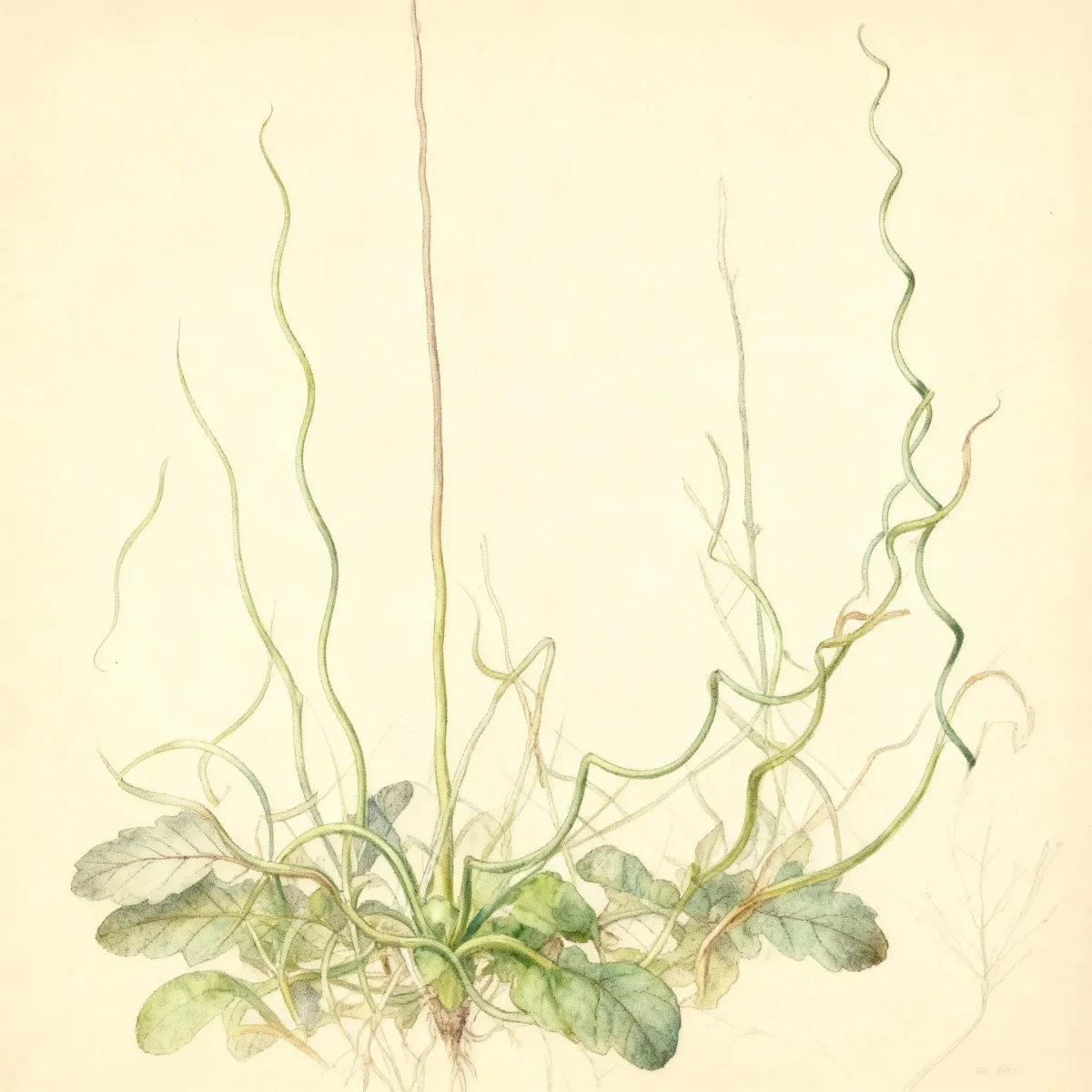
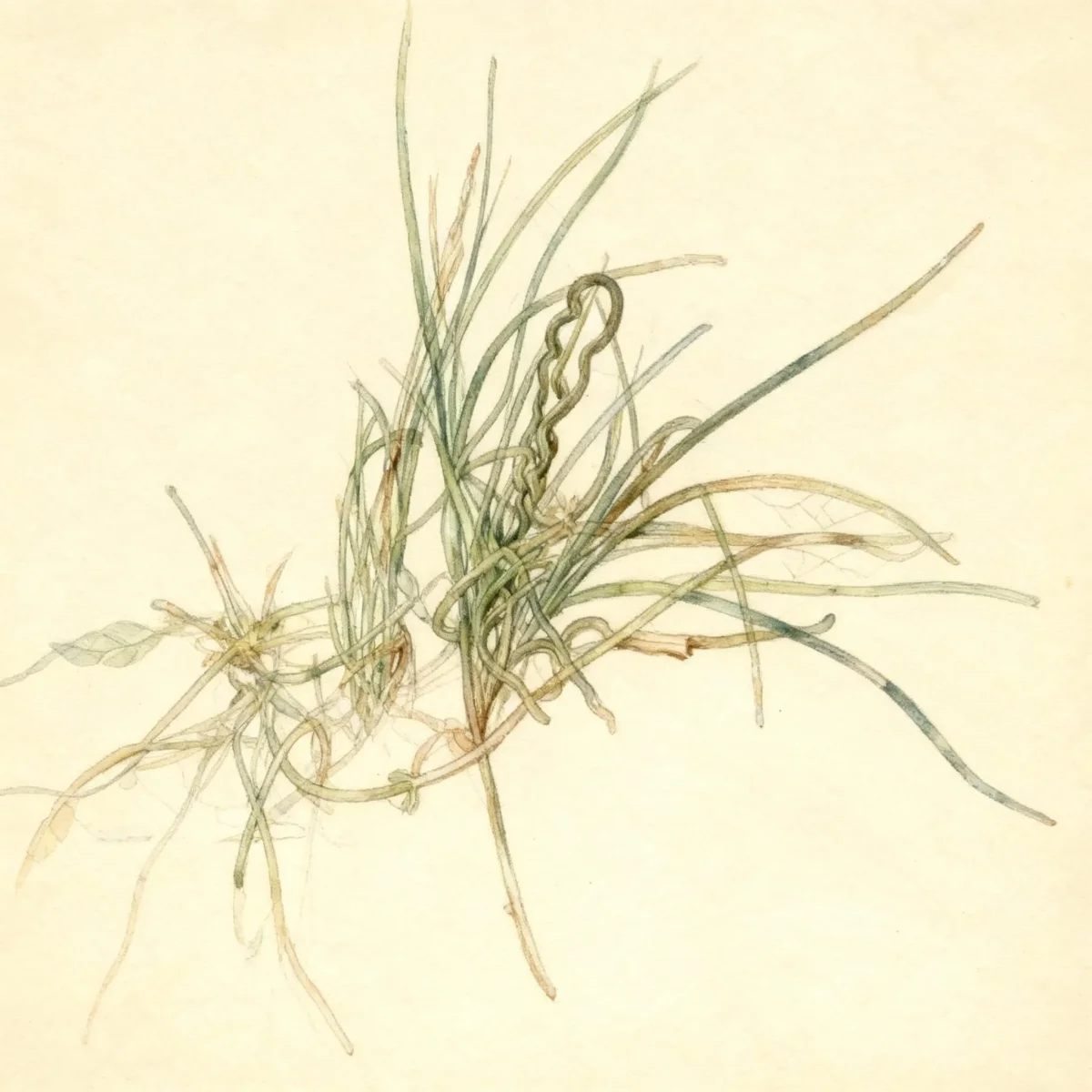
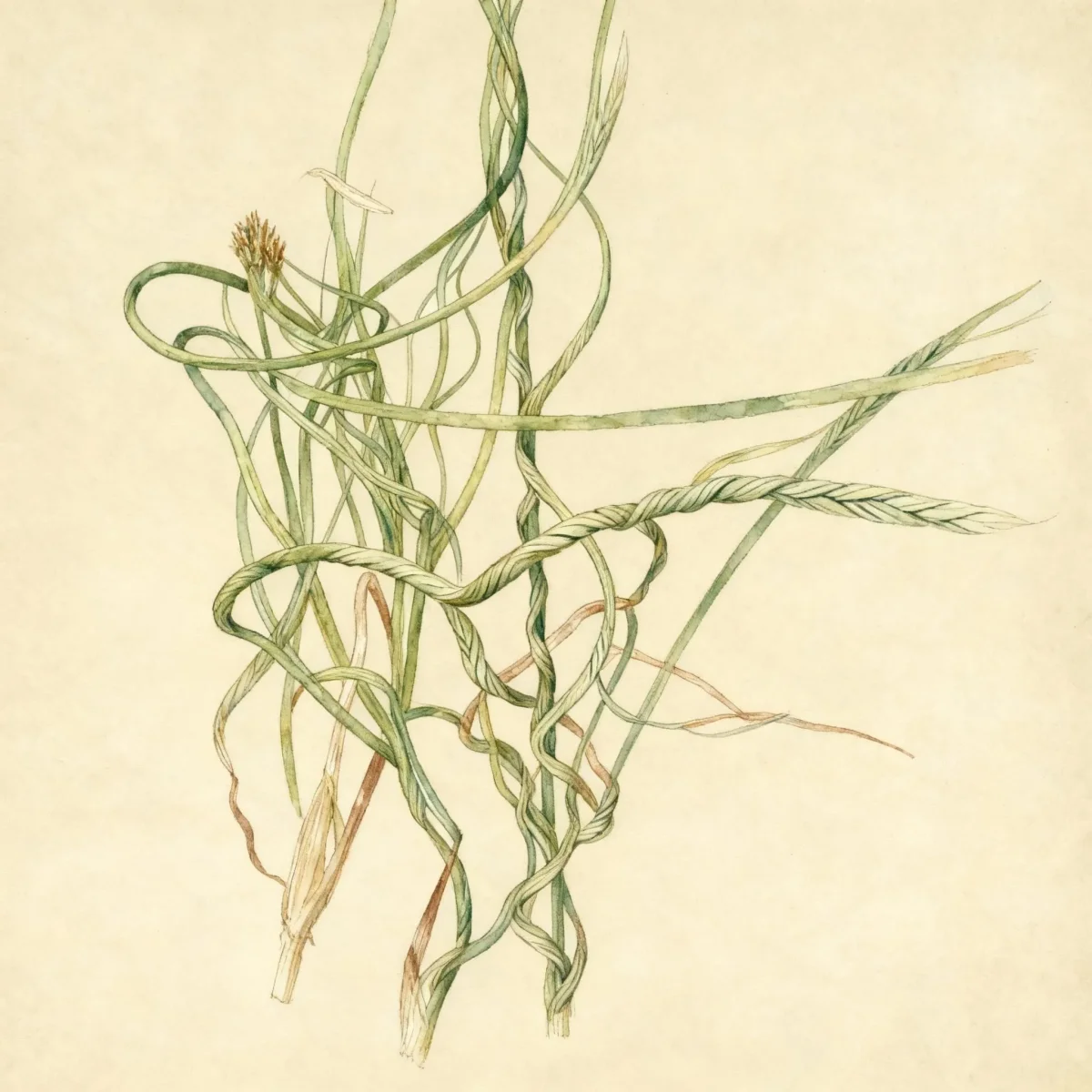
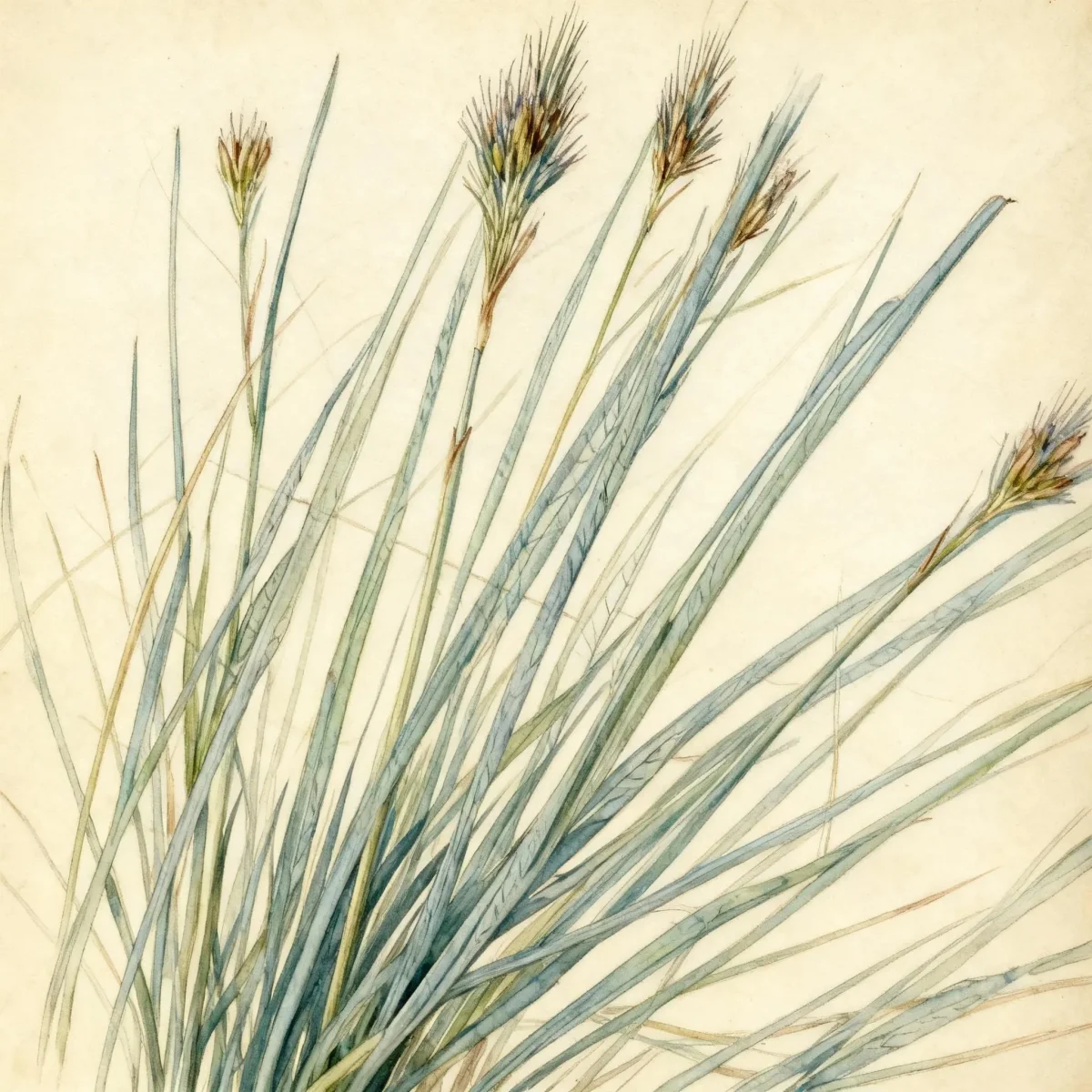
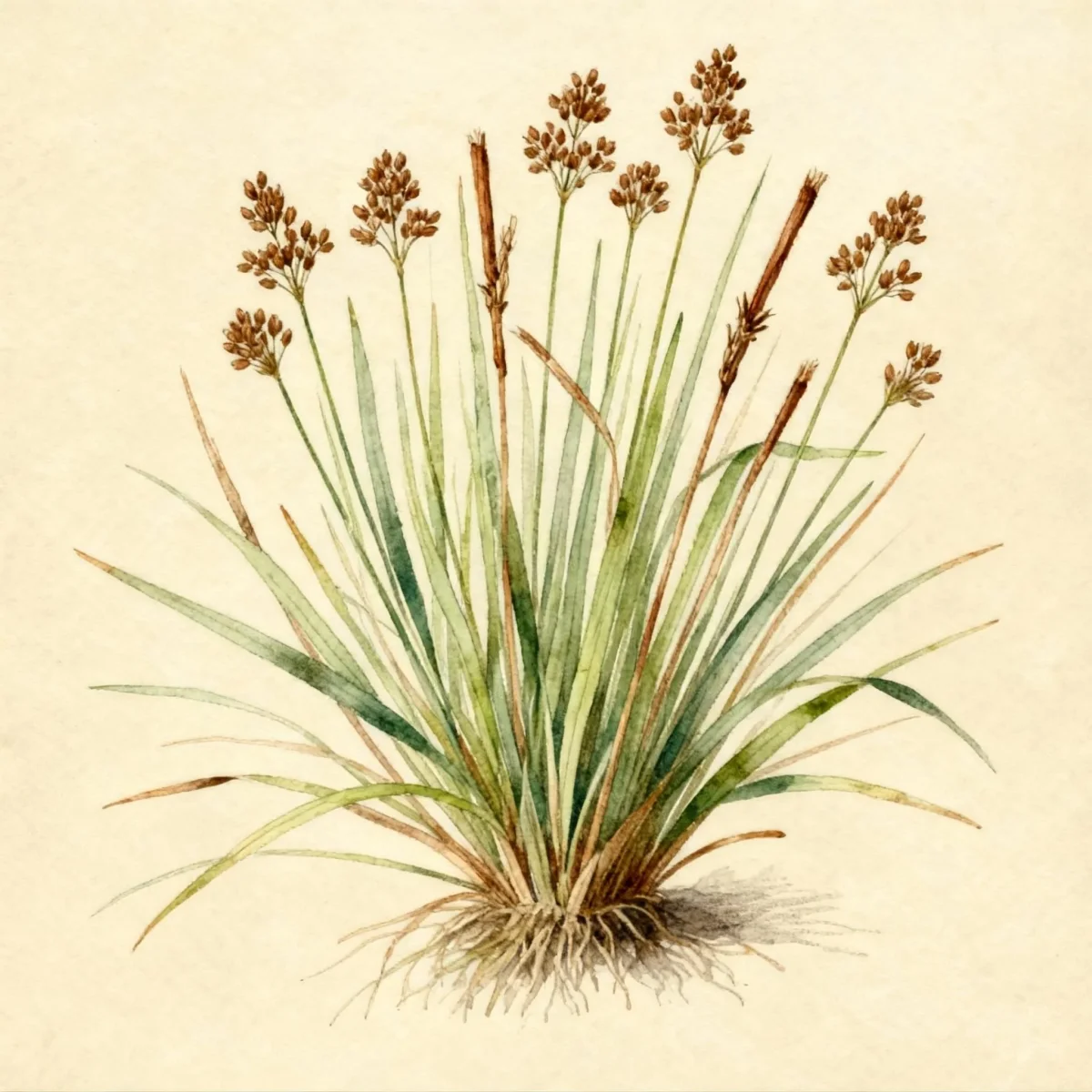
Hard rush (Juncus inflexus 'Afro')
Juncus inflexus 'Afro', or Hard rush, offers unique blue-green spiraled foliage, thriving in wet soils with low maintenance. Ideal for rain gardens.
Scroll down to discover growing tips, care requirements, companion plants, and more
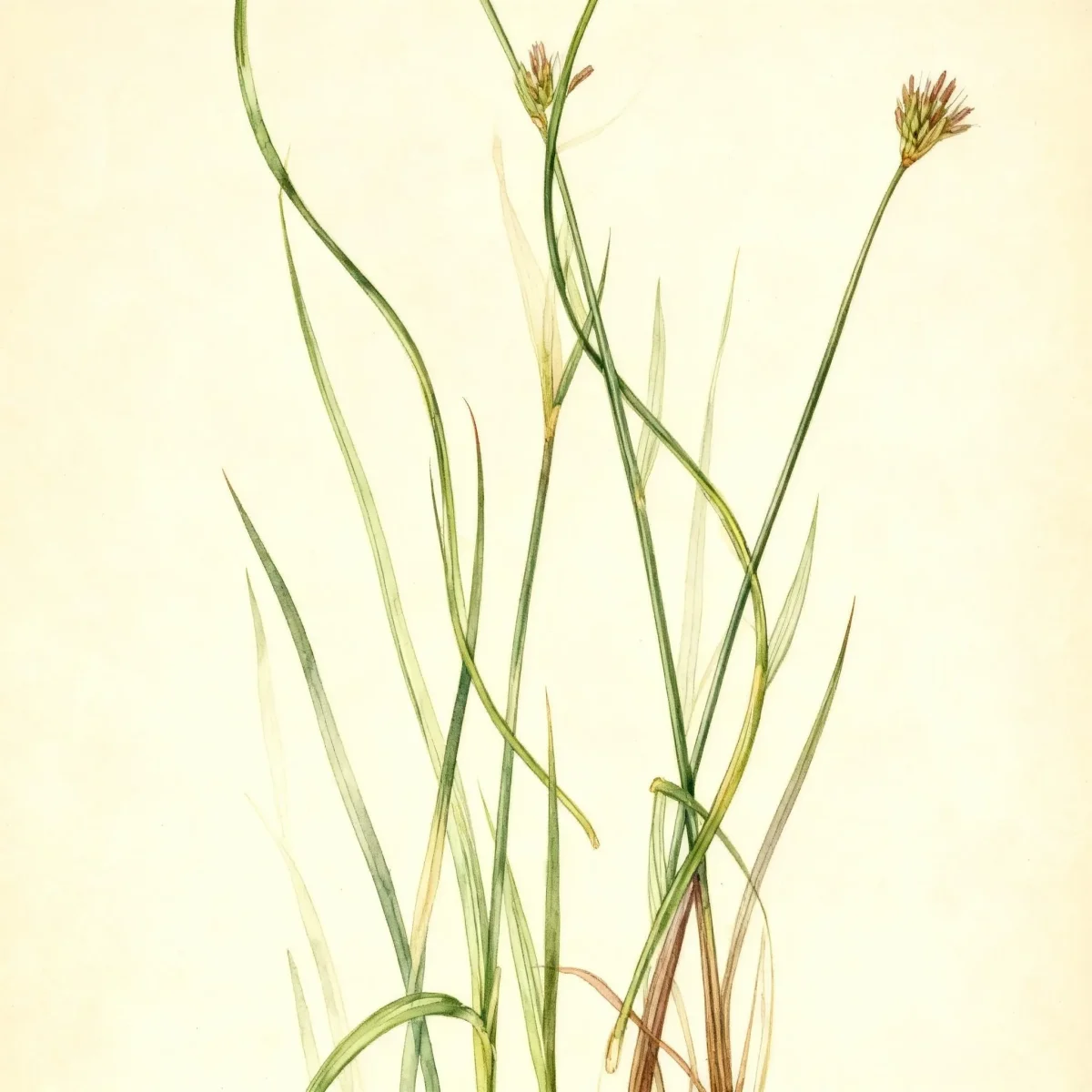
Complete Plant Information
Overview
Juncus inflexus ‘Afro’, commonly known as Hard rush, is highly valued by designers for its distinctive architectural foliage. This cultivar features tightly curled, powdery blue, cylindrical stems that add unique texture to waterside plantings. It is a rhizomatous perennial that forms dense tufts, making it an excellent choice for areas requiring consistent moisture.
While the standard Juncus inflexus can grow quite tall, the compact ‘Afro’ selection maintains a manageable size, usually topping out around 18 inches, allowing for tighter integration into smaller water features or containers. Gardeners appreciate its low maintenance profile once established and its ability to handle challenging wet conditions where many other ornamentals fail.
This compelling rush brings authenticity to transitional zones, moving seamlessly from standing water into moist garden beds. Using Juncus inflexus ‘Afro’ ensures year-round visual interest with its unique spiraled structure, functioning as a reliable structural element in aquatic and bog gardens.
Fast Facts
- Plant Family: Juncaceae
- Plant Type: Rush or Sedge
- Hardiness Zones: USDA Zones 4-9
- Size at Maturity:
- Height: 1-1.5 ft
- Spread: 1-2 ft
- Bloom Time: June to August
- Bloom Description: Brownish
- Sun Exposure: Full sun
- Water Needs: Wet
- Maintenance Level: Low
How to Grow
Plant Juncus inflexus ‘Afro’ in spring or early fall when soil moisture is high. This rush thrives in full sun, though it tolerates light shade, preferring neutral to alkaline soils. Ensure the location provides consistently moist to wet conditions; this plant excels when placed in standing water up to three inches deep.
Watering is simple: maintain constant moisture. This species tolerates heavy soils well and establishes slowly via creeping rhizomes once settled. Avoid letting the soil dry out completely, even if it is only slightly moist rather than fully submerged.
Maintenance is remarkably low. Foliage usually dies back in harsher winter climates, requiring clean up in early spring before new growth emerges. If you live in a warmer region, the foliage may persist through winter but benefit from an annual cutback in early spring to refresh appearance. Spring division is the easiest method for propagating clumps of Hard rush.
Landscape Uses
The suggested uses for Juncus inflexus ‘Afro’ center heavily around managing moisture and defining edges. It is highly effective when planted at the margin of a pond or integrated directly into bog gardens, acting as a good water garden accent. These rushes create zones of vertical structure among rocks or pebbles near the water’s edge.
For gardeners managing stormwater runoff, Hard rush serves dual duty: providing structure while also offering erosion control in transitional waterside areas. Its upright habit contrasts beautifully with broad-leafed moisture-loving perennials. Consider using it in large containers where you can consistently provide the necessary moisture levels.
In traditional landscape design, the tightly curled blue-green foliage of this cultivar offers year-round architectural interest that complements softer, flowering plants. It is a superb choice for rain garden installations needing reliable performance when saturated.
Standout Features
Flower Qualities
- Insignificant
Noteworthy Characteristics
Juncus inflexus, commonly known as hard rush or blue rush, is a rhizomatous, densely-tufted perennial with upright, cylindrical, blue-green stems/leaves. This is a true rush that will grow to as much as 40” tall. The ‘Afro’ cultivar is specifically prized because it is compact (to about 18” tall) and features powdery blue, cylindrical leaves which are noticeably and tightly curled, giving it a unique corkscrew-like aesthetic unavailable in many other rushes. Tiny, straw to reddish-brown flowers appear in loose cymes near the stem tips in summer, followed by small brown seed capsules.
Tolerances
- Erosion
- Wet Soil
Potential Problems
This plant exhibits no serious insect or disease problems, making it a very reliable selection for challenging wet sites. Because it is a true rush, standard pest pressures common to ornamental grasses or sedges are rare. Management concerns are almost exclusively related to ensuring adequate water supply during summer droughts.
Frequently Asked Questions
What hardiness zones is Hard rush suitable for?
Juncus inflexus ‘Afro’ is reliably cold-hardy in USDA Zones 4 through 9, providing good adaptability across a wide range of climates.
How large does Juncus inflexus ‘Afro’ grow?
This cultivar typically reaches a height between 1 and 1.5 feet, spreading slightly to form clumps 1 to 2 feet wide.
What sun exposure does Hard rush need?
For the best growth and deepest blue color in the foliage, Juncus inflexus ‘Afro’ should receive full sun, although it will tolerate light shade conditions.
When does Hard rush bloom?
Blooming occurs from June to August, featuring very small, somewhat insignificant brownish flowers located near the tips of the stems.
Conclusion
The unique, spiraled blue-green stems of Juncus inflexus ‘Afro’ make it an indispensable element for water gardens and saturated landscapes. Its low maintenance requirements and tolerance for wet soil ensure reliable performance. Before planting this visually appealing Hard rush, confirm that your chosen site can consistently provide the necessary moisture to see this architecturally interesting rush thrive.
Companion Planting
When selecting companions for Juncus inflexus ‘Afro’, prioritize other moisture-loving plants that thrive in full sun. This creates visual harmony in bog gardens or pond margins. Consider pairing the upright structure of the rush with broad-leaved plants like {Specific name of moisture-loving perennial: e.g., Caltha palustris (Marsh Marigold)} for textural contrast. Other rushes or sedges such as Iris species that prefer boggy feet also make excellent partners, reinforcing the wetland aesthetic.
Propagation Tips
The most straightforward method for increasing your stock of Hard rush is division. This process should be undertaken in early spring just as new growth begins to emerge, ensuring the plant has maximum time to recover before summer heat sets in. Carefully lift the clump and divide it into smaller sections, making sure each division retains healthy, established rhizomatous material. Planting these divisions immediately into consistently moist soil encourages rapid establishment.