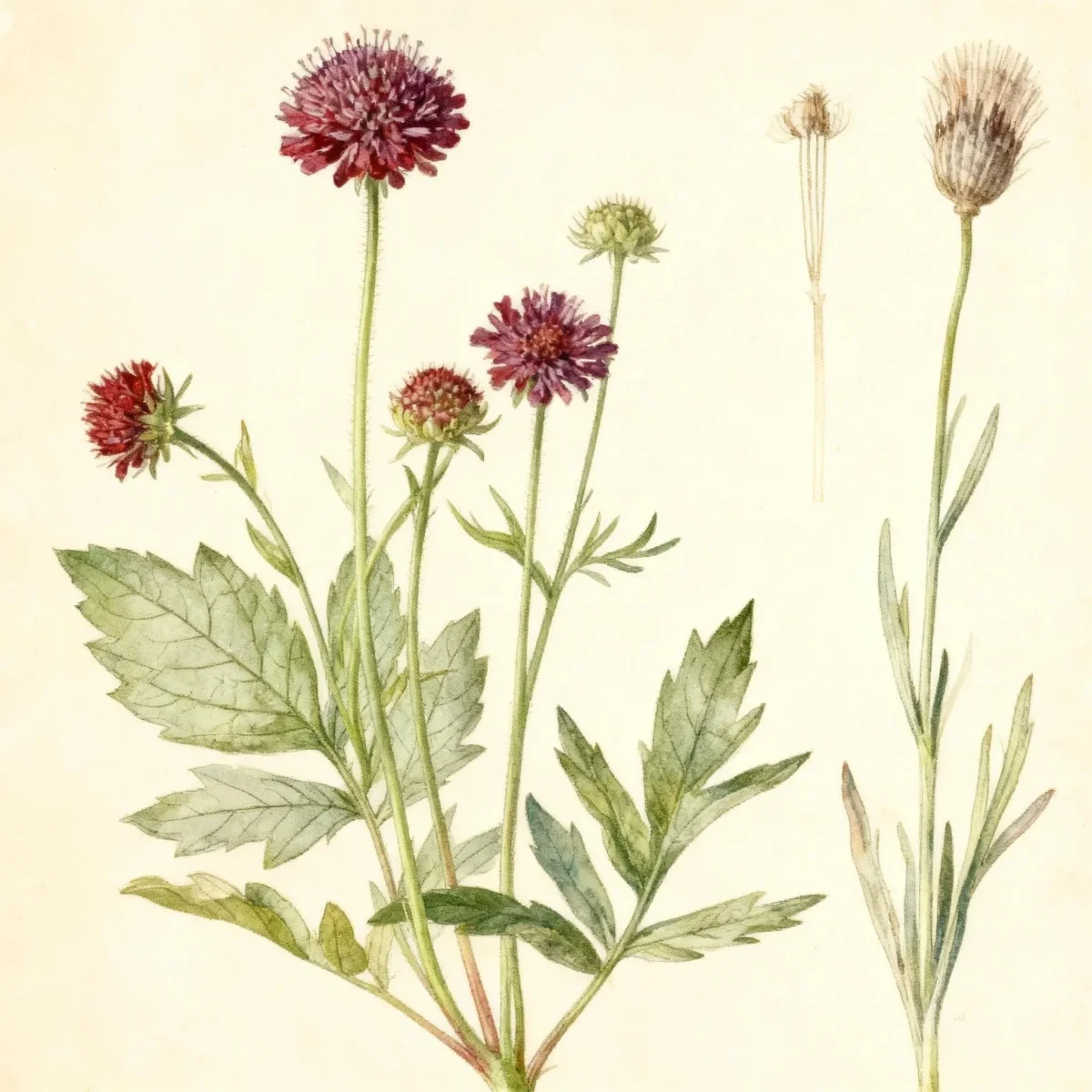
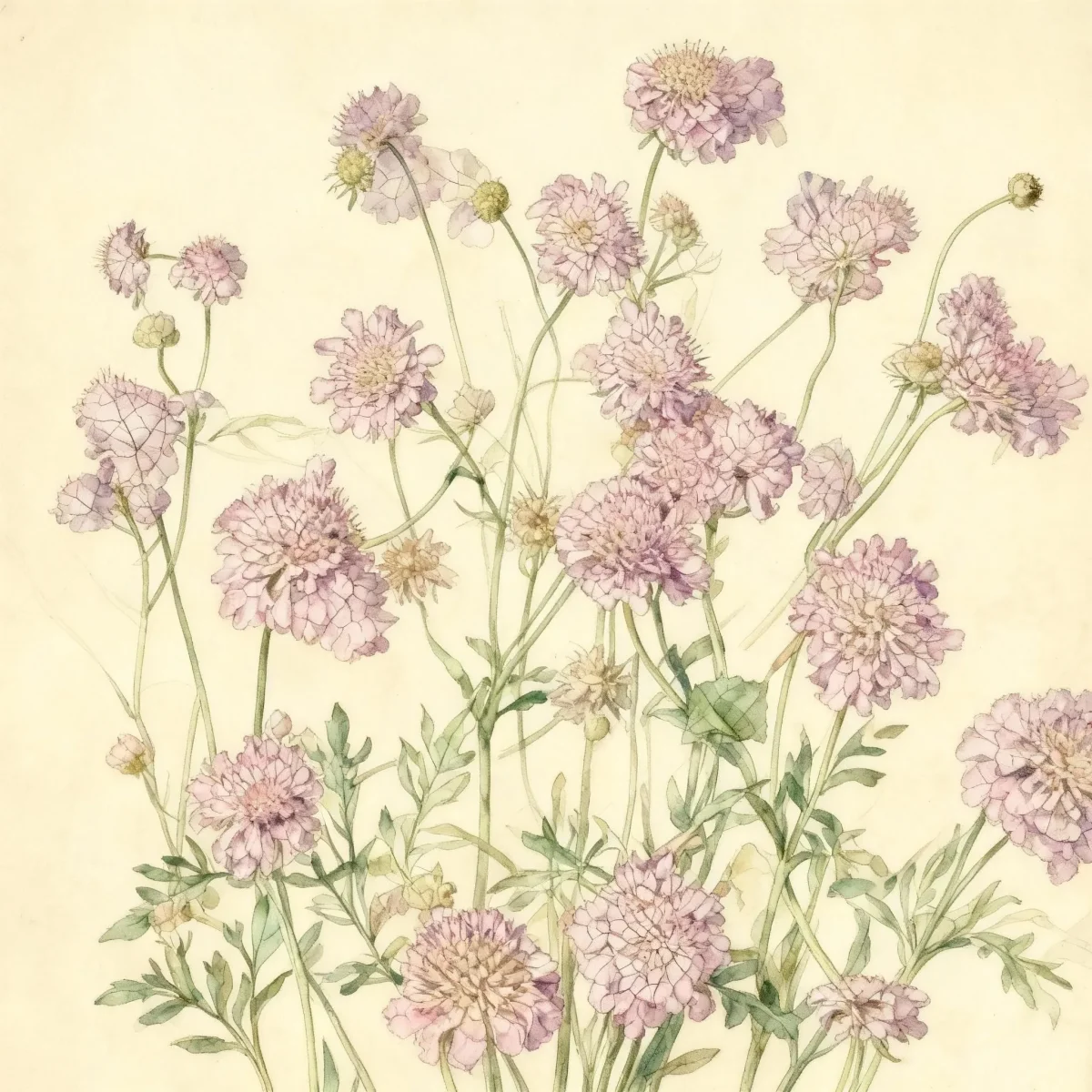
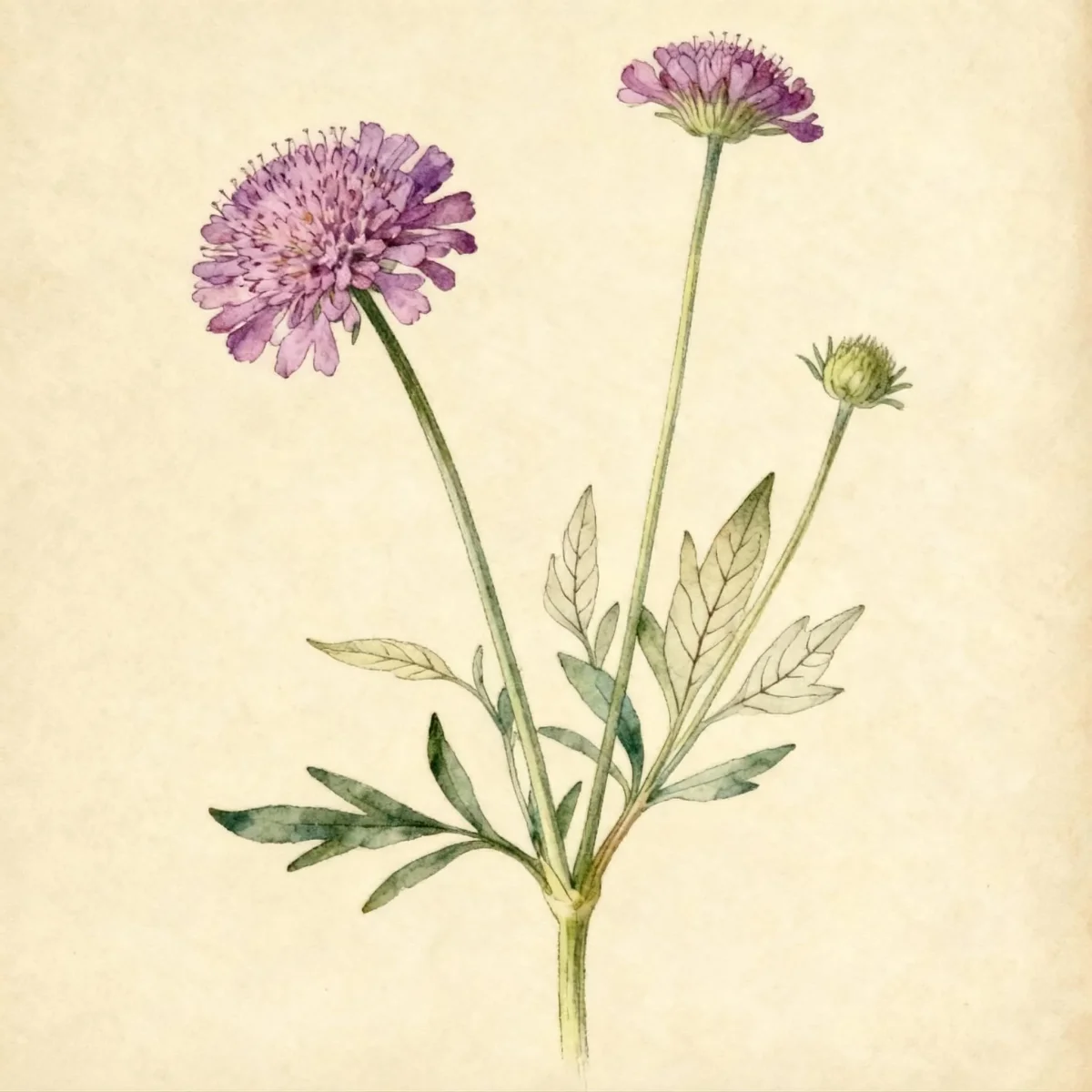
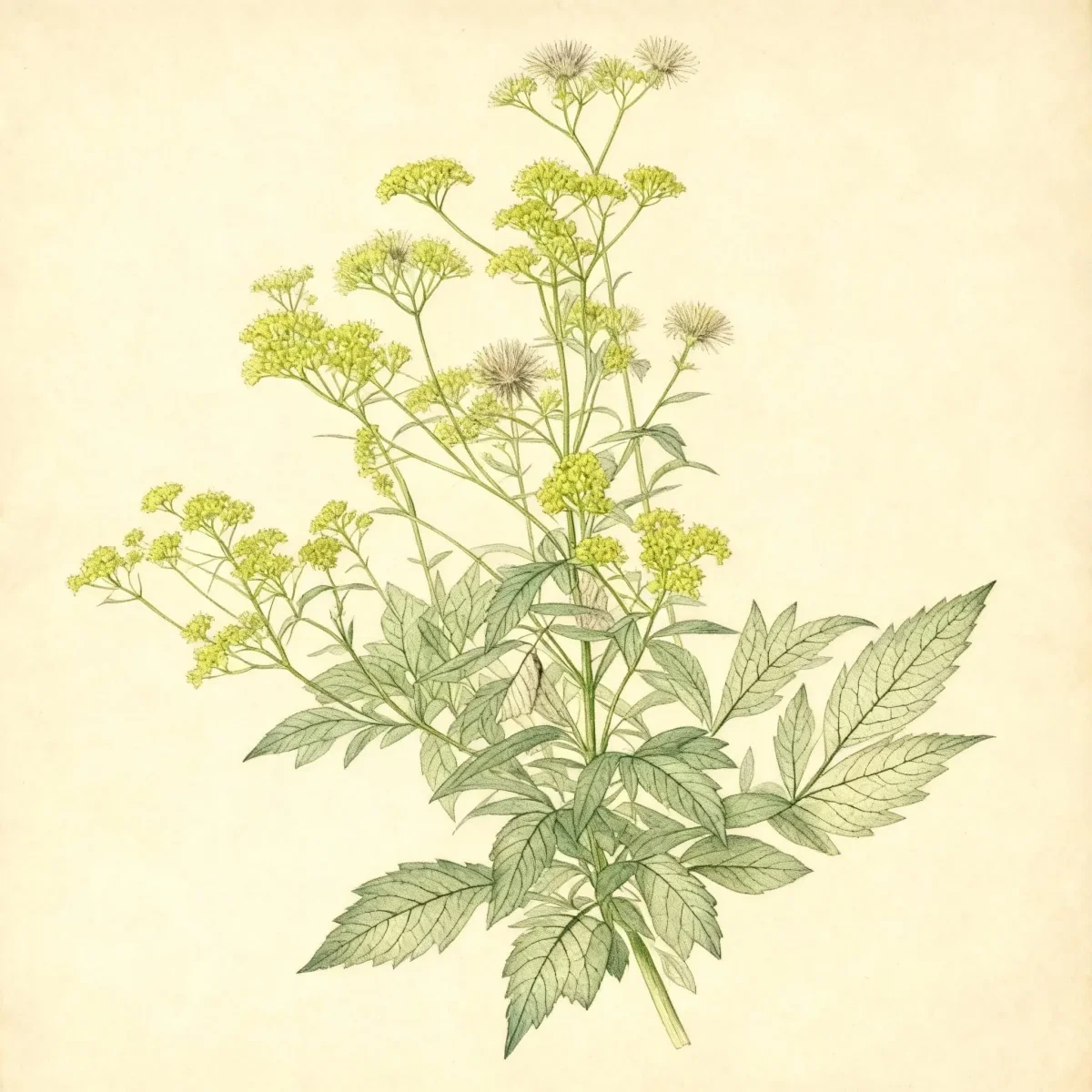
Knautia (Knautia macedonica)
Discover Knautia macedonica, a low-maintenance herbaceous perennial offering showy burgundy blooms from July through September in full sun.
Scroll down to discover growing tips, care requirements, companion plants, and more
Complete Plant Information
Overview
The Macedonian scabious, commonly known as Knautia, brings distinctive color and texture to the perennial border. Its value lies in its long bloom period, providing masses of deep purplish-red, dome-shaped flower heads from mid-summer well into autumn. This upright, clump-forming Knautia macedonica is a generally low-maintenance plant, ideal for gardeners seeking reliable color without excessive fuss.
Native to Southeastern Europe, these herbaceous perennials perform best in conditions mimicking cooler summers, contrasting slightly with the heat experienced in southern latitudes. The architecture provided by Knautia, with its slender branching stems holding the unique blooms aloft, makes it an excellent textural component in mixed plantings.
For gardeners prioritizing fresh or dried materials, the flower qualities of Knautia macedonica are highly appealing. Integrating this species into your landscape ensures a steady supply of unique burgundy accents, provided cultural needs—particularly drainage and sun exposure—are met.
Fast Facts
- Plant Family: Caprifoliaceae
- Plant Type: Herbaceous perennial
- Native Range: Southeastern Europe
- Hardiness Zones: USDA Zones 5-9
- Size at Maturity:
- Height: 1.5-2 ft
- Spread: 1.5-2 ft
- Bloom Time: July to September
- Bloom Description: Burgundy
- Sun Exposure: Full sun
- Water Needs: Medium
- Maintenance Level: Low
How to Grow
Plant Knautia macedonica in average, medium-moisture soils that drain exceptionally well, as standing water can quickly prove fatal to this perennial. Full sun exposure is crucial for maintaining strong, upright stems and abundant flowering. While this Knautia tolerates neutral to slightly alkaline soils, ensure you avoid overly rich or water-retentive conditions, especially where summers are hot.
Watering should be consistent, aiming for medium moisture levels—deep watering during dry spells is better than frequent shallow sprinkling. Maintenance is generally considered low. A key maintenance task is promptly deadheading spent flower heads; this practice vigorously encourages the plant to produce additional blooms throughout its long season.
An important consideration for Knautia is site selection related to climate. Plants perform best where summer nights remain relatively cool. In exceedingly hot and humid southern climates, species plants often struggle, resulting in tall stems that twist or flop in the summer heat. Locating your Knautia in an area protected slightly from strong winds can also help support the branching stems. Species plants may exhibit self-seeding under ideal cultural conditions.
Landscape Uses
The unique texture and late-season color of Knautia make this plant highly valuable in mixed borders and cottage gardens. Grouping them in mass plantings, as suggested, allows the distinctive burgundy domes to read as a cohesive block of color against contrasting textures like ornamental grasses or silver-leaved perennials. They integrate beautifully into naturalized areas or meadow settings where their slightly wild appearance complements an informal design aesthetic.
Consider placing Knautia macedonica toward the middle to back third of a mixed perennial border, allowing shorter, earlier flowering plants to fulfill spring interest while this Knautia takes over in July. Because it forms a tidy clump and offers excellent cut flowers, it pairs well with traditional border favorites like Salvia, Echinacea, or Rudbeckia providing synergistic bloom times.
Standout Features
Flower Qualities
- Showy
- Good Cut
- Good Dried
Noteworthy Characteristics
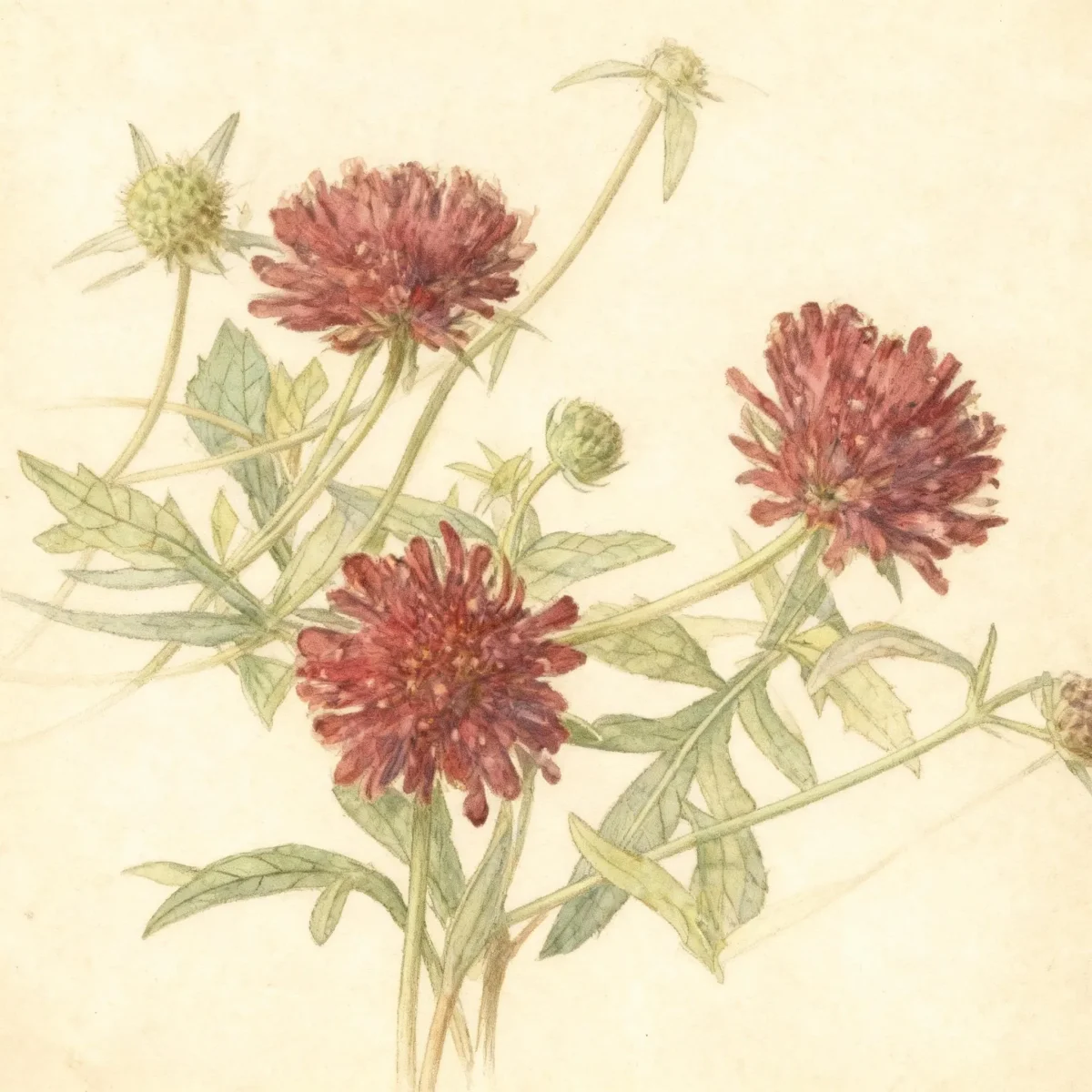
Knautia macedonica is an upright, clump-forming, somewhat short-lived perennial which typically grows 1.5-2’ tall. It features deep purplish-red, domed, scabiosa-like flower heads (to 1.5” across) atop slender, branching stems. The genus name honors German doctor and botanist Christoph Knaut, while the specific epithet references Macedonia on the Balkan Peninsula.
Tolerances
There are no specific tolerances listed in the provided data for this Knautia variety.
Potential Problems
Generally, Knautia macedonica does not suffer from serious insect or disease problems, making it a relatively robust choice. The primary issue gardeners face relates to environmental stress rather than pests. Plants may decline considerably by late summer, particularly in hot southern climates where persistent high temperatures and humidity stress the roots and stems. Ensure excellent drainage and consider shading the roots slightly if growing near the edge of its hardiness range to mitigate heat-related decline.
Frequently Asked Questions
What hardiness zones is Knautia suitable for?
This perennial thrives in USDA Hardiness Zones 5 through 9, requiring protection or supplemental care outside this range.
How large does Knautia macedonica grow?
Knautia macedonica typically reaches a mature height between 1.5 and 2 feet tall, with a similar spread of 1.5 to 2 feet.
When does Knautia macedonica bloom?
This plant offers blooms from July through September, presenting striking burgundy-colored flower heads.
What sun exposure does Knautia need?
For optimal performance, this herbaceous perennial requires a location receiving full sun throughout the day.
Conclusion
The reliability of its mid-to-late season color and its minimal maintenance requirements establish Knautia macedonica as a valuable addition to the summer garden landscape. Its distinctive burgundy blooms offer textural excitement perfect for cottage settings or contemporary borders. Before planting, confirm your site offers full sun and well-drained soil to ensure your Knautia thrives throughout its bloom season.
Companion Planting
When selecting partners for your Knautia macedonica, focus on plants that share similar cultural needs: full sun and medium, well-drained moisture. Because Knautia prefers neutral to alkaline soil, combining it with classic prairie perennials often works well. Pair it with Salvia nemorosa cultivars for continuous blue or purple contrast, or use ornamental grasses like Panicum or Calamagrostis to provide vertical structure and graceful movement around the solid mounds of the Macedonian scabious.
Propagation Tips
As a somewhat short-lived perennial, ensuring regeneration is key for long-term garden presence of Knautia. While this species may self-seed under optimum conditions, gardeners can proactively manage propagation through division or cuttings. Divisions of the clump should ideally be made in the spring before new growth flushes vigorously. Alternatively, softwood cuttings taken in early summer can be rooted to establish new, genetically identical plants, ensuring the continuation of desired bloom characteristics.