Golden rain tree (Koelreuteria paniculata 'September')
Koelreuteria paniculata 'September' is a low-maintenance Golden rain tree offering late-season yellow blooms and drought tolerance.
Scroll down to discover growing tips, care requirements, companion plants, and more
Complete Plant Information
Overview
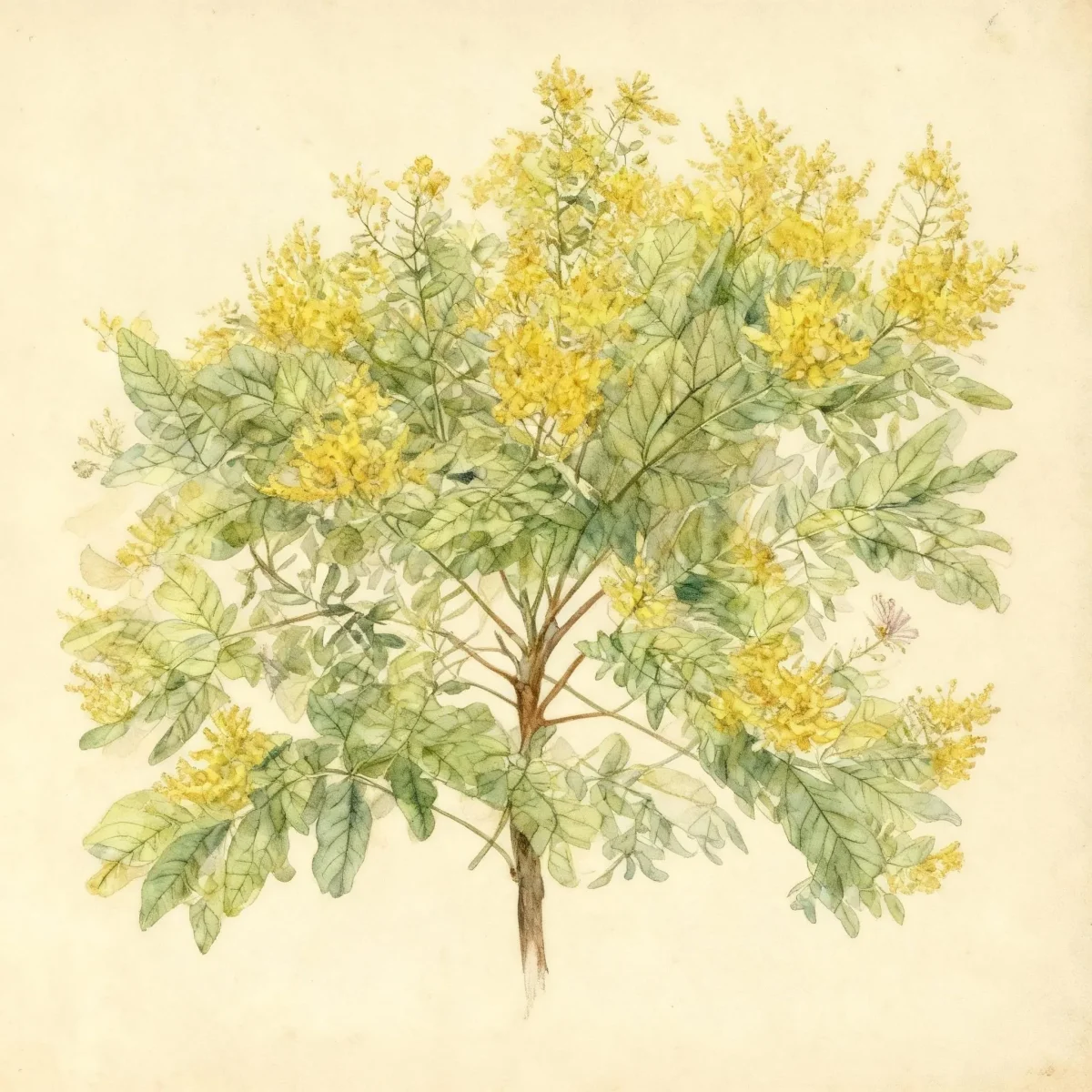
The Koelreuteria paniculata ‘September’, commonly known as the Golden rain tree, is a distinctive deciduous tree treasured for its late-season floral display. This cultivar provides brilliant yellow flowers later in the year than the species, extending summer interest into the early fall. As a small to medium-sized tree, it offers a rounded crown perfect for softening landscapes.
Valued for its adaptability, the Golden rain tree thrives in full sun and handles tough urban conditions remarkably well. It is noted for its low maintenance needs, making it a practical choice for various settings where year-round structure and seasonal color are desired. Gardeners appreciate how easily this tree establishes itself once situated properly.
The aesthetic appeal of Koelreuteria paniculata ‘September’ extends beyond its summer bloom; the foliage emerges with attractive bronze tints before maturing to green, and the resulting papery seed capsules add winter interest. Its resilience regarding soil type and drought tolerance makes the Koelreuteria paniculata ‘September’ an excellent specimen for sustainable landscaping.
Fast Facts
- Plant Family: Sapindaceae
- Plant Type: Tree
- Hardiness Zones: USDA Zones 5-9
- Size at Maturity:
- Height: 30-40 ft
- Spread: 30-40 ft
- Bloom Time: August to September
- Bloom Description: Yellow
- Sun Exposure: Full sun
- Water Needs: Dry to medium
- Maintenance Level: Low
How to Grow
Planting the Golden rain tree is best achieved in spring or fall, ensuring it receives full sun exposure for optimal flowering. This variety adapts well to a wide range of soils, preferring average conditions that are well-drained, though it tolerates clay soil well. Good drainage is key to long-term health, regardless of the soil matrix.
Once established, watering needs for Koelreuteria paniculata ‘September’ are minimal, requiring only dry to medium moisture levels. It exhibits strong drought tolerance, a desirable trait for low-input gardening. Fertilizing is rarely necessary; allow the tree to establish its root system naturally rather than encouraging excessive lush growth early on.
Pruning is generally light, mainly involving the removal of dead or rubbing branches when dormant. A critical care note for this cultivar: ‘September’ is listed as not being as winter hardy as the main species. Therefore, planting in a protected location, particularly in the cooler end of its range (USDA Zone 5), is highly recommended to prevent limb dieback during severe cold snaps.
Landscape Uses
The versatility of the Golden rain tree makes it a popular selection for mixed landscape designs. It excels as a small shade tree, large enough to offer relief from summer heat without overwhelming smaller properties. Its structure also lends itself well to placement within limited turf areas.
Due to its notable tolerance for air pollution and compacted soils, Koelreuteria paniculata ‘September’ is exceptional for use as a street tree along sidewalks, provided clearance from overhead wires is maintained. It serves beautifully as a specimen tree where its late-season yellow flowers can be prominently featured against evergreen backdrops or architectural elements.
For formal designs, utilize its consistent, rounded canopy as a repeating element in allees or large beds. Its ability to thrive near paved areas further enhances its value for urban and commercial properties looking for flowering canopy options.
Standout Features
Flower Qualities
- Showy
Noteworthy Characteristics
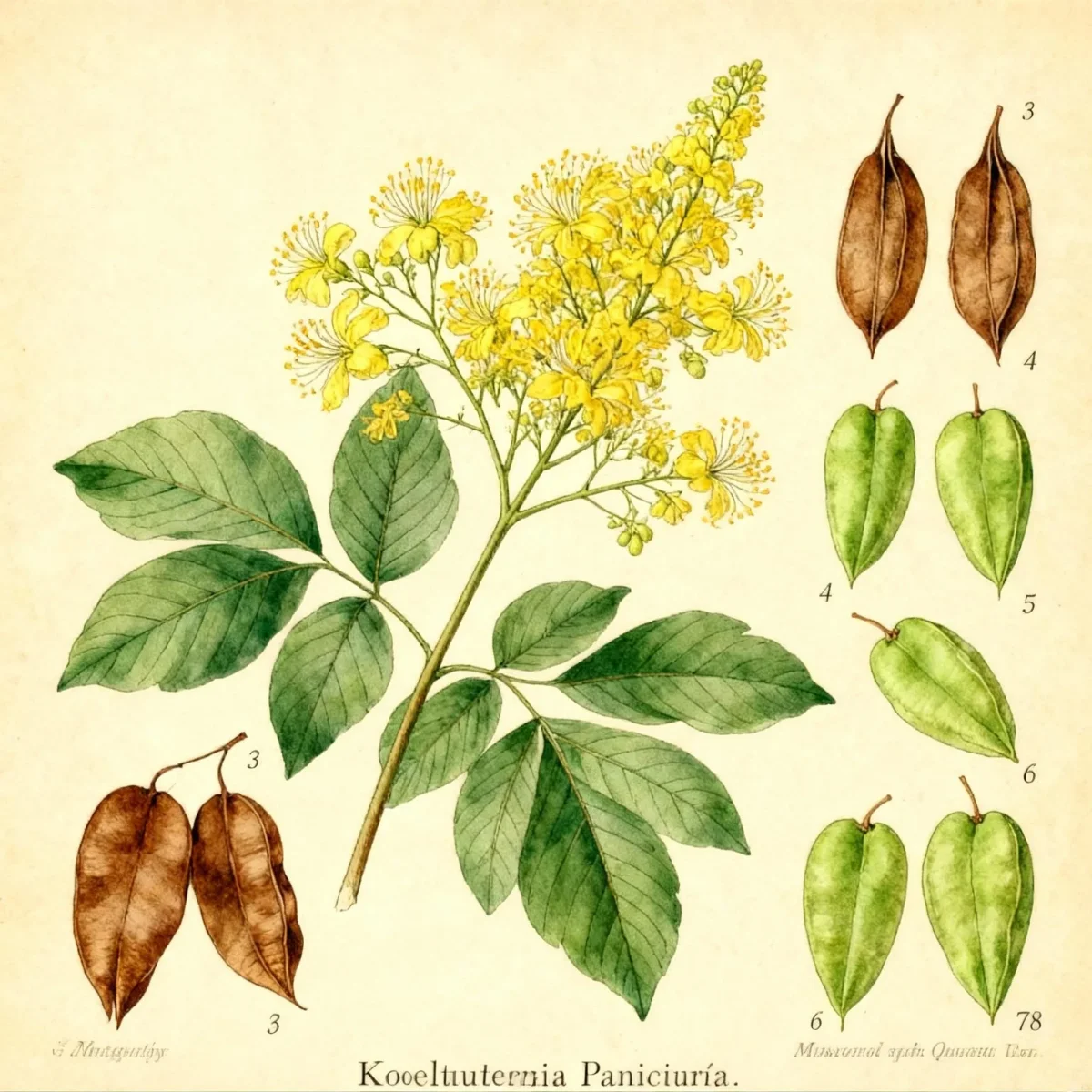
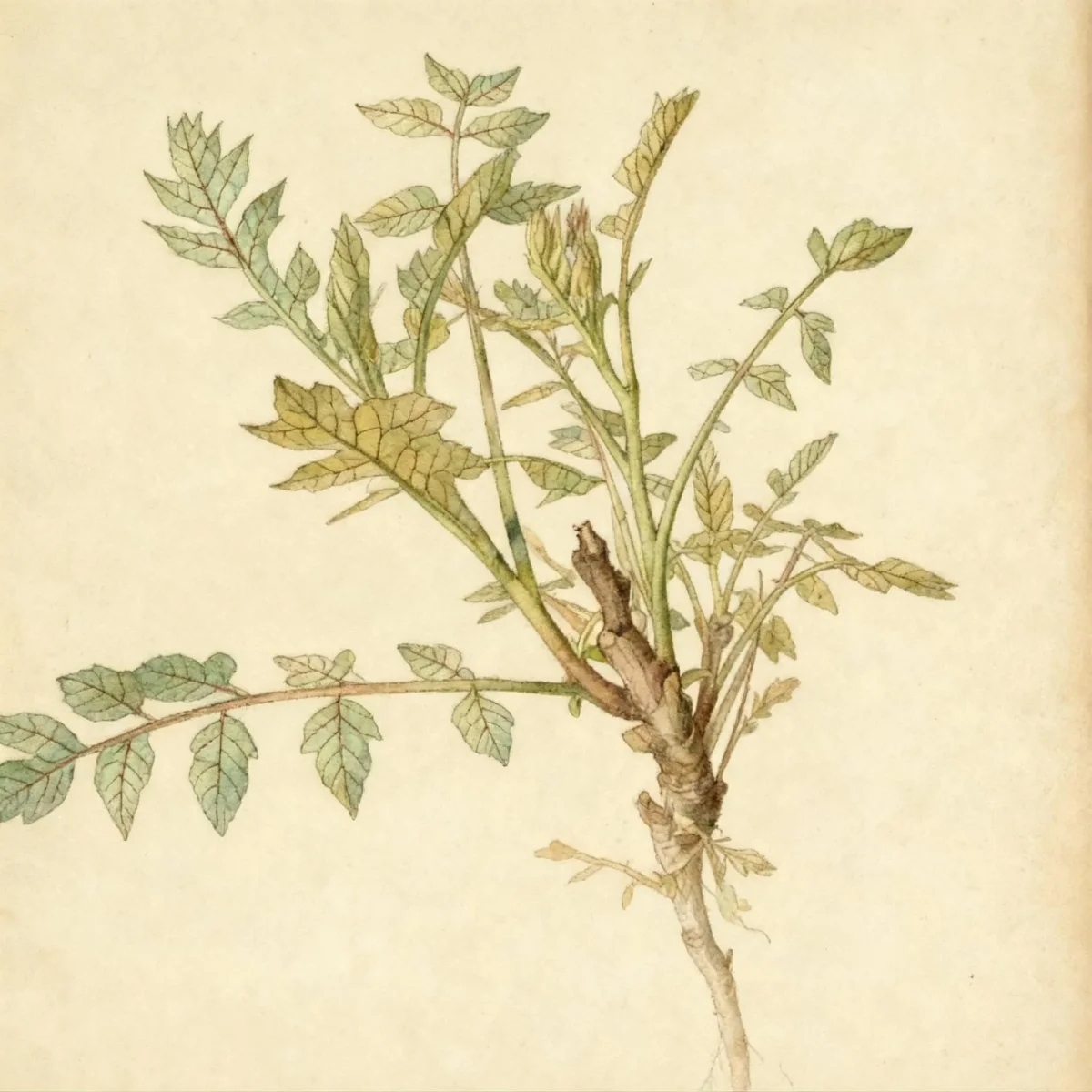
Koelreuteria paniculata, commonly called golden raintree, is a small, open-branching, irregularly-shaped, deciduous tree with a rounded crown which typically grows 30-40’ tall and as wide. Features pinnate or bipinnate, feathery, compound leaves (to 18” long), each leaf having 7-17 irregularly lobed leaflets. Leaves emerge pinkish bronze to purplish in spring, mature to a bright green in summer and turn yellow (quality variable) in fall. Bright yellow flowers (1/2” wide) appear in early summer in long, terminal, panicles (12-15”). Falling blossoms may or may not resemble “golden rain”, but the fallen blossoms often form an attractive golden carpet under the tree. Flowers give way to interesting, brown, papery seed capsules which somewhat resemble Chinese lanterns.
Tolerances
- Drought
- Clay Soil
- Air Pollution
Potential Problems
The Golden rain tree is generally robust, boasting few serious insect or disease problems. This low maintenance profile contributes significantly to its popularity in challenging environments.
However, be aware of some mild susceptibility to root rot, particularly if drainage is poor, and occasional issues with leaf spot or canker. Ensuring the planting site has well-drained soil will mitigate the risk of fungal issues like root rot. Watch for signs of stress, especially in Zone 5, which might indicate winter injury.
Frequently Asked Questions
What hardiness zones is Golden rain tree suitable for?
The Koelreuteria paniculata ‘September’ is suitable for USDA Hardiness Zones 5 through 9.
How large does Golden rain tree grow?
This cultivar typically reaches a mature height between 30 and 40 feet, with an equal spread of 30 to 40 feet.
What sun exposure does Koelreuteria paniculata ‘September’ need?
This tree performs best when planted in full sun conditions to encourage abundant, late-season flowering.
When does Golden rain tree bloom?
The Koelreuteria paniculata ‘September’ is specifically noted for blooming later, showing off its yellow flowers from August into September.
Conclusion
The Golden rain tree (‘September’ cultivar) offers exceptional value to the landscape with its low maintenance needs, adaptability to pollution and poor soils, and reliable bloom time spanning August and September. Before adding this specimen to your yard, carefully evaluate your site conditions, ensuring adequate sunlight and slightly protected placement if you are located near the cooler margin of Zones 5-9. Incorporating the Koelreuteria paniculata ‘September’ guarantees a structural, flowering highlight for late summer.
Companion Planting
For landscapes featuring the drought-tolerant Koelreuteria paniculata ‘September’, consider pairing it with other tough perennials that share a preference for full sun and well-drained soil. Plants like Sedum (Stonecrop), Russian Sage (Perovskia atriplicifolia), or ornamental grasses such as Switchgrass (Panicum virgatum) thrive alongside the Golden rain tree. These companions add textural contrast without competing heavily for moisture once the tree is established.
Avoid placing moisture-loving shrubs directly beneath the drip line, as this conflicts with the tree’s preference for dry to medium water needs. Grouping the Koelreuteria paniculata ‘September’ with other low-water natives that tolerate urban settings maximizes the success of a sustainable, water-wise garden design.
Design Ideas for Urban Settings
The Golden rain tree excels in urban and suburban settings due to its resilience and manageable mature size compared to large shade species. Its open branching habit, while providing filtered shade, maintains good visibility beneath the canopy, making it excellent for planting near patios or walkways where deep shade is undesirable. Consider using accent lighting pointed upward to highlight the intricate structure of the bark and the papery lanterns of the seed capsules in the evening.
When planting in constrained spaces, plant the Koelreuteria paniculata ‘September’ where its form can be appreciated against a simpler, taller building facade. The contrast between its fine, feathery summer foliage and the building’s solid geometry greatly enhances curb appeal. Its late bloom period also ensures that the garden composition doesn’t lack color once traditional summer bloomers begin to fade.