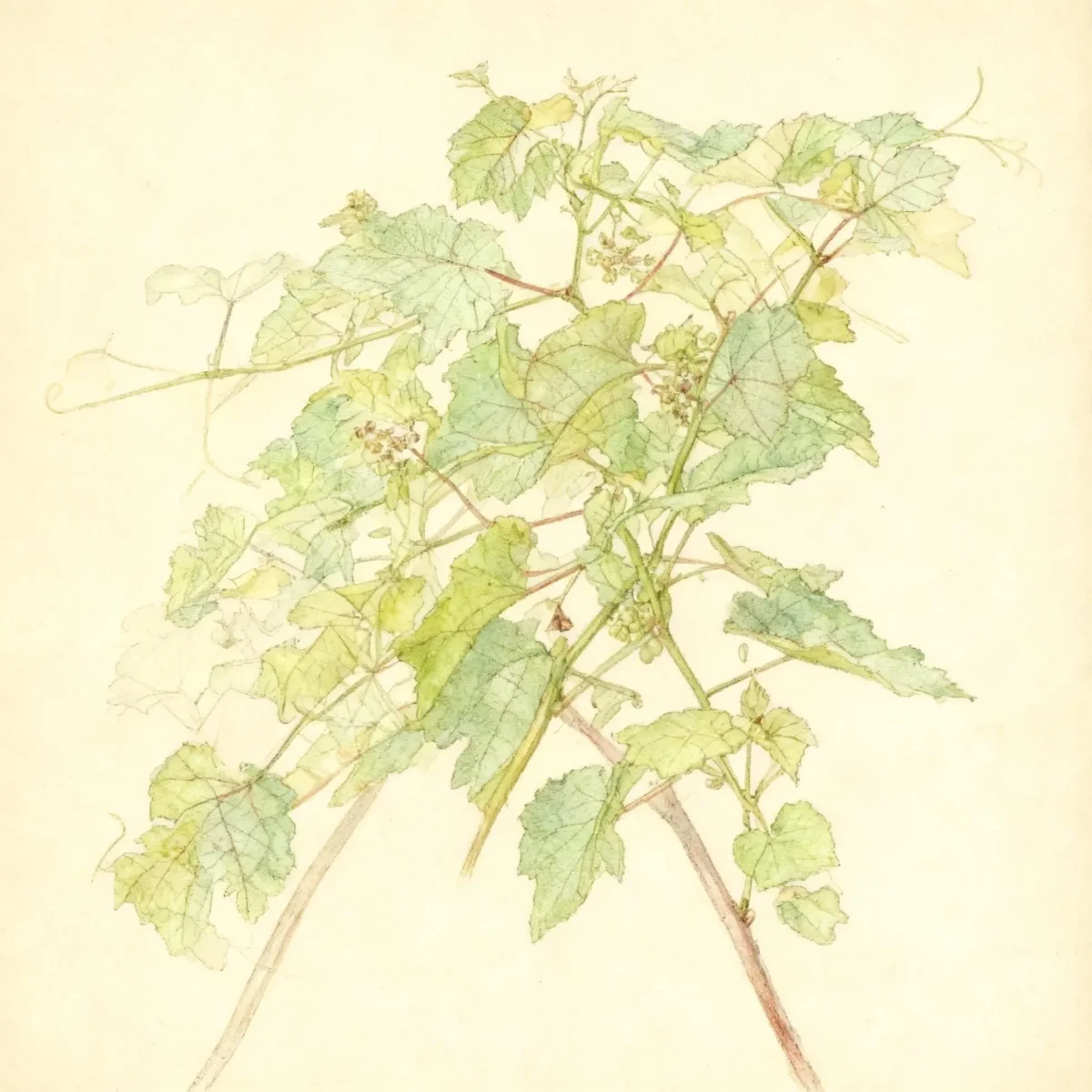
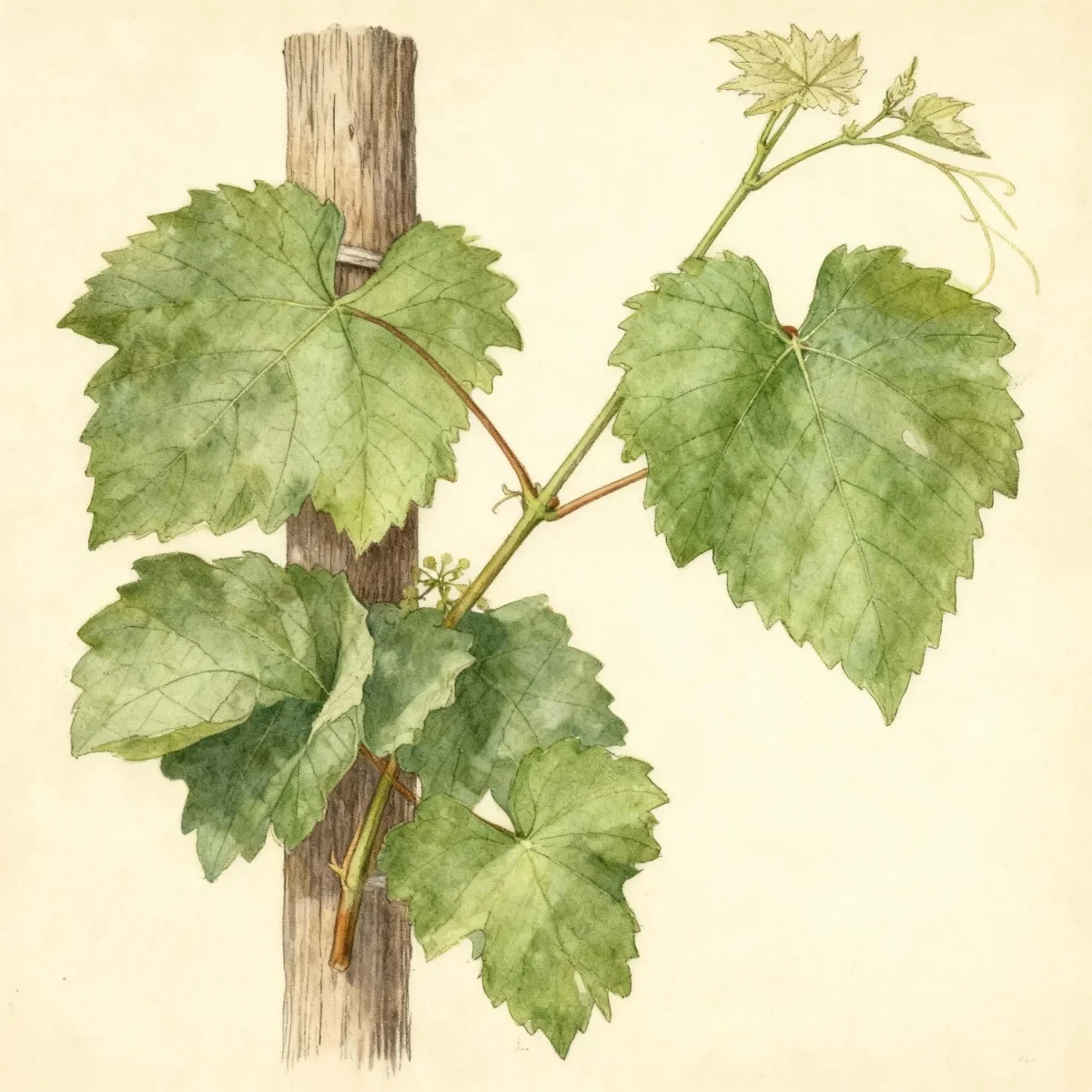
Grape (Vitis 'Chambourcin')
Vitis 'Chambourcin' Grape is a woody, deciduous hybrid vine thriving in zones 5-7 with medium water needs and high maintenance.
Scroll down to discover growing tips, care requirements, companion plants, and more
Complete Plant Information
Overview
Vitis ‘Chambourcin’ is a French-American hybrid Grape valued for its tendril-climbing structure and eventual edible, dark blue-black fruit, primarily used in winemaking. This woody, deciduous vine requires dedicated structural support and significant pruning to ensure optimal production each season. Gardeners should site the Grape carefully, preferring locations sheltered from harsh winter winds.
As a vigorous grower, Vitis ‘Chambourcin’ can reach heights of 15 to 20 feet, making it excellent for covering arbors or pergolas, though its high maintenance level demands consistent attention to pest control and cultivation practices. Its foliage provides bold texture throughout the summer months.
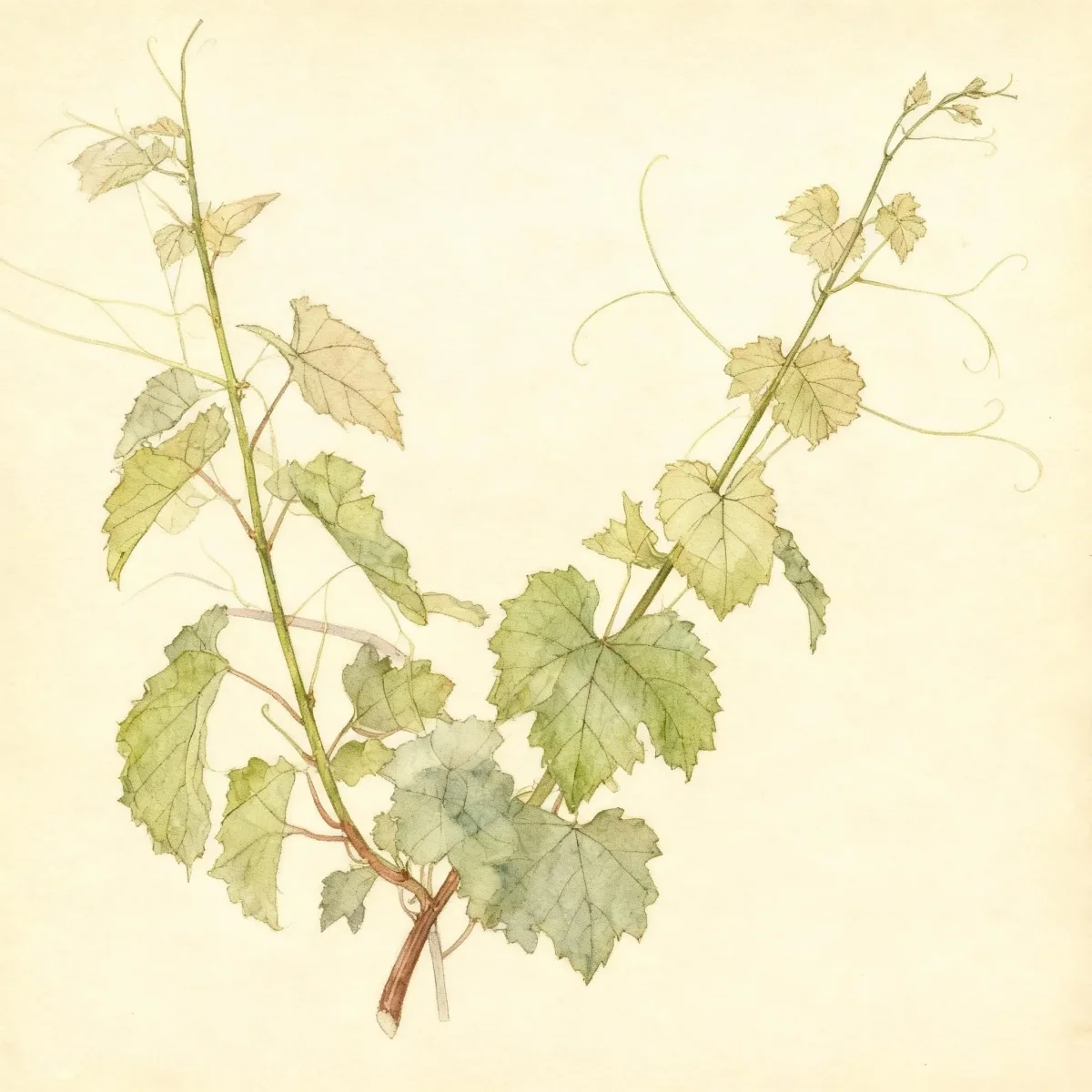
While its primary function is fruit bearing, this Grape variety contributes aesthetically through its spring flowers, developing foliage, and notable twisting trunk structure visible in the winter landscape. Successful cultivation of Vitis ‘Chambourcin’ relies heavily on excellent drainage and commitment to yearly maintenance tasks.
Fast Facts
- Plant Family: Vitaceae
- Plant Type: Fruit
- Hardiness Zones: USDA Zones 5-7
- Size at Maturity:
- Height: 15-20 ft
- Spread: 8-15 ft
- Bloom Time: May to June
- Bloom Description: Greenish
- Sun Exposure: Full sun
- Water Needs: Medium
- Maintenance Level: High
How to Grow
For the best success with Vitis ‘Chambourcin’, plant in spring or fall in a location receiving full, unimpeded sun. The most critical soil requirement is excellent drainage; while this Grape tolerates average garden soils, wet feet will severely compromise the plant’s health. Loamy soil with medium moisture retention is ideal. Site selection should prioritize southern-facing slopes if possible, offering maximum warmth and protection from damaging winter winds.
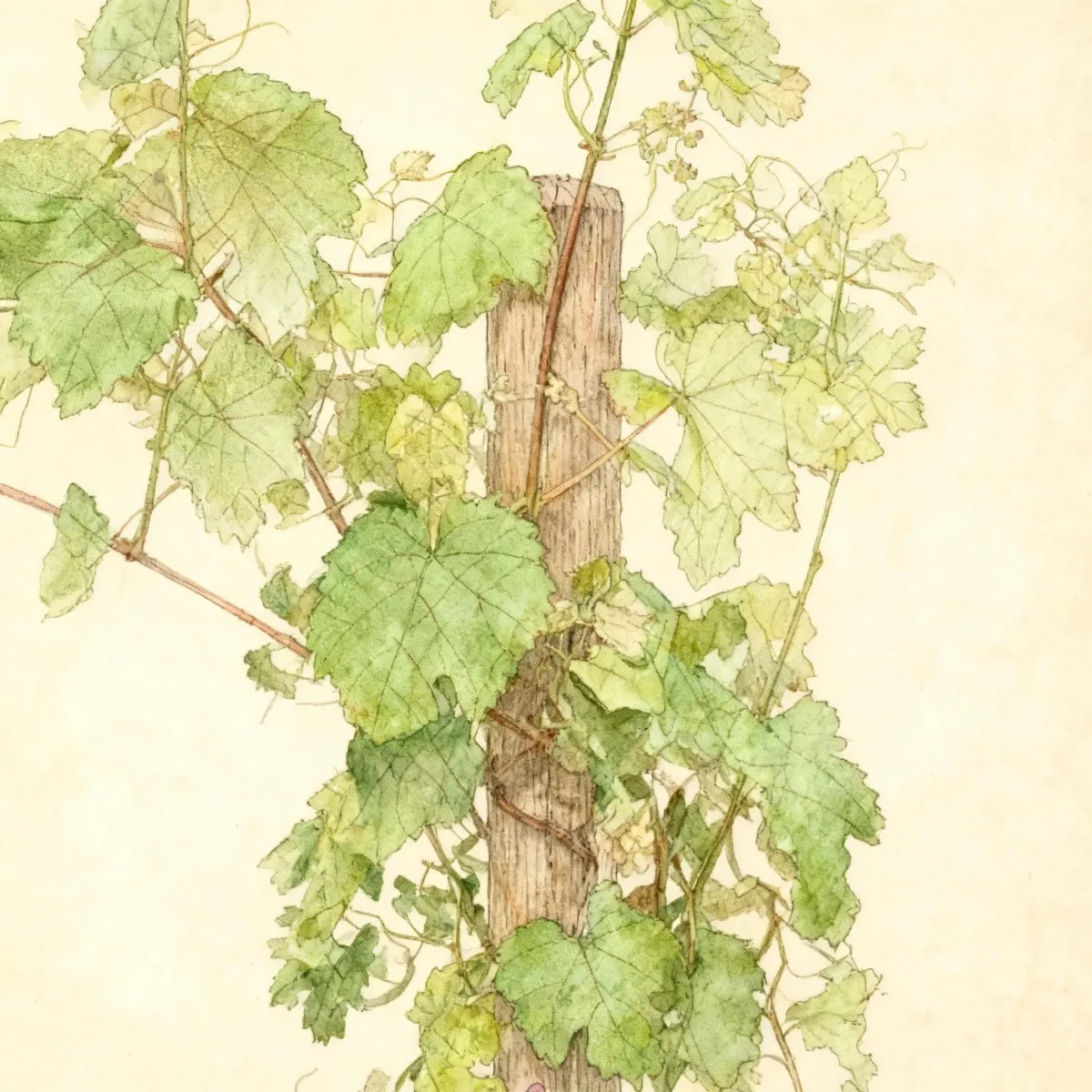
This Grape is self-pollinating, meaning you only need one vine for fruit set. Regular, structured care is essential, making the maintenance level high. Grapes demand sturdy support systems—trellises or arbors—to which the vines must be trained yearly. Pruning must be rigorous and scheduled to maximize fruit output and control size.
Watering should be consistent, maintaining medium soil moisture, especially during fruit development, but never allowing the ground to become saturated. Be prepared for regular fungicide and insecticide applications, particularly in humid regions, as grapes are susceptible to several common fungal diseases and pests. Note that Vitis ‘Chambourcin’ may struggle with winter hardiness in the colder parts of Zone 5, so extra winter protection may be necessary there.
Landscape Uses
Though primarily cultivated for its fruit yield, the Grape structure itself offers significant ornamental value in garden design. The dense, bold foliage creates excellent summer shading over patios or walkways when grown on substantial arbors or pergolas. Furthermore, Vitis ‘Chambourcin’ can be trained beautifully against sturdy fences or walls, providing vertical interest and screening.
The visual appeal extends beyond the growing season; the shaggy, twisted trunks and branches become prominent, sculptural features once the deciduous leaves drop in winter. This offers excellent texture in the dormant garden. The showy fruit clusters, which mature in mid-to-late season, provide a final highlight before fall.
Consider planting Vitis ‘Chambourcin’ where its need for support can be integrated into architectural features, such as entryways or over backyard seating areas. While not grown primarily for ornamentals, its vigorous habit ensures attractive year-round structure that complements perennial borders or hardscaping.
Standout Features
Flower Qualities
- Fragrant
- Insignificant
Fruit Qualities
- Showy
- Edible
Noteworthy Characteristics
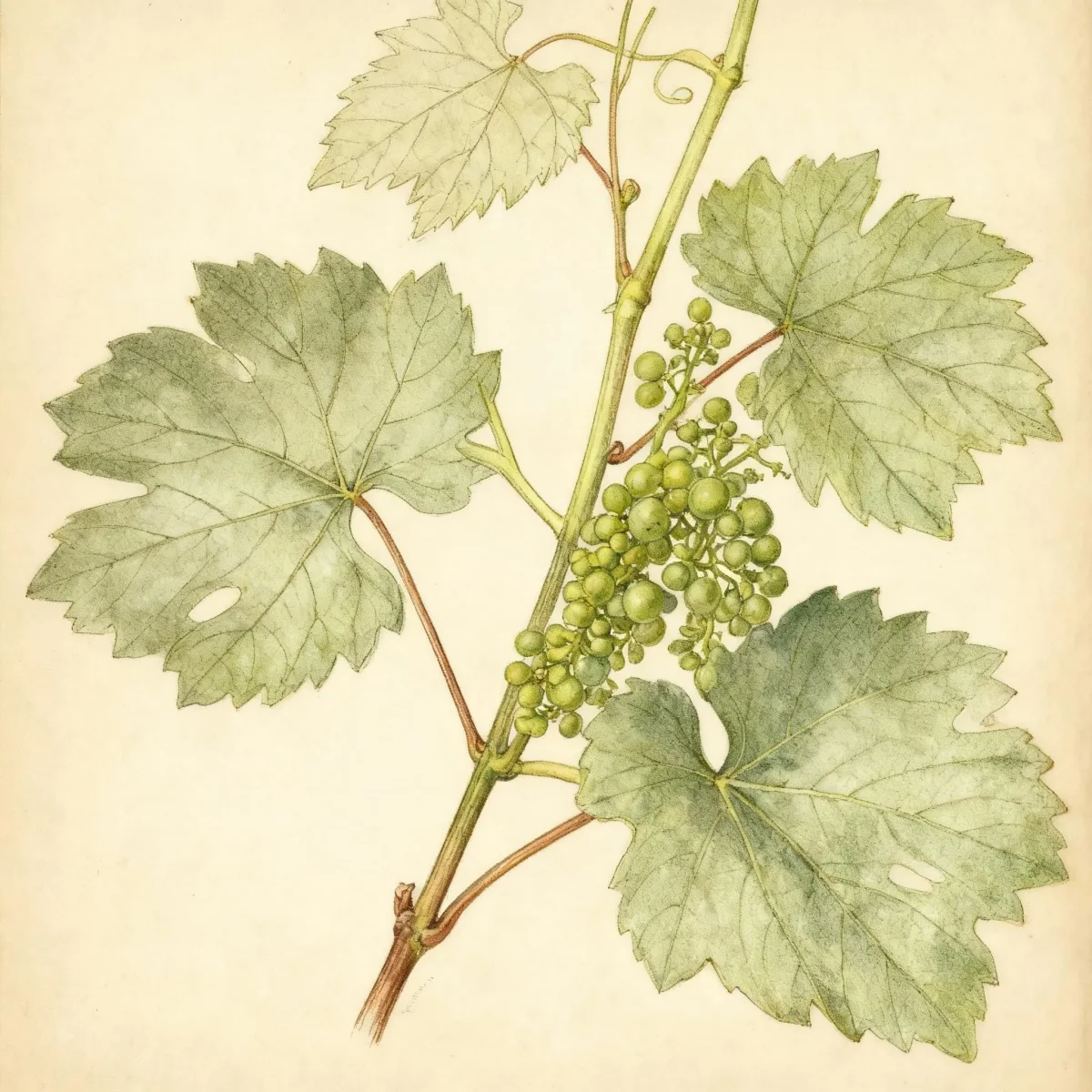
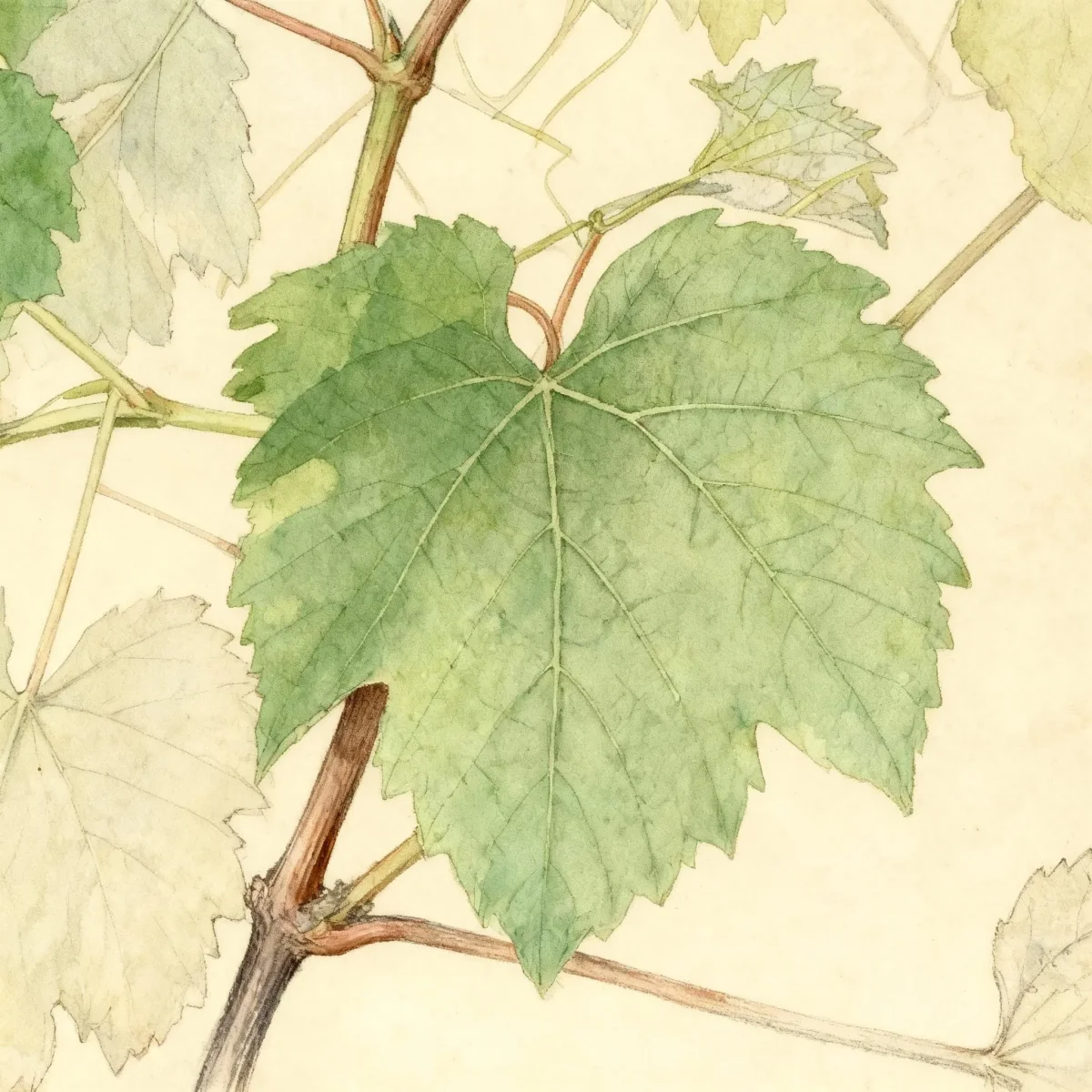
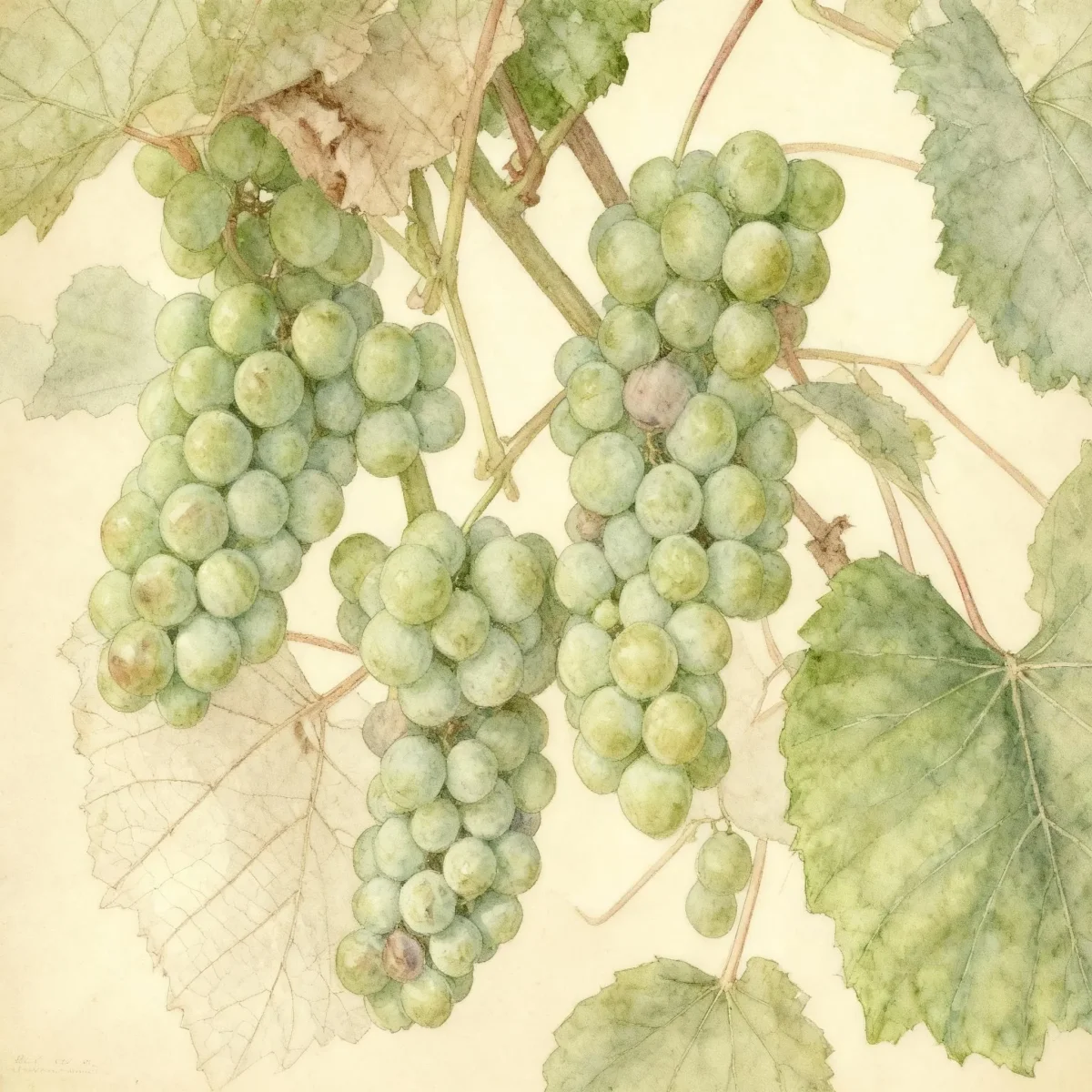
Vitis is a genus of woody vines, and the Vitis ‘Chambourcin’ hybrid is utilized mainly for wine production. This deciduous vine develops panicles of fragrant, greenish flowers in the spring, followed by dark blue-black grapes that mature later in the season. The foliage is large, shallowly-lobed, and green, and the flowers are an important nectar source for bees, while the ripe fruit attracts various birds and small mammals.
Tolerances
- Rabbit
- Deer
Potential Problems
Grapes, including Vitis ‘Chambourcin’, are known for being high-maintenance due to their susceptibility to numerous diseases and pests. Fungal issues like black rot, downy mildew, and powdery mildew thrive in humid summers and demand a regular spraying schedule for prevention. Insect management is also key, targeting pests such as leaf hoppers, berry moths, and phylloxera.
Managing vertebrate pests requires vigilance; while deer may browse on young shoots and leaves, birds pose the greatest threat to ripe fruit clusters. Physical barriers or netting are often unavoidable strategies for home growers aiming to harvest their Vitis ‘Chambourcin’ crop. Proper cultural practices, particularly rigorous pruning and providing structural support, are inseparable from disease and pest prevention efforts.
Frequently Asked Questions
What hardiness zones is Grape suitable for?
Vitis ‘Chambourcin’ is ideally suited for USDA Zones 5 through 7, though growers in Zone 5 should exercise caution regarding winter survivability.
How large does Grape grow?
This woody vine typically matures to a height between 15 and 20 feet, with a spread ranging from 8 to 15 feet wide.
What sun exposure does Grape need?
Vitis ‘Chambourcin’ requires full sun exposure to flourish and produce a quality fruit yield.
When does Grape bloom?
The flowering period for this Grape occurs from May to June, producing greenish, fragrant blooms.
Conclusion
The Vitis ‘Chambourcin’ Grape offers gardeners the reward of specialized fruit production wrapped in an attractive, vigorous woody vine structure. Successful cultivation hinges on providing excellent drainage and adhering to a high maintenance schedule involving regular pruning and pest management. Before planting your Vitis ‘Chambourcin’, confirm your local climate falls reliably within USDA Zones 5-7 for the best long-term results.
Wildlife Benefits
The early blooms of Vitis ‘Chambourcin’ provide a valuable nectar source for bees, supporting local pollinator populations during their active spring season. While the mature fruit is intended for harvest, it also serves as a food source for birds and various mammals, influencing local fauna behavior. Gardeners must balance fruit production goals with the inevitable wildlife attracted to the sweet, showy clusters.
Seasonal Care Calendar
Spring is crucial for Vitis ‘Chambourcin’, focusing on pruning latent wood, applying dormant oil sprays if necessary, and establishing the new season’s growth onto the existing support structure. As the season progresses into summer, apply fungicides preventatively, especially before long stretches of rain, and monitor water needs to ensure fruits swell properly. Dormant season care in late winter involves structural pruning—the most vital maintenance task—to ensure excellent air circulation and light penetration for the coming year’s fruiting canes.