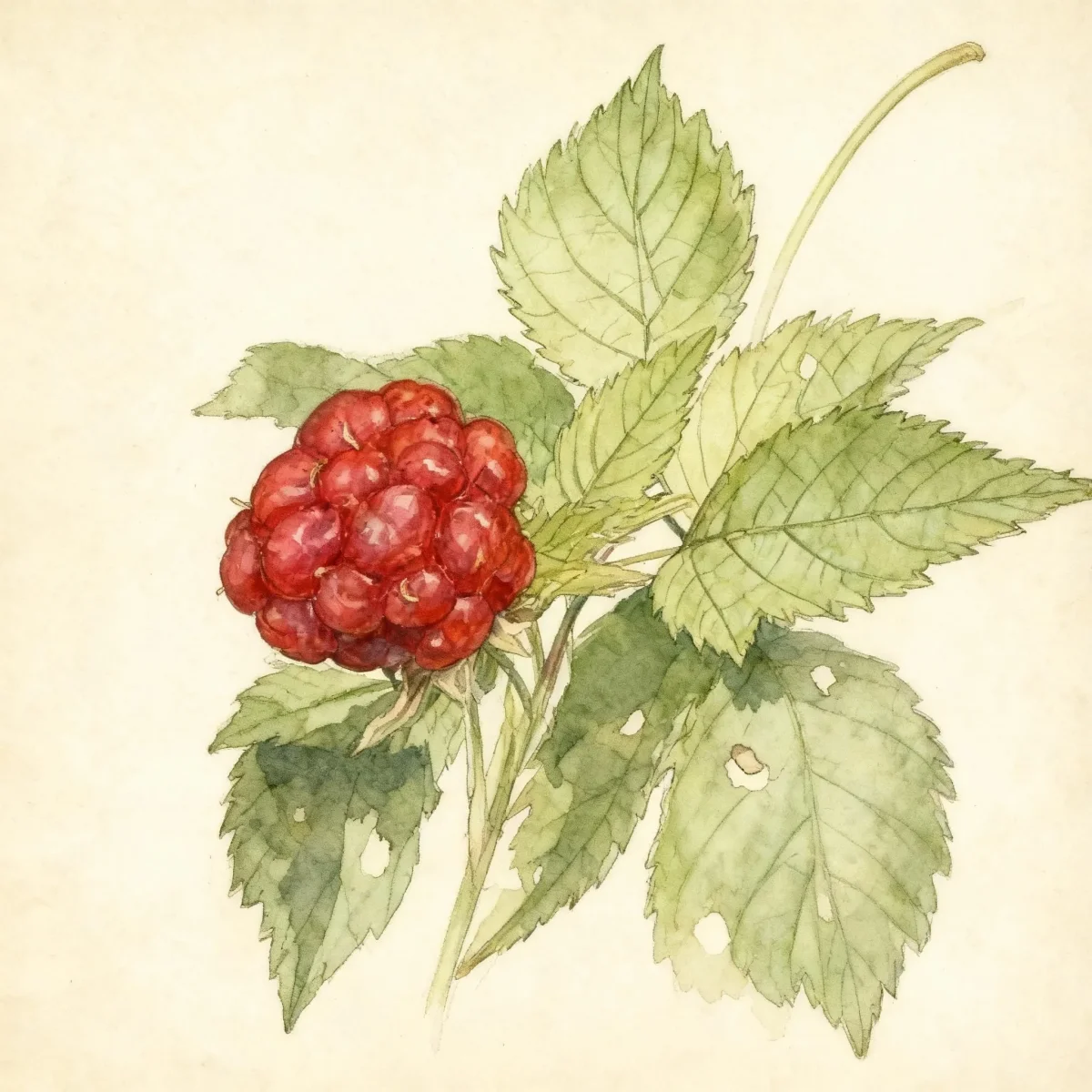
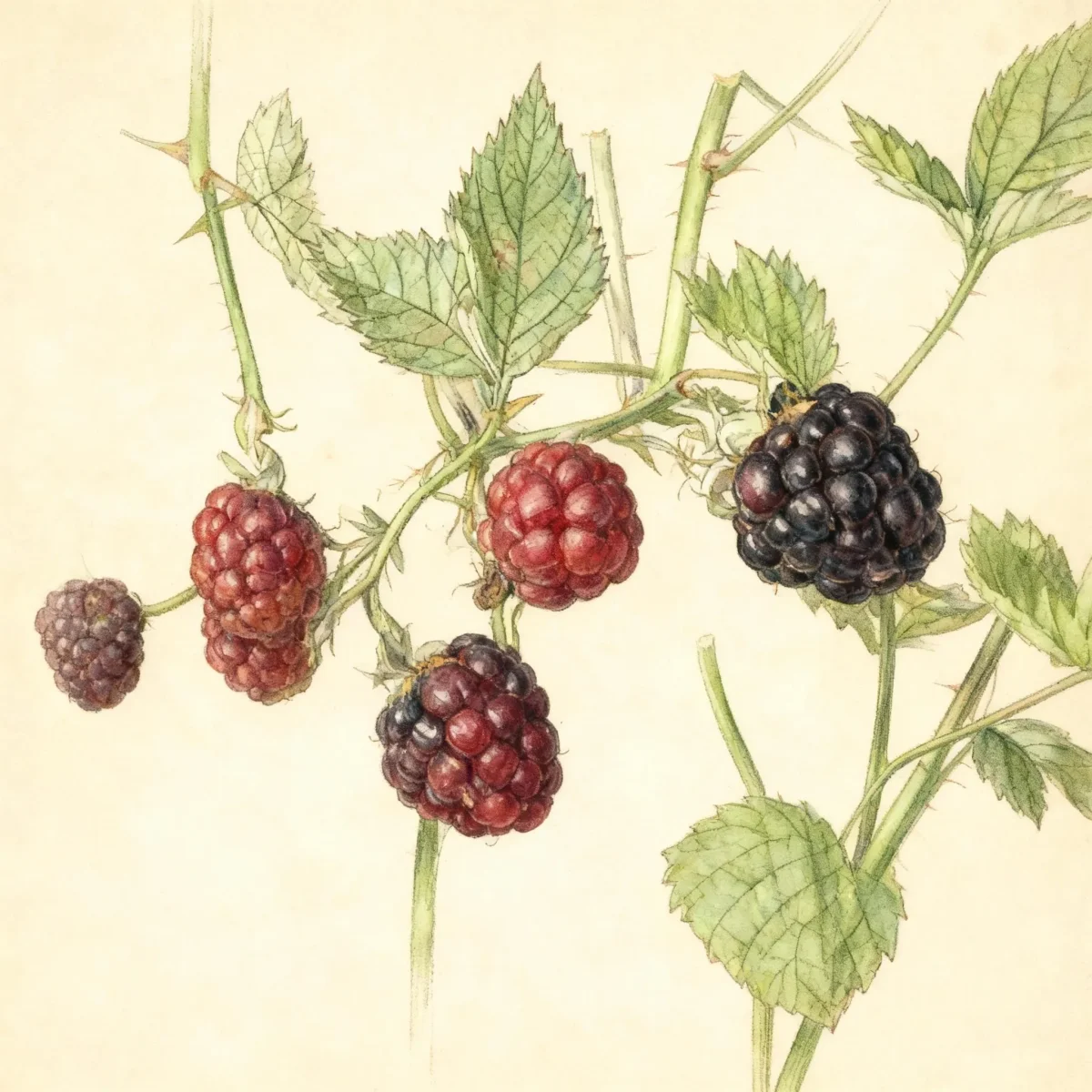
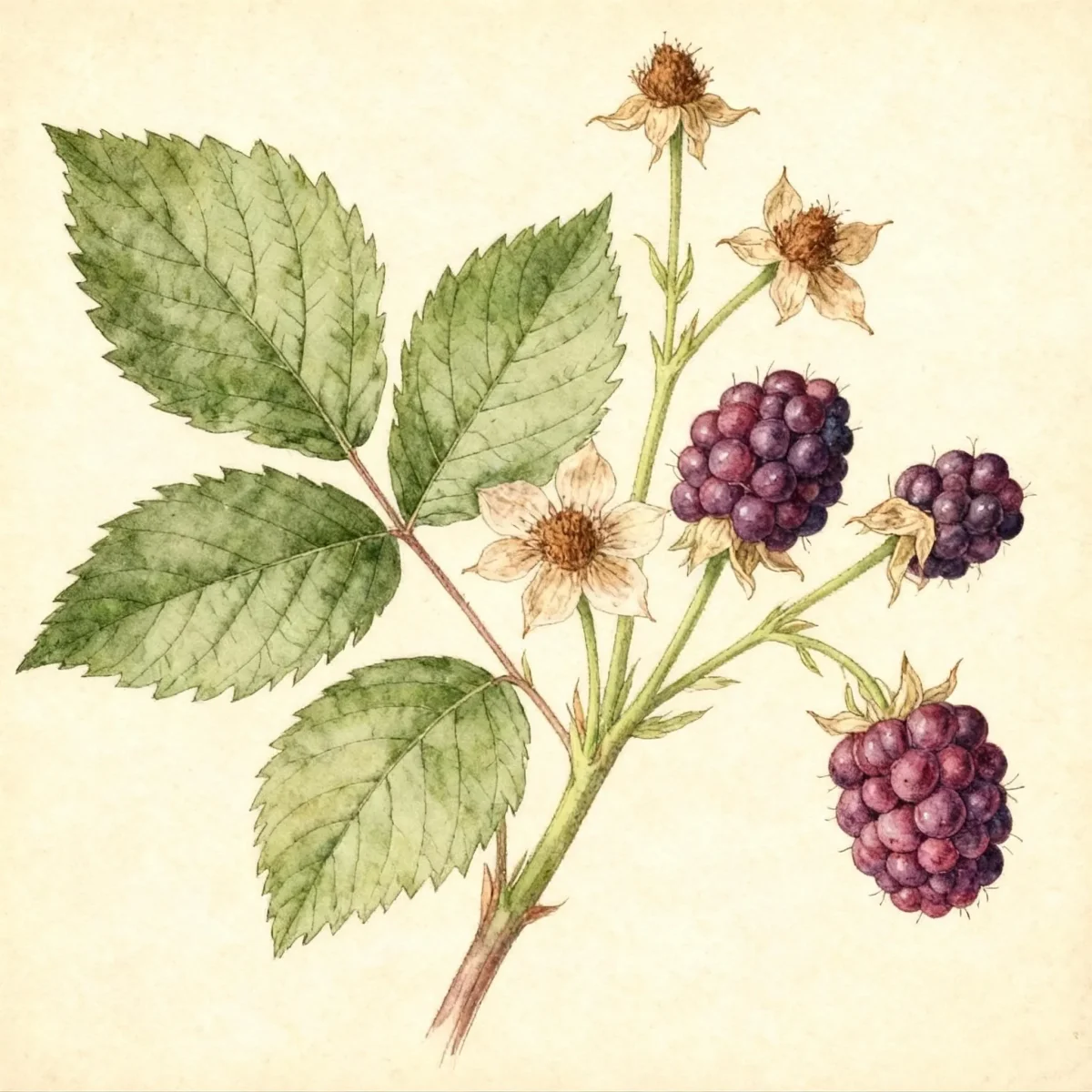
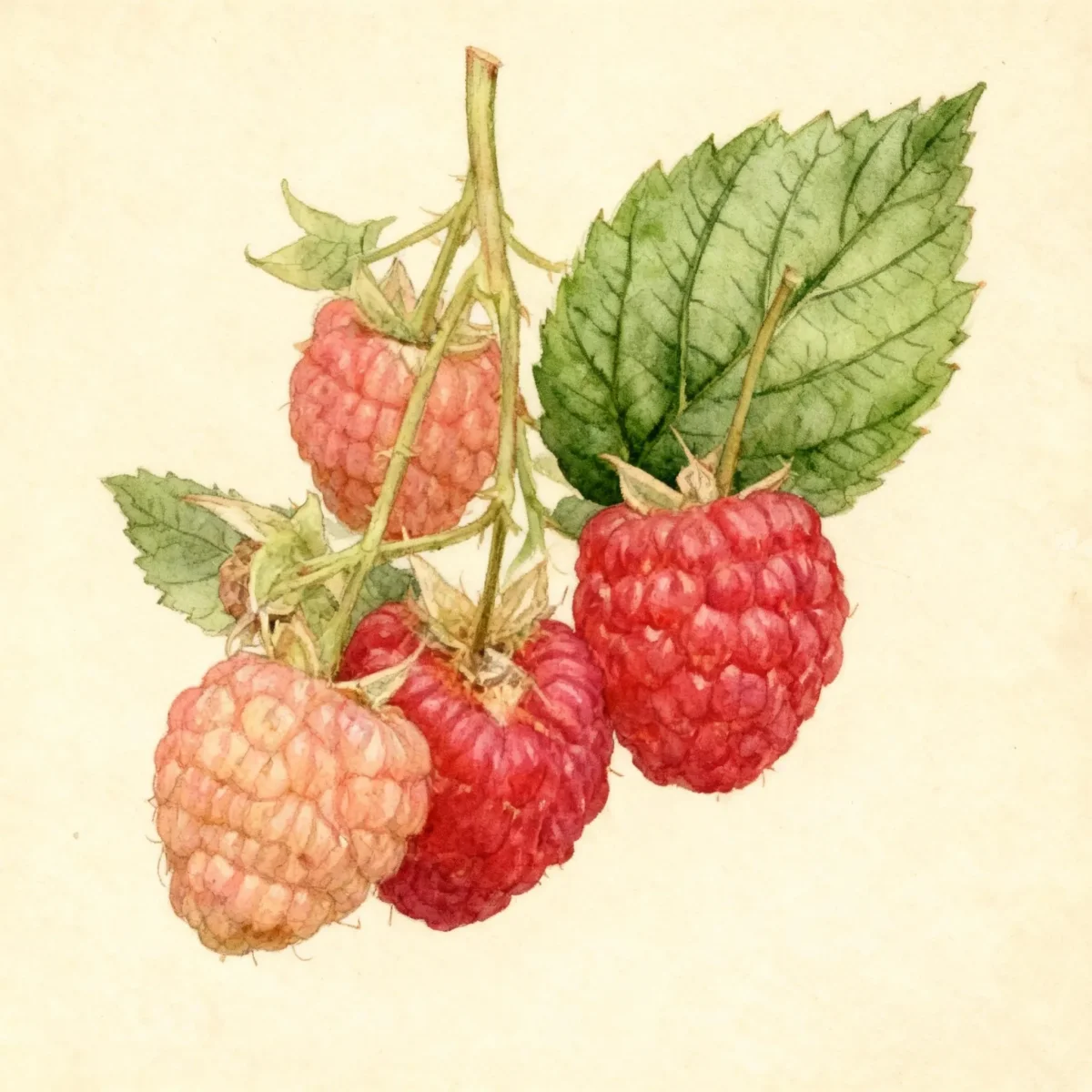
Blackberry (Rubus 'Triple Crown')
The thornless Rubus 'Triple Crown' Blackberry offers excellent eating quality fruit. Hardy in zones 5-8, this semi-erect shrub requires medium care.
Scroll down to discover growing tips, care requirements, companion plants, and more
Complete Plant Information
Overview
Rubus ‘Triple Crown’ is a highly valued cultivar prized by home gardeners for its production of firm, glossy blackberries with excellent eating quality throughout the summer months. This reliable standard among hybrid blackberries is classified as a semi-erect, thornless shrub, making cultivation and harvesting significantly easier than older, prickly varieties. As a self-fruitful plant, you only need one shrub for substantial harvests of quality fruit.
This plant establishes itself as a perennial rootstock producing biennial canes, meaning the fruiting wood is replaced yearly. Successfully managing the cane structure is central to its medium maintenance requirements, ensuring vigorous growth and maximizing the annual fruit yield of this excellent Blackberry variety.
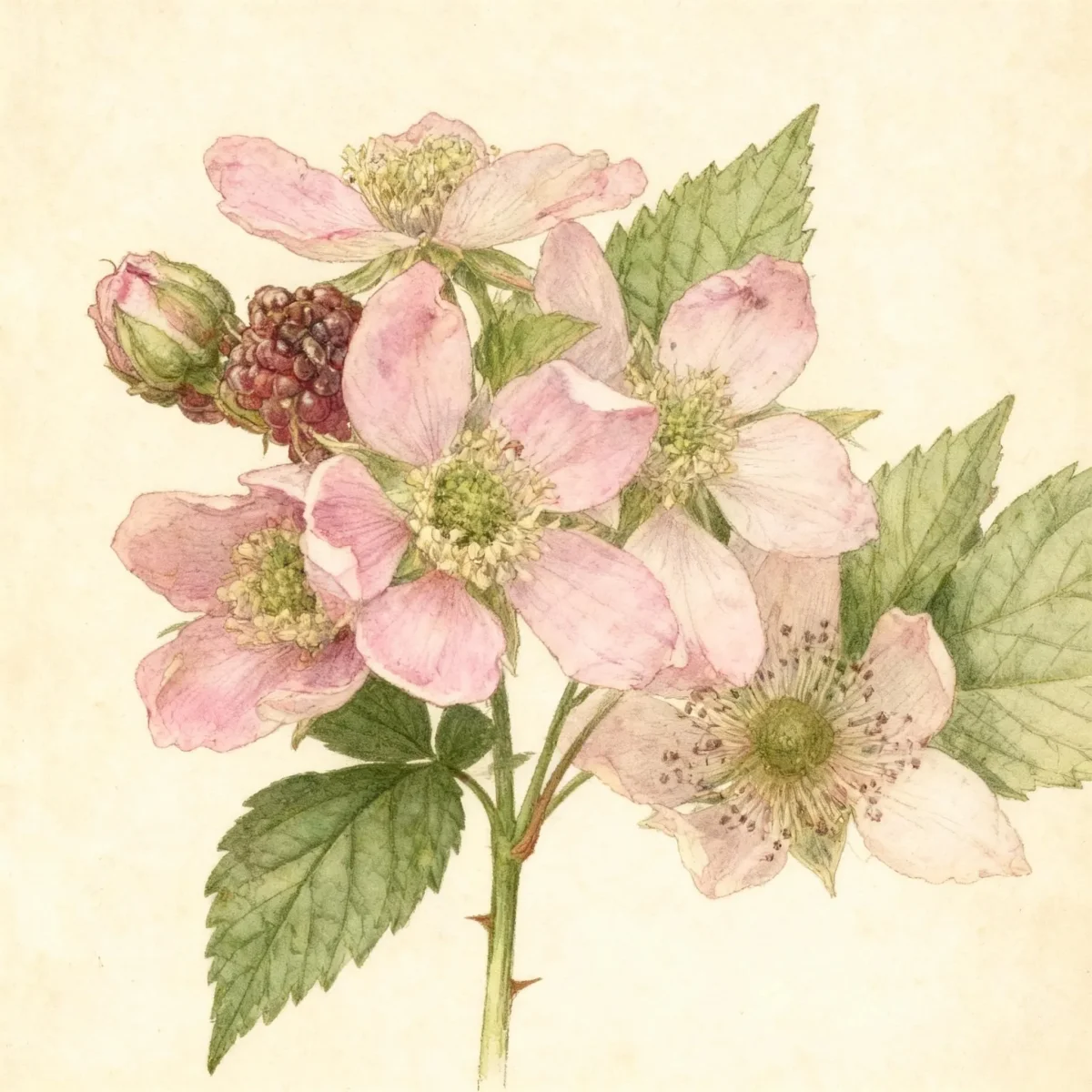
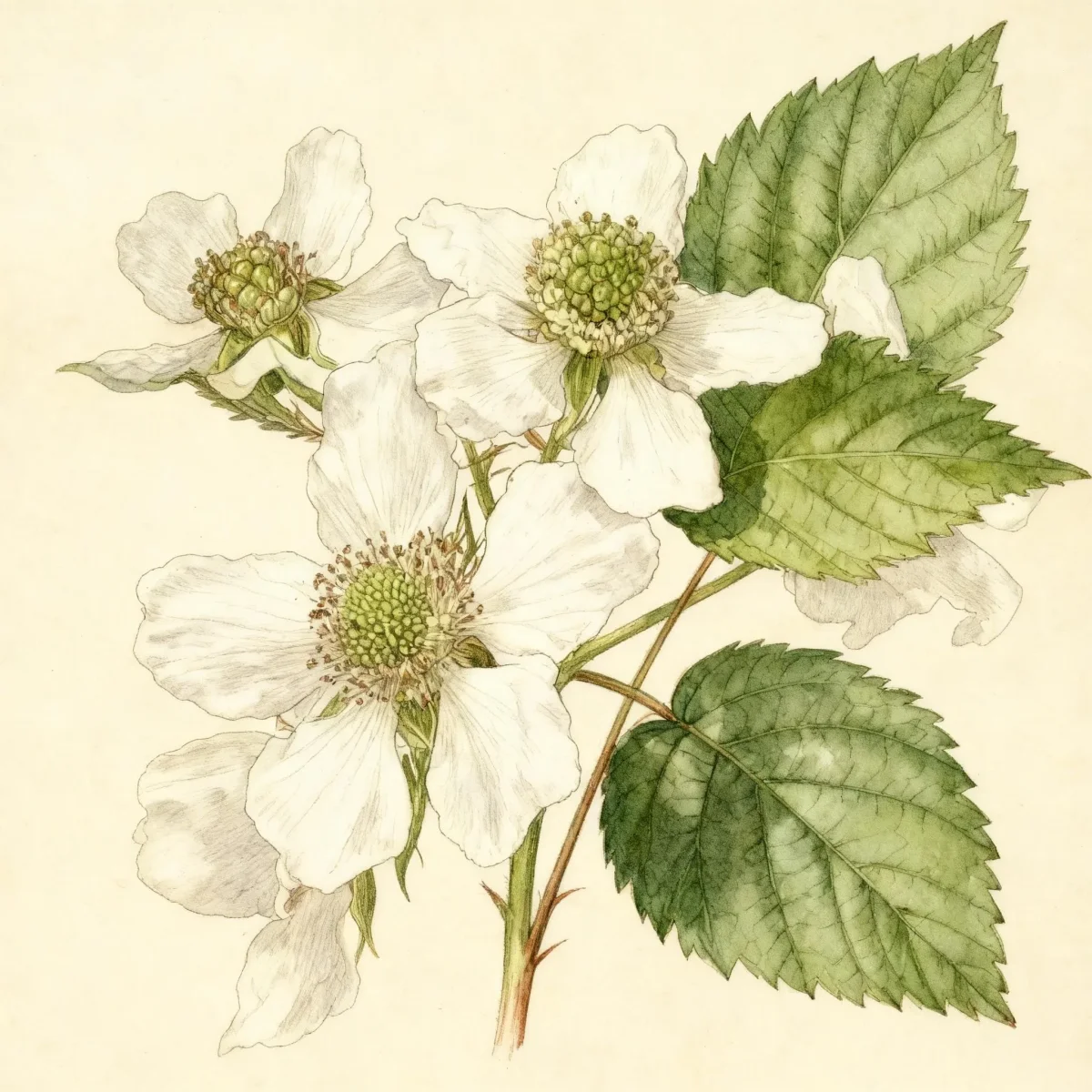
While primarily grown for its highly edible fruit, the clusters of white, five-petaled, rose-like flowers appearing in spring offer noticeable aesthetic appeal before the summer harvest begins. Planning for support, as Rubus ‘Triple Crown’ performs best when staked, will lead to healthier plants and cleaner berries ready for picking.
Fast Facts
- Plant Family: Rosaceae
- Plant Type: Fruit
- Hardiness Zones: USDA Zones 5-8
- Size at Maturity:
- Height: 3-5 ft
- Spread: 3-5 ft
- Bloom Time: April to May
- Bloom Description: White
- Sun Exposure: Full sun to part shade
- Water Needs: Medium
- Maintenance Level: Medium
How to Grow
The ideal time for planting Rubus ‘Triple Crown’ is during the dormant season, either early spring or late fall, ensuring preparation of well-drained soil beforehand. These blackberries thrive best in moist, organically rich, and slightly acidic soil conditions. Gardeners in areas prone to heavy clay or poor drainage should strongly consider planting Rubus ‘Triple Crown’ in raised beds to prevent issues caused by intolerance to wet soils.
Watering needs are medium; ensure consistent moisture, especially during fruit development, but avoid soggy feet. Proper pruning is essential for high yields. For established shrubs, begin maintenance by tipping new, non-fruiting canes in the summer. Immediately after the final fruit harvest, remove all canes that have completed fruiting entirely, cutting them flush to the ground.
In late winter or early spring, conduct the final structural thinning. Remove any canes showing signs of winter damage, and then thin the remaining growth down to four or five of the strongest, well-spaced canes. Prune the laterals growing off these main canes as well. Providing adequate support or staking is crucial for good air circulation and overall plant performance.
Landscape Uses
Although the flowers of the Blackberry are attractive, this plant is cultivated almost exclusively as a productive food crop. Consequently, it is generally not recommended for use in purely ornamental settings unless the structure and foliage itself appeal to the designer. Focus on integrating Rubus ‘Triple Crown’ into edible landscapes or dedicated fruit gardens where its primary function can be realized.
Planting this semi-erect Blackberry along the perimeter of a vegetable patch or along a sunny fence line provides functional screening while maximizing sun exposure. Due to its moderate height of 3 to 5 feet, use it as a mid-border element, perhaps backed by taller shrubs or trellises that can offer necessary support. Its robust nature can anchor a functional side yard space better than purely decorative species.
Consider pairing Rubus ‘Triple Crown’ with acid-loving companions that share similar sun and water requirements, such as blueberries or rhododendrons, if space allows, though ensure the Blackberry’s robust root system is contained if sharing tight quarters. The value lies firmly in the reliable, high-quality harvest this cultivar provides annually.
Standout Features
Flower Qualities
- Showy
Fruit Qualities
- Showy
- Edible
Noteworthy Characteristics
Blackberries are aggregate fruited brambles native to temperate regions around the world, characterized by biennial canes emerging from a perennial rootstock. Rubus ‘Triple Crown’ is specifically a semi-erect, thornless blackberry cultivar, known for being self-fruitful and free-standing, producing a single crop of high-quality fruit annually. Distinguishing features from raspberries include the receptacle remaining attached when picked, resulting in a solid core rather than a hollow center.
Tolerances
Potential Problems
Anthracnose, botrytis, and verticillium wilt pose serious disease threats to Blackberry cultivation and must be monitored closely. Preventing these fungal issues relies heavily on good cultural practices, such as ensuring excellent air circulation through proper pruning and avoiding overhead watering late in the day. If disease manifests, promptly remove and destroy affected canes to stop further spread.
Insect pests such as cane borers and crown borers are also potentially serious threats to the vigor of your Rubus ‘Triple Crown’. Inspecting canes for timely pruning and maintaining overall plant health are the best defenses against borer infestations which can weaken or kill the fruiting wood. Early detection aids in successful management of these pests.
Frequently Asked Questions
What hardiness zones is Blackberry suitable for?
This productive Rubus ‘Triple Crown’ cultivar is ideally suited for USDA Hardiness Zones 5 through 8, requiring protection if grown outside this range.
How large does Rubus ‘Triple Crown’ grow?
When mature, this semi-erect Blackberry typically reaches heights between 3 to 5 feet, spreading to a similar width of 3 to 5 feet.
What sun exposure does Rubus ‘Triple Crown’ need?
For best results and maximum fruit production, plant your Blackberry in full sun, though the plant tolerates conditions moving toward partial shade.
When does Blackberry bloom?
Clusters of white flowers appear relatively early in the season, typically during April to May, preceding the summer fruit set.
Conclusion
Rubus ‘Triple Crown’ remains a top choice for gardeners seeking a dependable, thornless source of excellent summer fruit, balancing manageable growth with superior berry quality. By adhering to the recommended fertilization, pruning schedule, and providing adequate support, you can ensure a successful harvest of this fantastic Blackberry variety season after season. Check your local climate to confirm hardiness compatibility before planning your planting site this coming dormant season.
Companion Planting
Selecting appropriate neighbors is key to maintaining the health of your Rubus ‘Triple Crown’. Since blackberries prefer slightly acidic, consistently moist soil, companions should share these requirements. Consider planting complementary fruit crops like strawberries or lowbush blueberries near your patch, as they share soil pH preferences and water needs, creating a unified edible zone.
Avoid planting members of the Solanaceae family (tomatoes, potatoes, peppers) close to your blackberries. These common garden vegetables are often hosts to Verticillium wilt, a serious fungal disease that Rubus ‘Triple Crown’ is susceptible to; separating planting areas minimizes disease transmission risk.
For structural balance in a mixed border, incorporate herbs that repel common pests, although specific pest deterrence claims for blackberries are often anecdotal. Placing perennial herbs like chives or ornamental, non-invasive alliums nearby can add visual interest while maintaining the required open spacing for good air flow.
Seasonal Care Calendar
Spring preparation is critical for maximizing late-season fruit production from your Rubus ‘Triple Crown’. As new vegetative growth begins, ensure you have completed the late winter/early spring pruning, focusing only on removing winter-damaged wood and thinning to the strongest canes. Begin vigilance for early signs of fungal issues like Anthracnose as temperatures rise.
Summer is the fruiting season, demanding consistent moisture, particularly as the firm, glossy blackberries begin to ripen in mid-summer. Once you have finished harvesting the single crop, immediately execute the first major pruning step: remove all one-year-old canes that have fruited completely, cutting them down to the base. This opens up the crown for next year’s growth.
In autumn, if you notice any new canes that are excessively vigorous or long, this is the time to perform the summer tip-pruning mentioned in the culture notes, encouraging sturdier, shorter growth that is less likely to flop or break over winter. Preparing support structures should be finalized before heavy winter snows potentially weigh down the developing framework.