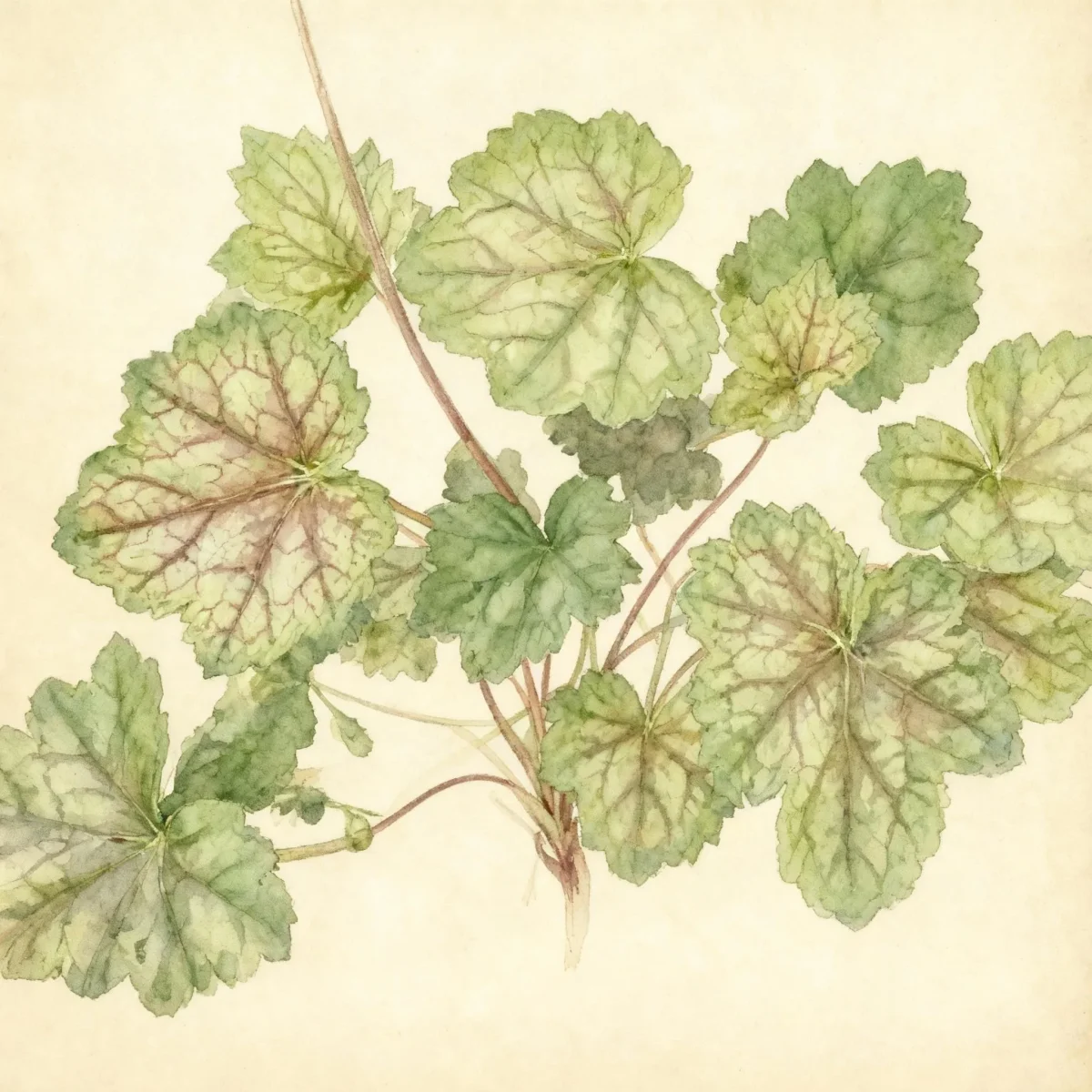
Coral bells (Heuchera 'Raspberry Ice')
Heuchera 'Raspberry Ice' coral bells offer striking silvery-green foliage with dark veins, blooming pink for reliable garden color.
Scroll down to discover growing tips, care requirements, companion plants, and more
Complete Plant Information
Overview
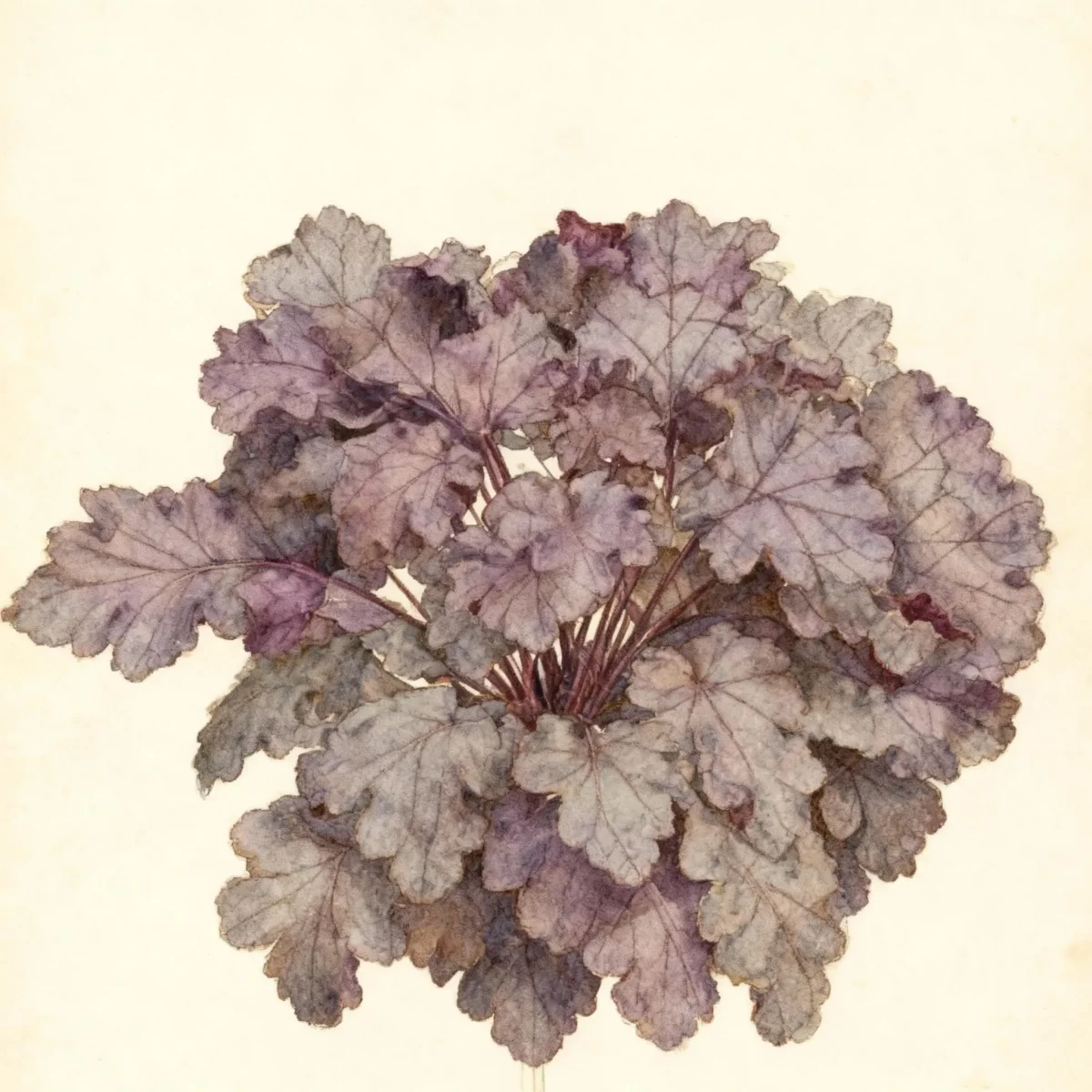
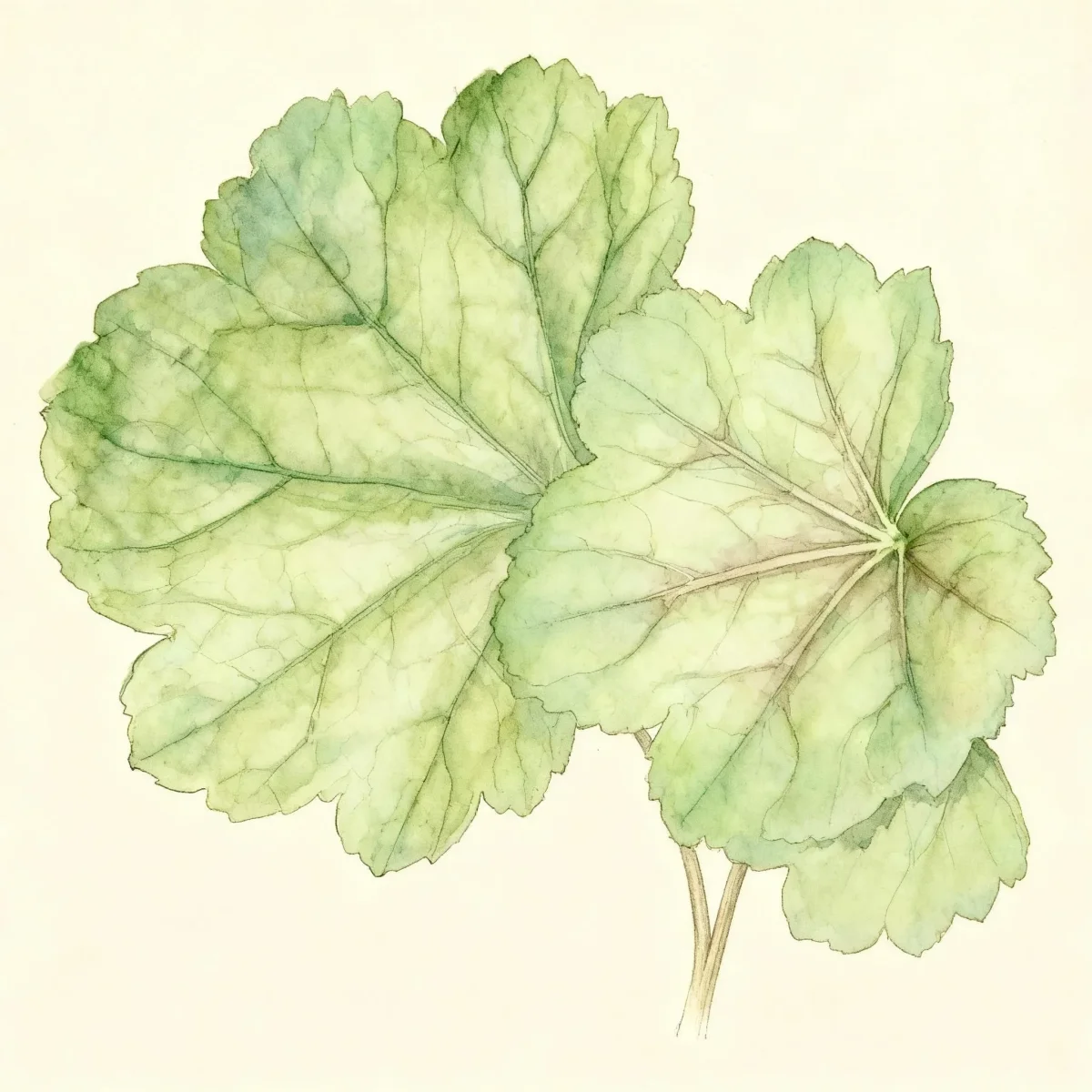
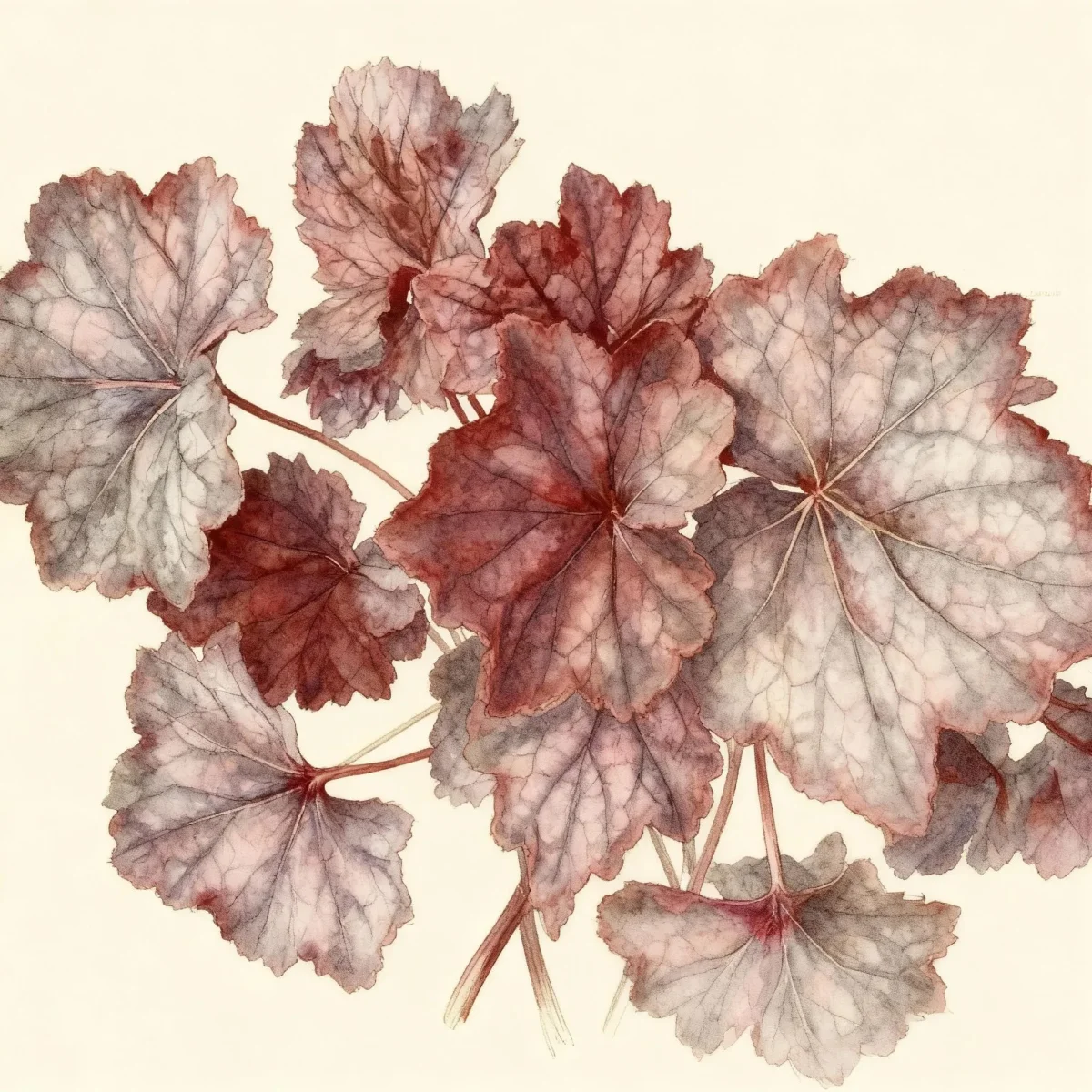
Heuchera ‘Raspberry Ice’, a stunning cultivar of coral bells, provides exceptional year-round visual interest thanks to its unique foliage color palette. This herbaceous perennial forms a dense basal mound featuring silvery gray-green leaves contrasted beautifully by dark gray-green veining and deep reddish-purple undersides. The overall effect is dynamic, making it a valuable year-round architectural element in the landscape.
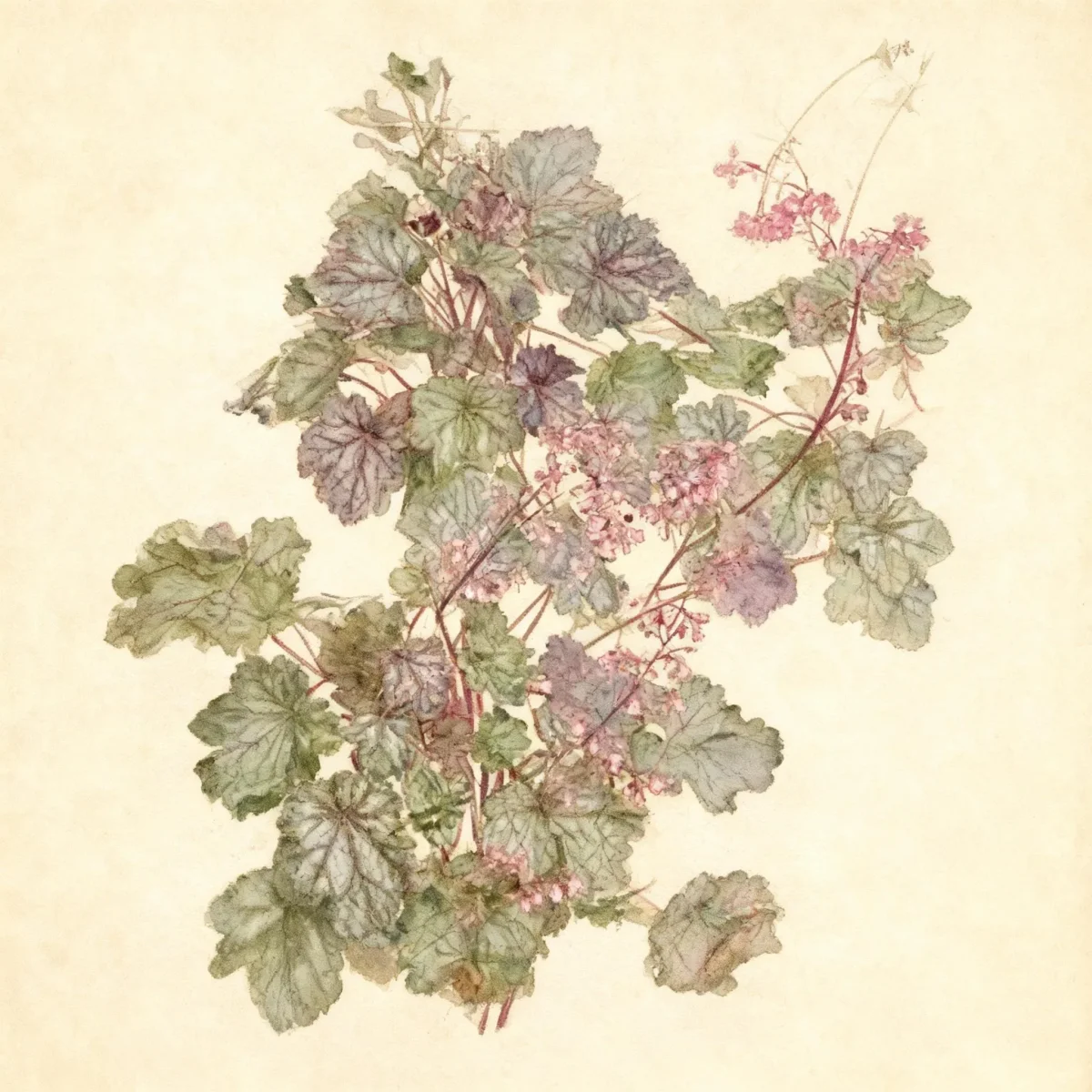
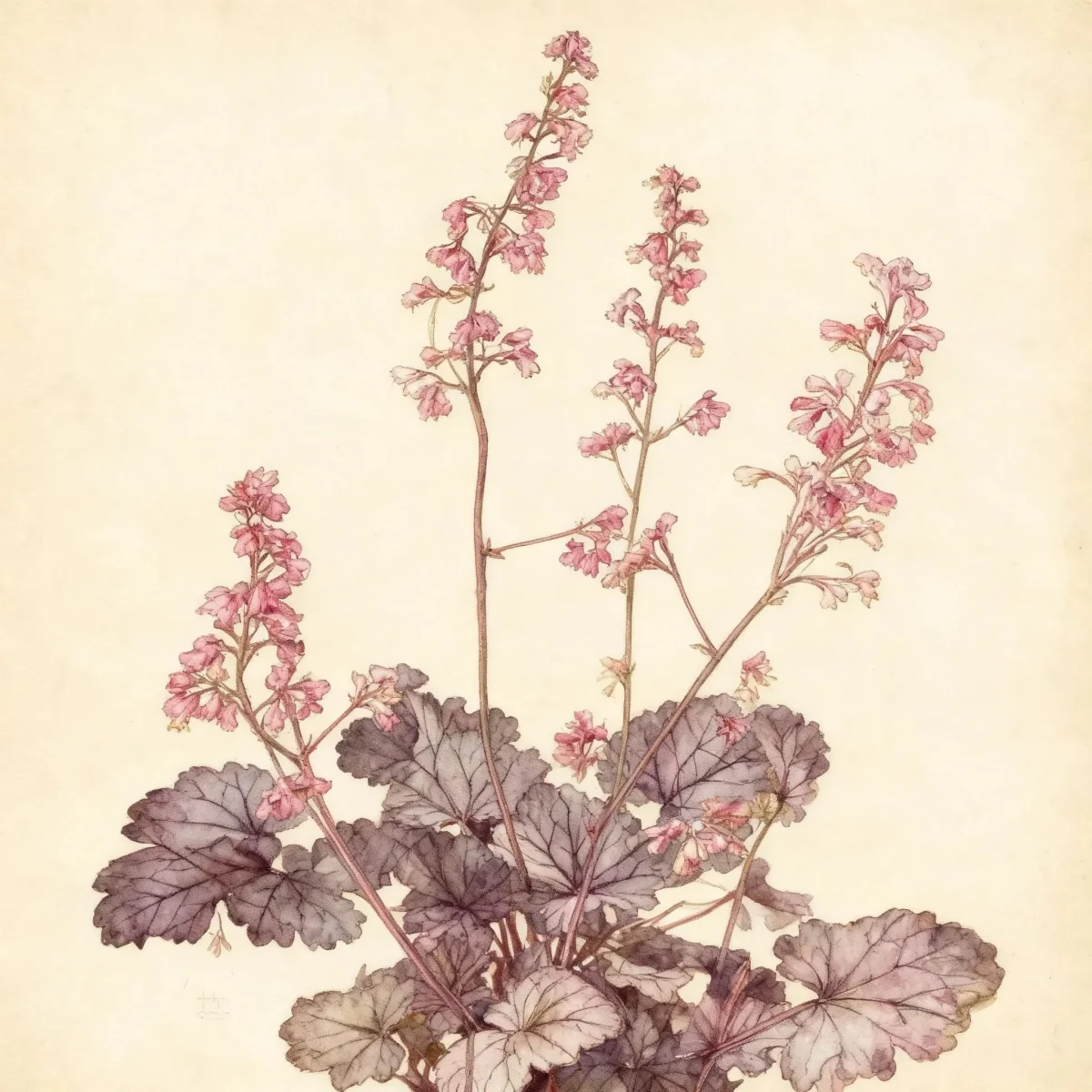
It brings vertical interest during the summer when slender stems carry small, airy panicles of two-tone pink flowers, typically appearing from June into July. Cultivating Heuchera ‘Raspberry Ice’ successfully relies heavily on matching its location to the parentage favoring a balance between sun exposure and moisture retention.
This particular hybrid excels where consistent medium moisture can be supplied, typically thriving from USDA Zones 4 through 9. Whether used to brighten shaded borders or as a colorful accent plant, Heuchera ‘Raspberry Ice’ is a highly adaptable and attractive addition to any garden design palette.
Fast Facts
- Plant Family: Saxifragaceae
- Plant Type: Herbaceous perennial
- Hardiness Zones: USDA Zones 4-9
- Size at Maturity:
- Height: 1-2 ft
- Spread: 1-2 ft
- Bloom Time: June to July
- Bloom Description: Pink
- Sun Exposure: Full sun to part shade
- Water Needs: Medium
- Maintenance Level: Medium
How to Grow
For the best performance, plant Heuchera ‘Raspberry Ice’ in soil that is organically rich, humusy, and well-drained, providing ample moisture. While these coral bells appreciate part shade, specific sun tolerance is highly dependent on parentage; be extremely cautious in hot southern climates. If planting in full sun, especially in northern areas, vigilant and consistent watering is critical to prevent leaf scorch and decline.
Water needs are medium; ensure the soil never dries out completely, particularly during periods of high heat or if the plant is sited in sunnier locations. Fertilizing is rarely essential in rich garden soils, but a spring application of compost helps maintain soil structure. Deadheading faded flower stems encourages the plant to redirect energy, though the foliage is the main attraction for this cultivar.
In colder regions, apply a winter compost mulch once the ground has frozen solid to help insulate the roots and prevent frost heaving, a major potential issue for established clumps. Foliage remains largely evergreen in warmer winters. Plan to divide large clumps of Heuchera ‘Raspberry Ice’ every three to four years during the spring to maintain vigor and optimal performance.
Landscape Uses
Gardeners prize coral bells for their vibrant, year-round foliage texture and color, and Heuchera ‘Raspberry Ice’ fits this role perfectly. Its mounding habit makes it exceptionally effective when planted en masse for creating drifts of silver-green color along woodland edges or shaded borders. It also functions beautifully in smaller groupings to provide contrast against darker green landscaping staples.
Consider using Heuchera ‘Raspberry Ice’ as a dynamic edger along walkways or around the perimeter of a patio where its season-long display can be easily appreciated up close. While it thrives in open woodland settings, its tolerance for partial sun also allows it to integrate well into rock gardens, adding soft color among hardscaping elements.
Due to its medium size, it pairs naturally with shade-lovers that offer differing textures, such as Hostas, Ferns, or Astilbes, creating layered depth in mixed perennial beds. The pink summer blooms offer a gentle complement to the foliage focus of this specific cultivar.
Flower Qualities
- Showy
Noteworthy Characteristics
Heuchera, commonly called coral bells or alumroot, features evergreen to semi-evergreen herbaceous perennial species native to diverse North American habitats. ‘Raspberry Ice’ is a clump-forming hybrid cultivar, noted for its distinctive leaf coloration: silvery gray-green with darker veining on top and dark reddish-purple below. It produces small, two-tone pink flowers in airy panicles rising above the 8-12 inch mound, typically reaching 20-24 inches tall when in bloom.
Tolerances
Potential Problems
The primary cultural concern for Heuchera ‘Raspberry Ice’ involves maintaining consistent soil moisture, as allowing the soil to dry out can lead to leaf scorch and general decline, especially when receiving significant sunlight. A more structural issue is frost heaving, where fluctuating winter temperatures push the shallow roots upward, requiring winter protection via mulch once the ground freezes.
Monitor for potential fungal issues like powdery mildew and rust, which thrive in overly humid or crowded conditions. Good air circulation and appropriate watering practices minimize these disease risks. Pest control should focus on checking for weevils and avoiding stress that attracts foliar nematodes.
Frequently Asked Questions
What hardiness zones is Coral bells suitable for?
Heuchera ‘Raspberry Ice’ is suitable for USDA Zones 4 through 9.
How large does Heuchera ‘Raspberry Ice’ grow?
This cultivar typically forms a basal mound 8 to 12 inches tall, spreading up to 27 inches wide after a couple of years, with flower spikes reaching 20 to 24 inches high.
What sun exposure does Heuchera ‘Raspberry Ice’ need?
This variety performs best in sun exposure ranging from full sun to part shade, though afternoon shade is preferable in hotter climates.
When does Coral bells bloom?
Heuchera ‘Raspberry Ice’ produces its pink blooms primarily from June into July.
Conclusion
The striking, highly contrasted foliage of Heuchera ‘Raspberry Ice’ offers reliable texture and color, making it a cornerstone for layered perennial design throughout the year. As a reliable variety of coral bells, it asks only for consistent moisture and well-drained soil to thrive from spring planting through winter dormancy. Always check your local USDA zone compatibility before incorporating this excellent hybrid into your garden plans.
Companion Planting
Successful companion planting for Heuchera ‘Raspberry Ice’ relies on pairing it with plants that share similar cultural requirements, primarily medium moisture and partial shade. Groupings of Hostas, especially those with solid green or blue foliage, provide a strong textural contrast to the detailed leaves of the coral bells.
For areas receiving filtered light, dense groundcovers or low-growing woodland natives work well around the base of the mounds, helping to keep the soil cool and moist. Consider using plants like Foamflower (Tiarella) or bleeding hearts (Dicentra), which appreciate the same protected conditions where Heuchera ‘Raspberry Ice’ excels.
Propagation Tips
While many nursery Heucheras are grown from tissue culture, home gardeners can successfully propagate Heuchera ‘Raspberry Ice’ through division. This process is best performed in the spring when new growth begins but before the plant becomes overly stressed by summer heat.
Gently lift the entire clump using a garden fork, taking care not to damage the central crown excessively. Using a sharp, clean knife, divide the clump into sections, ensuring each new division has a healthy portion of roots and at least two or three viable growth points. Replant the divisions immediately into prepared, enriched soil at the same depth they were previously growing.