Sisyrinchium ('E. K. Balls') Blue-Eyed Grass
Discover how to grow Sisyrinchium 'E. K. Balls', a striking Iridaceae perennial offering mauve, star-like flowers in late spring.
Scroll down to discover growing tips, care requirements, companion plants, and more
Complete Plant Information
Overview
Sisyrinchium ‘E. K. Balls’ is a highly desirable, clump-forming perennial prized for its attractive, grass-like foliage and masses of distinctive flowers. Although easily mistaken for actual grass due to its narrow leaves, this Blue-Eyed Grass belongs firmly to the Iris family, Iridaceae. Gardeners value this cultivar, often known as $S$. ‘Ball’s Mauve’, for its neat structure and bright bloom display during late spring.
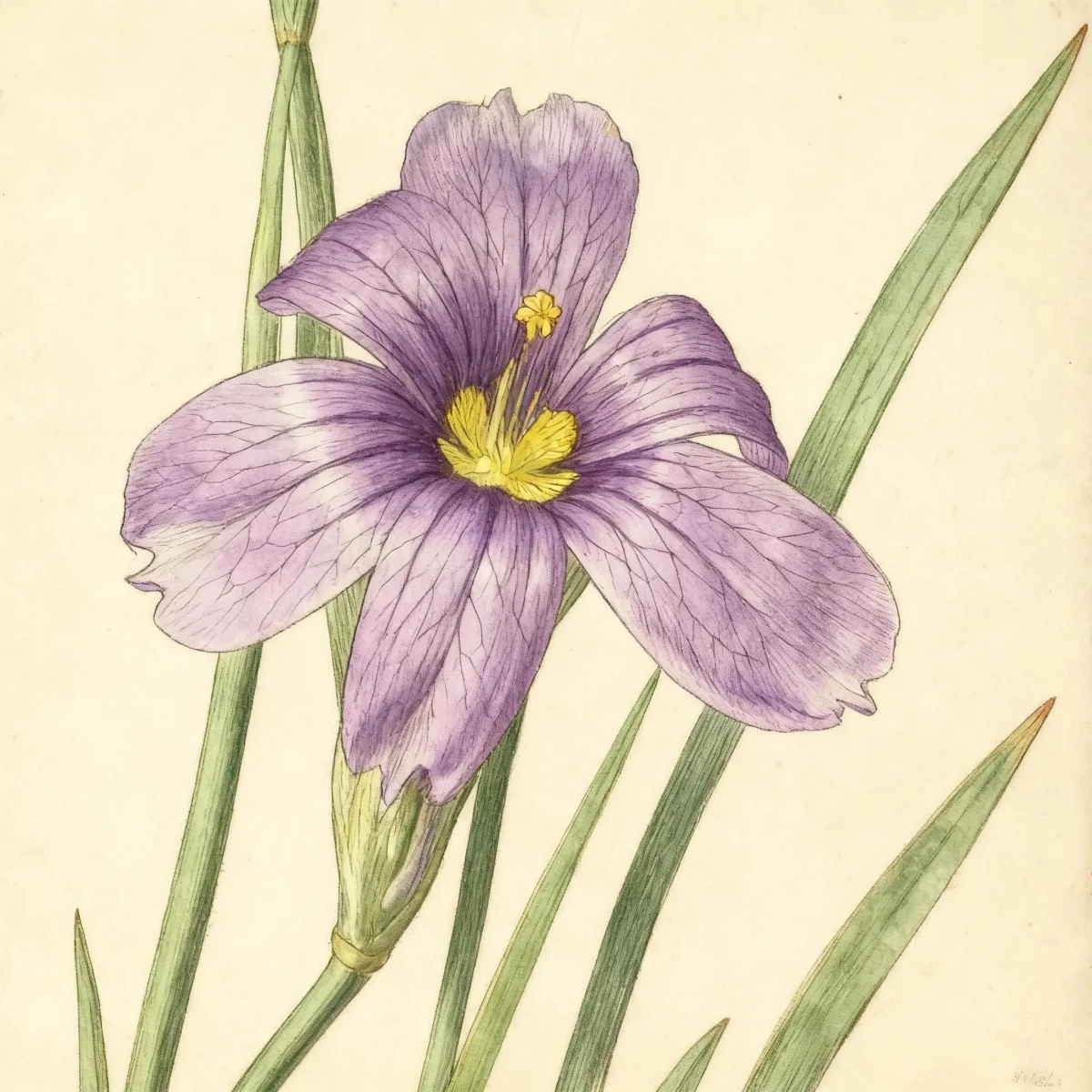
The striking feature of Sisyrinchium ‘E. K. Balls’ is its profusion of star-like, mauve flowers, contrasting beautifully against the dense, blue-green, fan-like tufts of foliage. Reaching under a foot tall, this plant is perfect for front-of-border placements where its structure can be appreciated through the entire season.
This easy-to-manage perennial thrives with consistent moisture but demands excellent drainage, making it a fantastic choice for rock gardens or meticulously edged walkways. Enjoy the late spring color show provided by Sisyrinchium before tidying the foliage for the remainder of the growing season.
Fast Facts
- Plant Family: Iridaceae
- Plant Type: Herbaceous perennial
- Hardiness Zones: USDA Zones 4-8
- Size at Maturity:
- Height: 0.5-0.75 ft
- Spread: 0.5-0.75 ft
- Bloom Time: May to June
- Bloom Description: Mauve
- Sun Exposure: Full sun
- Water Needs: Medium
- Maintenance Level: Medium
How to Grow
For the best performance, plant Sisyrinchium ‘E. K. Balls’ in the spring or fall when conditions are mild. Select a location that receives full sun, although light shade is tolerated by this robust variety. Crucially, the soil must be well-drained; while Sisyrinchium prefers consistently moist soils that should not dry out, soggy conditions will quickly lead to root failure.
Watering should be consistent through the growing season, meeting its medium water needs, ensuring the soil remains damp but never waterlogged. This cultivar generally performs well without heavy fertilization, which can sometimes encourage excessive, floppy foliage instead of blooms. This hybrid Sisyrinchium does not seem to self-seed, so division will be necessary to keep plantings vigorous.
A key aspect of maintaining healthy Sisyrinchium is post-bloom care. Plantings may be sheared back after the mauve flowers fade. This action tidies the appearance of the foliage for rest of the growing season. Plan to divide the clumps every two to three years to revitalize the plant mass.
Landscape Uses
Sisyrinchium ‘E. K. Balls’ excels in areas where fine texture and low stature are beneficial. It is best used in groups or massed plantings, which helps to amplify the impact of the small mauve flowers. Consider using it at the front of mixed borders where mid-sized perennials can rise behind its low profile.
Its grass-like foliage clumps remain attractive even when blooms are absent, making it an effective, continuous textural element in the landscape. It works wonderfully as a tidy edger along paths, walkways, or flanking formal steps where a low maintenance screen is required.
This plant also finds a natural home in rock gardens, where its need for sharp drainage is easily satisfied, or in open woodland garden settings that receive several hours of direct sun. Explore combinations with spring bulbs or early-blooming perennials that share similar light and moisture preferences for dynamic seasonal layering.
Standout Features
Flower Qualities
- Showy
Noteworthy Characteristics
Sisyrinchium is a genus of about 90 species of annuals and perennials native to North and South America. Although their foliage is grass-like, the blue-eyed grasses belong to the iris family not the grass family. ‘E. K. Balls’ is a hybrid cultivar that is noted for its mauve flowers and is sometimes sold as $S$. ‘Ball’s Mauve’. It forms a clump of narrow, grass-like, blue-green leaves, bearing star-like, mauve flowers to 3/4” across atop distinctively flattened flowering stems.
Tolerances
Potential Problems
This plant is generally robust and resists common garden pests or diseases effectively. No serious insect or disease problems are typically reported for Sisyrinchium ‘E. K. Balls’. Good cultural practices, especially ensuring excellent drainage, are the primary method of prevention against common perennial issues like crown rot.
If growth becomes overly crowded or flowering declines significantly, it usually indicates the clump needs rejuvenation. Addressing this through division every few years supports continued vigor and dense, healthy foliage.
Frequently Asked Questions
What hardiness zones is Sisyrinchium ‘E. K. Balls’ suitable for?
Sisyrinchium ‘E. K. Balls’ is reliably hardy in USDA Zones 4 through 8, making it adaptable across a wide range of temperate climates.
How large does Sisyrinchium grow?
This compact perennial typically reaches a height between 0.5 and 0.75 feet, with a spread of 0.5 to 0.75 feet, maintaining a low profile in the garden.
What sun exposure does Sisyrinchium need?
For optimal flowering and health, this Sisyrinchium requires full sun exposure, although it can tolerate periods of light shade during the hottest part of the day.
When does Sisyrinchium ‘E. K. Balls’ bloom?
The bloom time for this cultivar is typically from May into June, featuring masses of star-like, mauve blossoms.
Conclusion
The tidy, grass-like foliage and late spring flush of mauve color make Sisyrinchium ‘E. K. Balls’ an indispensable texture plant for refined garden spaces. Its easy care and resistance to serious pests ensure minimal frustration for the gardener. Check your local conditions to confirm compatibility with USDA Zones 4-8 and plan to incorporate this handsome plant near pathways this coming planting season.
Companion Planting
Because Sisyrinchium ‘E. K. Balls’ requires sharp drainage and consistent moisture, pairing it with other plants that share similar structural ground cover needs can create harmonious planting pockets. Look to low-growing Sedums, creeping Thyme varieties, or low-growing ornamental grasses that thrive in full sun settings. Avoid planting directly next to aggressive spreaders, as this specialized perennial does best when its root zone is respected.
Seasonal Care Calendar
Spring preparation involves shearing back any old, matted foliage, which should be done just as new basal growth begins emerging in early spring. Water deeply during dry spells in summer, particularly if the area is susceptible to drying out completely, remembering the plant despises drought stress. The only major mid-season task is shearing the plants after flowering concludes to keep the appearance neat. In late fall, while frost protection is usually unnecessary in zones 4-8, apply a light layer of mulch if winter temperatures are expected to fluctuate wildly.