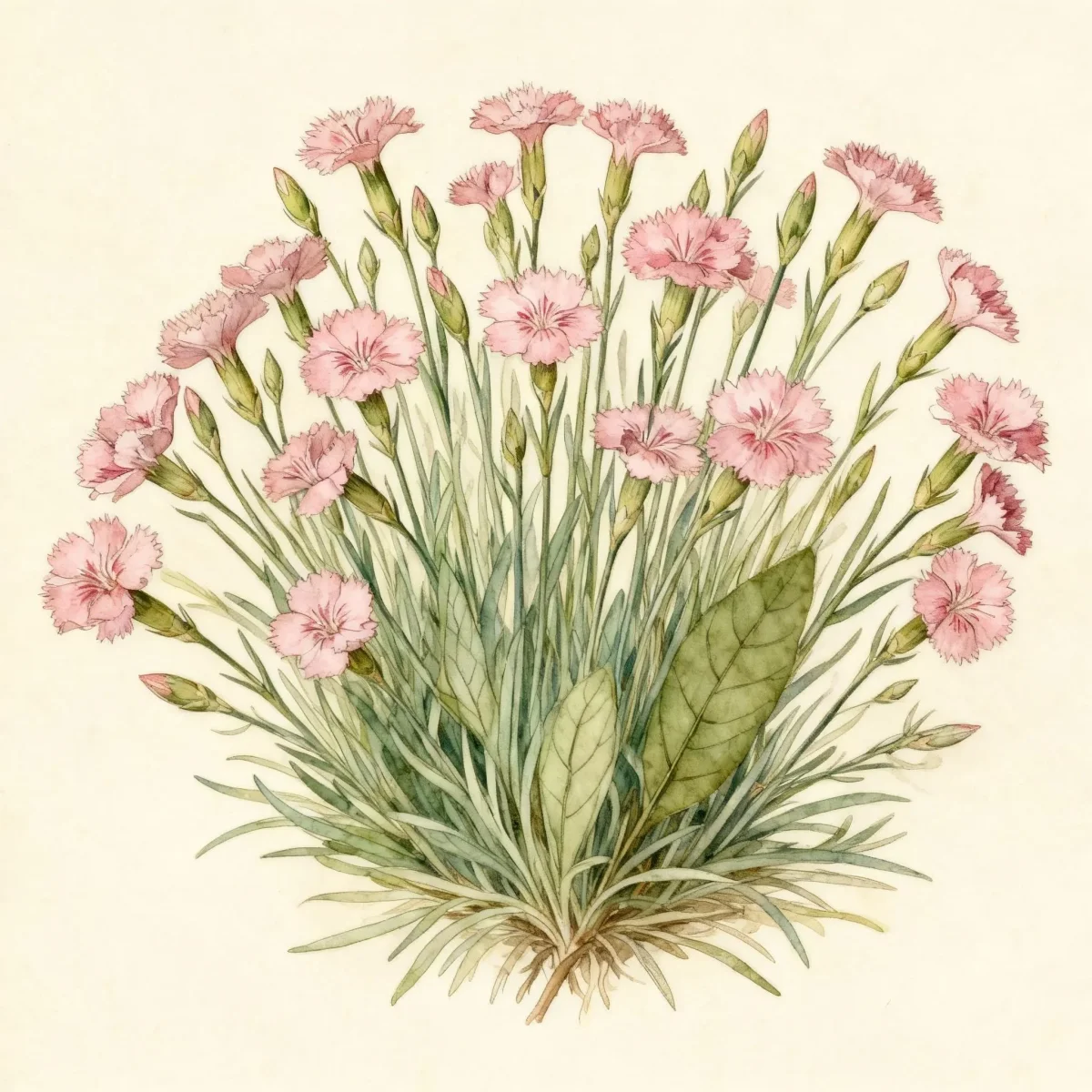
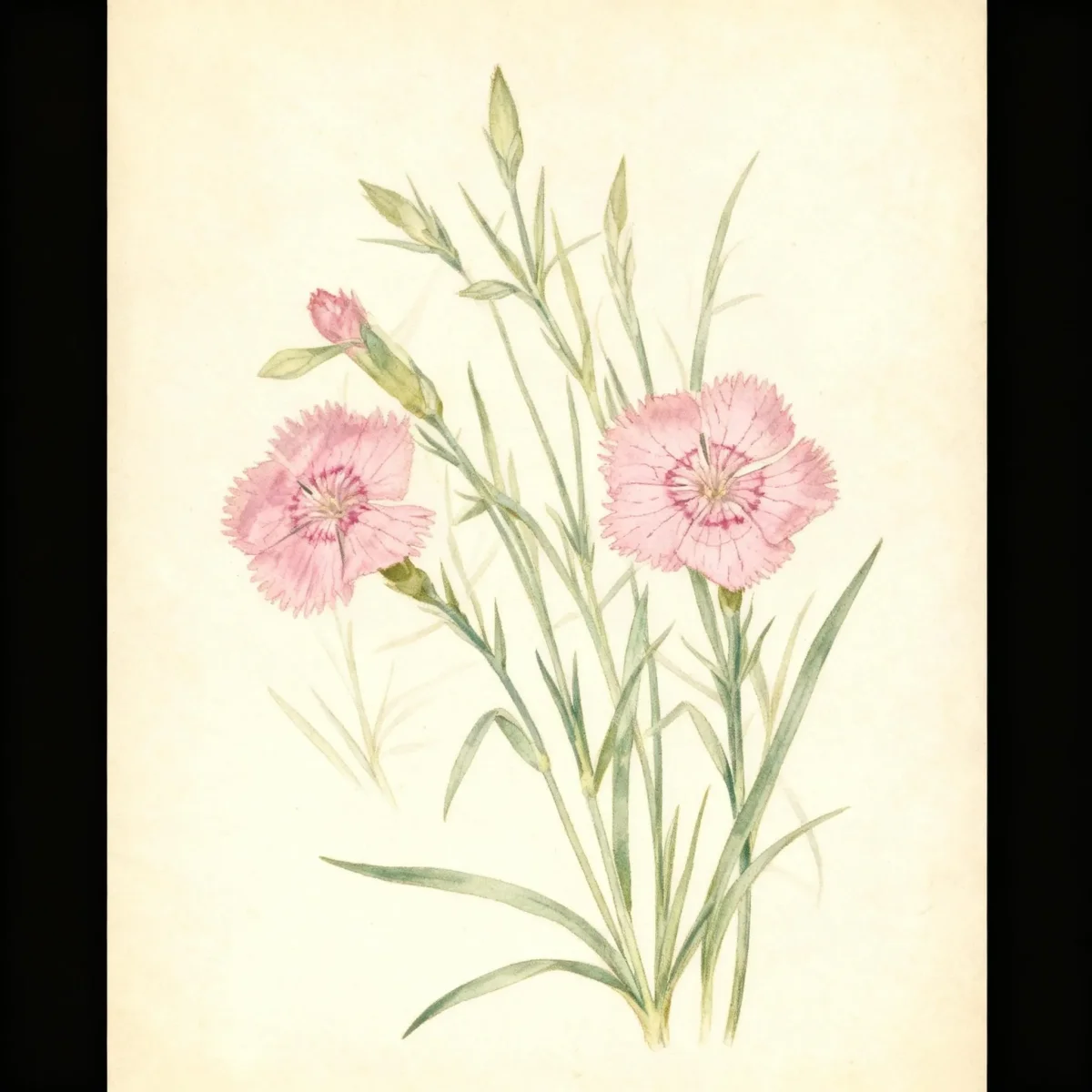
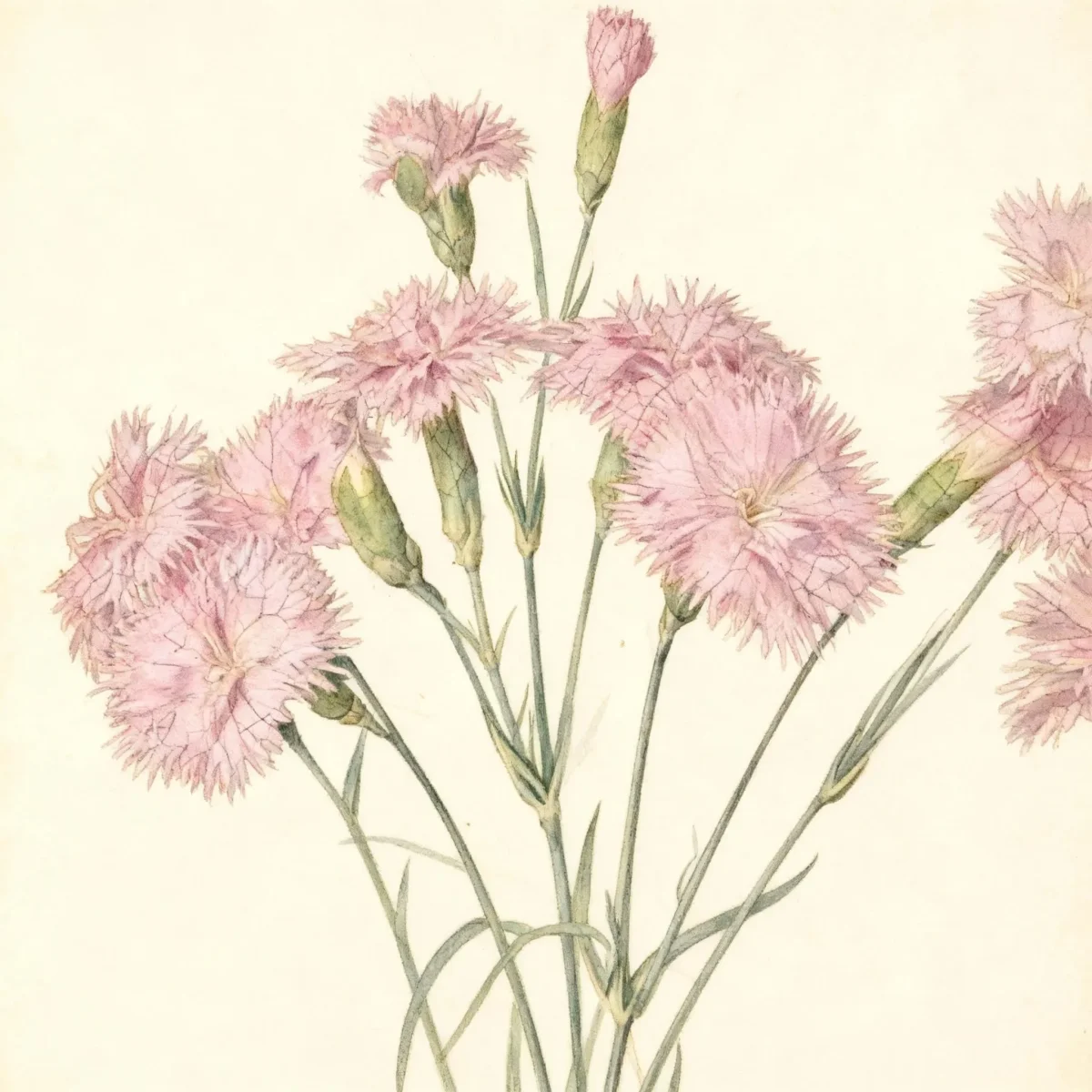
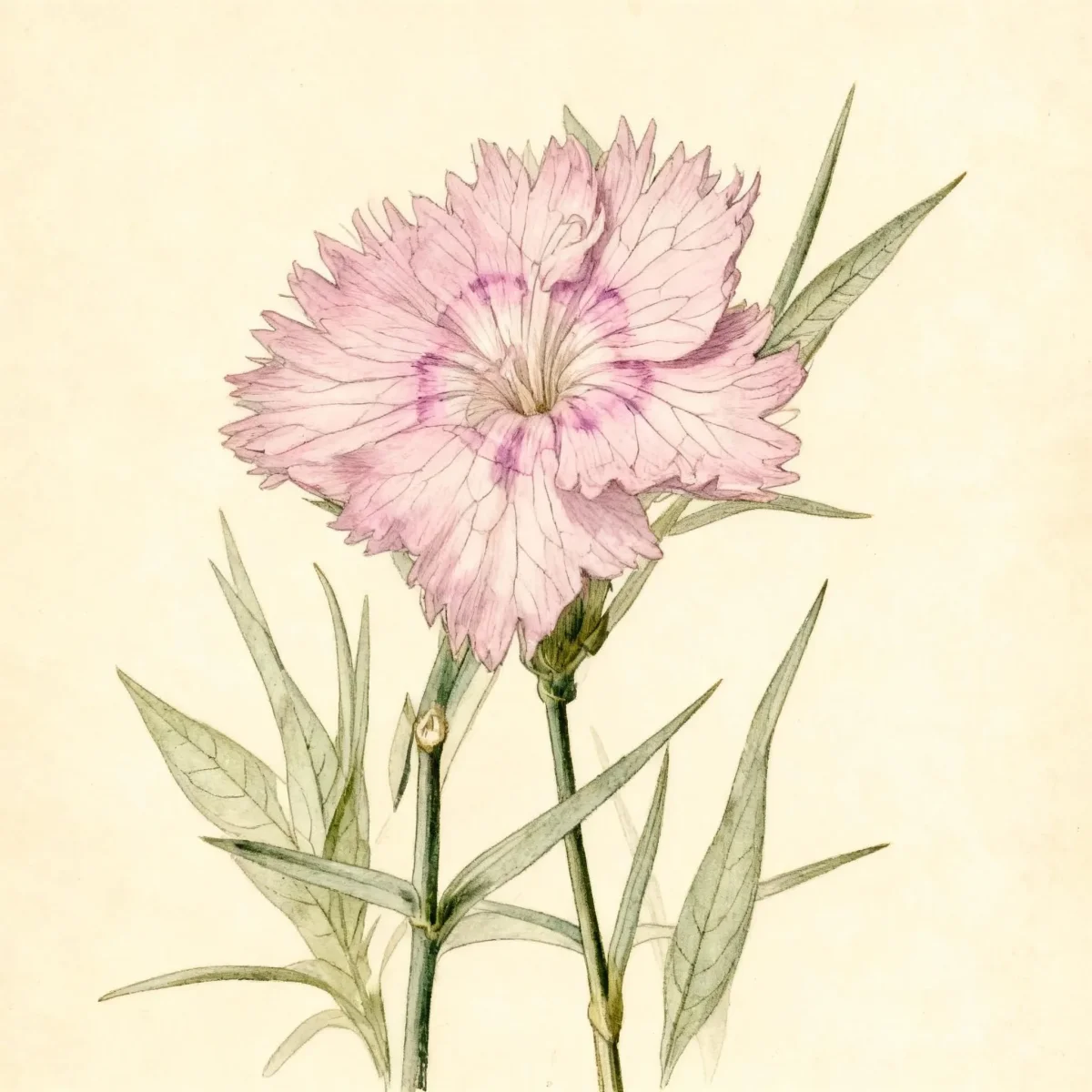
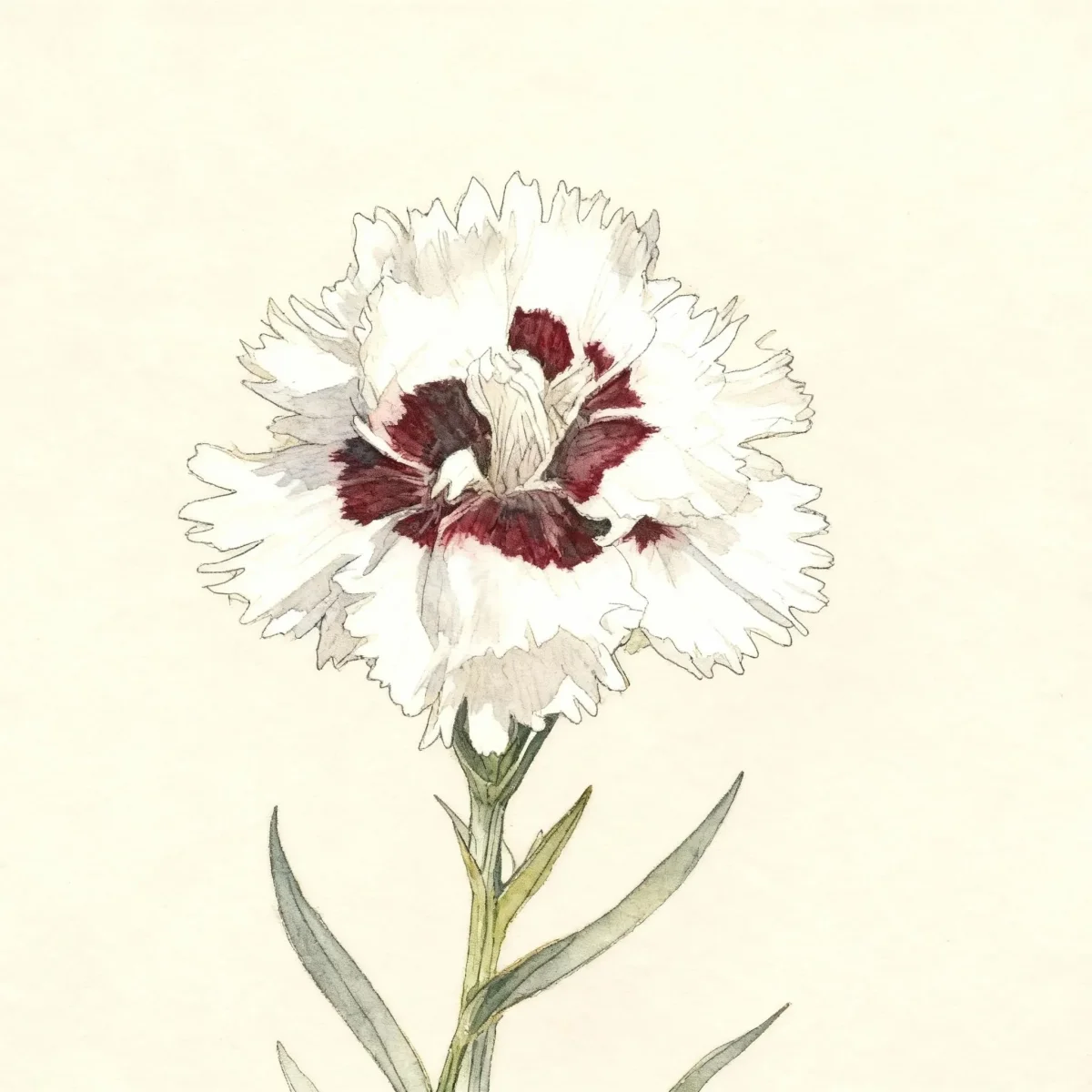
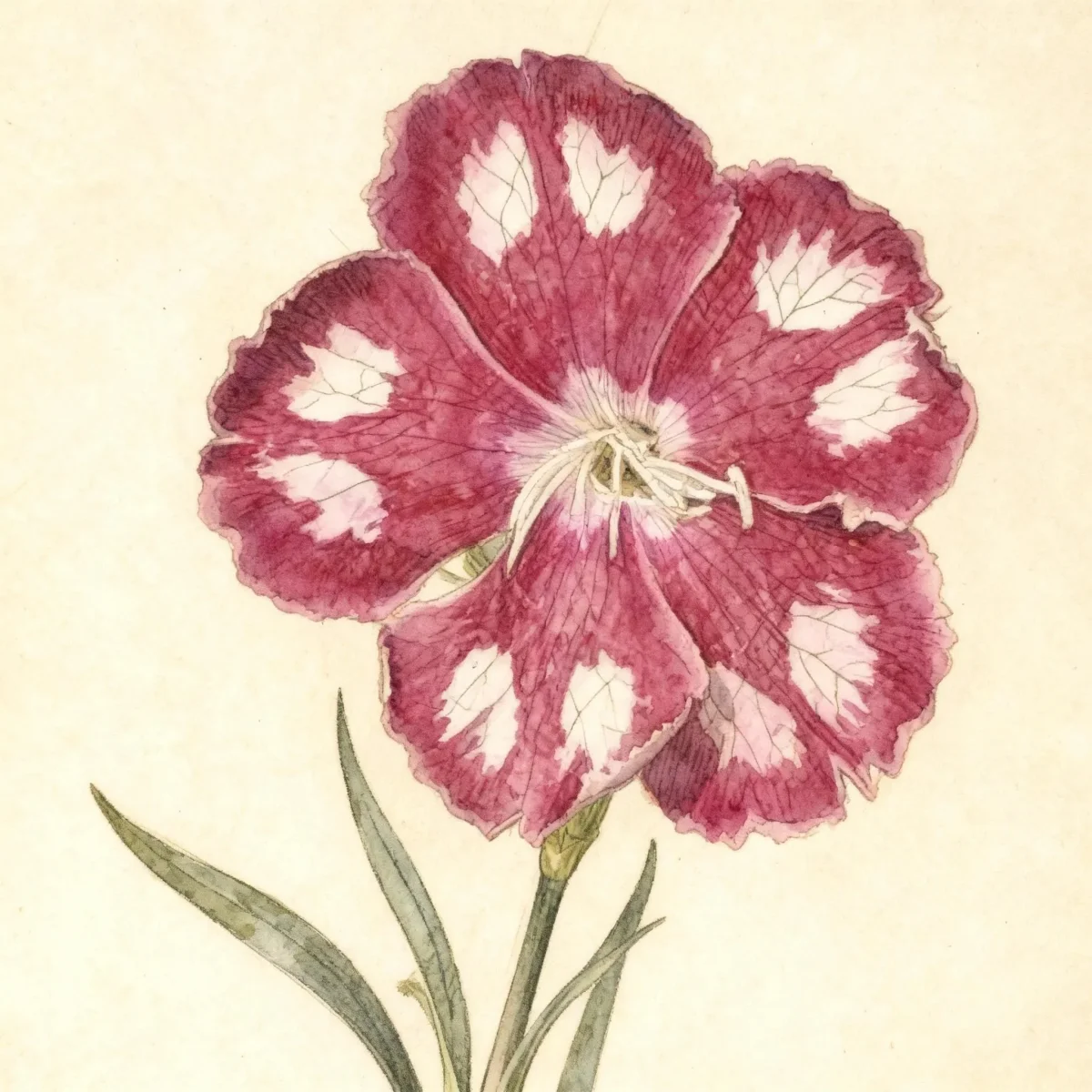
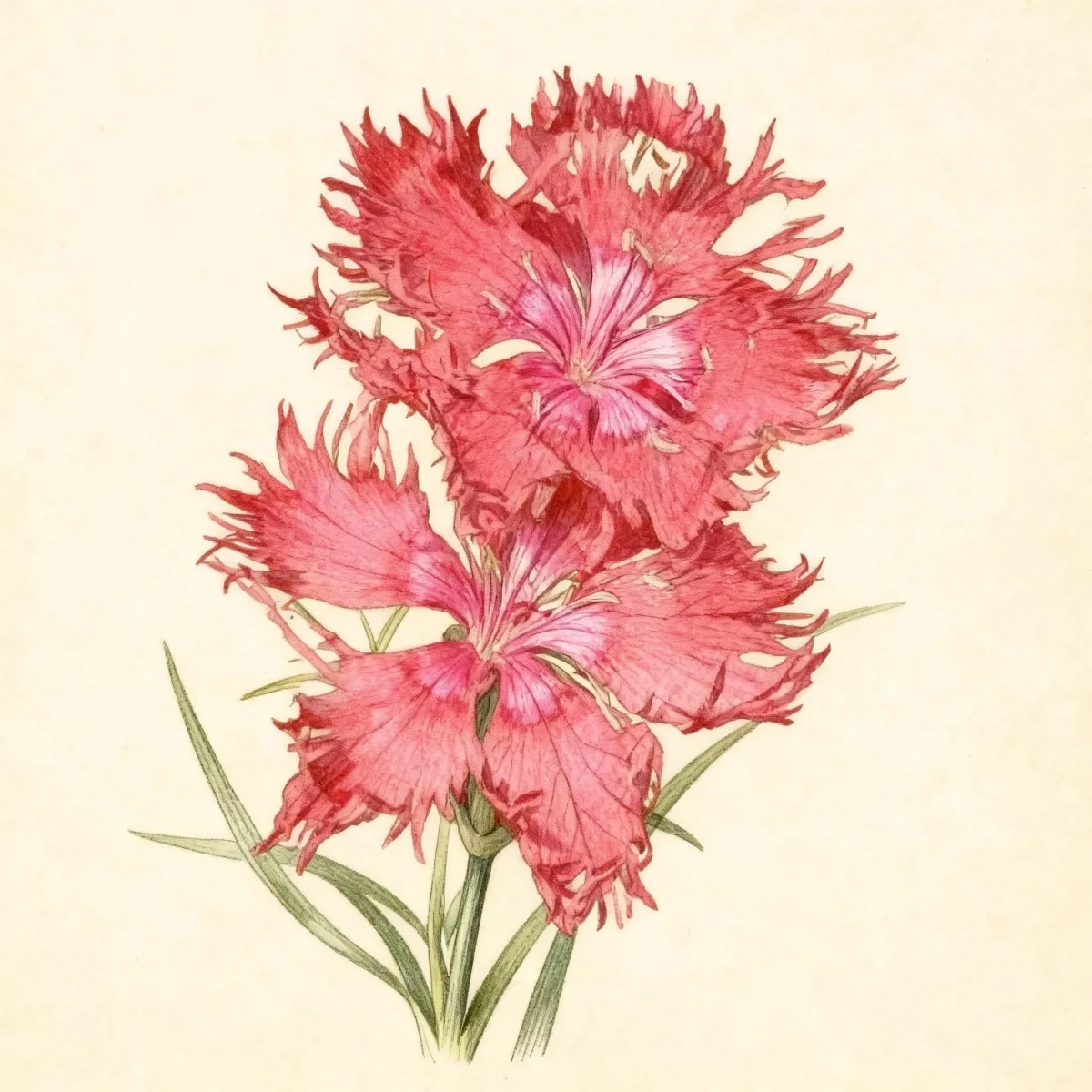
Fringed pink (Dianthus superbus 'Crimsonia')
Dianthus superbus 'Crimsonia', the Fringed pink, offers fragrant, showy crimson flowers and low maintenance in sunny borders.
Scroll down to discover growing tips, care requirements, companion plants, and more
Complete Plant Information
Overview
Dianthus superbus ‘Crimsonia’, commonly known as Fringed pink, is a superb choice for gardeners seeking vibrant color and delightful fragrance without excessive upkeep. This herbaceous perennial brings masses of shaggy, deeply-fringed, crimson red blooms to the garden during the early summer months. Its compact stature makes Dianthus superbus ‘Crimsonia’ highly versatile for various design applications.
This cultivar is valued not only for its aesthetic appeal but also for its reliable performance in sunny locations across a wide hardiness range. The foliage forms tight tufts, providing consistent green texture between blooming periods. Growing Dianthus superbus ‘Crimsonia’ ensures you bring a touch of Old World charm and divine fragrance to your landscape.
The low maintenance requirements of the Fringed pink ensure that even novice gardeners can successfully cultivate this plant. While species plants can be short-lived, ‘Crimsonia’ can be reliably grown from seed, offering gardeners an economical way to propagate and refresh plantings for season after season of beautiful, fragrant blooms.
Fast Facts
- Plant Family: Caryophyllaceae
- Plant Type: Herbaceous perennial
- Hardiness Zones: USDA Zones 3-8
- Size at Maturity:
- Height: 1.5-2 ft
- Spread: 1.5-2 ft
- Bloom Time: June to July
- Bloom Description: Crimson red
- Sun Exposure: Full sun
- Water Needs: Medium
- Maintenance Level: Low
How to Grow
Dianthus superbus ‘Crimsonia’ performs best when planted in spring or early fall in a location receiving full sun exposure throughout the day. The species prefers average, well-drained soils, ideally favoring fertile, slightly alkaline, somewhat gritty loams where drainage is excellent. Avoid heavy, wet clay that holds moisture, as this can lead to crown rot issues.
Once established, the Fringed pink requires medium watering, ensuring the soil remains consistently moist but never waterlogged. While minimal feeding is usually necessary in fertile soil, you can provide a balanced fertilizer if growth seems weak. The most important cultural practice relates to spent flowers.
Prompt removal of spent flowers can encourage a prolonged bloom period, but this can be labor-intensive for large displays. For a more practical approach, shear off faded flowers after the main bloom concludes in July. Dianthus superbus ‘Crimsonia’ seeds readily, offering a simple propagation route, though be aware that species plants are naturally short-lived.
Landscape Uses
The compact habit and striking color of the Fringed pink make it an excellent edging plant. It shines when used near border fronts, providing a vibrant, fragrant layer between taller structural plants and the lawn edge. Dianthus superbus ‘Crimsonia’ is also a standout selection for traditional cottage gardens where mixed textures and scents are celebrated.
For smaller spaces, consider massing this plant in rock gardens, where its gritted loam preference mimics its native habitat nicely. Furthermore, the Fringed pink thrives in containers, adding portable blocks of intense crimson color near patios or entryways. Pair it with silver-leaved companions or low-growing alpines for complementary textures in these visible areas.
Standout Features
Flower Qualities
- Showy
- Fragrant
Noteworthy Characteristics
Dianthus superbus is a European/Asian loosely tufted species known for its somewhat sprawling stems and upright branches. It typically produces shaggy, deeply-fringed flowers that are scented. The specific cultivar, ‘Crimsonia’, offers the added benefit of fragrant, crimson red flowers appearing on compact plants, usually reaching about 20 inches tall.
Tolerances
- Deer
Potential Problems
Dianthus superbus ‘Crimsonia’ generally enjoys good resistance to serious insect pests and common diseases. The primary cultural vulnerability involves soil moisture control. Crown rot is a significant threat if the Fringed pink is situated in soils that remain constantly moist or wet, especially if drainage is poor. Ensure excellent drainage to prevent this issue, particularly during wet growing seasons.
Frequently Asked Questions
What hardiness zones is Fringed pink suitable for?
The Dianthus superbus ‘Crimsonia’ is reliably hardy across USDA Zones 3 through 8.
How large does Dianthus superbus ‘Crimsonia’ grow?
This perennial typically reaches a height between 1.5 and 2 feet, with a similar spread from 1.5 to 2 feet.
When does Fringed pink bloom?
You can expect the showy, fragrant blooms of the Fringed pink between June and July, presenting a deep crimson red hue.
What sun exposure does Dianthus superbus ‘Crimsonia’ need?
This variety absolutely requires full sun exposure to flourish and produce the best quality crimson flowers.
Conclusion
Dianthus superbus ‘Crimsonia’ is a wonderfully resilient, low-maintenance perennial that delivers high returns in fragrance and bold color. Its crimson blooms enhance rock gardens and borders throughout the early summer. Check that your site offers full sun and excellent drainage before planting your new Fringed pink selection.
Companion Planting
When planning beds featuring Dianthus superbus ‘Crimsonia’, select companions that share similar cultural requirements, particularly the need for full sun and excellent drainage. Plants that appreciate slightly alkaline or gritty soil, such as various Sedums or Artemisia, pair beautifully next to the Fringed pink. Avoid placing them near overly thirsty plants, as this can inadvertently lead to overwatering the dianthus.
For color contrast in a cottage garden scheme, try pairing the crimson red of the Fringed pink with cool blues or soft whites. Nepeta (Catmint) offers long-lasting blue spires that complement the texture of the fringed petals perfectly, while providing a soft backdrop that allows the Dianthus superbus ‘Crimsonia’ to pop visually.
Propagation Tips
While Dianthus species are sometimes short-lived, propagation of the cultivar ‘Crimsonia’ is relatively straightforward. The most direct method mentioned is growing this plant directly from seed, which is an economical approach for large landscape displays. Start seeds indoors several weeks before the last frost date for the best results.
For established plants, propagation can also be achieved through basal cuttings taken in spring or early summer before the main flush of bloom. Ensure cuttings have a few nodes, remove the lower foliage, and place them in a well-draining, sterile mix kept slightly moist. While dividing clumps is sometimes possible, it is often less successful with Dianthus than rooting cuttings or starting new plants from seed.