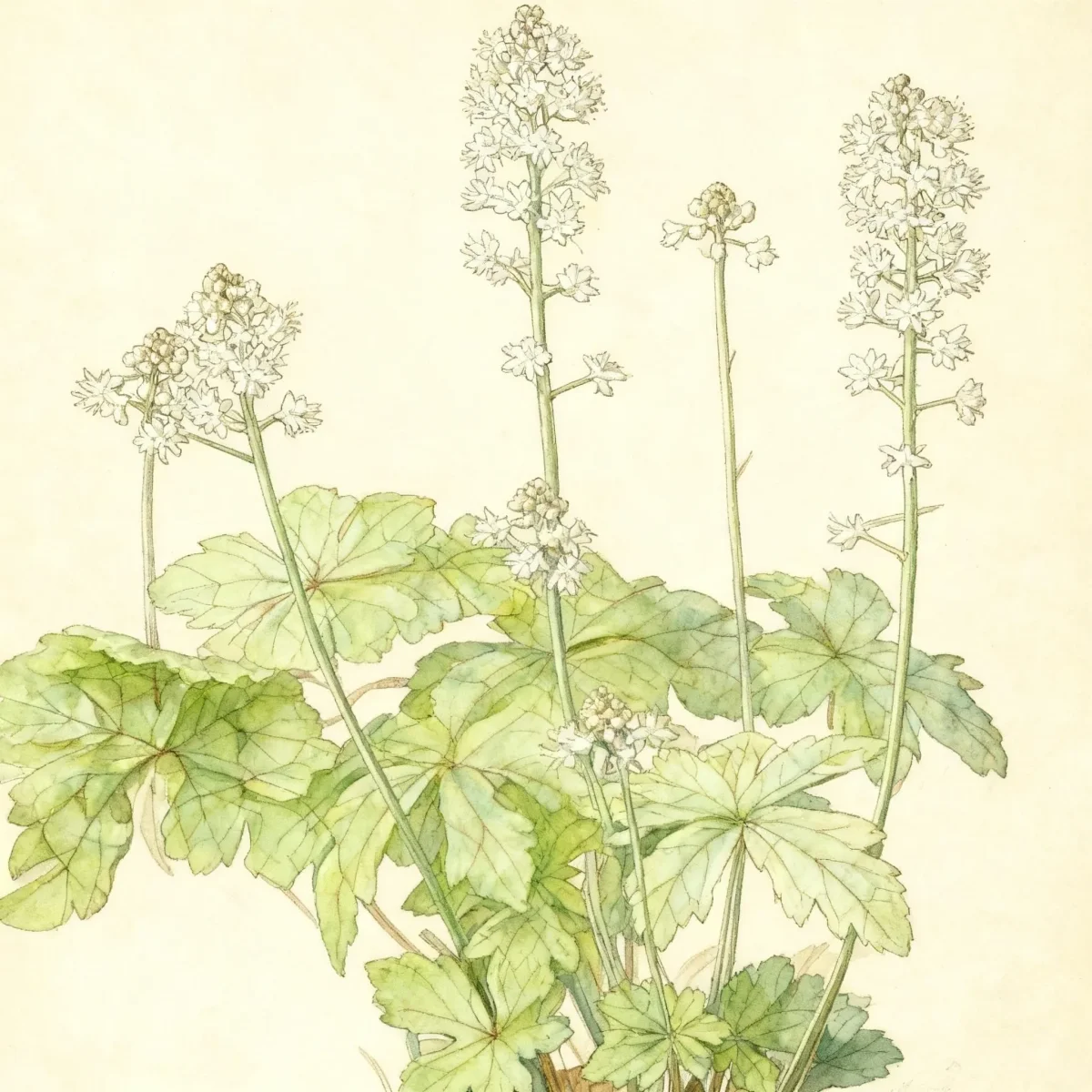
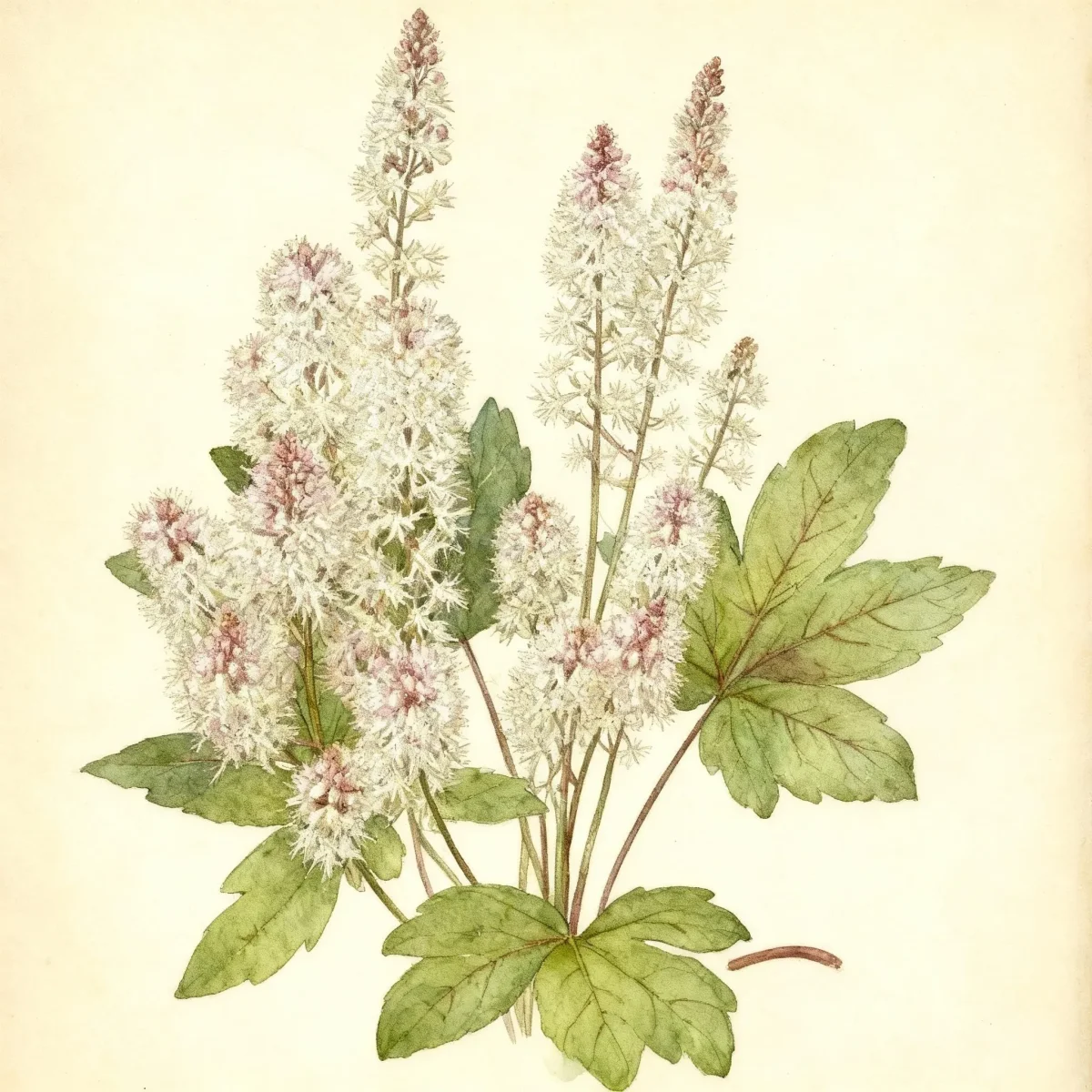
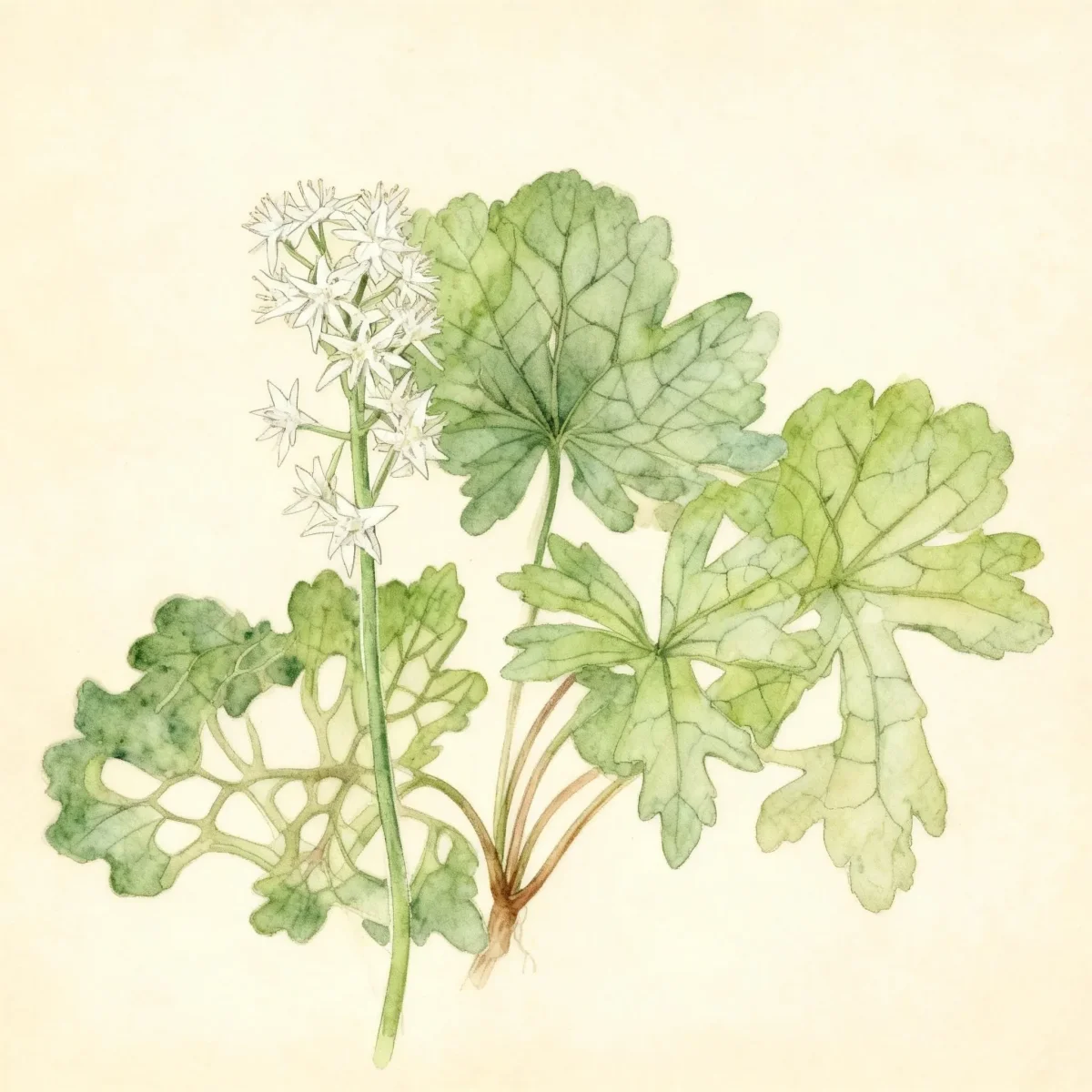
Foam flower (Tiarella 'Dark Star')
Tiarella 'Dark Star' is a low-maintenance Foam flower offering dark foliage contrast and airy pinkish-white blooms in May.
Scroll down to discover growing tips, care requirements, companion plants, and more
Complete Plant Information
Overview
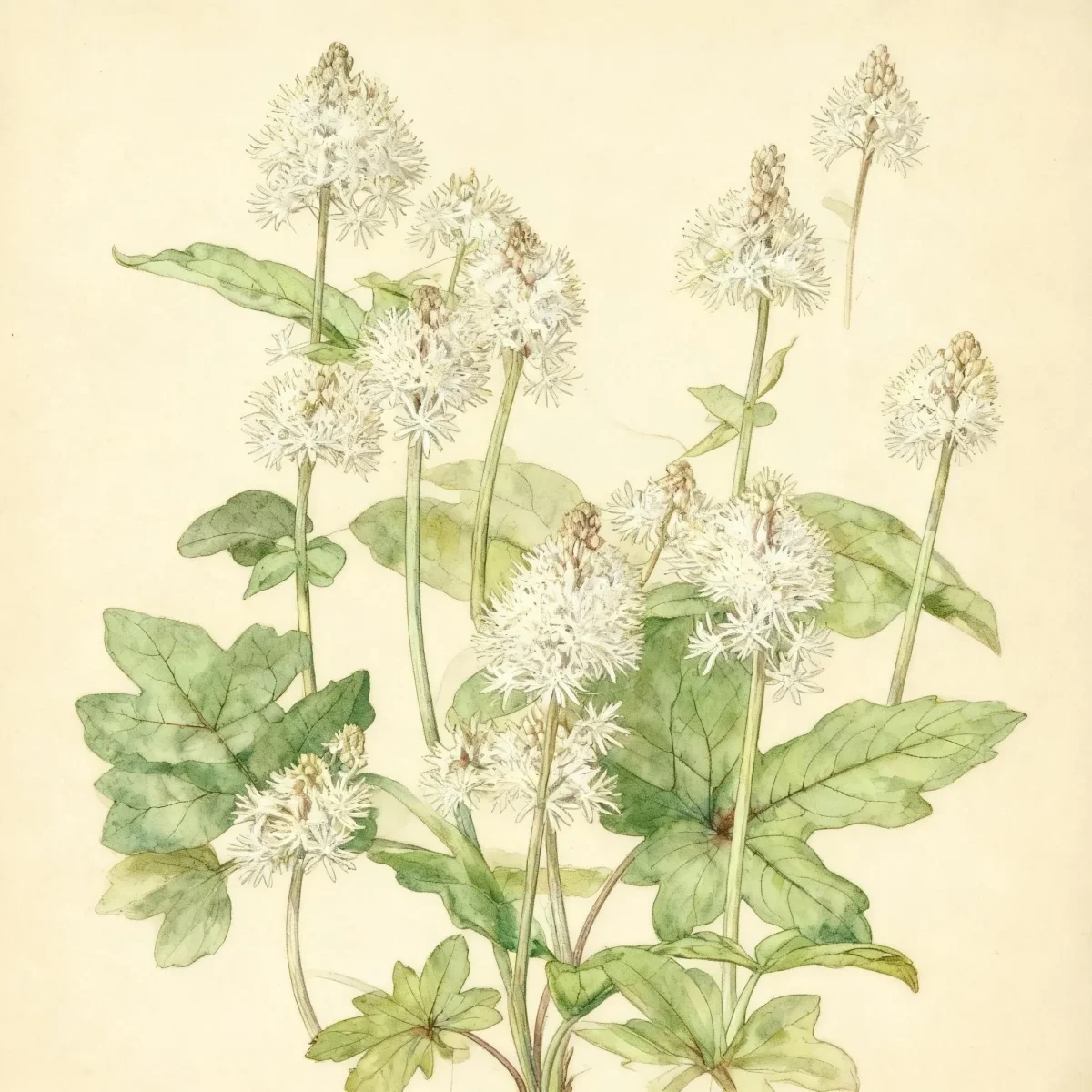
Tiarella ‘Dark Star’, commonly known as Foam flower, is a highly valued herbaceous perennial celebrated for its striking foliage that provides excellent contrast in shaded garden spaces. This hybrid forms a neat, clump-forming mound featuring star-shaped leaves highlighted by very dark centers, offering visual interest long before and after flowering. Its airy racemes of pinkish-white flowers float delicately above the foliage in late spring, creating a soft texture reminiscent of fine foam.
As a low-maintenance ground cover, Tiarella ‘Dark Star’ thrives reliably across USDA Zones 4 through 9. It is perfectly suited for woodland settings where it can spread slowly via stolons, eventually forming a dense carpet beneath taller trees. Gardeners appreciate this plant for its resilience and ability to bring brightness to dark corners without demanding excessive intervention.
The foliage of this specific Foam flower cultivar often develops attractive reddish-bronze tones in autumn, sometimes remaining semi-evergreen through winter in milder climates. Utilizing Tiarella ‘Dark Star’ ensures dependable texture and subtle color throughout the growing season, making it an essential ingredient for deep shade landscapes.
Fast Facts
- Plant Family: Saxifragaceae
- Plant Type: Herbaceous perennial
- Hardiness Zones: USDA Zones 4-9
- Size at Maturity:
- Height: 0.75-1.5 ft
- Spread: 1-1.5 ft
- Bloom Time: May
- Bloom Description: Pinkish white
- Sun Exposure: Part shade to full shade
- Water Needs: Medium
- Maintenance Level: Low
How to Grow
The ideal location for Tiarella ‘Dark Star’ is where it receives part shade to full shade, mimicking its natural woodland habitat. Plant in spring or fall into average soil that is well-drained, but ensure it retains consistent moisture. This plant thrives best when incorporated into humusy, organically rich soils that hold water well.
Maintain medium soil moisture consistently; allowing the soil to dry out is detrimental, particularly during hot spells. Critically, avoid overly wet soils, which can lead to root distress or death, especially during winter dormancy. Fertilization is generally unnecessary if starting in enriched soil, as the focus should remain on soil structure and moisture retention.
Routine care involves simplifying the appearance after blooming concludes. Prompt removal of the spent flower spikes will tidy up the foliage mound. In colder regions, the amount of attractive winter foliage retained by Tiarella ‘Dark Star’ depends heavily on winter severity, so be prepared for some dieback if temperatures are harsh.
Landscape Uses
Tiarella ‘Dark Star’ excels as an effective, spreading ground cover where many other plants fail due to deep shade. It is an excellent selection for softening the edge of woodland gardens or planting along naturally moist areas near ponds or streams, providing excellent coverage where mass planting is desired.
Use this Foam flower variety to create textural contrast against broad-leafed shade lovers like Hostas or evergreen ground covers. Its moderate height makes it perfect for the border fronts, providing a neat visual edge throughout the season. Furthermore, Tiarella ‘Dark Star’ performs beautifully when utilized in containers or shady rock gardens, bringing its unique leaf pattern to contained settings.
Standout Features
Flower Qualities
- Showy
Noteworthy Characteristics
Tiarella is a genus of about 7 species of herbaceous perennials from East Asia and North America. They make good ground covers in woodland gardens and shady borders. Plants are in the same family as and somewhat suggestive of Heuchera, Tellima and Mitella. Tiarella is sometimes commonly called false miterwort because of its similarity to Mitella (miterwort).Genus name comes from the Greek tiara meaning a small crown in reference to the form of the fruit.This foamflower hybrid is a clump-forming perennial which forms a basal foliage mound of unusual, star-shaped, maple-like leaves (to 4” across) with very dark centers. Foliage mound typically grows 6-9” tall and 12” wide, but slowly spreads by stolons to as much as 24” wide. Foliage turns an attractive reddish-bronze in autumn, and remains attractive throughout the winter (evergreen) in mild winter climates. Tiny, pinkish-white flowers in airy racemes bloom in spring on erect, wiry, mostly leafless stems which rise just above the foliage mound to a height of 10-13”
Tolerances
- Deer
Potential Problems
This plant generally faces no serious insect or disease problems when sited correctly. The primary concern is fungal issues; specifically, watch for powdery mildew, which can develop in overly humid or stagnant air conditions. Management involves ensuring good air circulation around the foliage mound.
Garden pests like root weevils and slugs may occasionally target Tiarella ‘Dark Star’ for casual nibbling. Early detection is key; inspect the undersides of leaves and the soil line regularly. Baiting for slugs during damp weather can help protect the appealing foliage of your Foam flower plants.
Frequently Asked Questions
What hardiness zones is Foam flower suitable for?
Tiarella ‘Dark Star’ is suitable for cultivation in USDA Hardiness Zones 4 through 9. Ensure your zone falls within this range for reliable perennial performance.
How large does Foam flower grow?
This perennial typically reaches a height between 0.75 to 1.5 feet tall, spreading slowly to a width of 1 to 1.5 feet, though it can slowly colonize up to 24 inches wide via stolons.
When does Foam flower bloom?
Tiarella ‘Dark Star’ sends up its signature airy racemes in May, bearing small, pinkish-white flowers above the dark foliage mounds.
What sun exposure does Foam flower need?
For the best display of foliage and blooms, Tiarella ‘Dark Star’ requires part shade to full shade exposure.
Conclusion
Tiarella ‘Dark Star’ is an indispensable choice for adding reliable texture and dark contrast to shaded garden environments. Its low maintenance requirements and attractive semi-evergreen foliage ensure the Foam flower remains relevant throughout the year. Before planting, confirm your garden site offers the consistent moisture and filtered light that Tiarella ‘Dark Star’ requires for optimal growth.
Companion Planting
When designing a shade garden around Tiarella ‘Dark Star’, prioritize companions that share similar needs for moisture retention and dappled light. Brunnera macrophylla offers contrasting leaf shapes and often blue flowers that complement the pinkish-white blooms of the Foam flower. Hosta varieties with bright green or variegated foliage provide excellent visual relief against the very dark centers of the Tiarella ‘Dark Star’ leaves.
Consider integrating low-growing Astilbe species, which share cultural requirements and bloom slightly later, extending the color interest in your shady border through early summer. Because Tiarella ‘Dark Star’ spreads slowly, grouping it with these perennials helps define garden edges while maintaining a lush, layered woodland aesthetic.
Design Ideas for Dark Corners
The compact yet slowly spreading habit of Tiarella ‘Dark Star’ makes it perfect for terraced shade gardens or shaded slopes where erosion control is a secondary benefit. Mass plantings create a flowing river of dark-centered foliage beneath deciduous trees, echoing the natural colony-forming appearance of woodland natives.
Use this plant as a living mulch at the base of taller shrubs that lose their lower leaves, like Rhododendrons or flowering Dogwoods, ensuring that the base of these larger specimens remains visually appealing. For container groupings, plant Tiarella ‘Dark Star’ on the cooler, shadier edge where it can cascade slightly over the rim, contrasting sharply with upright ferns or brightly colored impatiens.