Foam flower (Tiarella 'Laird of Skye')
Tiarella 'Laird of Skye' is a low-maintenance herbaceous perennial prized for its ruffled foliage and airy white spring bloom.
Scroll down to discover growing tips, care requirements, companion plants, and more
Complete Plant Information
Overview
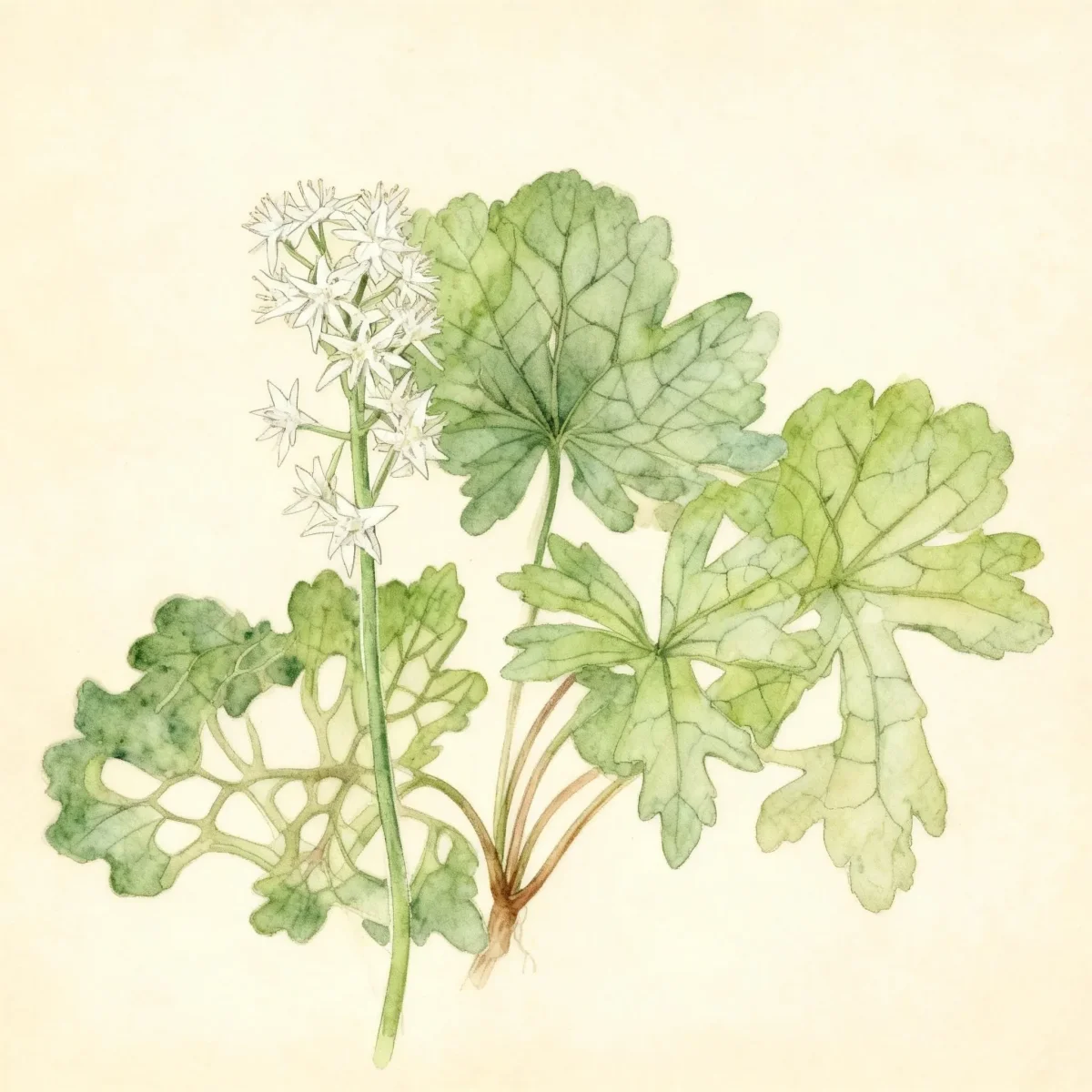
Tiarella ‘Laird of Skye’, commonly known as Foam flower, is a fantastic choice for brightening deep shade, offering delicate springtime color just when the garden needs it most. This clump-forming hybrid develops a dense basal mound of dark green, ruffled foliage that provides excellent texture throughout the season. Gardeners value the Foam flower for its very low maintenance requirements and its ability to perform reliably in deep woodland settings.
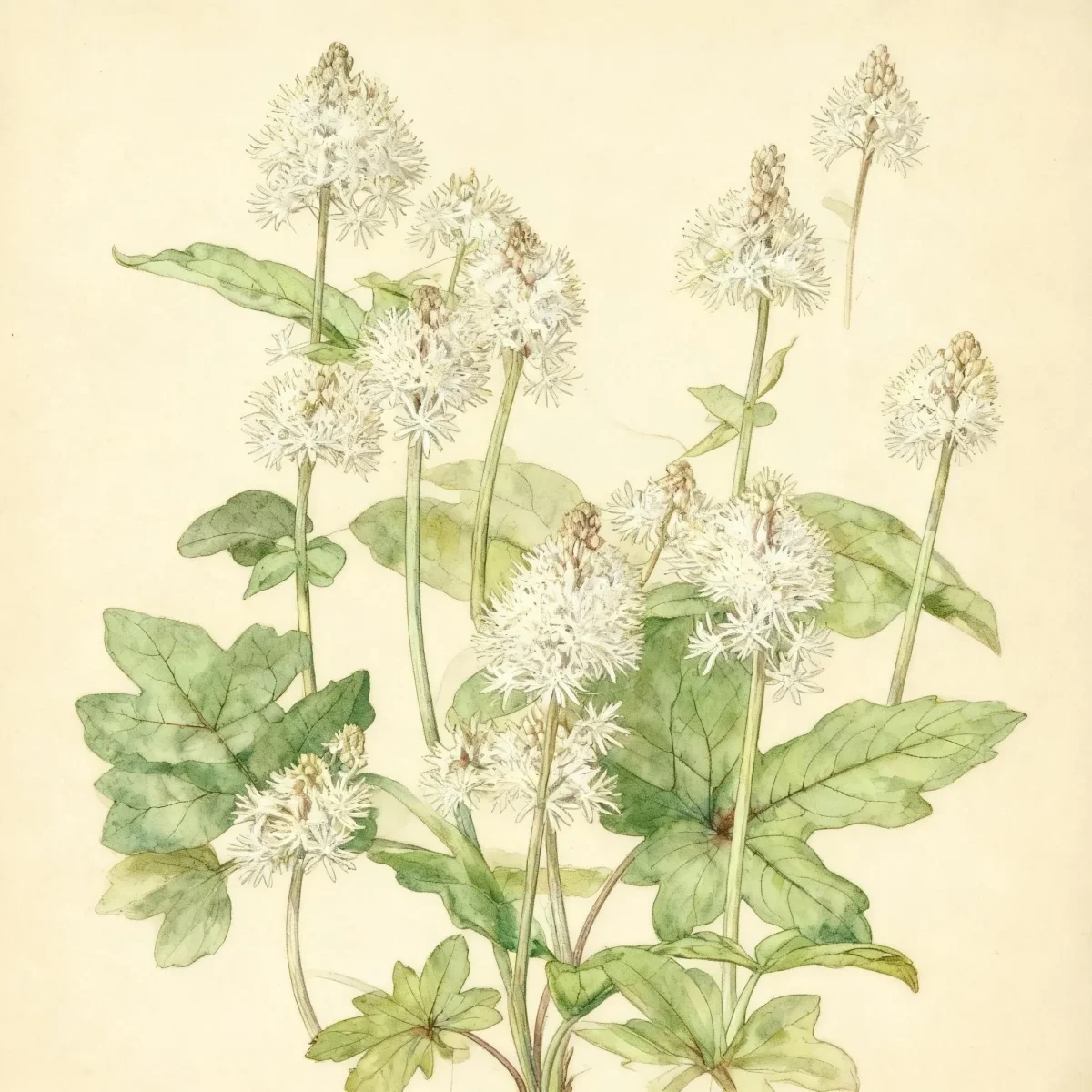
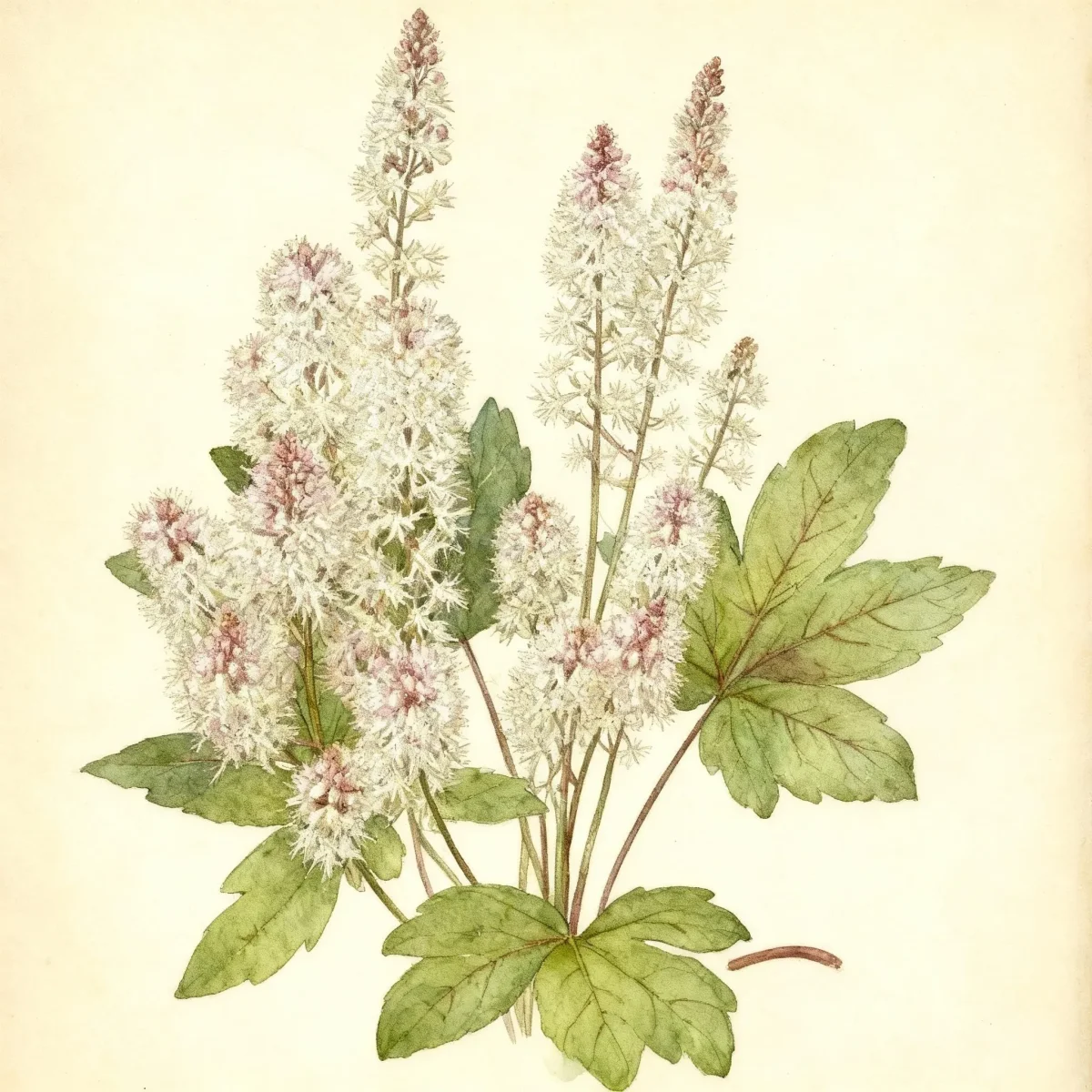
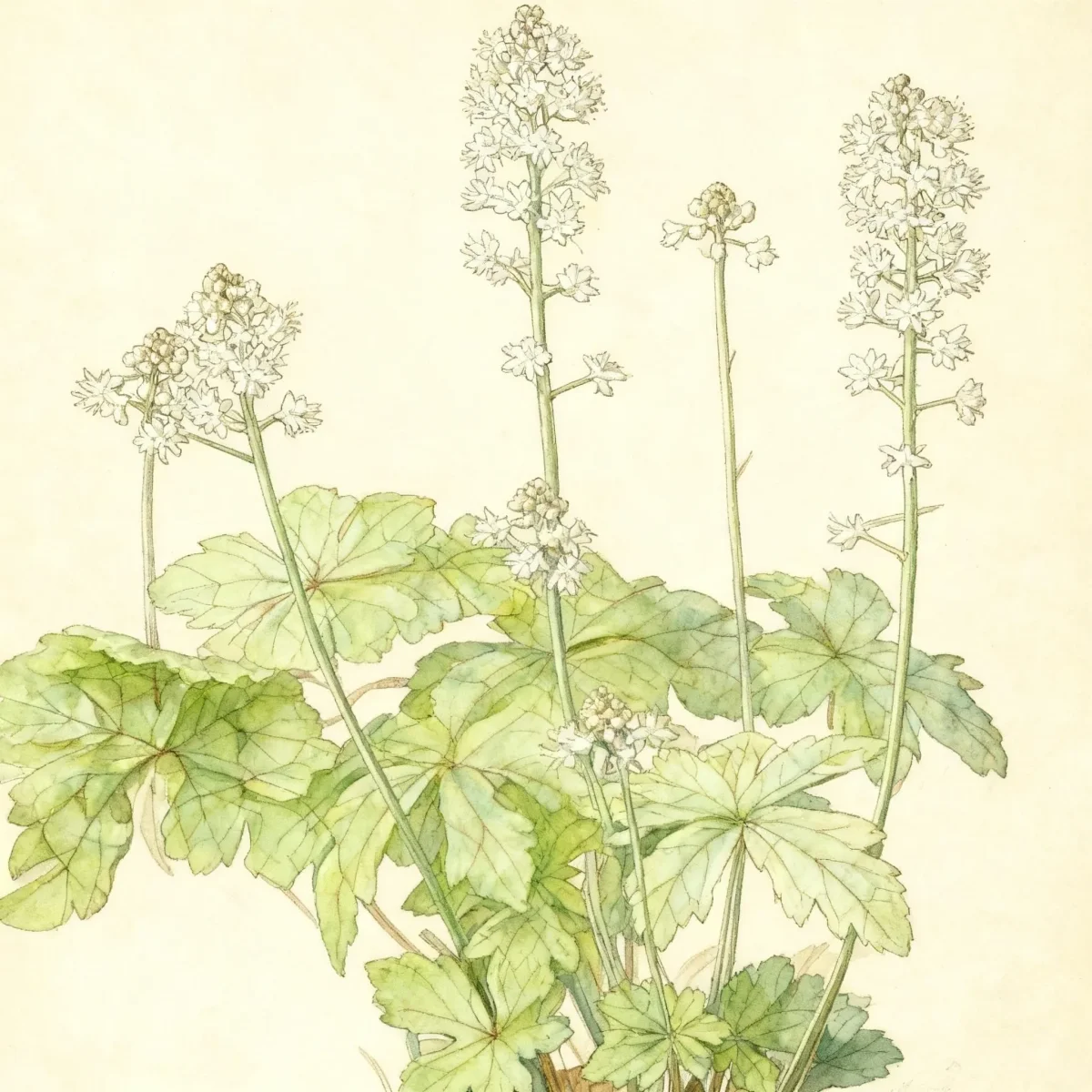
The standout feature is the airy racemes of tiny white flowers, speckled with yellow stamens, which rise above the leaves in May, creating a subtle, cloud-like display. Tiarella ‘Laird of Skye’ spreads slowly via stolons, making it an excellent choice for gradually filling bare spots under deciduous trees or establishing naturalized ground cover. Once established, this perennial requires minimal fuss, offering long-term aesthetic value.
This species is closely related to Heuchera and remains attractive long after flowering concludes, often maintaining semi-evergreen foliage, especially in milder winters. Its sturdy, yet elegant habit makes Tiarella ‘Laird of Skye’ a staple for shaded borders and woodland garden designs where color and texture are paramount.
Fast Facts
- Plant Family: Saxifragaceae
- Plant Type: Herbaceous perennial
- Hardiness Zones: USDA Zones 4-9
- Size at Maturity:
- Height: 0.75-1.5 ft
- Spread: 1-1.5 ft
- Bloom Time: May
- Bloom Description: White
- Sun Exposure: Part shade to full shade
- Water Needs: Medium
- Maintenance Level: Low
How to Grow
Plant Tiarella ‘Laird of Skye’ in spring or fall to allow roots time to establish before periods of intense heat or cold. The primary requirement for this Foam flower is rich, humusy soil that retains consistent moisture but remains well-drained. Avoid poorly draining areas altogether, as overly wet soil can be fatal, particularly during winter dormancy.
Watering needs are medium; aim to keep the soil consistently moist, particularly during dry spells in summer, as the foliage readily shows stress when allowed to dry out completely. While not heavy feeders, incorporating plenty of organic matter at planting time helps mimic its native woodland habitat. Fertilizer is rarely necessary; balanced amendments should only be applied sparingly if growth appears stunted.
Maintenance for Tiarella ‘Laird of Skye’ is minimal. While the plant is otherwise neat, you can improve the aesthetic appearance of the foliage mound by promptly removing the spent flower spikes after blooming finishes. In regions where the foliage remains semi-evergreen, the severity of winter temperatures dictates how much old foliage color is retained into the following spring.
Landscape Uses
The Foam flower excels as an understory planting, perfectly filling the challenging zones of part shade to full shade beneath mature trees or along shaded structures. The low-growing, spreading nature of Tiarella ‘Laird of Skye’ makes it ideal for mass planting, creating a lush, carpet-like effect that serves as an effective ground cover. Consider using it to naturalize sloping areas or along moist woodland pathways.
It blends beautifully with other shade lovers that appreciate similar moisture and soil conditions, such as hostas, ferns, and epimediums. For border fronts, the dense foliage mound of the Foam flower provides structure, contrasting nicely with taller perennials positioned behind it.
Furthermore, Tiarella ‘Laird of Skye’ adapts well to containers, provided the container mix is high in organic matter and maintained consistently moist. When planted in groups, they offer year-round interest through varied textures and seasonal flowers.
Standout Features
Flower Qualities
- Showy
Noteworthy Characteristics
Tiarella is a genus of about 7 species of herbaceous perennials from East Asia and North America. They make good ground covers in woodland gardens and shady borders. Genus name comes from the Greek tiara meaning a small crown in reference to the form of the fruit. ‘Laird of Skye’ foamflower hybrid is a clump-forming perennial which forms a basal foliage mound of wrinkled, ruffled, lobed, heart-shaped, dark green leaves (to 4” across). Tiny white flowers with yellow stamens bloom in airy racemes in spring on erect, wiry, mostly leafless stems which rise well above the foliage mound.
Tolerances
- Deer
Potential Problems
Generally, this Foam flower exhibits excellent resilience against serious pests and diseases, qualifying it as a low-maintenance star. The most frequent cultural issue to watch for is powdery mildew, which typically occurs when air circulation is poor or humidity is excessively high in shaded locations. Ensure adequate spacing during planting to mitigate this risk.
Be aware that slugs and root weevils can occasionally target the foliage. Management often involves cultural control—monitoring soil moisture levels and setting out bait for slugs, as root weevils thrive in overly moist conditions that the plant dislikes anyway. Avoiding wet winter soil dramatically reduces many potential cultural issues for Tiarella ‘Laird of Skye’.
Frequently Asked Questions
What hardiness zones is Foam flower suitable for?
Tiarella ‘Laird of Skye’ is reliably hardy across USDA Zones 4 through 9.
How large does Tiarella ‘Laird of Skye’ grow?
This perennial typically reaches a height between 0.75 and 1.5 feet, with a spread ranging from 1 to 1.5 feet, although it can spread wider via stolons over time.
When does Tiarella ‘Laird of Skye’ bloom?
The Foam flower produces its characteristic white blooms, noted for their showy yellow stamens, during the month of May.
What sun exposure does Tiarella ‘Laird of Skye’ need?
This variety thrives best when positioned in areas receiving part shade to full shade.
Conclusion
The Tiarella ‘Laird of Skye’ offers exceptional textural interest and reliable, low-maintenance performance specifically for shaded garden environments. Its elegant foliage and airy white flowers ensure it remains a favorite native garden standard. Before planting, confirm your location falls within USDA Zones 4-9 and prioritize amending your soil heavily with organic matter to ensure proper drainage and moisture retention for this beautiful Foam flower.
Companion Planting for Shaded Gardens
Companion planting near Tiarella ‘Laird of Skye’ should focus on species that share its need for moist, rich, well-drained soil and tolerance for deep shade. Ferns provide a contrasting, finely textured background that complements the bolder, ruffled leaves of the Foam flower. Consider using Hosta varieties with variegated or blue foliage, ensuring they are situated where neither plant competes excessively for moisture.
Lamium (Dead Nettle) makes an excellent textural contrast and ground cover alongside the spreading habits of Tiarella ‘Laird of Skye’. For complementary spring flowers before the hottest months arrive, Dwarf Bleeding Hearts (Dicentra) or spring bulbs that naturalize well in shade are excellent additions. Proper companion pairings enhance the visual depth of woodland plantings centered around the Foam flower.
Seasonal Care Calendar
Spring is the critical time for Tiarella ‘Laird of Skye’. Once new growth emerges, ensure consistent watering, and lightly top-dress the area around the plant with compost to refresh organic material. After the May bloom finishes, deadheading the spent flower stems is recommended to maintain a neat appearance and redirect the plant’s energy back into foliage production.
Summer care hinges entirely on moisture management. Since the Foam flower dislikes drying out, monitor soil moisture closely, especially on hot, windy days. Avoid overhead watering during the hottest part of the day; instead, water deeply and directly at the base if the soil feels dry to the touch several inches down.
In autumn, the foliage of Tiarella ‘Laird of Skye’ may develop attractive reddish-bronze tones, depending on the severity of the approaching cold. If you are in a fringe hardiness zone (Zone 4), ensuring the soil stays consistently moist through late fall can help protect semi-evergreen foliage during the first hard freezes. Avoid heavy mulching too early, waiting until the ground is reliably frozen to prevent winter rot.