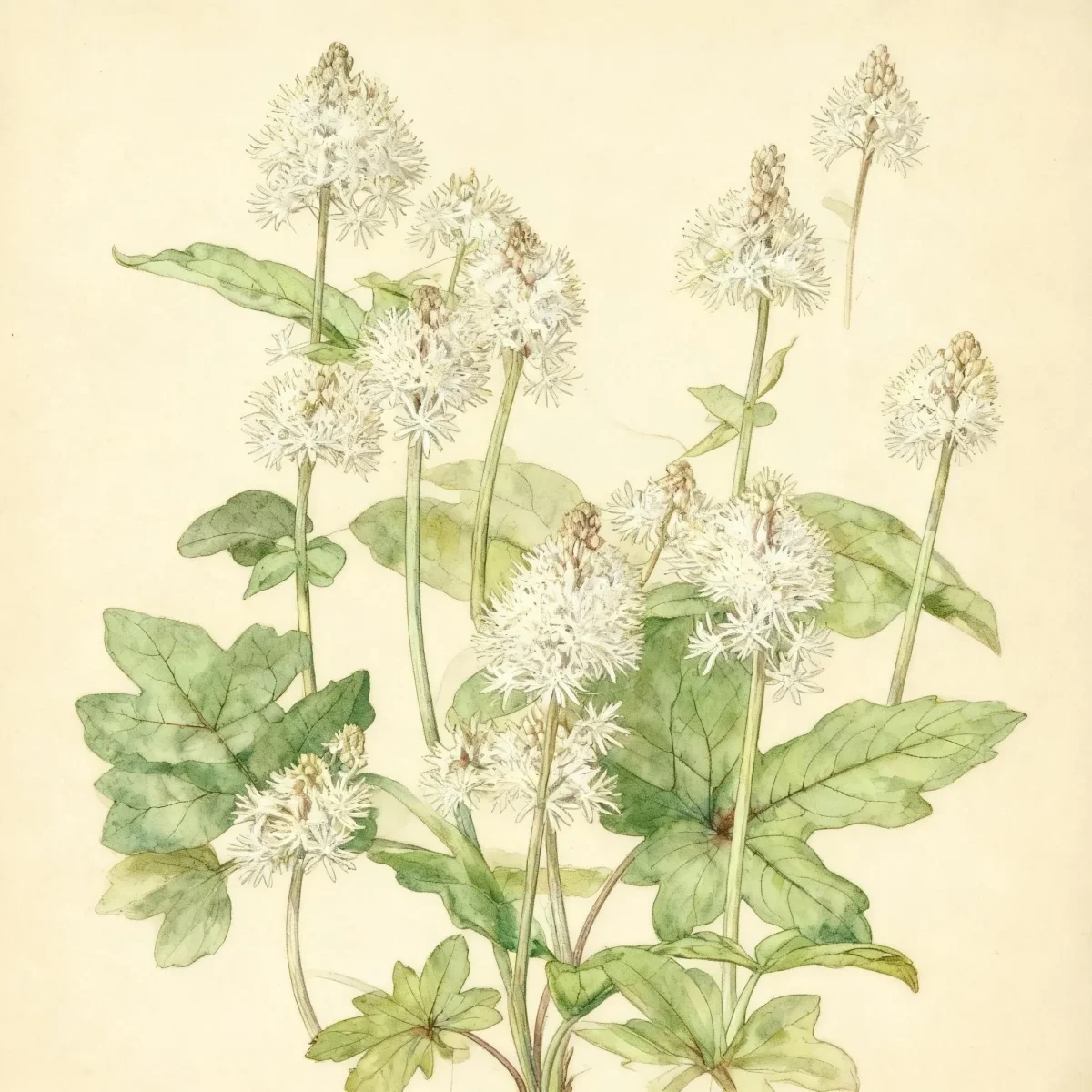
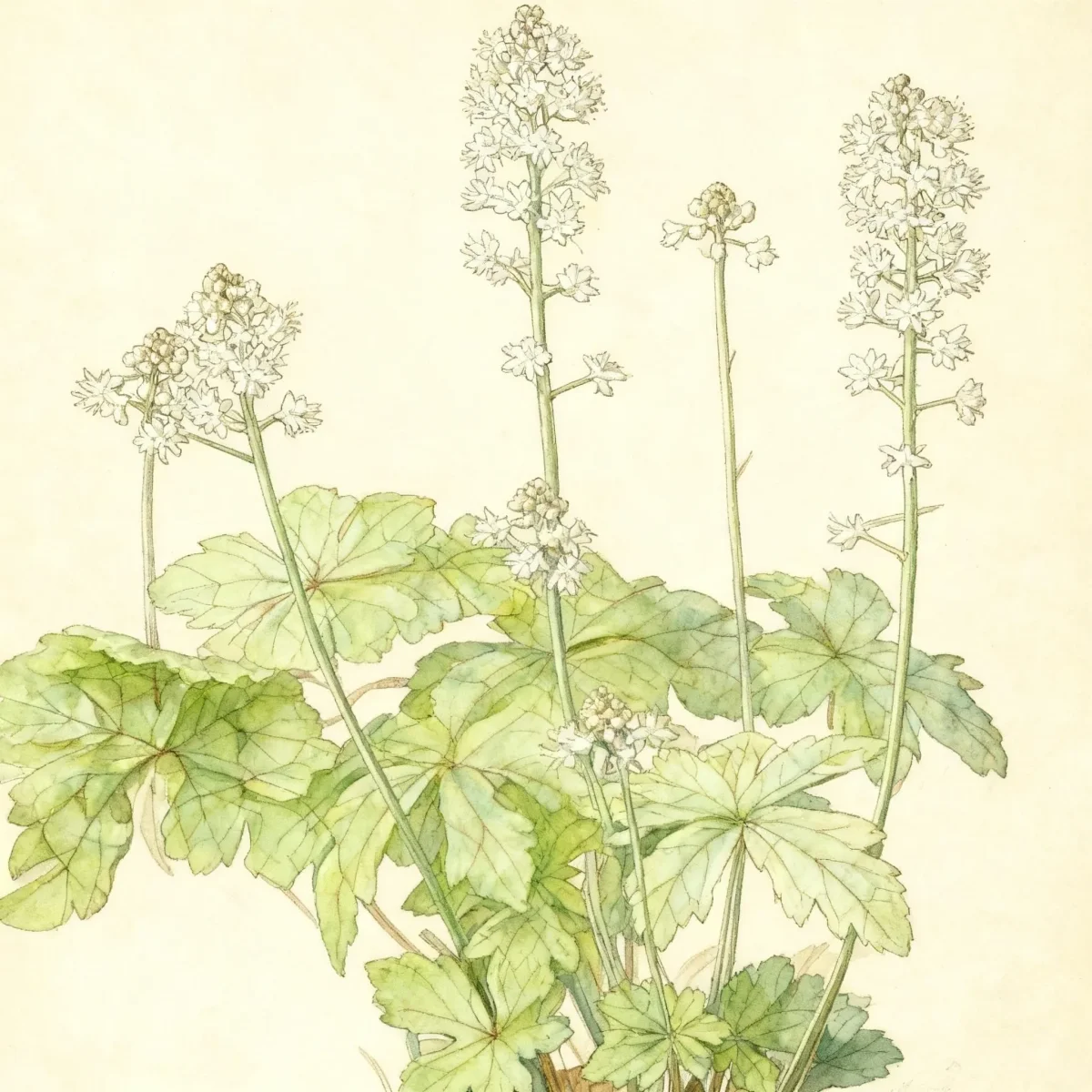
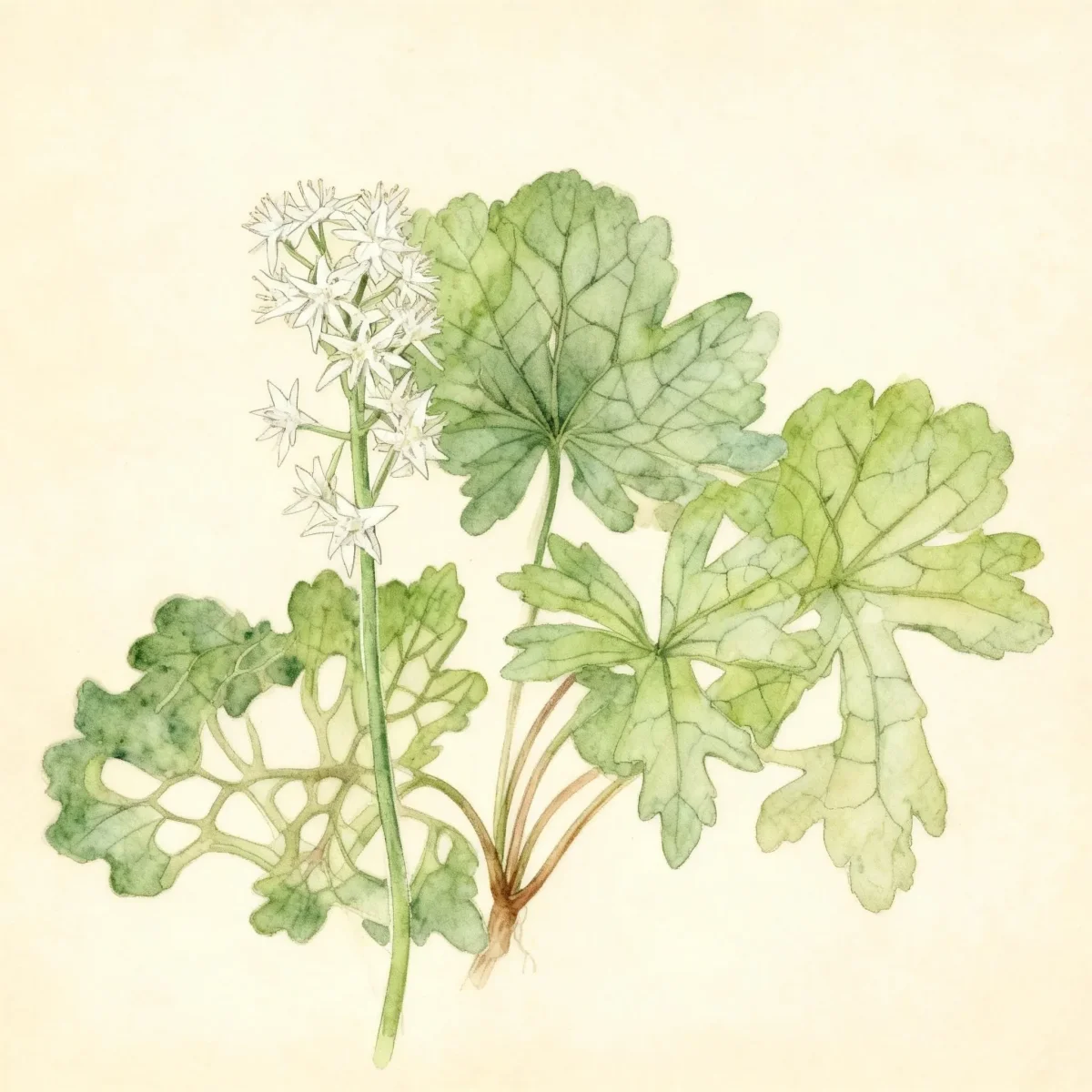
Foam flower (Tiarella 'Spring Symphony')
Tiarella 'Spring Symphony' is a low-maintenance perennial Foam flower offering light pink, fragrant blooms in late spring ideal for shady gardens.
Scroll down to discover growing tips, care requirements, companion plants, and more
Complete Plant Information
Overview
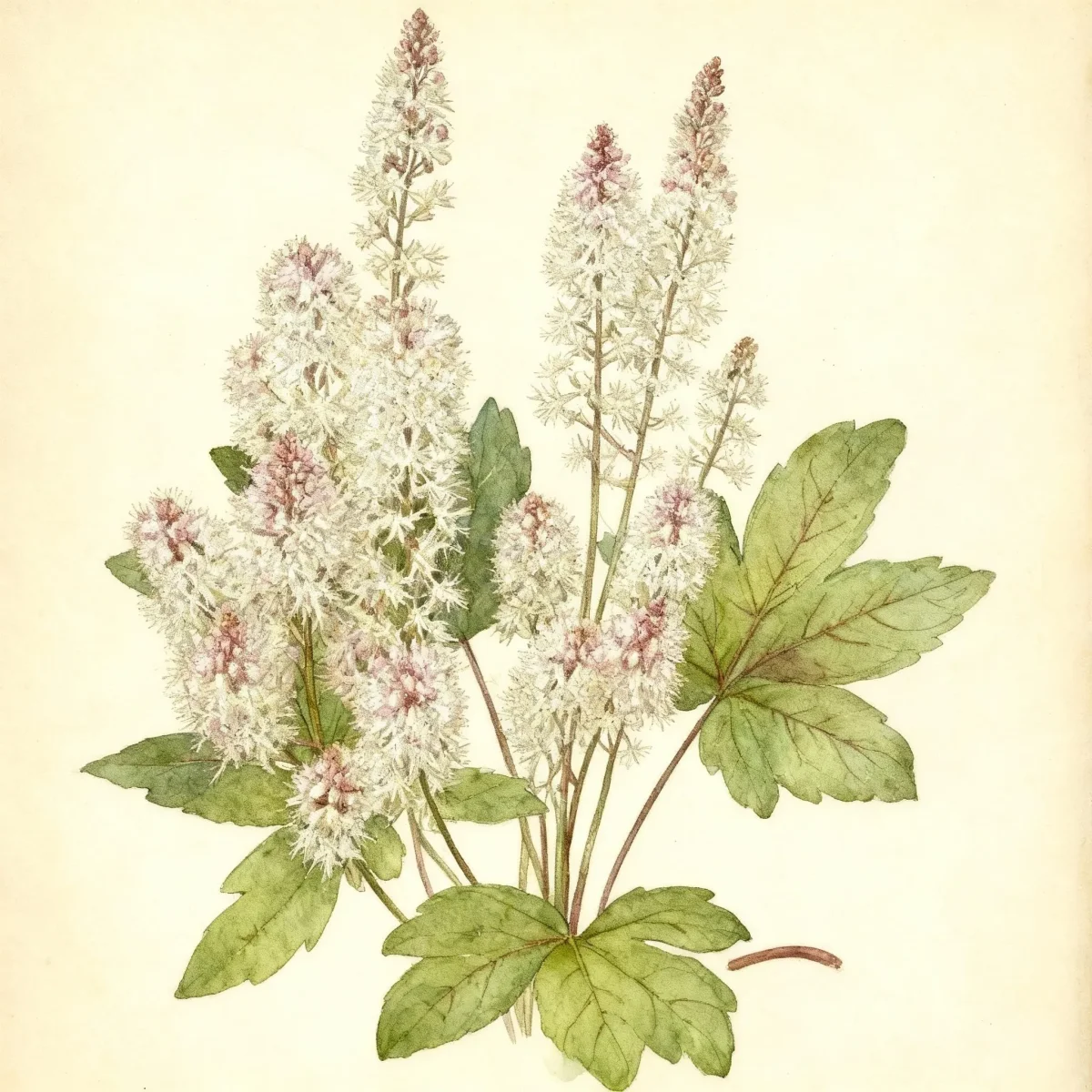
Tiarella ‘Spring Symphony’ is a stunning herbaceous perennial known for its delicate yet impactful presence in shaded garden settings. This Foam flower cultivar provides year-round interest, starting with attractive foliage and culminating in airy spikes of blush pink flowers from spring into early summer. Its clump-forming habit makes it an excellent groundcover solution for woodland or naturalized areas where bright sun is scarce.
Developed by Terra Nova Nurseries, Tiarella ‘Spring Symphony’ boasts palmate, deeply dissected leaves accented with dark markings along the veins, offering textural contrast. Standing between a half-foot and a full foot high, it creates soft drifts of color and texture beneath taller shrubs and trees. Gardeners prize this variety for its low maintenance requirements and its ability to thrive where many other plants struggle—under deep shade.
The defining feature of this hybrid Foam flower is its ethereal bloom display—cone-shaped heads of light pink flowers that are surprisingly fragrant. As a reliable performer in USDA Zones 4 through 9, Tiarella ‘Spring Symphony’ delivers consistent seasonal beauty without demanding extensive care, confirming its status as a stalwart of the shade garden.
Fast Facts
- Plant Family: Saxifragaceae
- Plant Type: Herbaceous perennial
- Hardiness Zones: USDA Zones 4-9
- Size at Maturity:
- Height: 0.5-1 ft
- Spread: 0.5-1 ft
- Bloom Time: April to July
- Bloom Description: Light pink
- Sun Exposure: Part shade to full shade
- Water Needs: Medium
- Maintenance Level: Low
How to Grow
Planting Tiarella ‘Spring Symphony’ is best accomplished in the spring or fall, allowing the roots to establish before summer heat or deep winter cold sets in. Ensure the planting location provides part shade to full shade, mimicking its native woodland environment. These plants thrive when set in average to rich soil that is medium in moisture, well-drained, and high in organic matter.
The key to successfully growing this Foam flower is consistency in moisture; the soil must be kept moist but never waterlogged. Avoid areas where soil remains soggy, especially during winter, as wet conditions can be fatal to the root system. While they require medium water, regular supplemental watering is necessary if rainfall is sparse, especially during dry spells.
Maintenance for Tiarella ‘Spring Symphony’ is generally low. While minimal fertilizing is usually required if the soil is organically rich, occasionally top-dressing the area with compost benefits the plant. For aesthetic purposes, lightly shearing off the spent flower spikes after blooming encourages a cleaner look for the foliage mound. Foliage offers semi-evergreen cover in milder areas, with winter appearance dependent on how severe the cold temperatures become.
Landscape Uses
Tiarella ‘Spring Flower Symphony’ excels as dependable texture and color for shady garden rooms. It is an excellent selection for woodland gardens, creating a natural, layered effect beneath mature trees. Its modest size and spreading habit make it perfect for use on border fronts, softening the edges of pathways or beds where more robust plants might overshadow it.
Mass planting is highly recommended for this Foam flower; creating large drifts of Tiarella ‘Spring Symphony’ establishes an attractive, dense ground cover that suppresses weed growth effectively. Consider using it in naturally moist areas adjacent to streams or ponds to enhance that woodland ambiance. Furthermore, its slightly spreading nature allows it to thrive in rock gardens where soil pockets retain good moisture.
Beyond ground cover roles, this cultivar performs admirably in containers, provided the pots are kept consistently watered and placed in appropriate filtered light conditions. Pair this plant with other shade-loving favorites such as Hostas, Ferns, or Heuchera, as they share similar cultural needs concerning moisture and sun exposure.
Standout Features
Flower Qualities
- Showy
- Fragrant
Noteworthy Characteristics
Tiarella is a genus of about 7 species of herbaceous perennials from East Asia and North America, making excellent ground covers for woodland gardens. This variety, ‘Spring Symphony’, is a clump-forming hybrid foam flower distinguished by its palmate, dissected leaves highlighted with dark markings along the veins. It produces cone-shaped heads of delicate, light pink flowers held above the foliage, growing compactly to about 1 foot tall and wide.
Tolerances
- Deer
Potential Problems
Tiarella ‘Spring Flower Symphony’ is generally recognized for its low susceptibility to serious pest or disease issues, which is a significant advantage for low-maintenance gardening. However, vigilance is required regarding fungal diseases; watch closely for powdery mildew, particularly if air circulation is poor or humidity is persistently high. In addition to mildew, gardeners should be aware of potential damage from slugs and root weevils. Management often involves improving air circulation, utilizing slug bait judiciously, or applying beneficial nematodes targeting root weevils in severe infestations.
Frequently Asked Questions
What hardiness zones is Foam flower suitable for?
Tiarella ‘Spring Symphony’ is adaptable across a wide range, thriving in USDA Zones 4 through 9.
How large does Tiarella ‘Spring Symphony’ grow?
This perennial typically reaches a mature height and spread between 0.5 and 1 foot tall and wide, forming a tidy clump.
What sun exposure does Foam flower need?
For the best performance and foliage color, Tiarella ‘Spring Symphony’ requires protection from hot afternoon sun, preferring environments ranging from part shade to full shade.
When does Tiarella ‘Spring Symphony’ bloom?
This variety puts on its display of light pink flowers, which are noted for being both showy and fragrant, throughout the blooming period from April to July.
Conclusion
Tiarella ‘Spring Symphony’ stands out as an invaluable asset for shaded landscapes, offering both textural foliage interest and charming, fragrant blooms without demanding high input from the gardener. Incorporating this easily managed Foam flower into your beds ensures reliable performance in tough, shady spots. Check your local hardiness zone compatibility and plan to plant this perennial during the cooler transition months for the best establishment success.
Companion Planting
Choosing the right companions enhances the woodland aesthetic Tiarella ‘Spring Symphony’ naturally creates. Since it requires medium moisture and shade, pair it with other reliable shade inhabitants that share similar cultural needs. Good partners include various woodland Ferns, which provide fine texture contrast to the broader leaves of the Foam flower. Heuchera varieties (Coral Bells) are excellent neighbors, offering contrasting leaf colors, from lime green to deep purple, complementing the pink blooms. Planting Astilbe nearby can extend the season of interest, as Astilbe blooms slightly later, ensuring continuous visual appeal in the shady border.
Seasonal Care Calendar
Late Winter/Early Spring is the time to clean up any dead foliage from the previous season, preparing the evergreen or semi-evergreen leaves of the Tiarella ‘Spring Symphony’ for new growth. As spring progresses into bloom time (April through July), ensure consistent watering to support medium water needs and encourage prolific flowering. In mid-to-late summer, if you desire a neater appearance, deadhead the faded flower spikes to encourage the foliage mound to look its best. Fall is a great time to amend the soil by adding a layer of rich compost, which will supply the nutrients needed for the plant entering dormancy, though minimal feeding is otherwise required for this low-maintenance perennial.