False mitrewort (Tiarella 'Tiger Stripe')
Tiarella 'Tiger Stripe' offers unique, streaked foliage beneath airy pinkish-white flowers, ideal for shady ground cover.
Scroll down to discover growing tips, care requirements, companion plants, and more
Complete Plant Information
Overview
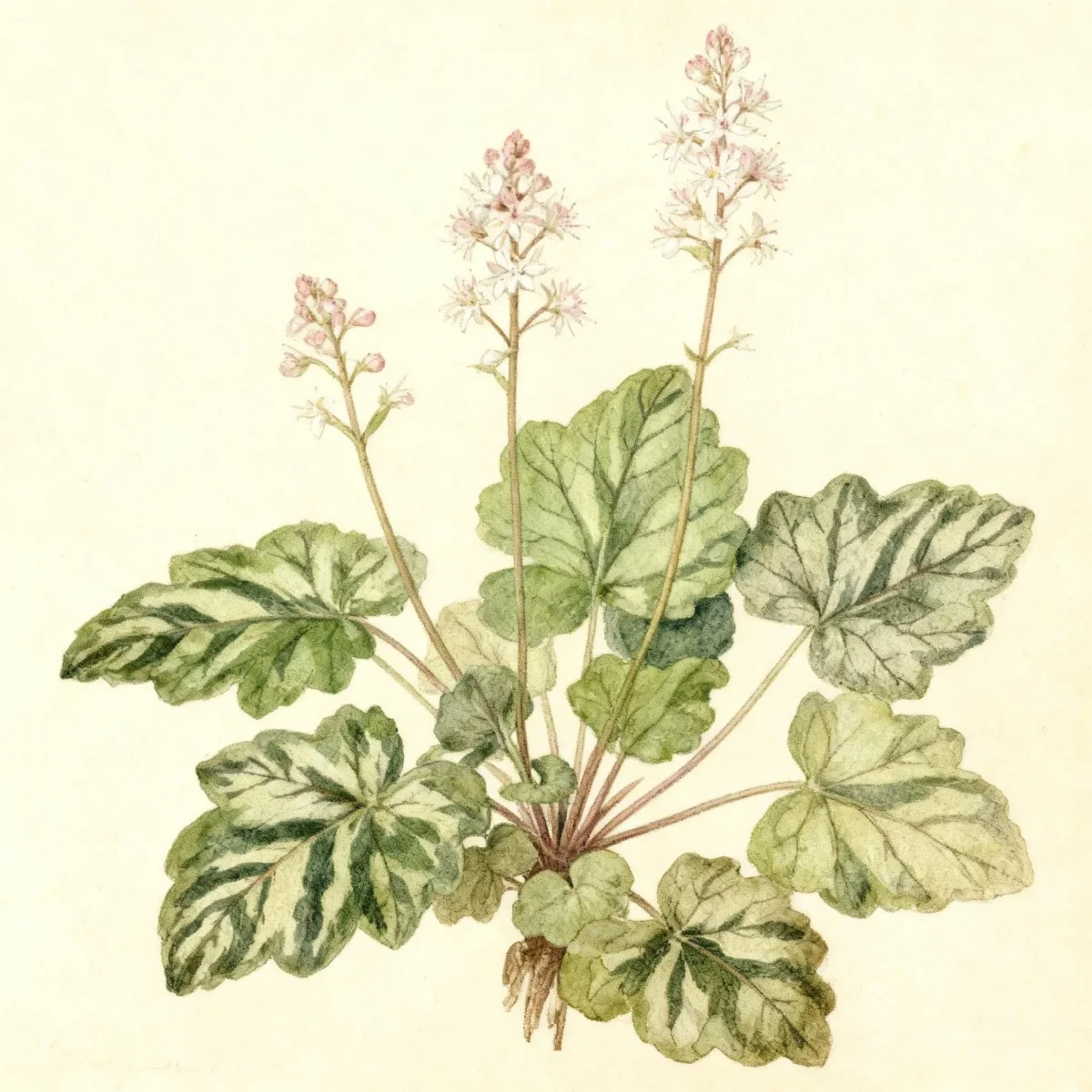
Tiarella ‘Tiger Stripe’, commonly known as False mitrewort, stands out in shady landscapes due to its distinctive foliage. This cultivar forms dense clumps, spreading slowly via runners, making it a superior choice for woodland settings where unusual texture is desired. The semi-glossy leaves are elegantly blotched or striped with purple, providing year-round interest, especially where winters are mild enough to retain some color.
As a clump-forming herbaceous perennial, False mitrewort thrives in the dappled light beneath taller trees. It produces airy racemes of tiny, pinkish-white flowers in May, rising just above the unique leaf mounds. Gardeners value Tiarella ‘Tiger Stripe’ for its low maintenance requirements and its ability to suppress weeds effectively when used as a ground cover.
This plant offers excellent aesthetic appeal that echoes other shade lovers like Heuchera, while its genus name references the crown shape of its fruit. Planting Tiarella ‘Tiger Stripe’ ensures a reliable patch of patterned greenery that evolves beautifully throughout the growing season.
Fast Facts
- Plant Family: Saxifragaceae
- Plant Type: Herbaceous perennial
- Hardiness Zones: USDA Zones 4-9
- Size at Maturity:
- Height: 0.75-1 ft
- Spread: 1-2 ft
- Bloom Time: May
- Bloom Description: Pinkish white
- Sun Exposure: Part shade to full shade
- Water Needs: Medium
- Maintenance Level: Low
How to Grow
For optimal establishment, plant Tiarella ‘Tiger Stripe’ during spring or fall in locations receiving part shade to full shade. This False mitrewort prefers humusy, organically rich, and moisture-retentive soils. Ensure the drainage is excellent, as this plant absolutely cannot tolerate wet soils, which can prove fatal, especially during winter dormancy.
Maintain consistent moisture; the requirement is medium, meaning the soil should never be allowed to dry out fully between waterings. While low maintenance, removing the spent flower spikes after bloom will neaten the foliage mound and encourage continued robust leaf growth. Foliage remains semi-evergreen in many regions, though its winter appearance is subject to temperature severity.
Fertilization is usually unnecessary if the soil is initially rich in organic matter. If growth seems sluggish, a light top dressing of compost in spring is sufficient. Watch vigilantly for powdery mildew, which is the most common cosmetic issue, though Tiarella ‘Tiger Stripe’ generally resists severe pest infestations.
Landscape Uses
Tiarella ‘Tiger Stripe’ excels as an attractive, patterned ground cover. It is an excellent selection for mass planting under the canopy of deciduous trees in woodland gardens where its unique foliage can shine without direct, harsh sunlight. Consider using this False mitrewort along the edges of moist areas, such as near streams or ponds, provided the soil remains consistently moist and not waterlogged.
This cultivar is perfectly suited for border fronts, adding textural contrast against coarser-leaved shade plants. It also performs well in shaded rock gardens where its low, spreading habit can soften hardscaping elements. Furthermore, Tiarella ‘Tiger Stripe’ is a dependable choice for containers situated on shaded porches or patios.
Standout Features
Flower Qualities
- Showy
Noteworthy Characteristics
Tiarella is a genus of about 7 species of herbaceous perennials from East Asia and North America. They make good ground covers in woodland gardens and shady borders. Plants are in the same family as and somewhat suggestive of Heuchera, Tellima and Mitella. Tiarella is sometimes commonly called false miterwort because of its similarity to Mitella (miterwort).Genus name comes from the Greek tiara meaning a small crown in reference to the form of the fruit.‘Tiger Stripe’ foamflower cultivar is clump-forming perennial which spreads by runners (stolons) to form dense, 1-2’ wide clumps of foliage. Semi-glossy, heart-shaped, 3-5 lobed leaves (4” across) rise directly from the stolons. Each light green leaf of this cultivar is blotched or striped with purple and has purplish veins. Leaves are evergreen in mild winters, usually turning an attractive reddish-bronze in autumn and winter. Tiny, pinkish-white flowers in airy racemes bloom in spring on erect, wiry, mostly leafless flower stems which rise just above the foliage clump to a height of 10-12”.
Tolerances
- Deer
Potential Problems
This variety generally exhibits no serious insect or disease problems, making Tiarella ‘Tiger Stripe’ a robust addition to the shade garden. The primary concern is often environmental rather than biological; avoid wet soils at all costs, especially during winter, as rot can quickly lead to plant failure.
Gardeners should remain vigilant for powdery mildew, particularly if air circulation is poor in densely planted areas. To manage this aesthetic ailment, ensure adequate spacing between plants and maintain proper watering practices, focusing moisture at the roots rather than misting the foliage.
Slugs and root weevils may occasionally pose a threat. Regular scouting, especially after heavy rains, allows for prompt intervention using standard organic controls if populations increase.
Frequently Asked Questions
What hardiness zones is False mitrewort suitable for?
Tiarella ‘Tiger Stripe’ is resilient across USDA Zones 4 through 9, offering a wide range of planting possibilities in shaded environments.
How large does Tiarella ‘Tiger Stripe’ grow?
This False mitrewort typically reaches a mature height between 0.75 and 1 foot tall, with a spread ranging from 1 to 2 feet wide as it slowly forms dense clumps.
What sun exposure does False mitrewort need?
This perennial thrives best when protected from the harsh afternoon sun, ideally situated in areas receiving part shade to full shade conditions.
When does Tiarella ‘Tiger Stripe’ bloom?
The bloom time for this cultivar is generally in May, producing delicate, airy racemes of pinkish white flowers.
Conclusion
Tiarella ‘Tiger Stripe’ is highly valued for its combination of reliable low maintenance and striking, patterned foliage that brightens shady garden corners. This handsome False mitrewort, with its unique streaking, establishes itself as an indispensable ground cover that rarely disappoints. Before planting, confirm your site provides medium moisture and adequate shade, then enjoy the textural beauty provided by Tiarella ‘Tiger Stripe’ for years to come.
Companion Planting
When designing a shaded border, pair Tiarella ‘Tiger Stripe’ with plants that share its need for consistent moisture and rich soil. Hostas with solid green or blue foliage provide a strong textural contrast to the variegated leaves of the False mitrewort. Ferns, such as Japanese Painted Ferns or Autumn Ferns, create a perfect woodland tapestry alongside the low mounds of Tiarella.
Consider using plants with different bloom times to extend visual interest beyond the short spring display of the foamflower. Lungwort (Pulmonaria) offers early spring color and shares similar low-growing, slightly mounding habits. Ensure companions do not aggressively out-compete the Tiarella for root space, as uniform moisture is key to its health.
Propagation Tips
The primary method for increasing Tiarella ‘Tiger Stripe’ is through division or leveraging its natural spreading habit. Since this False mitrewort spreads slowly by runners (stolons), you can gently separate rooted stolons in spring once the clump is established and running vigorously.
For division, lift the entire clump in early spring before rapid new growth begins, or in early fall. Carefully slice the root mass into sections, ensuring each division has several healthy growth nodes. Replant immediately in amended, moist soil, providing consistent watering until new roots are set.
If allowing the plant to naturalize, simply let the stolons root where they touch the ground. Over a few seasons, these runners will naturally form dense colonies, achieving the desired massed ground cover effect without any manual intervention.