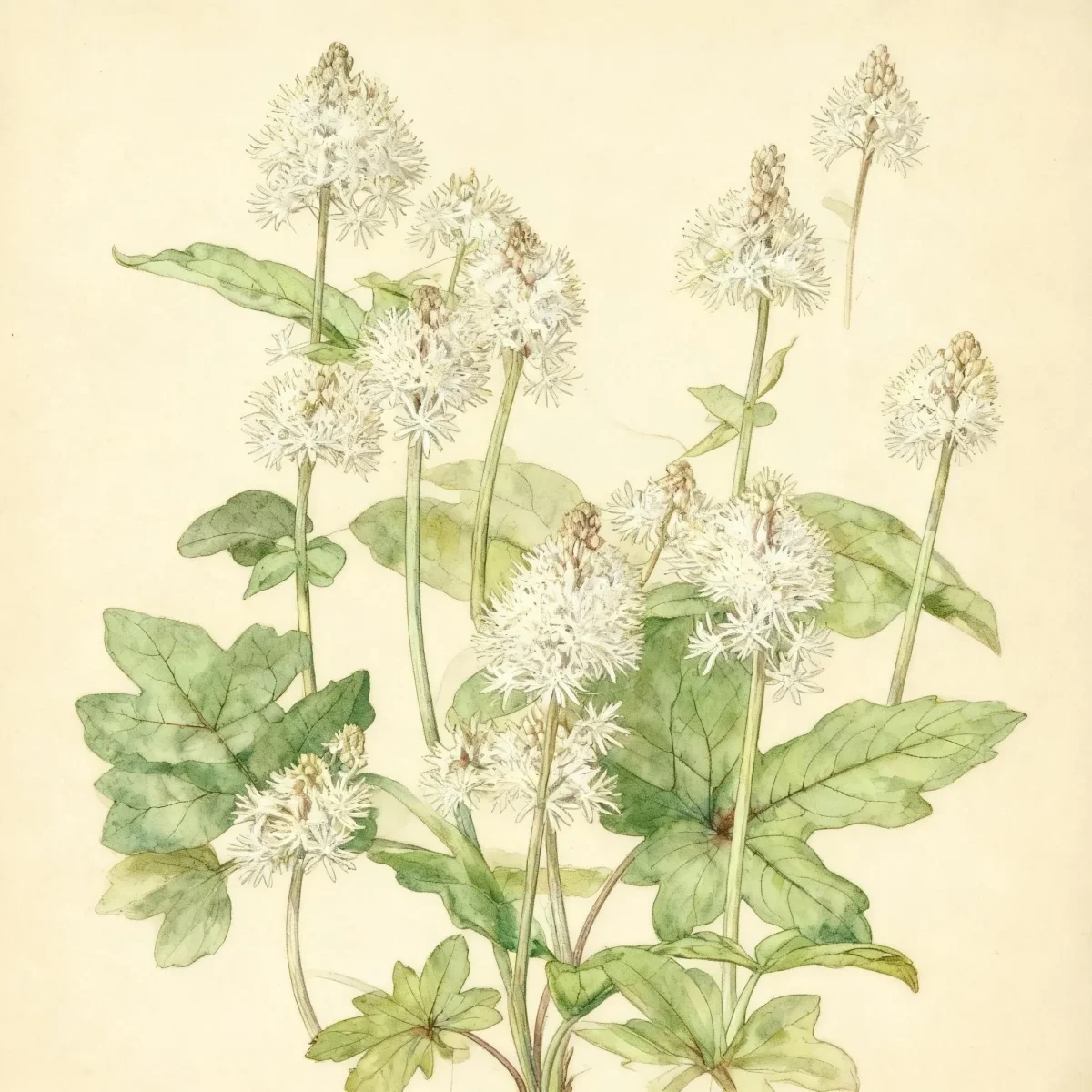
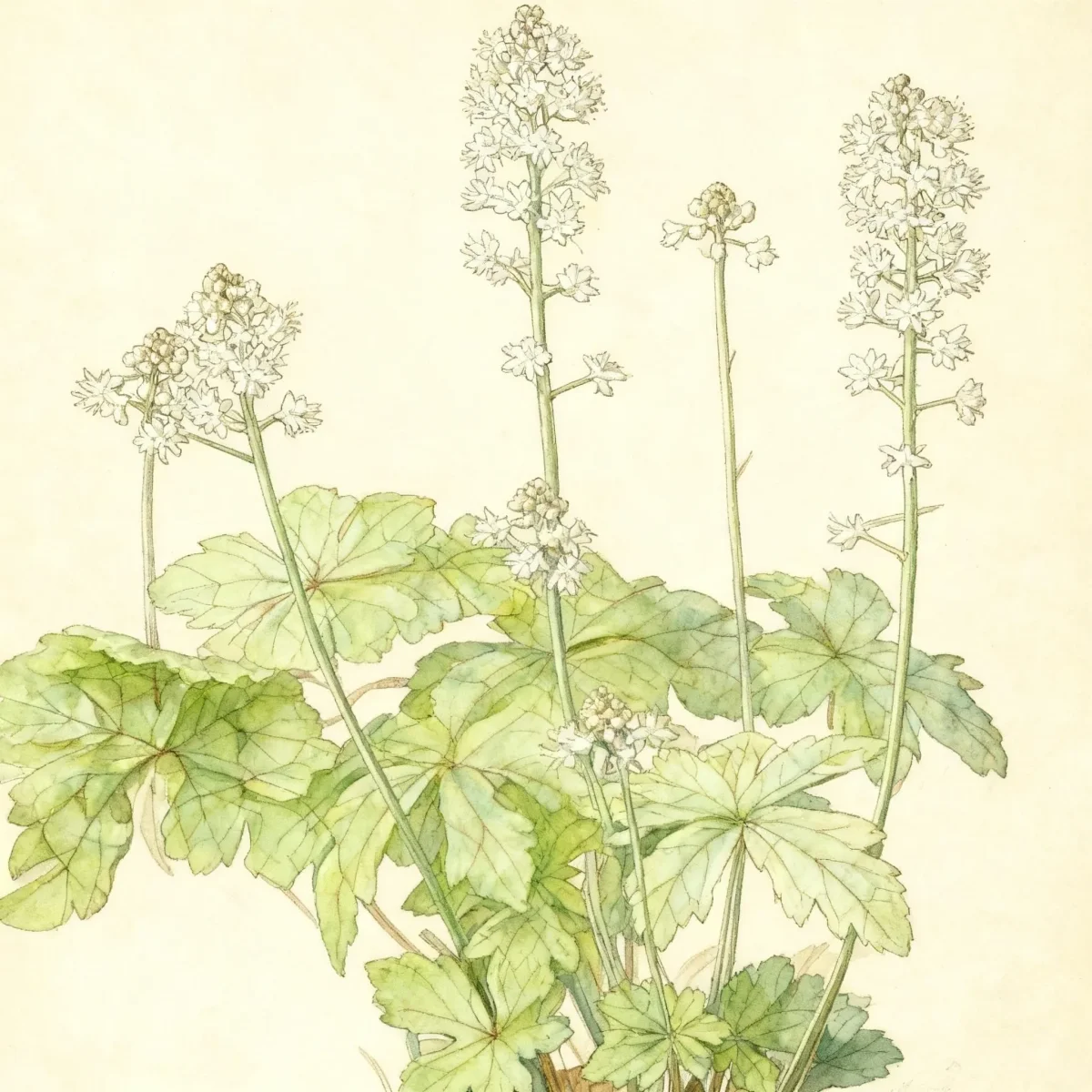
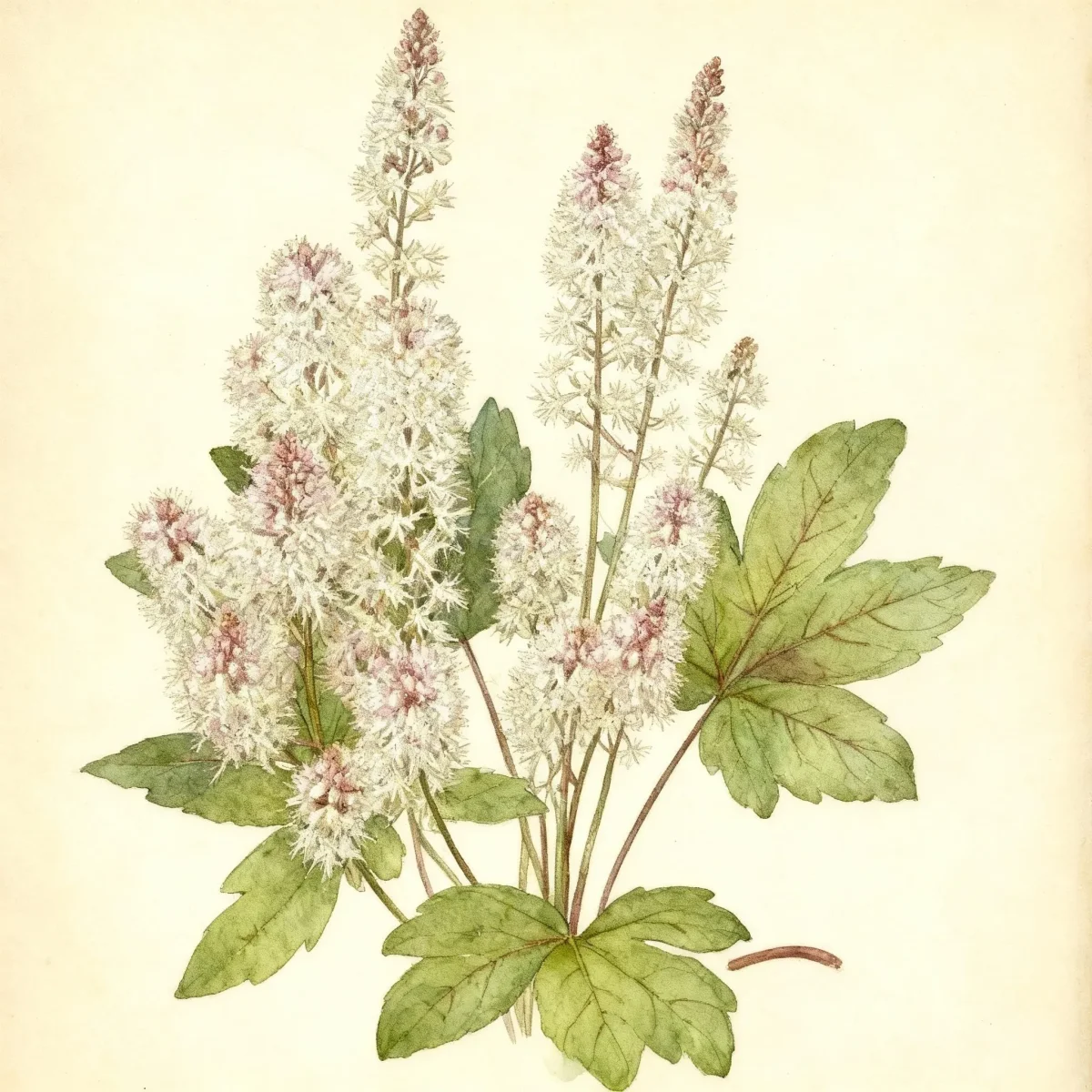
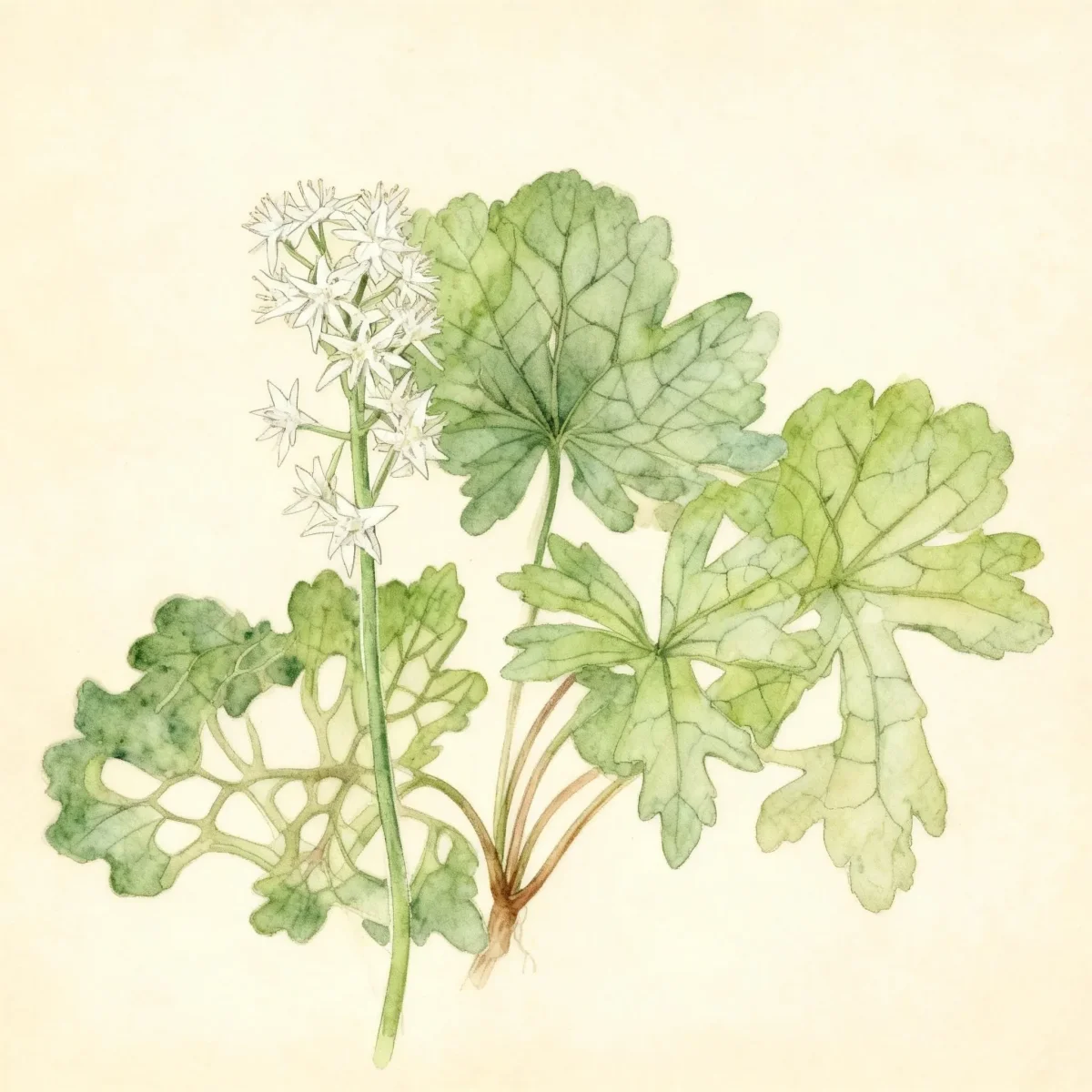
Foam flower (Tiarella cordifolia (Montrose 13))
Tiarella cordifolia (Montrose 13) is a low-maintenance, clump-forming perennial known as Foam flower, perfect for shaded ground cover.
Scroll down to discover growing tips, care requirements, companion plants, and more

Complete Plant Information
Overview
The Foam flower, scientifically identified here as Tiarella cordifolia (Montrose 13), is a highly valued herbaceous perennial ideal for transforming shaded garden spaces. Its main appeal lies in its ability to spread rapidly via runners, creating dense, attractive mats of foliage perfect for ground cover applications where grass struggles. This specific cultivar is noted for its charming pink blooms, setting it apart from typical white-flowered varieties.
As a member of the Saxifragaceae family, this shade-loving plant thrives under the canopy, providing texture and low-level interest throughout the growing season. Gardeners appreciate the low maintenance required by Tiarella cordifolia (Montrose 13), positioning it as an excellent choice for woodland settings or naturalized areas. Its semi-evergreen foliage also offers residual winter interest, depending on the severity of the season.
For optimal success, ensure Tiarella cordifolia (Montrose 13) receives consistent moisture and rich, humusy soil, mirroring its preferred woodland habitat. The delicate yet showy, foamy bloom display in spring makes this variety a worthwhile addition for those seeking reliable, beautiful coverage beneath taller plantings.
Fast Facts
- Plant Family: Saxifragaceae
- Plant Type: Herbaceous perennial
- Hardiness Zones: USDA Zones 4-9
- Size at Maturity:
- Height: 0.5-1 ft
- Spread: 1-1.5 ft
- Bloom Time: May
- Bloom Description: Pink
- Sun Exposure: Part shade to full shade
- Water Needs: Medium
- Maintenance Level: Low
How to Grow
Planting Tiarella cordifolia (Montrose 13) is best done in spring or early fall when temperatures are moderate. It absolutely requires a location providing part shade to full shade, as direct, hot sun will scorch its leaves. The ideal substrate is organically rich, moisture-retentive, and features good drainage; it performs excellently in humusy soils typical of established woodland areas.
Once established, maintain medium water needs by ensuring the soil does not dry out completely, especially during hot spells. However, be cautious of overwet conditions, as prolonged saturation, particularly during the winter, can prove fatal to this perennial. Fertilization is rarely required if the soil is already prepared with ample organic matter.
Maintenance for the Foam flower is generally low. After the spring blooming period concludes, consider removing the spent flower spikes to tidy up the mound of foliage beneath them. Foliage persistence is notable; in milder climates, the leaves remain semi-evergreen, sometimes developing beautiful reddish-bronze tones in autumn and winter, depending on temperature fluctuations.
Landscape Uses
The Foam flower excels in applications where dense, attractive ground coverage is necessary beneath mature trees or on shaded slopes. Its naturalizing tendency means it handles wild gardens and naturalistic plantings beautifully, swiftly blanketing areas. Consider massing Tiarella cordifolia (Montrose 13) along moist stream banks or in shaded rock gardens for a lush, textured effect.
This perennial looks stunning along the front of shaded borders, providing a soft edge that contrasts well with coarse-textured plants. It serves as an excellent transitional plant, bridging the gap between hardscape elements and deep shade areas. Its relatively small stature (1-1.5 ft spread) also makes it suitable for shaded container groupings where consistent moisture can be ensured.
Designers often use the foliage of the Foam flower alongside larger hostas or ferns, as the delicate texture and heart-shaped leaves of the Tiarella offer complementary structure. Because of its native woodland heritage, pairing it with spring ephemerals or other shade-loving natives creates a harmonious, low-input ecosystem.
Standout Features
Flower Qualities
- Showy
Noteworthy Characteristics
Tiarella cordifolia, commonly called foamflower, is a clump-forming perennial which spreads rapidly by runners (stolons) to form dense, 1-2’ wide clumps of foliage. Plants are in the same family as and somewhat suggestive of Heuchera, Tellima and Mitella. Semi-glossy, heart-shaped, 3-5 lobed leaves rise directly from the stolons, sometimes exhibiting reddish variegation along the veins. Tiny, pink-budded flowers with very long stamens (which create the foamy texture) appear in airy racemes in spring for about six weeks on erect, wiry stems well above the foliage. The specific cultivar (Montrose 13), as noted by the Missouri Botanical Garden, displays pink flowers.
Tolerances
- Rabbit
- Deer
Potential Problems
This plant generally enjoys an excellent reputation for disease and pest resistance, citing no serious insect or disease problems under normal growing conditions. Successful management often focuses on avoiding cultural stress rather than treating significant infestations. The primary threat comes from improper soil moisture—either too dry or, more critically, too wet during dormant winter periods. Ensure planting sites are not prone to standing water to prevent root rot.
Frequently Asked Questions
What hardiness zones is Foam flower suitable for?
The Foam flower (Tiarella cordifolia (Montrose 13)) is suitable for gardeners gardening in USDA Zones 4 through 9.
How large does Foam flower grow?
This perennial typically matures to a height between 0.5 and 1 foot, spreading outward to cover an area of 1 to 1.5 feet wide.
What sun exposure does Foam flower need?
Tiarella cordifolia (Montrose 13) thrives best in locations receiving part shade to full shade exposure, requiring protection from intense afternoon sun.
When does Foam flower bloom?
The bloom time for this variety is generally in May, producing clusters of flowers described as pink.
Conclusion
The Foam flower, Tiarella cordifolia (Montrose 13), is a versatile and resilient shade perennial, particularly cherished for its attractive seasonal flower display and effective ground-covering habits. Its low maintenance combined with deer and rabbit resistance secures its status as a superb choice for naturalistic and woodland plantings. Check your USDA zone compatibility now and plan to plant this May-blooming gem where consistent moisture and cool shade can be guaranteed.
Companion Planting in the Shade
Because Tiarella cordifolia (Montrose 13) prefers humus-rich, consistently moist soil in shade, it pairs naturally with other woodland natives that share these requirements. Consider planting alongside Astilbe varieties, which also feature airy plumes, though they usually prefer more sun than the Foam flower. Ferns, particularly Japanese Painted Ferns or Ostrich Ferns, offer excellent textural contrast with their broader fronds against the delicate leaves of the Tiarella.
For winter interest, pair the Foam flower with evergreen groundcovers like Pachysandra or certain low-growing Hosta cultivars whose leaves remain longer into the cold season. This grouping ensures that the shaded garden area maintains visual appeal year-round, minimizing bare patches.
Seasonal Care Calendar
Spring preparation involves gently cleaning up any lingering winter debris and perhaps amending the soil surface with a thin layer of compost to boost organic matter before the Foam flower begins its active growth surge. Summer care centers entirely on consistent watering; never let the soil fully desiccate, as this moisture-loving plant struggles when stressed by heat and drought.
In the autumn, while the foliage may transition to reddish bronze hues, routine care is minimal; avoid heavy leaf litter buildup that might block winter sun or trap excessive moisture near the crown. True winter preparation involves assessing drainage—if heavy winter rains are anticipated, ensure mulch paths or surrounding layers allow water to move away from the plant base swiftly to prevent fatal winter wetness.