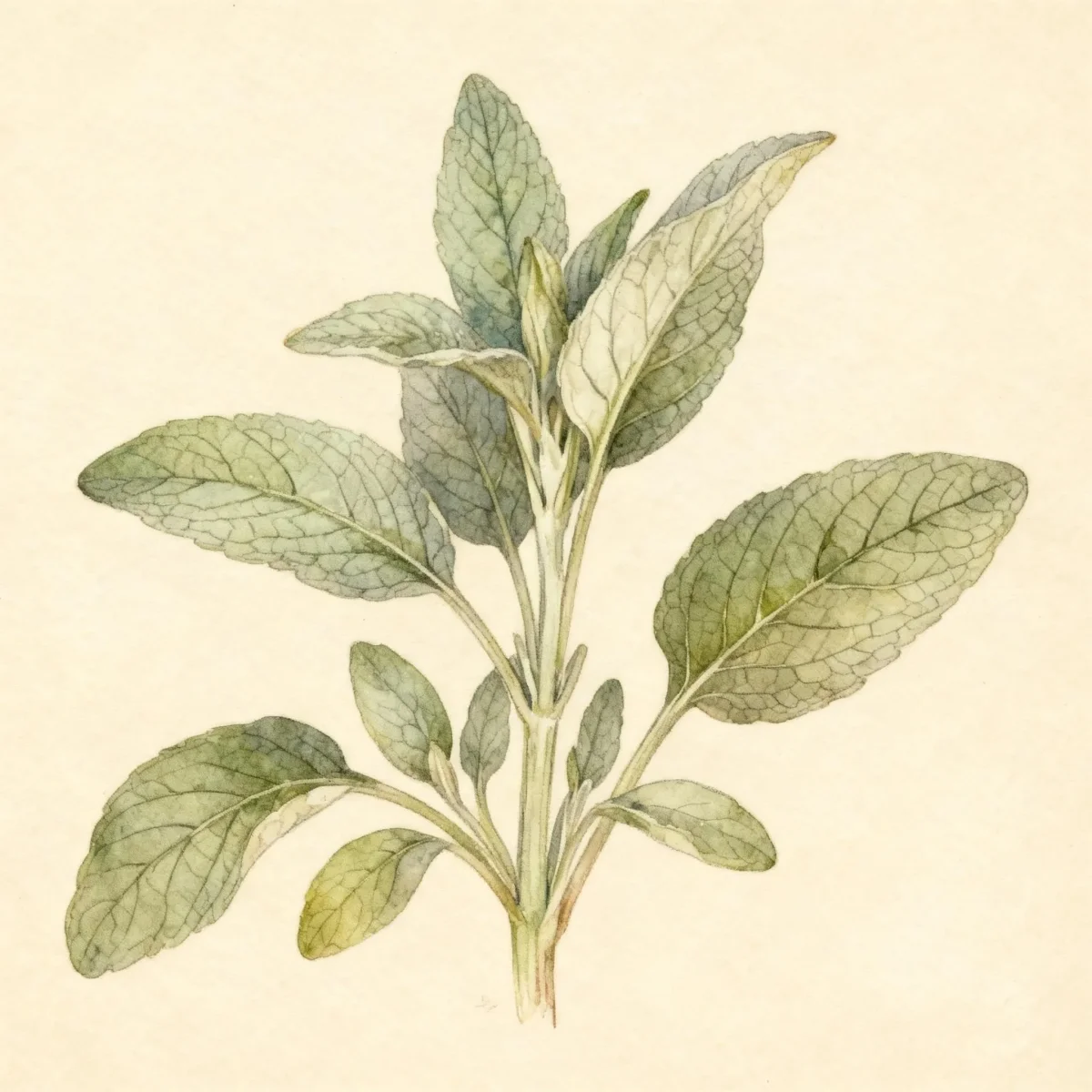
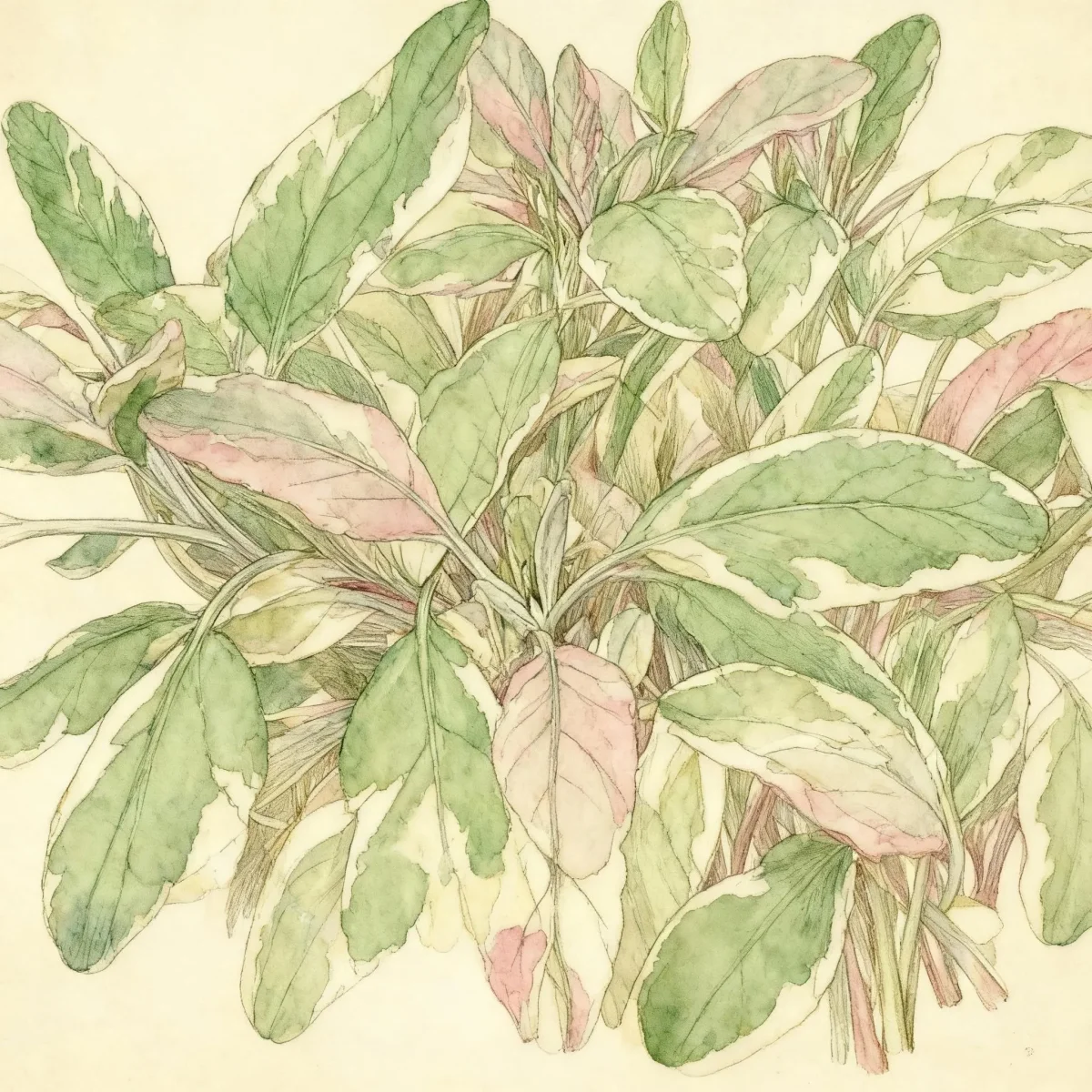
Common sage (Salvia officinalis 'Aurea')
Discover Salvia officinalis 'Aurea', golden sage, a compact perennial with aromatic, variegated foliage perfect for culinary use.
Scroll down to discover growing tips, care requirements, companion plants, and more
Complete Plant Information
Overview
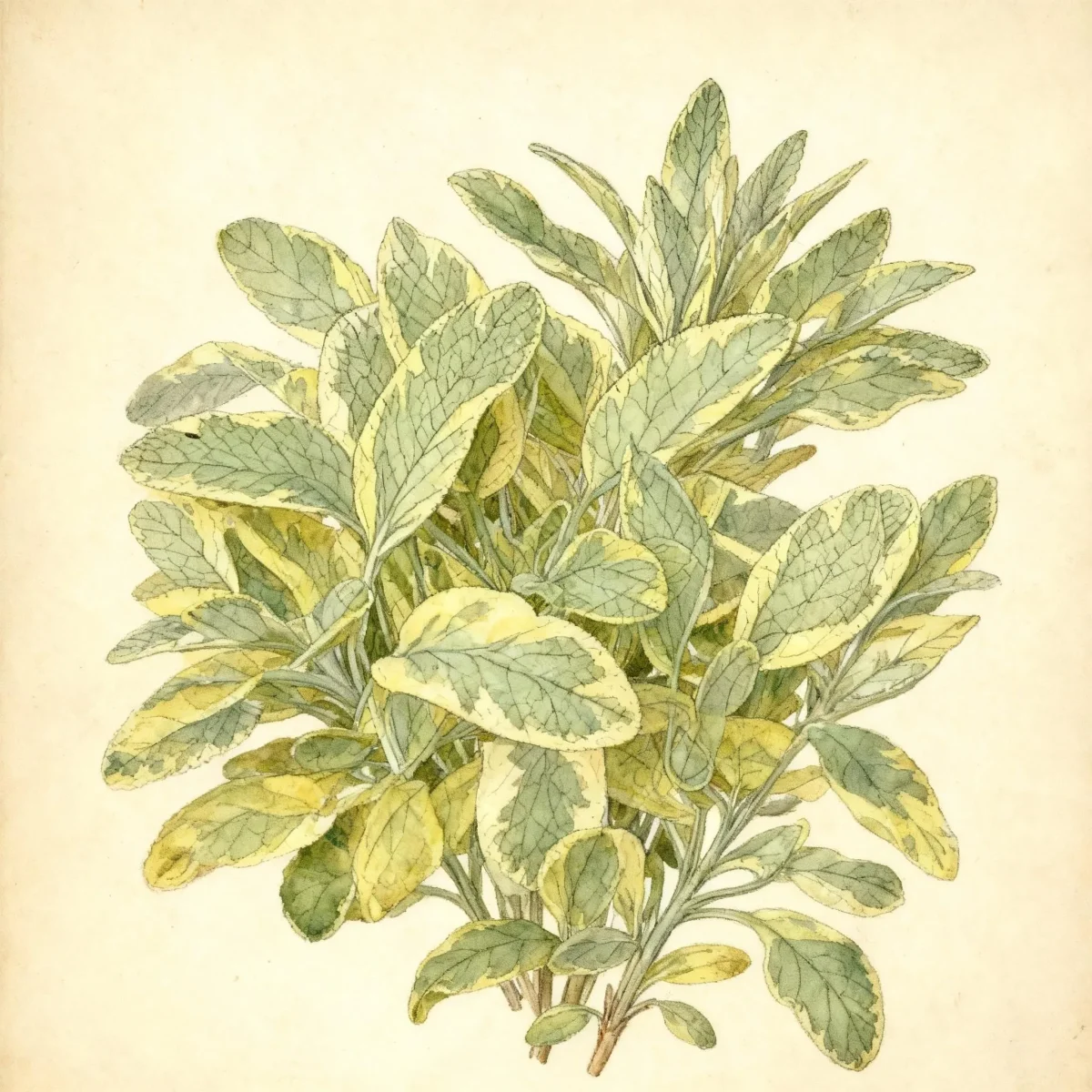
Salvia officinalis ‘Aurea’, commonly known as golden sage or Common sage, offers excellent dual functionality for the garden, serving both as an attractive ornamental and a vital culinary herb. This cultivar is cherished for its uniquely variegated foliage, featuring leaves streaked with gold and light green, providing consistent color contrast throughout the growing season. Unlike the species, Salvia officinalis ‘Aurea’ is valued highly for its ornamental appeal, though its aromatic leaves retain their strong culinary heritage.
As a compact, woody-stemmed perennial, this sage fits well into various garden settings, contrasting beautifully with darker evergreens or finer-textured herbs. It thrives when given ample sunlight and well-drained conditions, rewarding the gardener with bursts of lilac-blue flowers in late spring and early summer. Gardeners should appreciate the strong aromatic properties of the leaves, which are useful fresh or dried, making the presence of Salvia officinalis ‘Aurea’ both beautiful and practical.
Fast Facts
- Plant Family: Lamiaceae
- Plant Type: Herbaceous perennial
- Hardiness Zones: USDA Zones 6-9
- Size at Maturity:
- Height: 1-1.5 ft
- Spread: 1.5-2 ft
- Bloom Time: May to June
- Bloom Description: Lilac-blue
- Sun Exposure: Full sun
- Water Needs: Dry to medium
- Maintenance Level: Medium
How to Grow
Plant Salvia officinalis ‘Aurea’ in average soil that is well-drained. This golden sage performs best when situated in a location receiving full sun, although it can tolerate very light shade. Avoid wet soils strictly, as consistently moist or overly saturated conditions can be fatal and lead to root rot for this variety of Common sage.
Watering requirements are minimal once established; aim for dry to medium moisture levels. Consistent drought is tolerated well by established plants, reinforcing its value in xeriscaping or low-water gardens. Fertilization is generally not required, as overly rich soil can encourage excessive, floppy growth, especially if the plant does not receive adequate light.
Pruning is important, particularly for ornamental use, to maintain a tidy shape. Taller specimens may need support if they begin to sprawl, especially in less-than-ideal sun conditions. Gardeners in the cooler zones, such as St. Louis mentioned in cultivation notes, must provide winter protection or treat Salvia officinalis ‘Aurea’ as an annual, as cold hardiness is sometimes questionable outside optimal zones.
Landscape Uses
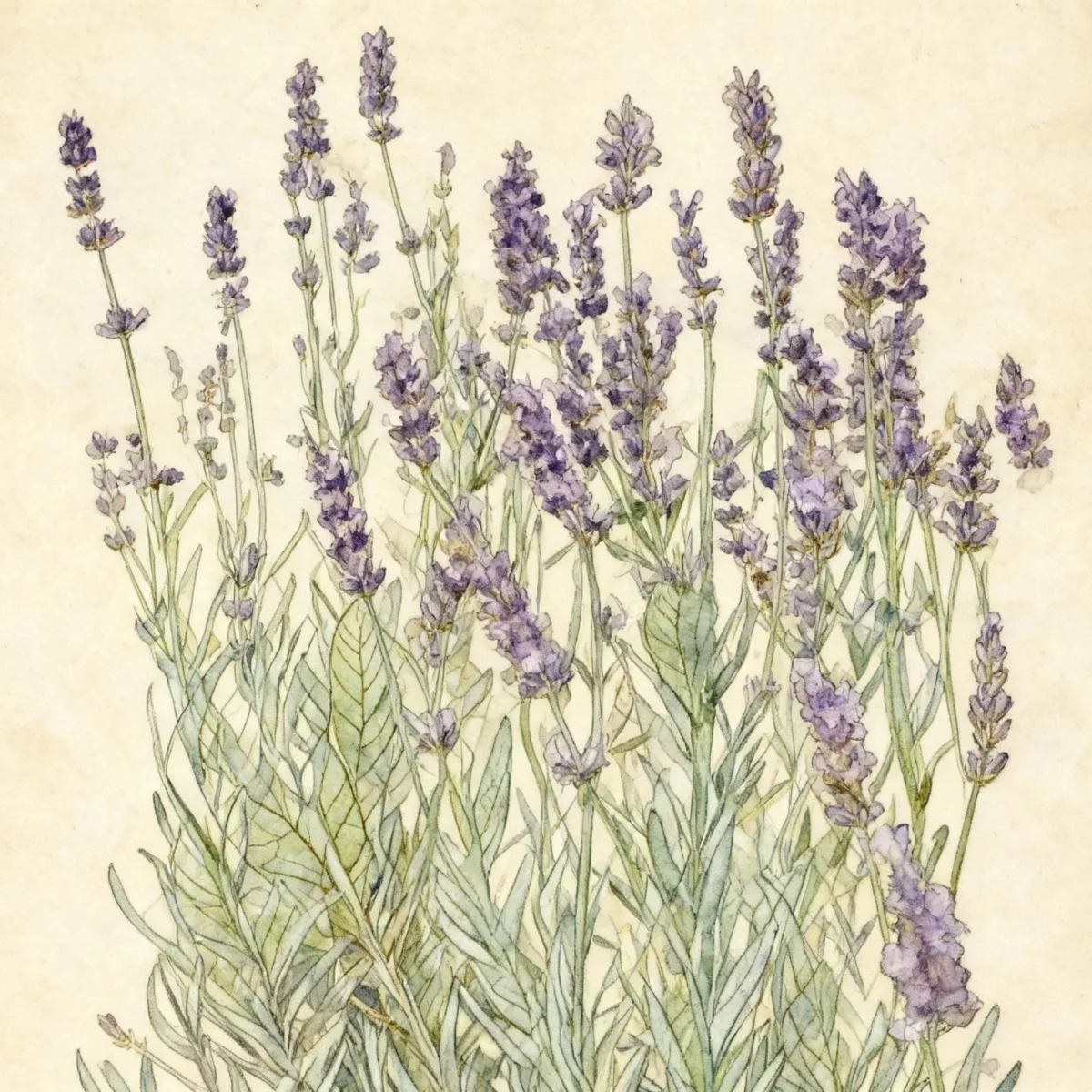
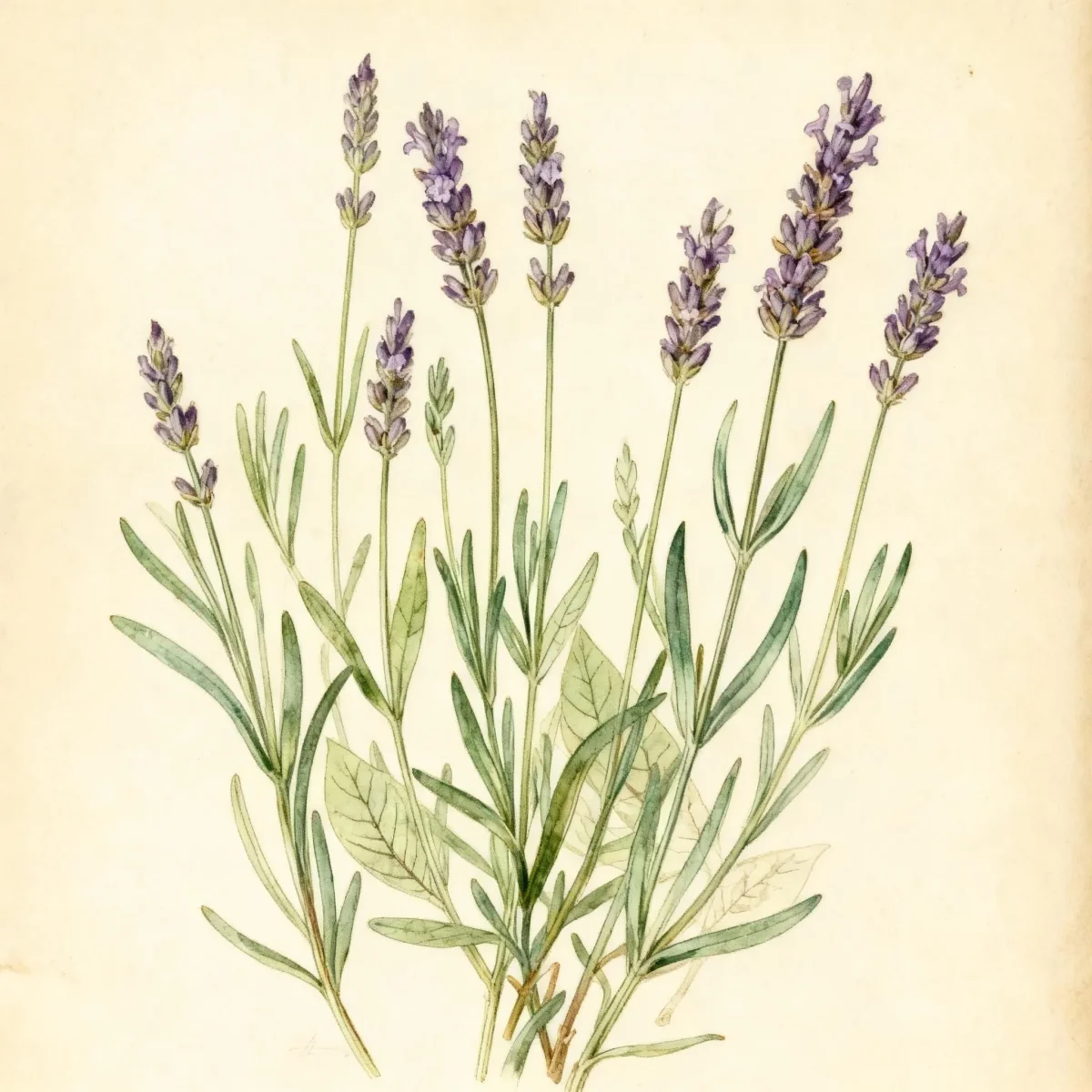
The compact habit and attractive golden-variegated foliage make Salvia officinalis ‘Aurea’ an excellent element in mixed perennial borders, adding texture and year-round interest. Its heat and drought tolerance allow it to pair beautifully with Mediterranean companions such as Lavender, Thyme, or Rosmarinus. It is equally at home in dedicated herb or vegetable gardens where both its ornamental value and culinary applications can be enjoyed.
For rock gardens or along sunny, dry pathways, this Common sage provides consistent low-growing structure. Because the leaves are strongly aromatic, planting it near seating areas ensures that the fragrance is released when brushed against. Mixing the golden hues of Salvia officinalis ‘Aurea’ with deep purple basil or silver Lamb’s Ears creates stunning, low-maintenance color combinations.
Standout Features
Flower Qualities
- Showy
Noteworthy Characteristics
Salvia officinalis commonly called sage, is the culinary sage familiar to most cooks, but this cultivar excels ornamentally with its variegated foliage. Known as golden sage, Salvia officinalis ‘Aurea’ is a compact, shrubby perennial featuring wrinkled oblong leaves variegated with gold and light green. These strongly aromatic leaves are highly prized for fresh or dried culinary use, making this plant a garden favorite.
Tolerances
- Deer
- Drought
- Dry Soil
- Shallow-Rocky Soil
Potential Problems
This herb generally faces no serious insect or disease issues, which contributes to its medium maintenance rating. The primary concern for Common sage is root rot, which occurs if the soil remains consistently moist or wet—ensure excellent drainage to prevent this fatal condition. Taller plants that have become leggy may sprawl and require light pruning or staking, particularly when grown primarily for ornamental displays rather than heavy culinary harvesting.
Frequently Asked Questions
What hardiness zones is Common sage suitable for?
Salvia officinalis ‘Aurea’ is generally suitable for USDA Hardiness Zones 6 through 9.
How large does Salvia officinalis ‘Aurea’ grow?
This herbaceous perennial typically reaches a height between 1 and 1.5 feet and spreads between 1.5 and 2 feet at maturity.
When does Common sage bloom?
This variety of Common sage blooms from May to June, displaying attractive whorls of lilac-blue flowers.
What sun exposure does Salvia officinalis ‘Aurea’ need?
For optimal growth and to prevent sprawling, Salvia officinalis ‘Aurea’ requires full sun exposure.
Conclusion
Salvia officinalis ‘Aurea’ is a highly valuable garden asset, merging the culinary necessity of Common sage with striking golden-variegated ornamental foliage. Its resilience to dry soil and pests makes it a foundational plant for sunny, Mediterranean-style gardens. Before planting, confirm your location falls within USDA Zones 6-9 and ensure you have a spot with full sun and sharp drainage to best showcase this golden perennial.
Companion Planting
This sage thrives alongside other water-wise, full-sun herbs, enhancing both aesthetic appeal and horticultural success. Consider planting groups of rosemary or thyme nearby; these companions share similar low-water needs and soil structure preferences, creating a functional and drought-tolerant grouping. Avoid placing Common sage next to plants that require consistently heavy moisture, as the risk of fungal issues for the sage increases significantly.
Wildlife Benefits
The late spring and early summer bloom period of Salvia officinalis ‘Aurea’ provides a reliable nectar source during the transition into the main growing season. The lilac-blue flowers are highly attractive, drawing in beneficial pollinators, particularly bees and butterflies, into the herb garden. Planting this mint family member supports local insect populations while you harvest its flavorful leaves.