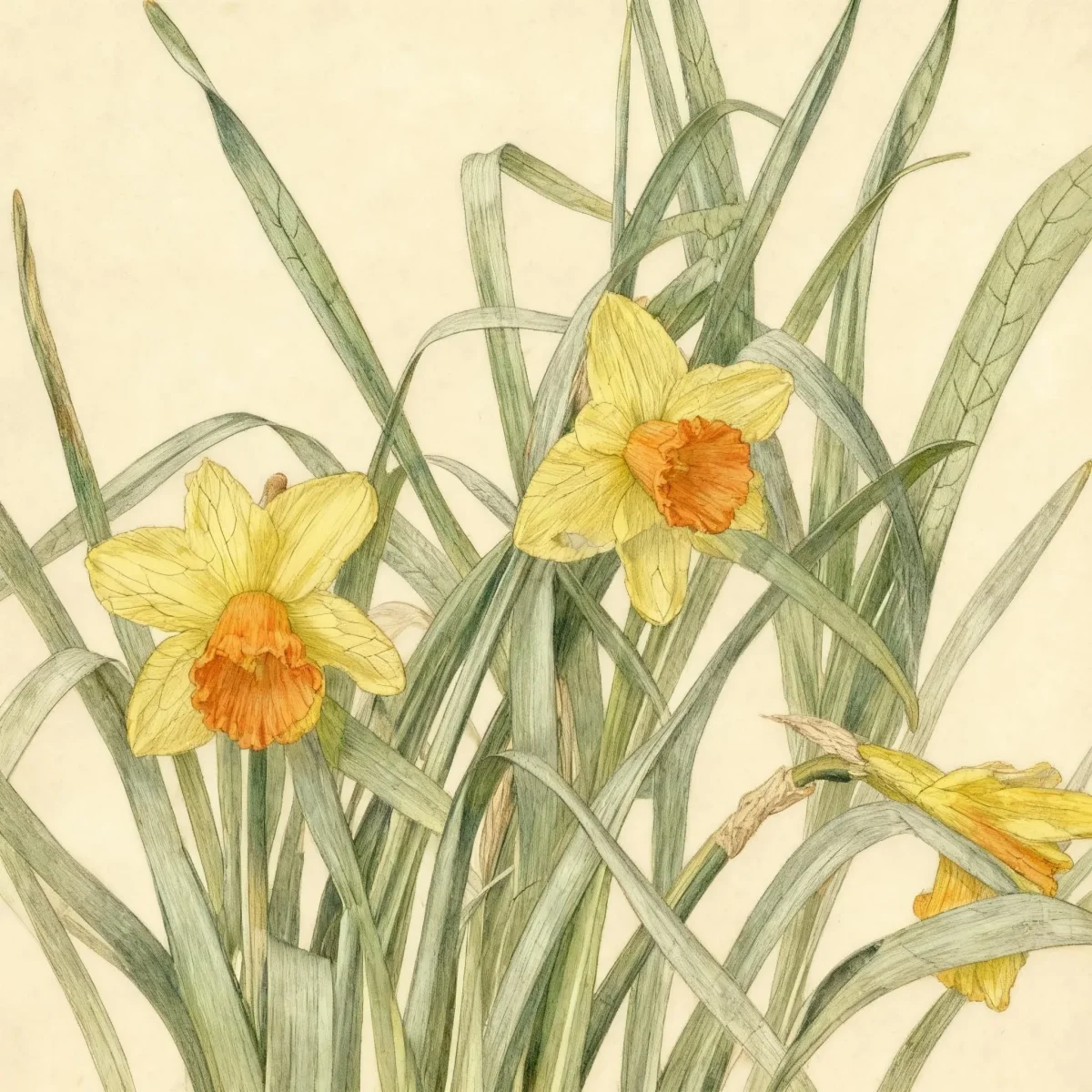
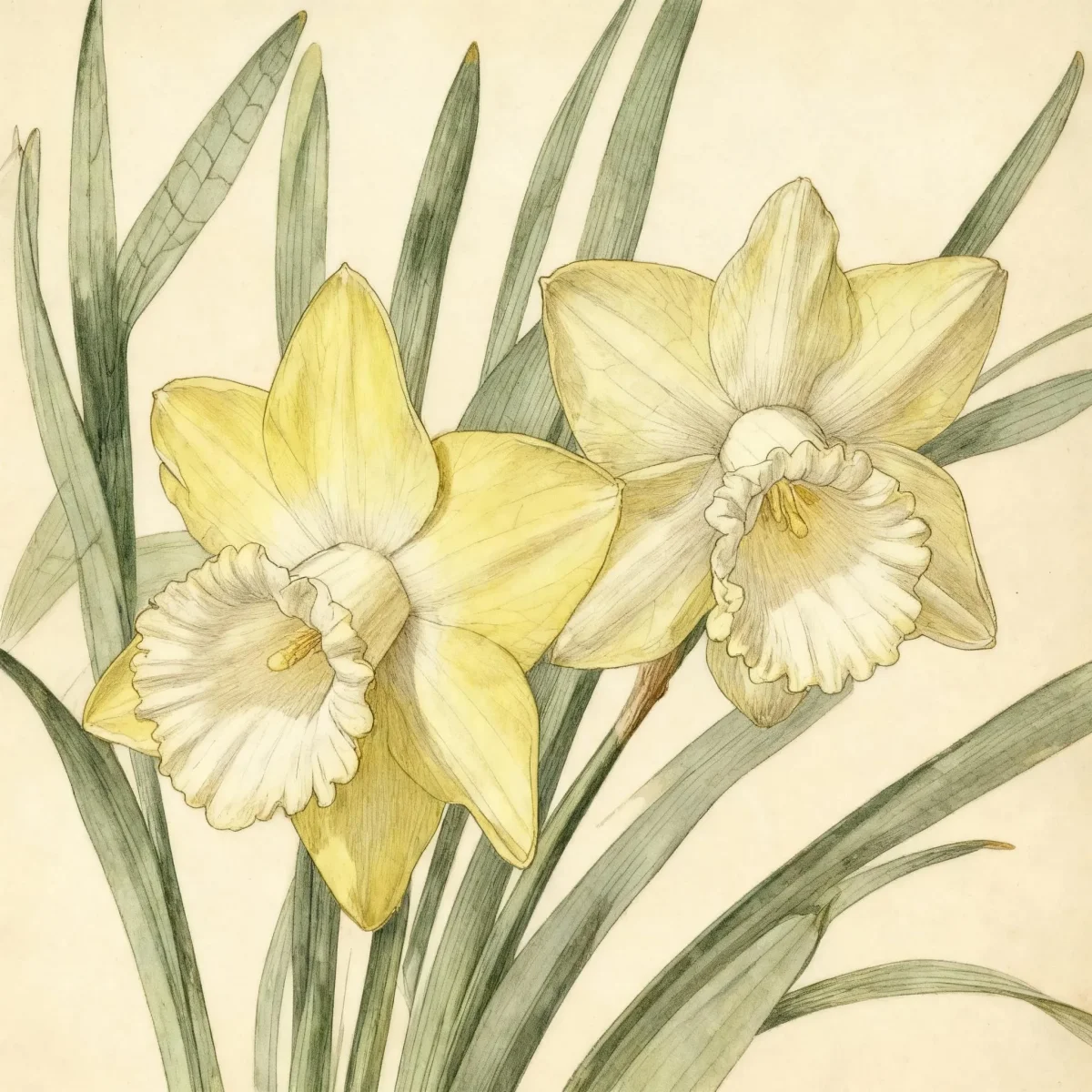
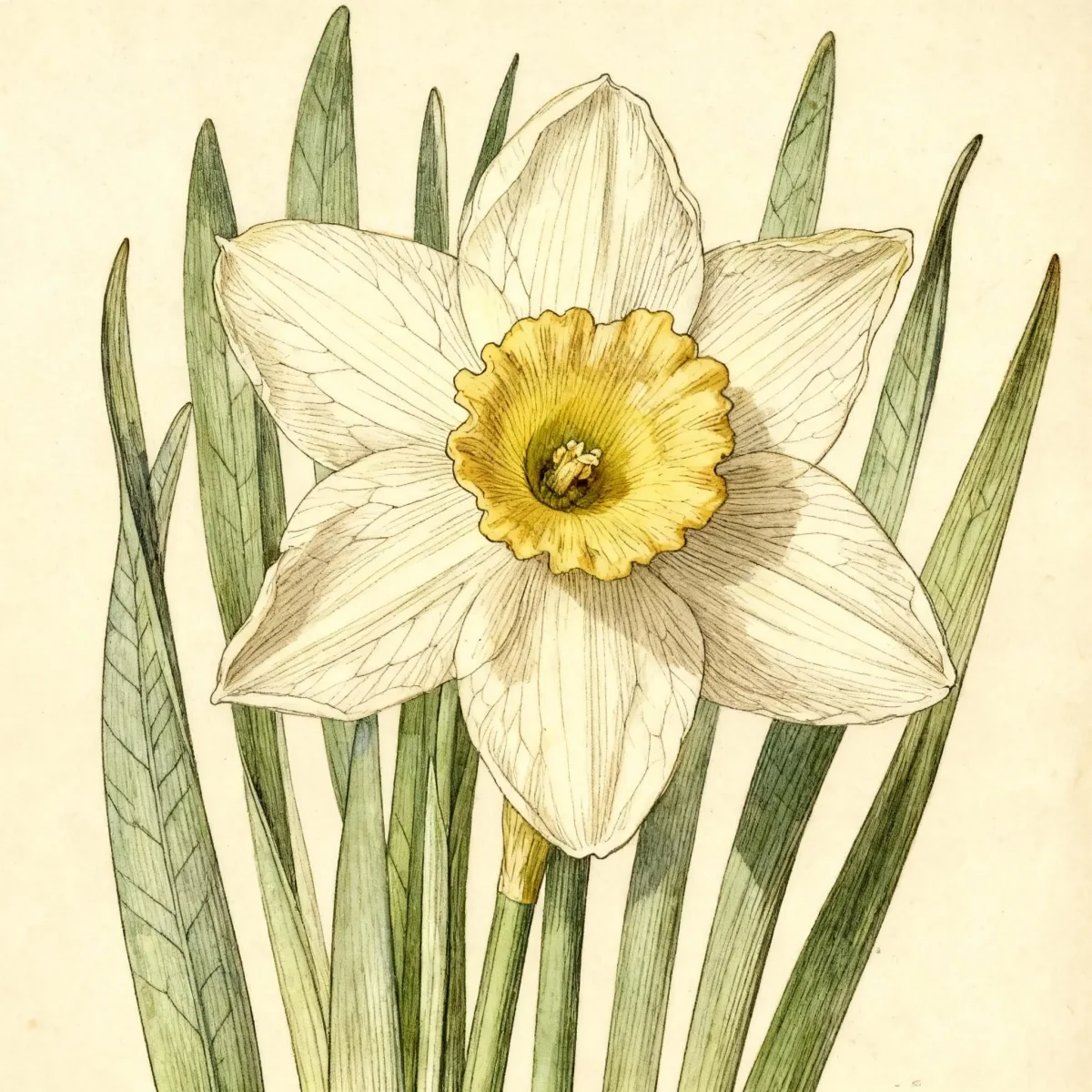
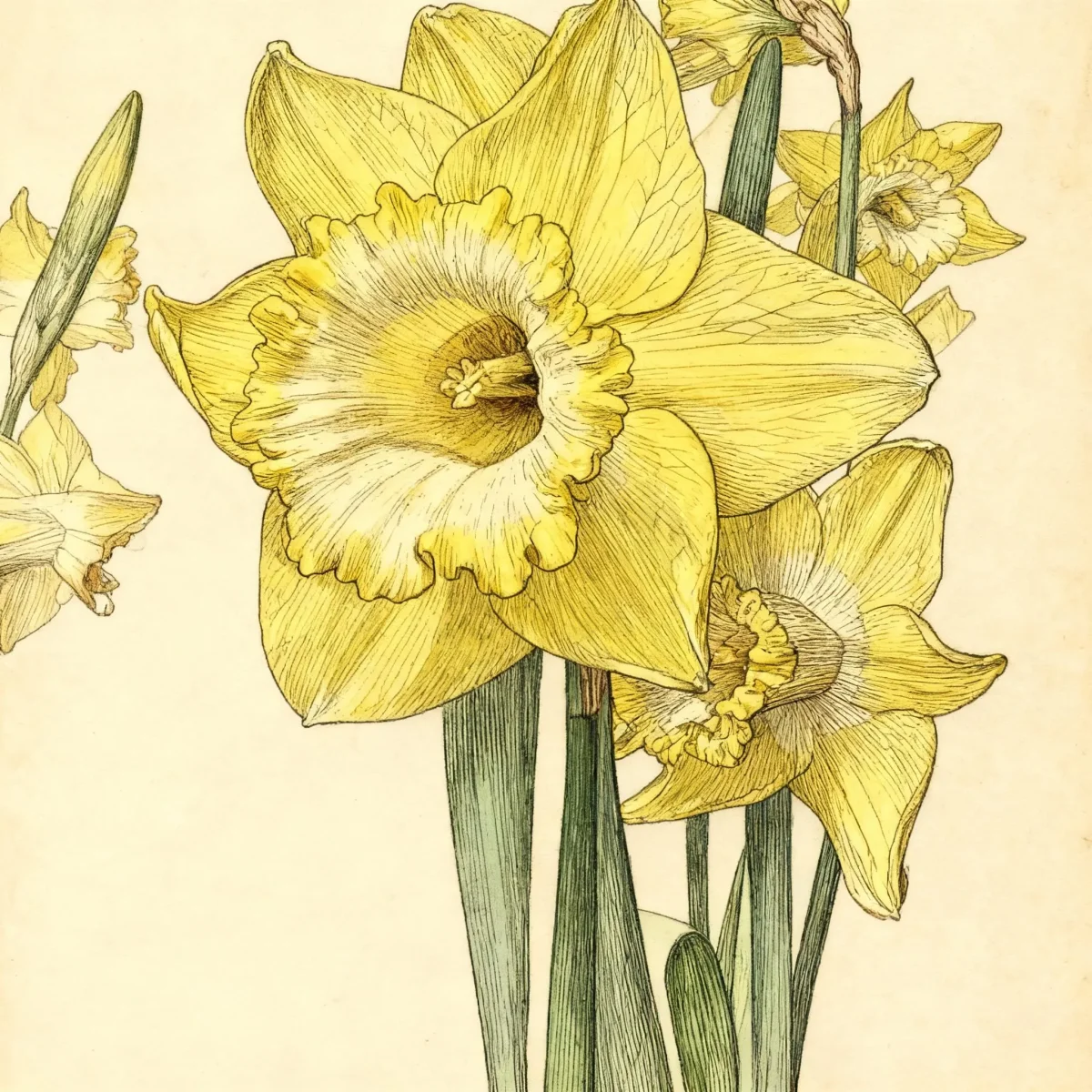
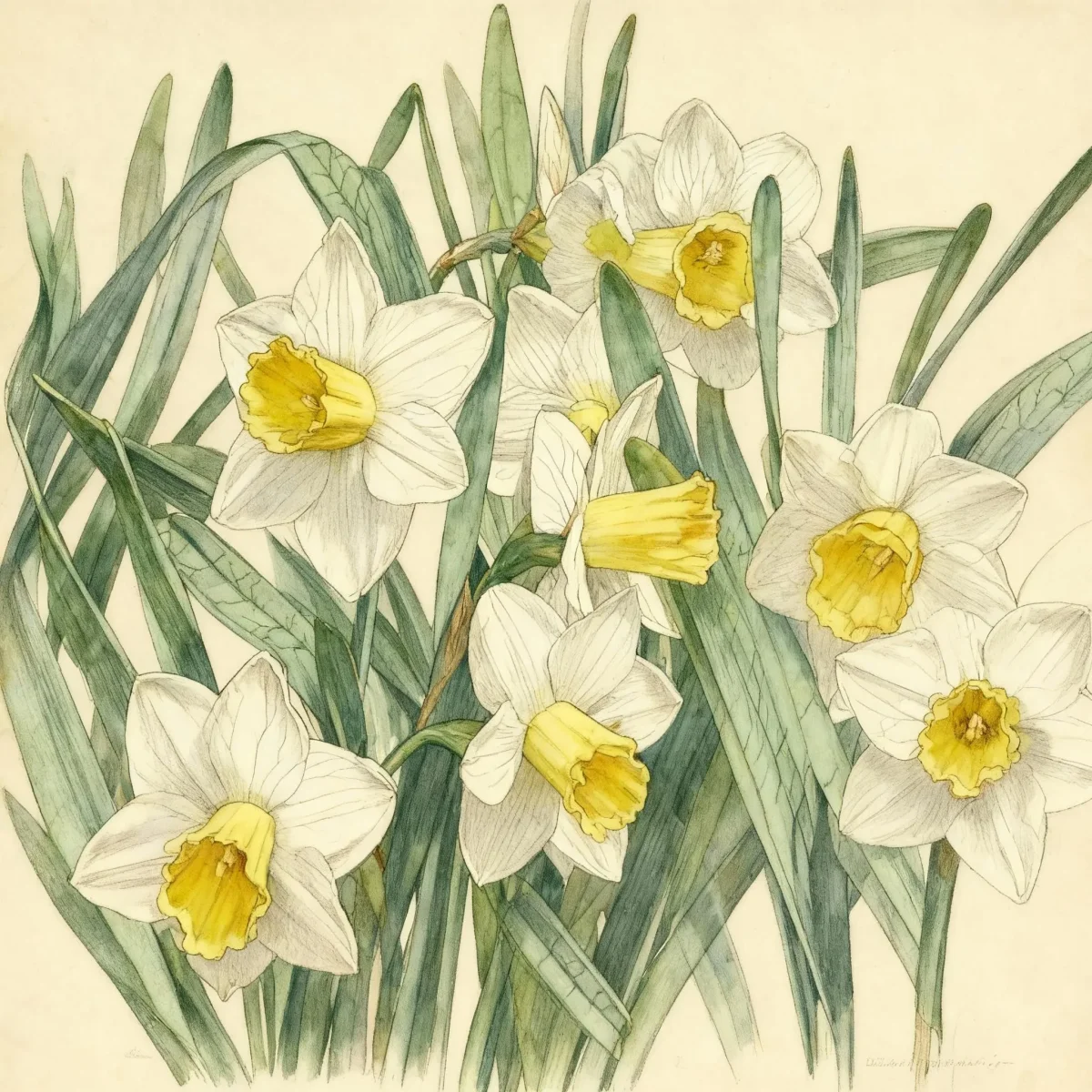
Trumpet daffodil (Narcissus 'Bravoure')
Narcissus 'Bravoure' is a classic Trumpet daffodil, offering showy white petals and a yellow cup. Low maintenance and deer resistant.
Scroll down to discover growing tips, care requirements, companion plants, and more
Complete Plant Information
Overview
The Narcissus ‘Bravoure’ stands out as a beloved classic within the spring garden landscape. As a Division I Trumpet daffodil, it is prized for its stately presence, featuring pristine white petals framing a vibrant, deep yellow cup, often appearing in mid-season April. This bulbous perennial offers dependable, low-maintenance color, returning year after year once established.
Gardeners appreciate the structure and lasting resilience of Narcissus ‘Bravoure’. Its flowers generally rise on strong stems, providing excellent vertical interest against developing spring foliage. Furthermore, daffodils generally deter common garden pests like rabbits and deer, making this a rewarding choice for open plantings.
Planting a quantity of these bulbs ensures a magnificent sweep of early spring color. Whether massed or used in drifts, the Trumpet daffodil reliably delivers on its promise of cheerful blooms with minimal ongoing input required from the gardener.
Fast Facts
- Plant Family: Amaryllidaceae
- Plant Type: Bulb
- Hardiness Zones: USDA Zones 3-8
- Size at Maturity:
- Height: 1.5-2 ft
- Spread: 0.5-1 ft
- Bloom Time: April
- Bloom Description: White with a yellow cup
- Sun Exposure: Full sun to part shade
- Water Needs: Medium
- Maintenance Level: Low
How to Grow
Planting Narcissus ‘Bravoure’ bulbs should occur in early to mid-fall before the ground freezes solid. These perennials thrive in average, medium moisture soils that must be exceptionally well-drained; good drainage is essential to prevent bulb rot. For optimal results, aim for organically rich loams, ensuring the site receives full sun to part shade.
Dig holes deep enough to accommodate planting each bulb 2 to 3 times its height, generally resulting in a depth of 3-6 inches, with at least three inches of soil covering the top. Space the bulbs between 4 to 10 inches apart, depending on the size of the bulb. While wider spacing in early years may look sparse, the clumps naturally fill in over time, reducing the need for future division.
Water needs are medium while actively growing, meaning soils should be kept uniformly moist in spring. However, once blooming concludes, the foliage must remain intact until it turns yellow, as this process recharges the bulb for the following season. Drought tolerance is notable once the foliage dies back.
After the flowers fade, you may snip the spent flower stem, but never cut the foliage prematurely. If bloom quantity declines after several years, divide the clumps immediately after the foliage has completely yellowed. Position plantings so that any shading elements are behind the flowers, as the blooms tend to face toward the strongest light source.
Landscape Uses
Daffodils, unlike tulips, are long-lived perennials that naturalize beautifully, making Narcissus ‘Bravoure’ an excellent addition to almost any spring scheme. They excel when planted en masse—groupings of at least six bulbs create a stronger visual impact, while larger drifts provide sweeping seasonal vistas.
Consider using this Trumpet daffodil in traditional garden beds, along the edges of borders, or under deciduous trees where they will receive full sun before the canopy fills in. They mix exceptionally well with other spring-flowering bulbs like grape hyacinths or early tulips. Allowing them to naturalize creates a charming, wild garden aesthetic that requires virtually no annual effort.
The classic white and yellow combination of ‘Bravoure’ lends itself well to formal settings, yet its easygoing nature suits informal woodland areas too. Plant them near walkways where their mid-spring bloom can be easily admired up close.
Standout Features
Flower Qualities
- Showy
Noteworthy Characteristics
Narcissus is a genus renowned for providing the first vibrant color after winter, featuring flowers typically composed of a trumpet or cup (corona) surrounded by six petals. ‘Bravoure’ specifically belongs to Division I, meaning it is a true trumpet daffodil, rising 18 to 24 inches tall with one bloom per stem. This particular hybrid is celebrated for its excellent performance both in the garden and as a consistently fresh cut flower.
Tolerances
- Rabbit
- Deer
- Drought
Potential Problems
Daffodils, including Narcissus ‘Bravoure’, are generally robust and suffer from few serious insect or disease issues, provided cultural requirements like proper soil drainage are met. Bulb rot is the primary threat, occurring in overly wet or poorly drained environments. Infrequent pests include slugs and snails, particularly when foliage is young. While deer and rabbits typically avoid the foliage and bulbs due to their toxicity, monitoring for signs of narcissus yellow stripe virus is important if planting stock seems weak.
Frequently Asked Questions
What hardiness zones is Trumpet daffodil suitable for?
The Narcissus ‘Bravoure’ is hardy across USDA Zones 3 through 8, making it adaptable to a wide range of climates.
How large does Narcissus ‘Bravoure’ grow?
This Trumpet daffodil typically achieves a height between 1.5 and 2 feet, with a spread of 0.5 to 1 foot as the clumps establish.
What sun exposure does Narcissus ‘Bravoure’ need?
For best flowering, plant this daffodil in locations receiving full sun to partial shade.
When does Narcissus ‘Bravoure’ bloom?
This variety generally blooms in April, offering striking flowers characterized by white petals and a yellow cup at the center.
Conclusion
The Narcissus ‘Bravoure’ is an indispensable element for achieving vibrant, early spring color with remarkable ease. Its dependable flowering, pest resistance, and classic white and yellow presentation solidify its status as a garden cornerstone. Before fall arrives, plan large-scale plantings according to the listed hardiness zones to ensure stunning displays of this wonderful Trumpet daffodil next season.
Companion Planting
Selecting suitable neighbors ensures your Narcissus ‘Bravoure’ looks excellent both before and after its bloom period. Since daffodils complete their energy production cycle early, plant them alongside perennials or annuals that emerge later in the season to cover the unsightly yellowing foliage. Try pairing them with early-blooming Siberian Iris or later-flowering plants like Peonies or Hostas, ensuring the companion plants do not create dense, overly competitive root systems near the bulbs. Because the foliage of the Trumpet daffodil is toxic, most weeds and grasses simply struggle to compete right next to the bulbs, though excellent drainage remains paramount for all partners.
Seasonal Care Calendar
Spring care focuses almost exclusively on letting the foliage decline naturally after the white and yellow blooms fade; resist the urge to tidy up dead leaves too soon. In summer, when dormant, the bulbs are highly drought tolerant, requiring no supplemental water unless you experience extreme, prolonged dry spells. Fall is the crucial time for planting or dividing clumps of Narcissus ‘Bravoure’, ensuring they are placed correctly to face the sun. Winter care involves minimal intervention; simply ensure heavy mulch is not piled directly against the crown area, which could trap excessive moisture and lead to rot in poorly drained sites.