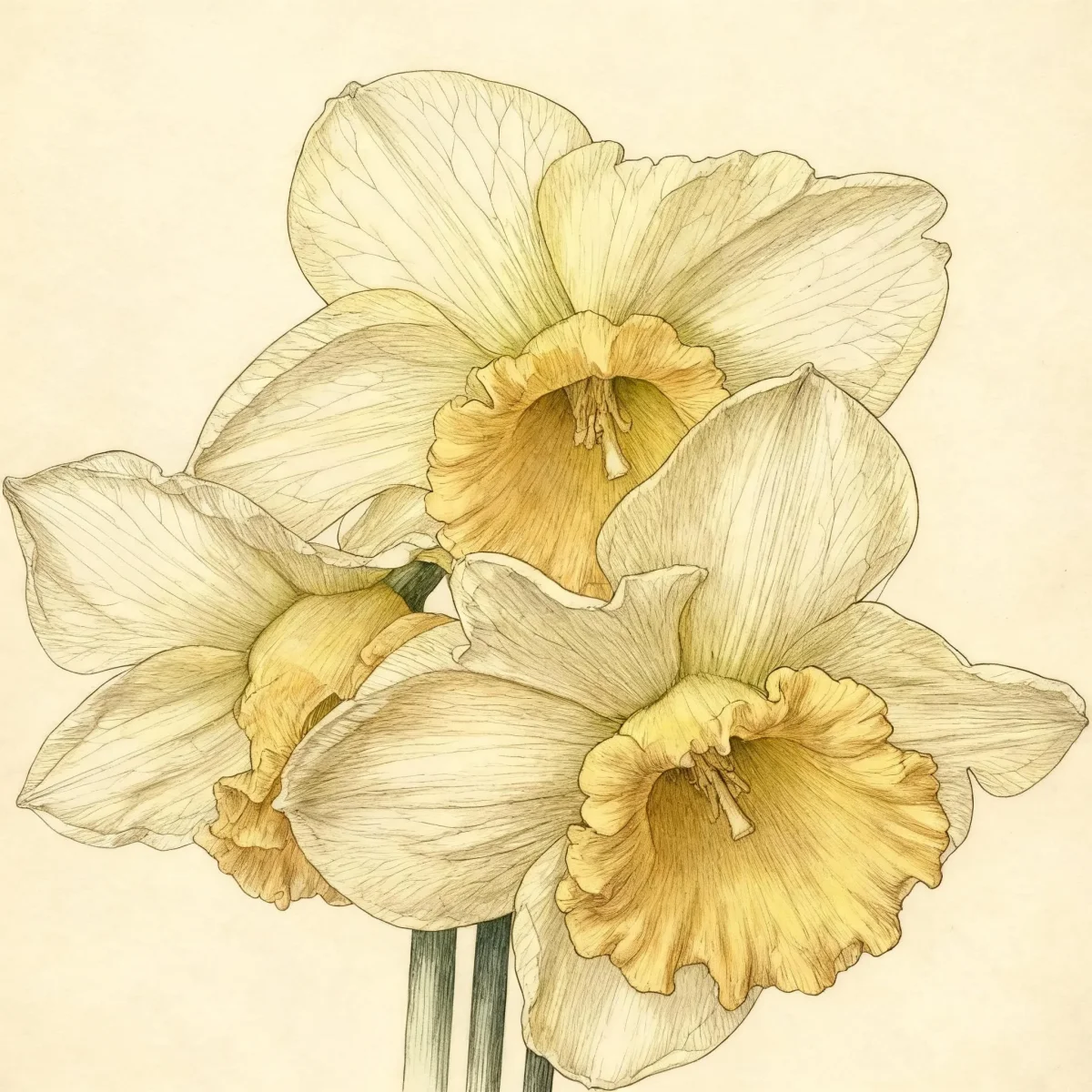
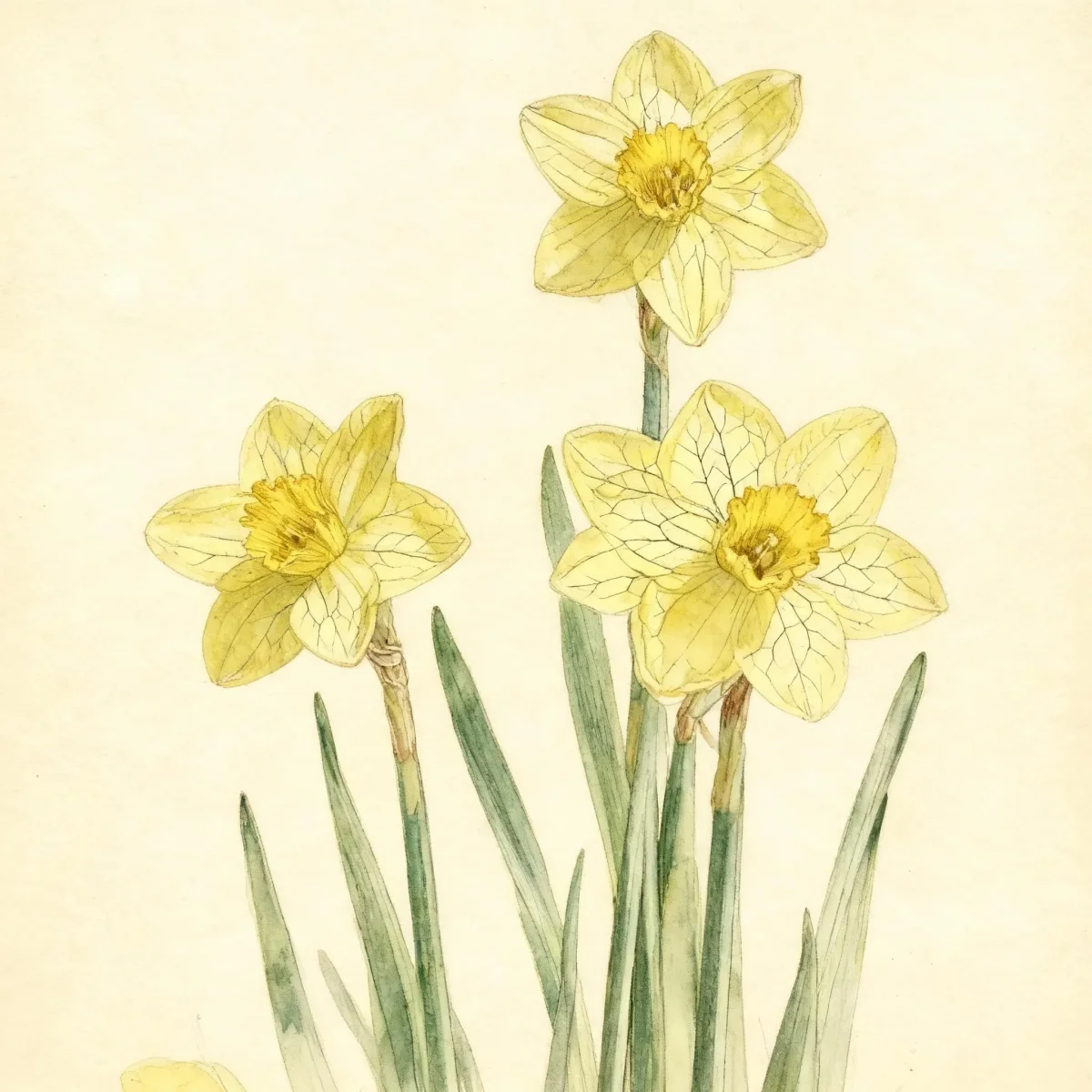
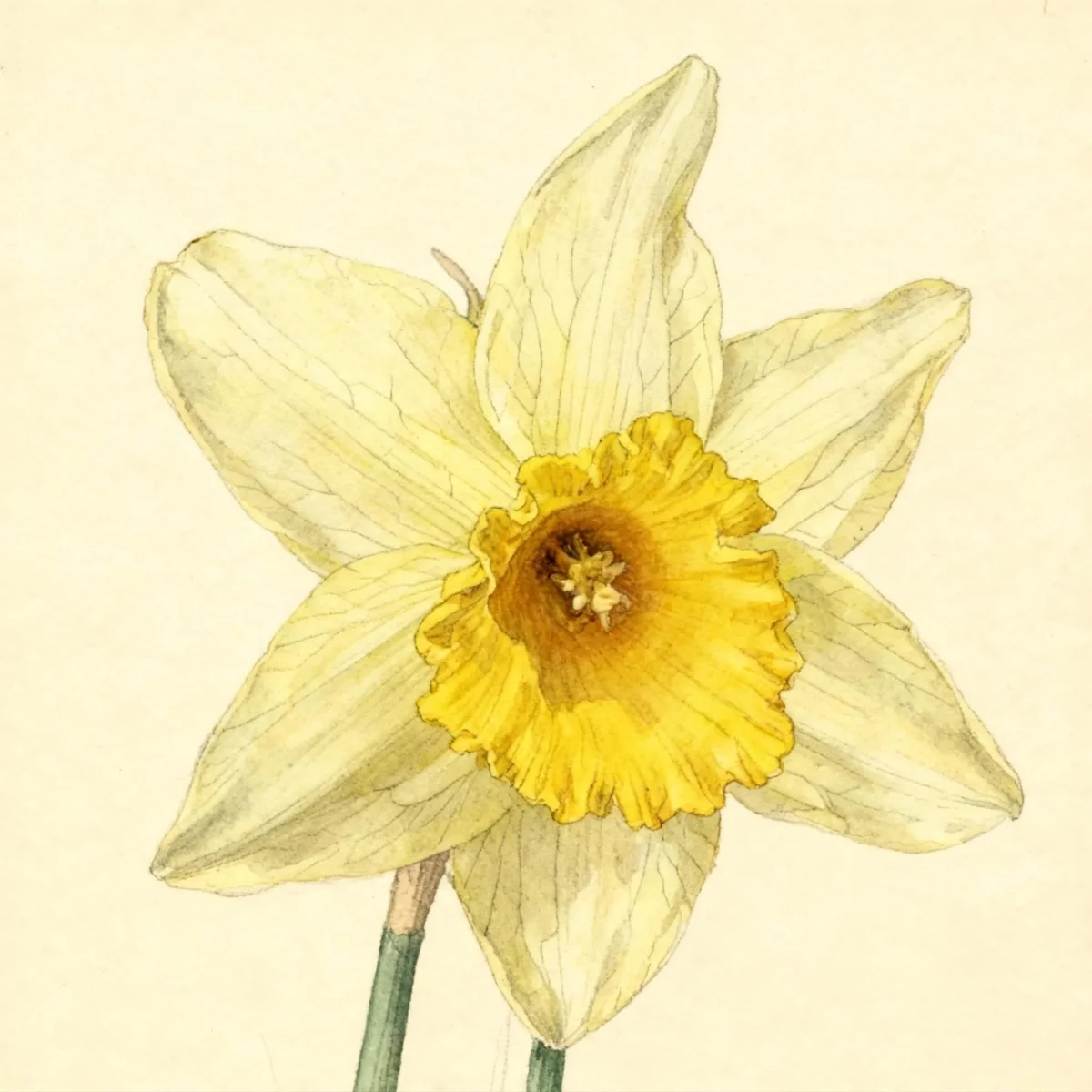
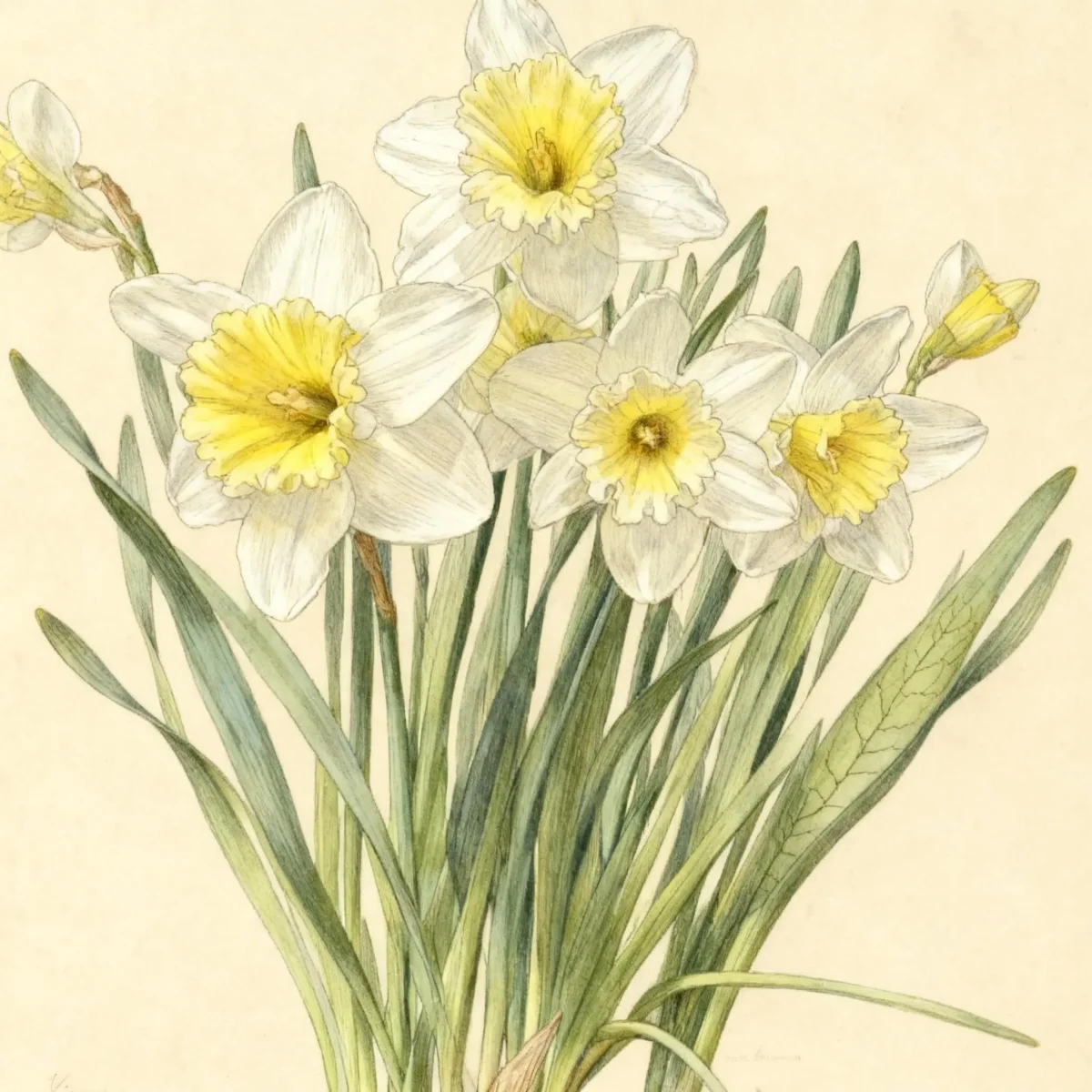
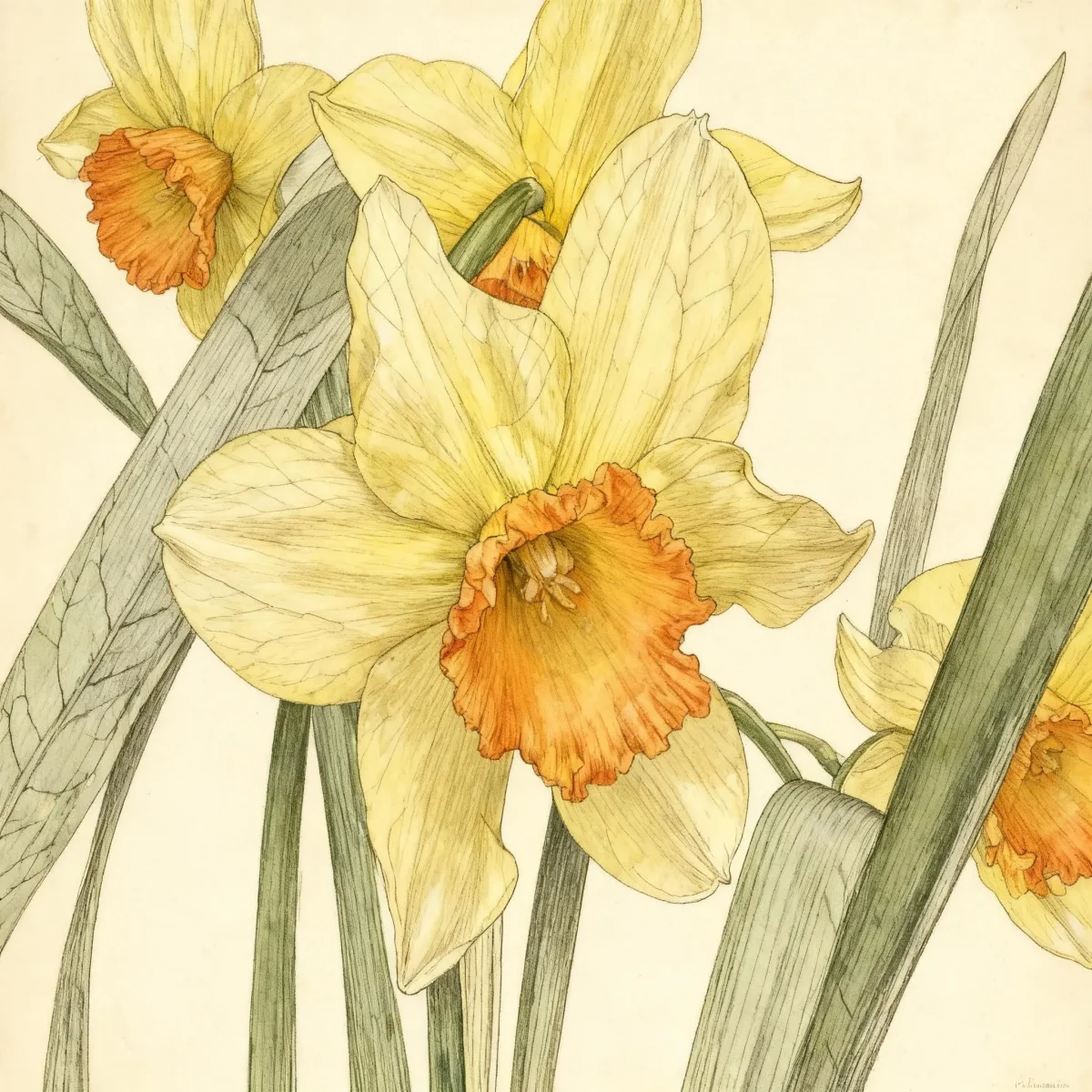
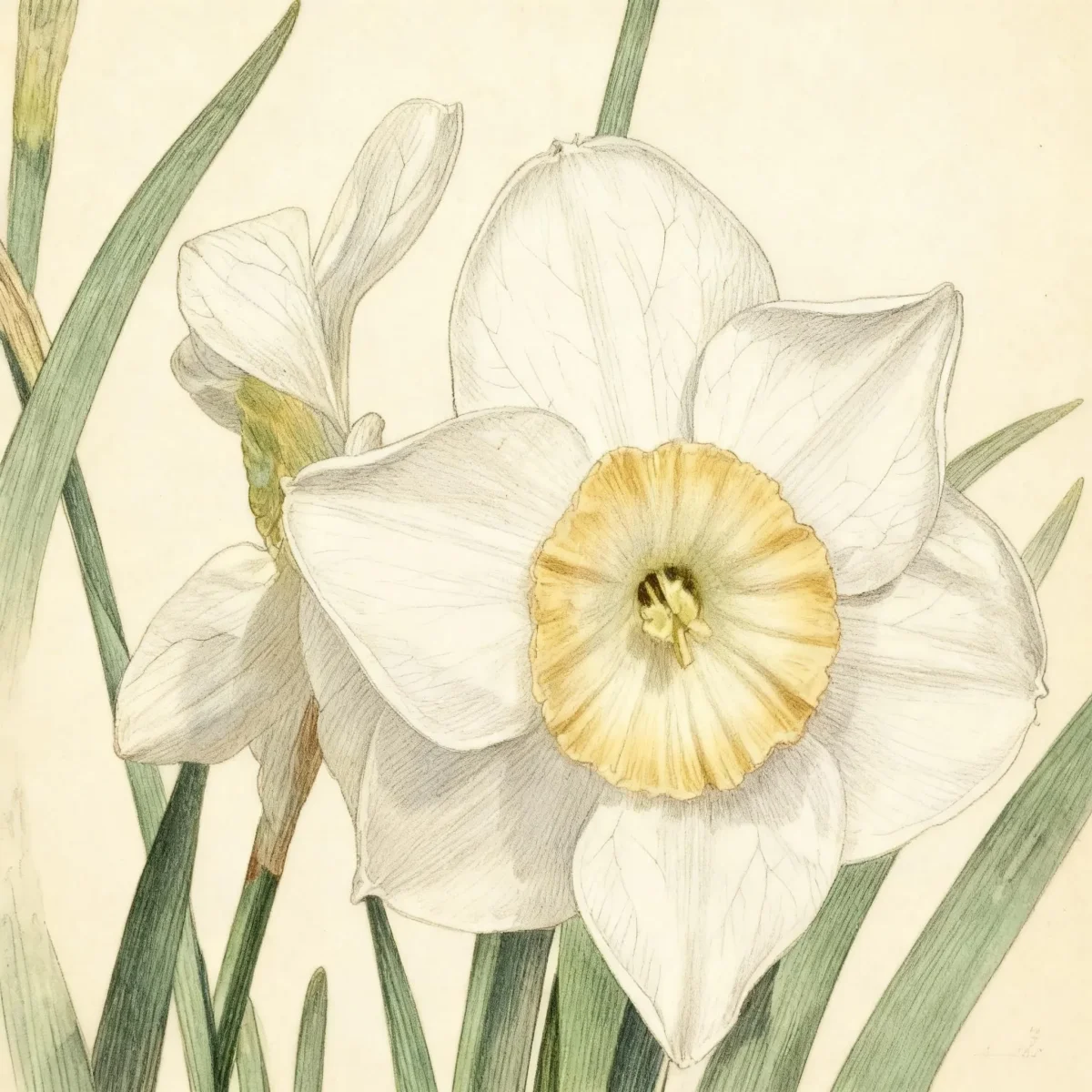
Large-cupped daffodil (Narcissus 'Daydream')
Narcissus 'Daydream' is a classic Large-cupped daffodil, offering golden yellow petals and an orange-red cup in April. Low maintenance and deer resistant.
Scroll down to discover growing tips, care requirements, companion plants, and more
Complete Plant Information
Overview
Narcissus ‘Daydream’, a celebrated Large-cupped daffodil, brings reliable cheer to the early spring landscape. This cultivar is distinguished by its vibrant combination of golden yellow petals set against a richly colored orange-red cup, making it an immediate focal point as winter fades. As a bulbous perennial, it requires relatively low maintenance once established, rewarding gardeners with dependable seasonal color year after year.
Belonging to Division II, the Large-cupped daffodil group, Narcissus ‘Daydream’ features a corona (cup) that is significantly longer than one-third but shorter than the perianth segments (petals). These hardy plants thrive in average conditions, provided the soil offers excellent drainage. Planting these bulbs in early to mid-fall ensures a stunning bloom display typically occurring in April.
Beyond the striking coloration, gardeners value Narcissus ‘Daydream’ for its robust nature; it exhibits notable resistance to common garden pests like deer and rabbits. This dependable perennial is an essential component for creating layered spring interest, offering exceptional aesthetic impact with minimal ongoing care requirements.
Fast Facts
- Plant Family: Amaryllidaceae
- Plant Type: Bulb
- Hardiness Zones: USDA Zones 3-7
- Size at Maturity:
- Height: 1-1.5 ft
- Spread: 0.5-0.75 ft
- Bloom Time: April
- Bloom Description: Greenish yellow
- Sun Exposure: Full sun to part shade
- Water Needs: Medium
- Maintenance Level: Low
How to Grow
Planting Narcissus ‘Daydream’ bulbs should occur in the early to mid-fall season before the ground freezes hard. Select a location receiving full sun to light afternoon shade, favoring organically rich loam soils. Critically, good soil drainage is essential; bulb rot often results from standing water or overly saturated conditions. Plant the bulbs two to three times as deep as the bulb height, ensuring at least 3 inches of soil covers the top, spacing them between 4 to 10 inches apart depending on the bulb size.
Watering during the active growing season demands medium moisture levels to keep soils uniformly moist, though the bulbs tolerate drought well once they enter dormancy. After the lovely flowers of Narcissus ‘Daydream’ fade in the spring, remove the spent flower stem if possible to prevent seed set, but resist the urge to cut back the green foliage. The leaves must be allowed to fully yellow naturally, replenishing the bulb’s energy store for next year’s display.
These bulbs can remain undisturbed for many years, providing consistent performance. If the bloom quality or quantity begins to diminish, clumps can be carefully divided shortly after the foliage completely dies back. Remember that flowers generally lean toward the light source, so position any shade features behind your grouping of this magnificent Large-cupped daffodil.
Landscape Uses
While the inherent nature of daffodils sometimes necessitates caution due to potential basal rot in certain soil types, Narcissus ‘Daydream’ is generally admired for its visual impact in prepared garden settings. When planted in areas with proven excellent drainage, these bulbs perform reliably for borders, mass plantings, or naturalized meadows where spring color is desired. Their height (around 1.5 feet) makes them perfect for the middle third of a perennial border.
Consider grouping Narcissus ‘Daydream’ bulbs with later-blooming tulips or early-blooming scilla to create a sequential burst of color throughout the spring season. Because the foliage yellows as the summer progresses, plant them alongside summer-blooming perennials that will rise up and conceal the fading daffodil leaves. The bright golden yellow and orange-red of this variety contrast beautifully with deep purple or blue spring accents.
Standout Features
Flower Qualities
- Showy
Noteworthy Characteristics
Narcissus is a genus of about 50 species of bulbous perennials from Europe and North Africa. They are a mainstay of the spring garden. Depending upon species or hybrid type, flowers appear singly or in clusters atop stems rising from 6-30” tall. Flowers generally feature a trumpet or cup (the corona) surrounded by six petals (perianth segments), in colors ranging from white to yellow to orange to pink to bicolors. Flowers sometimes feature fragrance. Flowers bloom in early spring. Narrow, linear to strap-shaped, green leaves appear in erect to sprawling clumps. Cultivated daffodils have been organized into 13 divisions based on the characteristics of the blooms. ‘Daydream’ is a large-cupped daffodil (Division II). By definition, a large-cup daffodil features a cup (corona) that is more than 1/3 but less than the length of the petals (perianth segments). ‘Daydream’ rises 14-16” tall in spring, featuring golden yellow petals and an orange-red cup. This variety is excellent as a fresh cut flower.
Tolerances
- Rabbit
- Deer
- Drought
Potential Problems
Daffodils, including Narcissus ‘Daydream’, are generally noted for being remarkably pest-free when situated in healthy soil with proper culture. The most critical concern is bulb rot, which stems directly from poor soil drainage leading to perpetually soggy conditions. Prevent this by amending heavy soils or selecting a naturally well-drained site before planting your Large-cupped daffodil bulbs.
Infrequently, gardeners might encounter narcissus bulb fly, narcissus nematode, or damage from slugs and snails, particularly when bulbs are newly planted or moisture management is inconsistent. Though rare, Narcissus yellow stripe virus can be an issue; promptly remove any infected plants to prevent spread. Fortunately, deer and rabbits typically ignore this toxic spring bulb.
Frequently Asked Questions
What hardiness zones is Large-cupped daffodil suitable for?
Narcissus ‘Daydream’ is suitable for USDA Zones 3 through 7, offering flexibility across many temperate regions.
How large does Narcissus ‘Daydream’ grow?
This Large-cupped daffodil typically reaches a height between 1 and 1.5 feet, with a spread of 0.5 to 0.75 feet.
When does Large-cupped daffodil bloom?
Narcissus ‘Daydream’ blooms reliably in April, producing greenish yellow flowers that serve as an excellent marker for mid-spring.
What sun exposure does Narcissus ‘Daydream’ need?
This plant thrives best when situated in locations receiving full sun throughout the day, though it tolerates partial shade well.
Conclusion
The Large-cupped daffodil, Narcissus ‘Daydream’, is a foundational element for any successful early spring garden, providing brilliant color and minimal fuss. Its striking golden and orange-red flowers are pest-resistant and require low maintenance, making it a gardener’s favorite. Before planting, confirm your soil offers superb drainage, and incorporate your bulbs in the fall to enjoy the dependable burst of life this daffodil brings.
Companion Planting with Spring Bulbs
To maximize garden impact throughout spring, pair Narcissus ‘Daydream’ with bulbs that emerge either slightly before or significantly after its April bloom time. Early companions like Snowdrops (Galanthus) or Crocus provide the very first hints of color, offering a lovely textural contrast to the strap-like foliage of the daffodil. As Narcissus ‘Daydream’ finishes blooming, allow its foliage to mature naturally, knowing that later-season perennials like bearded Iris or Siberian Iris will soon take over the visual space, masking the dying daffodil leaves.
For a cottage-garden feel, interplant the bulbs in drifts among forget-me-nots (Myosotis). The small, delicate blue flowers of the Myosotis create a soft carpet beneath the upright stems of the Large-cupped daffodil. This combination takes advantage of the different light requirements; the Myosotis enjoys the dappled shade cast by emerging tree leaves while the daffodil is in bloom.
Seasonal Care Calendar
Spring care for Narcissus ‘Daydream’ centers on preservation rather than feeding. Once the bloom concludes, ensure you resist the urge to immediately cut back the foliage. This green material is actively photosynthesizing, creating the energy reserves stored in the bulb for next year’s performance, including the formation of the distinguishing orange-red cup.
Summer dormancy requires minimal attention, primarily ensuring the area does not remain soggy, though drought is tolerated. Once the foliage has yellowed completely, usually by mid-summer, it is safe to gently pull it away or trim it back. For areas where clumps become overcrowded after several years, plan division for early autumn, digging the bulbs just after the foliage has died down entirely.
Fall preparation involves planting the new bulbs. If you notice poor bloom performance in a specific spot during successive years, this is a strong signal to dig, amend the soil heavily with grit or compost to improve aeration, and replant the Narcissus ‘Daydream’ bulbs slightly deeper or wider apart.