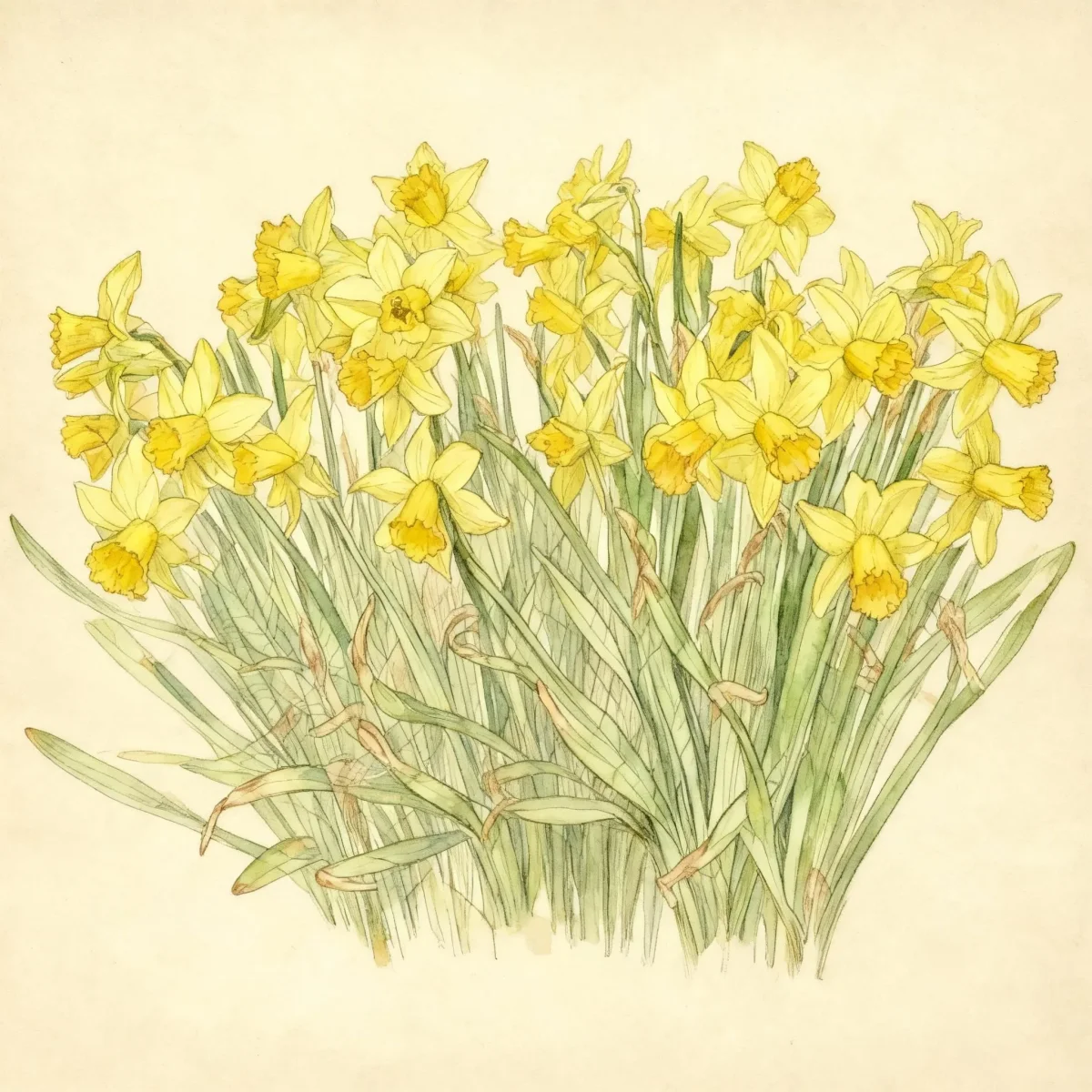
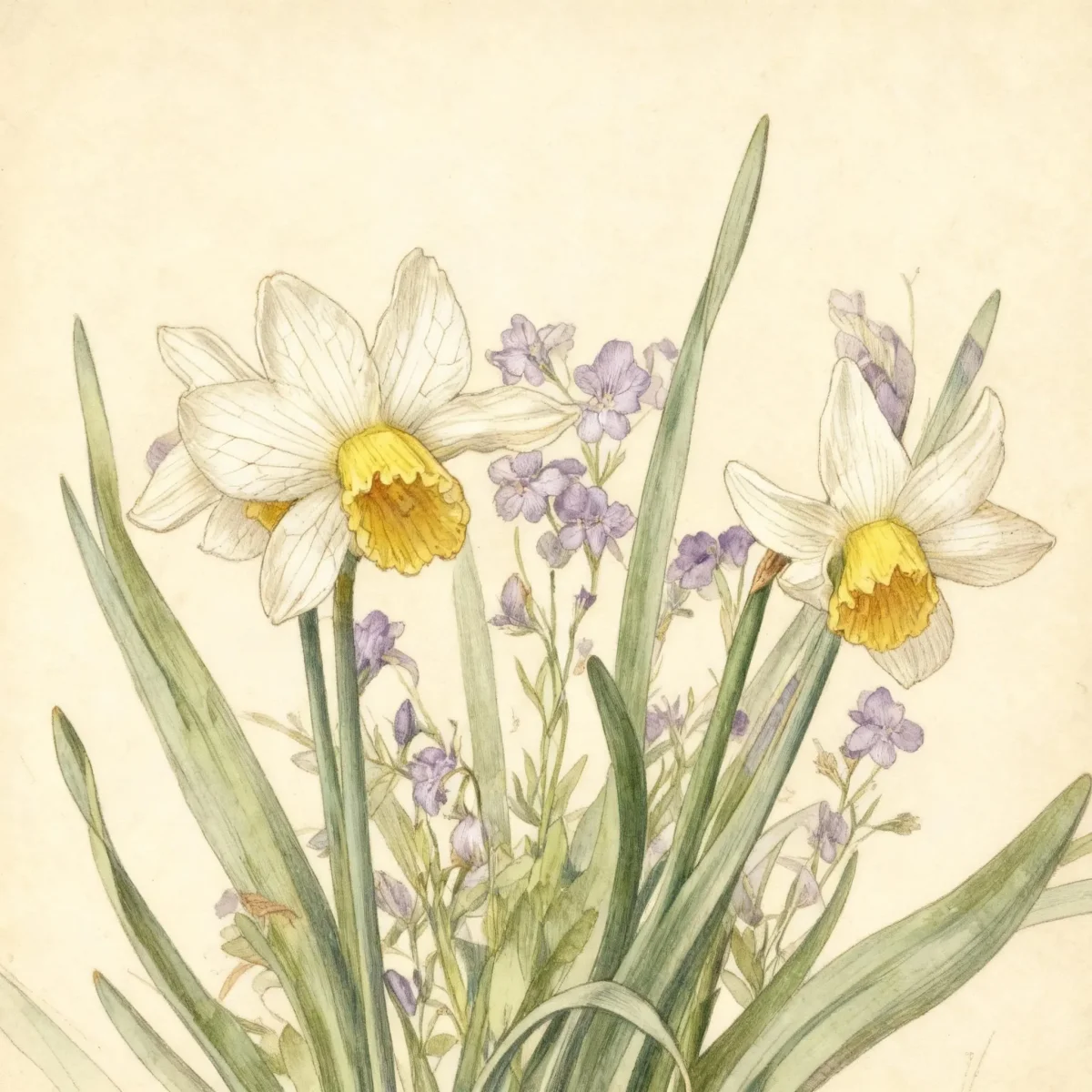
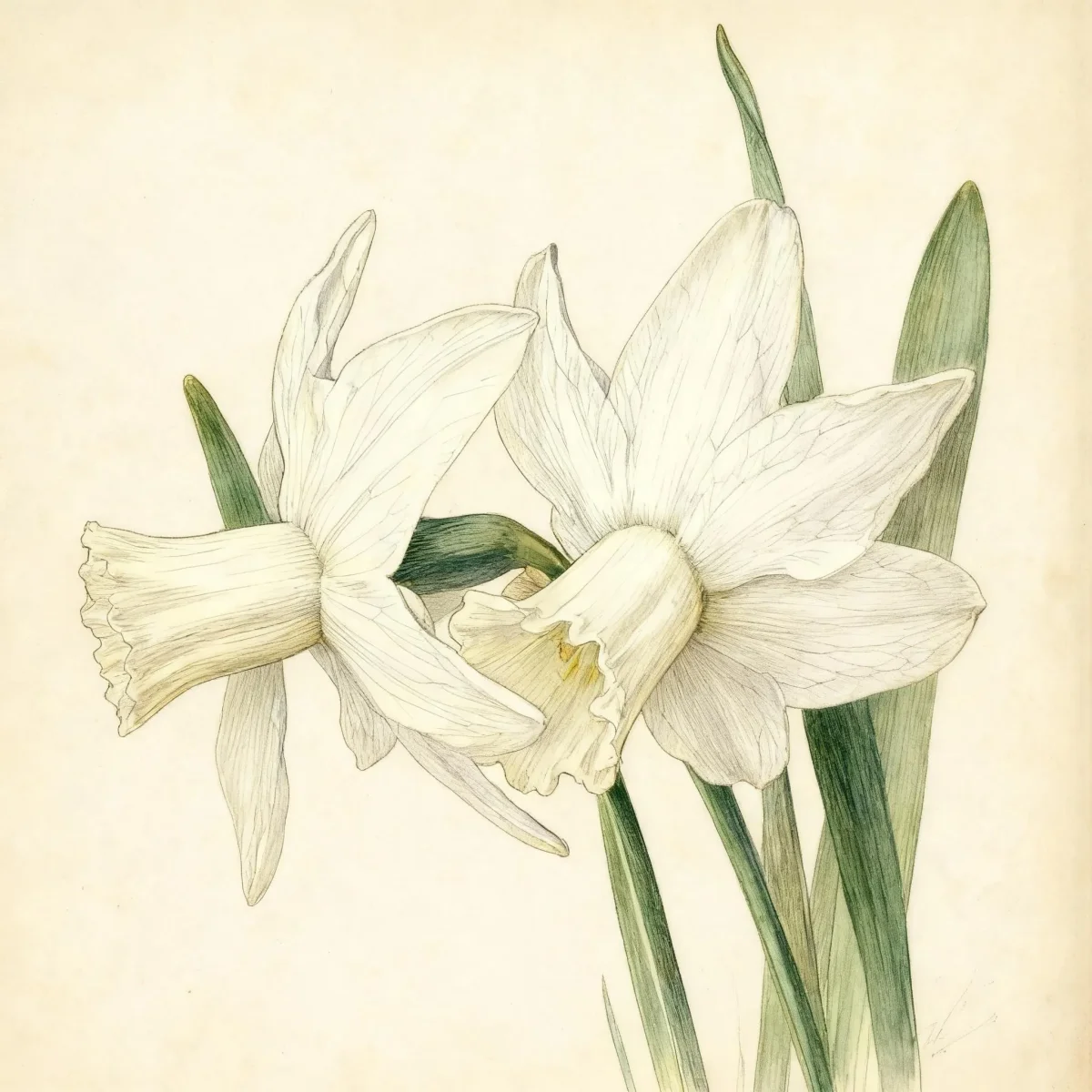
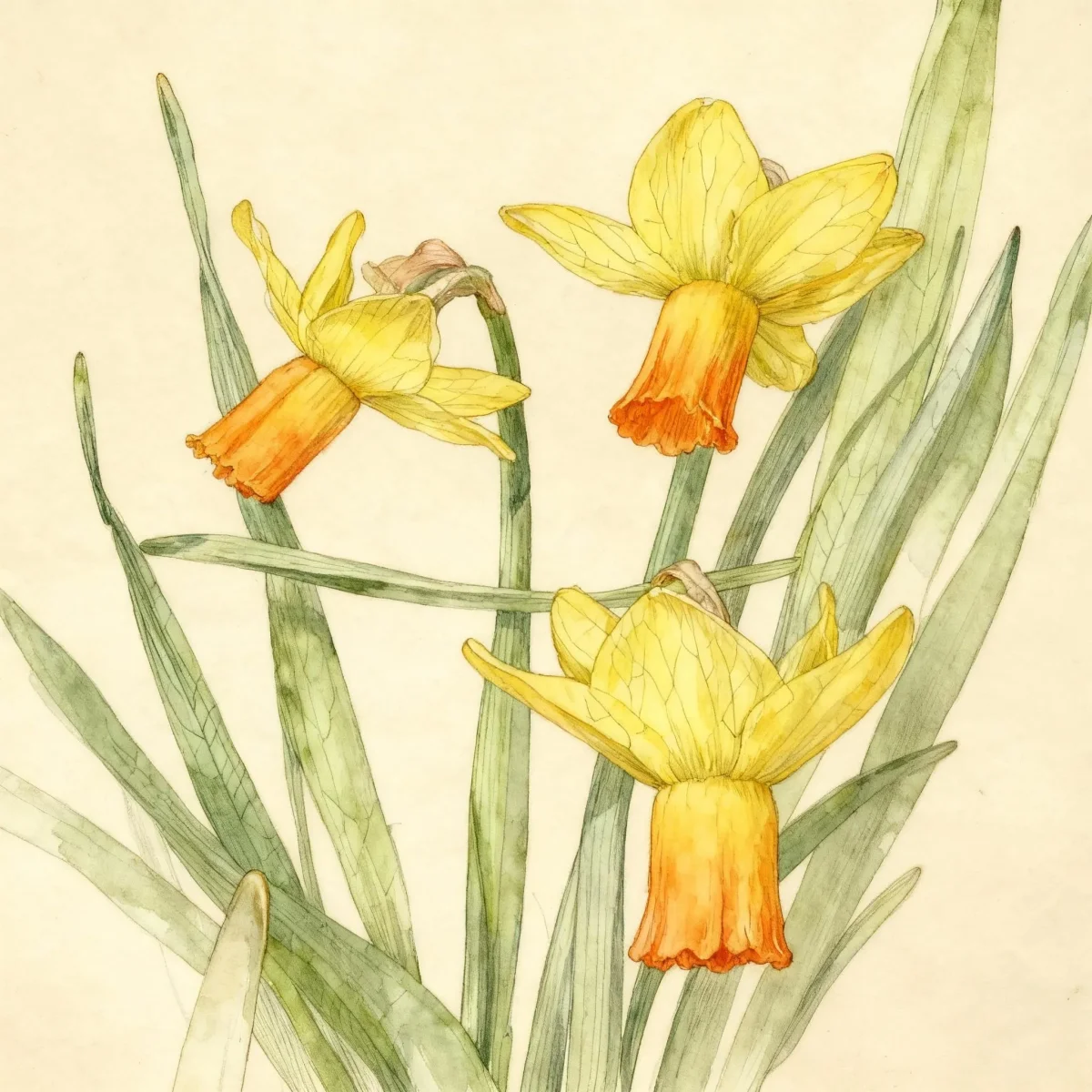
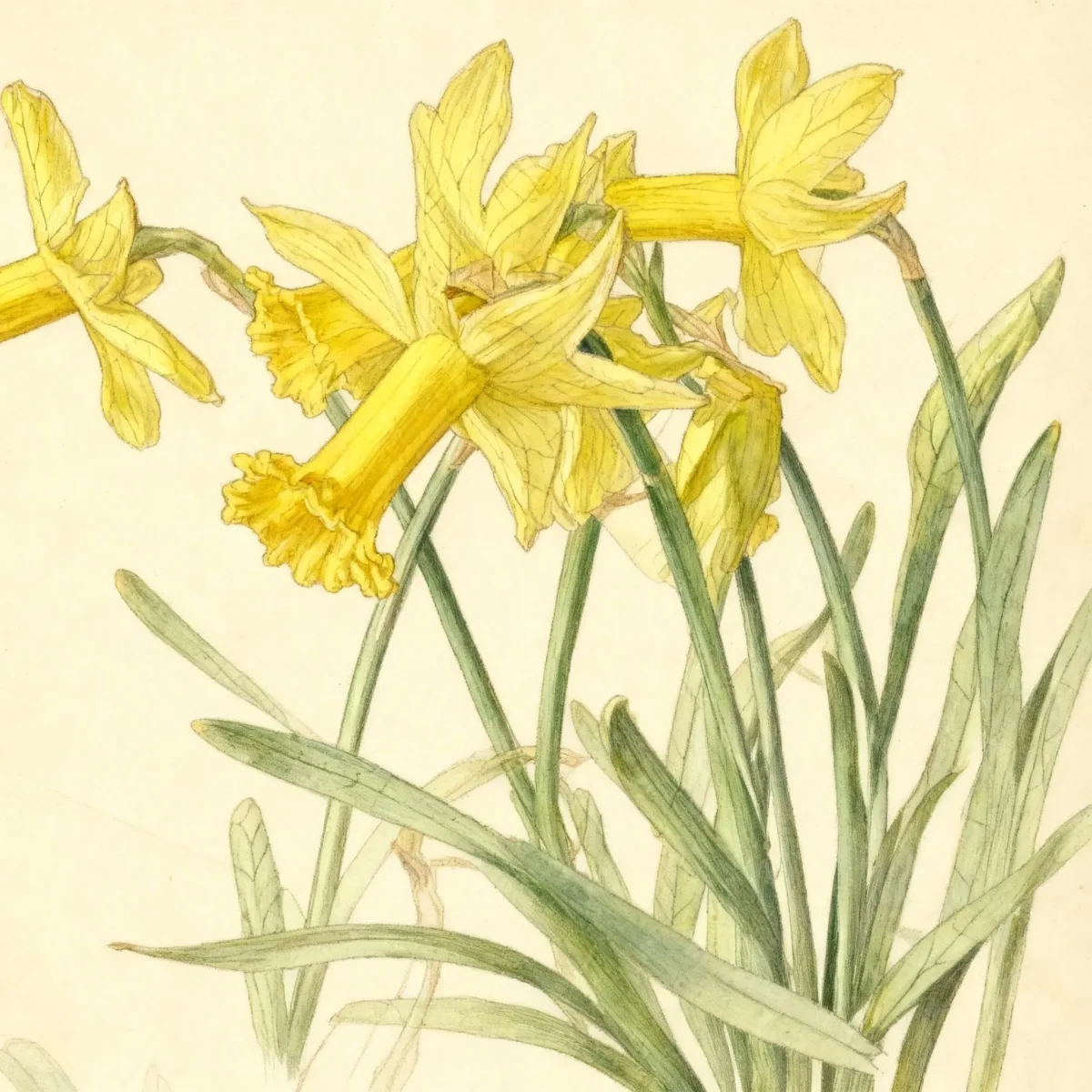
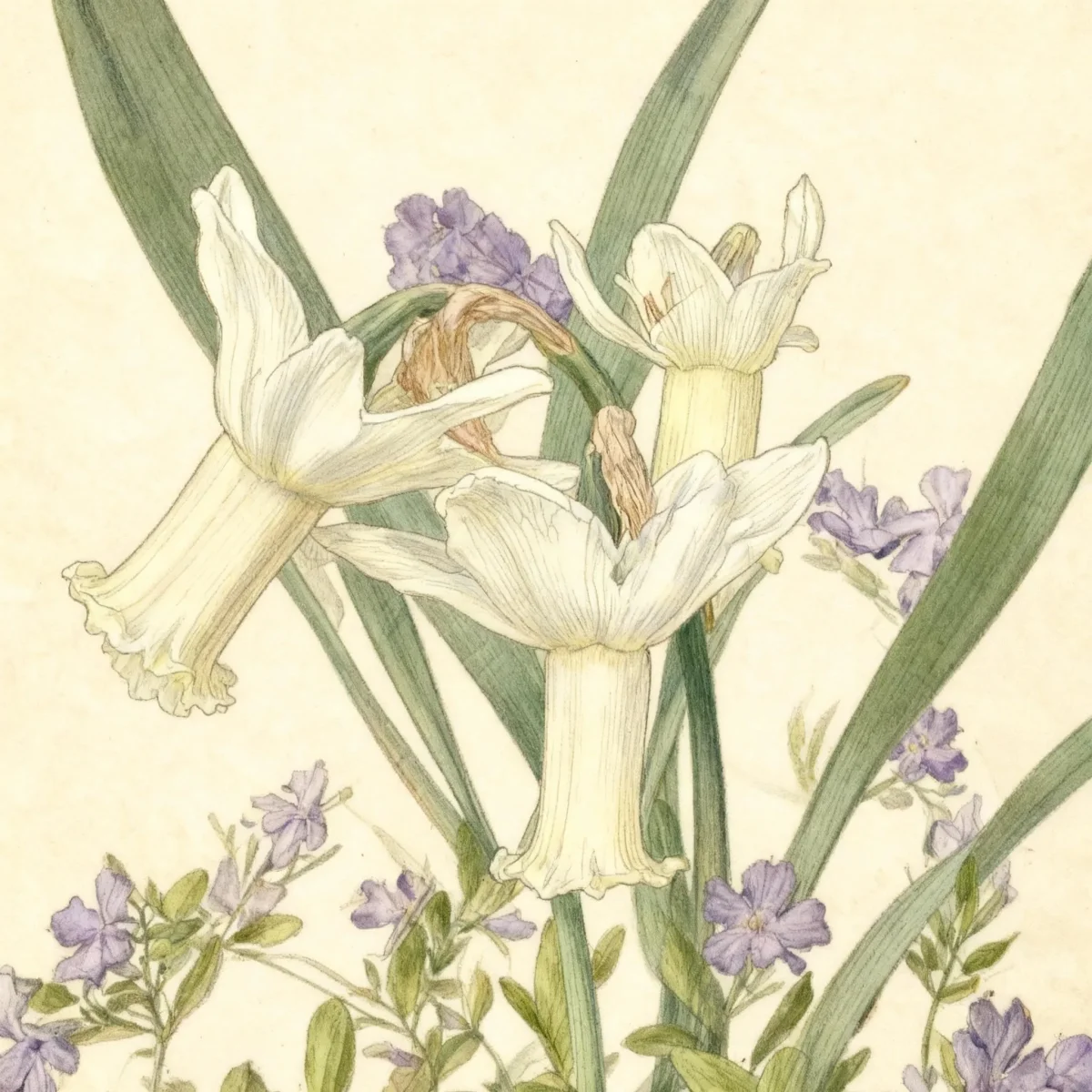
Cyclamineus daffodil (Narcissus 'Little Princess')
Narcissus 'Little Princess' is a striking Cyclamineus daffodil blooming in April with greenish-pink trumpets. Low maintenance and deer resistant.
Scroll down to discover growing tips, care requirements, companion plants, and more

Complete Plant Information
Overview
The Narcissus ‘Little Princess’ is a beloved cultivar highly valued for its early spring display and distinctive bloom structure, marking it as a classic Cyclamineus daffodil. This flower features petals that reflex dramatically backwards, lending it an elegant, airy appearance that stands out in the garden landscape. As a bulb, it offers substantial seasonal impact with very little recurring labor required from the gardener.
This variety thrives readily in average garden settings, provided the soil allows for proper drainage, which is crucial for long-term bulb health. Its manageable size, reaching only about one foot tall, makes it perfect for edging borders or naturalizing where larger specimens might overwhelm. Gardeners appreciate the reliable resurgence of Narcissus ‘Little Princess’ each spring.
Enjoying full sun to light afternoon shade, this daffodil provides vibrant, durable color where many plants are just beginning to stir. The combination of low maintenance and reliable return makes Narcissus ‘Little Princess’ an essential component for anyone establishing a traditional or naturalized spring bulb display.
Fast Facts
- Plant Family: Amaryllidaceae
- Plant Type: Bulb
- Hardiness Zones: USDA Zones 3-8
- Size at Maturity:
- Height: 0.75-1 ft
- Spread: 0.5-0.75 ft
- Bloom Time: April
- Bloom Description: Greenish-white with yellowish-pink trumpet
- Sun Exposure: Full sun to part shade
- Water Needs: Medium
- Maintenance Level: Low
How to Grow
Planting Narcissus ‘Little Princess’ bulbs should occur in early to mid-fall before the ground freezes hard. They require average, medium-moisture, well-drained soil; excellent drainage is non-negotiable to prevent the bulb rot that plagues many daffodils planted in heavy clay. Set the bulbs 2 to 3 times as deep as the bulb is tall, ensuring at least 3 inches of soil covers the top. Space the bulbs between 4 to 10 inches apart, depending on the mature size, knowing that closer spacing fills in faster but requires earlier division.
Care for this Cyclamineus daffodil is straightforward once established. Keep the soil uniformly moist through the active growing season in spring, though they tolerate drought once fully dormant. Crucially, never cut back the foliage after the flowers fade. The leaves must be allowed to yellow naturally (usually 6-8 weeks) so they can photosynthesize and store energy for next year’s bloom. You may snip off the spent flower stem when blooms fade to prevent seed formation.
For optimal viewing, remember that daffodils generally face the sun. Arrange your planting so that any shade source, such as shrubs or trees, is located behind the planting area. This ensures the attractive face of the Narcissus ‘Little Princess’ is fully visible. Clumps can be left undisturbed for many years, but if blooming density decreases, divide them carefully just after the foliage has completely died back.
Landscape Uses
Daffodils, unlike many spring annuals, are reliable perennials that improve with age when sited correctly. Narcissus ‘Little Princess’ excels when planted in large drifts rather than small, isolated groupings. Aim for at least six bulbs, though sweeping masses of dozens create the most naturalized, impactful effect that reminds gardeners of early spring meadows.
This variety looks fantastic edged along woodland borders or beneath early-leafing deciduous trees, benefiting from the full sun they receive before the tree canopy fills in. They are also superb in mixed perennial beds, blending harmoniously with other spring bloomers like early tulips or grape hyacinths, which share similar soil and sun requirements. Because they are deer and rabbit resistant, they are a dependable choice for areas where pests frequently nibble on less fortunate tulips.
Consider massing Narcissus ‘Little Princess’ in front of evergreen foundation shrubs for a bright contrast against the dark foliage once flowering commences. Their short stature also makes them ideal for rock gardens or the front edge of any border where you want early color without obstructing views of taller, later-blooming plants.
Standout Features
Flower Qualities
- Showy
Noteworthy Characteristics
Narcissus ‘Little Princess’ is classified in Division VI: Cyclamineus. A defining feature of this division is the flower’s extremely reflexed petals, which curl backward, mimicking the look of cyclamen blooms. This specific hybrid blooms later in the spring period, usually mid- to late April, showcasing greenish-white petals surrounding a contrasting yellowish-pink trumpet structure.
Tolerances
- Rabbit
- Deer
- Drought
Potential Problems
Daffodils, including the Cyclamineus daffodil variety Narcissus ‘Little Princess’, are generally robust plants, rarely suffering from serious insect or disease issues when planted in suitable soil. The single most common issue gardeners face is bulb rot, which occurs exclusively in soils lacking adequate drainage. If bulbs sit in soggy conditions over winter, they decay.
To avoid this, ensure your planting site is well-drained; amending heavy clay with grit or compost improves air circulation. Infrequently, pests like slugs and snails might bother emerging foliage, and scale mites or the narcissus bulb fly can occasionally be a concern. If you notice yellow striping, suspect Narcissus yellow stripe virus, though this is uncommon. Fortunately, deer and rabbits find this flower highly unpalatable.
Frequently Asked Questions
What hardiness zones is Cyclamineus daffodil suitable for?
The Narcissus ‘Little Princess’ Cyclamineus daffodil performs best in USDA Hardiness Zones 3 through 8.
How large does Narcissus ‘Little Princess’ grow?
This daffodil typically achieves a mature height between 0.75 and 1 foot tall, with a spread of 0.5 to 0.75 feet.
What sun exposure does Narcissus ‘Little Princess’ need?
This plant thrives when exposed to full sun to partial shade conditions throughout the growing season.
When does Narcissus ‘Little Princess’ bloom?
This bulb blooms reliably in April, featuring flowers described as having greenish-white petals and a yellowish-pink trumpet.
Conclusion
The Narcissus ‘Little Princess’ offers gardeners a low-maintenance taste of spring, distinguished by the refined, reflexed petals characteristic of the Cyclamineus daffodil group. Its deer and rabbit resistance, combined with its bright, late-season bloom, makes it an indispensable component of sunny borders. Before the first chill sets in, ensure you procure your bulbs and amend those heavy soils for excellent drainage before your early to mid-fall planting window closes.
Companion Planting
Creating coordinated spring displays involves pairing Narcissus ‘Little Princess’ with plants that share similar cultural needs—namely, medium water and well-drained soil during dormancy. Because this daffodil naturalizes well and foliage dies back by late spring, pairing it with early summer perennials provides seamless garden transitions. Consider planting early blooming alliums or later tulips nearby; since the daffodils naturalize, they don’t require lifting, offering a nice contrast in texture when the foliage fades.
Alternatively, plant low-growing groundcovers like creeping thyme or creeping phlox around the clumps. These groundcovers will fill in the space left by yellowing daffodil foliage, keeping the area tidy while the bulbs are gathering energy for next year’s performance. Ensure companions are planted after the daffodils, or place the groundcovers carefully around the planting hole to avoid disturbing the Narcissus ‘Little Princess’ bulbs.
Design Ideas for Mass Planting
Mass planting is the most effective way to utilize the visual punch of Narcissus ‘Little Princess’. In formal settings, plant them in clearly defined, large groupings along pathways or at the edge of beds where their bright, early color can be easily appreciated. Remember that bulbs planted near an edge should have taller elements behind them, as the flowers naturally track the sun’s path through the sky.
For a more naturalistic style, scatter bulbs somewhat randomly across a lawn area or open woodland edge. This technique, known as “throwing” the bulbs and planting them where they land, creates sweeps and drifts that appear less structured than rigid rows. This is perfect for creating that classic, abundant, cottage-garden feel, letting the Cyclamineus daffodil naturalize year after year.