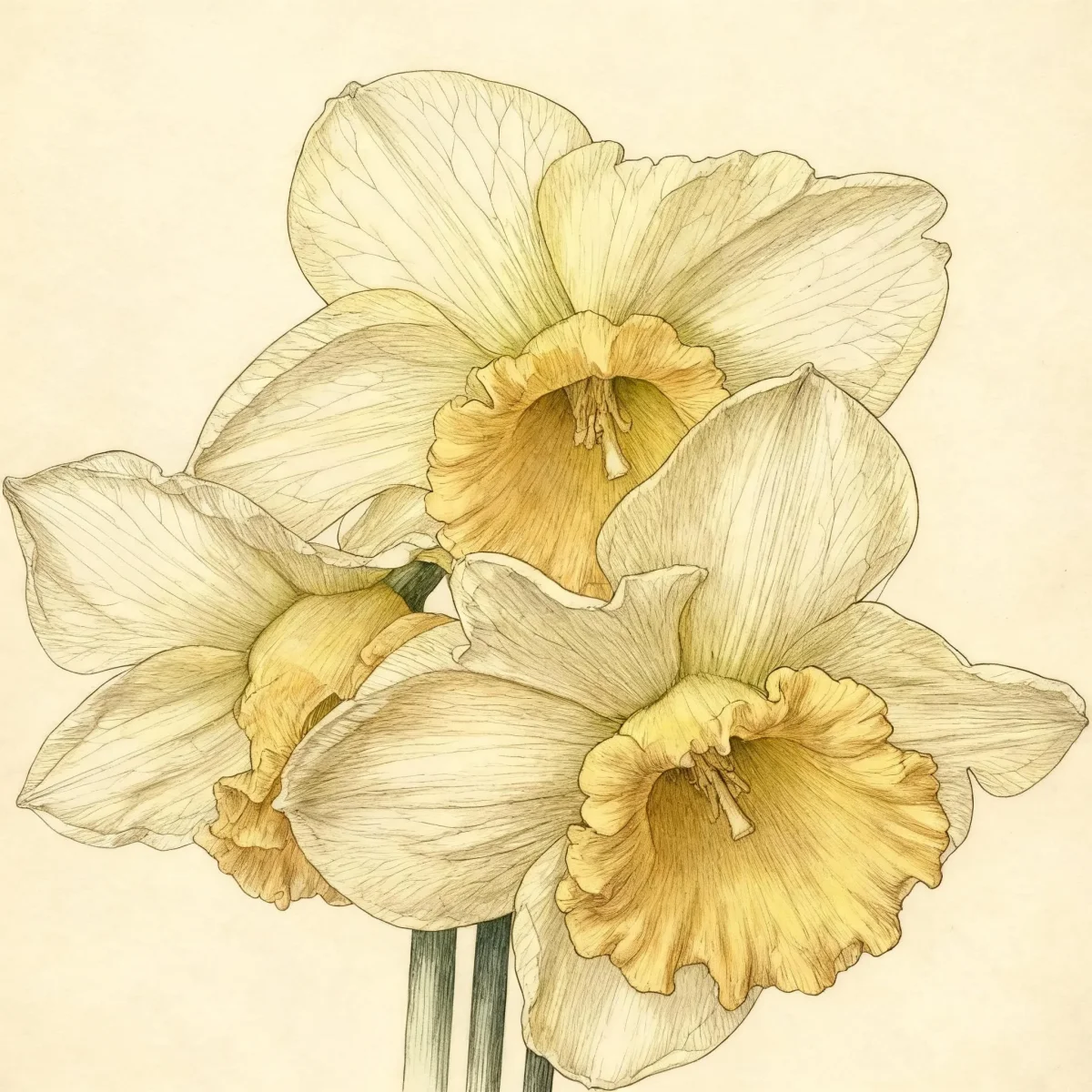
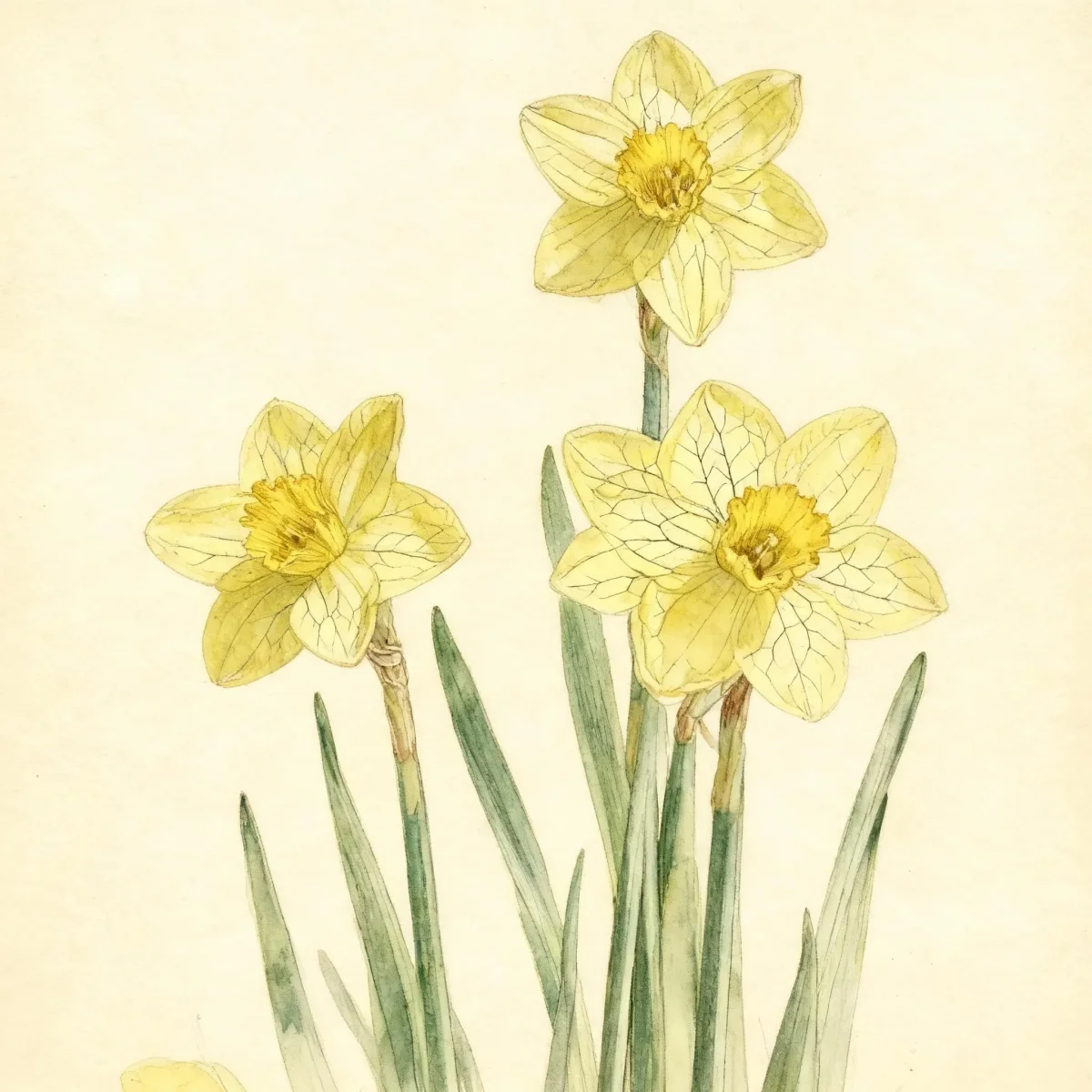
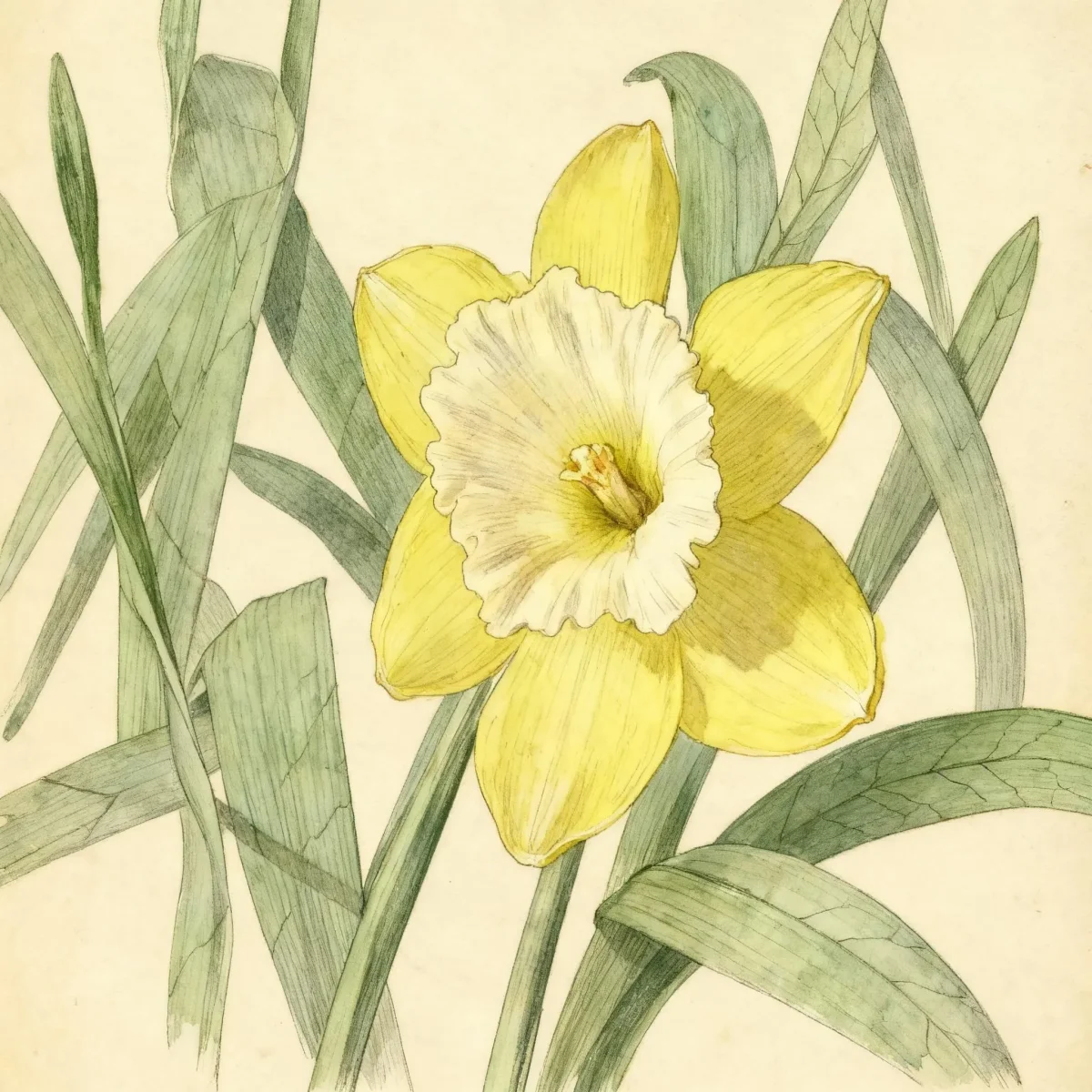
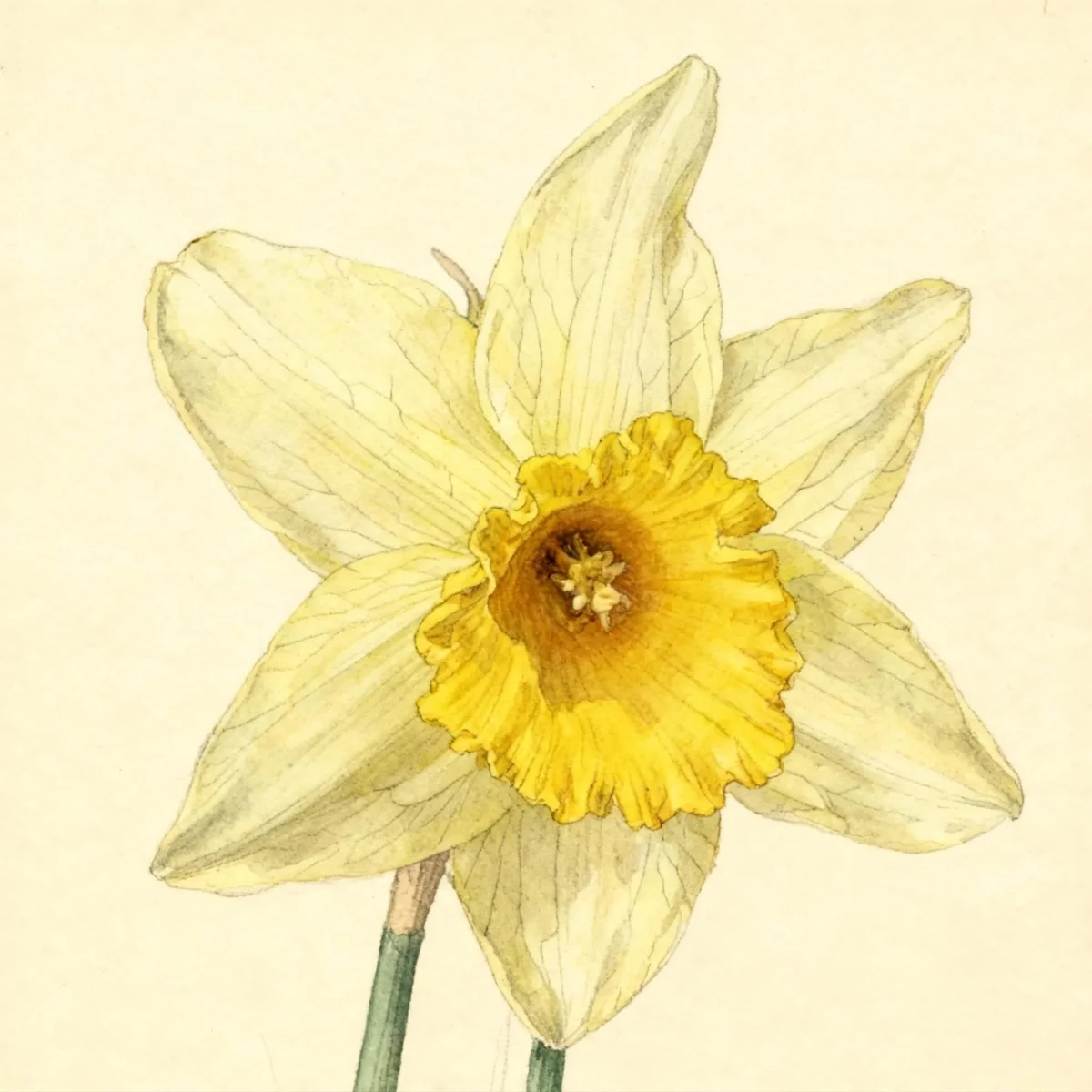
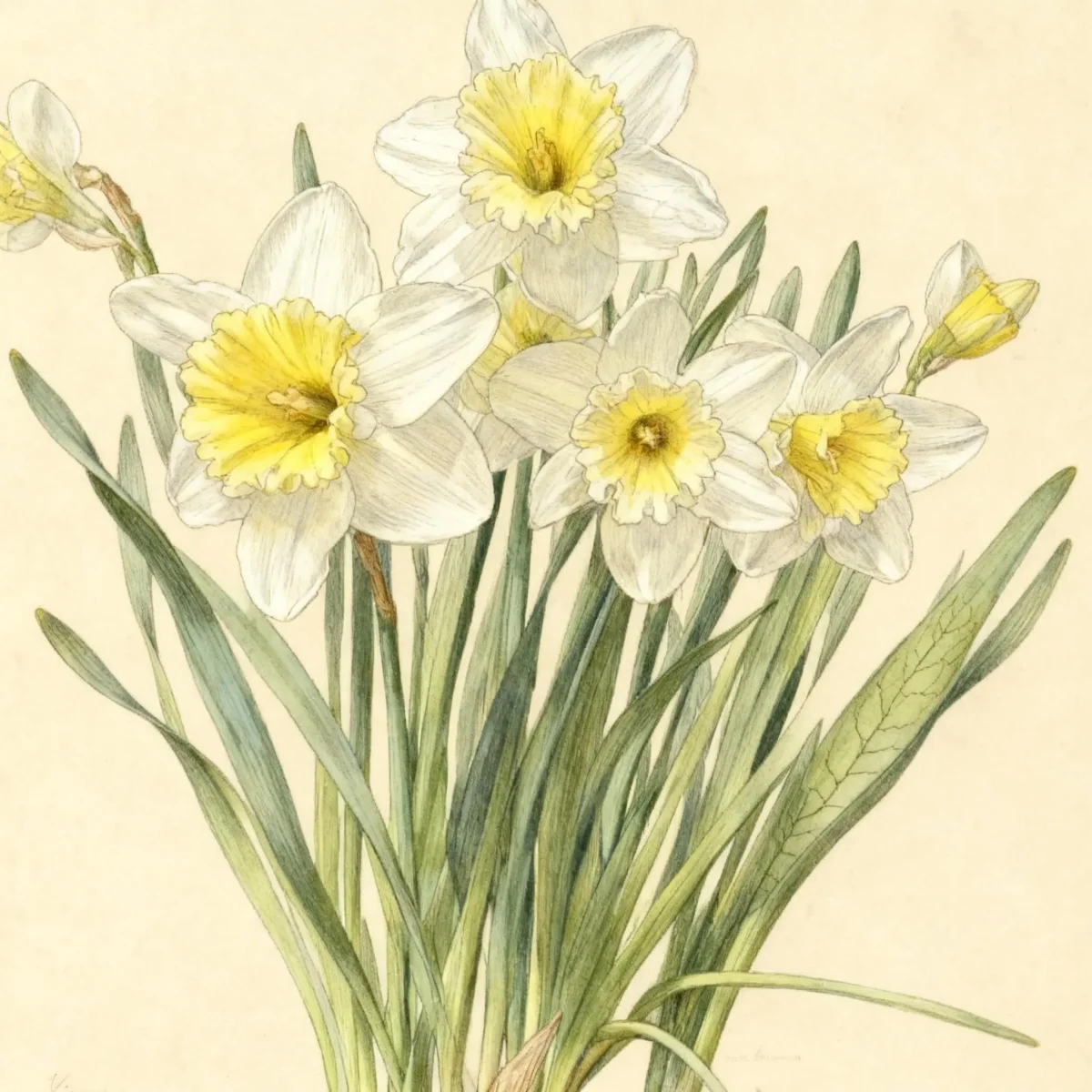
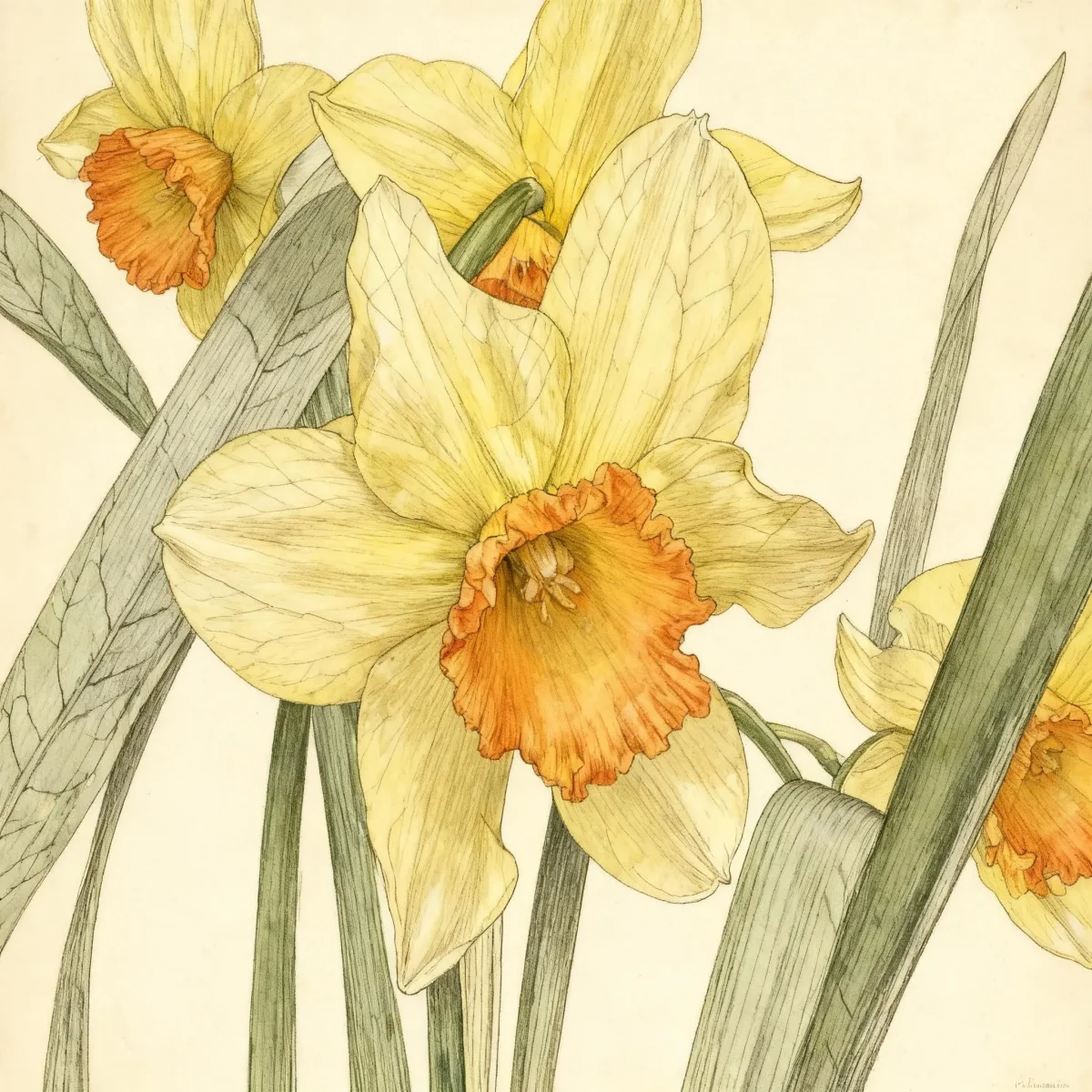
Large-cupped daffodil (Narcissus 'Manon Lescaut')
Narcissus 'Manon Lescaut' is a stunning Large-cupped daffodil offering white petals and creamy yellow cups, perfect for spring borders.
Scroll down to discover growing tips, care requirements, companion plants, and more
Complete Plant Information
Overview
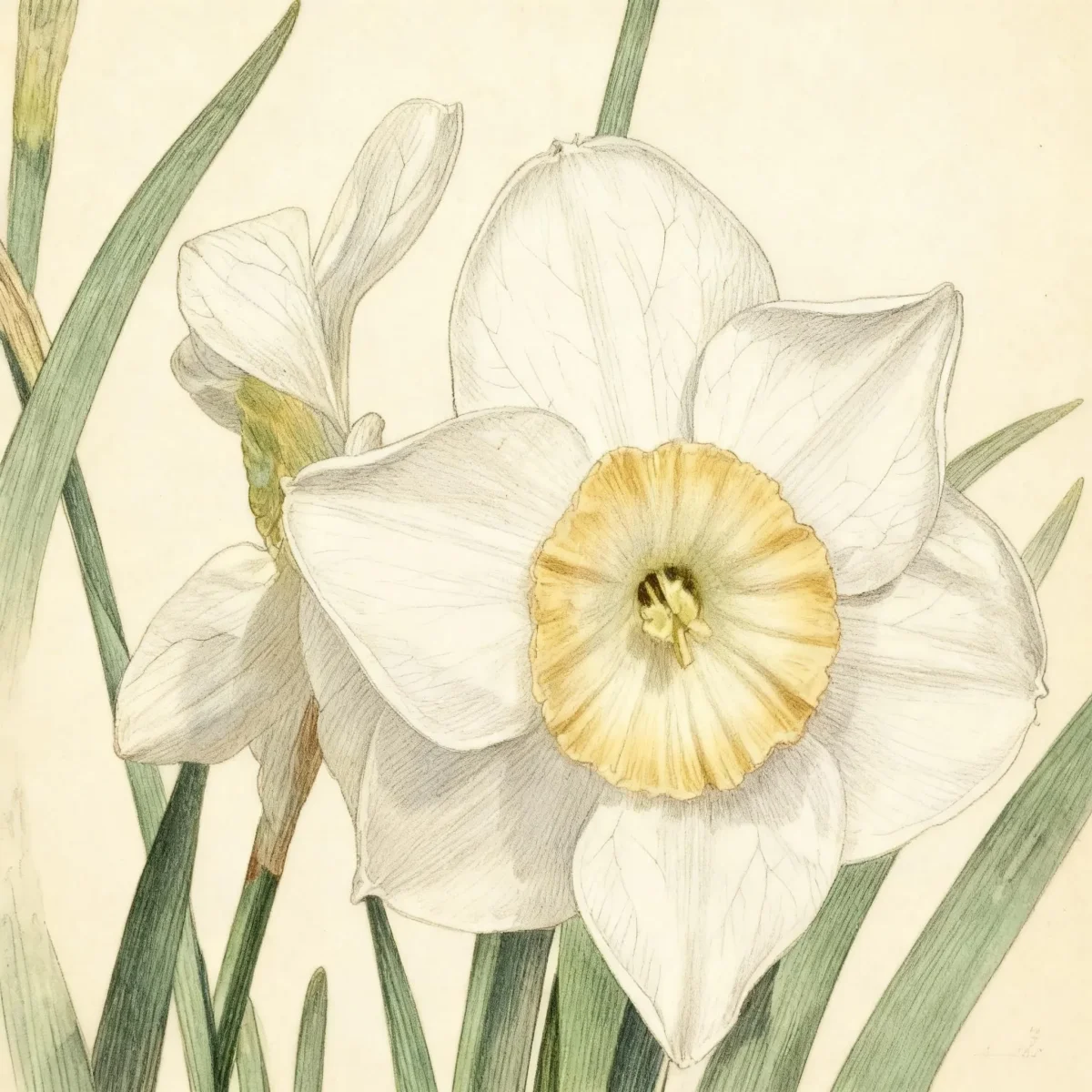
Narcissus ‘Manon Lescaut’ is a highly valued addition to the spring landscape, belonging to the popular Large-cupped daffodil division. This variety stands out with its elegant bi-color display, featuring pure white petals contrasting beautifully against a creamy yellow cup accentuated by an orange band. As a robust bulb, it establishes easily and requires minimal attention once planted, rewarding gardeners with reliable performance year after year.
This hardy perennial bulb is a mainstay in the Amaryllidaceae family, offering dependable structure and color in early to mid-spring gardens. Narcissus ‘Manon Lescaut’ typically reaches 1.5 to 2 feet tall, making it an excellent mid-border plant or naturalizing specimen. Its low maintenance level means gardeners can enjoy its charm without intensive care.
For the best effect, plant Narcissus ‘Manon Lescaut’ in significant groupings where their spring show can be fully appreciated. They seamlessly blend into mixed borders and offer fantastic naturalizing potential under deciduous trees, adding essential early season color to the garden design.
Fast Facts
- Plant Family: Amaryllidaceae
- Plant Type: Bulb
- Hardiness Zones: USDA Zones 3-8
- Size at Maturity:
- Height: 1.5-2 ft
- Spread: 0.5-1 ft
- Bloom Time: April
- Bloom Description: White with a creamy yellow cup
- Sun Exposure: Full sun to part shade
- Water Needs: Medium
- Maintenance Level: Low
How to Grow
Planting narcissus bulbs, including Narcissus ‘Manon Lescaut’, should occur in early to mid-fall before the ground freezes permanently. Select a location offering full sun to partial shade, ensuring the area benefits from organically rich, well-drained loam. Good drainage is paramount; bulb rot is a risk in soggy conditions. Generally, plant bulbs 3 to 6 inches deep, ensuring at least 3 inches of soil covers the top, spacing them 4 to 8 inches apart depending on the size of the individual bulb.
During the active growing season, maintain medium soil moisture levels, keeping the soil consistently moist. While actively growing, the Large-cupped daffodil appreciates routine water, but it tolerates drought once dormant. After the flowers fade in spring, resist the urge to cut back the foliage. Allow leaves to persist until they naturally yellow, as this process replenishes the bulb stores for next year’s bloom of Narcissus ‘Manon Lescaut’.
Deadheading spent flowers by removing the stem just below the bloom prevents seed production, directing that energy back into the bulb. Narcissus ‘Manon Lescaut’ bulbs can be left undisturbed for many years. If clump quality diminishes, divide the bulbs only after the foliage has completely died back. Ensure that any shade-casting elements recede during the spring bloom, as the flowers naturally orient themselves toward the sun.
Landscape Uses
Daffodils are celebrated for their ability to naturalize, reliably returning year after year where many other spring bulbs fade quickly. Narcissus ‘Manon Lescaut’ excels when mass-planted, creating sweeping drifts of white and cream that brighten woodland edges or the foreground of shrub borders. They perform wonderfully in formal beds and along meandering pathways where their spring emergence provides structure.
For a classic spring presentation, interplant these Large-cupped daffodils with early-blooming tulips or late-blooming grape hyacinths to extend the season of color. They look particularly effective planted beneath developing deciduous trees, as the bulbs flower before the tree canopy fully leafs out, utilizing the maximum available sunlight. Planting bulbs in groups of six or more ensures a substantial visual impact when spring arrives.
The clean, crisp colors of Narcissus ‘Manon Lescaut’ work well in contemporary landscape settings as well as traditional cottage gardens. Since they are deer and rabbit resistant, they are a reliable choice for areas where browsing pressure is present, offering high-impact color with low security risk.
Standout Features
Flower Qualities
- Showy
Noteworthy Characteristics
Narcissus is a genus of about 50 species of bulbous perennials from Europe and North Africa. They are a mainstay of the spring garden. Flowers generally feature a trumpet or cup (the corona) surrounded by six petals (perianth segments), in colors ranging from white to yellow to orange to pink to bicolors. ‘Manon Lescaut’ is a large-cupped daffodil (Division II), rising 18-20” tall in early spring with white petals and a flattened, creamy yellow cup that has an orange band. This variety produces one flower per stem and is considered an excellent fresh cut flower.
Tolerances
- Rabbit
- Deer
- Drought
Potential Problems
Daffodils, including the popular Large-cupped daffodil Narcissus ‘Manon Lescaut’, are generally considered low-maintenance and remarkably pest-free when planted in suitable conditions. The primary threat arises from poorly drained soils, which can lead to bulb rot. To prevent this, ensure soil amendments provide excellent drainage before planting in the fall.
Infrequently, gardeners may encounter narcissus bulb fly, which damages the bulb, or slugs and snails when the foliage first emerges. Slugs are deterred somewhat by the plant’s natural defenses, but physical barriers or baits may be necessary for severe infestations. While Narcissus yellow stripe virus is rare, immediately remove any infected plants displaying yellow striping on the leaves to prevent potential spread.
Frequently Asked Questions
What hardiness zones is Large-cupped daffodil suitable for?
Narcissus ‘Manon Lescaut’ is hardy in USDA Zones 3 through 8, offering reliable perennial performance across a wide range of climates.
How large does Narcissus ‘Manon Lescaut’ grow?
This Large-cupped daffodil typically achieves a height between 1.5 and 2 feet, with a spread of 0.5 to 1 foot.
What sun exposure does Narcissus ‘Manon Lescaut’ need?
This variety performs best when sited in an area receiving full sun to light partial shade.
When does Large-cupped daffodil bloom?
Narcissus ‘Manon Lescaut’ blooms during April, producing attractive flowers described as white with a creamy yellow cup.
Conclusion
Narcissus ‘Manon Lescaut’ offers gardeners a beautiful, dependable burst of early-season color, proving why the Large-cupped daffodil remains so universally popular. With its striking bicoloration and low maintenance requirements, this bulb provides substantial aesthetic return for minimal effort. Check your local USDA zone compatibility now and plan to plant your selection of Narcissus ‘Manon Lescaut’ bulbs this coming fall for a spectacular spring display.
Companion Planting
When establishing plantings of Narcissus ‘Manon Lescaut’, consider companion plants that either bloom sequentially or share similar cultural needs. Since daffodils naturally fade after their bloom, pairing them with early-blooming perennials like Primula (Primrose) or Ajuga ensures continuous ground coverage and color interest as the daffodil foliage yellows. These companions also appreciate the medium moisture conditions preferred during the spring growth phase.
Because bulbs benefit from undisturbed soil, avoid companions that require frequent division or aggressive root systems that might disturb the dormant narcissus bulbs. Plants that tolerate the slightly shaded conditions that develop later in the season, such as Hosta or Lungwort (Pulmonaria), are excellent partners for the mid-to-back of a border scheme.
Wildlife Benefits
While daffodils are not primary nectar sources for bees, the early bloom time of Narcissus ‘Manon Lescaut’ provides one of the very first available pollen sources for emerging pollinators. Gardeners should remember that while the foliage and bulbs are toxic to mammals, the nectar and pollen, presented in their showy cups, are still utilized by certain early-flying insects.
Furthermore, a significant benefit of growing this Large-cupped daffodil is its inherent pest resistance. Since Narcissus ‘Manon Lescaut’ is actively avoided by deer and rabbits due to the toxic alkaloid content, it preserves the aesthetic quality of the spring garden without the need for protective caging or netting around the emerging shoots.