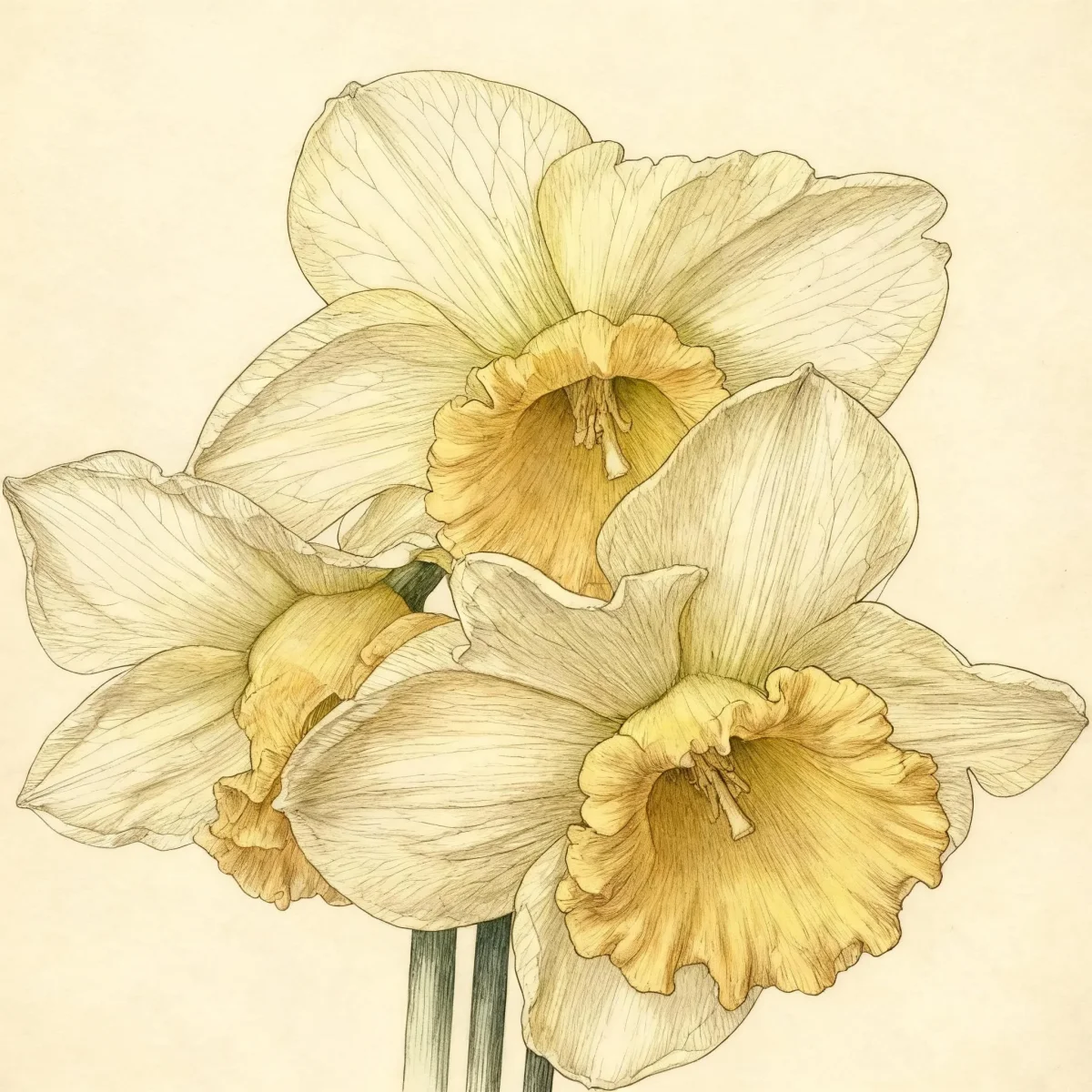
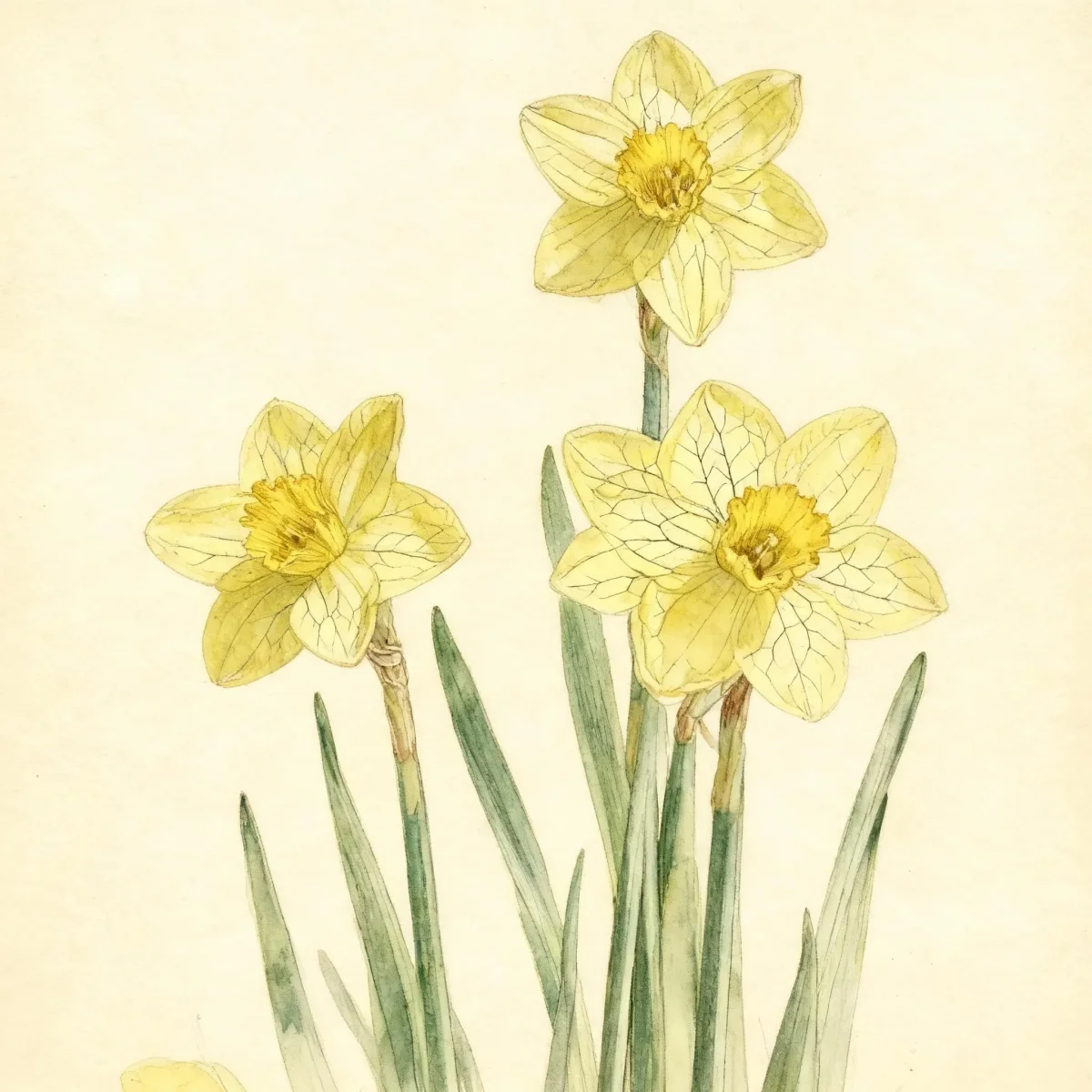
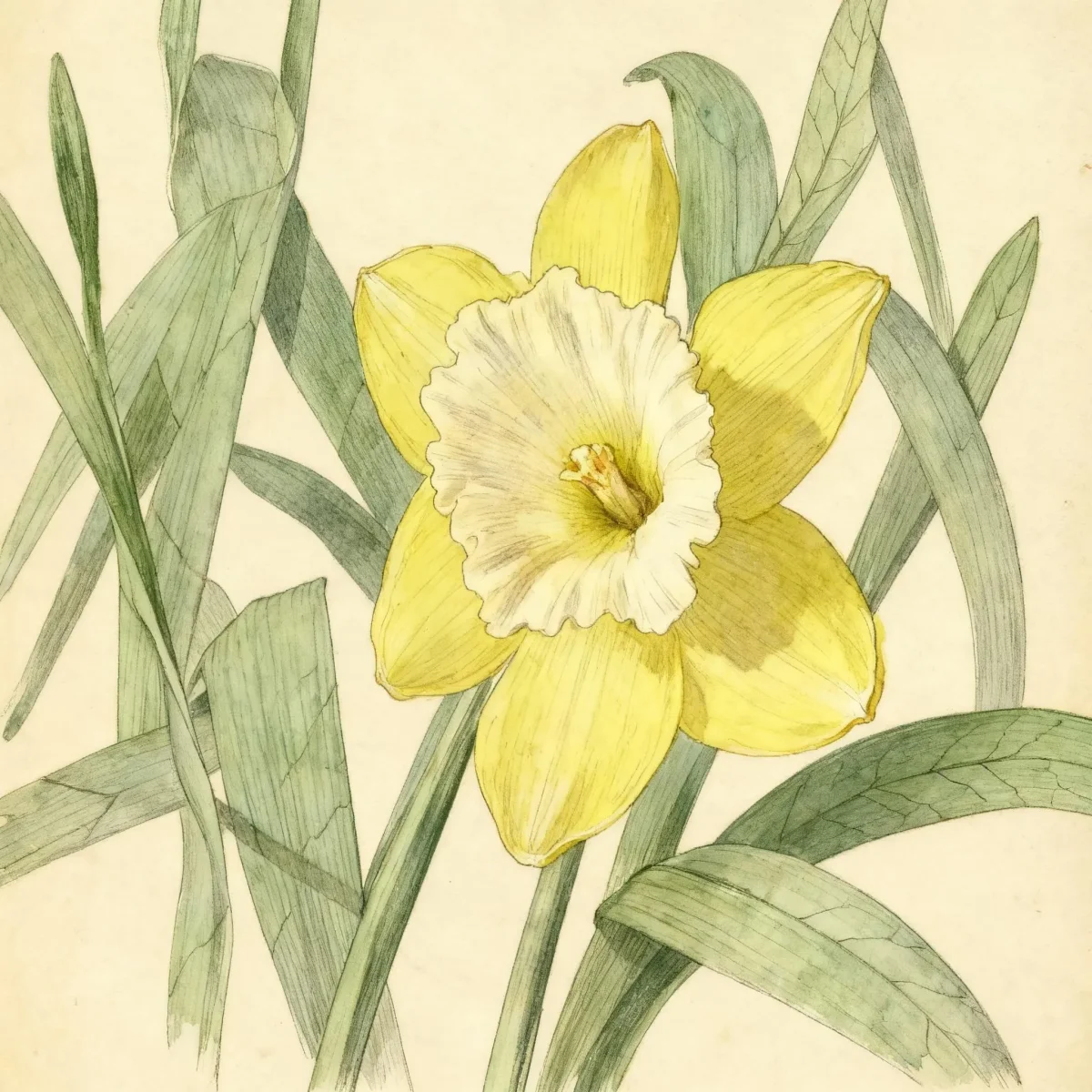
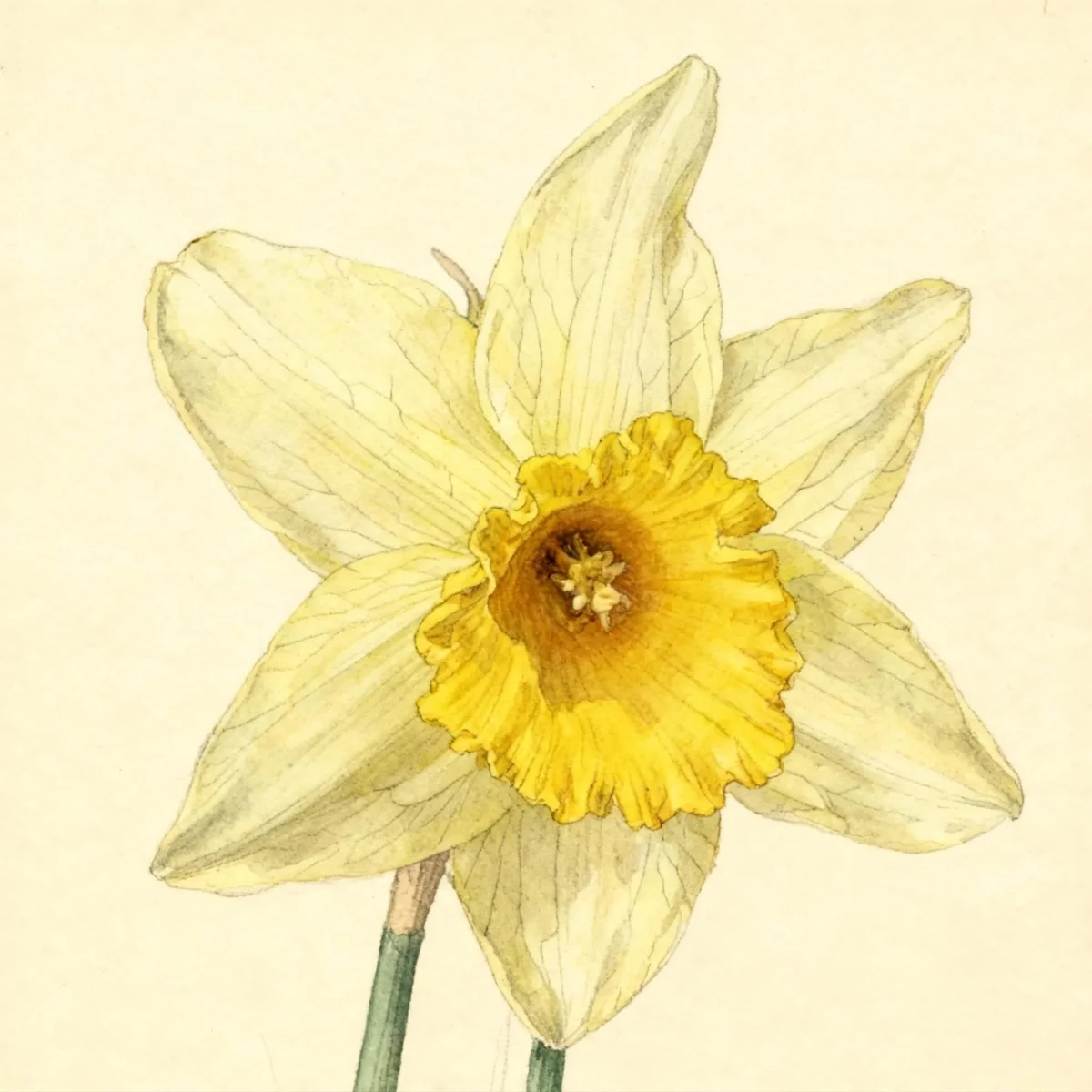
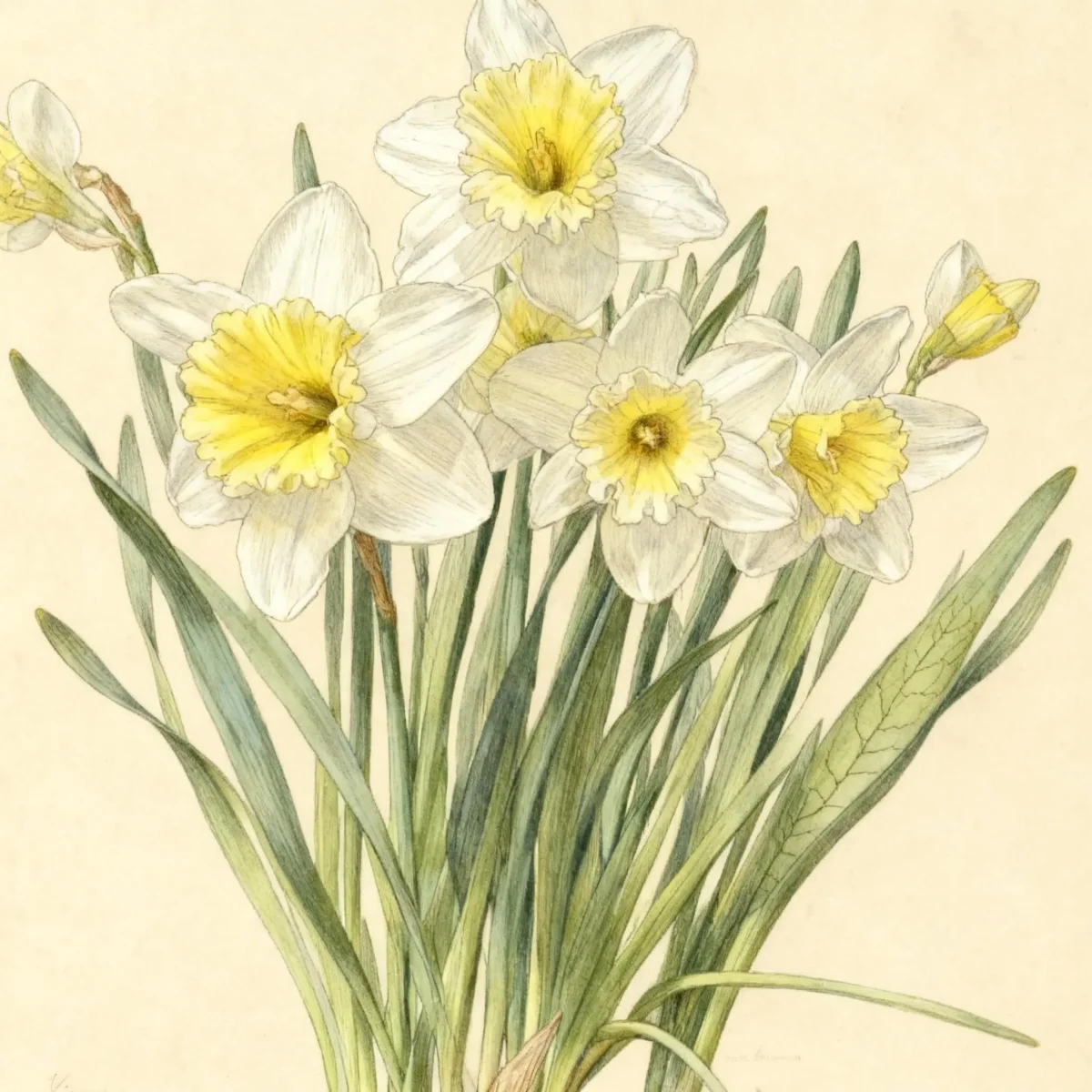
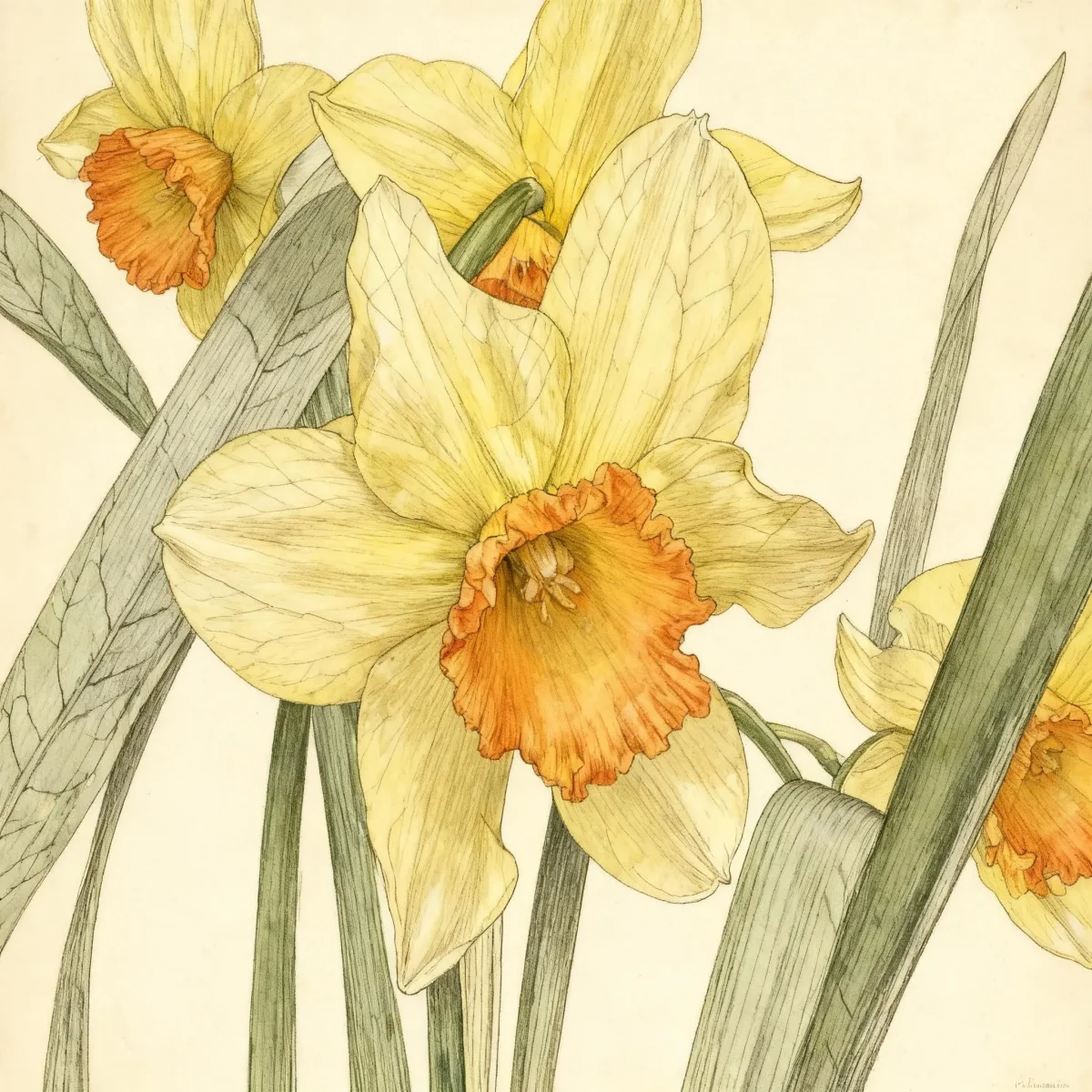
Large-cupped daffodil (Narcissus 'Slim Whitman')
Narcissus 'Slim Whitman' is a popular Large-cupped daffodil known for creamy white petals and orange-yellow cups. Easy to grow.
Scroll down to discover growing tips, care requirements, companion plants, and more
Complete Plant Information
Overview
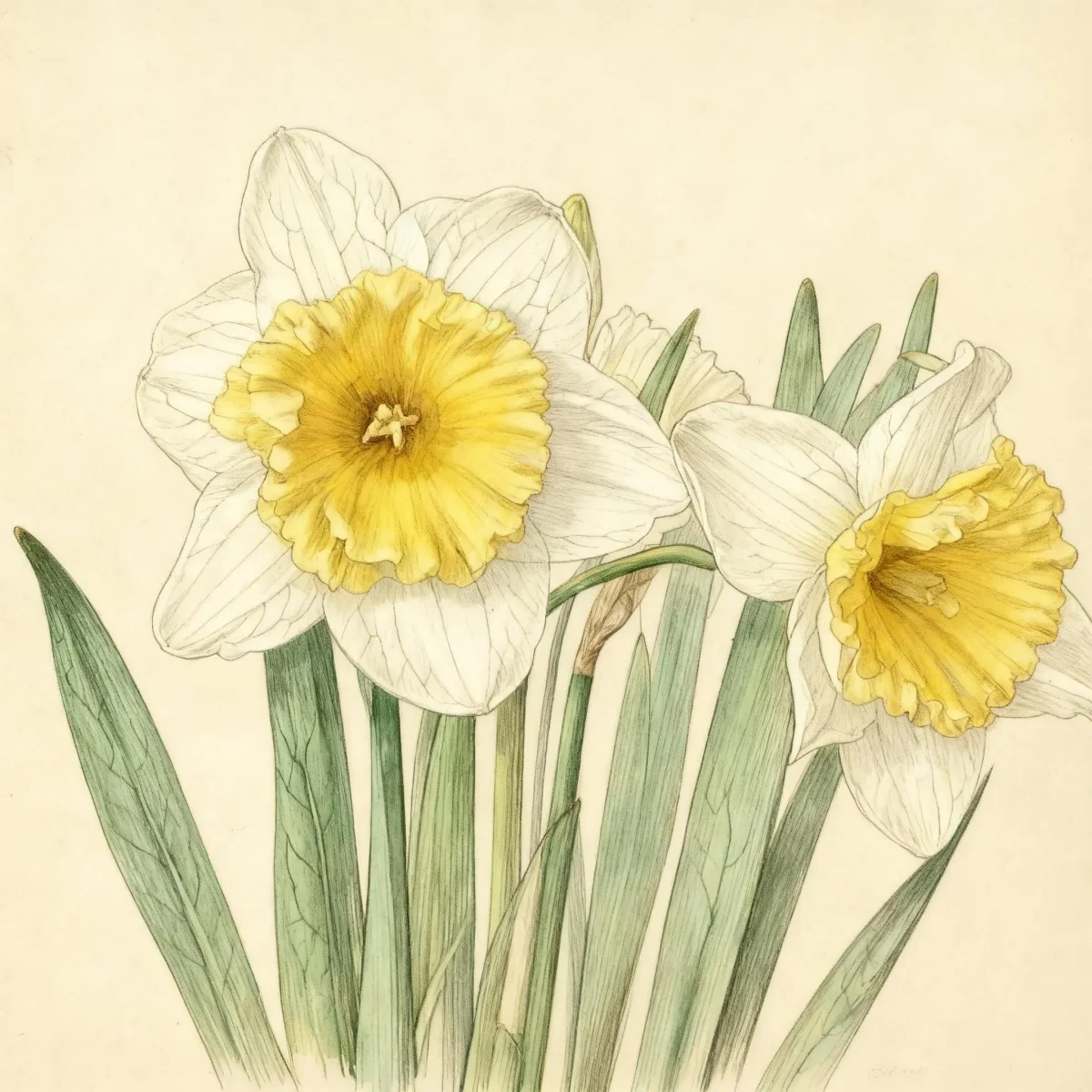
Narcissus ‘Slim Whitman’ is an outstanding cultivar belonging to the well-loved Large-cupped daffodil division. This bulb perennial is prized for its striking bloom presentation, featuring pure creamy white petals juxtaposed against a contrasting orange-yellow corona, making it a vibrant herald of spring. Gardeners appreciate the reliable performance and low maintenance associated with this classic spring ephemeral.
As a reliable grower in USDA Zones 3 through 8, the Large-cupped daffodil offers consistent returns year after year without the need for annual replacement, unlike many other spring bloomers. Narcissus ‘Slim Whitman’ typically reaches 1 to 1.5 feet tall, emerging early to mid-season when the garden still needs a burst of color. Its foliage provides a neat, upright clump during the growing period.
This variety adds significant visual impact, whether planted in drifts or as a formal border accent. Furthermore, its resistance to common garden pests like rabbits and deer adds practical value, ensuring that this beautiful Narcissus ‘Slim Whitman’ display remains intact through its short but spectacular bloom cycle.
Fast Facts
- Plant Family: Amaryllidaceae
- Plant Type: Bulb
- Hardiness Zones: USDA Zones 3-8
- Size at Maturity:
- Height: 1-1.5 ft
- Spread: 0.5-0.75 ft
- Bloom Time: March to April
- Bloom Description: Creamy white petals with orange-yellow corona
- Sun Exposure: Full sun to part shade
- Water Needs: Medium
- Maintenance Level: Low
How to Grow
Planting Narcissus ‘Slim Whitman’ bulbs should occur in early to mid-fall, allowing adequate time for root establishment before the ground freezes. Select a site receiving full sun to partial shade, ensuring the soil is well-drained; good drainage is critically important for bulbs to prevent rot. For planting depth, aim for 2 to 3 times the height of the bulb underneath the soil surface, spacing them generally 4 to 8 inches apart.
During the active growing season in spring, maintain medium moisture levels; the soil should stay uniformly moist while the foliage is present. Although this Large-cupped daffodil tolerates drought once dormant, consistent moisture promotes the best bloom performance. Avoid fertilizing heavily, as this may encourage excessive foliage growth at the expense of flowers.
Once the creamy white and orange-yellow blooms fade, resist the urge to cut the foliage immediately. Allow the leaves to yellow naturally, as this process replenishes the energy reserves in the bulb for next year’s display, which may include another beautiful show from Narcissus ‘Slim Whitman’. If divisions become necessary due to clumping, undertake this task right after the foliage has completely died back.
Landscape Uses
Daffodils, including the esteemed Large-cupped daffodil like ‘Slim Whitman’, thrive when planted in significant quantities, creating a much more naturalized and impactful spring scene. Avoid solitary plantings; instead, mass at least six bulbs, or aim for larger, sweeping drifts that mimic woodland wanderers beneath deciduous trees or in open woodland areas. They are exceptional for early spring borders, providing structure before summer perennials take over.
Because they naturalize so readily—returning reliably year after year—they are perfect for planting beneath shrubs or in front of later-blooming perennials where the fading foliage can be easily hidden. Narcissus ‘Slim Whitman’ mixes beautifully with other spring-flowering bulbs, such as early tulips or grape hyacinths, creating layered color interest throughout early spring.
Their upright habit makes them excellent near pathways or where you need strong vertical accents in the early season landscape. Remember that blooms generally face the sun, so position any overhead shade sources behind the planting area to ensure maximum visibility of the flowers.
Standout Features
Flower Qualities
- Showy
Noteworthy Characteristics
Narcissus is a genus of about 50 species of bulbous perennials from Europe and North Africa. They are a mainstay of the spring garden. ‘Slim Whitman’ is classified as a large-cupped daffodil (Division II), meaning its cup (corona) is longer than one-third but shorter than the petals (perianth segments). The cultivar features creamy white petals and a slightly ruffled, orange to yellow-orange cup, rising 14-16” tall, and is also excellent as a fresh cut flower.
Tolerances
- Rabbit
- Deer
- Drought
Potential Problems
Daffodils offer gardeners a significant advantage due to their inherent resistance to most serious insect and disease problems, provided they are grown in appropriate, well-drained soil. Bulb rot is the primary issue, stemming exclusively from overly wet or poorly drained site conditions, which should be remedied through soil improvement before planting. Infrequently, growers might encounter pests like slugs and snails when growth first emerges, or less often, narcissus bulb fly or narcissus nematode. If blooms decline, it is more likely the result of crowding or lack of nutrients rather than pests.
If Narcissus yellow stripe virus appears, promptly remove affected plants to prevent spread, though this is an infrequent occurrence. Since deer and rabbits generally avoid the toxic bulbs, Narcissus ‘Slim Whitman’ remains a reliable choice in areas with high browsing pressure.
Frequently Asked Questions
What hardiness zones is Large-cupped daffodil suitable for?
The Narcissus ‘Slim Whitman’ thrives in a wide range, suitable for planting in USDA Hardiness Zones 3 through 8.
How large does Large-cupped daffodil grow?
This variety generally matures to a height between 1 and 1.5 feet tall, with a spread ranging from 0.5 to 0.75 feet.
What sun exposure does Narcissus ‘Slim Whitman’ need?
For the best flowering, this bulb requires full sun to part shade conditions. Remember that the flowers will naturally face toward the sun.
When does Large-cupped daffodil bloom?
Narcissus ‘Slim Whitman’ blooms relatively early in the season, typically from March to April, showcasing its creamy white petals with an orange-yellow corona.
Conclusion
Narcissus ‘Slim Whitman’ delivers high visual impact with minimal long-term effort, standing out particularly because it is deer and rabbit resistant. As a classic Large-cupped daffodil, it provides dependable early-season color that naturalizes beautifully. Before the first frost hits this stunning Narcissus ‘Slim Whitman’, ensure your best sunny spots have these bulbs planted at the correct depth for a spectacular spring show.
Companion Planting
Choosing effective companions can enhance the display and help mask the fading foliage of your Large-cupped daffodils. Since Narcissus ‘Slim Whitman’ blooms early in soil that benefits from moisture, pair it with plants that emerge later or thrive in similar conditions. Consider planting later-blooming perennials like Hostas or Peonies nearby; by the time these summer standbys begin robust growth, the daffodil foliage will have yellowed naturally.
For continuous spring color, interplant the bulbs with forget-me-nots (Myosotis) or early Tulips. The tulips will take over the vertical space as the daffodils fade, while the low-growing groundcovers will happily surround and obscure the drying daffodil leaves. Ensure all companion plants share the preference for full sun to part shade exposure.
Design Ideas
The height of Narcissus ‘Slim Whitman’ (1 to 1.5 feet) positions it perfectly in the front to middle sections of mixed borders. For a formal presentation, plant bulbs in straight lines or geometric patterns along walkways, ensuring you maintain the recommended 4-8 inch spacing for a full look within three years. Avoid placing them where they will be shaded by structures in the afternoon, as the flowers track the light.
For a more relaxed, naturalized look, toss bulbs haphazardly into established lawn areas or in dappled woodland settings. Since they tolerate drought once dormant, they are excellent candidates for planting under mature, well-established trees where summer watering may be less frequent. The contrast between the creamy petals and the strong, dark bark of trees makes for a magnificent early spring transition.