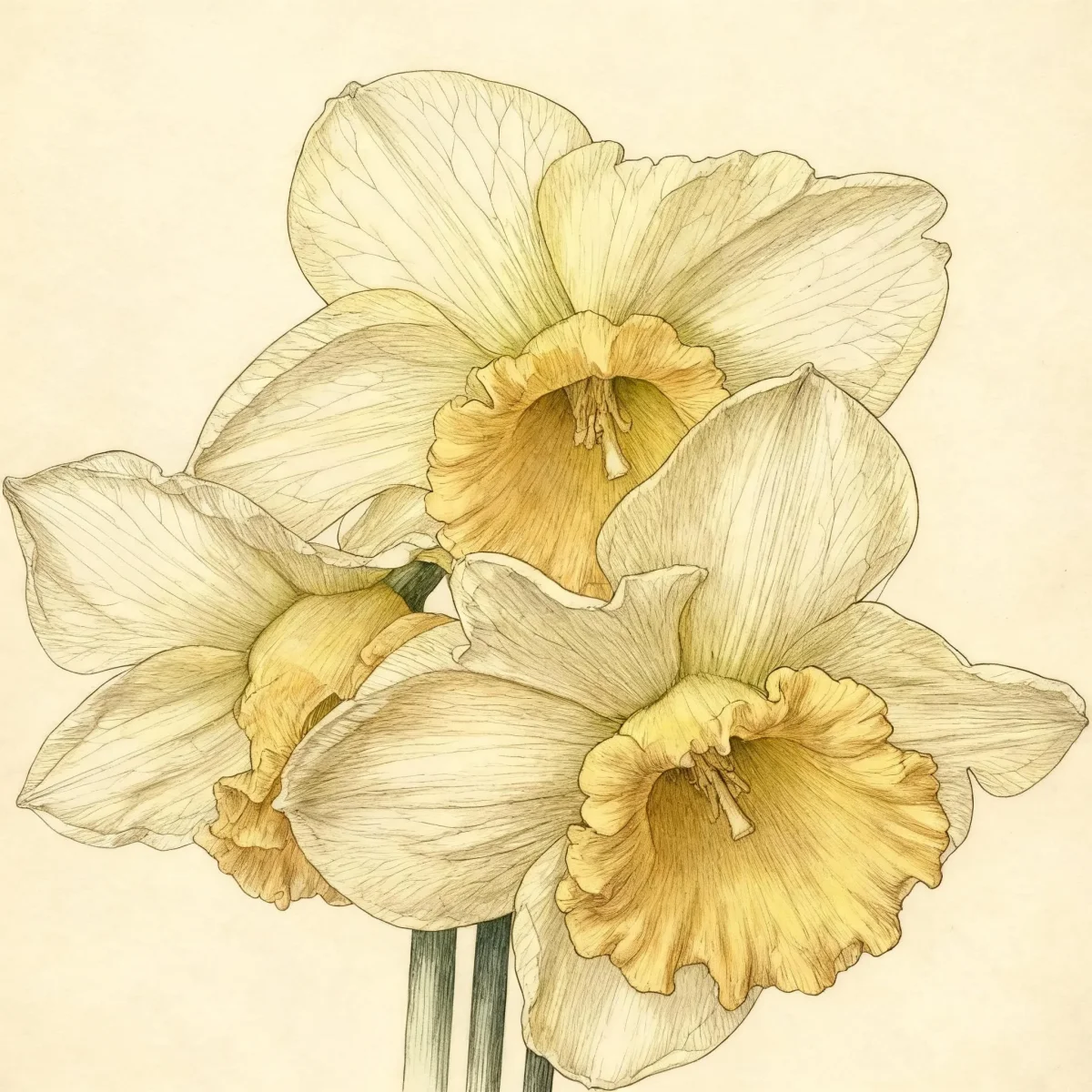
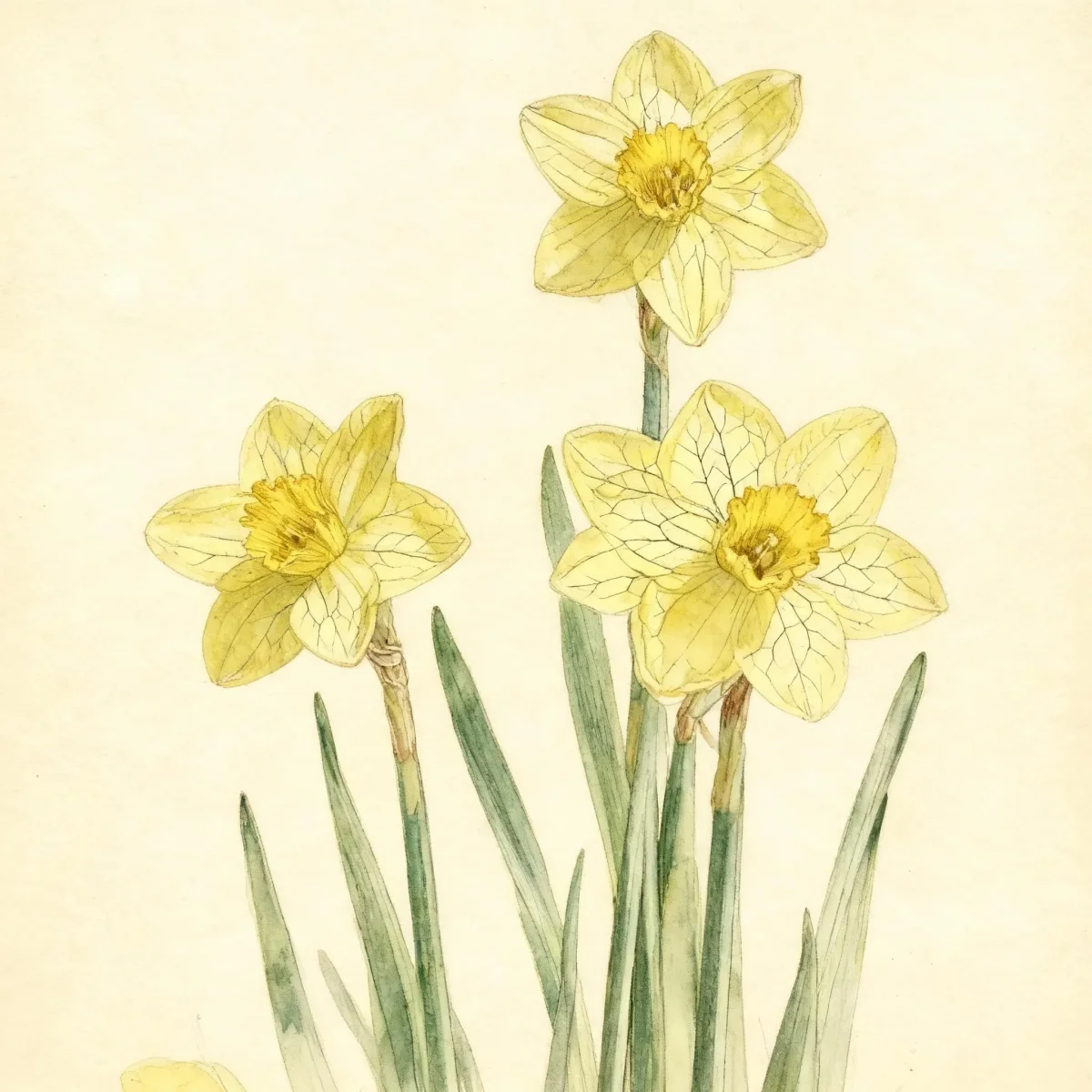
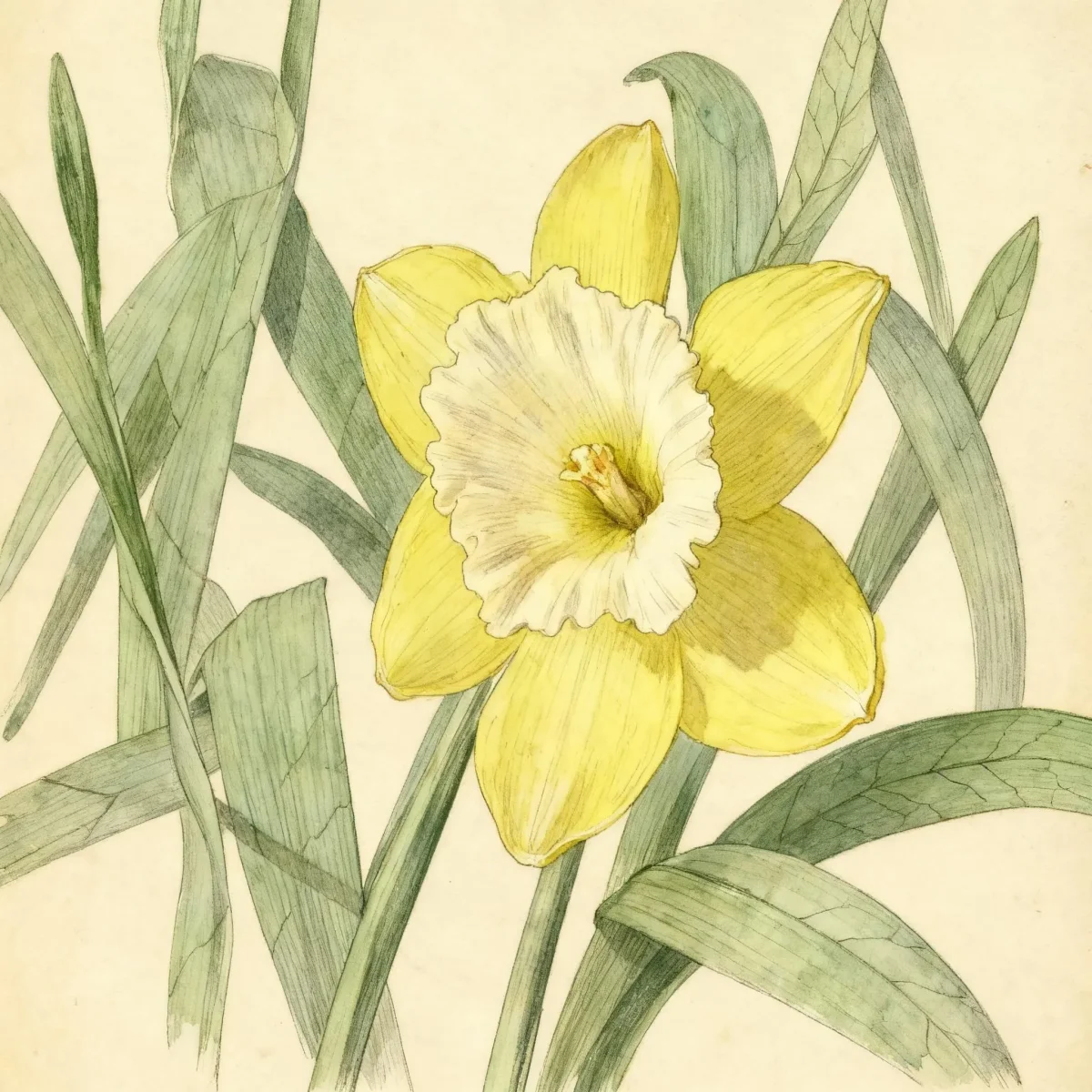
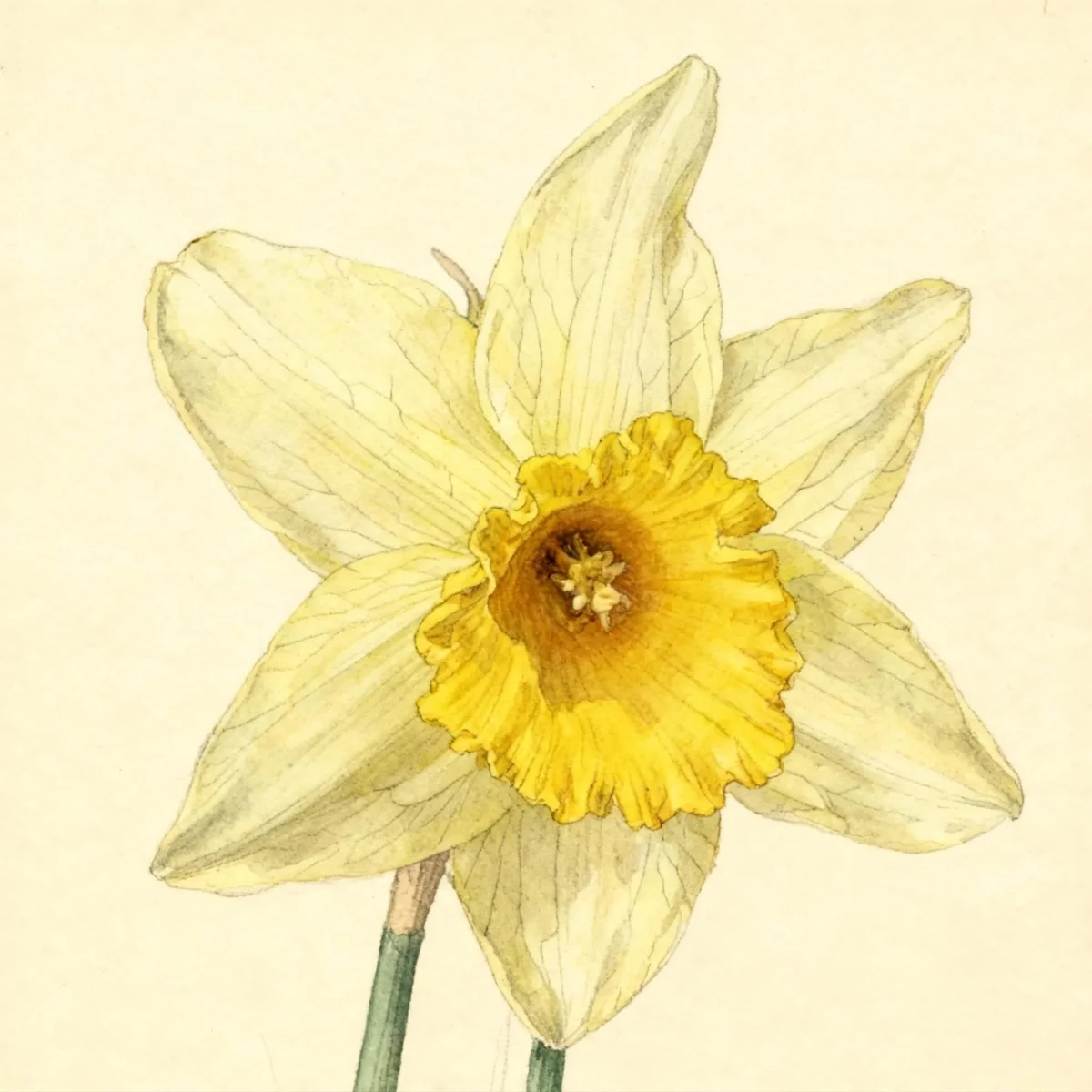
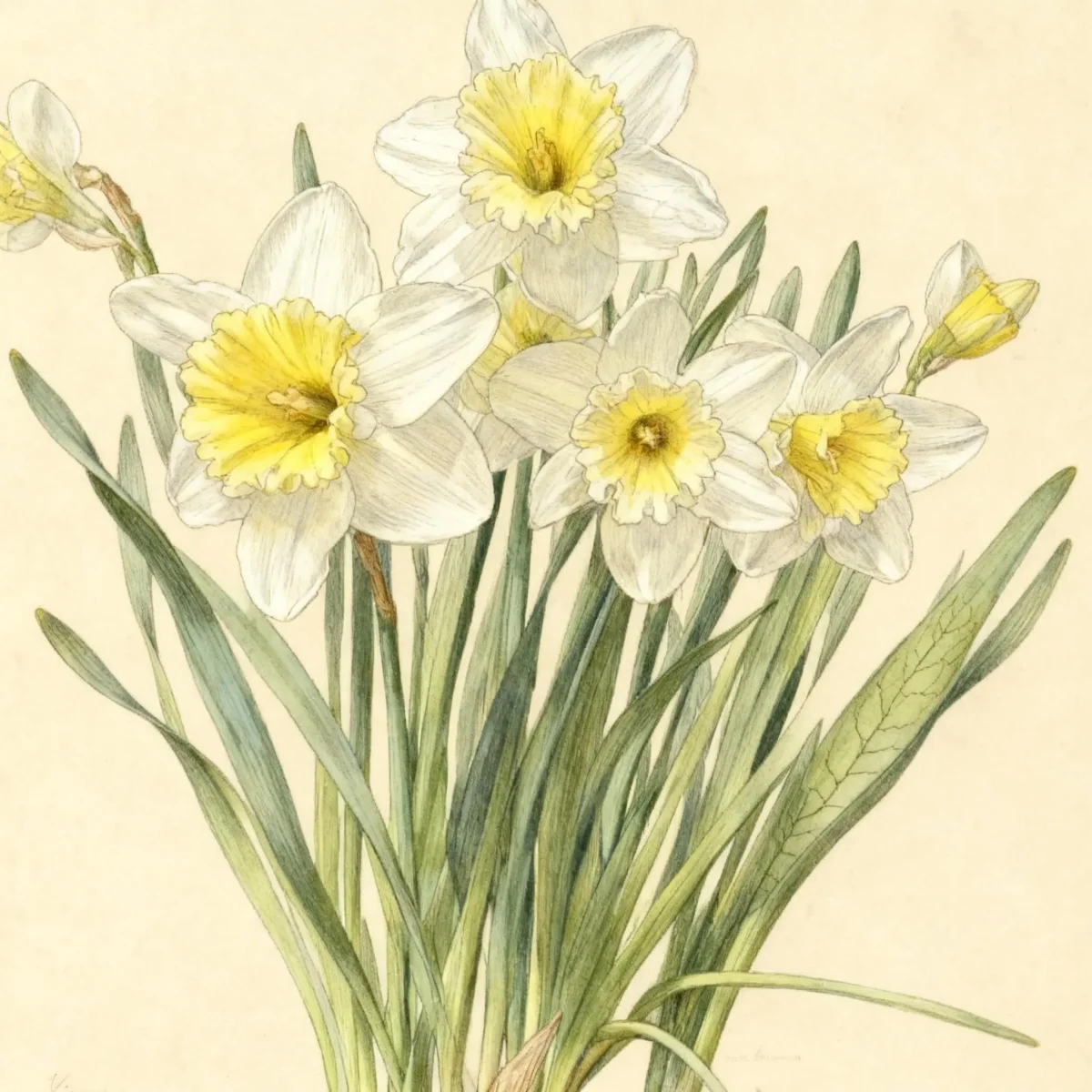
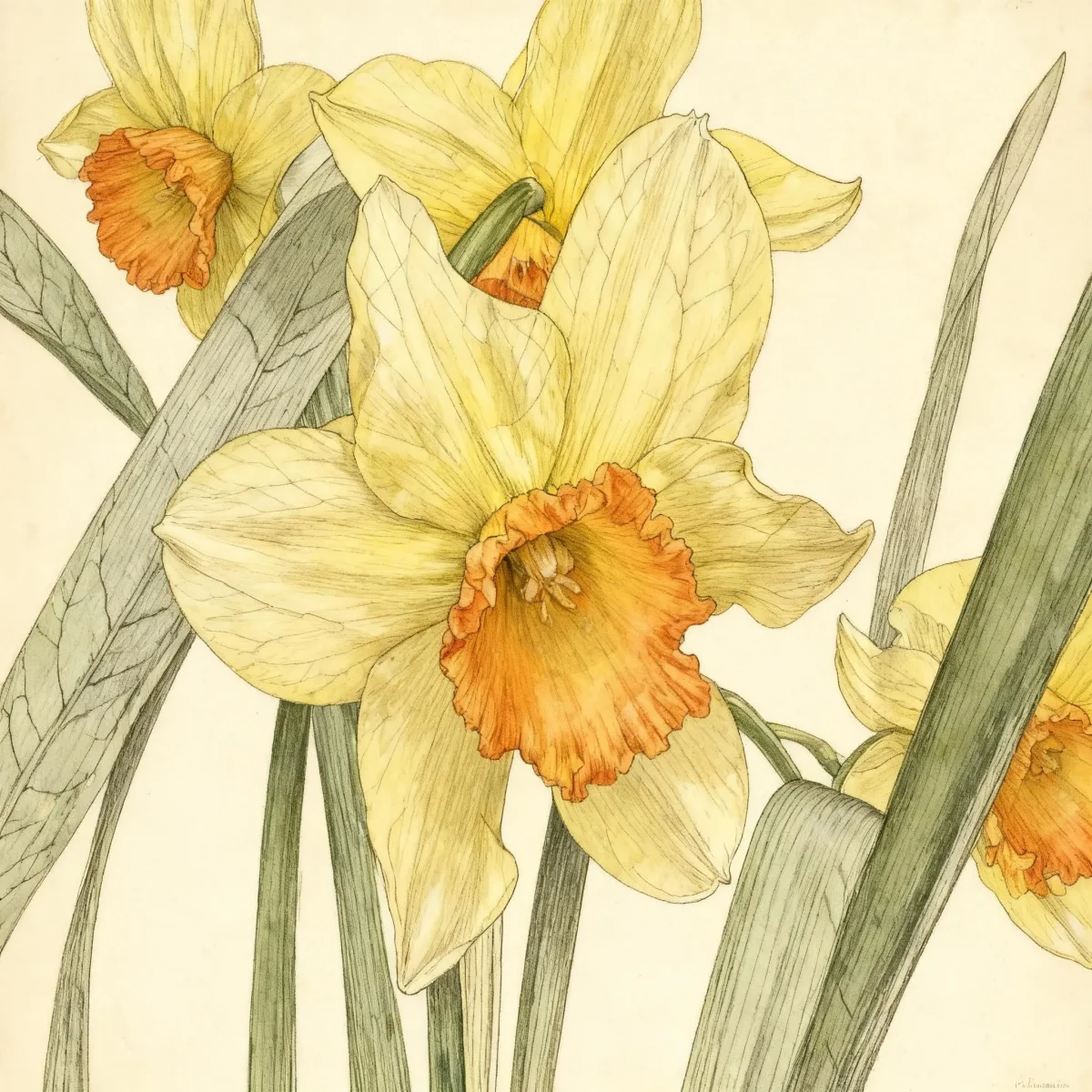
Large-cupped daffodil (Narcissus 'Passionale')
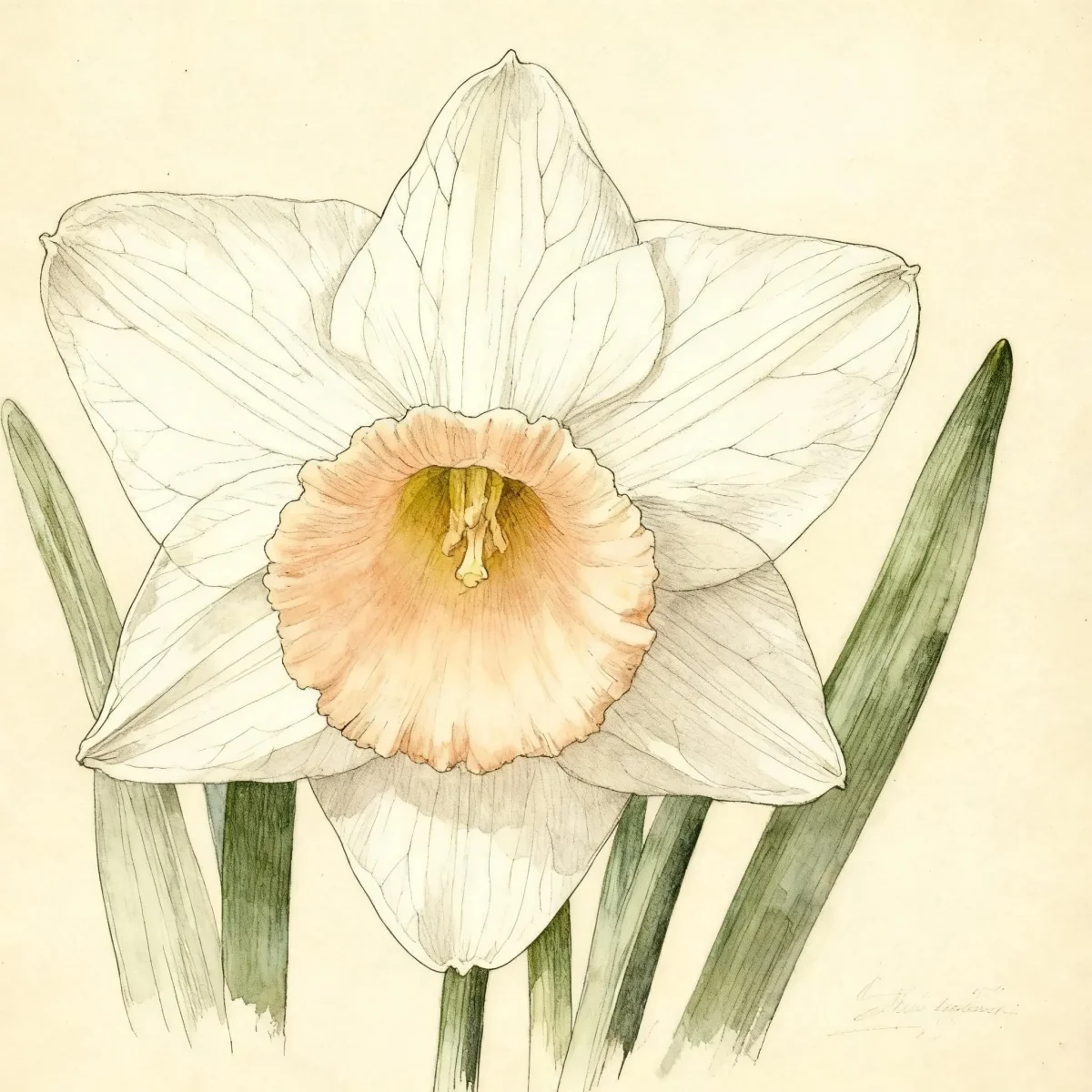
Narcissus 'Passionale' is a stunning Large-cupped daffodil featuring white petals and a soft pink cup, thriving in sun to part shade.
Scroll down to discover growing tips, care requirements, companion plants, and more
Complete Plant Information
Overview
The Narcissus ‘Passionale’ brings sophisticated color to the early spring landscape, standing out among spring bulbs. As a member of the Large-cupped daffodil division, it offers a striking bicoloration: pure white petals contrasted beautifully by a soft, glowing pink cup. This cultivar is highly valued for its reliable performance and low maintenance requirements once established.
Reaching modest heights of 1 to 1.5 feet, Narcissus ‘Passionale’ offers season-long structural interest, emerging reliably year after year. It thrives when planted in mass groupings, creating drifts of color that signal the return of warmer weather, making it an essential component for perennial borders.
With its pest-resistant nature and ability to naturalize, Narcissus ‘Passionale’ is an excellent, long-term investment for the spring garden. Gardeners appreciate its easy care and striking appearance, easily earning its place as a perennial favorite in USDA Zones 3 through 8.
Fast Facts
- Plant Family: Amaryllidaceae
- Plant Type: Bulb
- Hardiness Zones: USDA Zones 3-8
- Size at Maturity:
- Height: 1-1.5 ft
- Spread: 0.5-0.75 ft
- Bloom Time: April
- Bloom Description: White with a soft pink cup
- Sun Exposure: Full sun to part shade
- Water Needs: Medium
- Maintenance Level: Low
How to Grow
Planting Narcissus ‘Passionale’ bulbs is best scheduled for early to mid-fall before the ground freezes hard. These Large-cupped daffodils prefer average, medium-moisture, well-drained soils, with organically rich loams being ideal. Ensure excellent drainage to prevent bulb rot issues. Plant bulbs two to three times as deep as the bulb is tall, aiming for 3 inches of soil above the tip, spacing them 4 to 10 inches apart depending on the desired effect.
During the active growing season, soils must be kept uniformly moist; however, the plant tolerates drought once dormant in summer. After blooming in spring, remove the spent flower stems, but crucially, allow the foliage to remain intact, letting it yellow naturally. Removing the foliage prematurely interrupts nutrient storage needed for next year’s spectacular show of Narcissus ‘Passionale’ blooms.
These bulbs are long-lived and can remain undisturbed for many years. If bloom quality diminishes, divide clumps only just after the foliage fully dies back. For the best aesthetic outcome, position plantings so any surrounding shade areas are behind the flowers, allowing the blooms to naturally face the available sunlight.
Landscape Uses
Daffodils, including the Narcissus ‘Passionale’, are unmatched for early season impact and their resistance to naturalizing too aggressively compared to some other bulbs. They look fantastic when planted in large quantities—aim for groups of at least six bulbs to create effective drifts. Site them in defined beds or borders, or utilize them to brighten open woodland areas or beneath deciduous shrubs where they receive adequate spring sun.
Because Narcissus ‘Passionale’ thrives in bright conditions before trees fully leaf out, they mix exceptionally well with early spring perennials that emerge later. Consider pairing them with early-blooming groundcovers or the emerging foliage of later summer perennials. Since they are deer and rabbit resistant, they provide reliable color where lesser bulbs might be nibbled.
These Large-cupped daffodils are fantastic for adding depth to borders; plant them toward the front, knowing their foliage will begin to decline just as later-blooming specimens take over the scene. Furthermore, their vibrant spring display makes them an excellent choice mixed with other spring-flowering bulbs like Muscari or smaller Narcissus varieties.
Standout Features
Flower Qualities
- Showy
Noteworthy Characteristics
Narcissus is a genus of bulbous perennials renowned throughout the Northern Hemisphere, forming the backbone of the spring garden display. Flowers feature a central cup (corona) contrasted by six petals, appearing in a spectrum of whites, yellows, oranges, and pinks. ‘Passionale’ is specifically categorized as a Division II Large-cupped daffodil, rising to about 16-18 inches, famous for its classic white petals and beautiful soft pink cup, making it an excellent fresh cut flower.
Tolerances
- Rabbit
- Deer
- Drought
Potential Problems
The Narcissus ‘Passionale’ is generally robust and noted for being almost entirely pest and disease-free when cultural requirements, especially drainage, are met. The primary threat is bulb rot, which occurs rapidly in heavy, waterlogged soils; proper site preparation focusing on well-drained media is the key preventative measure. Infrequent pests may include slugs and snails, especially while foliage is young, and very rarely, narcissus bulb fly or narcissus nematode. To manage the minimal risks associated with this low-maintenance Large-cupped daffodil, ensure sharp drainage and avoid overly wet conditions following planting.
Frequently Asked Questions
What hardiness zones is Large-cupped daffodil suitable for?
The Narcissus ‘Passionale’ is reliably hardy across USDA Zones 3 through 8.
How large does Narcissus ‘Passionale’ grow?
This variety typically reaches a height between 1 and 1.5 feet, with a modest spread of 0.5 to 0.75 feet.
What sun exposure does Large-cupped daffodil need?
Narcissus ‘Passionale’ performs best when sited in locations receiving full sun to light or dappled part shade.
When does Narcissus ‘Passionale’ bloom?
This spring bulb blooms in April, presenting its distinctive flowers of white petals with a soft pink cup.
Conclusion
The Narcissus ‘Passionale’ offers gardeners a reliable, low-effort introduction to spring color, distinct for its white and blush-pink bicoloring. As a versatile Large-cupped daffodil, it naturalizes well and boasts superior resistance to common garden pests. When planning your garden tapestry, ensure you select a well-drained site and plant these bulbs in the fall for a rewarding performance next April.
Companion Planting for Spring Interest
Pairing Narcissus ‘Passionale’ with complementary spring bloomers enhances the transitional garden sequence. Since daffodils finish their performance before the summer heat sets in, look for companions whose foliage emerges just as the daffodil leaves begin to yellow. Consider pairing with emerging Hellebores or late-blooming Crocus varieties to maintain color continuity until tulips begin their show.
For a classic cottage garden effect, interplant the bulbs with early-blooming Scilla (squill) or Grape Hyacinths (Muscari). These smaller companions provide ground-level texture and color contrast while the Narcissus ‘Passionale’ rises above them with its more formal structure. Remember that all these companions share the requirement for excellent drainage.
Seasonal Care Calendar
Spring care for Narcissus ‘Passionale’ is minimal: monitor soil moisture, ensuring medium water levels during this active, leafy period. Once blooms fade in April, resist the urge to tidy up; let the foliage remain to recharge the bulb for next year. In early summer, if your clumps have become crowded and flowering is sparse, late summer or early fall is the ideal window to carefully divide the bulbs after the leaves have died back completely.
If you are growing these bulbs in mass for naturalization, minimal intervention is required in the winter apart from checking that the soil has not become waterlogged. For container plantings of your Large-cupped daffodil, ensure pots are protected from harsh freeze-thaw cycles, perhaps by burying the pots in mulch or placing them in an unheated garage once the foliage has died back.