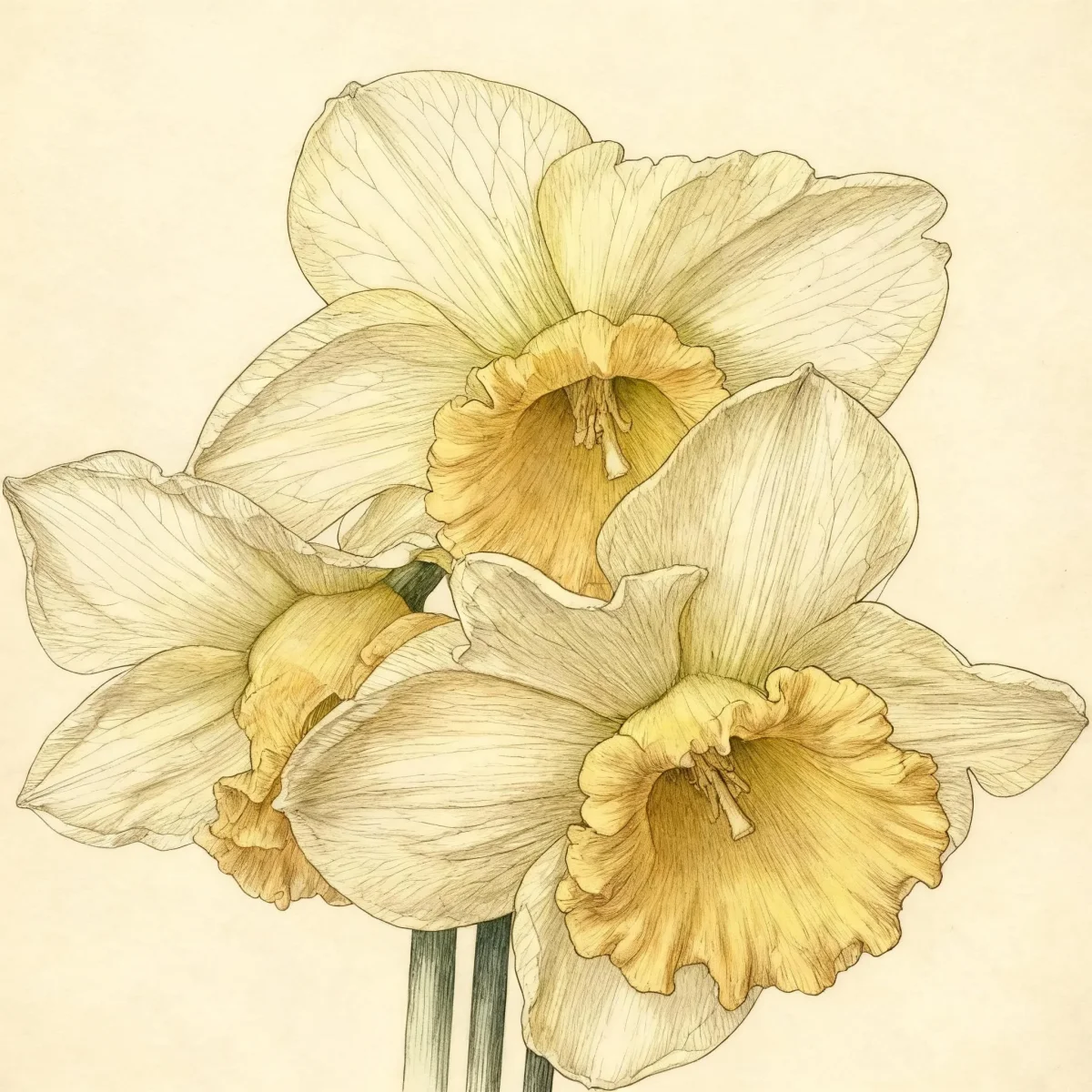
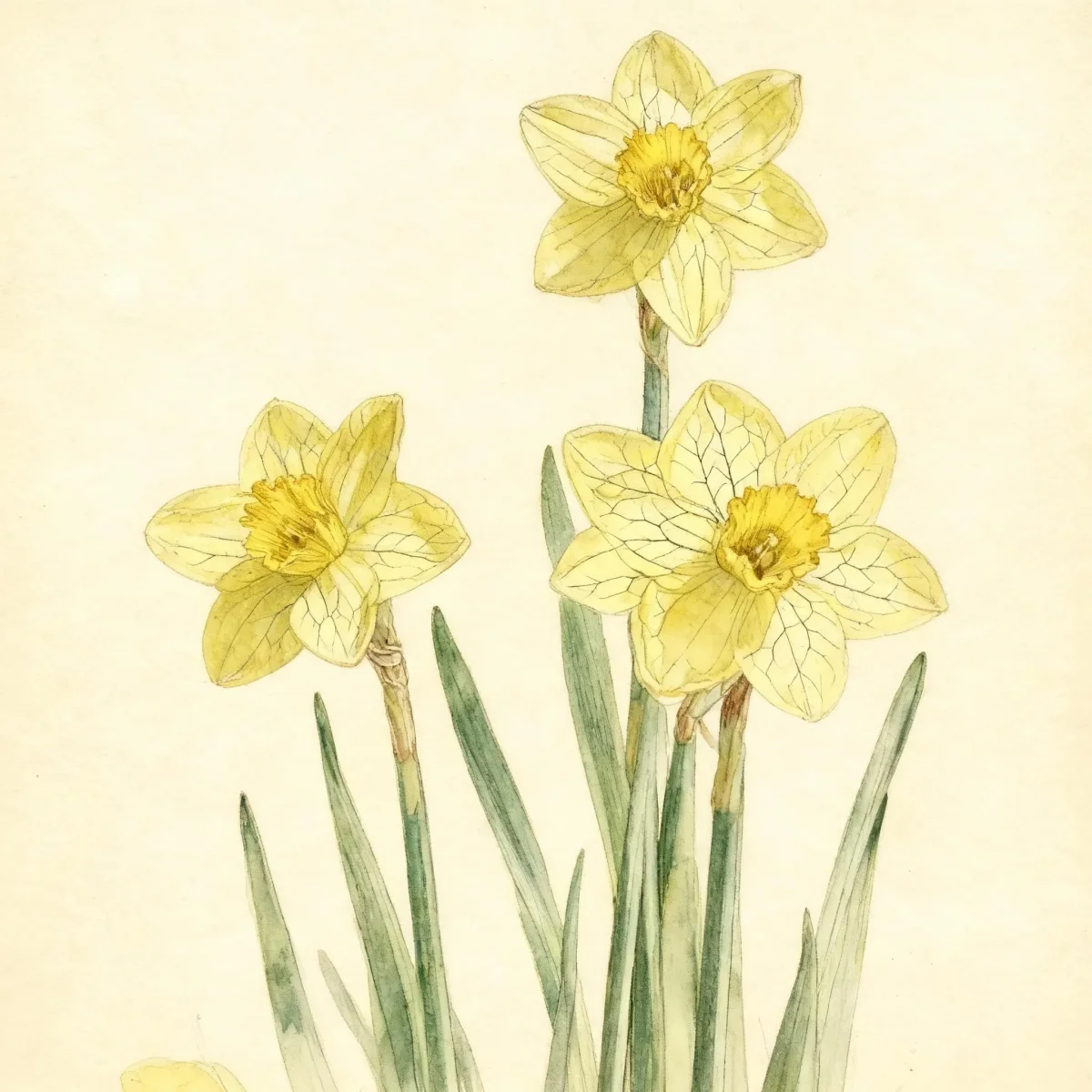
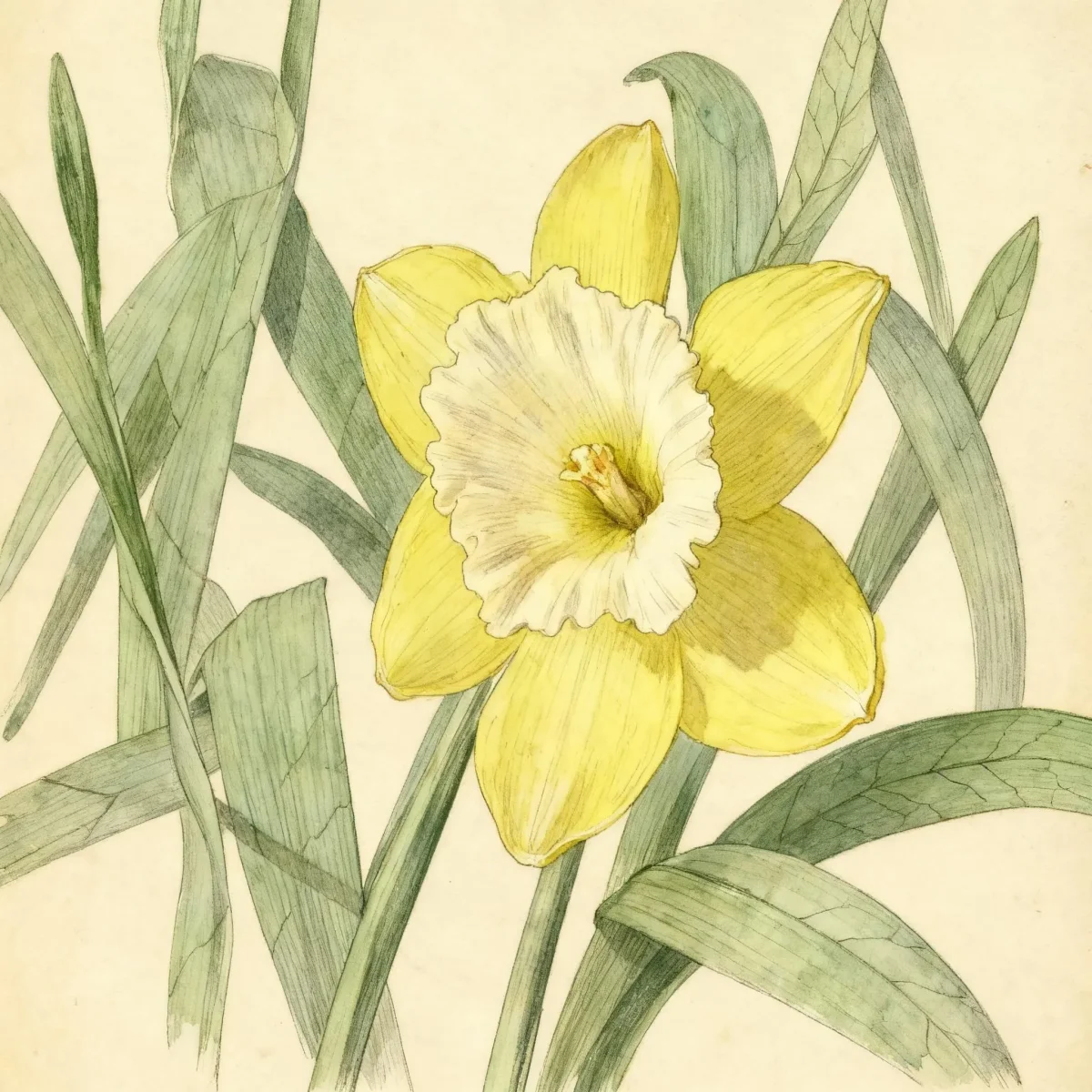
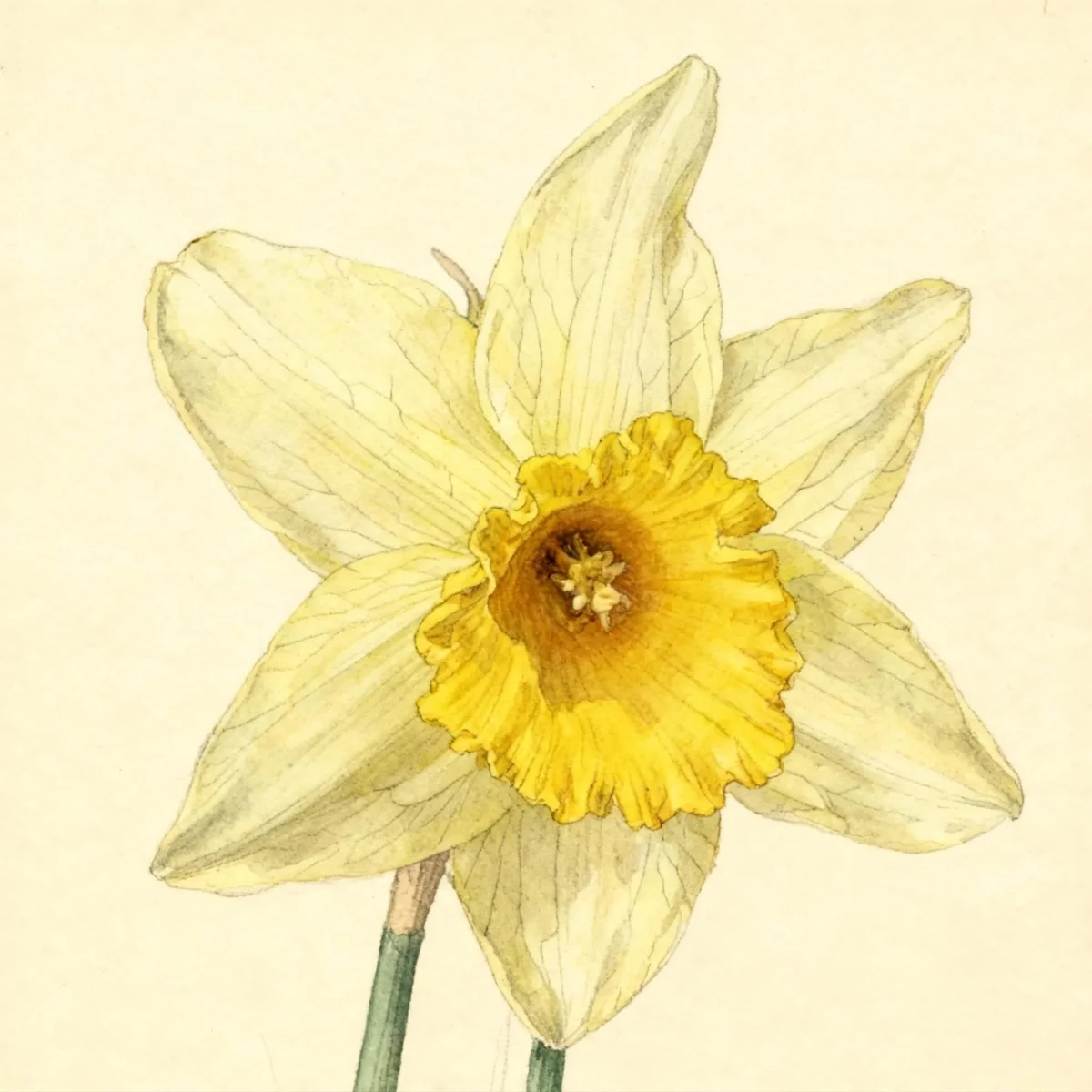
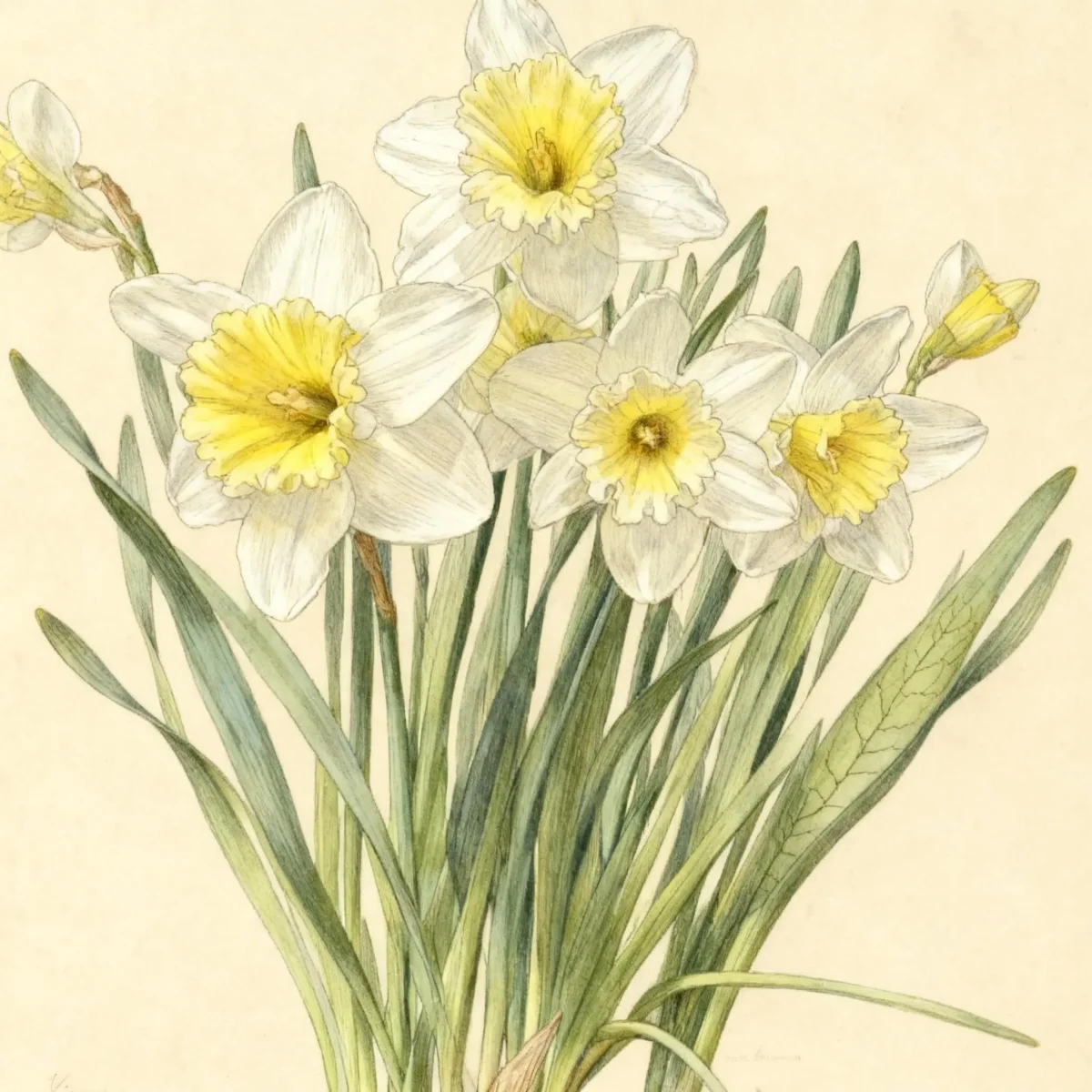
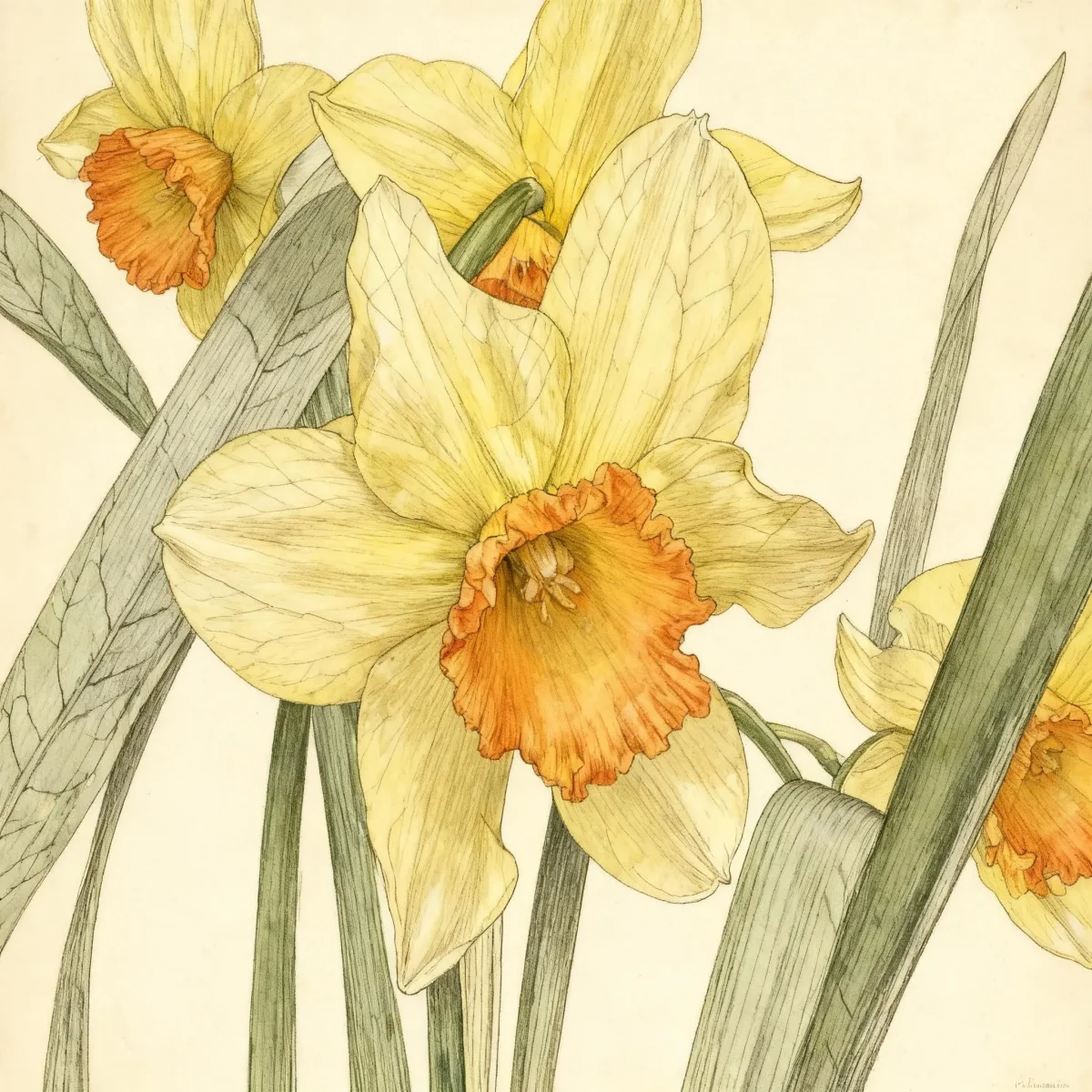
Large-cupped daffodil (Narcissus 'Rosy Wonder')
Narcissus 'Rosy Wonder' is a stunning Large-cupped daffodil blooming in April with white petals and a pink-banded cup.
Scroll down to discover growing tips, care requirements, companion plants, and more
Complete Plant Information
Overview
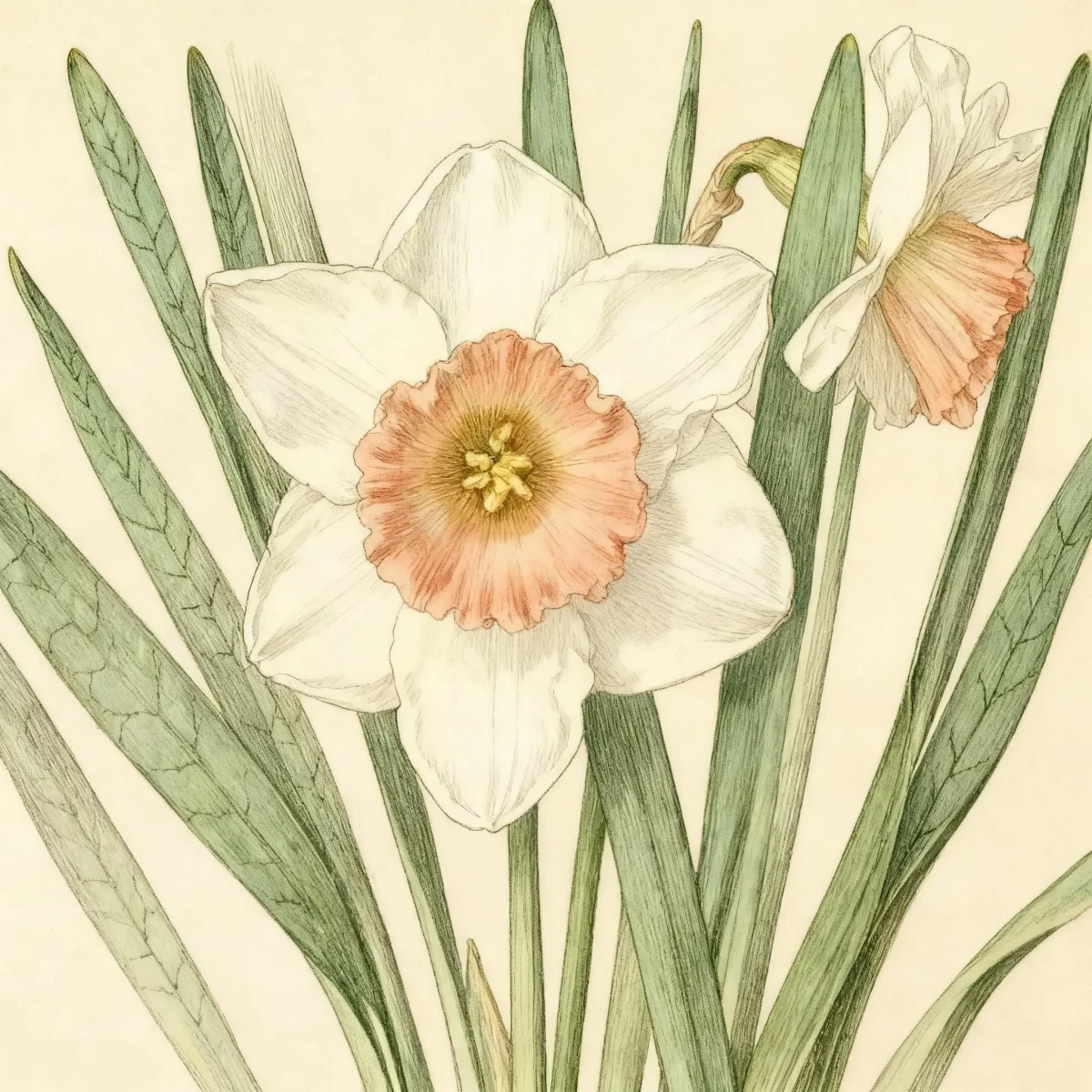
The Narcissus ‘Rosy Wonder’ is a cherished addition to any spring garden, belonging to the popular Large-cupped daffodil division (Division II). This variety stands out with its distinctive coloration: ivory white petals contrasting beautifully against an open, slightly ruffled, pale yellow cup featuring a prominent band of pink. As a bulb, it offers exceptionally low maintenance once established, providing reliable, vibrant color early in the season.
These perennials create a classic spring tapestry, rising between 1 and 1.5 feet tall. Narcissus ‘Rosy Wonder’ embodies the resilience of daffodils, thriving in full sun to part shade and offering excellent longevity, often naturalizing beautifully over time. They are a fantastic, traditional choice for injecting immediate cheer into the landscape after winter.
Gardeners highly value the performance and disease resistance of Narcissus ‘Rosy Wonder’. Its striking bloom time in mid-season April provides critical early nectar sources, and it performs as an excellent fresh cut flower. Plan to integrate these bulbs where their mid-season performance can be easily enjoyed.
Fast Facts
- Plant Family: Amaryllidaceae
- Plant Type: Bulb
- Hardiness Zones: USDA Zones 4-8
- Size at Maturity:
- Height: 1-1.5 ft
- Spread: 0.5-0.75 ft
- Bloom Time: April
- Bloom Description: White with a pink-banded pale yellow cup
- Sun Exposure: Full sun to part shade
- Water Needs: Medium
- Maintenance Level: Low
How to Grow
Planting Narcissus ‘Rosy Wonder’ bulbs should occur in early to mid-fall to allow sufficient root development before the ground freezes. Choose a location providing full sun to partial shade, ensuring the soil is fertile, medium moist, and, crucially, very well-drained, as poor drainage leads to bulb rot. Plant each bulb two to three times as deep as the bulb itself—generally 3 to 6 inches deep—and space them between 4 and 10 inches apart.
Care during the growing season requires keeping the soil uniformly moist, though established bulbs manage drought well once they are dormant. After the flowers fade in spring, resist the temptation to cut the foliage; this greenery is vital for gathering energy for next year’s bloom. Only remove the flower stem tops if desired to prevent seed setting, and allow the foliage to yellow naturally before cutting it back.
These Large-cupped daffodils can be left undisturbed for many years. If you notice a decline in the quantity or quality of the Narcissus ‘Rosy Wonder’ blooms, divide the clumps just as the foliage begins to die back. Growing them where afternoon shade is situated behind them ensures their faces are always turned toward maximum morning sun exposure.
Landscape Uses
Daffodils, including this spectacular Large-cupped daffodil cultivar, are superior choices for long-term spring displays because they reliably return year after year. They excel when planted in masses—ideal groupings start with at least six bulbs—to create sweeping drifts that mimic naturalized settings. Use them to edge borders, plant beneath deciduous trees, or mass near the foundation of shrubs where early spring color is desired against darker backdrops.
For a sophisticated look, mix Narcissus ‘Rosy Wonder’ with other spring bulbs whose bloom times slightly precede or follow them, such as early tulips or later-blooming hyacinths, ensuring continuous color through the season. Their strong upright stems and striking coloration make them excellent foreground plantings in mixed shrub beds.
Because they naturalize readily, these bulbs work perfectly in wilder garden sections or open woodland areas where they can spread slowly without frequent disturbance. Plant at least 3-6 inches deep for best performance and to encourage the long-term clumping that defines successful daffodil plantings.
Standout Features
Flower Qualities
- Showy
Noteworthy Characteristics
Narcissus is a genus of about 50 species of bulbous perennials from Europe and North Africa, serving as a mainstay of the spring garden. Flowers display a trumpet or cup (corona) surrounded by six petals (perianth segments) in a spectrum of colors. ‘Rosy Wonder’ is specifically classified as a large-cupped daffodil (Division II), rising 16-18 inches tall with ivory petals and a distinctive pink-banded, pale yellow cup. These blooms appear in late mid-season, typically April, and are excellent selections for fresh cut arrangements.
Tolerances
- Rabbit
- Deer
- Drought
Potential Problems
Daffodils are generally robust and exceptionally low maintenance, posing few serious disease or insect threats when cultural needs are met. The primary danger is bulb rot, which occurs if the soil lacks sufficient drainage; ensure heavy, poorly-draining soils are amended with grit or organic matter before planting. Infrequent pests may include slugs, snails, or occasionally the narcissus bulb fly. Keep in mind that deer and rabbits typically avoid the foliage and bulbs of Narcissus ‘Rosy Wonder’, offering a built-in protection layer in landscaped areas.
Frequently Asked Questions
What hardiness zones is Large-cupped daffodil suitable for?
Narcissus ‘Rosy Wonder’ is suitable for growing in USDA Hardiness Zones 4 through 8.
How large does Large-cupped daffodil grow?
This variety generally reaches a height between 1 and 1.5 feet, with a spread of 0.5 to 0.75 feet at maturity.
What sun exposure does Narcissus ‘Rosy Wonder’ need?
Narcissus ‘Rosy Wonder’ performs best when exposed to full sun to part shade conditions.
When does Large-cupped daffodil bloom?
This Large-cupped daffodil blooms in April, showcasing flowers described as white with a pink-banded pale yellow cup.
Conclusion
Narcissus ‘Rosy Wonder’ delivers reliable, distinctive beauty, making it one of the most celebrated spring bloomers available to home gardeners. Its elegant bicolored cup ensures it stands out among other spring bulbs, and its low maintenance profile means joy returns with minimal effort each year. Ensure you purchase your Large-cupped daffodil bulbs in the fall and plant them deeply in well-draining soil within USDA Zones 4-8 for a spectacular April display.
Companion Planting
To maximize the visual impact of Narcissus ‘Rosy Wonder’, pair them with plants that offer foliage or blooms later in the season, hiding the spent daffodil leaves. Grape hyacinths (Muscari) are excellent early companions that share similar sun and soil needs. For later color schemes, consider planting low-growing perennials like creeping phlox or Ajuga near the base of the bulbs; these groundcovers will rapidly fill in the thinning space as the daffodil foliage yellows.
Seasonal Care Calendar
Spring care focuses primarily on observation; enjoy the bloom of Narcissus ‘Rosy Wonder’ and remove spent flower heads if seed formation is unwanted, but never cut the foliage prematurely. Summer is the dormant season; avoid digging or cultivating the areas where bulbs are planted to prevent bulb damage. In fall, this is the crucial time to plant new bulbs, ensuring they receive consistent medium moisture until the soil freezes. Prepare for winter by ensuring planting sites drain well; no special mulching is usually necessary for established clumps in zones 4-8.