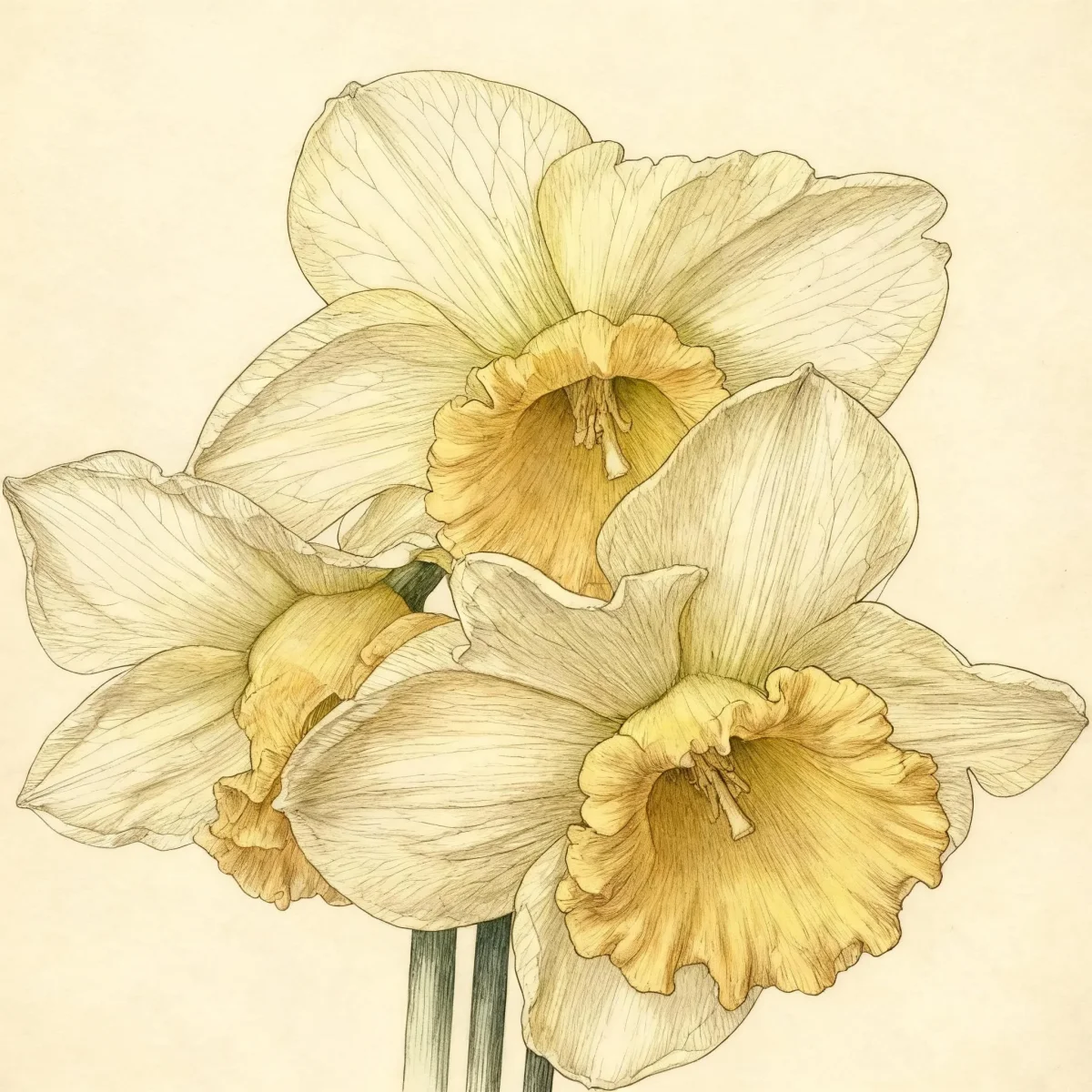
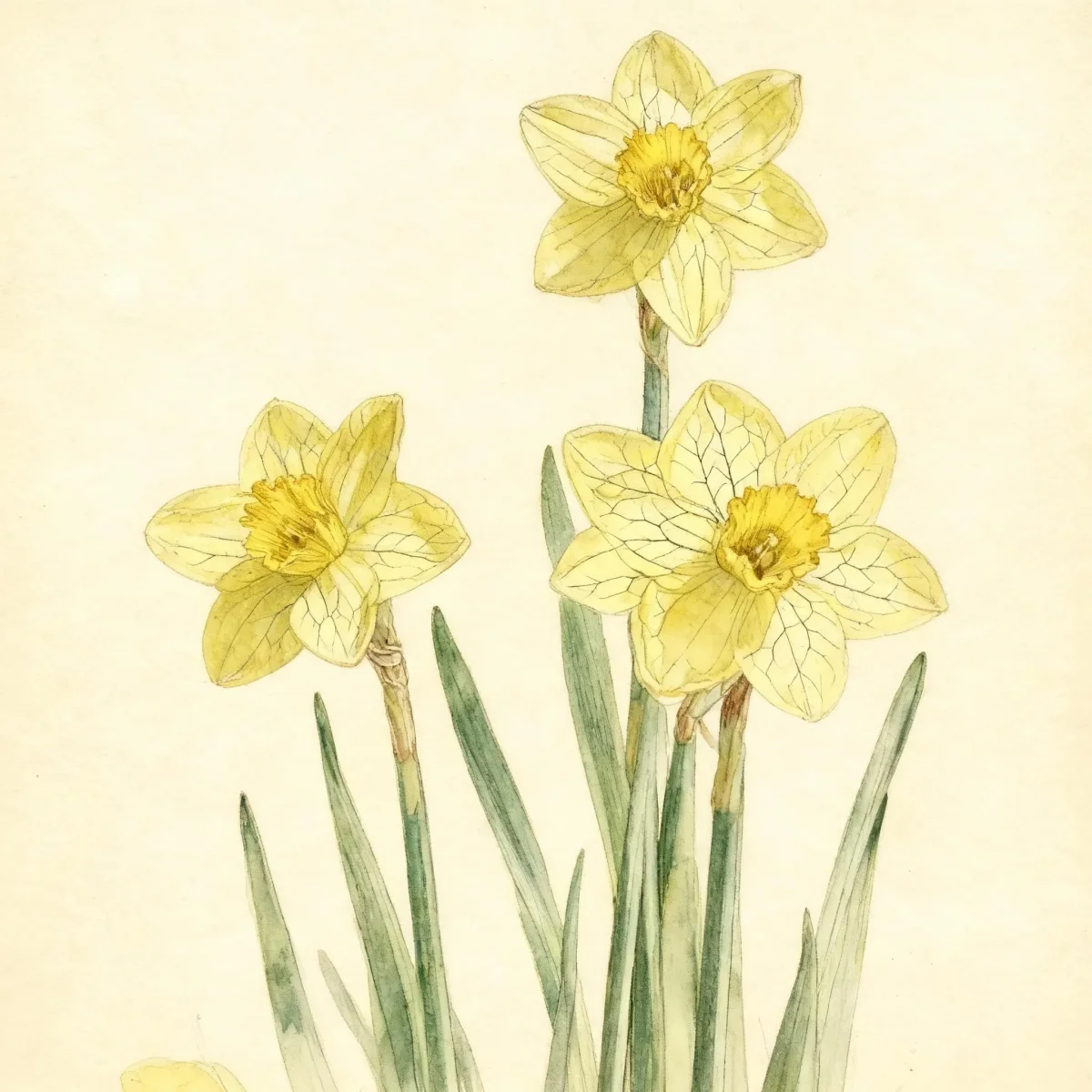
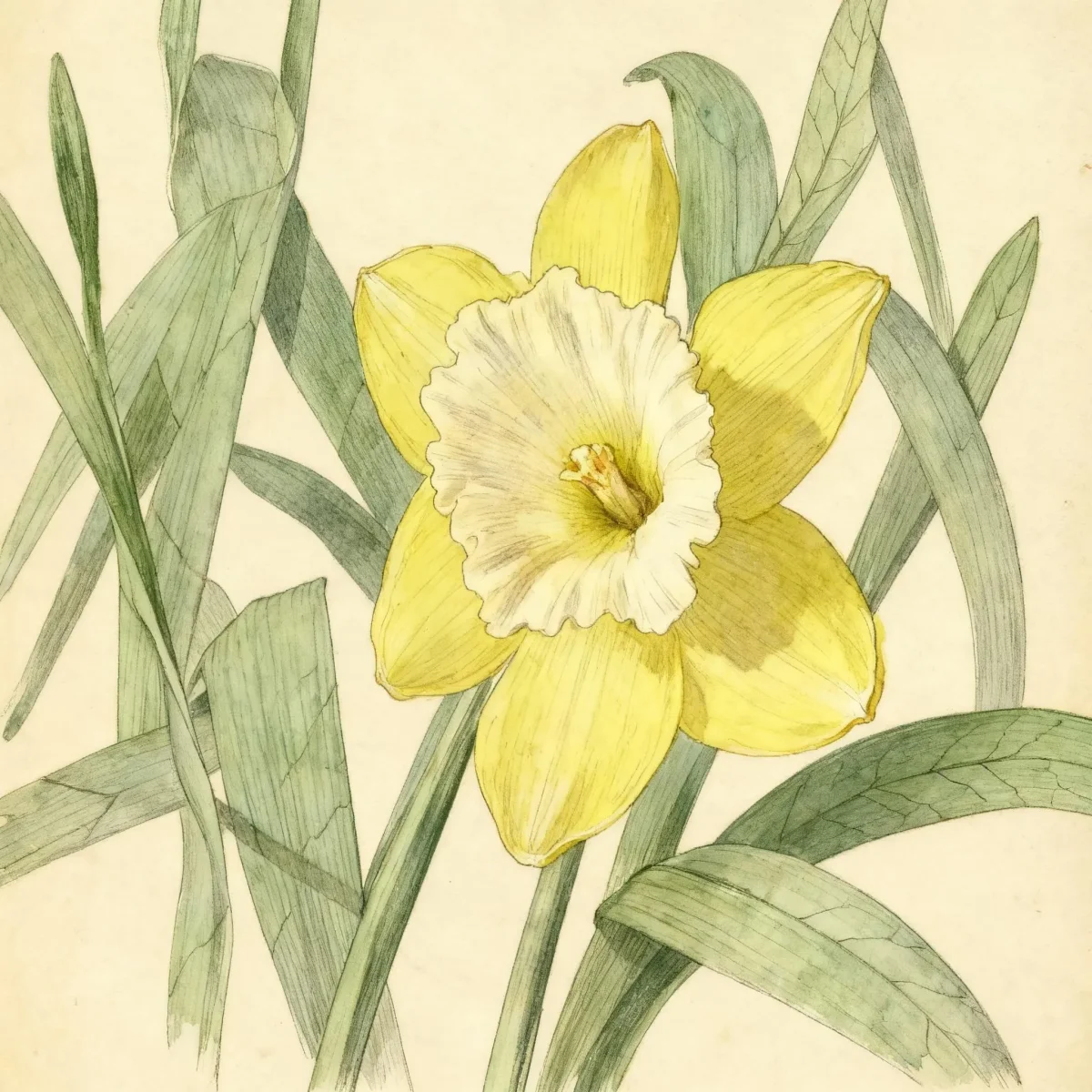
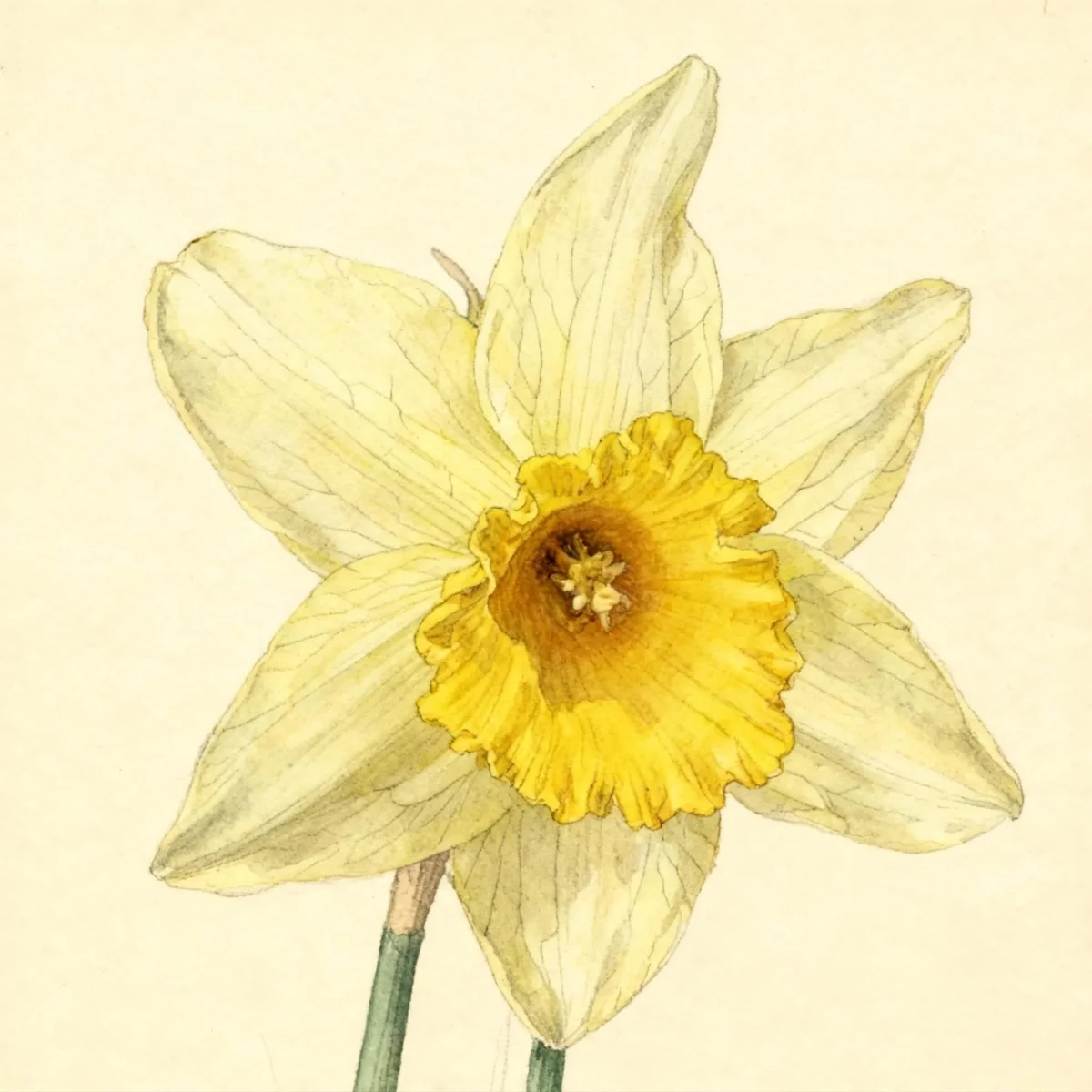
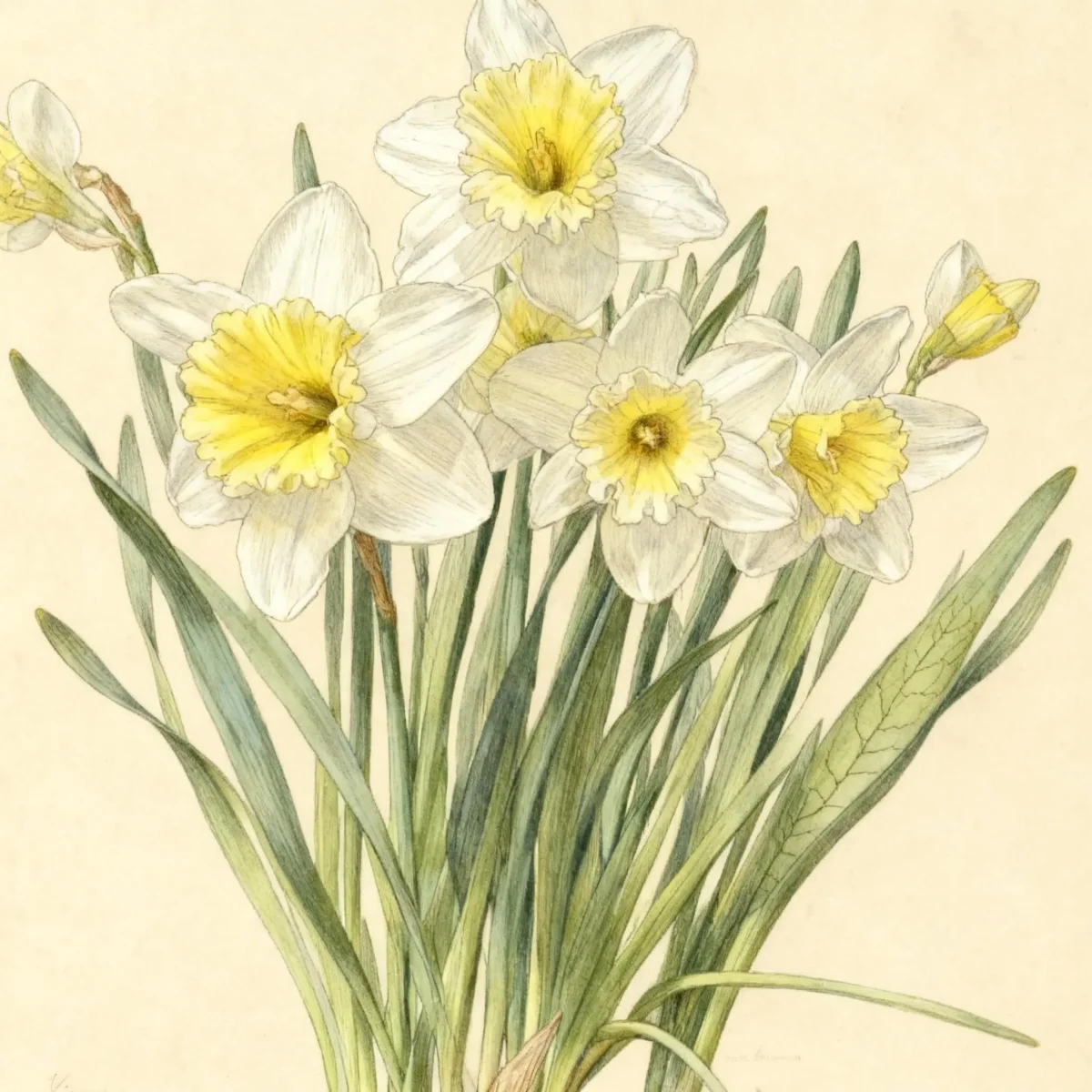
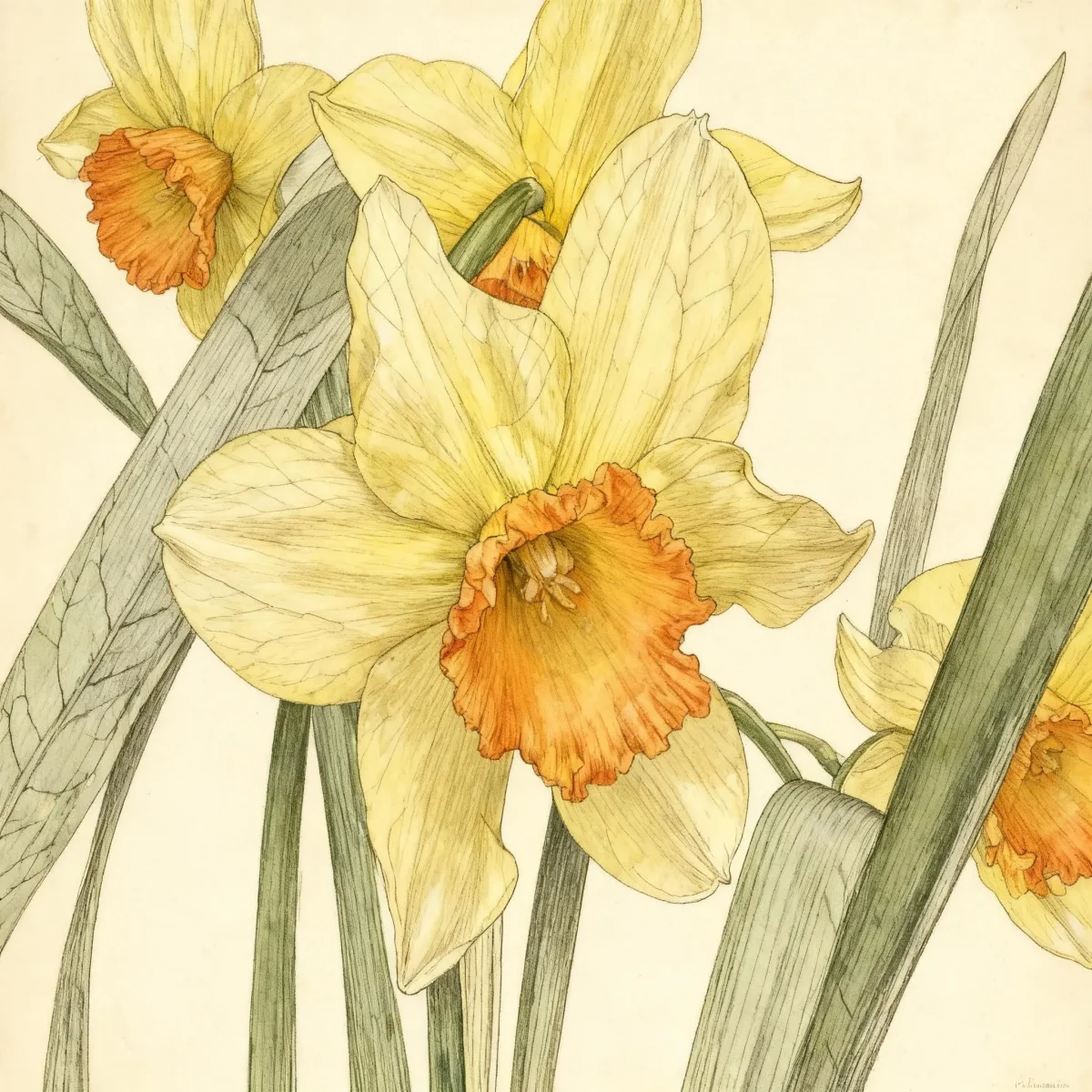
Large-cupped daffodil (Narcissus 'Wild Carnival')
Narcissus 'Wild Carnival' is a stunning Large-cupped daffodil featuring golden petals and a deep orange cup, thriving in zones 3-8.
Scroll down to discover growing tips, care requirements, companion plants, and more
Complete Plant Information
Overview
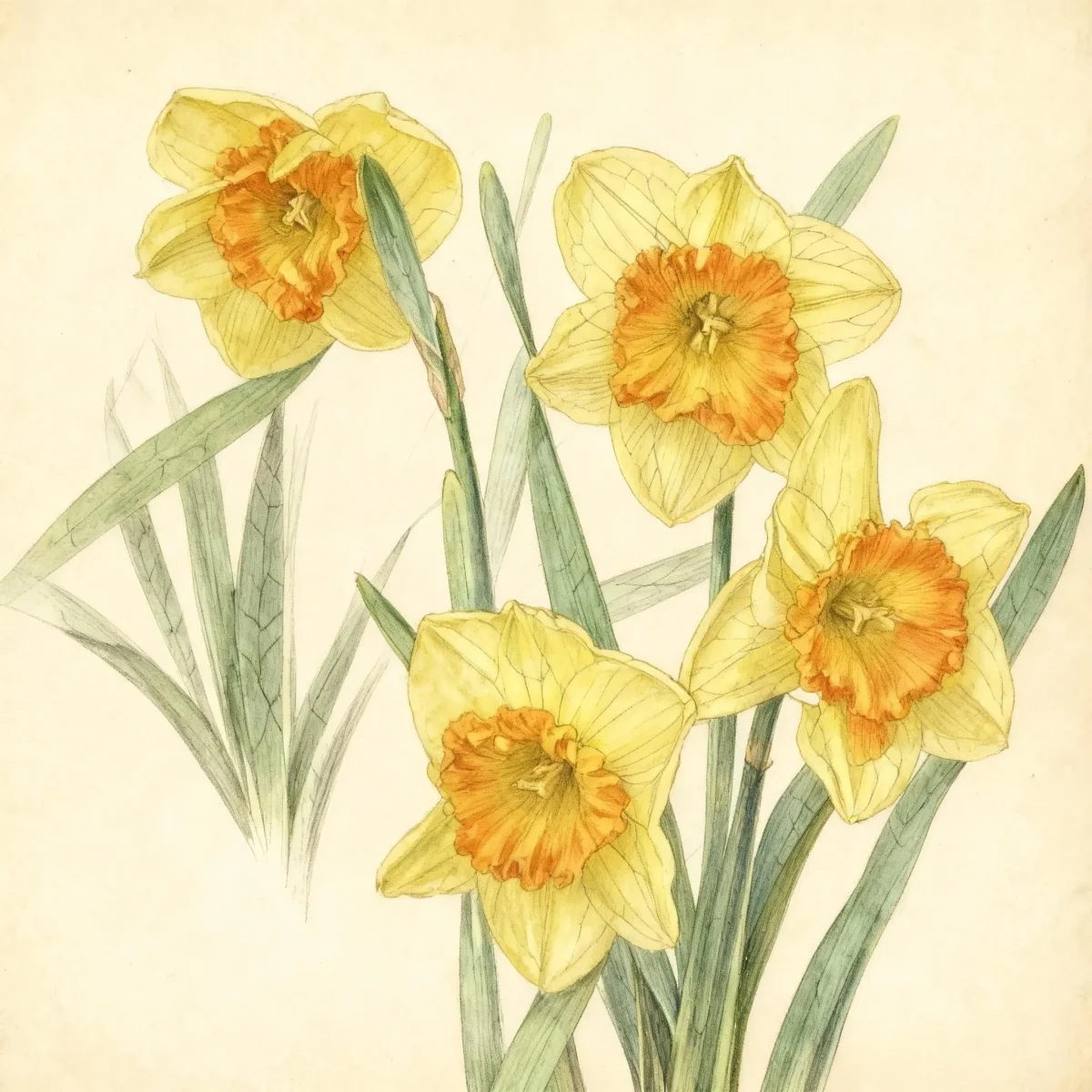
Narcissus ‘Wild Carnival’ provides a vibrant splash of color as one of the earliest harbingers of spring in the perennial border. This specific cultivar belongs to the popular Division II classification, known as the Large-cupped daffodil group. Gardeners prize this variety for its bold contrast, featuring clear golden yellow petals perfectly juxtaposed by a deeply ruffled, rich orange cup.
As a deciduous bulb, Narcissus ‘Wild Carnival’ demands minimal attention once established, offering reliable performance across a wide range of climates within USDA Zones 3 through 8. Its medium height and neat foliage make it a versatile addition, integrating well into formal beds or naturalized settings. The visual impact of a mass planting of this Large-cupped daffodil is considerable, marking the end of winter dormancy spectacularly.
This daffodil is valued not only for its easy culture and low maintenance needs but also for its predictable flowering in mid-spring. Enjoying Narcissus ‘Wild Carnival’ means you are planting a perennial beacon; bulbs naturalize readily, increasing in density and bloom over successive years with little intervention required beyond basic foliage care.
Fast Facts
- Plant Family: Amaryllidaceae
- Plant Type: Bulb
- Hardiness Zones: USDA Zones 3-8
- Size at Maturity:
- Height: 0.75-1 ft
- Spread: 0.25-0.5 ft
- Bloom Time: April
- Bloom Description: Yellow petals and orange cup
- Sun Exposure: Full sun to part shade
- Water Needs: Medium
- Maintenance Level: Low
How to Grow
Planting Narcissus ‘Wild Carnival’ bulbs should occur in early to mid-fall before the first hard frost sets in. These bulbs thrive in average, medium moisture, well-drained soils, with strong drainage being critical to prevent rot. For best results, plant in organically rich loams, ensuring they receive full sun to partial shade; remember that flowers tend to face the sun, so plan shade placement accordingly.
When positioning the bulbs, depth is key: bury each bulb approximately two to three times its own depth, ensuring at least 3 inches of soil covers the top. Spacing typically ranges from 4 to 10 inches apart, depending on the bulb size. While initial plantings might appear sparse, the clumps will gradually fill in, reducing the need for future division.
After the bright bloom finishes in April, maintenance is simple but crucial for next year’s display. Remove the spent flower head to prevent seed production, but absolutely leave the foliage intact. Allow the leaves to yellow completely, as this process replenishes the bulb’s energy stores. Do not cut back the foliage until this natural yellowing process is complete.
If the clumps of Narcissus ‘Wild Carnival’ become overcrowded and flower quality declines after several years, divide them immediately after the foliage dies back. Furthermore, this Large-cupped daffodil is highly deer and rabbit resistant, simplifying placement decisions in areas frequented by wildlife.
Landscape Uses
Daffodils, unlike tulips, are excellent long-term investments because they reliably return year after year, making Narcissus ‘Wild Carnival’ ideal for foundational spring color. These bulbs perform magnificently when planted in large, sweeping drifts rather than isolated groupings, immediately providing maximum impact early in the season. Consider mass planting them in beds, along borders, or in open woodland areas where their spring brilliance contrasts beautifully with emerging greenery.
The medium size of this Large-cupped daffodil makes it perfect for planting in front of taller shrubs or beneath deciduous trees, ensuring the spring flowers receive ample sun before the summer canopy thickens. They mix effectively with other classic spring bloomers such as early blooming tulips, hyacinths, and scilla, creating layered drifts of color that transition smoothly into summer perennials. Allowing them to naturalize beneath lawns or in wilder garden spaces is a highly recommended practice.
For cut flower enthusiasts, Narcissus ‘Wild Carnival’ is an excellent choice, providing the vibrant yellow and orange coloration indoors shortly after the snow melts. Integrating this cheerful bulb ensures your garden offers reliable, low-effort performance through the transitional early spring period.
Standout Features
Flower Qualities
- Showy
Noteworthy Characteristics
Narcissus is a genus of about 50 species of bulbous perennials from Europe and North Africa, serving as a mainstay of the spring garden. Flowers characteristically feature a trumpet or cup (the corona) surrounded by six petals (perianth segments), available in a range of colors from white to orange. ‘Wild Carnival’ is specifically classified as a large-cupped daffodil (Division II), rising about 9-10 inches tall with golden yellow petals and a ruffled deep orange cup on a single stem, blooming mid-season.
Tolerances
- Rabbit
- Deer
- Drought
Potential Problems
Daffodils, due to their toxicity, are generally pest-free, offering excellent reliability when properly sited. No serious insect or disease problems plague Narcissus ‘Wild Carnival’ provided the cultural requirements are met. The primary risk arises from poor culture, specifically in poorly-drained soils where bulb rot is likely to occur. Infrequent pests can include slugs and snails, especially when foliage first emerges. To ensure long-term success with your Narcissus ‘Wild Carnival’, focus on excellent drainage and proper planting depth.
Frequently Asked Questions
What hardiness zones is Large-cupped daffodil suitable for?
Narcissus ‘Wild Carnival’ is well-suited for gardeners in USDA Zones 3 through 8.
How large does Large-cupped daffodil grow?
This variety typically reaches a height between 0.75 and 1 foot tall, with a spread of 0.25 to 0.5 feet wide.
When does Narcissus ‘Wild Carnival’ bloom?
This daffodil generally blooms in April, showcasing clear yellow petals and a vibrant orange cup.
What sun exposure does Narcissus ‘Wild Carnival’ need?
It performs best when situated in locations receiving full sun to light, dappled part shade.
Conclusion
Narcissus ‘Wild Carnival’ stands out as a highly rewarding, low-maintenance feature in the early spring landscape, delivering consistent, bold color. This reliable Large-cupped daffodil provides excellent visual structure and naturalizes beautifully over time. Check your local USDA zone compatibility and plan your fall bulb planting now to enjoy the spectacular spring show of this classic daffodil.
Companion Planting
When planning beds featuring Narcissus ‘Wild Carnival’, consider companions that emerge later to fill the space once the daffodil foliage fades. Early emerging perennials like Bleeding Hearts (Dicentra spectabilis) or Lady’s Mantle (Alchemilla mollis) are excellent choices, as their foliage will help screen the dying daffodil leaves. Since daffodils are toxic, they deter common spring pests, meaning they pair well with less resilient companions like tulips, often used as annual fillers planted right over the daffodil bulbs.
Design Ideas
Utilize the bold coloration of the Large-cupped daffodil to anchor cornerstone plantings against dark green evergreens or the dark, rich browns of mulched beds. Planting Narcissus ‘Wild Carnival’ in curved, sweeping lines rather than straight rows creates a more natural, impactful drift that catches the eye from a distance. For a cottage garden aesthetic, blend them informally through beds containing Grape Hyacinths (Muscari) and low-growing Pulmonarias for a continuous, textured spring display.