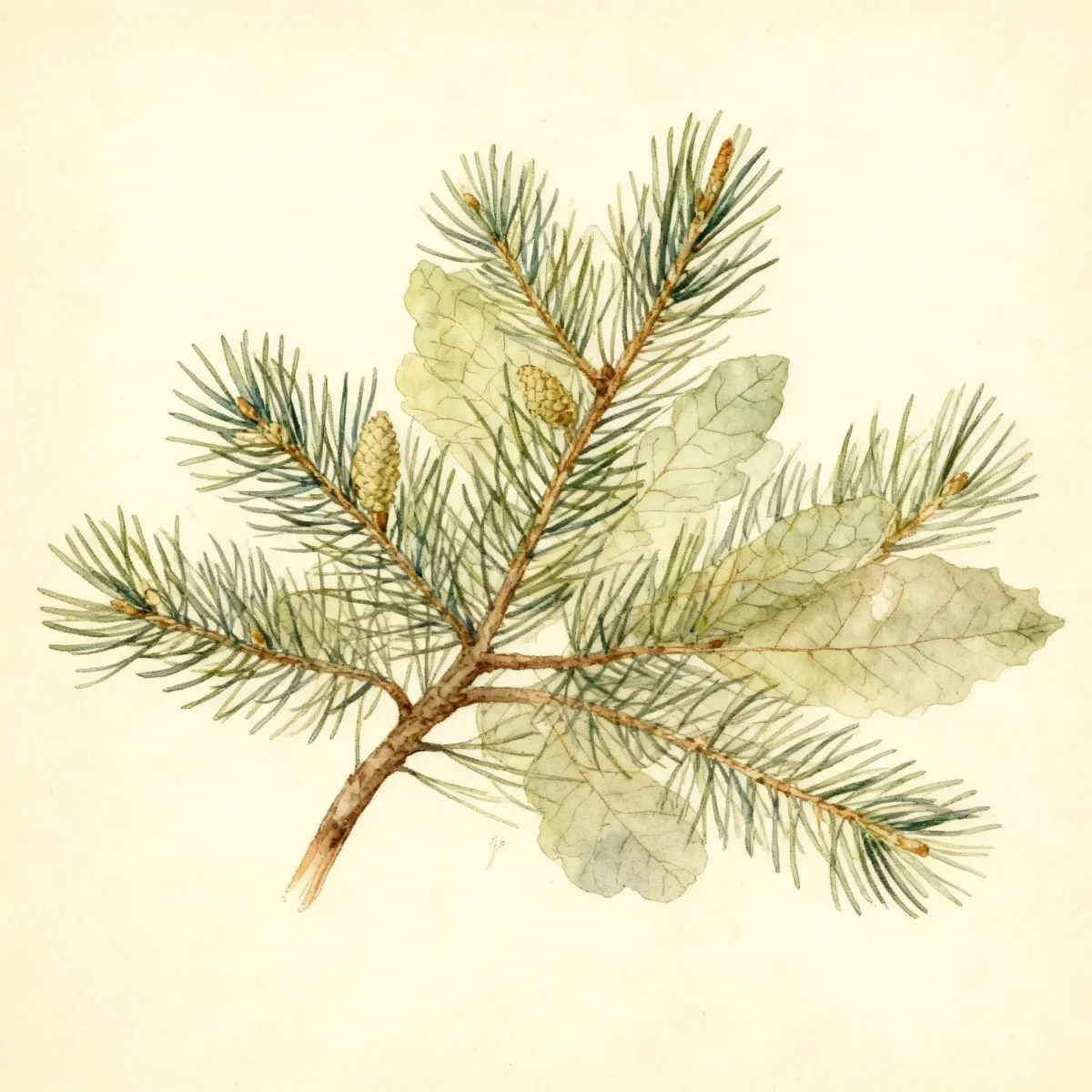
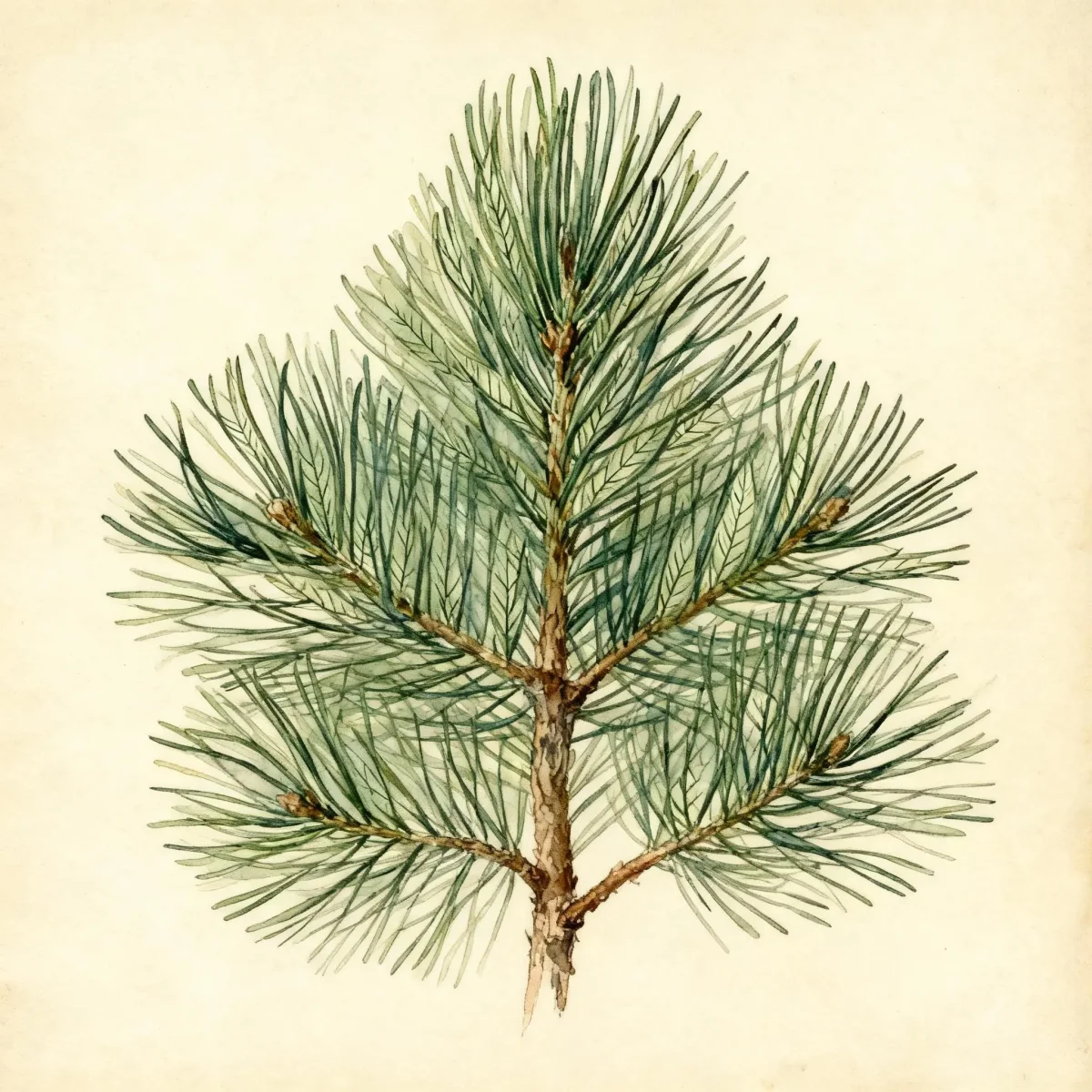
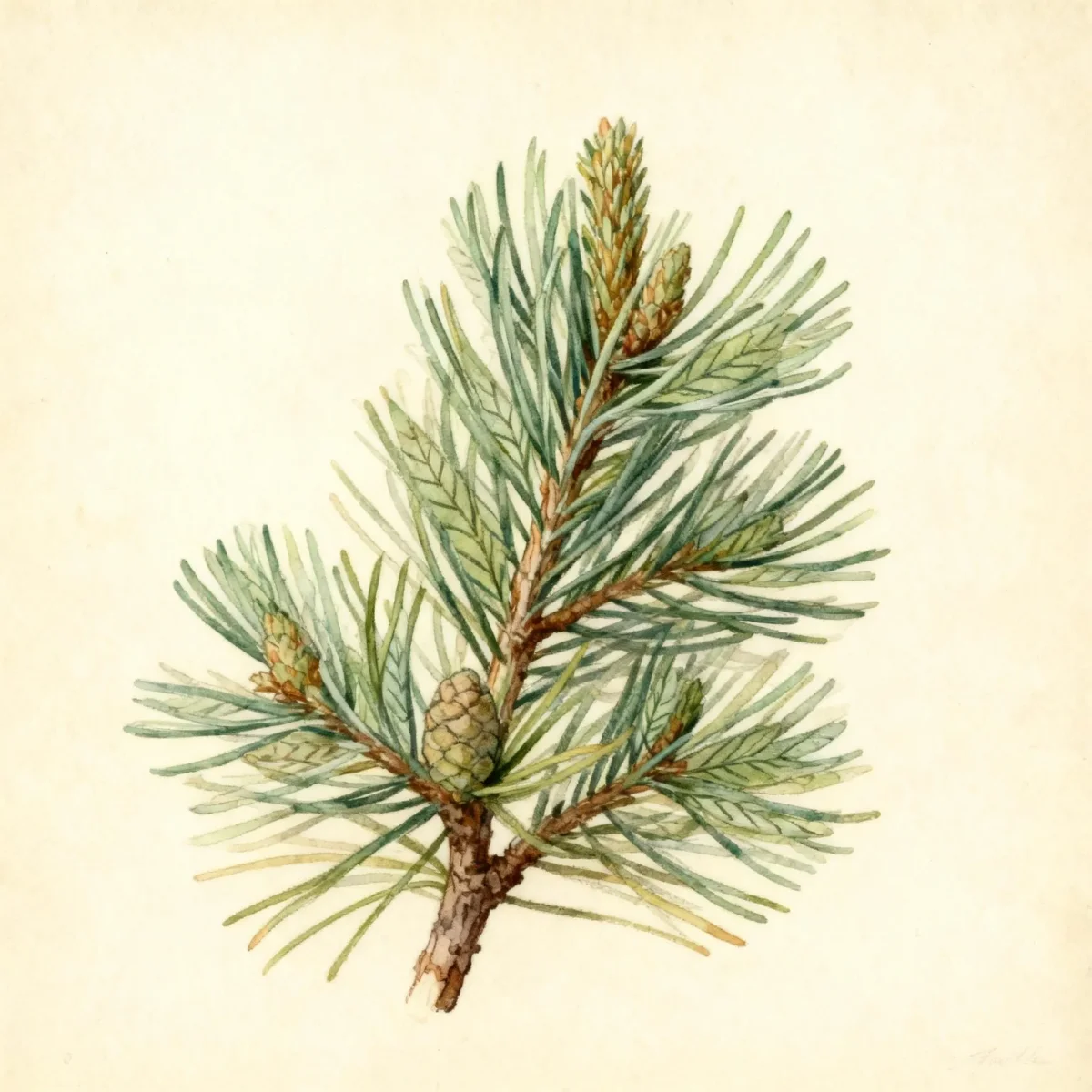
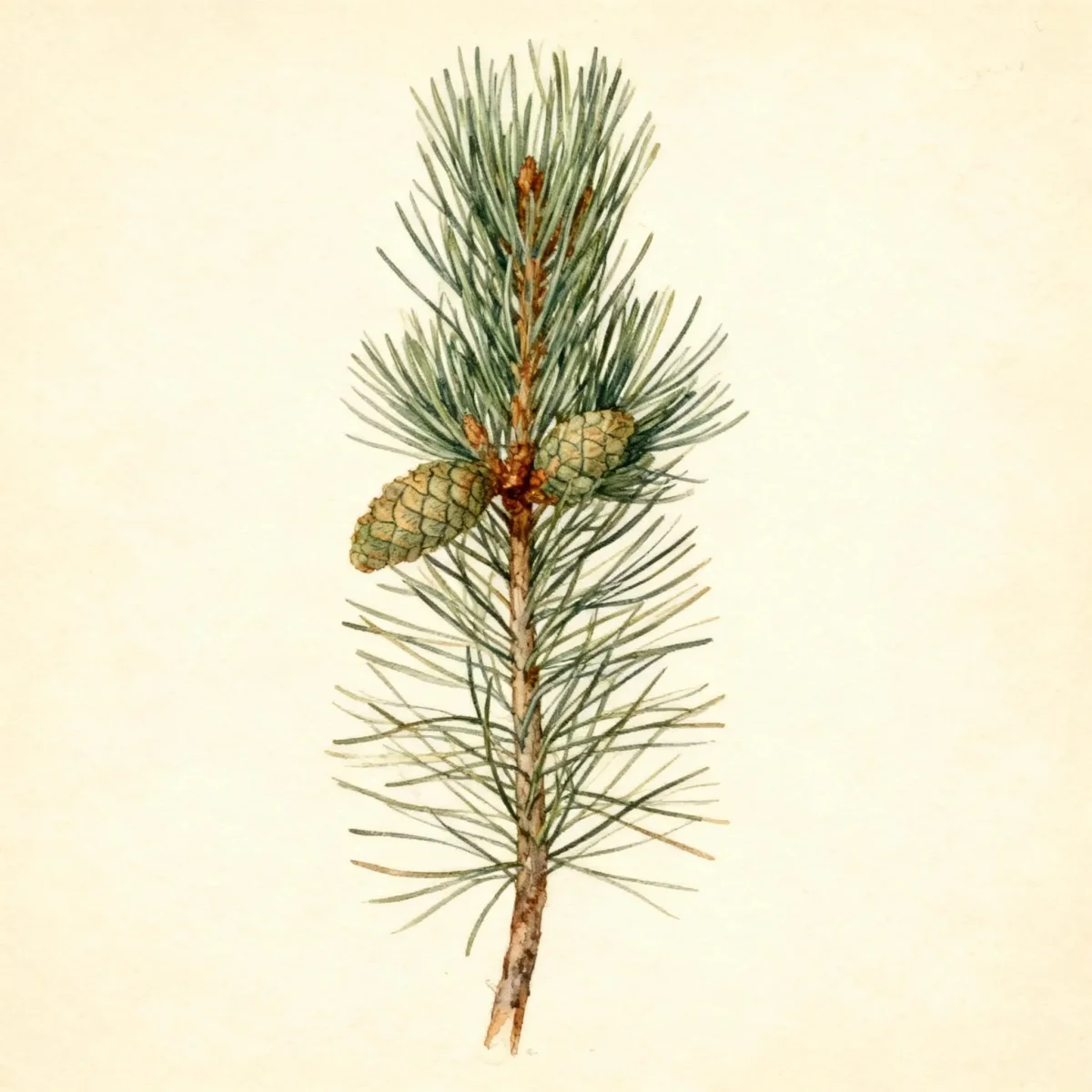
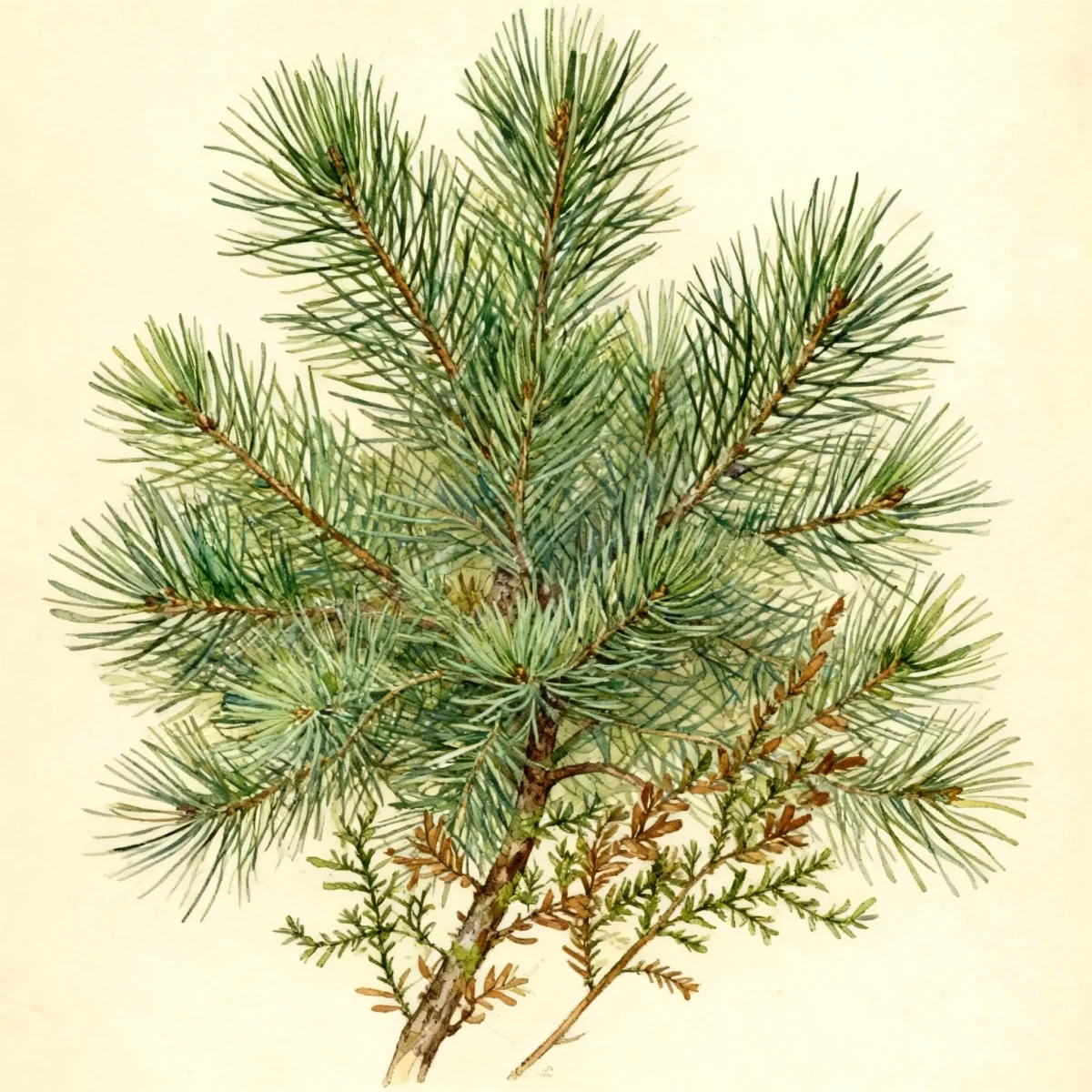
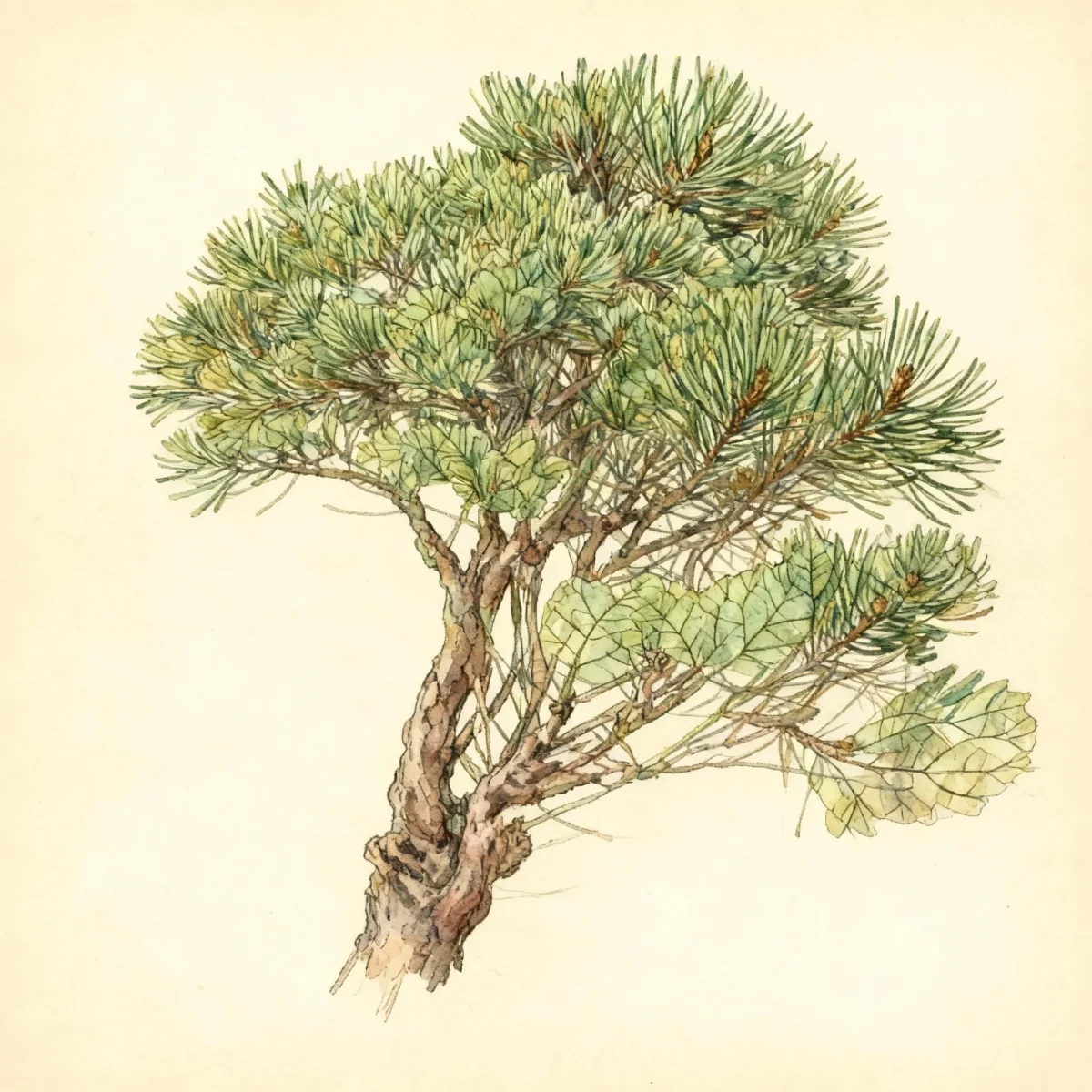
Scotch pine (Pinus sylvestris 'Watereri')
Pinus sylvestris 'Watereri' is a slow-growing, pyramidal Scotch pine valued for its blue-gray needles and low maintenance needs.
Scroll down to discover growing tips, care requirements, companion plants, and more
Complete Plant Information
Overview
The Pinus sylvestris ‘Watereri’ cultivar of Scotch pine provides year-round structure with a manageable, slow-growing habit. Unlike its larger wild cousin, this variety matures into a handsome, flat-topped to broad-rounded conical tree ideal for smaller landscapes or specimen planting. Its distinctive blue-gray needles offer excellent contrast against winter landscapes.
This low-maintenance needled evergreen is highly adaptable, thriving in full sun conditions where many other conifers struggle. While native Scots pine is widespread, Pinus sylvestris ‘Watereri’ offers a reliable, compact form suitable for gardeners seeking the classic pine look without excessive size management.
Gardeners appreciate this Scotch pine for its strong architectural shape and relative toughness once established. It tolerates urban pollution and a variety of soil types, provided sharp drainage is maintained, making it a practical choice for challenging sites.
Fast Facts
- Plant Family: Pinaceae
- Plant Type: Needled evergreen
- Hardiness Zones: USDA Zones 3-7
- Size at Maturity:
- Height: 10-20 ft
- Spread: 8-12 ft
- Bloom Time: Non-flowering
- Bloom Description: Non-flowering
- Sun Exposure: Full sun
- Water Needs: Medium
- Maintenance Level: Low
How to Grow
Plant Pinus sylvestris ‘Watereri’ during the cooler seasons—late fall or early spring—to allow the root system to establish before summer heat. Select a location that offers full sun exposure for the best needle color and density. Crucially, this evergreen demands excellent drainage; while it tolerates various soil mixtures, soggy conditions must be avoided. Acidic soil is preferred for optimal health.
Water needs are designated as medium. During the first few years after planting, maintain consistent moisture, especially during dry spells. Established plants are relatively drought tolerant but benefit from deep watering during prolonged droughts. Generally, fertilizing is unnecessary unless the soil is extremely poor, as these pines are tolerant of less-than-ideal conditions.
Pruning is minimal; ‘Watereri’ maintains a desirable shape naturally. If shaping is required, prune only during the dormant season and avoid heavily cutting back into old wood, as pines do not readily regenerate from bare branches. This cultivar dislikes intense heat and humidity, performing best in cool summer climates.
Landscape Uses
The controlled size of Pinus sylvestris ‘Watereri’ makes it invaluable for landscape accents where space is limited. Use this compact Scotch pine as a focal point near entryways or as a strong vertical element contrasting with broader deciduous shrubs. Its pyramidal shape transitions well into garden peripheries or the background areas of mixed foundation plantings.
Because of its year-round color and texture, it pairs effectively with contrasting textures such as smooth ornamental grasses or broadleaf evergreens. When planting near borders, ensure adequate space for its 8-12 foot spread to develop its characteristic broad, rounded crown over time. This specific form minimizes the aggressive stature of standard Scots pine.
Standout Features
Noteworthy Characteristics
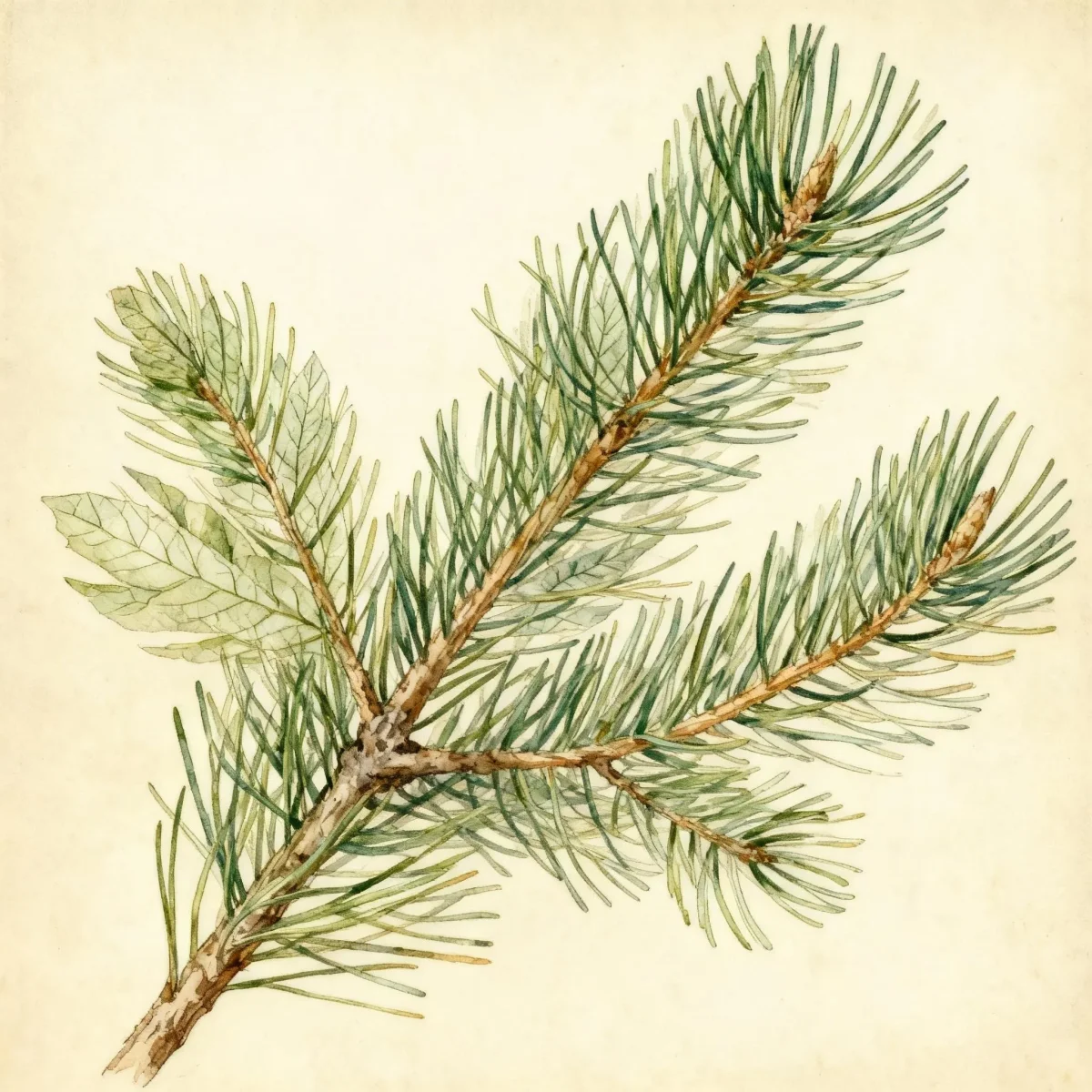
Pinus sylvestris, commonly called Scots pine, is a fast-growing, conical to columnar, medium sized conifer with distinctive flaking orange/red-brown bark. It typically grows 30-60’ tall in cultivation, but may reach 100’ in the wild. It develops an open-rounded, irregular crown as it matures. It is a very widely distributed pine that is native to northern Europe and northern Asia, but has also naturalized in parts of the northeastern and north-central U.S. It is the only pine that is native to Great Britain. Plants will vary in habit, hardiness and needle appearance depending on their specific native geographical growing region. Scots pine generally features (1) twisted, blue-green needles (to 3” long) in bundles of two, (2) gray to light brown cones (to 3” long) and (3) scaly orange/red bark in upper part but darker red-brown near the base. The common name of scotch pine is still popular, but is now considered by some experts to be inappropriate.Genus name comes from the Latin name for pines.Specific epithet means of woods and forests.‘Watereri’ is a slow-growing flat-topped, pyramidal form that eventually matures to 10-20’ tall as a large shrub or broad-rounded conical tree. Blue-gray needles are attractive year round.
Tolerances
- Deer
Potential Problems
While resilient, Scotch pine cultivars like ‘Watereri’ can struggle in regions experiencing hot, humid summers, which may limit their vigor. Look out for Sphaeropsis (Diplodia) tip blight, a fungal issue that manifests as browning needle tips; good air circulation and avoiding overhead watering can help mitigate risk. Pine wilt nematode remains a concern in certain areas, requiring vigilance for sudden wilting or discoloration.
Management should focus on cultural health. Since this plant prefers cooler climates, ensuring sharp soil drainage is paramount to preventing root issues that lower resistance to disease. Monitoring for common pests such as scale insects, sawflies, or moths should be part of routine late spring and summer inspection.
Frequently Asked Questions
What hardiness zones is Scotch pine suitable for?
Pinus sylvestris ‘Watereri’ is reliably hardy in USDA Zones 3 through 7.
How large does Pinus sylvestris ‘Watereri’ grow?
This cultivar typically reaches a manageable height of 10 to 20 feet, with a spread between 8 and 12 feet at maturity.
What sun exposure does Scotch pine need?
This needled evergreen absolutely requires full sun exposure to maintain its dense habit and vibrant blue-gray needle color.
When does Pinus sylvestris ‘Watereri’ bloom?
This plant is a conifer and is non-flowering.
Conclusion
The Pinus sylvestris ‘Watereri’ offers a low-maintenance solution for adding year-round, architectural interest to the landscape, distinguishing itself with appealing blue-gray foliage and a controllable size. Its tolerance for various soils makes it a pragmatic choice, but gardeners must ensure it receives full sun and excellent drainage. Before planting, confirm that your location falls within USDA Zones 3-7 to ensure the greatest success with your new Scotch pine.
Design Ideas
When integrating Pinus sylvestris ‘Watereri’ into formal garden designs, its tight, pyramidal shape functions excellently as a vertical anchor at the corners of defined planting beds. Contrast its dense, cool coloration with the bright greens or reds of deciduous shrubs like Japanese maples or barberry varieties that demand similar sun exposure. This cultivar acts as an excellent year-round screen when grouped, providing architectural skeleton structure to perennial beds throughout winter.
For a naturalistic or woodland edge planting, place the Scotch pine where its distinctive flaking, orange-red bark can be appreciated, especially when backlit by the afternoon sun. Since it handles urban conditions well, consider using a single specimen near a patio or sitting area to provide a visual focal point without overwhelming the space as a large field pine would.
Companion Planting
Companion planting for Pinus sylvestris ‘Watereri’ should focus on plants that share similar requirements for full sun and well-drained, perhaps slightly acidic, soil. Groundcovers that tolerate dry shade once established, such as Pachysandra or Vinca minor, can be effective beneath the canopy as the tree matures and shades the ground. Avoid planting moisture-loving perennials directly at the trunk base, which could lead to root rot given the pine’s sensitivity.
Consider pairing this evergreen with deciduous trees or shrubs that offer complementary seasonal interest. For instance, serviceberry (Amelanchier) provides spring flowers and fall color, creating a dynamic visual transition around the steady presence of the Scotch pine. The key is maintaining low maintenance for both groups, favoring hardy, adaptable species.