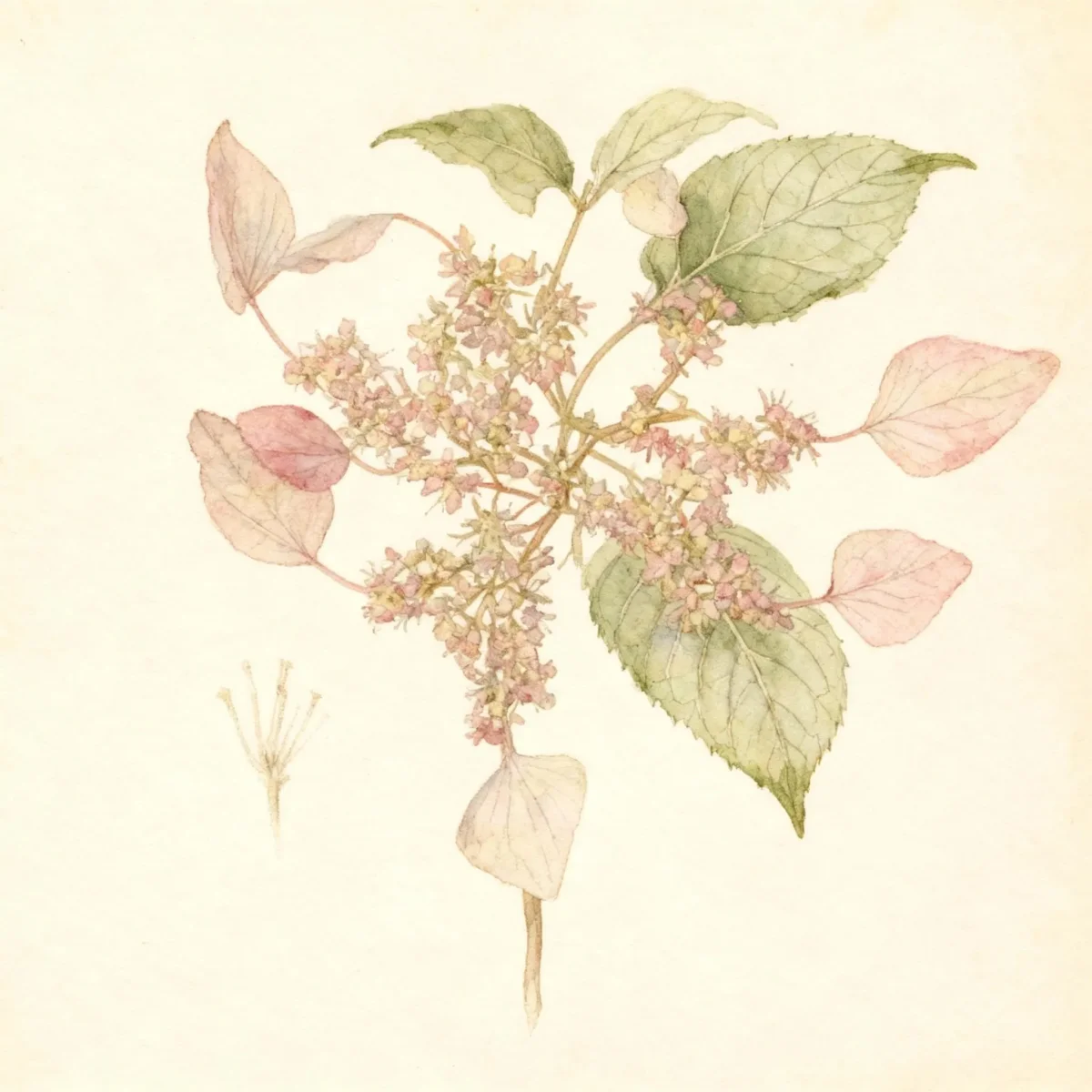
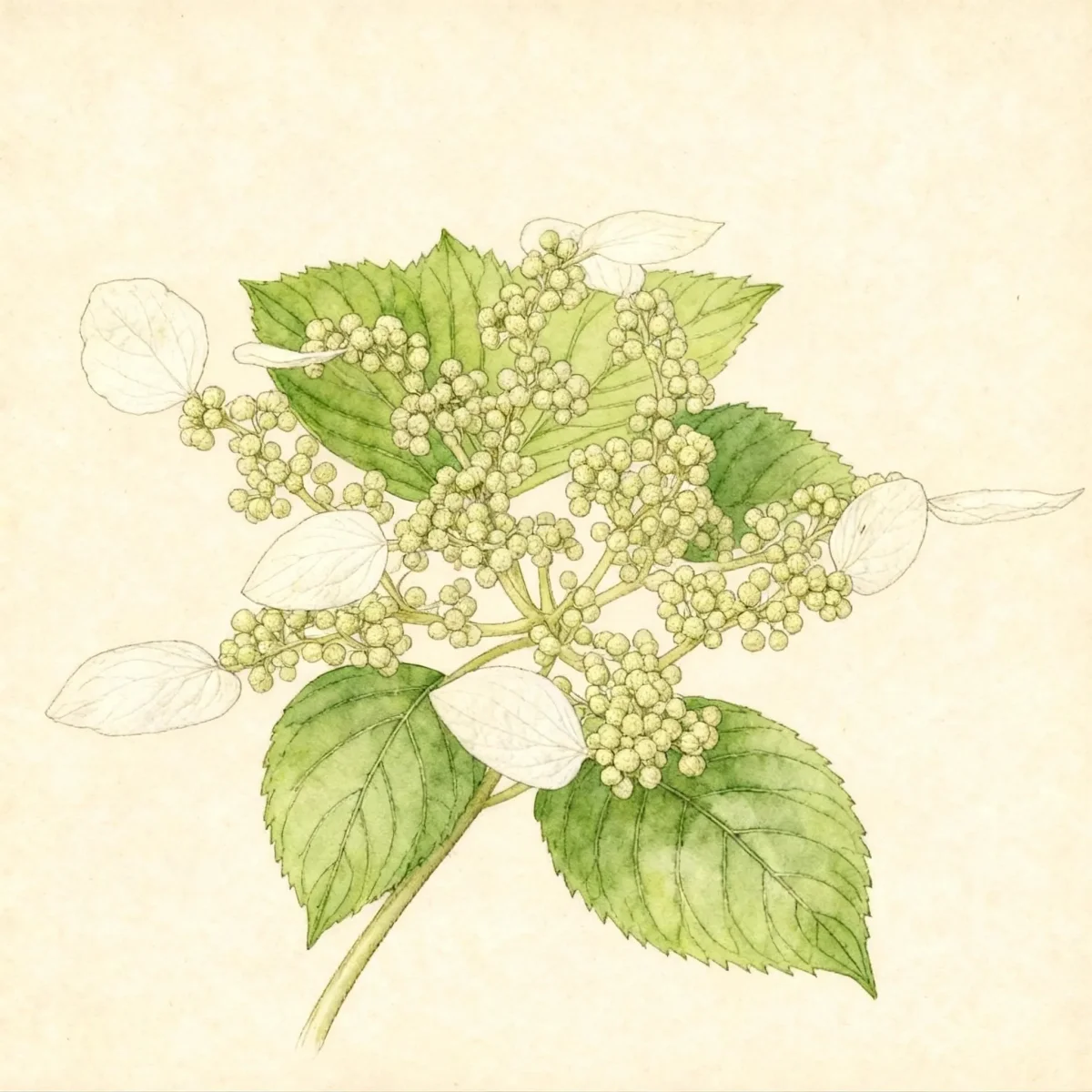
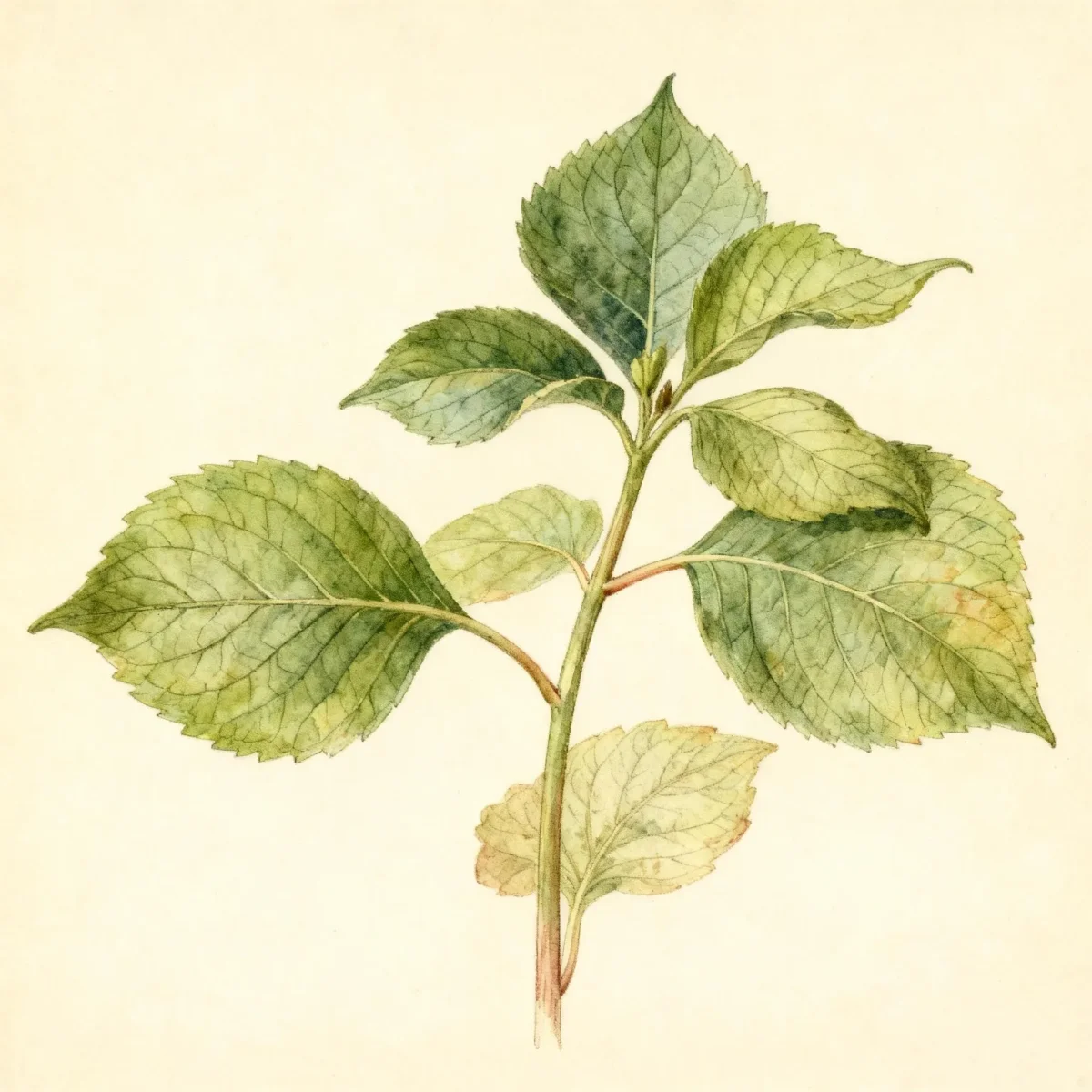
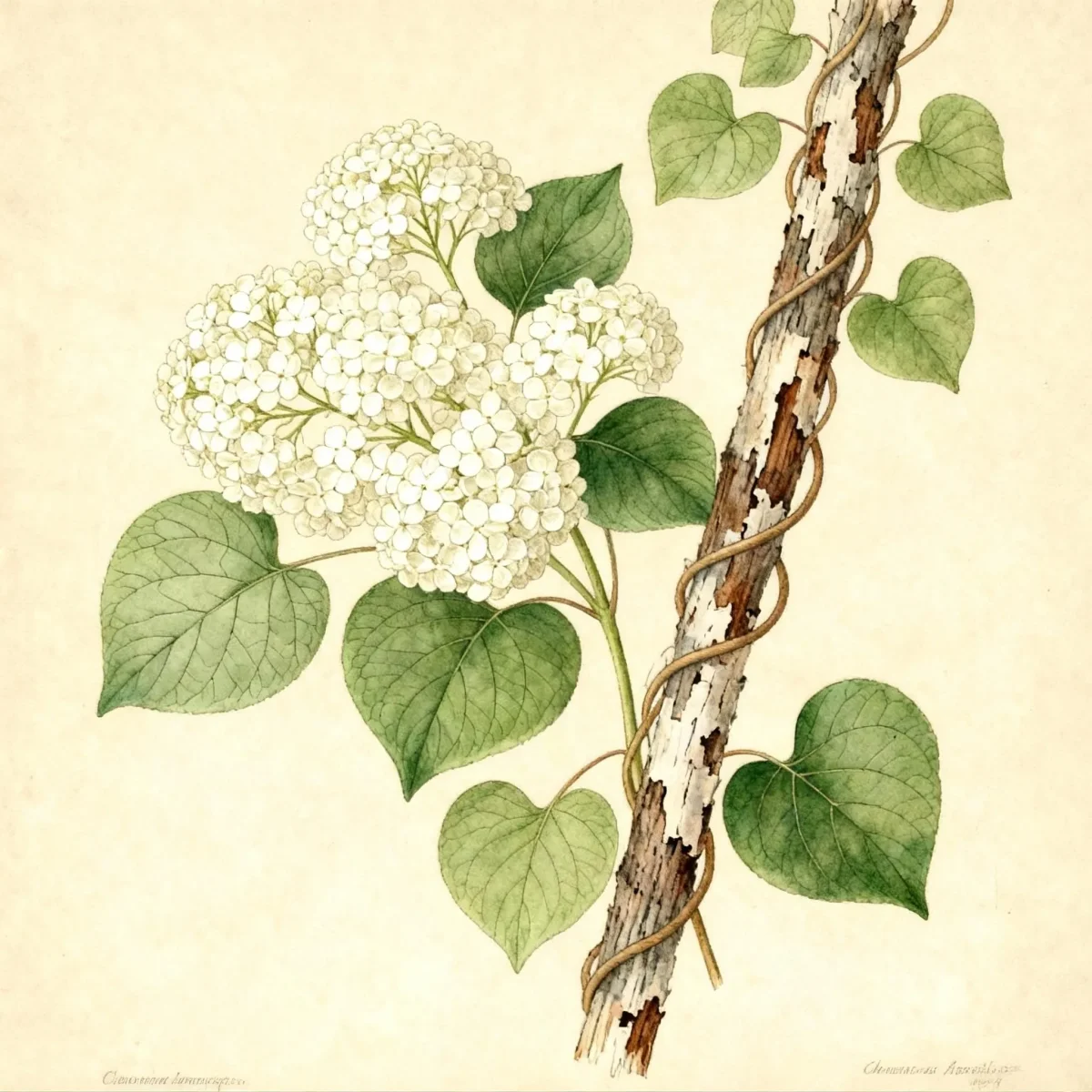
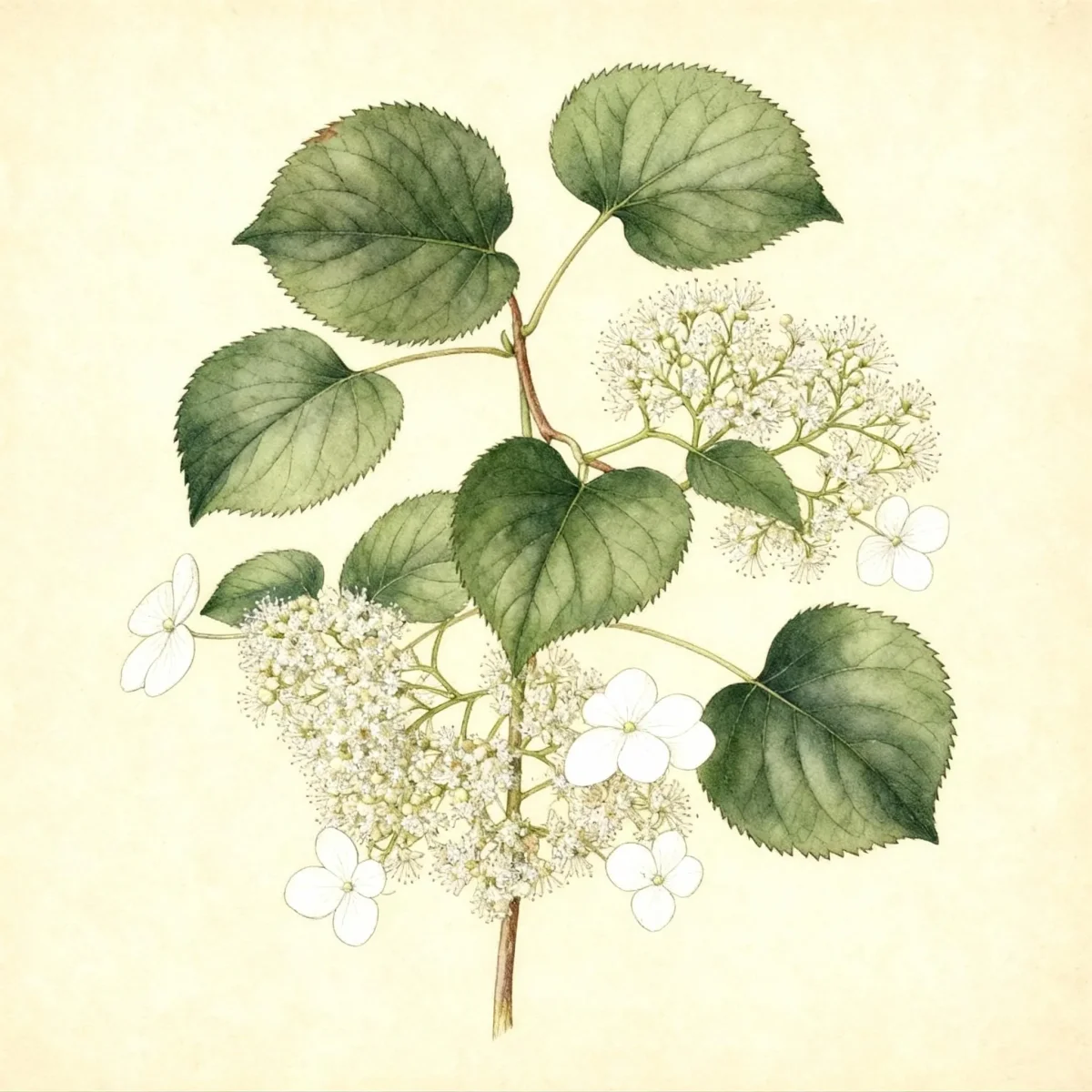
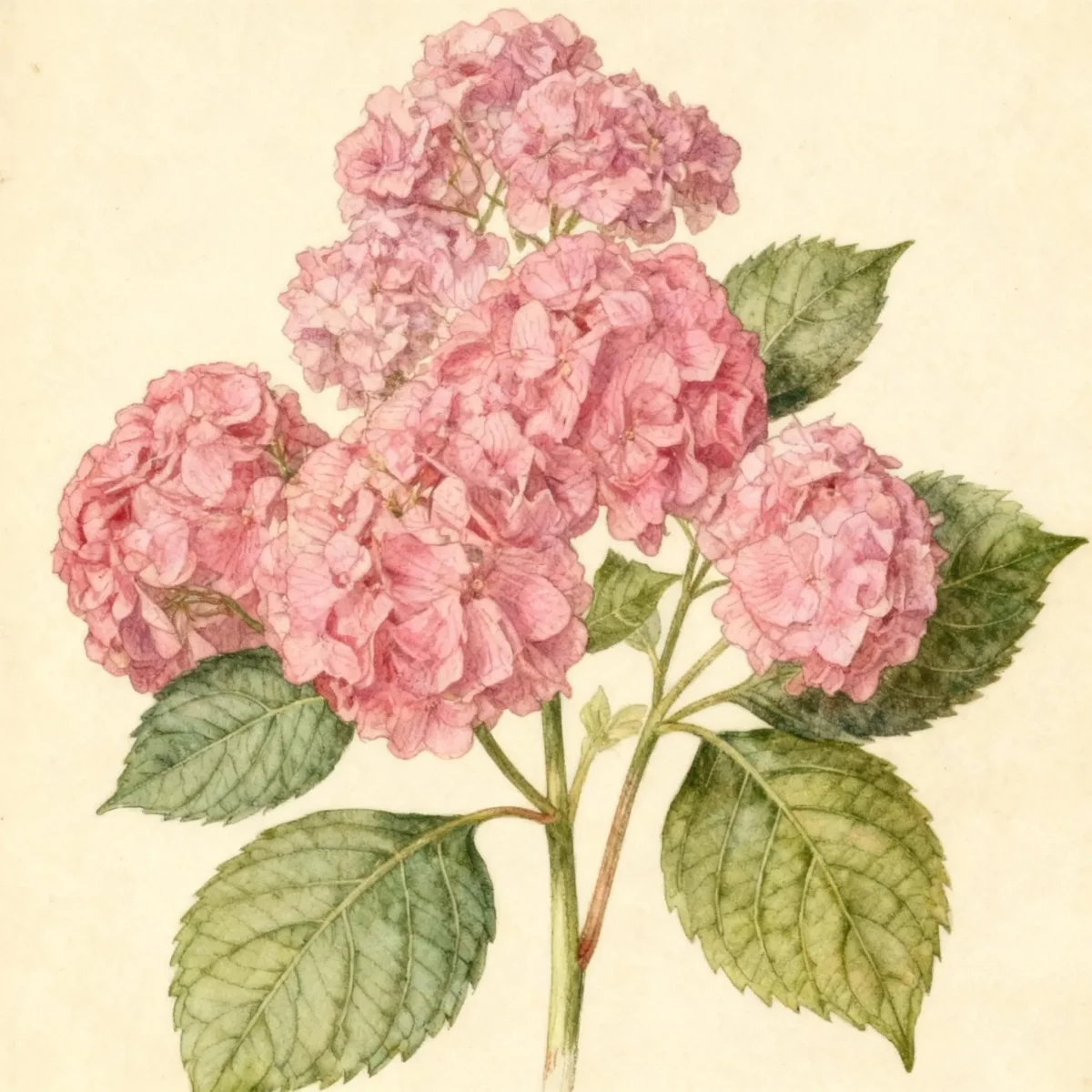
Japanese hydrangea vine (Schizophragma hydrangeoides 'Moonlight')
The stunning Schizophragma hydrangeoides 'Moonlight' is a woody vine featuring silvery, blue-green foliage and large white flower clusters. Ideal for shady walls.
Scroll down to discover growing tips, care requirements, companion plants, and more
Complete Plant Information
Overview
Schizophragma hydrangeoides ‘Moonlight’, commonly known as the Japanese hydrangea vine, is a magnificent deciduous climber celebrated for softening harsh vertical spaces with its unique foliage and blooms. Its visual appeal centers around the large, silvery, blue-green, heart-shaped leaves that catch and reflect dappled light beautifully throughout the season. This woody vine uses adhesive rootlets to cling to flat surfaces like masonry walls, providing excellent vertical coverage as it matures.
Valued for its structure and striking summer display, the Japanese hydrangea vine produces elegant, flat-topped clusters of creamy white flowers, resembling lace-cap hydrangeas. It is perfectly suited for deeply shaded gardens where few other flowering vines can thrive, offering texture and summer interest. The foliage also transitions to yellow in the fall, adding a final seasonal flourish before the reddish-brown stems offer winter structure.
Growing Schizophragma hydrangeoides ‘Moonlight’ successfully means providing it with a rich, moist foundation and protection from harsh afternoon sun. While slow to establish initially, patience rewards the gardener with a robust climber reaching heights of 30 feet or more. This vine provides a dramatic, naturalized effect when allowed to ascend large structures or mature trees.
Fast Facts
- Plant Family: Hydrangeaceae
- Plant Type: Vine
- Hardiness Zones: USDA Zones 5-9
- Size at Maturity:
- Height: 20-30 ft
- Spread: 6-9 ft
- Bloom Time: July to August
- Bloom Description: White
- Sun Exposure: Part shade to full shade
- Water Needs: Medium
- Maintenance Level: Medium
How to Grow
Establish your Schizophragma hydrangeoides ‘Moonlight’ during the spring or fall when temperatures are moderate. This woody vine requires rich, well-drained soil that maintains medium moisture levels consistently. Ensure the planting location receives protection, thriving best in part shade to full shade, avoiding intense, scorching afternoon sun exposure which can scorch the distinctive foliage.
Watering should be consistent, especially during the initial establishment phase, as this Japanese hydrangea vine prefers continuously moist conditions. Avoid letting the soil dry out completely between waterings. Fertilization is rarely necessary if the soil is rich; otherwise, a balanced, slow-release fertilizer applied in early spring can support vigorous growth.
Pruning is best managed in late winter or early spring just as new growth begins. Remove any dead, damaged, or crossing branches to maintain an open structure. Keep in mind that a single plant has the capacity to cover 30 feet wide over time, so if you are using it for rapid coverage on a wall, space individual plants 6 to 9 feet apart at planting time.
Landscape Uses
The primary strength of Schizophragma hydrangeoides ‘Moonlight’ lies in its ability to green and soften large vertical planes that receive limited sun. Use this climbing vine to dramatically cover old, unattractive masonry walls or to provide a lush green curtain up the trunk of a large, established tree. It also looks magnificent draped slowly over low stone retaining walls or cascading over large boulders when groundcover is desired.
For design pairings, consider utilizing companion plants that also thrive in deep shade and appreciate high levels of moisture. Hostas with contrasting leaf textures, variegated Solomon’s Seal, or shade-loving ferns work exceptionally well beneath the spreading canopy of the Japanese hydrangea vine. These pairings accentuate the unique, lighter tones of the ‘Moonlight’ cultivar.
When planting near structures, ensure you provide adequate support or allow the natural adhesive rootlets to attach to rough surfaces. While it adheres well to masonry, avoid placing it against surfaces that require pristine condition, as removal can be difficult once mature.
Standout Features
Flower Qualities
- Showy
Noteworthy Characteristics
Schizophragma hydrangeoides, commonly called Japanese hydrangea vine, is a deciduous, woody-stemmed, climbing vine valued for its toothed, heart-shaped, deep green leaves and large, flat-topped, lace cap hydrangea-like clusters of white flowers which bloom in early summer. The cultivar ‘Moonlight’ is particularly noted for its silvery, blue-green, heart-shaped leaves (3-5” across) and large flower clusters (8-10” across) that bloom for an extended period of 6 to 8 weeks in summer. This plant attaches to vertical flat surfaces by stem-borne adhesive rootlets, and the reddish-brown stems offer modest interest during winter months.
Tolerances
- Heavy Shade
Potential Problems
Fortunately, the Japanese hydrangea vine generally avoids serious insect or disease problems, contributing to its low-maintenance appeal when sited correctly. The most common challenge gardeners face with Schizophragma hydrangeoides ‘Moonlight’ is establishing the plant quickly. It is often slow to get started, sometimes taking several years before exhibiting vigorous vertical growth. Ensure consistent moisture and patience during the first 2-3 growing seasons to encourage deep root development.
Frequently Asked Questions
What hardiness zones is Schizophragma hydrangeoides ‘Moonlight’ suitable for?
This highly adaptable vine performs best in USDA Hardiness Zones 5 through 9.
How large does Japanese hydrangea vine grow?
Mature specimens of Schizophragma hydrangeoides ‘Moonlight’ typically reach heights between 20 and 30 feet tall, with a spread spanning 6 to 9 feet wide.
When does Japanese hydrangea vine bloom?
You can expect the showy, white flower clusters of the Japanese hydrangea vine to appear from July through August.
What sun exposure does Schizophragma hydrangeoides ‘Moonlight’ need?
This vine thrives in shadier locations; provide it with part shade to full shade for the best results.
Conclusion
Schizophragma hydrangeoides ‘Moonlight’ offers exceptional elegance to shaded garden spaces with its silvery, large foliage and enduring white summer blooms. The unique clinging habit of this Japanese hydrangea vine makes it an unparalleled choice for softening walls and vertical architectural elements. Before planting, confirm your location falls within USDA Zones 5-9 and that you can provide consistent moisture in a shady spot to ensure its successful ascent.
Companion Planting
When choosing neighbors for your climbing Schizophragma hydrangeoides ‘Moonlight’, focus on plants that share its love for deep shade and consistent moisture. Groundcover choices that benefit from the dappled light filtering through the vine’s canopy include Helleborus (Lenten Rose), which offers very early color, and Astilbe, prized for its fine, fern-like, colorful plumes contrasting nicely with the broad leaves of the vine. Underplanting also helps keep the base of the vine cool and moist, encouraging better establishment.
Seasonal Care Calendar
Spring is the optimal time to assess overall plant health and execute necessary pruning of any dead wood before new growth accelerates. As summer progresses and the vine blooms, monitor water levels closely; though mature vines are resilient, drought stress during peak flowering will diminish the display. In the late fall, while the foliage turns yellow, avoid heavy cleanup; the remaining reddish stems provide valuable vertical lines throughout the winter months.