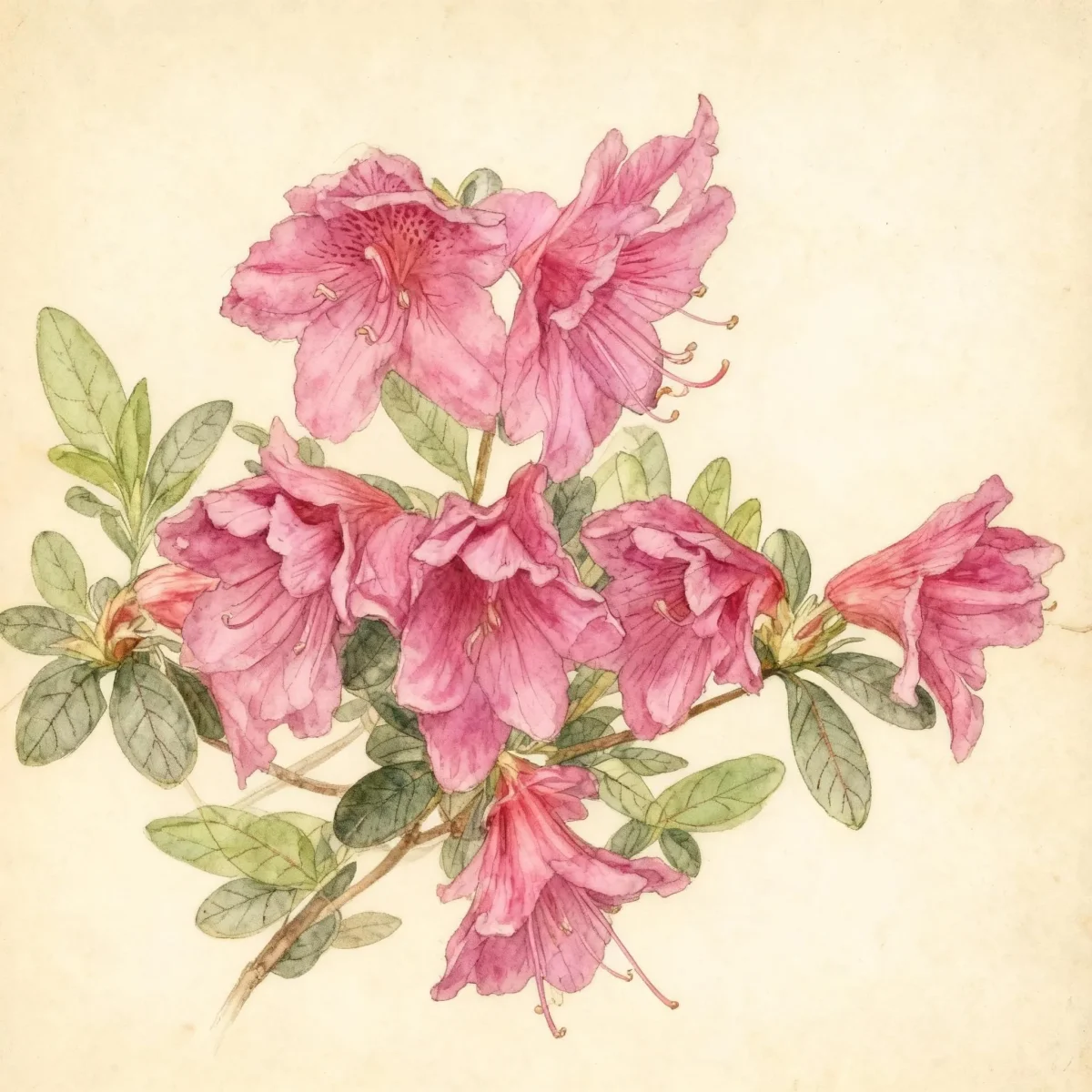
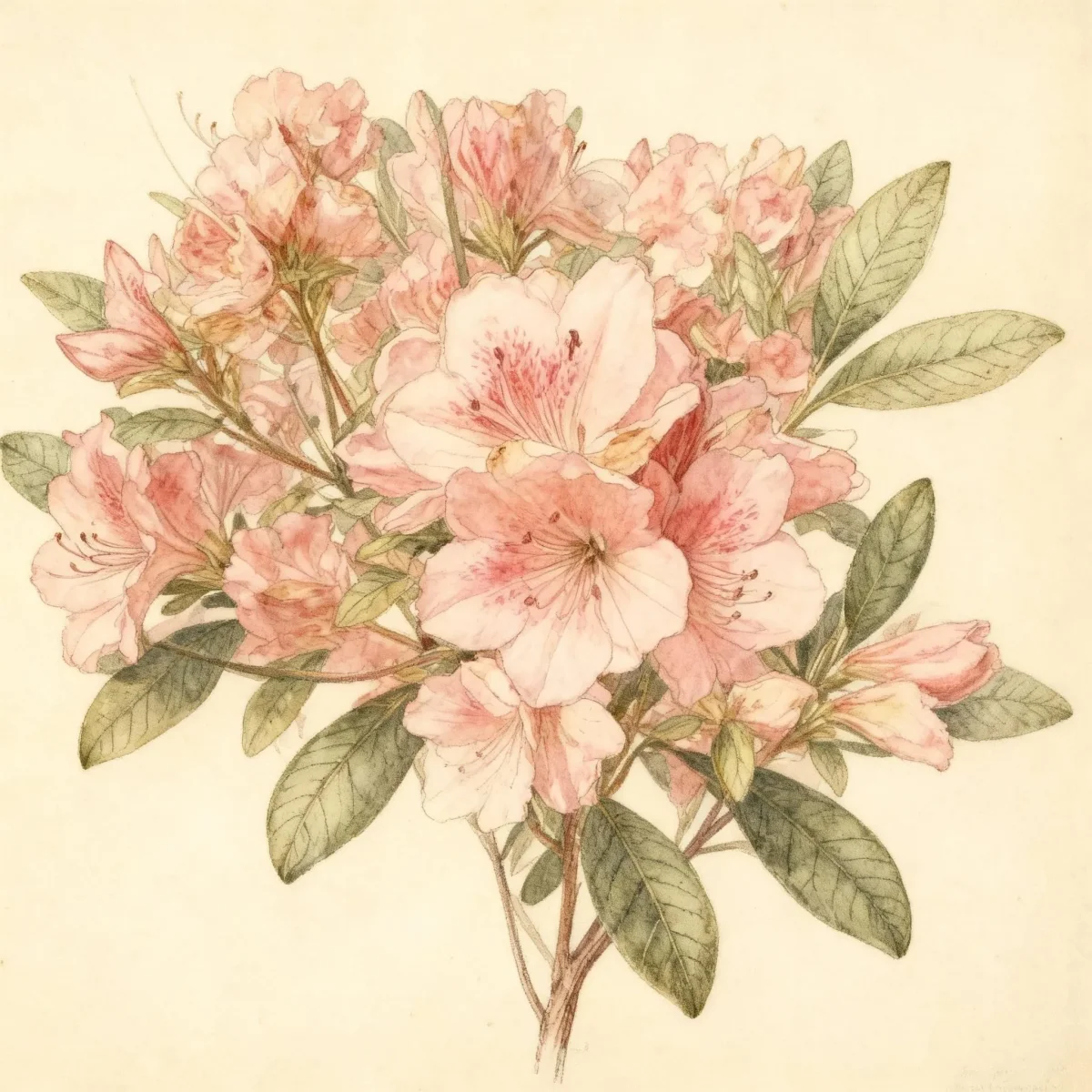
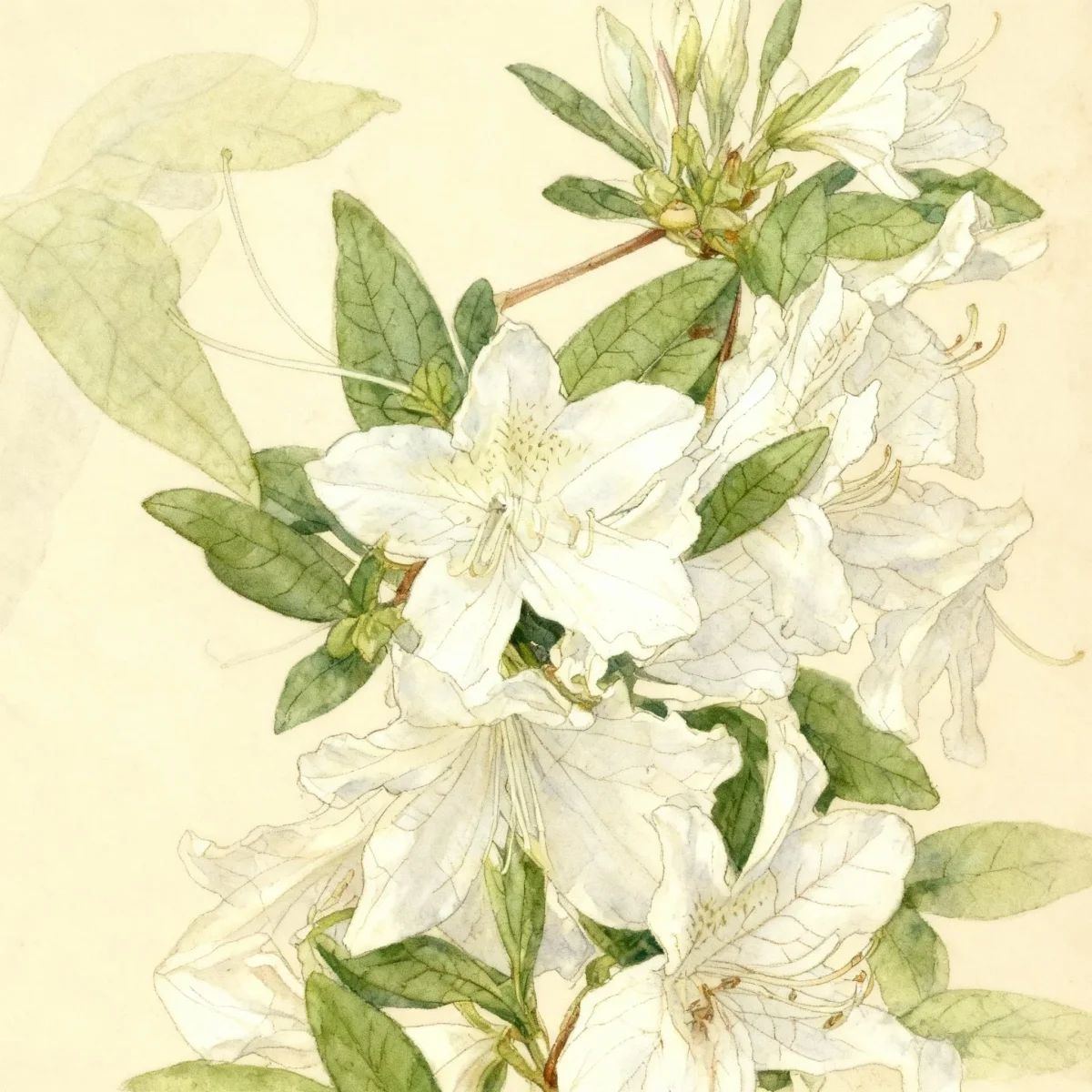
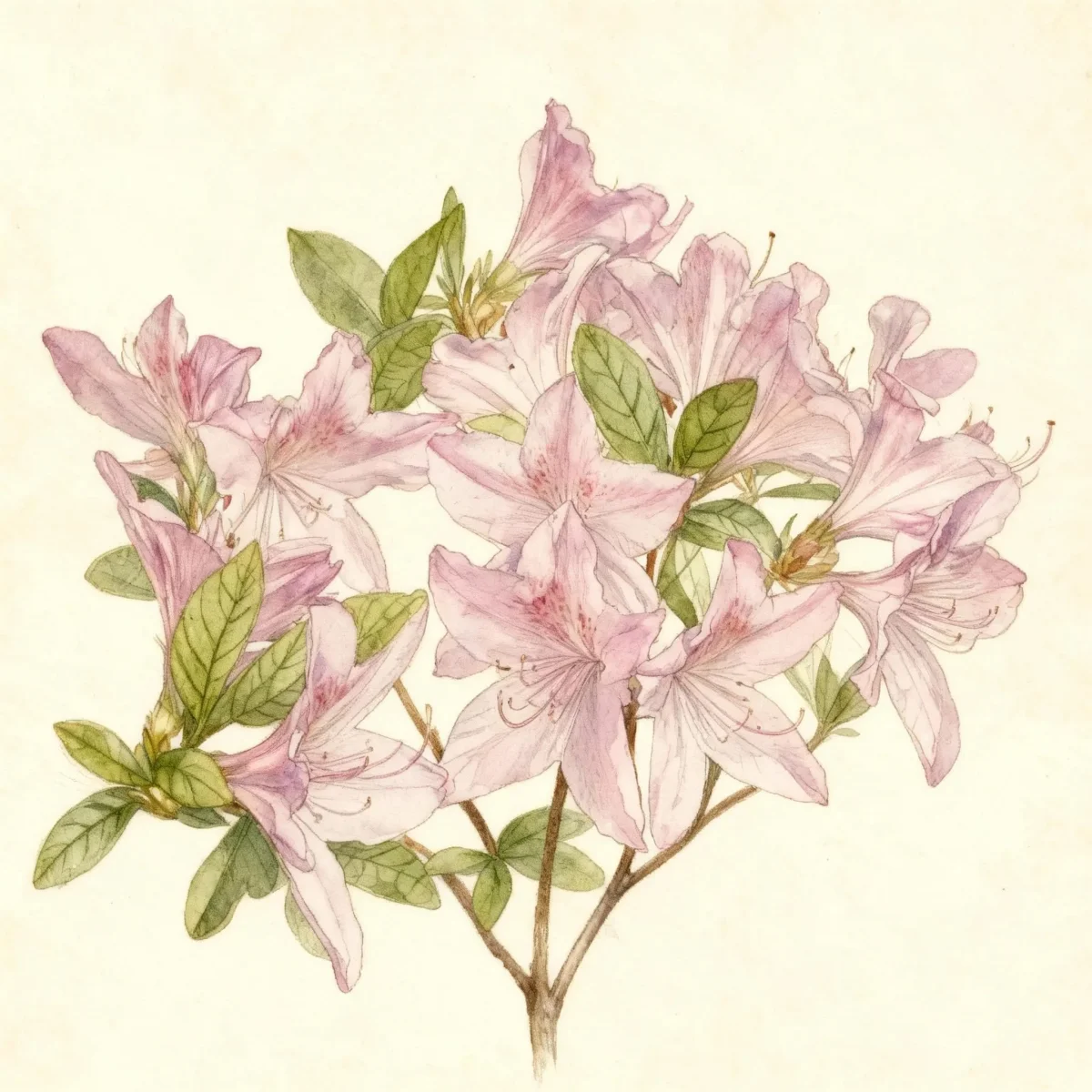
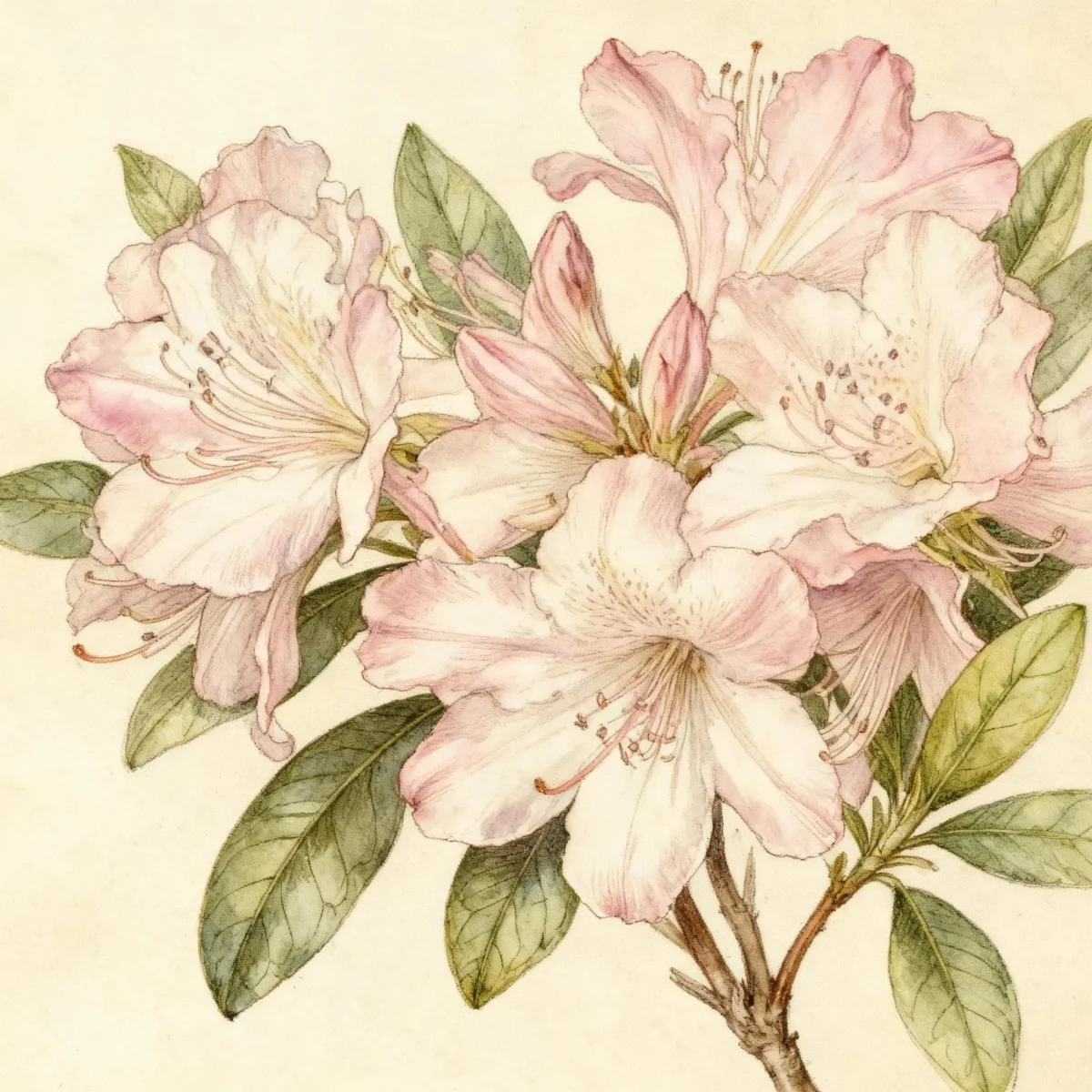
Evergreen azalea (Rhododendron 'Rosebud')
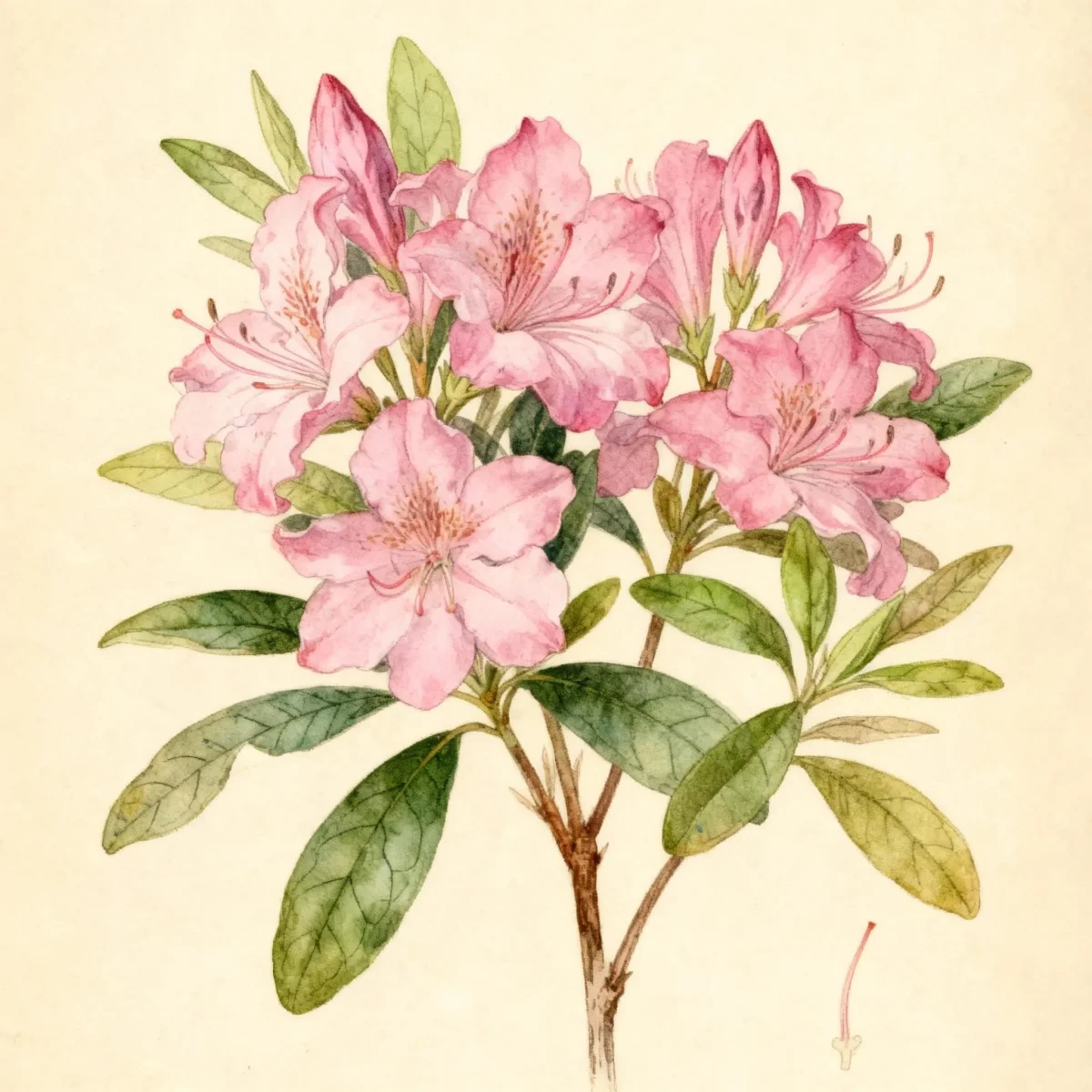
Rhododendron 'Rosebud' is a beautiful Evergreen azalea offering showy, purplish-pink, hose-in-hose flowers in late spring.
Scroll down to discover growing tips, care requirements, companion plants, and more
Complete Plant Information
Overview
Rhododendron ‘Rosebud’ is a highly valued Gable hybrid, specifically recognized as a dense, showy Evergreen azalea. It provides year-round structure with its broadleaf evergreen foliage, contrasting beautifully with its distinctive, funnel-shaped, hose-in-hose blooms appearing from May to June. This cultivar is prized for its deep purplish-pink coloration, making it an excellent specimen plant or addition to mixed borders.
As a compact shrub, Rhododendron ‘Rosebud’ typically reaches 2 to 3 feet tall and spreads up to 4 feet wide, fitting well into foundation plantings where space is limited. Successful cultivation hinges on mimicking its native woodland environment, requiring slightly acidic, rich, and consistently moist, yet well-drained soil. Proper placement in part shade ensures vibrant health for this attractive Evergreen azalea.
Gardeners seeking reliable four-season interest will appreciate the resilience of Rhododendron ‘Rosebud’. While it retains its leaves throughout winter, gardeners in colder zones must protect developing buds from extreme freeze, as winter injury can affect spring performance. Attention to soil pH and drainage is the key cultural practice for enjoying years of spectacular blooms from this versatile shrub.
Fast Facts
- Plant Family: Ericaceae
- Plant Type: Broadleaf evergreen
- Hardiness Zones: USDA Zones 6-9
- Size at Maturity:
- Height: 2-3 ft
- Spread: 3-4 ft
- Bloom Time: May to June
- Bloom Description: Purplish pink
- Sun Exposure: Part shade
- Water Needs: Medium
- Maintenance Level: Medium
How to Grow
The key to establishing Rhododendron ‘Rosebud’ successfully lies in site preparation, focusing heavily on soil structure and acidity. Plant in early spring or fall when the weather is cool, ensuring the location receives morning sun followed by afternoon shade, or consistent dappled light throughout the day. Cultivate the soil to be organically rich and humusy, with excellent drainage, as this variety absolutely cannot tolerate “wet feet” which leads to root rot. In heavy clay areas, consider creating raised beds for optimal drainage when planting your Evergreen azalea.
Maintain consistently medium moisture levels; the shallow, fibrous root system of Rhododendron ‘Rosebud’ must never be allowed to dry out, especially during warmer months. Apply a thick layer of mulch, such as pine needles or wood chips, to stabilize soil temperatures and conserve moisture, but keep the mulch away from the immediate crown of the plant. Soil pH should be managed actively, aiming for a range between 5.0 and 5.5; use iron sulfate or sulfur to acidify soil if needed, avoiding high pH conditions which cause chlorosis (yellowing leaves).
Pruning for Rhododendron ‘Rosebud’ is minimal; the most important task after flowering is promptly clipping off spent flower clusters (deadheading) to encourage energy redirection toward next year’s buds. Avoid cultivating the soil deeply near the plant, owing to the sensitive, surface-level roots. Furthermore, strictly avoid planting this shrub near walnuts, butternuts, or pecans, as the toxic juglones secreted by their roots are highly detrimental to azaleas.
Landscape Uses
Rhododendron ‘Rosebud’ offers excellent form and color for structured landscapes, functioning effectively as a low-growing hedge or as an elegant specimen plant. Its manageable size, reaching 2 to 3 feet tall, makes it perfect for defining the front edge of shrub borders or softening the foundation planting line against structures. Consider using masses of this Evergreen azalea along woodland margins where filtered light naturally mimics their preferred environment.
When selecting companions, choose plants that share Rhododendron ‘Rosebud”s preference for acidic, well-drained woodland settings. Good partners include Japanese maples, ferns, camellias, or shade-loving groundcovers like Helleborus or Tiarella. This shrub performs beautifully when grouped for mass appeal, allowing the purplish-pink blooms to create a cohesive swath of color against deeper greens.
For woodland gardens, plant Rhododendron ‘Rosebud’ where it receives some protection from harsh, desiccating winds, as strong air movement can exacerbate winter foliage burn. Its compact, mounded structure also ensures it maintains visual interest even when not in bloom, providing necessary evergreen texture year-round.
Standout Features
Flower Qualities
- Showy
Noteworthy Characteristics
Rhododendron ‘Rosebud’ is a Gable hybrid derived from R. ‘Louise Gable’ and R. ‘Caroline Gable’, growing to a manageable 2-3 feet tall and 3-4 feet wide. It features beautiful, funnel-shaped, hose-in-hose flowers, meaning they appear to have 10 to 12 petals, creating a look of one blossom nested inside another. These distinctive flowers present in shades of purplish pink, often accented with slight, deep purplish-pink veining, adding complexity to this popular Evergreen azalea.
Tolerances
- Rabbit
Potential Problems
Rhododendrons and azaleas, including Rhododendron ‘Rosebud’, are susceptible to several common pests and diseases that require proactive management. Key insect threats include scale, lacebugs, and borers, while fungal issues like leaf spot, powdery mildew, and threatening root rot are common in unfavorable conditions. Chlorosis, characterized by yellow leaves, usually signals that the soil pH is too high, leading to an iron deficiency which must be corrected by lowering the pH.
Preventative care is your best defense against pathogens and pests. Ensure the plant is sited correctly—avoiding poor drainage is paramount to preventing root rot—and maintain the ideal acidic soil pH between 5.0 and 5.5. If chlorosis appears, incorporating iron sulfate while ensuring good moisture retention will help restore deep green color to the foliage of your Evergreen azalea.
Frequently Asked Questions
What hardiness zones is Evergreen azalea suitable for?
Rhododendron ‘Rosebud’ is typically hardy and performs best in USDA Zones 6 through 9.
How large does Rhododendron ‘Rosebud’ grow?
This cultivar reaches a mature height of 2 to 3 feet tall and spreads to between 3 and 4 feet wide.
What sun exposure does Rhododendron ‘Rosebud’ need?
Rhododendron ‘Rosebud’ requires part shade, ideally needing protection from intense, hot afternoon sun to prevent leaf scorch.
When does Evergreen azalea bloom?
This Evergreen azalea blooms reliably in the late spring, generally from May into June, displaying stunning purplish-pink flowers.
Conclusion
The Rhododendron ‘Rosebud’ offers gardeners a fantastic combination of reliable evergreen structure and abundant, uniquely formed purplish-pink spring flowers. Its moderate size makes it highly useful for borders and hedges where a sophisticated, textured shrub is desired. Before planting this specific cultivar, confirm that your growing area falls within USDA Zones 6-9 and that you can consistently provide the acidic, well-drained soil this fine Evergreen azalea demands.
Companion Planting
Since Rhododendron ‘Rosebud’ thrives in acidic, humus-rich, well-drained soil under filtered light, companion plants must share these specific cultural needs. Excellent companions include other members of the Ericaceae family, such as mountain laurel (Kalmia) or blueberries, which tolerate or prefer similar soil chemistry. Low-growing companions that thrive in dappled shade, like Astilbe, Hosta, or various woodland ferns, provide excellent textural contrast beneath the canopy of larger shrubs.
When designing a grouping, consider that shallow-rooted plants work best near azaleas, since the root systems of Rhododendron ‘Rosebud’ should not be disturbed by deep cultivation. Planting these companions slightly away from the base of the azalea allows for easier placement of mulch, which is critical for maintaining soil temperature and moisture retention around the sensitive roots of the Evergreen azalea.
Seasonal Care Calendar
Early spring care involves checking the mulch layer and ensuring the soil remains moist as temperatures begin to rise before aggressive blooming starts. Once blooming concludes in early summer, deadhead spent flower clusters and apply a slow-release, acidifying fertilizer formulated specifically for rhododendrons, following label instructions carefully. Summer watering should be consistent, ensuring the shrub never experiences drought stress, which weakens its ability to withstand winter conditions.
Fall preparation for Rhododendron ‘Rosebud’ focuses primarily on adequate hydration; ensure the plant is deeply watered before the ground freezes solid, as evergreen foliage continues to lose moisture throughout winter. Protect young or newly established plants from winter winds which can cause foliage desiccation; temporary burlap screens placed on the north or west sides can offer crucial protection against harsh winter burn.