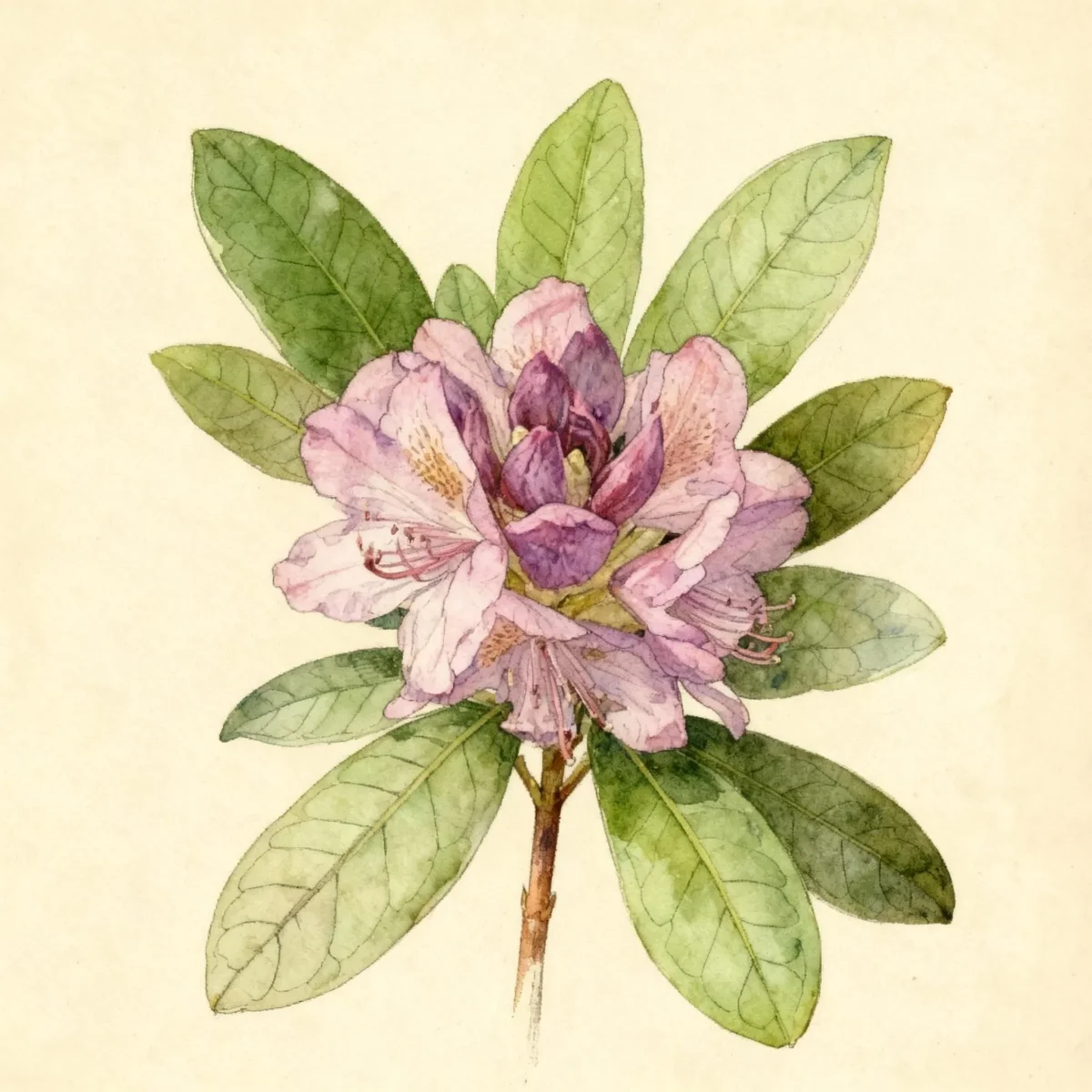
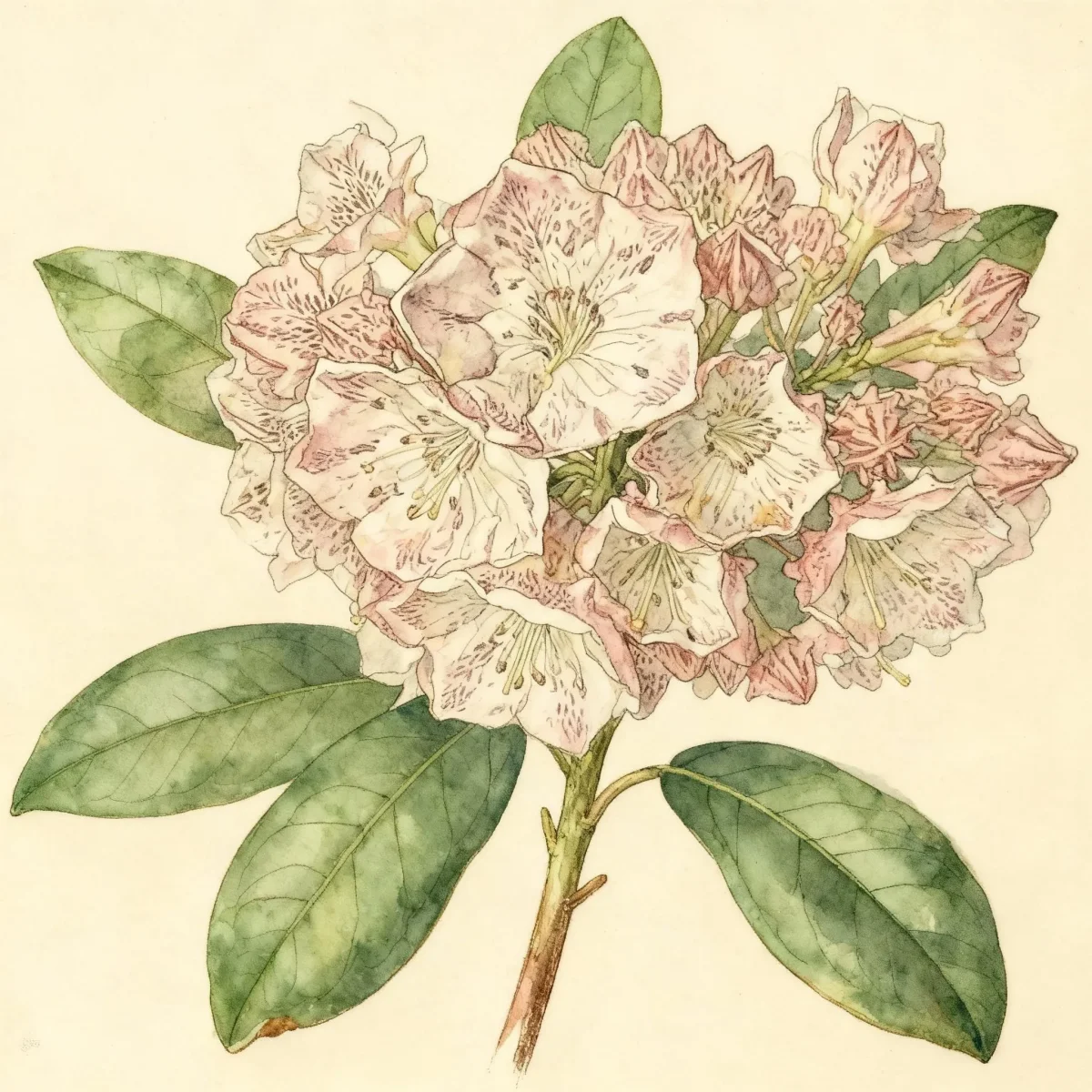
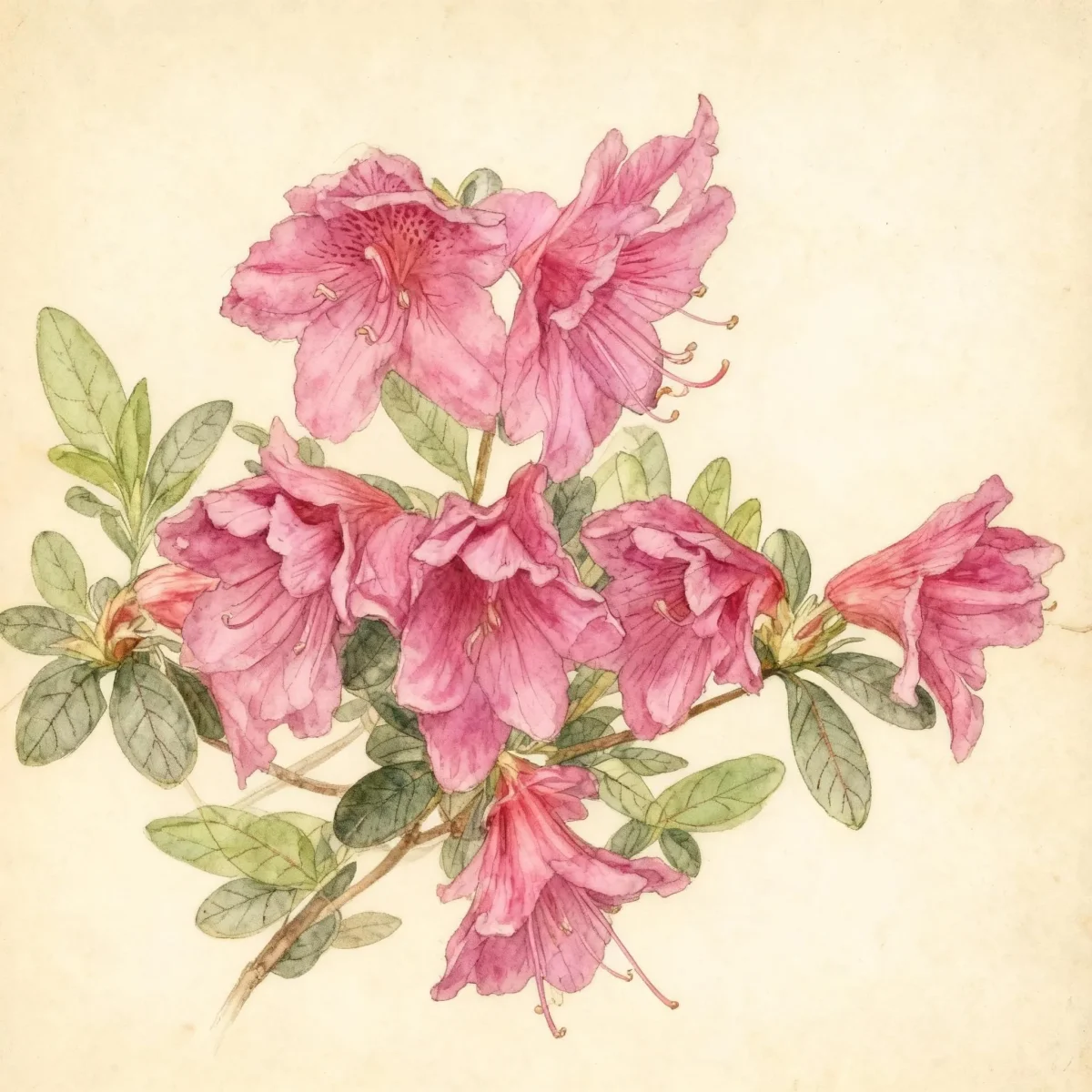
Catawba rhododendron (Rhododendron catawbiense 'Grandiflorum')
The robust Rhododendron catawbiense 'Grandiflorum' offers showy lavender blooms and provides structure in the landscape. Ideal for Zones 4-8.
Scroll down to discover growing tips, care requirements, companion plants, and more
Complete Plant Information
Overview
The Rhododendron catawbiense ‘Grandiflorum’ is a highly valued broadleaf evergreen, celebrated for its dense structure and reliable spring color. This cultivar of the Catawba rhododendron offers large, showy clusters of lavender-pink flowers, making it a classic choice for foundational plantings and woodland edges. Originating from the Appalachian region, this shrub exhibits excellent cold hardiness, thriving where many other rhododendrons struggle.
As a sturdy, medium-sized shrub, the Rhododendron catawbiense ‘Grandiflorum’ provides year-round visual interest with its deep, glossy green foliage. It establishes a strong presence in the garden, often used to create sheltered areas or screen less attractive views. Beyond aesthetics, it contributes to ecological health, offering nectar for butterflies and shelter for local wildlife.
Gardeners consistently select Rhododendron catawbiense ‘Grandiflorum’ for its ability to bring dependable, large-scale color to partially shaded areas. Successfully growing this plant hinges on mimicking its native mountain habitat by ensuring consistently acidic, well-drained soils and protection from harsh winter winds.
Fast Facts
- Plant Family: Ericaceae
- Plant Type: Broadleaf evergreen
- Hardiness Zones: USDA Zones 4-8
- Size at Maturity:
- Height: 5-6 ft
- Spread: 5-6 ft
- Bloom Time: May
- Bloom Description: Lavender
- Sun Exposure: Part shade
- Water Needs: Medium
- Maintenance Level: Medium
How to Grow
Planting should ideally occur in spring or early fall, allowing the extensive root system time to establish before extreme weather hits. Rhododendron catawbiense ‘Grandiflorum’ demands highly acidic soil rich in organic matter, ensuring it is humusy and moisture-retentive yet perfectly drained. Avoid planting near juglone-producing trees like walnuts, as these chemicals are toxic to rhododendrons.
Watering is critical; the shallow, fibrous roots must never be allowed to dry out, especially during hot or windy periods. Supplement natural rainfall with deep, regular watering during establishment. The soil pH must be maintained at a low level, so incorporate soil acidifiers both at planting and annually thereafter as needed.
Because it dislikes being disturbed, avoid cultivating near the base of the shrub; instead, apply a thick layer of organic mulch, such as pine needles or wood chips. This mulch layer helps stabilize soil temperature, conserves essential moisture, and suppresses weeds beneath the mature Catawba rhododendron. Planting in raised beds is highly recommended if your native soil has heavy clay content, mitigating the risk of fungal root rot caused by poor drainage.
Landscape Uses
The robust nature and dependable evergreen foliage of the Catawba rhododendron make it an exceptionally versatile landscape component. They excel when integrated into shrub borders, creating deep, textured backgrounds for spring perennials and smaller flowering shrubs. Their natural, rounded habit makes them suitable for formal settings when pruned, or for softer transitions in woodland gardens.
Use Rhododendron catawbiense ‘Grandiflorum’ extensively within naturalized areas or along wood margins where filtered light mimics its native environment. They function excellently as mass plantings to quickly establish an area of continuous color and structure. Furthermore, specimen planting allows the large trusses of lavender blooms to serve as strong, vertical accents in a partially shaded border.
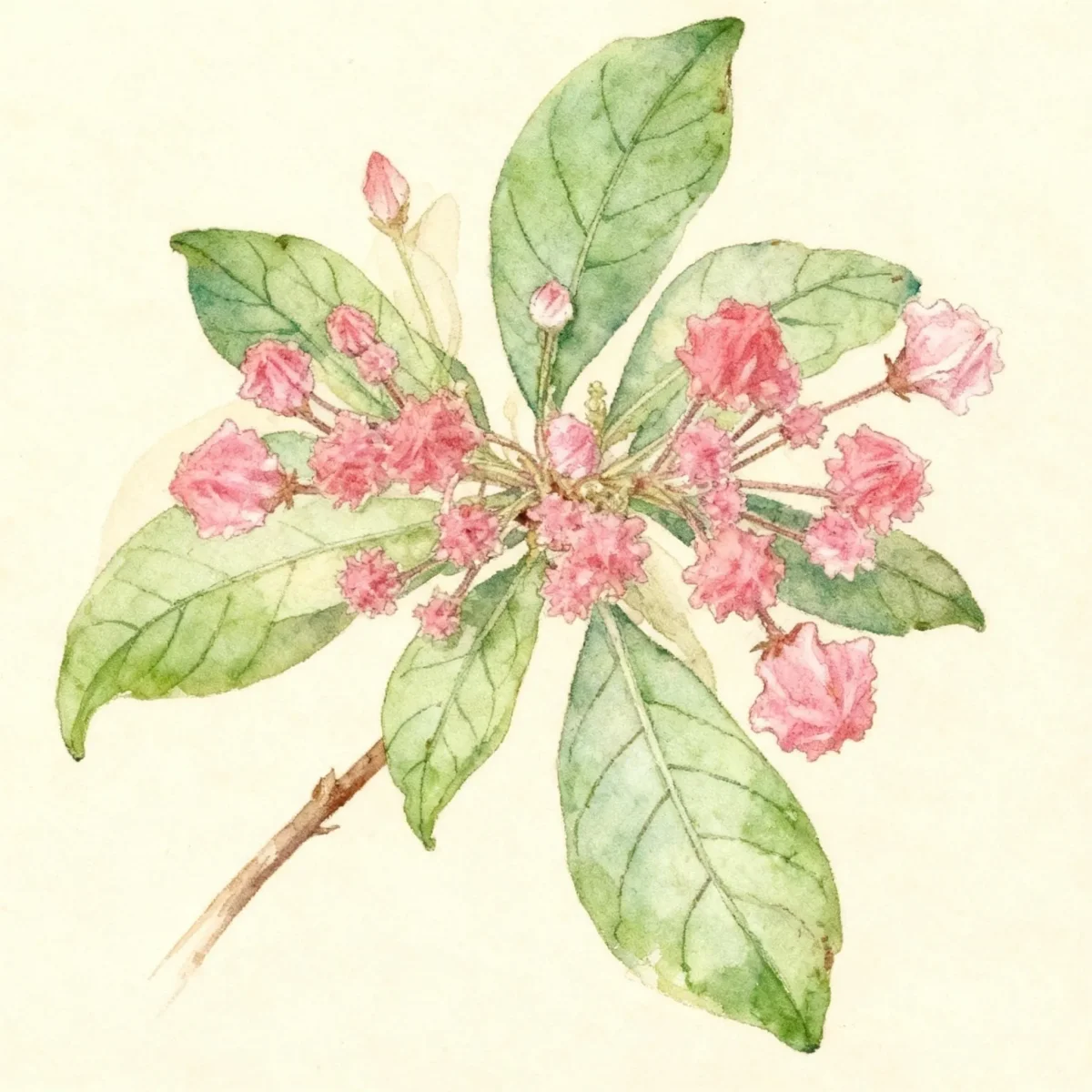
When pairing this plant, select companions that share the same preference for acidic, moist conditions, such as azaleas, mountain laurels, or various ferns. The evergreen structure of this specific rhododendron ensures that even during winter, the garden retains significant visual weight and form.
Standout Features
Flower Qualities
- Showy
Noteworthy Characteristics
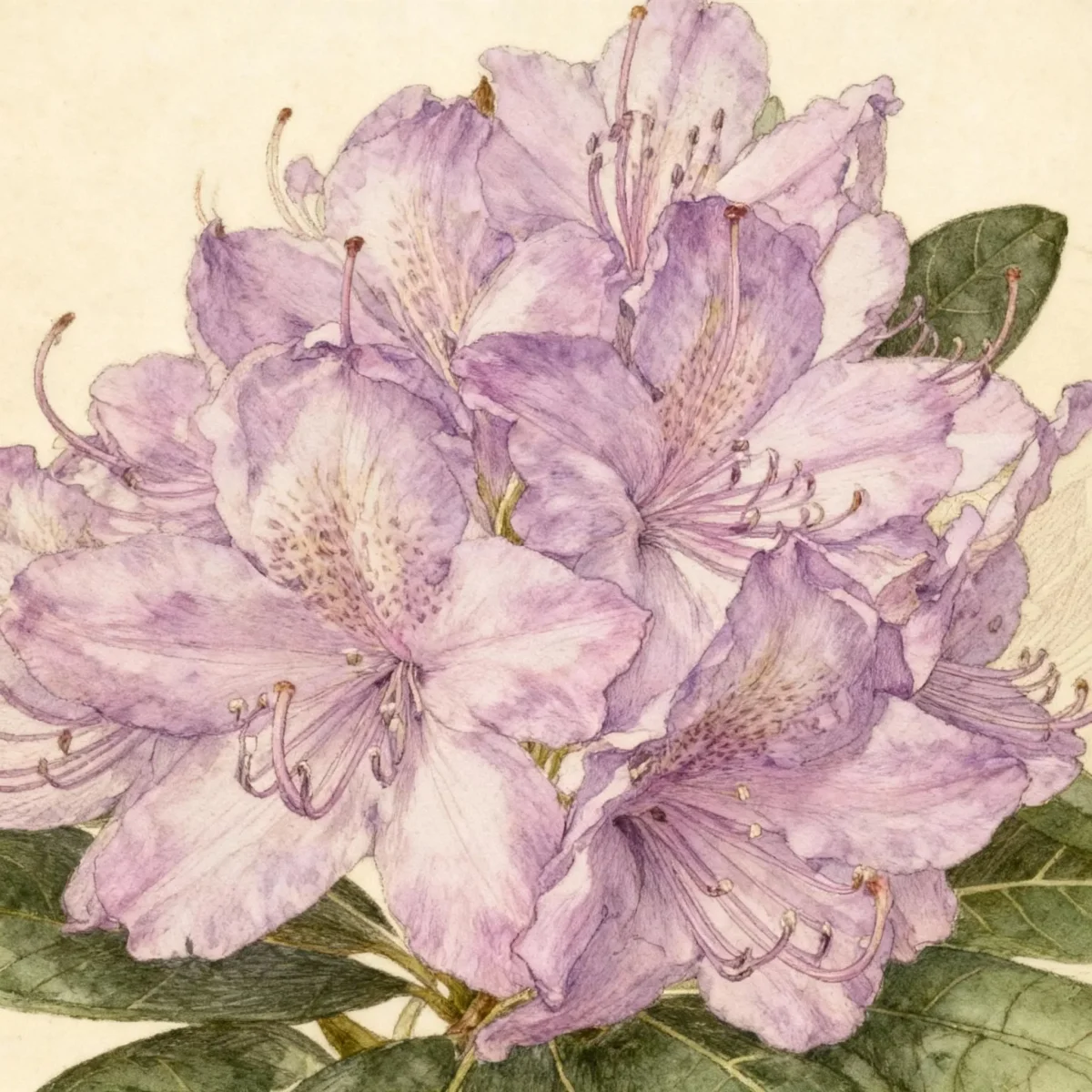
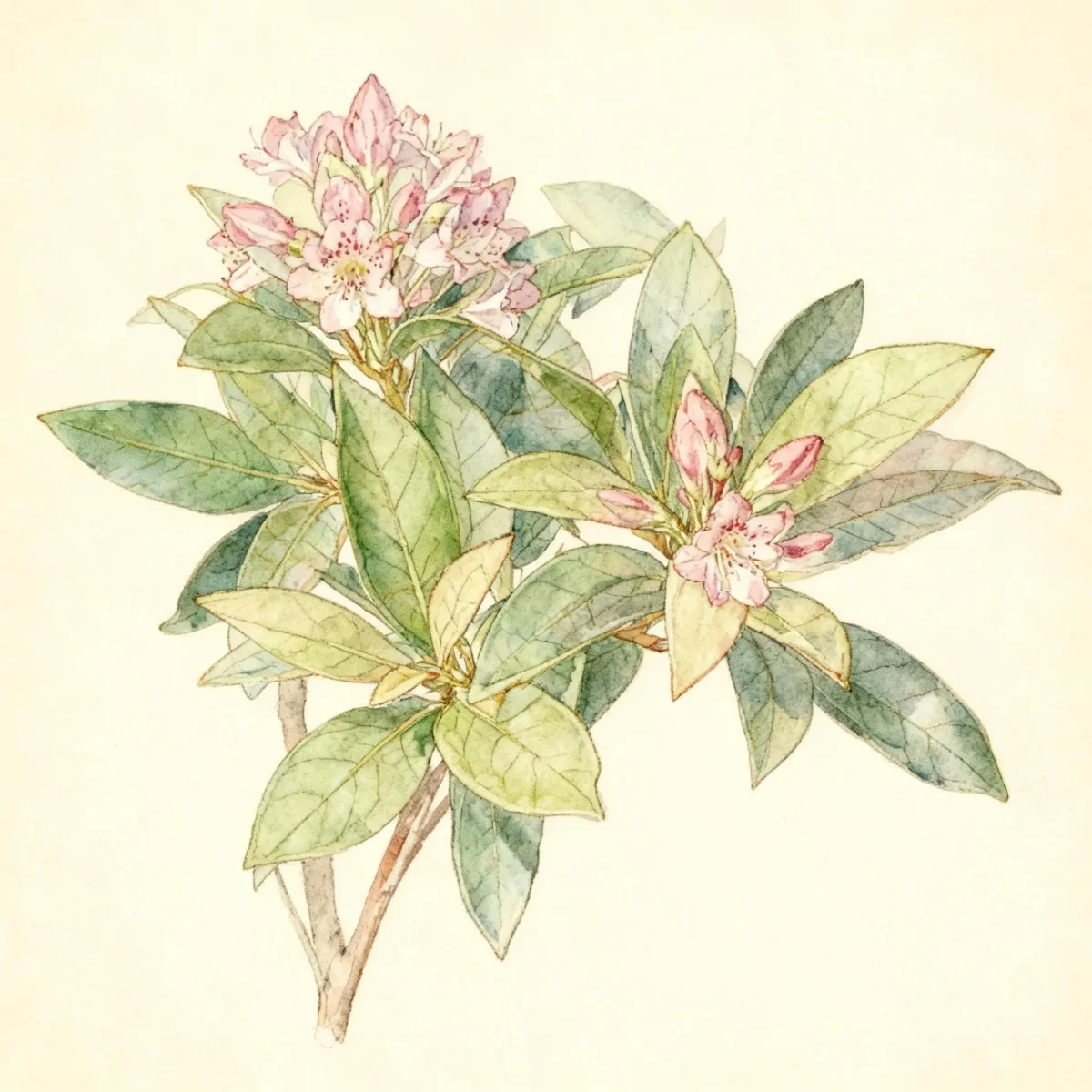
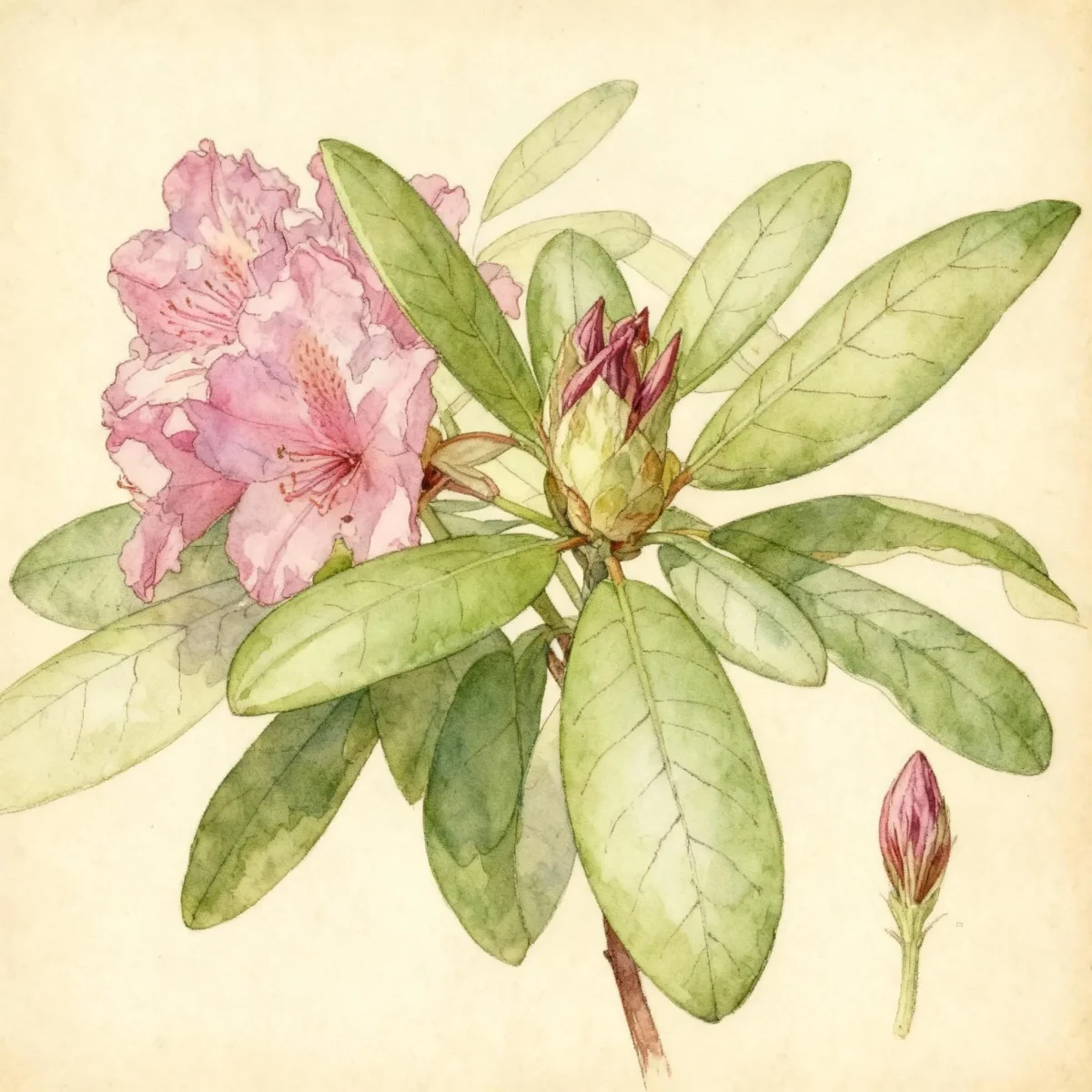
Rhododendron catawbiense, commonly called Catawba rhododendron or mountain rosebay, is a large, rounded to spreading, multi-stemmed, broadleaf evergreen shrub that typically grows to 6-10’ (rarely to 20’) tall. It is native to the eastern U.S. From Maryland to Kentucky south to Alabama and Georgia, with concentrations in alpine woodlands, rocky slopes and ridges in the Appalachian Mountains from Virginia to Georgia where it often forms dense thickets. Alternate, elliptic to oblong, glossy, dark green leaves (to 3-6” long). Funnel-shaped lavender-pink flowers have green to yellow-brown throat markings. Flowers bloom mid to late spring in compact showy terminal clusters (trusses), each containing 15-20 flowers. Flowers are followed by elongated dry seed capsules (each to 1/2 to 1” long) which mature in fall. Gray-brown bark develops fine scales with age. Provides shelter and nesting sites for birds and wildlife. Flowers are a nectar source for butterflies. This shrub is an important parent of a large number of frost-hardy hybrids.Genus name comes from the Greek words rhodo meaning rose and dendron meaning tree. Transferred from the Greek name for Nerium oleander.Specific epithet comes from the Catawba region of the Blue Ridge Mountains of eastern North America.‘Grandiflorum’ is a medium dense cultivar with deep, slightly shiny, green foliage. Its long lasting, large lilac-purple flowers have matching filaments and ginger-brown spotted throats.
Tolerances
- All parts of this plant are highly toxic if ingested
Potential Problems
Rhododendrons are susceptible to many insect and disease problems, including but not limited to canker, crown rot, root rot, leaf spot, rust, powdery mildew, aphids, borers, lacebugs, leafhoppers, mealybugs, mites, nematodes, scale, thrips and whiteflies. A healthy plant in the proper environment should have limited problems.
The most common issues arise from adverse environmental conditions rather than pests. Poor drainage rapidly leads to root rot, which can swiftly kill the plant, emphasizing the need for acidic, well-drained media or raised beds. Fungal issues like leaf spot and powdery mildew can often be managed by ensuring good air circulation around the foliage, which is easier to achieve when space is maintained between individual shrubs.
Frequently Asked Questions
What hardiness zones is Catawba rhododendron suitable for?
The Rhododendron catawbiense ‘Grandiflorum’ is reliably winter hardy in USDA Zones 4 through 8.
How large does Rhododendron catawbiense ‘Grandiflorum’ grow?
This cultivar typically reaches a mature height range of 5 to 6 feet, with the spread matching its height at 5 to 6 feet.
What sun exposure does Catawba rhododendron need?
It thrives best in part shade, performing well with some morning sun but requiring protection from the intense heat and drying rays of the afternoon sun.
When does Rhododendron catawbiense ‘Grandiflorum’ bloom?
This magnificent shrub typically blooms in May, showcasing distinctive lavender-colored flowers.
Conclusion
The Rhododendron catawbiense ‘Grandiflorum’ stands out as a foundation plant, offering excellent cold tolerance paired with showy spring flowers and necessary evergreen structure through winter. Its robust nature makes the Catawba rhododendron a long-term asset to acidic, shaded gardens. Before planting, confirm your soil pH is acidic and plan your location where it receives protection from drying winter winds.
Wildlife Benefits (Pollinators and Shelter)
The flowers of the Rhododendron catawbiense ‘Grandiflorum’ provide an accessible nectar source that encourages spring butterfly activity. While the plant has robust evergreen leaves and dense branching, it offers crucial protective cover. These thickets act as valuable shelter and nesting sites for various small birds and local wildlife, especially during harsh weather.
Companion Planting for Acid-Loving Gardens
Successful planting near the Catawba rhododendron requires selecting species that tolerate or prefer the same acidic, well-drained soil conditions. Excellent choices include companionate acid-lovers such as Fothergilla (bottlebrush), Pieris japonica (andromeda), and various Camellia varieties if your climate permits. Additionally, consider underplanting with shade-tolerant, moisture-loving groundcovers like Japanese painted ferns or mondo grass to help shade the shallow root zones.