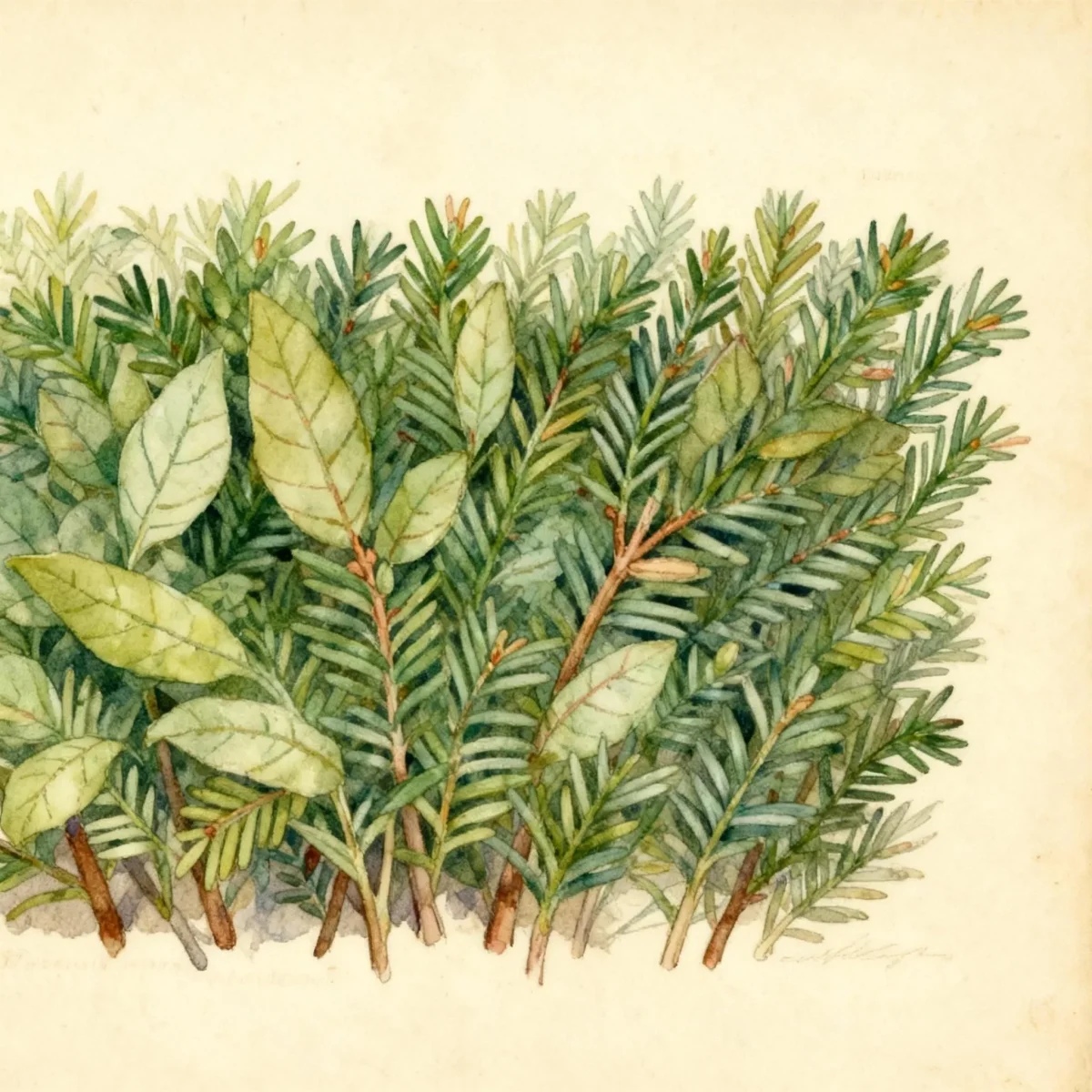
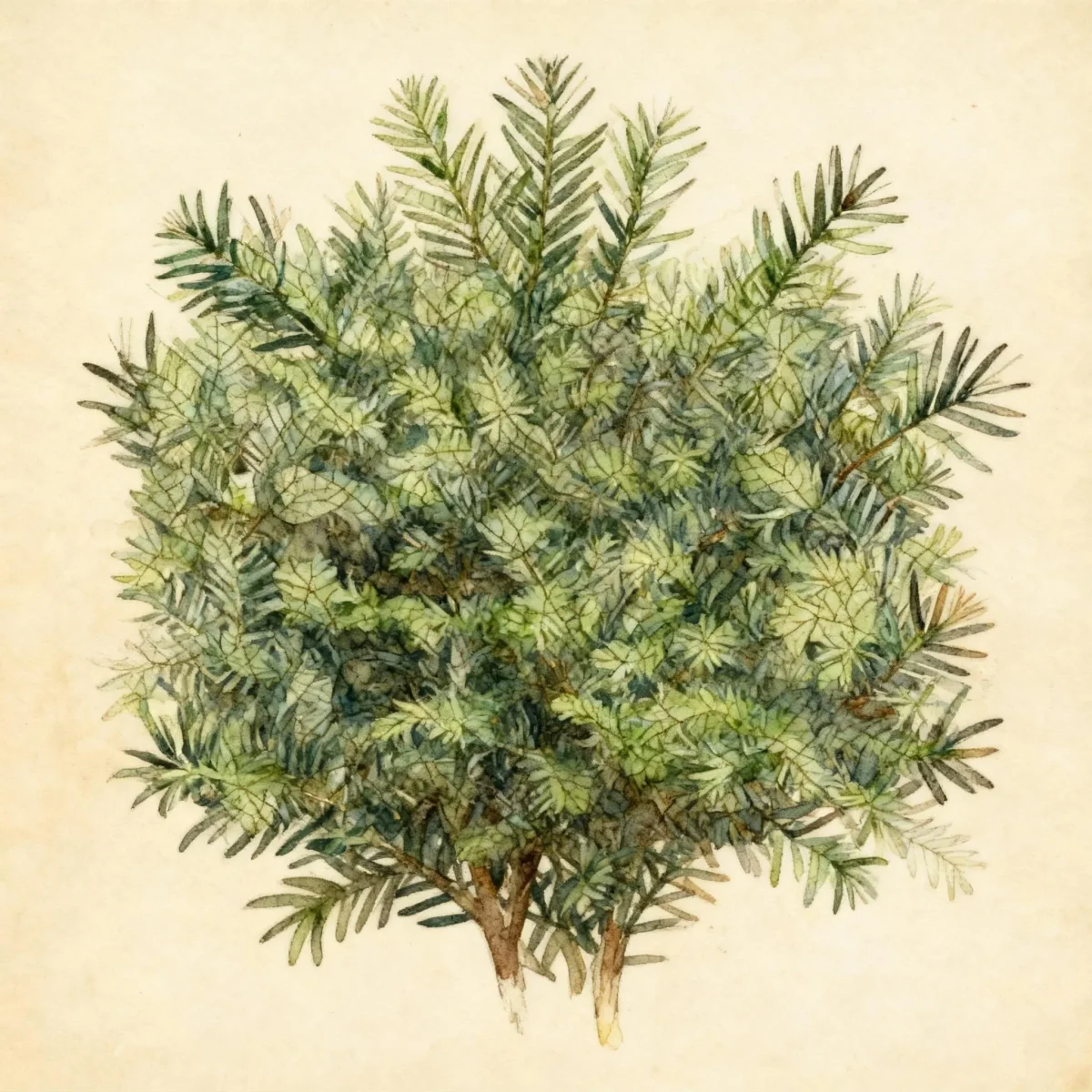
Yew (Taxus × media 'Beanpole')
Taxus × media 'Beanpole' Yew is a columnar, needled evergreen ideal for tight spaces, valued for its year-round appeal and low maintenance.
Scroll down to discover growing tips, care requirements, companion plants, and more
Complete Plant Information
Overview
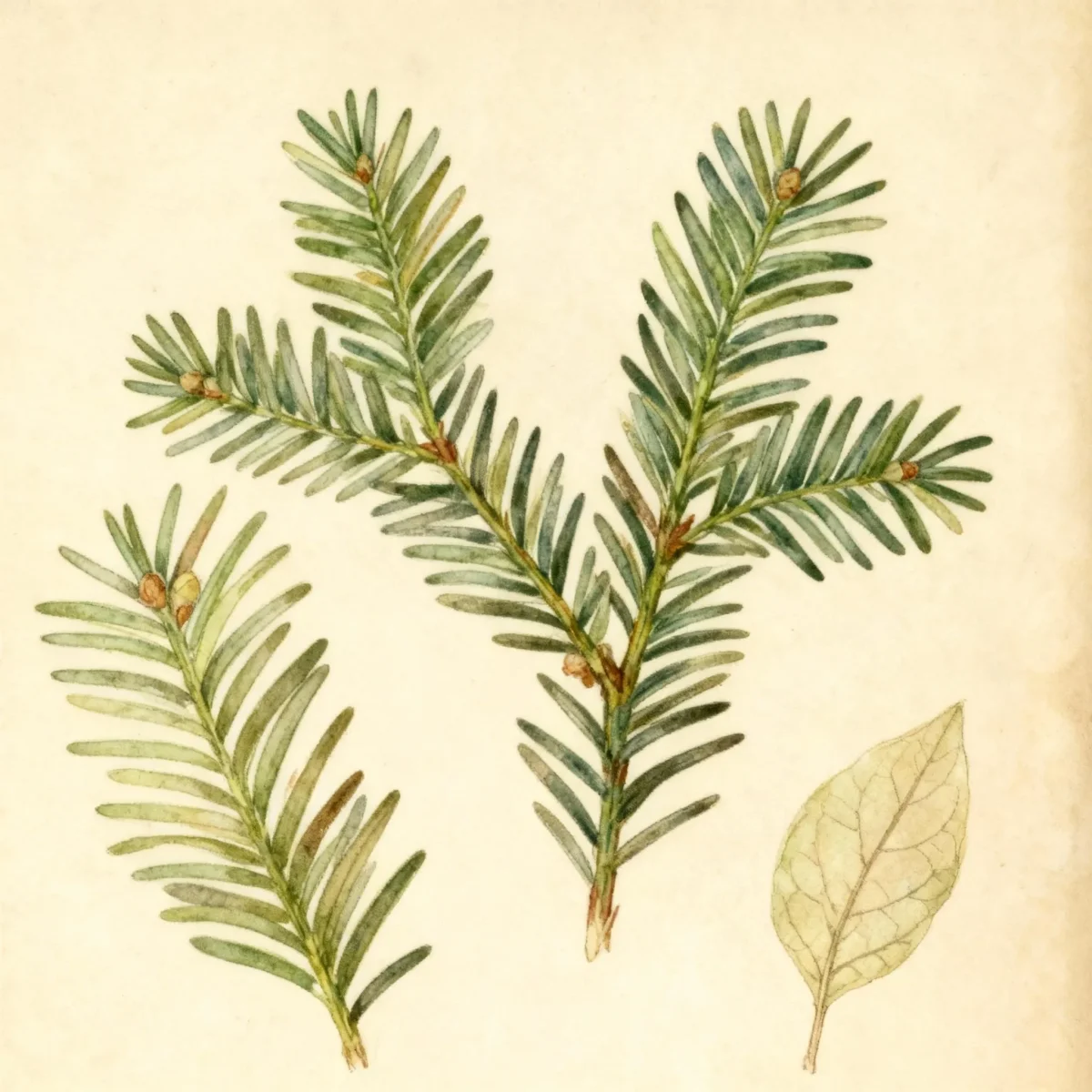
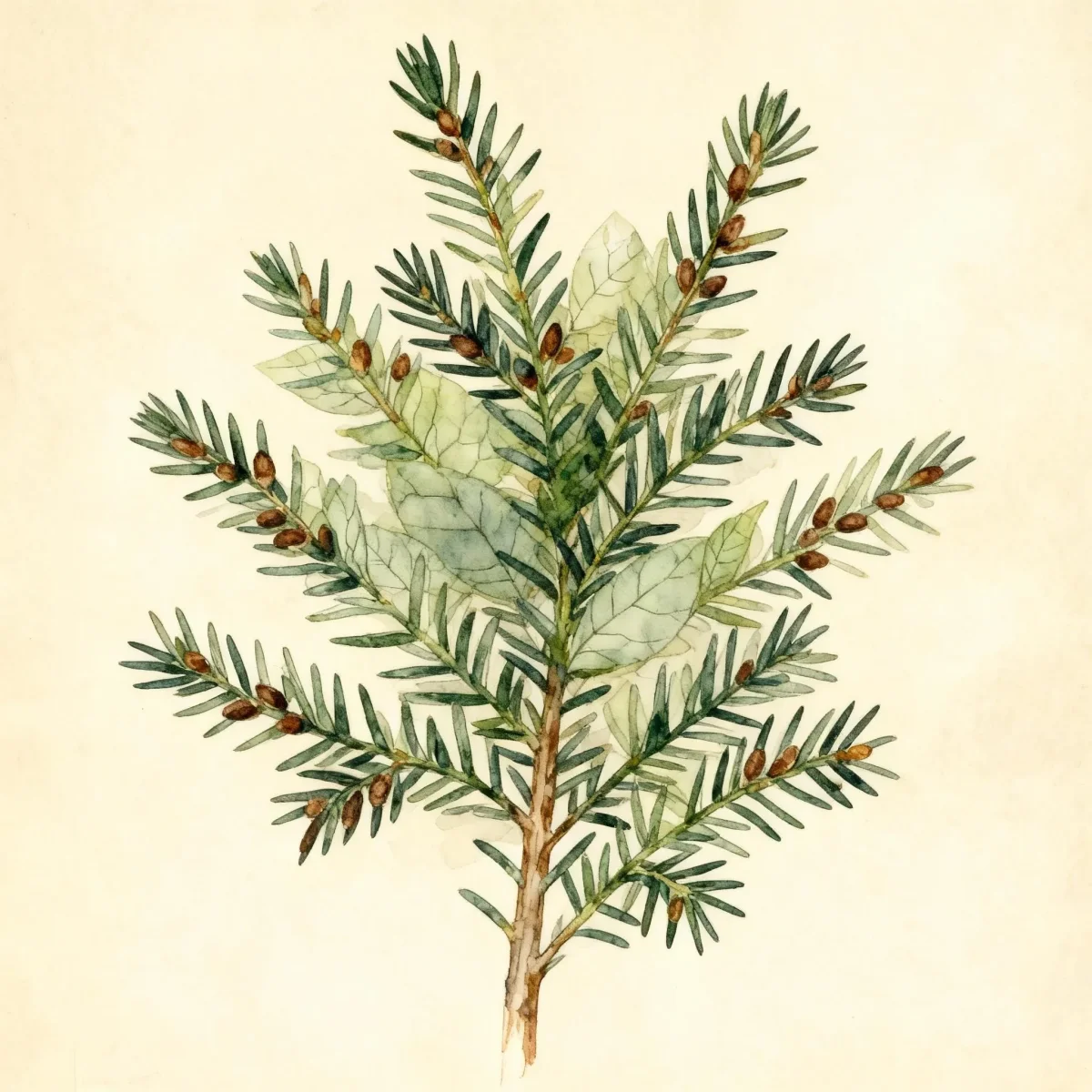
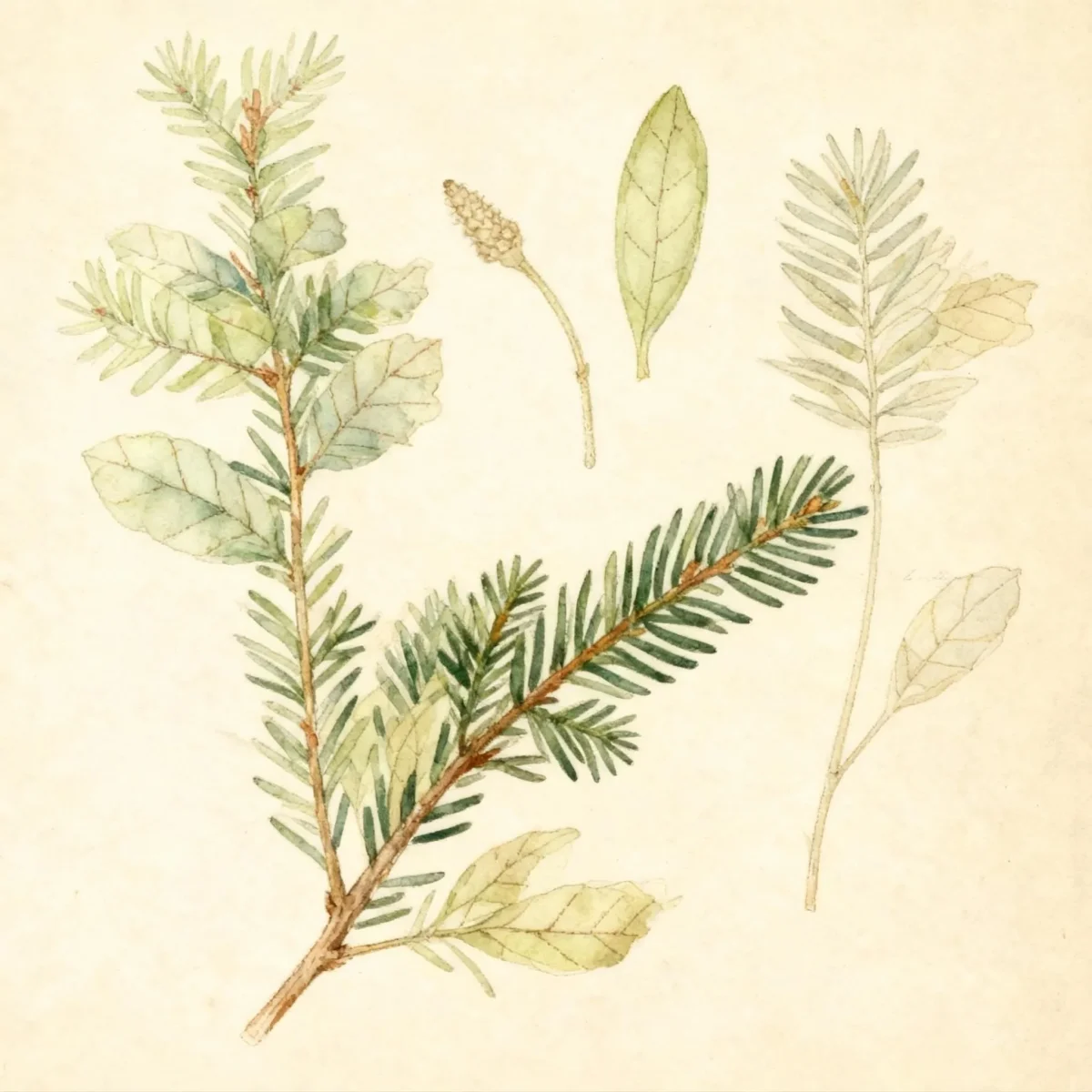
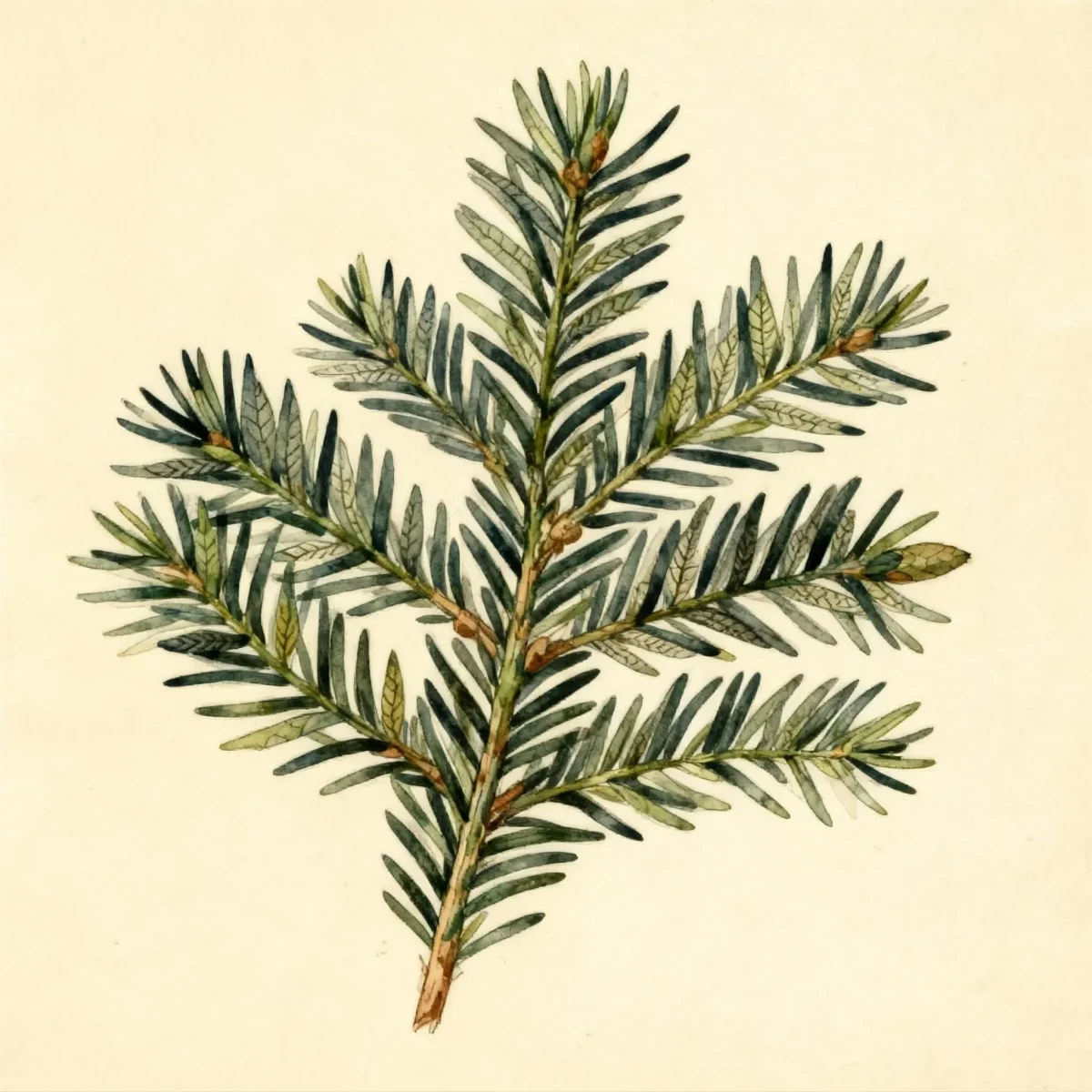
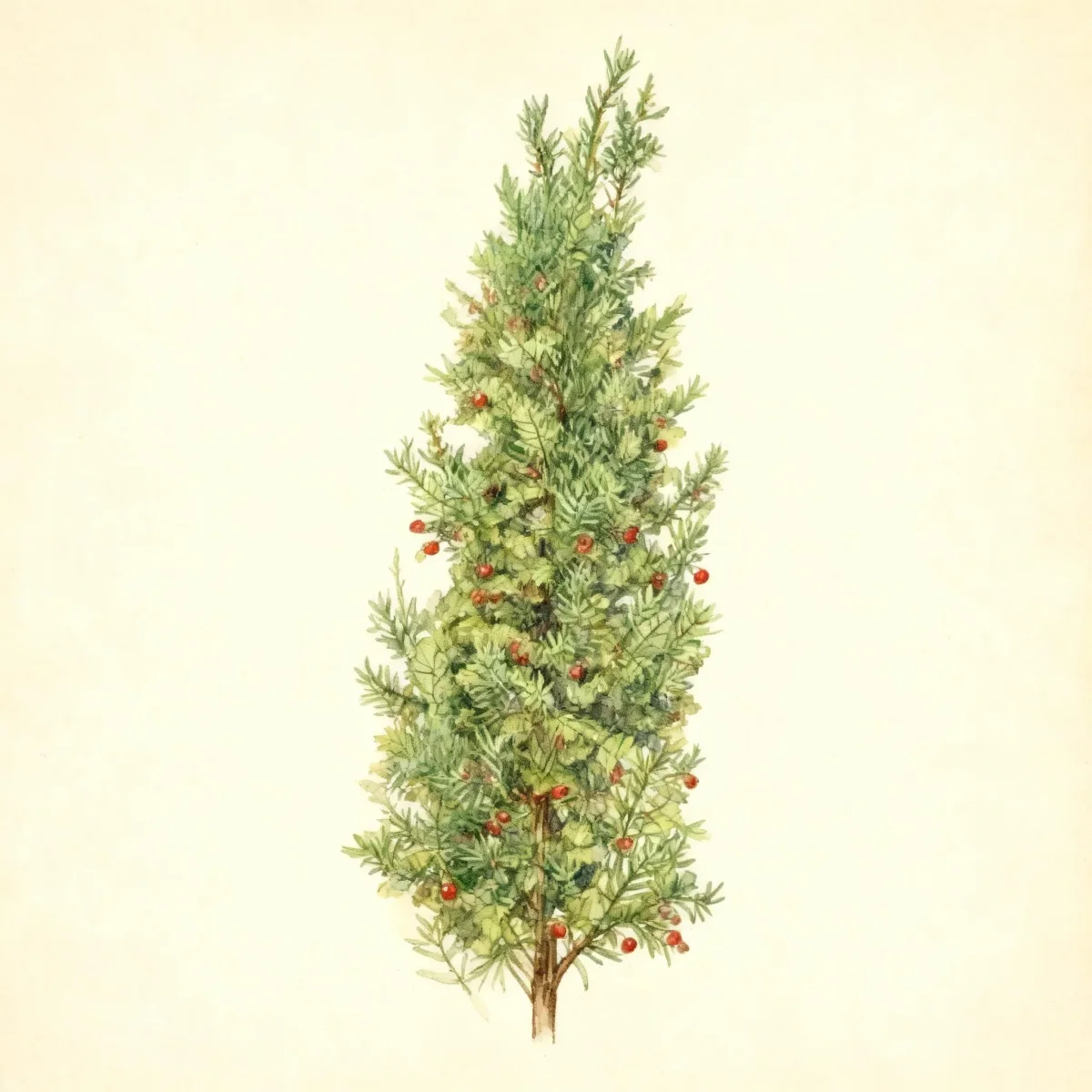
Taxus × media ‘Beanpole’ is a highly valued hybrid Yew, specifically bred to offer a dense, upright, columnar habit perfect for narrow garden spaces where traditional spreading shrubs would dominate. This needled evergreen provides exceptional year-round color with its lustrous, dark green, flat needles, making it a cornerstone for formal or year-round structure in the landscape. As a member of the Taxaceae family, this cultivar combines the ornamental merits of the English Yew with the robust winter hardiness necessary for colder climates.
Growing typically to 8–10 feet tall with a restricted spread of only 4–6 feet, Taxus × media ‘Beanpole’ offers significant vertical accent without consuming excessive horizontal space. Its low maintenance requirements and high tolerance for pruning make it an excellent candidate for controlled hedge screening or specimen planting that requires minimal intervention once established. Gardeners appreciate this Yew for maintaining its attractive emerald color across various light conditions, from full sun to heavy shade.
The heritage of this hybrid ensures a reliable, attractive, and durable plant. Whether used as a formal accent or incorporated into foundation plantings, the Taxus × media ‘Beanpole’ delivers consistent performance. Its slow, upward growth pattern means less shaping over time, securing its reputation as a low-stress, high-impact evergreen choice for North American gardeners in USDA Zones 5 through 7.
Fast Facts
- Plant Family: Taxaceae
- Plant Type: Needled evergreen
- Hardiness Zones: USDA Zones 5-7
- Size at Maturity:
- Height: 8-10 ft
- Spread: 4-6 ft
- Bloom Time: Non-flowering
- Bloom Description: Non-flowrering
- Sun Exposure: Full sun to part shade
- Water Needs: Medium
- Maintenance Level: Low
How to Grow
Planting Taxus × media ‘Beanpole’ is best accomplished in the spring or early fall, allowing the roots to establish before extreme summer heat or deep winter freezes arrive. This Yew excels in average soils, provided they feature excellent drainage. Good soil drainage is absolutely essential, as this plant has no tolerance for wet, waterlogged conditions, which can quickly lead to root rot. While it prefers moist conditions, ensure the preferred medium is a well-drained loam.
Ongoing care for Taxus × media ‘Beanpole’ is straightforward, requiring medium water, particularly during the first few growing seasons until the root system is fully developed. Overwatering must be strictly avoided to maintain plant health. Fertilization is generally unnecessary unless the soil is extremely poor, as the Yew adapts well to average conditions. It tolerates urban pollution, making it a resilient choice for many settings.
Pruning and shearing are well-accepted by this columnar Yew, helping to maintain its tight form. The best time for significant shaping or shearing is in the early spring, just before the new season’s growth begins to emerge. Avoid heavy pruning late in the season. Furthermore, when selecting a location, site the Taxus × media ‘Beanpole’ where it is protected from harsh, drying winter winds, as these can contribute to potential winter burn damage on the needles.
Landscape Uses
The primary value of the Taxus × media ‘Beanpole’ lies in its strong, vertical silhouette, making it an outstanding choice for architectural elements in the landscape design. Use this Yew to flank entryways, emphasize vertical lines in rock gardens, or serve as the narrow “bookends” in a foundation planting scheme where width is restricted. Its columnar shape allows it to provide screening or vertical breaks in an otherwise low border without overwhelming the space.
Due to its adaptability regarding light exposure, positioning Taxus × media ‘Beanpole’ near taller deciduous shrubs or beneath open canopies of trees is feasible, provided it still receives part shade. It pairs well visually with plants offering contrasting textures, such as broadleaf evergreens or flowing ornamental grasses flanking its base. For formal designs, maintain tight shearing; for a more natural look, allow the upright shoots to develop their inherent narrow character. This Yew functions effectively as a strong, dark green anchor point in mixed foundation plantings.
Standout Features
Fruit Qualities
- Showy
Noteworthy Characteristics
Taxus × media is a hybrid designation for a large number of shrubby, often wide-spreading crosses of English yew (Taxus baccata) and Japanese yew (Taxus cuspidata). These hybrids are noted for combining the ornamental excellence of English yew with the winter hardiness of Japanese yew. ‘Beanpole’ is an upright, columnar, hybrid evergreen yew that typically grows narrowly upward with ascending shoots, eventually maturing over 20+ years to 8-10’ tall with a spread of 4-6’ wide. These plants are dioecious; female plants produce berry-like cones surrounded by a red, fleshy structure called an aril that is visible, often leading to the “showy” attribute.
Tolerances
- Rabbit
- Drought
- Heavy Shade
Potential Problems
Taxus × media ‘Beanpole’ is generally low-maintenance, but vigilance regarding environmental stresses is required. Susceptibility to winter burn is a notable issue, especially when the plant is located in highly exposed sites where persistent winter winds desiccate the foliage. To mitigate this, ensure protection from prevailing winter winds during site selection.
Pest and disease issues are usually minor but can occasionally appear. Twig blight and needle blight are reported problems; ensure good air circulation and avoid overhead watering to reduce fungal risks. In poorly drained soils—which must be avoided at all costs—root rot can become fatal. Watch for common pests like weevils, mealybugs, and scale; treat infestations promptly according to horticultural recommendations to keep your Yew healthy.
Frequently Asked Questions
What hardiness zones is Yew suitable for?
The Taxus × media ‘Beanpole’ Yew is best suited for USDA Hardiness Zones 5 through 7.
How large does Taxus × media ‘Beanpole’ grow?
This columnar evergreen typically matures to a size of 8 to 10 feet in height, maintaining a relatively narrow spread between 4 and 6 feet wide.
What sun exposure does Yew need?
This versatile Yew variety thrives in locations receiving full sun or tolerating significant periods of part shade, making it highly adaptable.
When does Yew bloom?
Taxus × media ‘Beanpole’ is classified as non-flowering. As a needled evergreen, it does not produce true flowers, though female plants may bear fleshy, red arils.
Conclusion
The Taxus × media ‘Beanpole’ remains a superior choice for gardeners needing vertical interest, reliable year-round screening, and remarkably low upkeep. Its adaptability to shade and resistance to grazing by rabbits make this Yew a pragmatic investment. Before planting, confirm your site falls within USDA Zones 5-7 and guarantee sharp soil drainage to ensure the long-term success of your Taxus × media ‘Beanpole’.
Companion Planting for Columnar Evergreens
When integrating Taxus × media ‘Beanpole’ into foundation plantings or borders, selecting companions that contrast effectively enhances its formal structure. Pair this dark green Yew with plants that offer lighter foliage or brighter summer blooms to maximize visual separation. Consider placing low-growing, silvery groundcovers at the base to complement the columnar shape, or use deciduous shrubs with excellent fall color that will look dramatic against the evergreen backdrop of the Yew during the cooler months.
Design Ideas for Narrow Spaces
The tight, upright habit of Taxus × media ‘Beanpole’ makes it an ideal solution for constrained areas where standard shrubs would interfere with walkways or windows. Use single specimens to flank narrow entrances, providing stately, formal accents. For hedging in restricted side yards, place these Yews about 3-4 feet apart to allow for minor spread while maintaining a solid green wall texture. Their tolerance for urban conditions also makes them excellent choices for planting near pavement where other, less resilient plants might struggle.