Globe flower (Trollius europaeus)
Trollius europaeus (Globe flower) is a hardy perennial famed for globular, showy yellow blooms thriving in moist, shady to partially shaded gardens.
Scroll down to discover growing tips, care requirements, companion plants, and more
Complete Plant Information
Overview
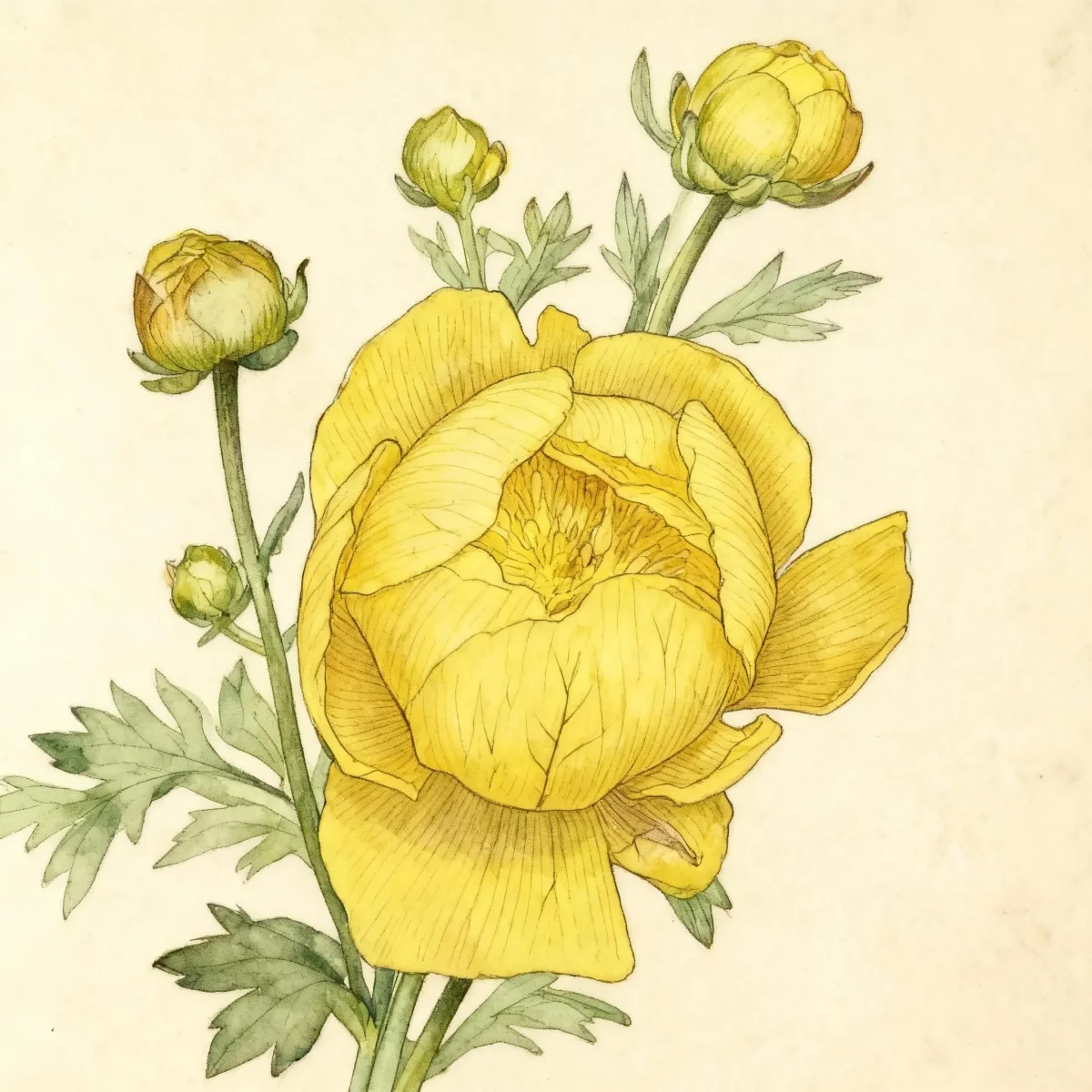
The Globe flower, scientifically known as Trollius europaeus, is a standout herbaceous perennial treasured for its unique, perfectly spherical, lemon-yellow flowers. This species brings a whimsical, classic cottage garden charm, especially valuable for shaded, damp locations where many flowering plants struggle. Its reliability in cool, moist conditions makes it a staple in specialized perennial borders and near water features.
Trollius europaeus originates from the damp meadows and open woodlands of Europe and western Asia, instantly signaling its preference for consistently moist soils. Gardeners appreciate its relatively low maintenance once established, provided its cultural needs regarding moisture and partial shade are met. It performs best in cooler climates, generally struggling in intense heat south of its ideal hardiness range.
Aesthetically, the Globe flower provides structure and bright color contrast against dark green, deeply divided foliage. Its distinct globular flower shape—giving it the common name Globe flower—is highly attractive, making a mass planting of Trollius europaeus a truly spectacular sight during late spring and early summer.
Fast Facts
- Plant Family: Ranunculaceae
- Plant Type: Herbaceous perennial
- Native Range: Central and western Asia, Europe
- Hardiness Zones: USDA Zones 3-6
- Size at Maturity:
- Height: 1.5-2 ft
- Spread: 1-1.5 ft
- Bloom Time: May to July
- Bloom Description: Yellow
- Sun Exposure: Part shade to full shade
- Water Needs: Medium to wet
- Maintenance Level: Medium
How to Grow
Planting Trollius europaeus is best achieved in spring or early fall, aiming for a location that receives morning sun or dappled shade throughout the day. This plant demands rich, humusy soils that must remain reliably moist to wet; they thrive in boggy conditions. Ensure the soil is well-drained overall, despite the requirement for consistent moisture, to avoid root rot issues.
Care for your Globe flower centers on moisture management. During the growing season, ensure the soil never dries out, especially during hot spells, as this plant dislikes dry soil and hot summers. Fertilization is seldom necessary if the native soil is rich and humusy; heavy feeding can encourage excessive foliage at the expense of flowers.
Since Trollius europaeus performs poorly in excessive heat, gardeners in the upper limits of its hardiness zone should provide maximum afternoon shade. If the foliage starts to look spent or bleached by mid-summer, you can cut back the stems at that time to tidy the plant’s appearance going into fall. Clump division is manageable in late summer or early fall, and plants may naturally self-sow where conditions are optimal.
Landscape Uses
The primary strength of the Globe flower lies in its preference for wet environments, making specialized planting areas ideal. Mass plantings of Trollius europaeus mixed with ferns and astilbe create stunning, lush, woodland scenes along stream banks or ponds. They are excellent choices for bog gardens or moist meadow installations where turf grass is undesirable.
The structure of the Globe flower also allows it to be included in the middle of cottage borders, provided the area retains consistent moisture. Since the nodding, spherical flowers can benefit from close viewing, incorporating them into rock gardens near pathways is another effective strategy. Their rich yellow color blends beautifully with cool-toned foliage typical of moisture-loving companions.
Standout Features
Flower Qualities
- Showy
Noteworthy Characteristics
Trollius europaeus, commonly known as common globeflower or European globeflower, is a clump-forming perennial of the buttercup family that features a late spring to early summer bloom of globular lemon-yellow flowers (to 2” across) atop sparsely-leaved stems rising to 18-24” tall. It is native to damp meadows, moist open woodlands, stream banks, wet pastures and scrubby areas in northern parts of Europe and western Asia. The genus name comes from the German word troll meaning round in reference to flower shape.
Tolerances
- Rabbit
- Heavy Shade
- Wet Soil
Potential Problems
For Trollius europaeus, serious insect or disease problems are uncommon, which adds to its appeal. The most frequently noted issue is powdery mildew, which can afflict the foliage, especially if air circulation is poor or humidity is persistently high. To manage this, ensure adequate spacing between plants and avoid overhead watering late in the day. If mildew occurs, pruning back affected foliage as described in the culture section can help.
Frequently Asked Questions
What hardiness zones is Globe flower suitable for?
The reliable hardiness range for Trollius europaeus is USDA Zones 3 through 6.
How large does Globe flower grow?
This herbaceous perennial typically reaches a height between 1.5 and 2 feet, spreading to 1 to 1.5 feet wide.
What sun exposure does Globe flower need?
This plant thrives best in part shade, though it can tolerate full shade; however, high sun exposure can cause the foliage to bleach, especially in hotter summers.
When does Globe flower bloom?
The flowers appear from May through July, exhibiting a distinct bright yellow hue.
Conclusion
Trollius europaeus offers reliable structure and unique, showy yellow blooms perfect for adding brightness to damp, shaded garden areas. Gardeners seeking a durable, moisture-loving perennial will find the Globe flower an indispensable feature for streamsides or woodland settings. Confirm your local climate falls within USDA Zones 3-6 and ensure consistently moist soil before planting this charming European native.
Propagation Tips
Division is the primary method for increasing healthy clumps of Trollius europaeus. Established plants should be lifted and divided in late summer or early fall, ideally when the soil is still warm enough for recovery before winter dormancy. Ensure each division retains a healthy crown and sufficient root material for immediate re-establishment in its new, moist location.
If you wish to allow natural reproduction, the plant will self-sow readily under good conditions. Collect seed heads after they mature and sow them in a prepared, moist seedbed outdoors. Germination for Trollius europaeus can sometimes be erratic, but nature usually manages success when the seeds drop directly where the parent plant thrives.
Companion Planting
Because the defining characteristic of the Globe flower is its requirement for consistent moisture, companion plants must share this dedication to wet feet. Ferns are excellent choices, as their texture complements the deeply lobed leaves of Trollius europaeus while thriving in similar shady, damp environments. Astilbes are another superb partner, offering contrasting flower plumes later in the season once the Globe flower is fading.
When planning for a bog garden or pond edge, consider incorporating marginal aquatic plants or moisture lovers like Siberian Iris or certain moisture-tolerant Hosta varieties. Grouping plants with similar water needs simplifies maintenance immensely, ensuring every plant receives the medium to wet conditions that Trollius europaeus demands.