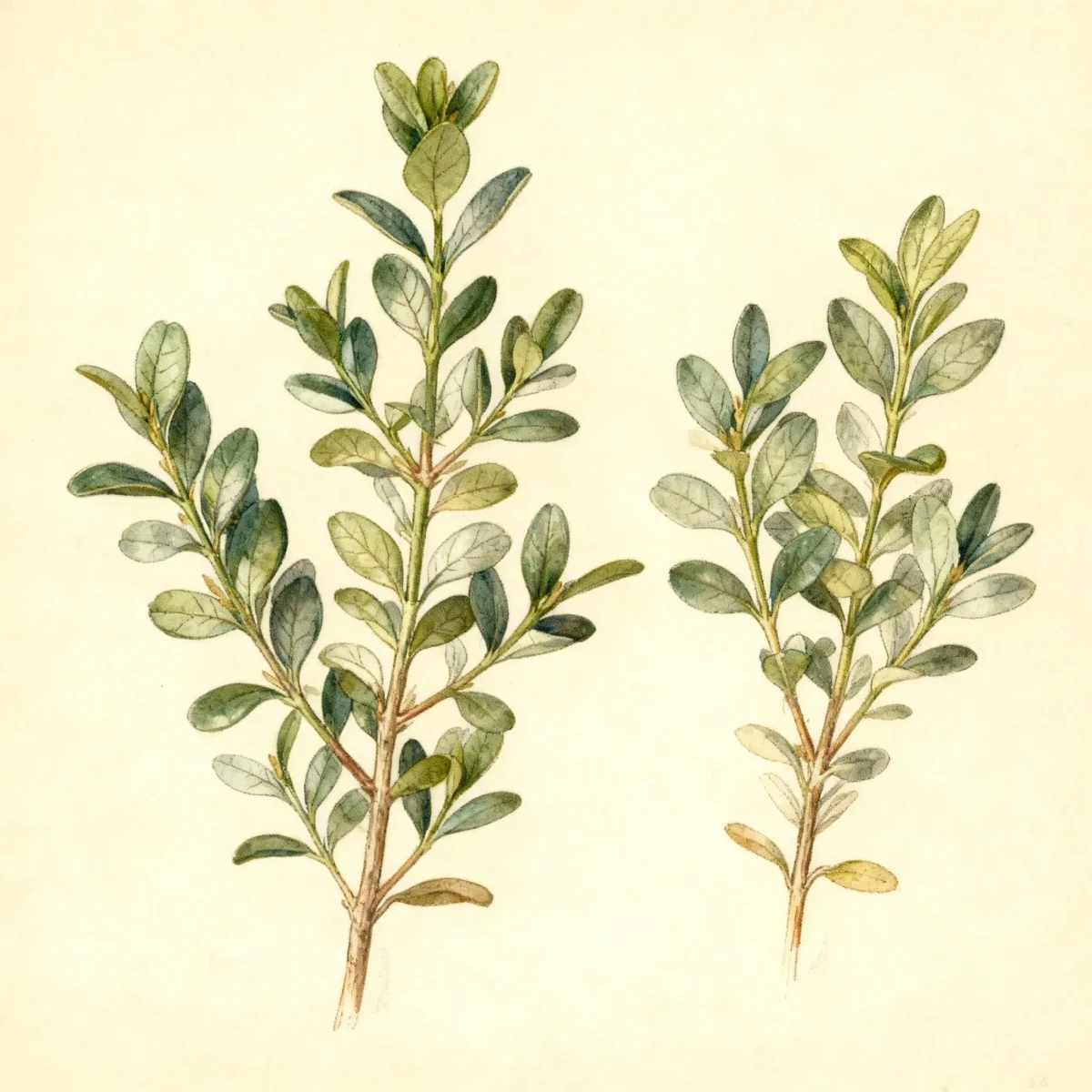
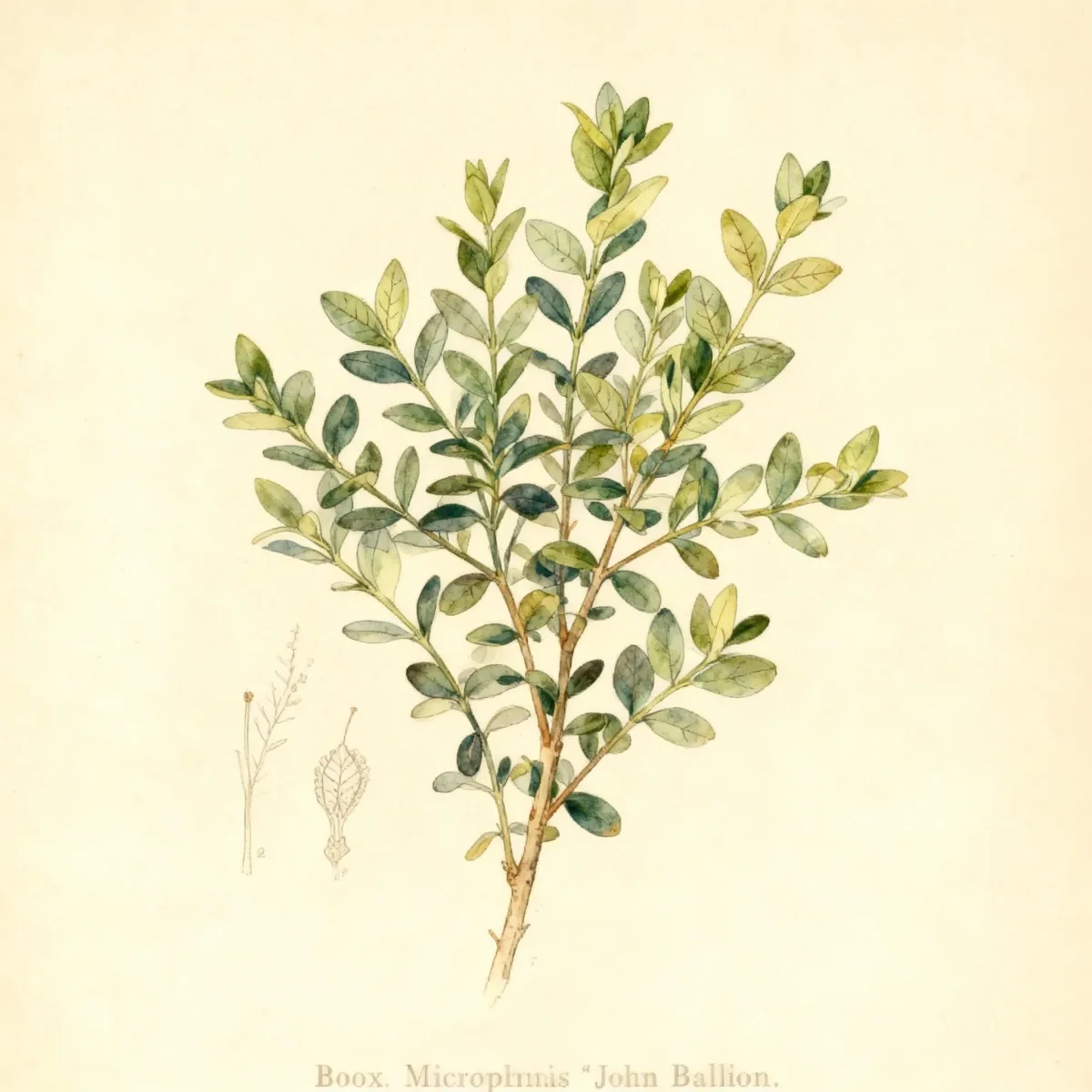
Boxwood (Buxus sempervirens 'Treska Gorge')
Buxus sempervirens 'Treska Gorge' is a columnar Broadleaf evergreen Boxwood, ideal for hedges in Zones 5-8, offering dense, dark green foliage.
Scroll down to discover growing tips, care requirements, companion plants, and more
Complete Plant Information
Overview
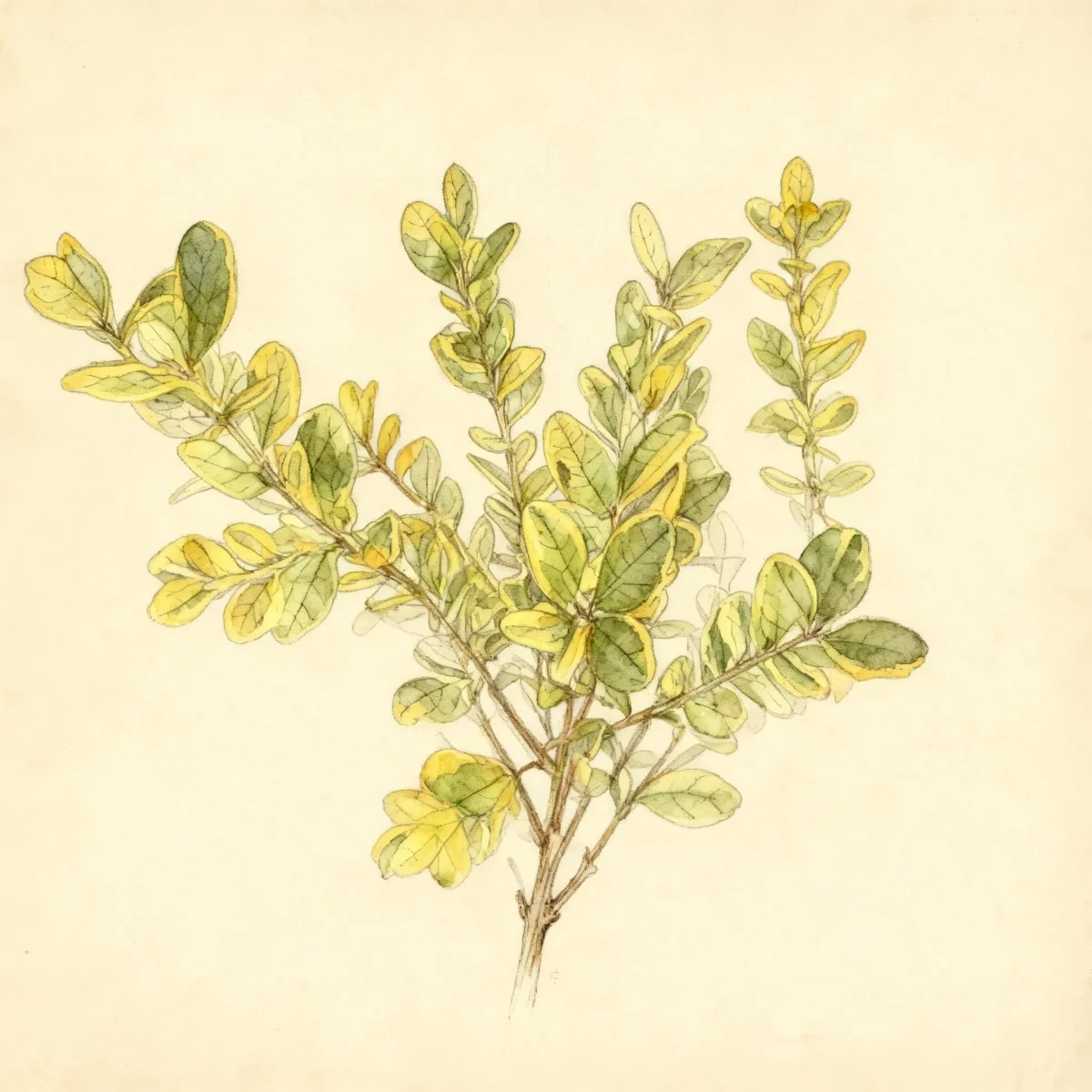
The cultivar Buxus sempervirens ‘Treska Gorge’ offers gardeners a robust vertical accent among the many Boxwood varieties. This multi-branched evergreen shrub features a distinctly broad columnar habit, making it highly valuable where height and narrow width are required in the landscape design. As a hardy Boxwood, it maintains its dark, glossy green foliage year-round, providing crucial winter structure.
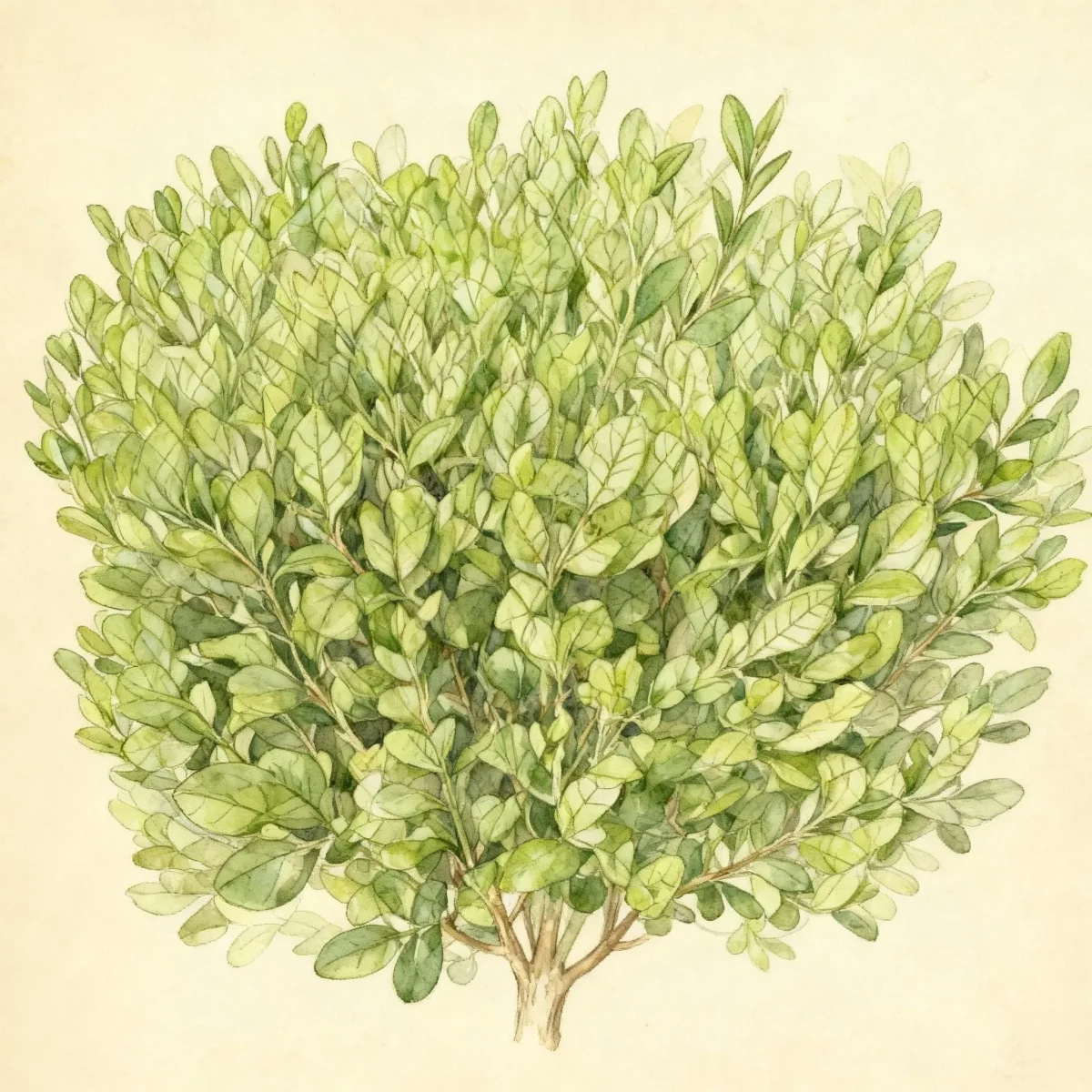
When sited correctly, Buxus sempervirens ‘Treska Gorge’ matures beautifully, reaching heights between 15 and 20 feet while maintaining a manageable spread of 7 to 10 feet. It thrives best when protected from harsh winter sun and drying winds, conditions which can otherwise cause its otherwise durable foliage to bronze. Its evergreen nature and excellent tolerance for shearing make this Boxwood an exceptional choice for formal hedging or as a striking vertical specimen.
Originating from seed collected near Skopje, Yugoslavia, this particular selection was established at the Arnold Arboretum before being officially registered. Gardeners appreciate Buxus sempervirens ‘Treska Gorge’ for its proven reliability in USDA Zones 5 through 8, providing long-term evergreen interest with medium maintenance.
Fast Facts
- Plant Family: Buxaceae
- Plant Type: Broadleaf evergreen
- Hardiness Zones: USDA Zones 5-8
- Size at Maturity:
- Height: 15-20 ft
- Spread: 7-10 ft
- Bloom Time: April to May
- Bloom Description: Green to white
- Sun Exposure: Full sun to part shade
- Water Needs: Medium
- Maintenance Level: Medium
How to Grow
To ensure success with Buxus sempervirens ‘Treska Gorge’, planting should occur in well-drained loam soils that can maintain even moisture. While this Boxwood tolerates various light conditions, including open sun-dappled areas or light shade with morning sun, avoid deep, dark shade where vigor and foliage density will decrease significantly. Plants prefer soils ranging from slightly acidic to slightly alkaline in pH.
Watering should be consistent—aiming for medium moisture levels—especially when establishing the plant. Avoid cultivating close to the base of the shrub, as Boxwood possesses shallow roots that benefit greatly from a 1-2 inch layer of organic mulch, such as shredded bark or compost, to retain moisture and regulate soil temperature.
Pruning and shearing are major components of Boxwood care, but timing is critical. Never shear until after the last spring frost date has safely passed. Early spring pruning encourages tender new growth that is highly susceptible to frost damage. Annually thin the foliage minimally to improve necessary air circulation within the dense structure of Buxus sempervirens ‘Treska Gorge’.
Proper siting is essential to prevent winter bronze. Locate your Boxwood where it receives protection from strong winter winds and intense afternoon sun exposure, which rapidly dehydrates leaves and leads to unsightly winter scorch or bronzing.
Landscape Uses
The tall, narrow profile of Buxus sempervirens ‘Treska Gorge’ makes it an outstanding choice for architectural elements in landscape design. It excels when used as a vertical accent in foundation plantings or as a formal, stately element within Mediterranean or traditional garden settings. Mass planting allows you to create a crisp, narrow hedge that defines space without the extensive footprint of a standard shrub.
For formal gardens, this Boxwood is perfectly suited for use as topiary, maintaining sharp lines through regular shearing. In mixed borders, its consistent, dark green color serves as an excellent backdrop that allows brighter flowering perennials or annuals to truly stand out. Furthermore, its upright nature means it performs well when grouped in large containers flanking an entryway.
Standout Features
Flower Qualities
- Insignificant
Noteworthy Characteristics
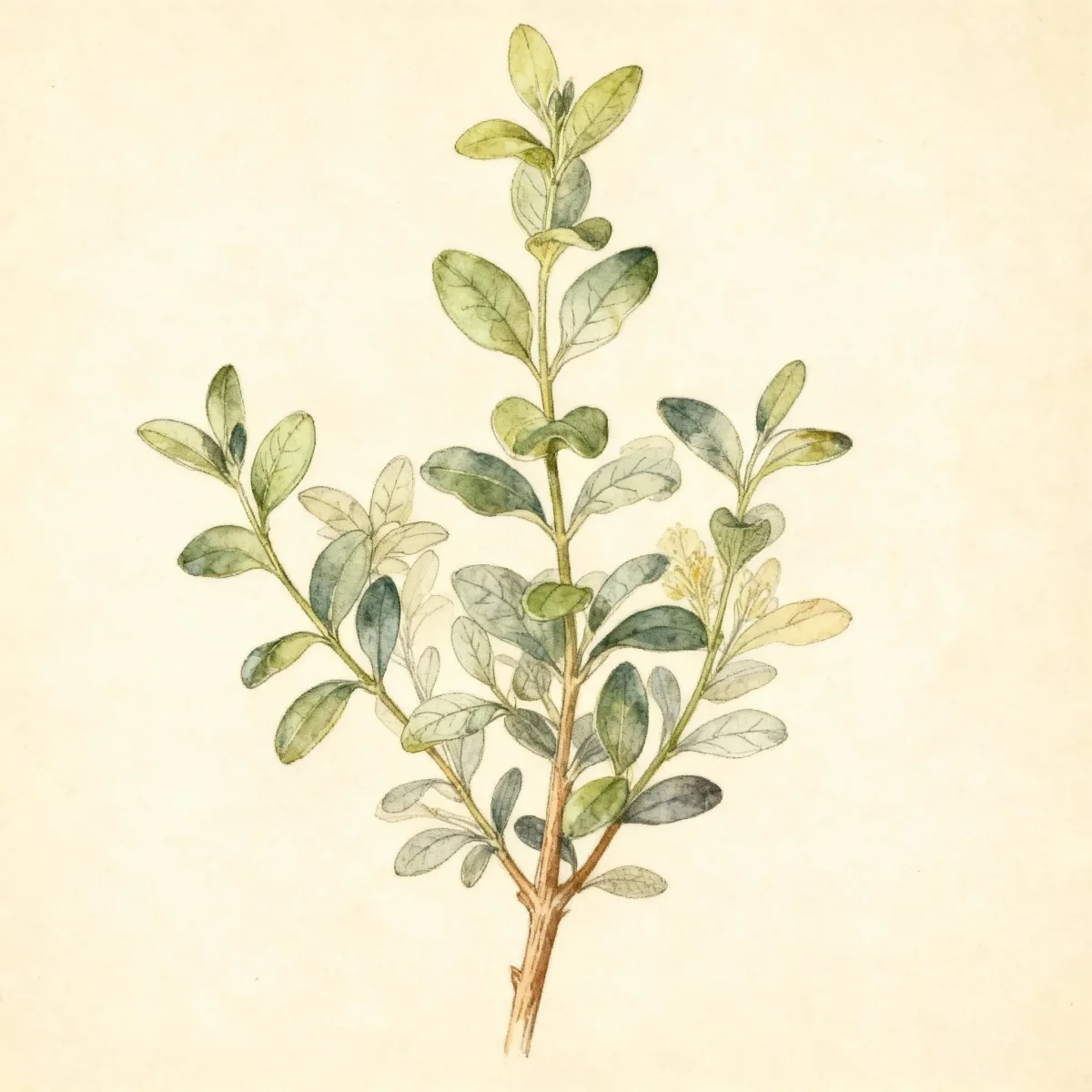
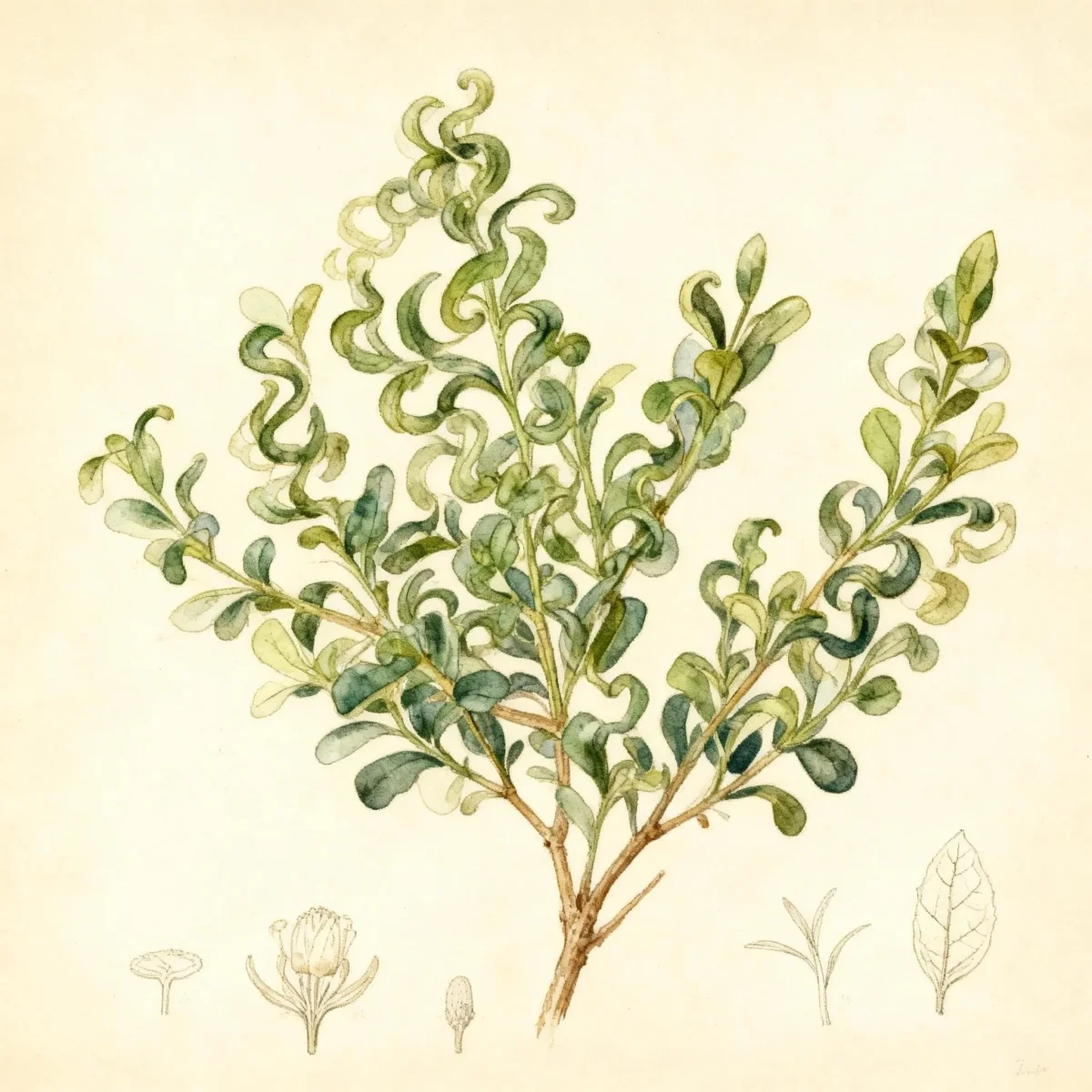
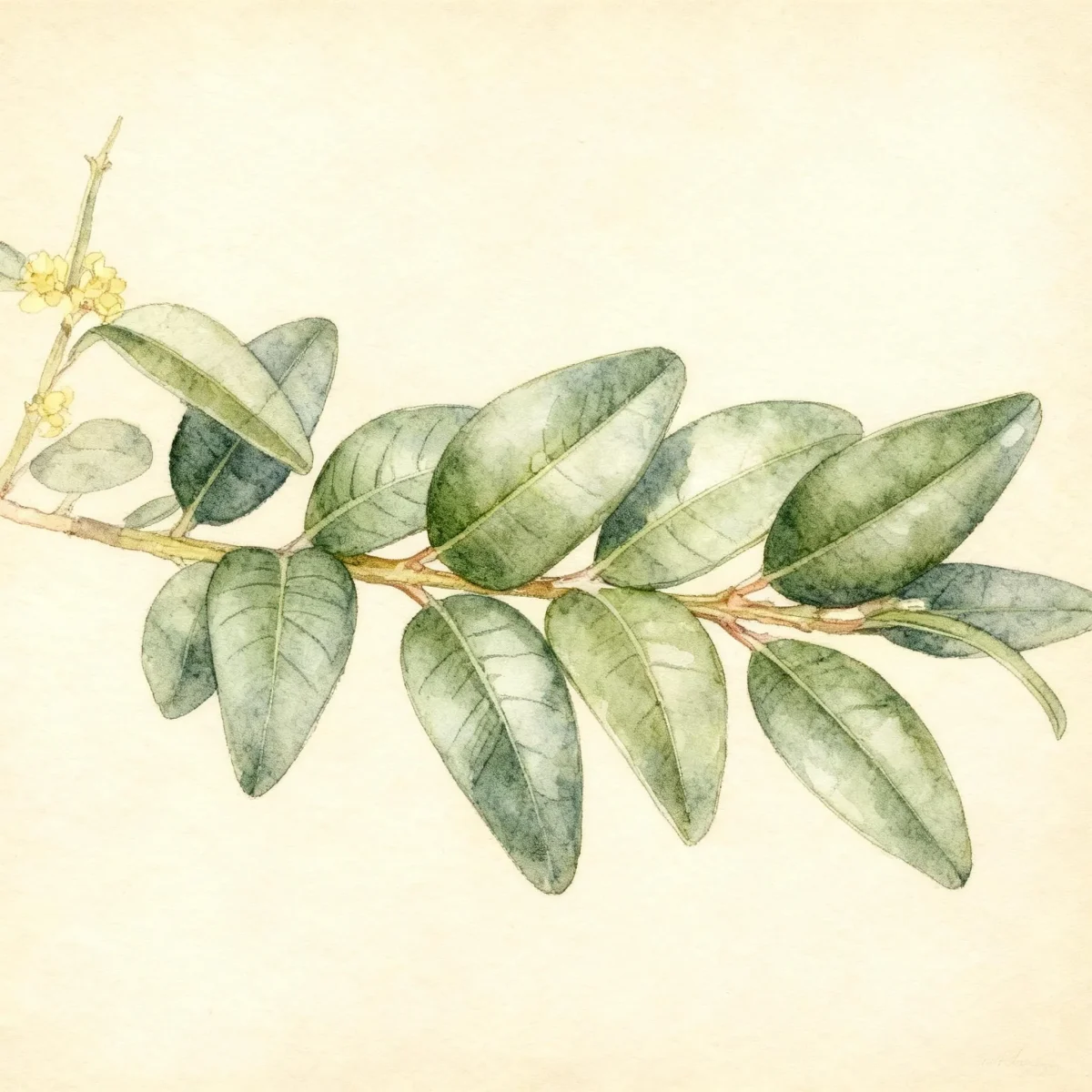
Buxus sempervirens is a rounded to broad-rounded shrub or small tree native to Southern Europe and Western Asia, typically maturing shrubby but capable of reaching tree heights. The cultivar ‘Treska Gorge’ specifically is recognized as a multi-branched evergreen shrub featuring a broad columnar habit, maturing to 15-20 feet tall and 7-10 feet wide with leathery, dark green leaves. This selection derived from seed collected near Skopje, Yugoslavia, was named in 1998, honoring its origin point.
Tolerances
- Rabbit
- Deer
Potential Problems
Boxwood foliage is known to bronze, turning an unattractive brownish-yellow color, particularly when exposed to strong winter winds and full winter sun. This is generally a sign of dehydration rather than disease. Protect this evergreen by selecting a sheltered site whenever possible, and ensure adequate moisture is available before the ground freezes completely.
This Boxwood variety is susceptible to fungal issues, including boxwood blight, volutella blight, and general leaf spot diseases; ensure good air circulation through proper spacing and annual thinning to mitigate humidity buildup. Poorly drained soil risks root rot. Common insect pests include the boxwood leafminer, mite, and psyllid; manage infestations promptly and monitor new growth closely, as tender young shoots are magnets for damage.
Frequently Asked Questions
What hardiness zones is Boxwood suitable for?
The Buxus sempervirens ‘Treska Gorge’ Boxwood is sufficiently hardy for planting across USDA Zones 5 through 8.
How large does Buxus sempervirens ‘Treska Gorge’ grow?
This cultivar typically matures to a height between 15 and 20 feet tall, with a spread generally reaching 7 to 10 feet wide, offering a columnar structure.
What sun exposure does Boxwood need?
This Boxwood variety performs well in conditions ranging from full sun to part shade, though protection from intense winter sun is highly recommended to prevent foliage bronzing.
When does Buxus sempervirens ‘Treska Gorge’ bloom?
Flowering occurs relatively early in the season, typically from April to May, presenting small, inconspicuous flowers described as green to white.
Conclusion
For gardeners seeking dependable, year-round vertical structure, the Buxus sempervirens ‘Treska Gorge’ Boxwood is an excellent, refined choice capable of formal hedging or solitary accent use. Its ability to maintain a columnar shape for decades ensures lasting architectural interest in the garden space. Before planting, verify that your site falls within USDA Zones 5-8 and plan your seasonal pruning carefully to maximize the health of your new Boxwood.
Companion Planting
Selecting appropriate companions for Buxus sempervirens ‘Treska Gorge’ involves choosing plants that share similar needs for well-drained soil and protection from scorching afternoon sun. Consider pairing this columnar Boxwood with Japanese Maples (Acer palmatum) or other fine-textured deciduous plants whose summer shade might protect the Boxwood’s base while complementing its dense evergreen texture. In foundation beds, low-growing perennials like Hosta varieties that tolerate part shade, or low-mounding evergreen groundcovers, can soften the base of the shrub without competing for root space near its shallow system.
Seasonal Care Calendar
Early spring is the time to apply a fresh layer of organic mulch (1-2 inches deep) around the base of the Boxwood, avoiding burying the root flare. Wait until the danger of late spring frost has clearly passed before performing any necessary shaping or pruning on Buxus sempervirens ‘Treska Gorge’. In summer, ensure consistent, medium watering, especially during dry spells, to support dense growth and prevent early summer drought stress. Prepare for winter by ensuring the plant is fully hydrated in late fall; deep watering just before the ground freezes helps the foliage resist winter dehydration and subsequent bronzing.