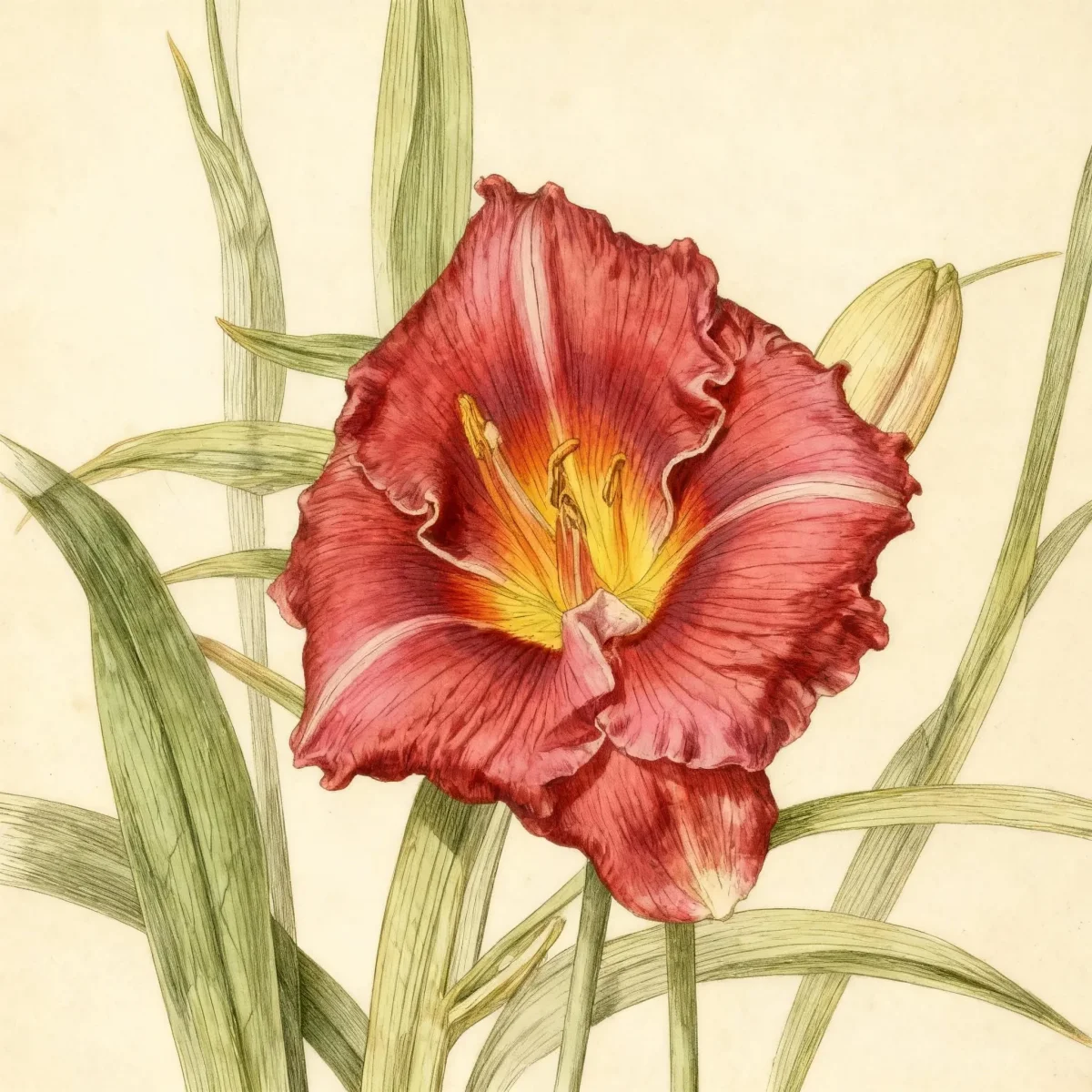
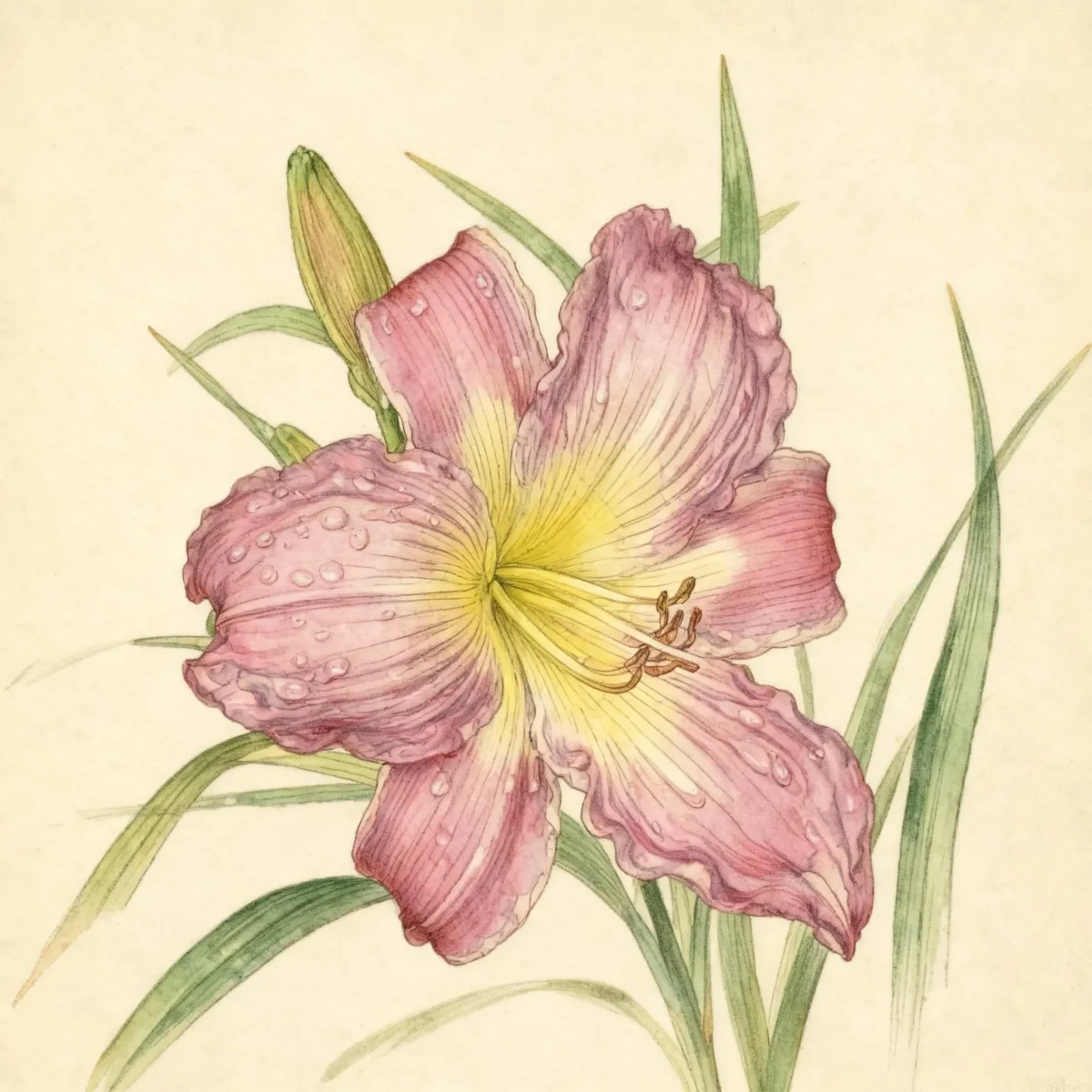
Daylily (Hemerocallis 'Lady Georgia')
Hemerocallis 'Lady Georgia' is a low-maintenance Daylily famous for its peach blooms with apricot throats. Hardy in Zones 3-9.
Scroll down to discover growing tips, care requirements, companion plants, and more
Complete Plant Information
Overview
Hemerocallis ‘Lady Georgia’, a highly regarded cultivar of the common Daylily, offers reliable performance and attractive summer color in most garden settings. This herbaceous perennial provides a tropical flair without demanding intensive care, making it a favorite for both novice and experienced gardeners. Its striking peach blossoms stand out beautifully against the arching, linear foliage.
This robust Daylily offers structure and vibrant color from June through July. With a mature height between 2 and 3 feet, Hemerocallis ‘Lady Georgia’ provides excellent mid-border interest or solid mass planting texture. As a low-maintenance choice, it rewards gardeners with minimal effort.
These durable plants are native to Asia and Europe, though most modern varieties like this one are complex hybrids resulting from decades of careful breeding. Incorporating Hemerocallis ‘Lady Georgia’ into your landscape ensures a splash of reliable, beautiful perennial color year after year.
Fast Facts
- Plant Family: Asphodelaceae
- Plant Type: Herbaceous perennial
- Hardiness Zones: USDA Zones 3-9
- Size at Maturity:
- Height: 2-3 ft
- Spread: 1-2 ft
- Bloom Time: June to July
- Bloom Description: Peach with apricot throat
- Sun Exposure: Full sun to part shade
- Water Needs: Medium
- Maintenance Level: Low
How to Grow
Planting the Daylily, including the ‘Lady Georgia’ cultivar, is best done in spring or fall when temperatures are moderate. Focus on a location that receives full sun to achieve the best bloom count, though part shade is tolerated. These plants thrive in average, medium moisture, well-drained soils, preferring deep, fertile loams when possible. They are highly adaptable once established.
Routine care involves routine maintenance of spent flowers. Deadhead spent blooms daily for a neat appearance, and remove the entire flower scape once flowering is complete for the season. Although Daylilies tolerate heat and humidity well, they appreciate deep watering during dry spells to keep the foliage looking its best throughout the summer months.
Daylilies do benefit from periodic division, typically every three to four years, to maintain vigor and optimal flowering. Perform division in the fall or spring; if you are in a very cold region, spring division is safer. Understand that hybrid Daylilies like Hemerocallis ‘Lady Georgia’ will not come true from seed, so division is the only way to propagate this exact variety.
For winter dormant types, ensuring a period of cold winter dormancy is crucial for the best spring performance, though this limits the suitability of some varieties in Zones 9 and above.
Landscape Uses
The reliable growth habit and robust nature of the Daylily make it an essential tool for landscape architects. Herbaceous perennials such as Hemerocallis ‘Lady Georgia’ perform brilliantly when used for defining borders or providing crisp edging along walkways. They establish quickly, allowing for fast coverage in new plantings.
Mass planting Daylilies creates sweeping drifts of color that mature beautifully over time, softening large architectural features or filling wide, open spaces. While standard varieties are taller, numerous dwarf cultivars exist that excel in rock gardens, offering low-growing structure without compromising hardiness.
Consider pairing this Daylily with foliage plants that contrast its linear leaves, such as Hostas or ornamental grasses, to enhance the visual impact of the 5-inch diameter peach flowers when they appear in mid-season.
Standout Features
Flower Qualities
- Showy
Noteworthy Characteristics
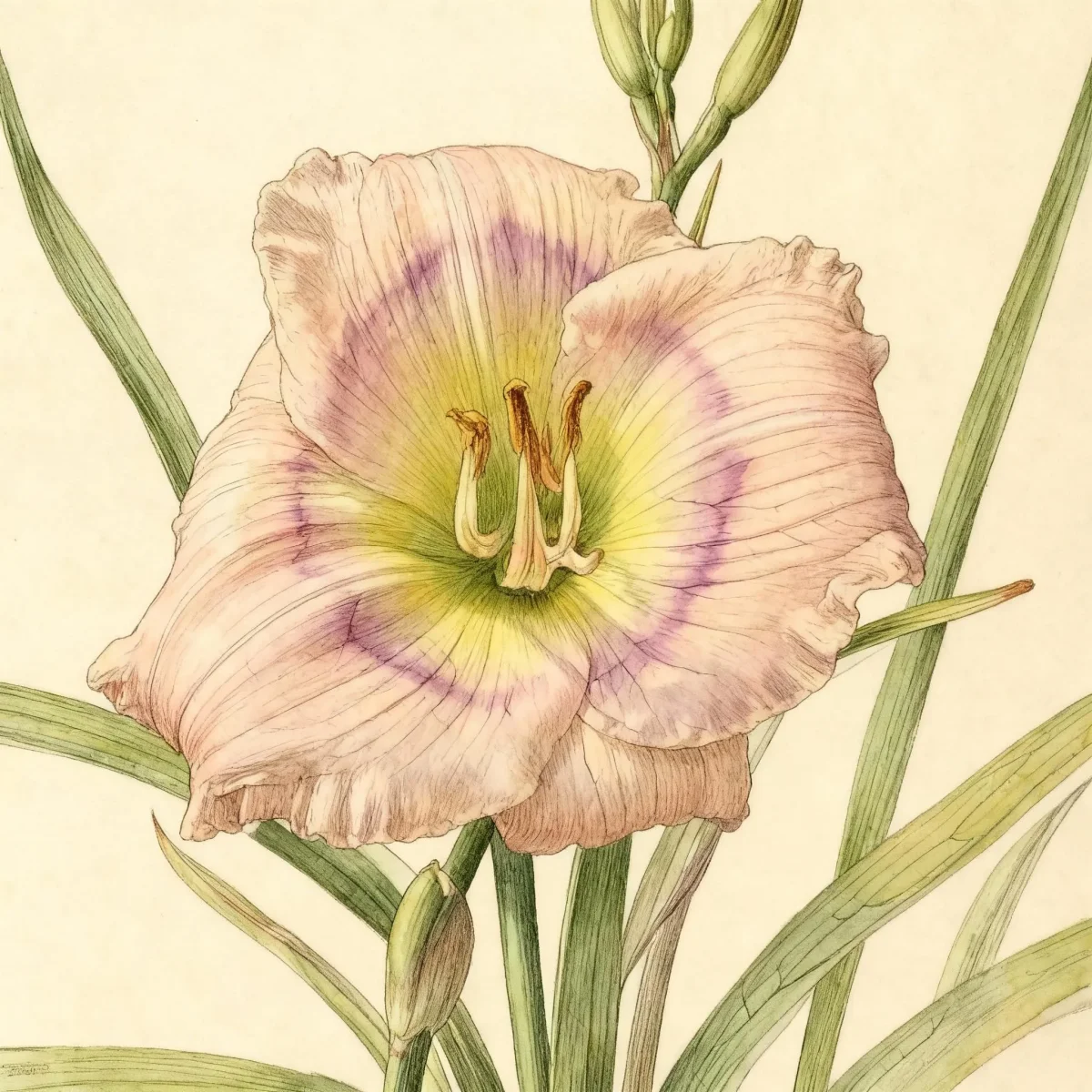
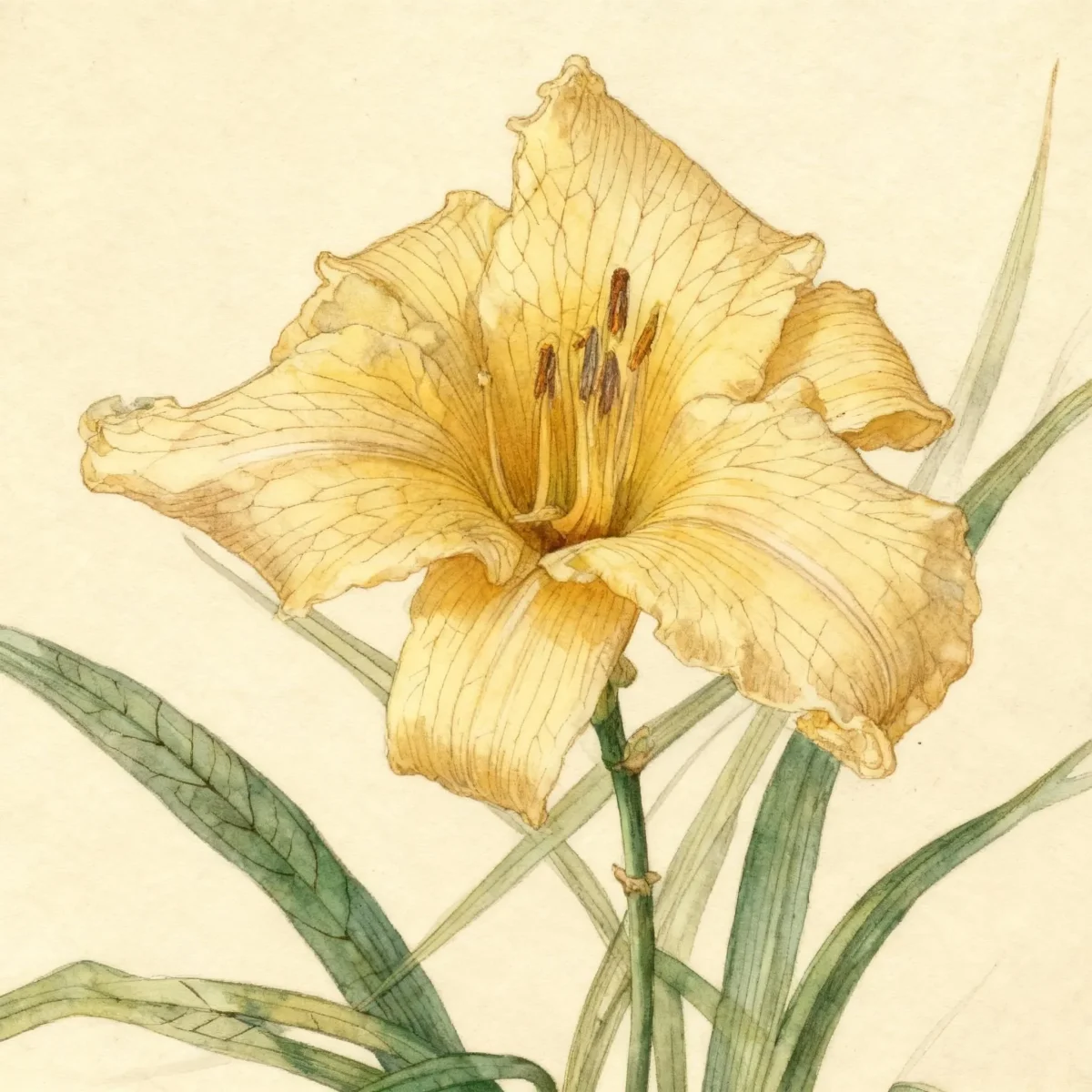
Hemerocallis is a genus of about 15 species of herbaceous perennials commonly known as daylilies. Hybridizers have expended considerable effort over the years creating new daylilies featuring flowers with new colors, color combinations, shapes and patterns. Each flower typically remains open for one day, hence the common name of daylily, but flowers are produced in succession over a long period. ‘Lady Georgia’ is a tetraploid cultivar which features ruffled, 5” diameter, peach flowers with apricot throats, rising on scapes to about 32” tall.
Tolerances
- Rabbit
- Erosion
- Air Pollution
Potential Problems
Daylilies are exceptionally adaptable and are generally considered easy to grow and relatively pest-free. When issues do arise, they typically involve minor insect activity like mites, aphids, or thrips, which can usually be managed with standard garden practices. A more significant concern in some moist environments is Daylily rust, which requires vigilance and appropriate fungicide use if it becomes established. Rabbits typically leave established clumps of Hemerocallis ‘Lady Georgia’ alone.
Frequently Asked Questions
What hardiness zones is Daylily suitable for?
Hemerocallis ‘Lady Georgia’ is suitable for a wide range, thriving in USDA Hardiness Zones 3 through 9.
How large does Daylily grow?
This cultivar reaches a mature height of 2 to 3 feet with a spread of 1 to 2 feet, forming a manageable clump.
When does Daylily bloom?
This Daylily displays its peach with apricot throat blooms between June and July, often reblooming if deadheaded promptly.
What sun exposure does Hemerocallis ‘Lady Georgia’ need?
For optimal flowering, Hemerocallis ‘Lady Georgia’ needs full sun, although it tolerates partial shade conditions.
Conclusion
Hemerocallis ‘Lady Georgia’ stands out as a dependable, beautiful, and low-effort perennial perfect for adding reliable summer color. Its peach blooms attract the eye while its hardy nature ensures longevity in the garden. Before planting, confirm your site fits the full sun to part shade requirement and that your area falls within USDA Zones 3-9 for success with this superb Daylily.
Companion Planting
Selecting appropriate neighbors helps ensure the long-term health and aesthetic appeal of your Hemerocallis planting beds. Because Daylilies thrive in medium moisture and well-drained soil, pair them with other perennials that share similar cultural needs, such as Echinacea (Coneflowers) or Rudbeckia (Black-Eyed Susans). These sun-loving companions create a classic cottage garden look that complements the flowing form of the Daylily foliage.
Avoid planting tender annuals directly beneath the crown, as Daylilies prefer the soil around their base to dry slightly between heavy watering sessions. For textural contrast, consider surrounding the base of the Hemerocallis ‘Lady Georgia’ with low-growing, fine-textured groundcovers that don’t compete aggressively for nutrients but appreciate the dappled shade cast when the Daylily foliage is dense.
Seasonal Care Calendar
Spring is the ideal time to refresh your Daylily beds. Cut back any remaining dead foliage from the previous year once new growth begins to emerge, promoting a clean start for the season. Avoid excess nitrogen fertilizer; Daylilies perform best when soil fertility is moderate, preventing overly lush foliage at the expense of flowers.
Summer maintenance centers primarily on deadheading your Hemerocallis ‘Lady Georgia’ daily to encourage continuous blooming throughout June and July. If rainfall is scarce, apply deep, infrequent watering to sustain the plant during hot, dry periods, ensuring the root zone stays adequately moist without becoming waterlogged.
In the fall, clean up any yellowing foliage, though many winter-dormant types will naturally senescence. If division is planned, early fall is an option in mild climates, but spring division is safest for re-establishing plants quickly before summer heat sets in. Cover dormant foliage cutbacks with mulch in colder regions for winter insulation.