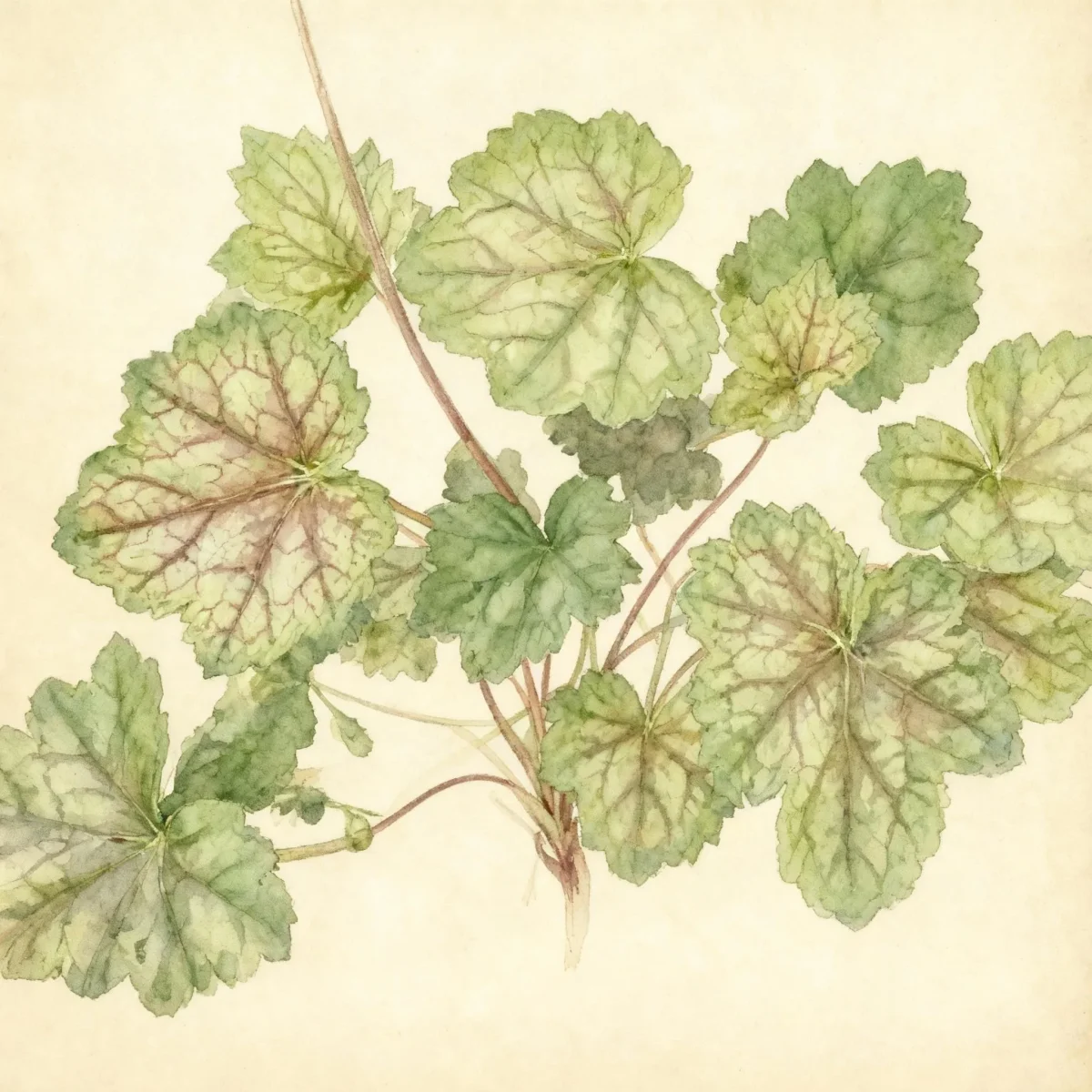
Coral bells (Heuchera 'Purple Petticoats')
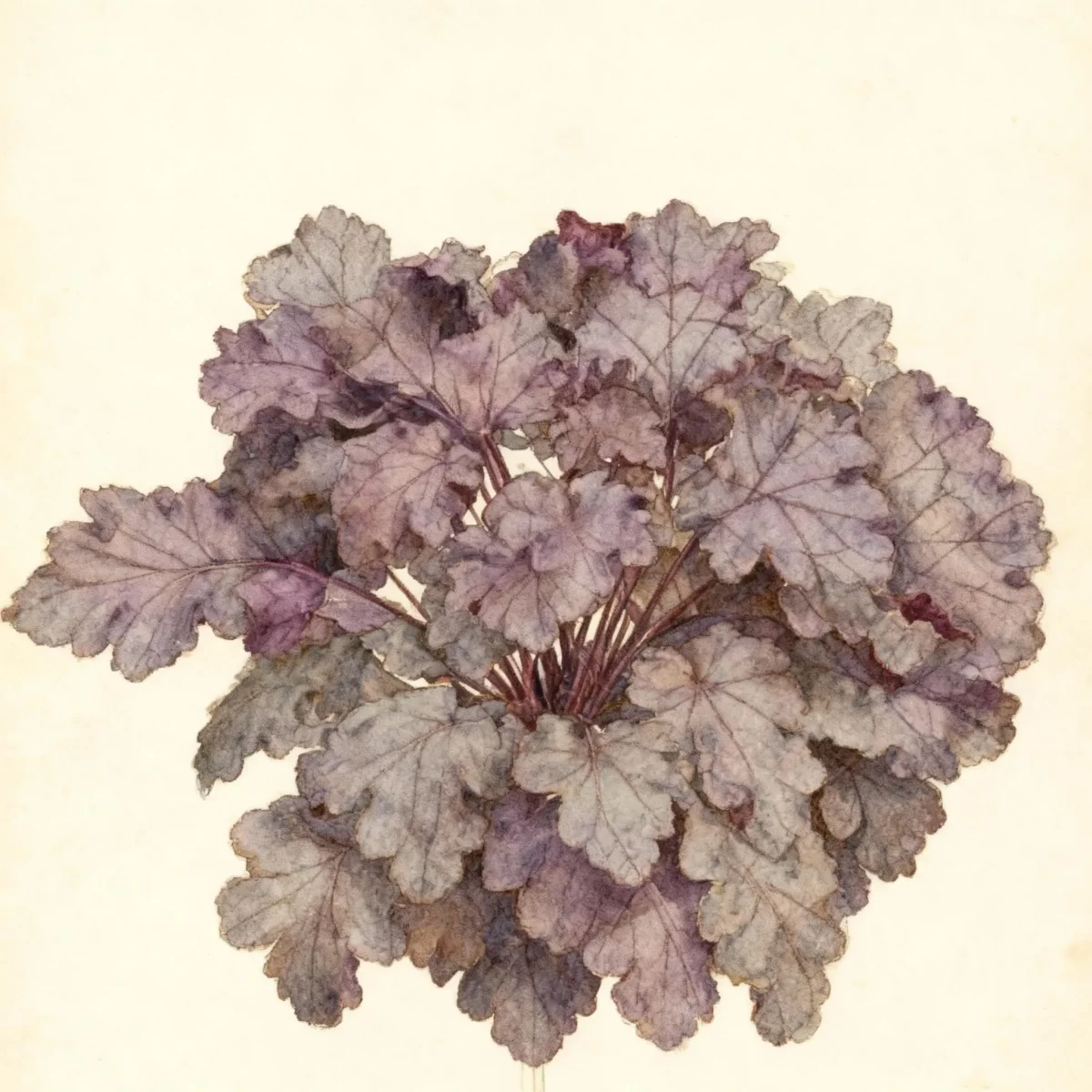
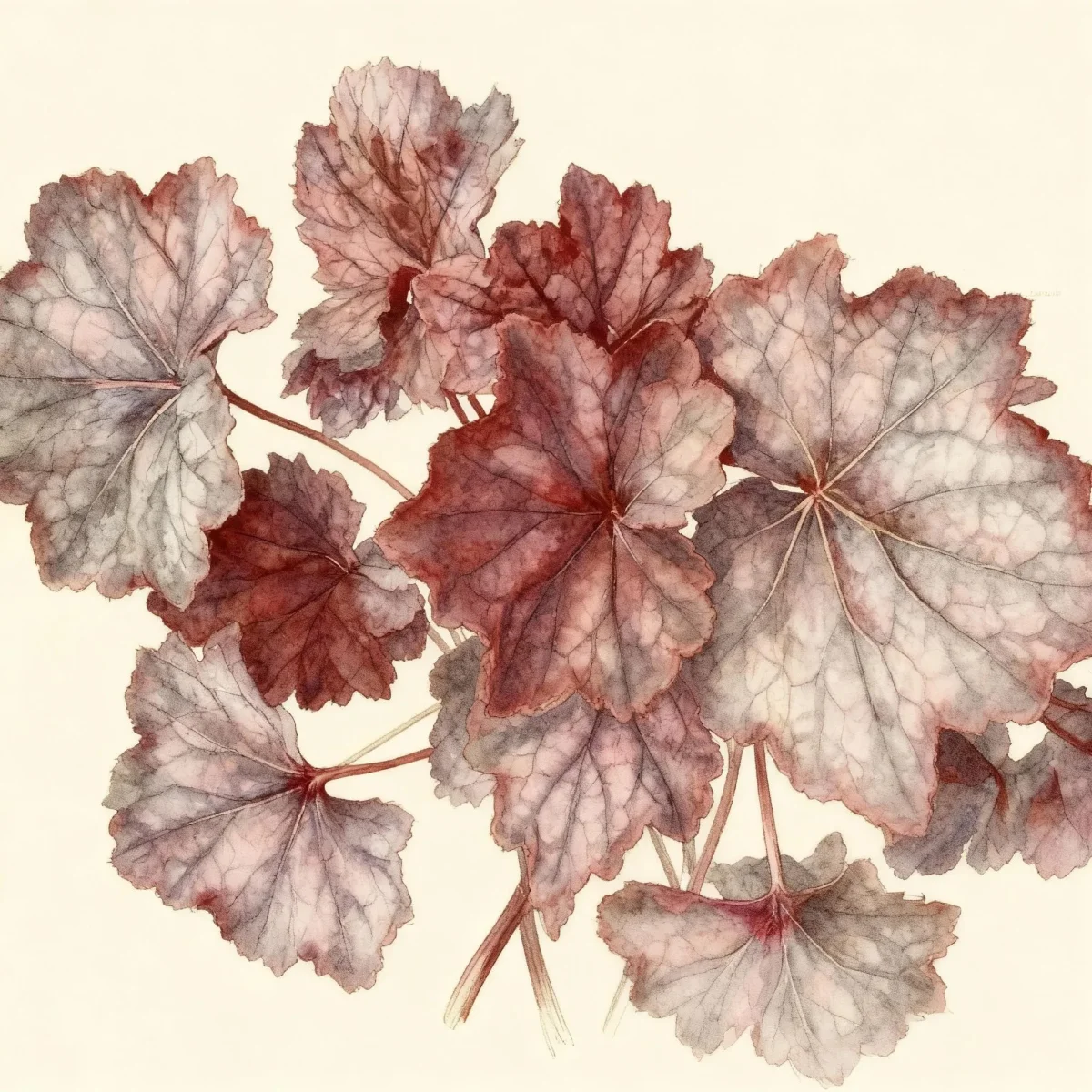
Heuchera 'Purple Petticoats' Coral bells offers solid dark-purple, frilly foliage. This medium-maintenance perennial thrives in partial shade.
Scroll down to discover growing tips, care requirements, companion plants, and more
Complete Plant Information
Overview
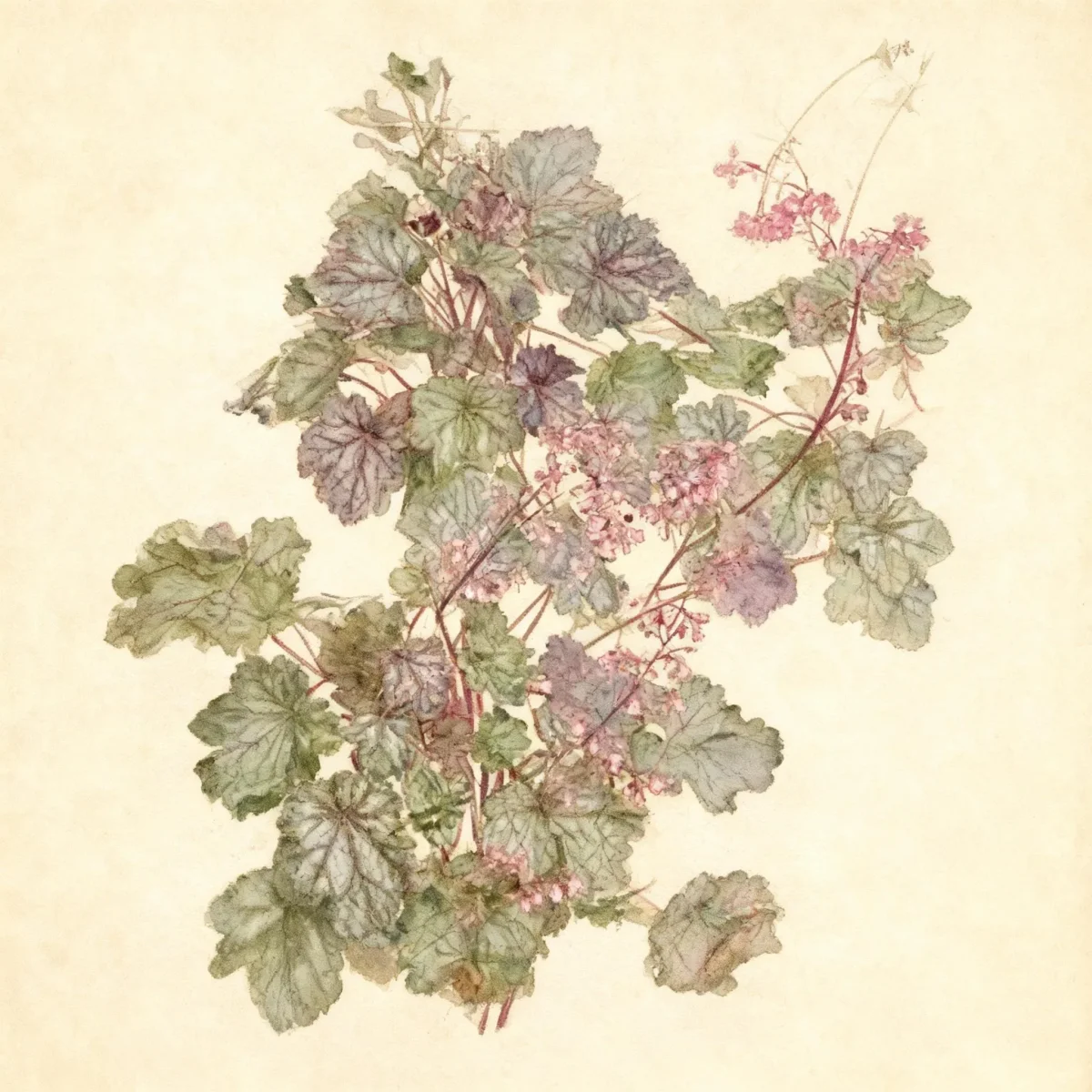
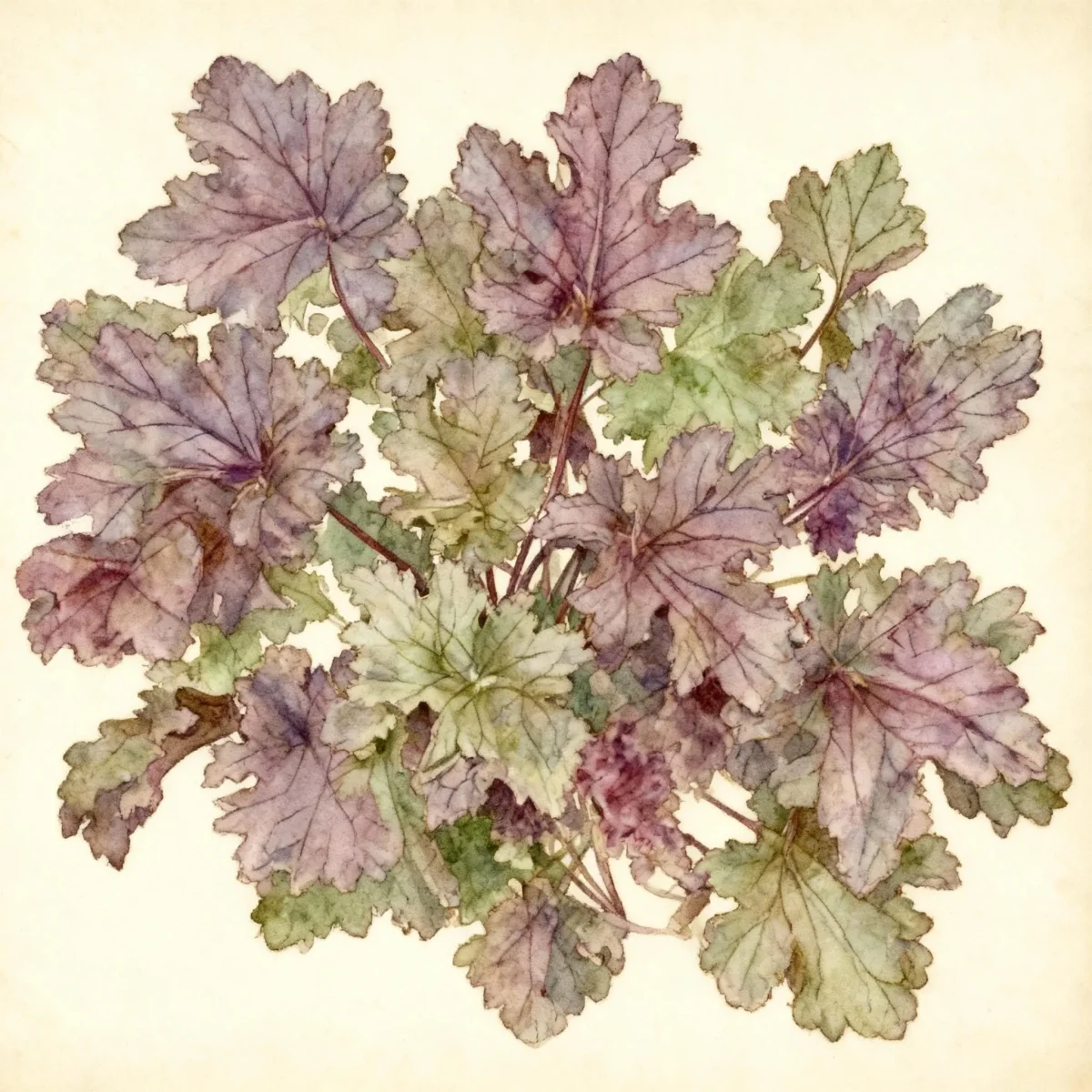
Heuchera ‘Purple Petticoats’, commonly known as Coral bells, is highly valued in the landscape for its dramatic, deeply colored foliage that provides season-long interest. This cultivar features solid dark-purple leaves characterized by distinctive frilly edges, creating year-round texture and contrast in shaded garden areas. While it does produce inconspicuous whitish blooms in summer, the primary appeal of Heuchera ‘Purple Petticoats’ lies in its robust, mounding habit.
As an herbaceous perennial, this selection requires consistent care to maintain its vibrant color, particularly regarding moisture levels. Optimal performance for Coral bells usually involves rich, humusy soils and protection from intense afternoon sun, although specific needs can vary based on parentage. Gardeners rely on Heuchera ‘Purple Petticoats’ to provide reliable, low-growing structure in woodland settings, borders, and rock gardens.
Fast Facts
- Plant Family: Saxifragaceae
- Plant Type: Herbaceous perennial
- Hardiness Zones: USDA Zones 4-9
- Size at Maturity:
- Height: 1-2 ft
- Spread: 1-2 ft
- Bloom Time: June to July
- Bloom Description: Whitish
- Sun Exposure: Full sun to part shade
- Water Needs: Medium
- Maintenance Level: Medium
How to Grow
Planting Heuchera ‘Purple Petticoats’ is best achieved in spring or fall, ensuring the location provides organically rich, humusy soil with excellent drainage. While most preferred conditions involve part shade, some hybrids can handle full sun, especially in cooler northern climates, provided consistent moisture is maintained. Afternoon shade is crucial in southern regions to prevent leaf scorch.
Watering should be consistent, meeting medium needs; never allow the soil to completely dry out, as this stresses the plant and can lead to foliage decline. Little routine fertilization is necessary if the soil structure is good. Deadhead faded flower stems, although the blooms are not highly showy, to redirect energy back into foliage production.
In very cold climates, applying a winter compost mulch after the ground freezes helps insulate the roots and prevents damage caused by frost heaving. Divide overcrowded clumps of these Coral bells every three to four years in the spring to maintain vigor and size.
Landscape Uses
Heuchera ‘Purple Petticoats’ excels as an edging plant, lending year-round deep purple color along paths, walkways, or the front of shaded borders. Its mounding form makes it an ideal groundcover when massed together, creating waves of dark color that contrast beautifully against lighter green hostas or ferns.
These Coral bells are perfectly suited for rock gardens where drainage is naturally enhanced, or for planting beneath high tree canopies in open woodland gardens. Consider pairing the dark leaves of Heuchera ‘Purple Petticoats’ with plants that offer bright yellow or lime-green foliage for maximum visual pop in transitional light areas.
Standout Features
Flower Qualities
- Showy
Noteworthy Characteristics
Heuchera, commonly called alumroot or coral bells, is composed of about 55 North American native species, ranging from dwarf alpine types to tall woodland varieties. Hybrid varieties, like Heuchera ‘Purple Petticoats’, offer leaves in colors spanning green, purple, bronze, and silver-black, often with intricate variegation. ‘Purple Petticoats’ is specifically noted for its solid dark-purple, ruffled foliage forming a dense basal mound below slender spikes of tiny, whitish flowers.
Tolerances
This section remains empty based on provided data.
Potential Problems
Frost heaving of roots is a notable concern, especially where winter temperatures fluctuate widely; preventative winter mulching after the soil freezes is essential. Gardeners should watch for potential foliar diseases, including powdery mildew, rust, and bacterial leaf spot, often exacerbated by poor air circulation or high humidity. Insect pests such as weevils and foliar nematodes can occasionally cause damage to the attractive leaves of your Coral bells.
Frequently Asked Questions
What hardiness zones is Heuchera ‘Purple Petticoats’ suitable for?
This Coral bells variety is suitable for USDA Hardiness Zones 4 through 9.
How large does Heuchera ‘Purple Petticoats’ grow?
It typically reaches a height between 1 to 2 feet and spreads to a width of 1 to 2 feet, forming a dense basal mound.
What sun exposure does Coral bells need?
Heuchera ‘Purple Petticoats’ performs best in full sun to part shade conditions, preferring protection during the hottest part of the afternoon.
When does Coral bells bloom?
This specific cultivar blooms from June through July, producing small, whitish flowers on thin stems rising above the foliage.
Conclusion
Heuchera ‘Purple Petticoats’ is an outstanding choice for adding year-round depth and rich color, thanks to its uniquely frilled, dark-purple leaves. Incorporating this resilient cultivar of Coral bells into your landscape guarantees visual interest even when traditional flowers are dormant. Before planting, confirm that your garden location offers the rich soil and appropriate light balance that Heuchera ‘Purple Petticoats’ needs to truly flourish.
Design Ideas
When integrating Heuchera ‘Purple Petticoats’ into complex designs, utilize it strategically as a dark anchor point. Its texture complements fine-leafed plants like Japanese forest grass or ferns, preventing the garden from looking too soft or monochromatic. Consider planting groups along a north-facing stone wall, allowing the purple foliage to spill over the edge slightly for softening effect.
For vibrant seasonal displays, pair these Coral bells with spring-blooming bulbs like golden Daffodils. As the bulbs fade, the foliage of Heuchera ‘Purple Petticoats’ takes over, providing rich color continuity throughout summer heat when many spring accents have disappeared.
Propagation Tips
While seed starting is possible for species plants, hybrid Heuchera varieties like ‘Purple Petticoats’ are best propagated through division. This process rejuvenates older, declining clumps and multiplies your stock effectively. Divide the established plants carefully in the spring, ensuring each new division has a substantial root system attached to the desirable foliage crown.
Division should occur every three to four years. If you wait too long, the centers of the clumps may hollow out, or the plant may become congested, inhibiting flowering and healthy growth. Ensure the newly divided sections are replanted immediately into enriched soil at the same depth they were previously growing.