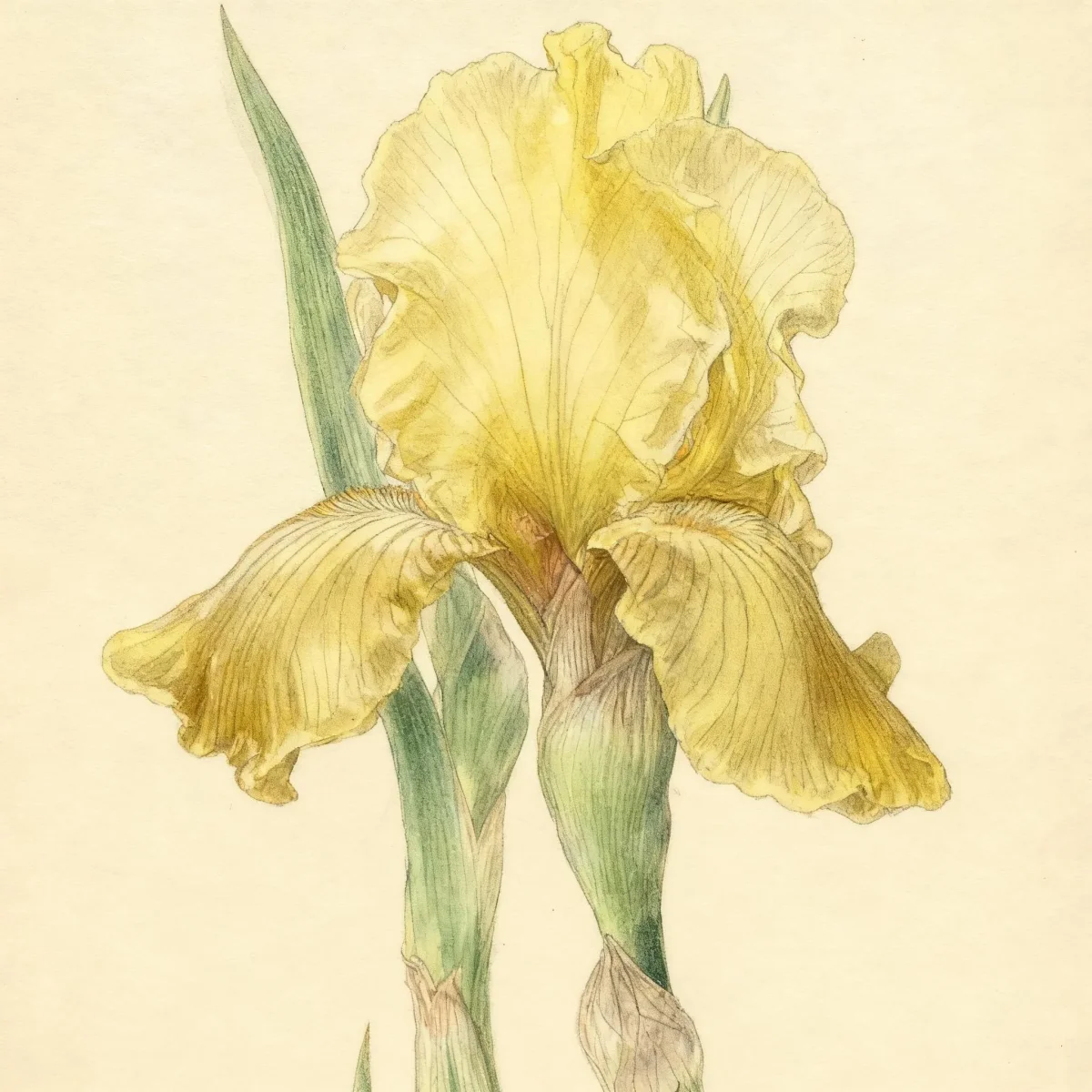
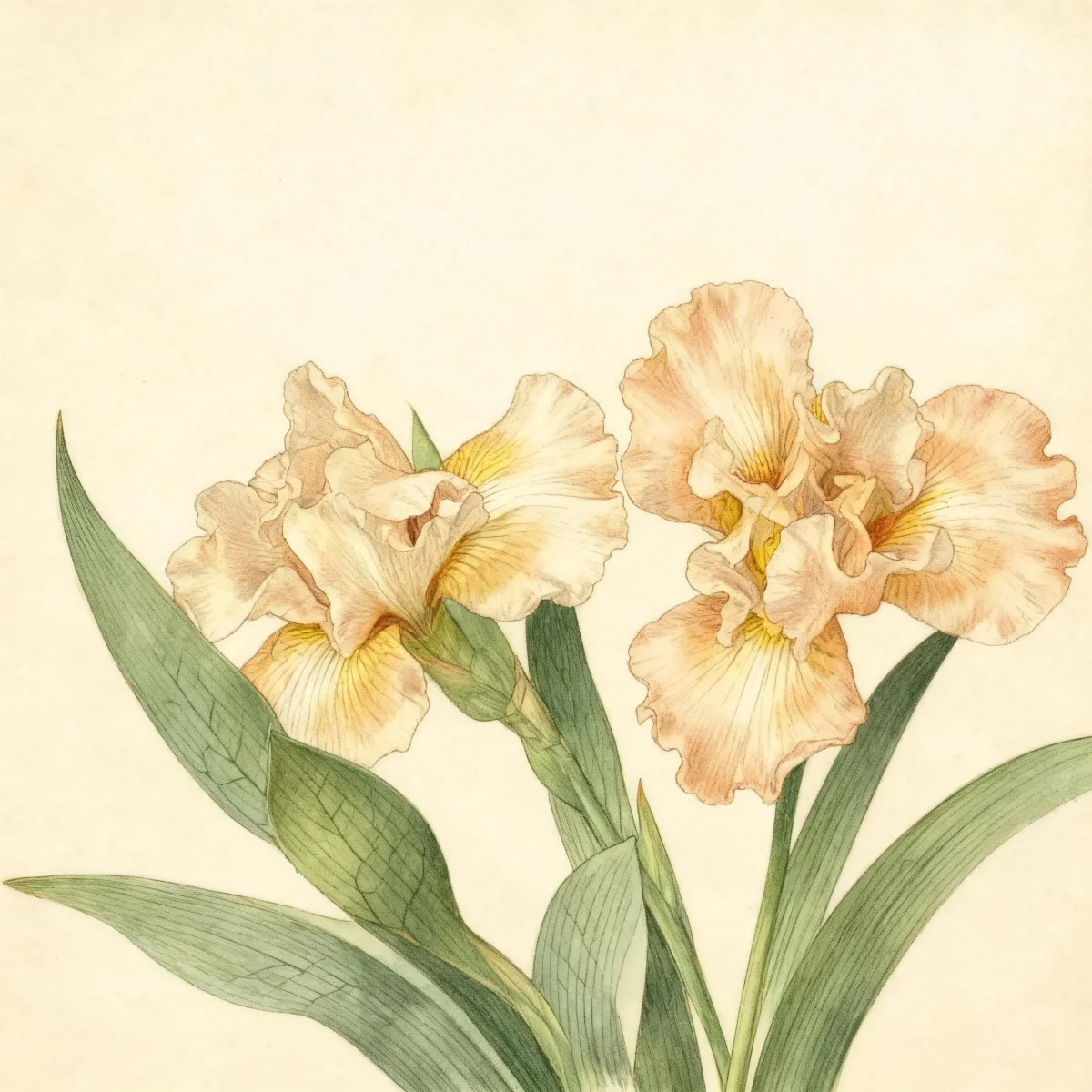
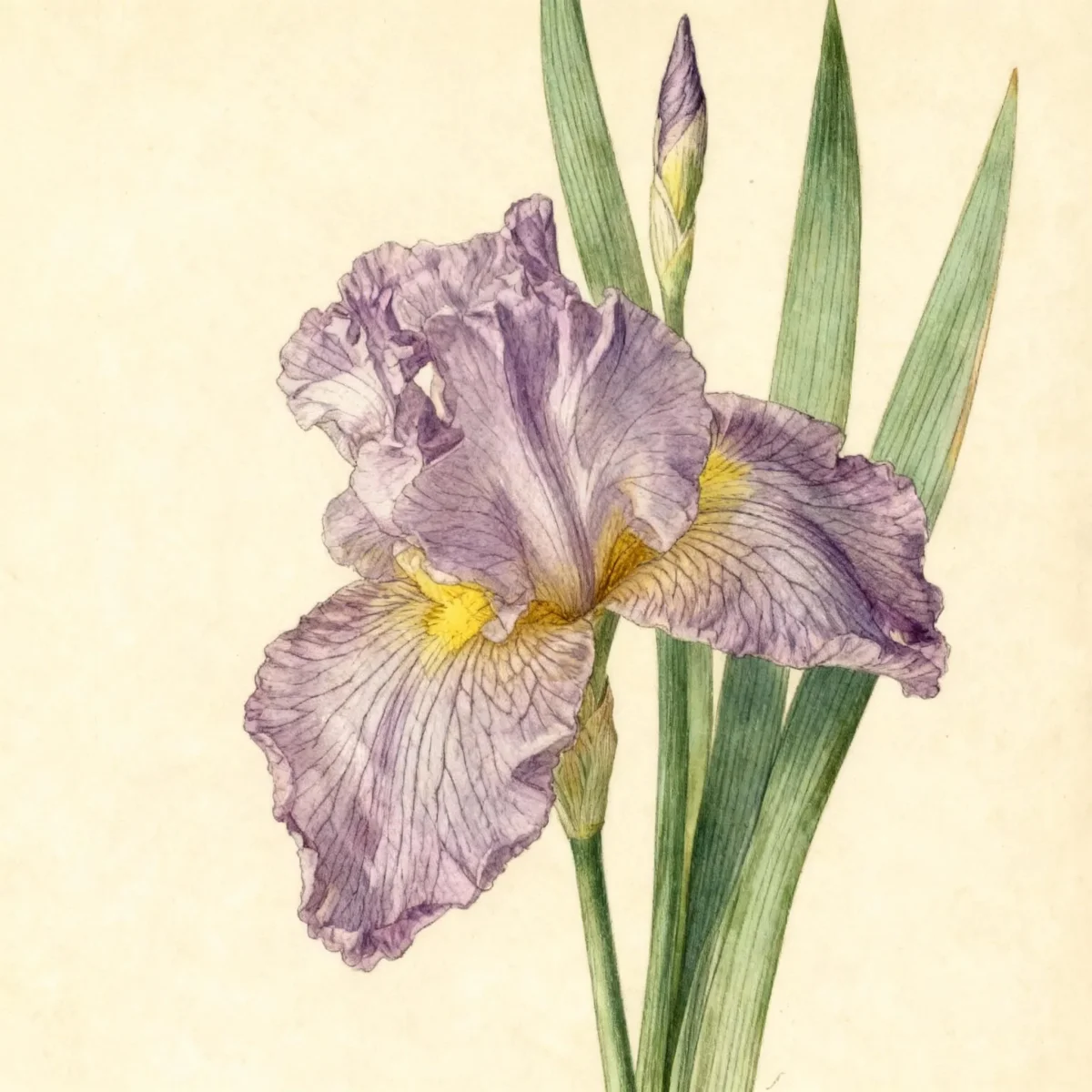
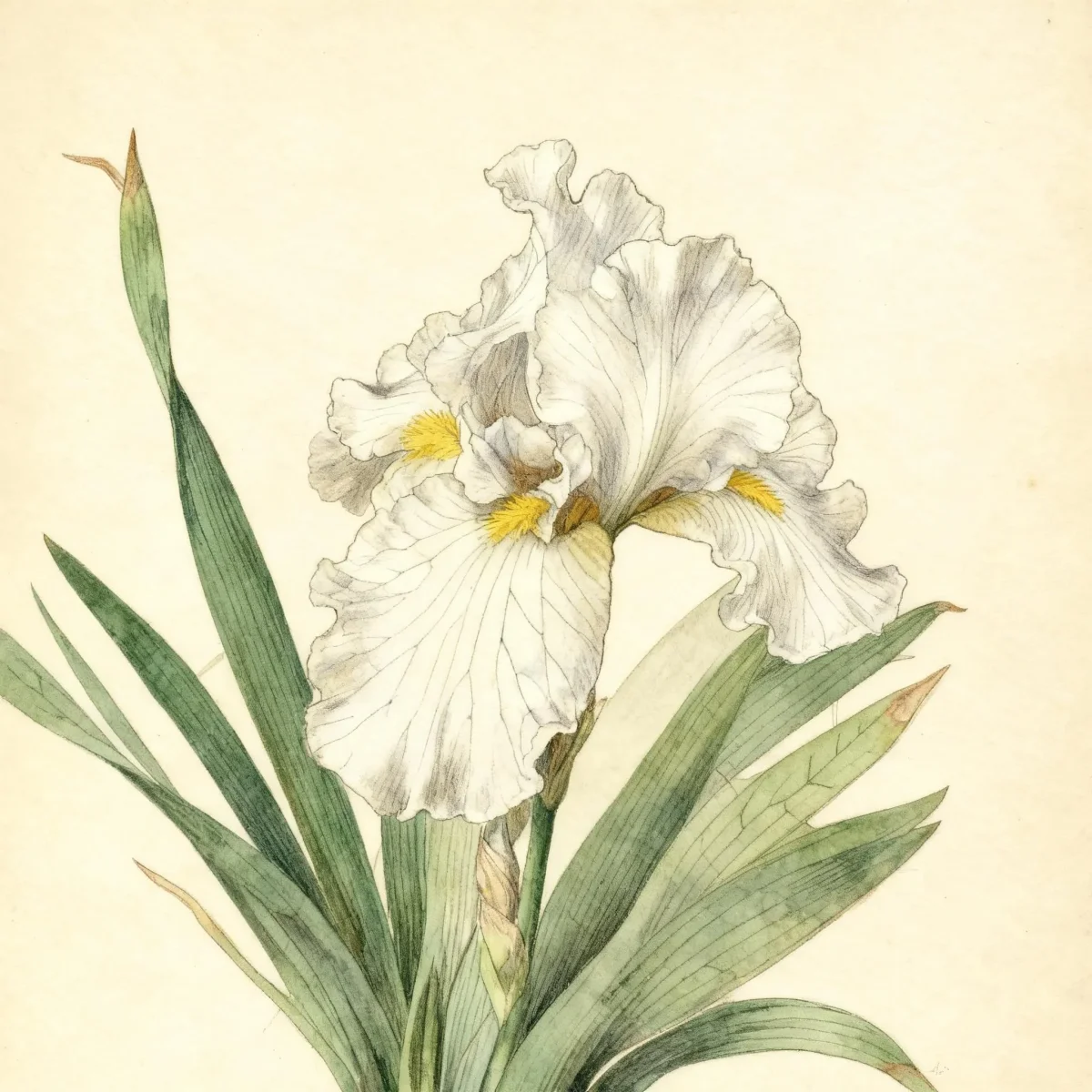
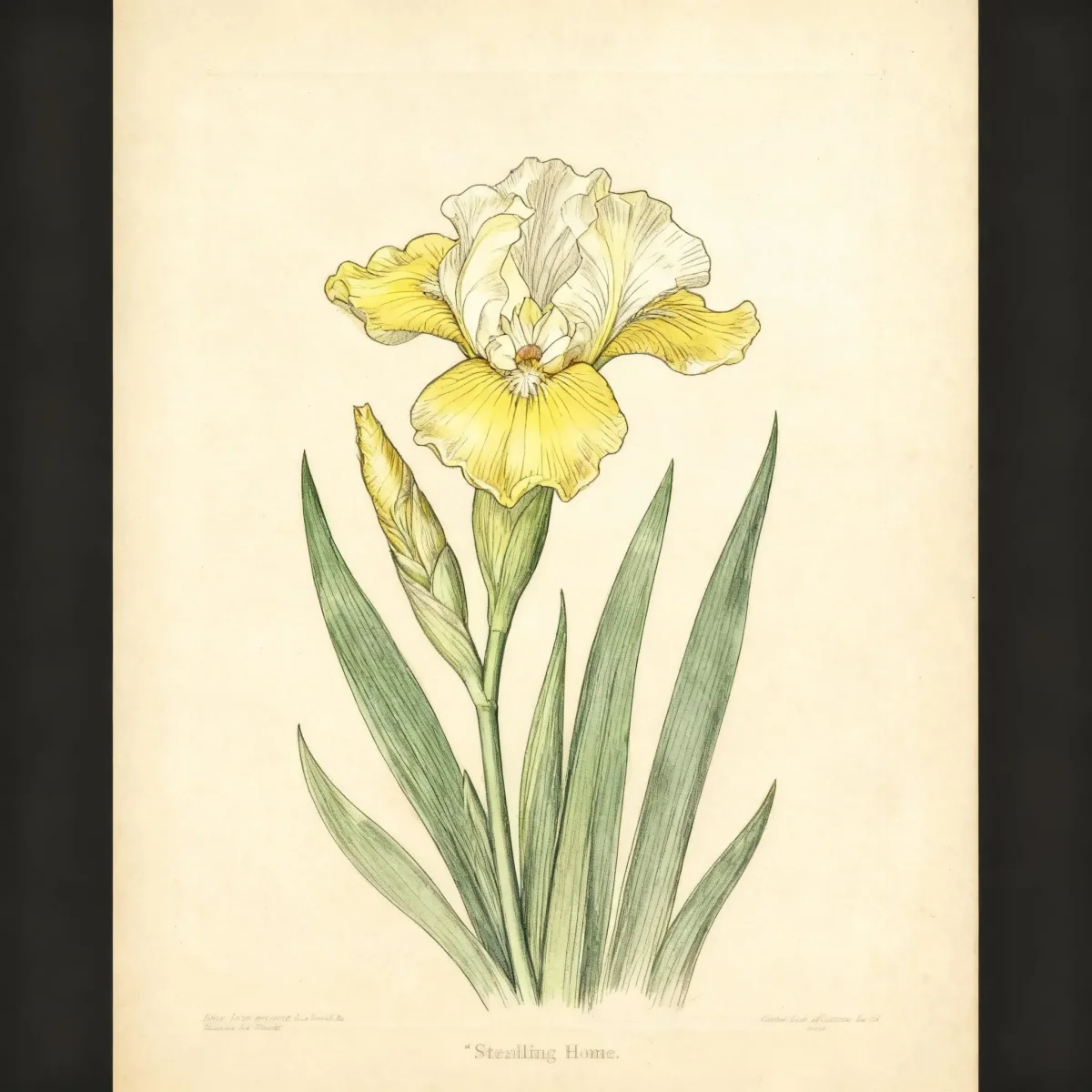
Border bearded iris (Iris 'Rielle')
Iris 'Rielle' is a stunning Border bearded iris, showcasing white standards overlaid yellow and white falls, ideal for sunny perennial borders.
Scroll down to discover growing tips, care requirements, companion plants, and more
Complete Plant Information
Overview
Iris ‘Rielle’ presents a truly captivating display, categorized as a Border bearded iris, renowned for its elegant, two-toned flowers blooming reliably in late spring. This variety features pristine white standards heavily overlaid with yellow tones, contrasting beautifully with white falls accented by yellow detailing. As a rhizomatous perennial, it offers reliable structure and texture to the garden landscape, slowly forming attractive clumps over time. Gardeners prize Iris ‘Rielle’ not just for its coloration but also for its adaptability across many hardiness zones, provided it receives sufficient sunlight and excellent drainage.
The structure of this Bearded Iris type means it fits well toward the front or middle of perennial groupings, earning its designation as a Border bearded iris. While it thrives best with consistent moisture during its active growth period in spring, established specimens of Iris ‘Rielle’ exhibit respectable drought tolerance, making it a somewhat resilient choice for sunny borders. Proper planting of the rhizome—ensuring one-third is exposed to the sun—is crucial for maximizing flowering potential and ensuring the long-term health of Iris ‘Rielle’.
Fast Facts
- Plant Family: Iridaceae
- Plant Type: Herbaceous perennial
- Hardiness Zones: USDA Zones 3-10
- Size at Maturity:
- Height: 1.5-2 ft
- Spread: 1-1.5 ft
- Bloom Time: May to June
- Bloom Description: White overlaid yellow (standards); white with yellow (falls)
- Sun Exposure: Full sun
- Water Needs: Medium
- Maintenance Level: Medium
How to Grow
Planting Iris ‘Rielle’ rhizomes should occur between late July and October, depending on your local climate, timing to allow root establishment before winter. These Border bearded iris require full, direct sun for the best performance, although tolerance exists for light afternoon shade in very hot summer regions. The soil must be medium moisture, well-drained, and average; excellent drainage is paramount, especially when dealing with clay soils, where planting on slopes or in raised beds prevents the rhizomes from rotting.
When planting Iris ‘Rielle’, situate the rhizomes shallowly, spaced about 12-20 inches apart, ensuring one-third of the rhizome sits uncovered above the soil mound, with roots spread horizontally to anchor the plant. Consistency is key during the early season; maintain medium moisture from spring until six weeks after the initial bloom period concludes. While established plants handle some dryness, avoiding severe drought aids rebloom potential.
Maintenance generally involves keeping the bed weed-free and dividing overcrowded clumps every few years, ideally in late summer (August). For reblooming types like Iris ‘Rielle’, consider fertilizing lightly in early spring and again in early July after the first flush of flowers to encourage subsequent autumn blooms, though rebloom success is never guaranteed.
Landscape Uses
As a medium-height variety, the Border bearded iris fits perfectly into the front or middle tiers of a sunny perennial border where its distinctive flowers can be easily appreciated. Mass planting or grouping Iris ‘Rielle’ creates a strong visual impact during its primary May to June bloom window. They also serve as excellent structural elements near foundations or along walkways where their upright, narrow foliage provides year-round green interest.
These irises pair beautifully with early-season spring bulbs that finish blooming before the iris takes center stage, such as tulips or daffodils, and later-season bloomers like Shasta daisies or echinacea that can fill the void once the iris flowering concludes. The strong vertical line of the leaves complements mounding or sprawling plants effectively, creating pleasing textural contrast in sunny garden beds.
Standout Features
Flower Qualities
- Showy
Noteworthy Characteristics
Tall Bearded Iris cultivars, including Iris ‘Rielle’, are distinguished by their rhizomatous structure, producing significant flower spikes with multiple branches and large blooms over 5 inches wide featuring upright standards and pendant falls. The classic structure earns its “Bearded” name from the visible fuzzy growth at the center of the fall. Iris ‘Rielle’ specifically is a reblooming (remontant) type, noted for having standards that are white overlaid with yellow, while the falls are white edged with yellow, offering a refined color palette.
Tolerances
- Deer
- Drought
Potential Problems
Iris ‘Rielle’, like other irises, is susceptible to several foliage and rhizome diseases, including leaf spot, bacterial soft rot, crown rot, and root rot. Pests such as slugs, snails, aphids, and the destructive iris borer also require monitoring. The most crucial protective measure is meticulous sanitation; promptly remove and destroy any diseased or borer-infested foliage or rhizomes, and ensure a thorough annual cleanup of garden debris after the first fall frost.
Cultural errors frequently lead to poor performance or failure to flower in the Border bearded iris. Planting rhizomes too deeply, placing them in heavy shade, applying excessive nitrogen fertilizer, or allowing clumps to become severely overcrowded are common pitfalls. If your Iris ‘Rielle’ fails to produce adequate blooms, check these cultural factors first, as mechanical division in late summer often resolves overcrowding issues that stifle flowering.
Frequently Asked Questions
What hardiness zones is Border bearded iris suitable for?
Iris ‘Rielle’ is exceptionally versatile, thriving in USDA Zones 3 through 10.
How large does Iris ‘Rielle’ grow?
This variety typically reaches 1.5 to 2 feet in height with a spread between 1 and 1.5 feet.
What sun exposure does Iris ‘Rielle’ need?
For optimal growth and best flowering of this Border bearded iris, ensure it receives full sun exposure throughout the day.
When does Iris ‘Rielle’ bloom?
The primary bloom period for Iris ‘Rielle’ is May to June, featuring white standards overlaid yellow and white falls edged yellow.
Conclusion
Iris ‘Rielle’ provides dynamic visual appeal with its classic form and bright, clean coloration, making it a reliable centerpiece for sunny perennial borders. By adhering to strict soil drainage requirements and providing adequate sun, you can successfully cultivate this striking Border bearded iris. Plan your planting for late summer or early fall to ensure this jewel in the rainbow has time to establish its rhizomes before the next growing season.
Design Ideas for Bearded Iris Beds
When integrating Iris ‘Rielle’ into your garden design, consider its mature height of around two feet. Use its upright foliage and vibrant early summer blooms to anchor the mid-border. Because its color pattern is relatively light (white and yellow), it pairs beautifully with deeper purple or dark blue companion flowers, which will make the paler Iris ‘Rielle’ pop visually, especially in the late afternoon sun.
Consider companion planting with plants that share similar sun and water needs but bloom at slightly different times. Lamb’s Ears or ornamental sages that prefer dry, sunny conditions make excellent partners, as they often handle the drier soil rhizomes prefer once established. Avoid companions that create dense shade or require perpetually wet feet, as this directly contradicts the cultural demands of a healthy Border bearded iris.
Companion Planting Suggestions
The key to successful companion planting around Iris ‘Rielle’ is excellent soil drainage and full sun exposure. Plants that share the Mediterranean or dry-garden preference work best. Try pairing them with low-growing Dianthus varieties, which offer contrasting textures and bloom slightly later, extending the visual interest of the border.
For height contrast behind the 2-foot Iris ‘Rielle’, consider taller, drought-tolerant perennials like Russian Sage (Perovskia atriplicifolia) or upright ornamental grasses. These companions complement the linear leaves of the iris without competing aggressively for the shallow nutrients near the rhizomes. Always ensure adequate airflow around the base of the iris to promote drying after rain, mitigating the risk of soft rot.