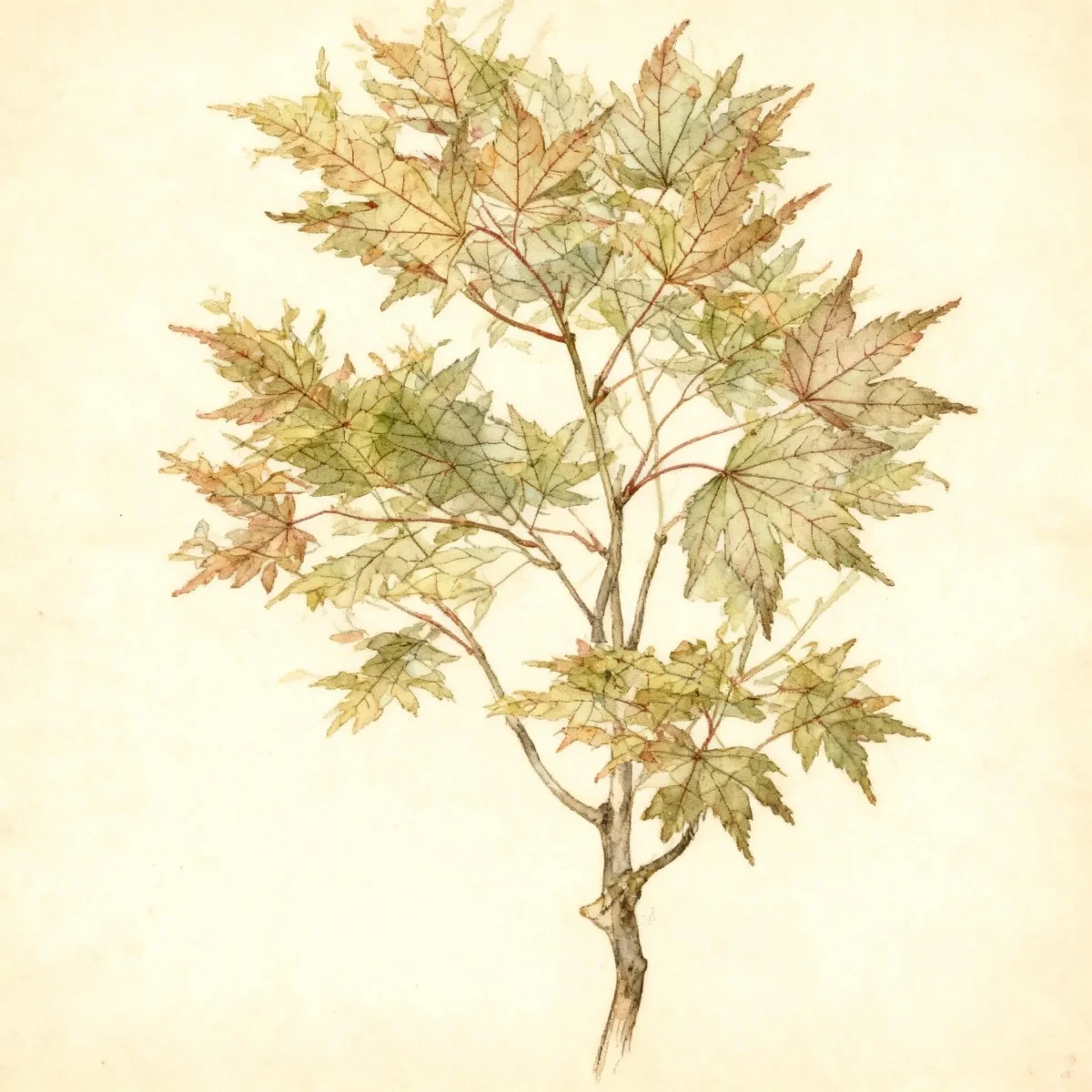
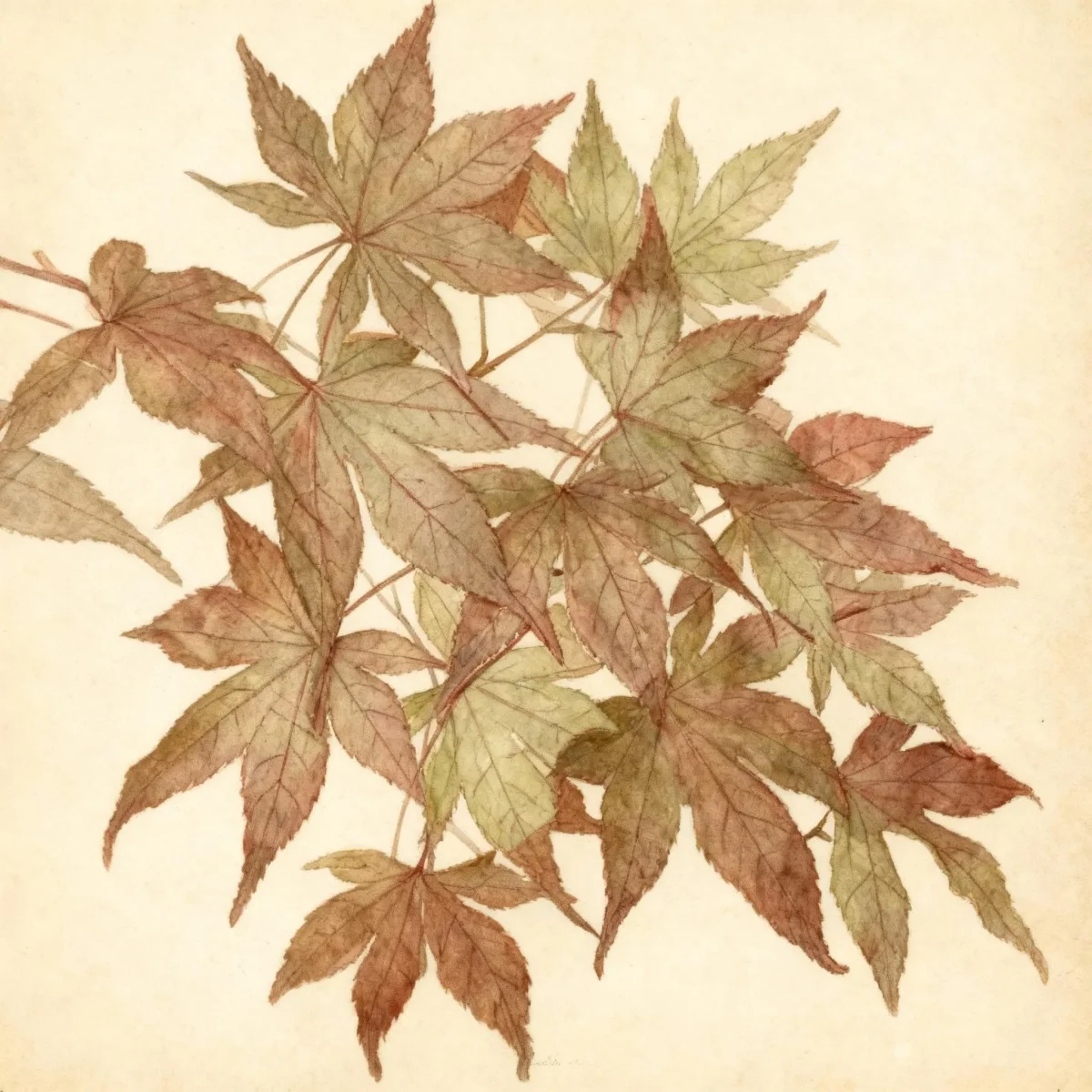
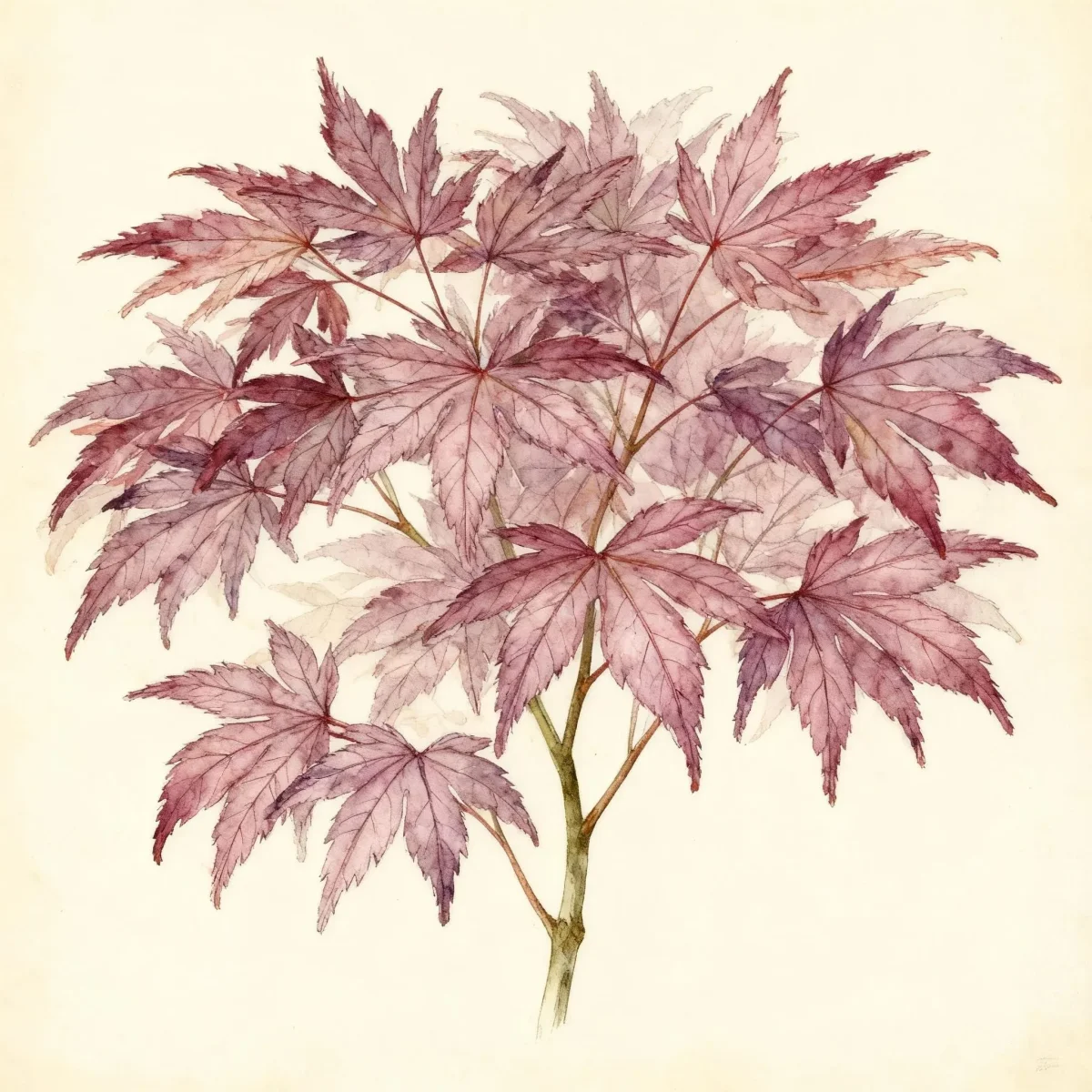
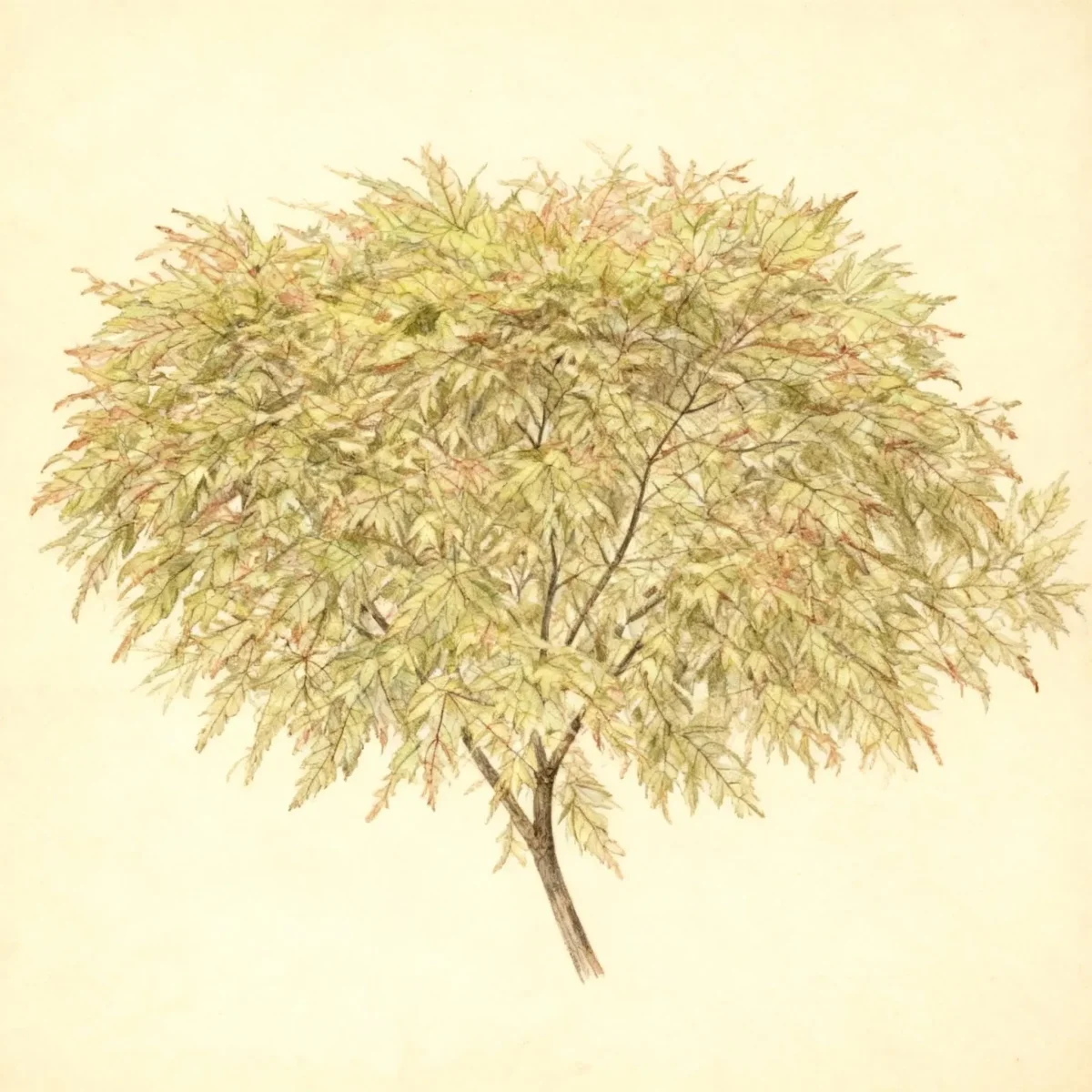
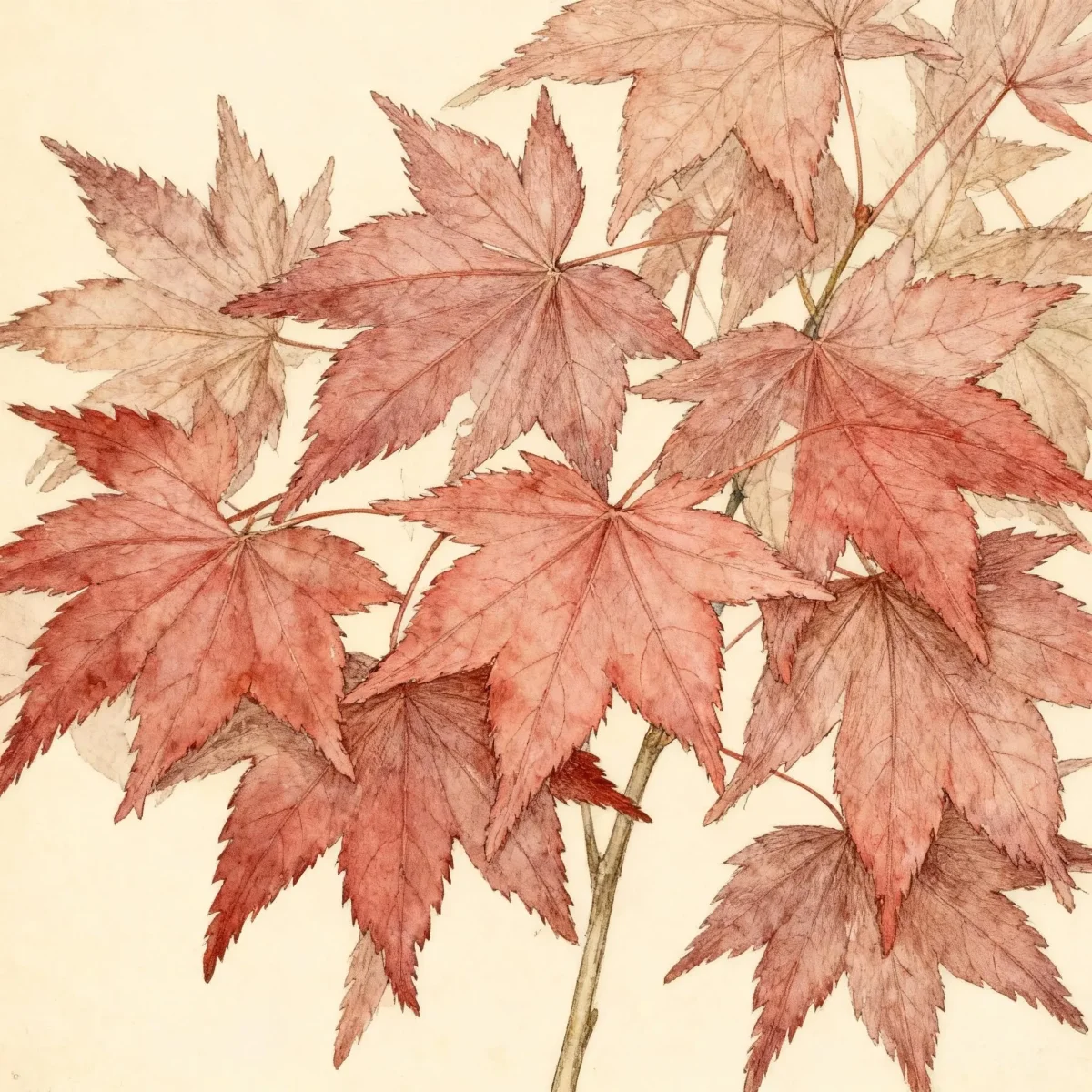
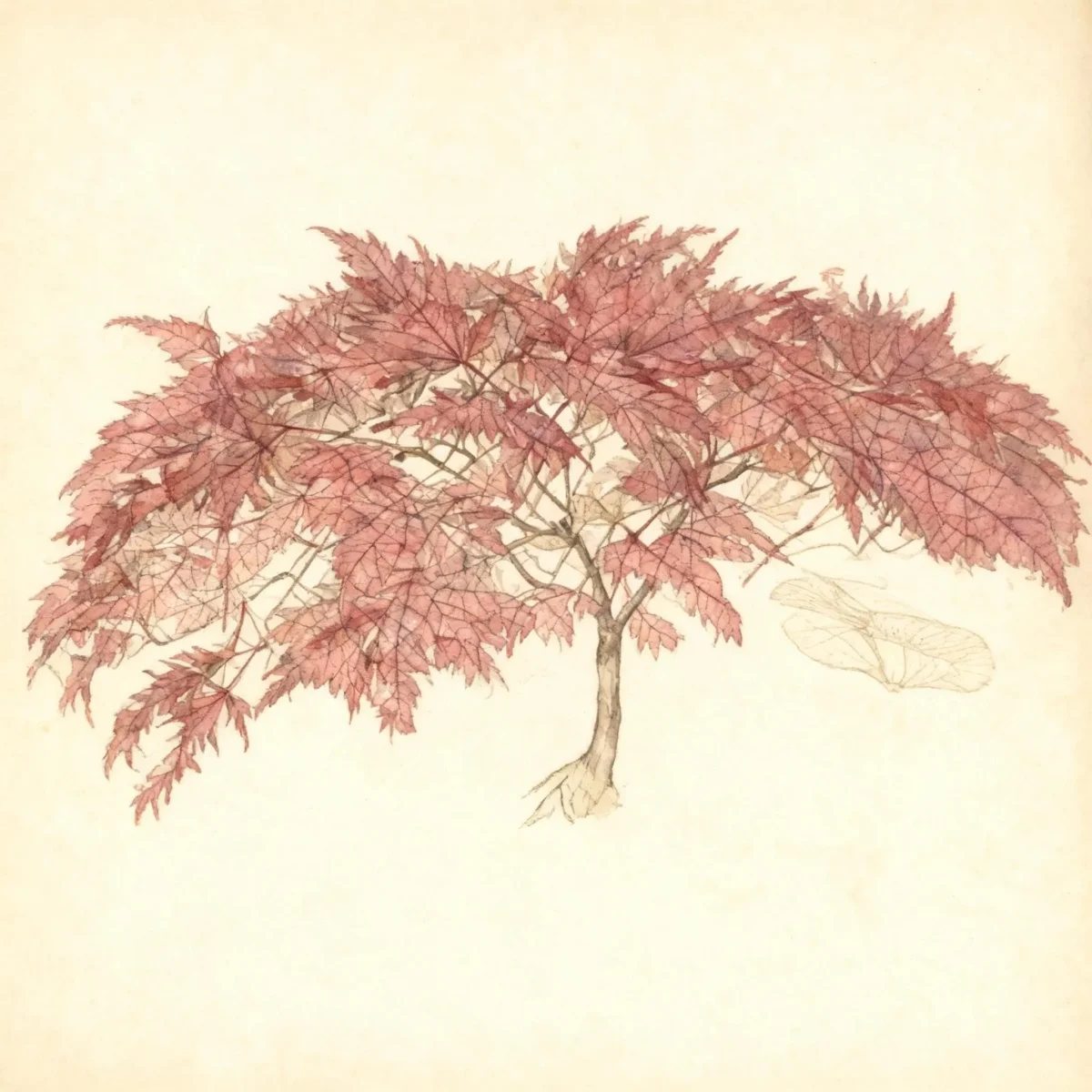
Japanese maple (Acer palmatum 'Tsuma-gaki')
Acer palmatum 'Tsuma-gaki' is a unique Japanese maple prized for its nail-polish tipped emerging foliage. Low-maintenance deciduous shrub for zones 5-9.
Scroll down to discover growing tips, care requirements, companion plants, and more
Complete Plant Information
Overview
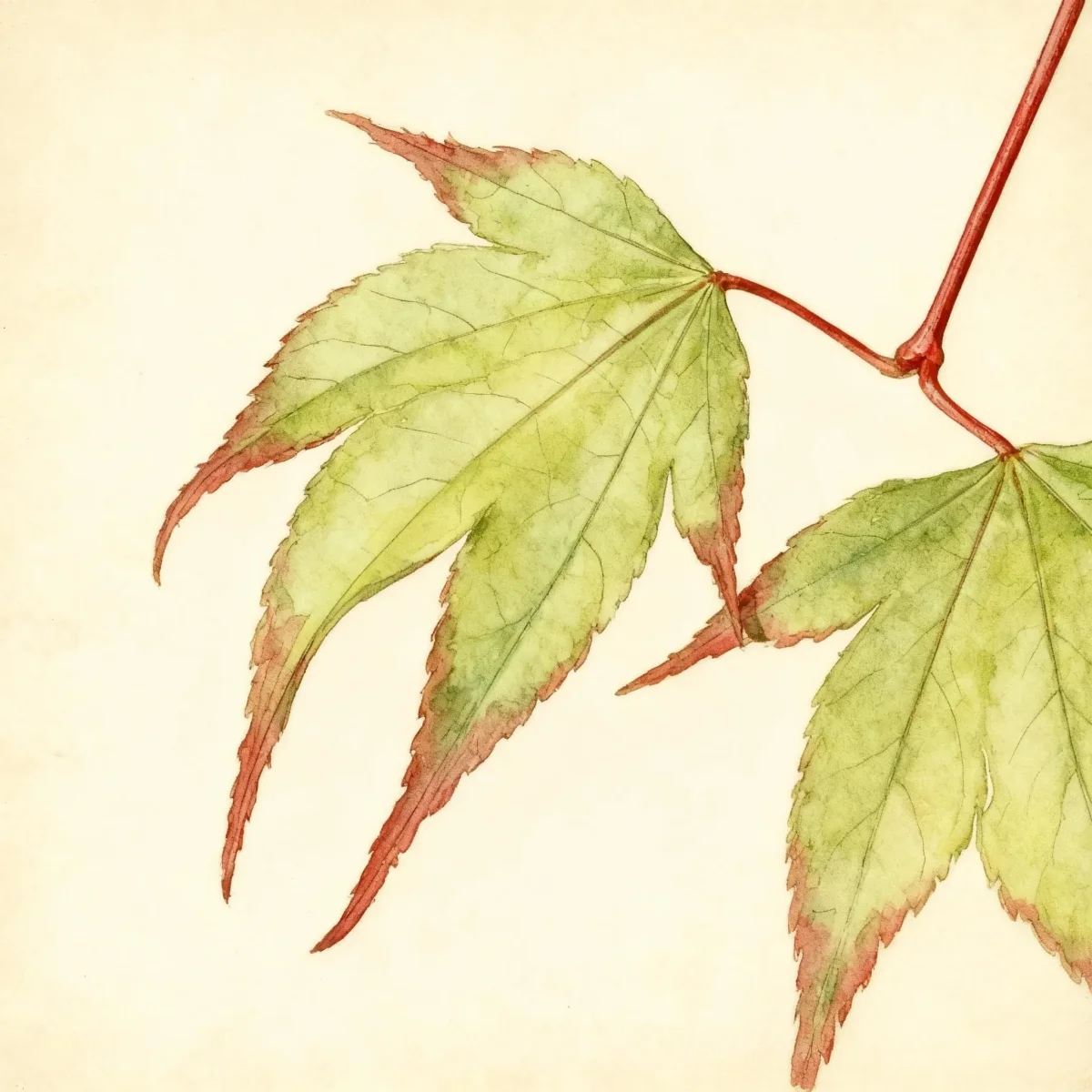
The Acer palmatum ‘Tsuma-gaki’, commonly known as a Japanese maple, offers exceptional ornamental value, especially noted for its unique spring display. This cultivar is especially recognized because its emerging leaves feature red-tipped lobes, resembling the Japanese term ‘tsuma-gaki’ (red nail polish). As a small, rounded deciduous shrub, it provides structure and seasonal interest without becoming overly large.
This variety matures relatively slowly, reaching about 10 feet tall, making it an excellent specimen plant for smaller garden spaces or sheltered borders. While it is generally a low-maintenance choice, proper siting is crucial to protect its delicate new foliage from scorching summer sun or harsh winds. Growing Acer palmatum ‘Tsuma-gaki’ successfully means respecting its needs for consistent moisture and well-drained, fertile soil.
Gardeners seeking fine texture and dependable form will appreciate the Japanese maple. Its architectural shape and distinct seasonal color shift—from the unique spring emergence to green summer leaves and finally to rich red and yellow tones in autumn—ensure it remains a focal point year-round.
Fast Facts
- Plant Family: Sapindaceae
- Plant Type: Deciduous shrub
- Hardiness Zones: USDA Zones 5-9
- Size at Maturity:
- Height: 5-10 ft
- Spread: 4-8 ft
- Bloom Time: April
- Bloom Description: Dark red
- Sun Exposure: Full sun to part shade
- Water Needs: Medium
- Maintenance Level: Low
How to Grow
For optimal establishment, plant your Acer palmatum ‘Tsuma-gaki’ in the spring or fall. Select a location offering moist, organically rich, slightly acidic, and very well-drained soil; sandy loams are generally well-tolerated. While it handles full sun well in cooler northern climates, gardeners in the southern range should prioritize part afternoon shade to prevent leaf scorch during intense heat.
Watering should be consistent, especially during establishment and hot summers, as remaining dry stresses the plant. Mulching is highly recommended to retain soil moisture and keep the roots cool, warding off the effects of heat. Fertilize lightly in the spring just before the leaves emerge, but avoid over-fertilizing, which can reduce winter hardiness.
Pruning Acer palmatum ‘Tsuma-gaki’ should be kept to an absolute minimum. If pruning is necessary to shape the specimen or remove dead wood, perform this task in late fall or mid-winter. Be aware that pruning during spring or summer often leads to significant sap bleeding from the cuts, a common issue with many Japanese maples. Always site this sensitive cultivar away from areas prone to strong winds.
Landscape Uses
Japanese maples are celebrated additions to the landscape, primarily for their attractive foliage texture and refined shape. The Acer palmatum ‘Tsuma-gaki’ excels as a specimen or accent plant where its unique spring coloration can be closely observed, perhaps near a patio or entryway. Due to its manageable size, it functions beautifully as an element within a mixed shrub border or along the periphery of a foundation planting.
Consider planting this Japanese maple where it can receive dappled sunlight, mimicking its natural understory environment. It pairs well with broadleaf evergreens that provide winter contrast or low-growing, acid-loving groundcovers at its base. Its formal, rounded habit also makes it an excellent choice for woodland garden margins, softening transition areas in the landscape design.
Because this cultivar benefits from protection, plant it near structures or taller plantings that can buffer it from harsh winds. While suitable for screening a small area, its value is best realized when sited where it can be viewed as a focal point rather than lost in a dense hedge.
Standout Features
Flower Qualities
- Insignificant
Noteworthy Characteristics
Acer palmatum, commonly called Japanese maple, is a deciduous shrub or small tree that typically grows to 10-25’ (infrequently to 40’) tall. It is native to Japan, Korea and China. General plant form is rounded to broad-rounded, often with low branching. Each palmate green leaf (2-5” long) has 5 or 7 but less frequently 9 pointed toothed lobes. Small reddish-purple flowers in umbels bloom in mid spring (April). The flowers are rather attractive close up, but are not particularly showy from a distance. Flowers are followed by samaras (to 3/4” long) in pairs. Samaras ripen in September-October. Fall color includes shades of yellow, red-purple and bronze. Cultivars (often grafted) are quite variable.Genus name is the Latin name for a maple tree.Specific epithet is in reference to the palmate nature of the leaves. Each leaf has several lobes (typically 5-7) that all originate from one point looking like an open hand with outstretched fingers.‘Tsuma-gaki’ (Amoenum Group) is a small rounded maple that typically grows to 5-7’ tall over the first 10 years, eventually maturing to 10’ tall. It is particularly noted for the colors on its distinctively pendant emerging leaves: light yellowish green with red-tipped lobes resembling a hand with finger nail polish (tsuma-gaki from Japanese means red nail). Each palmate leaf has 5-7 oval, toothed, moderately cut lobes which are divided about 1/2 way to the leaf base. Leaves turn green by summer before eventually changing to red with some yellow in fall.
Tolerances
- Rabbit
- Black Walnut
Potential Problems
The Acer palmatum ‘Tsuma-gaki’ is subject to several potential disease and pest issues common to the Japanese maple group. Diseases may include stem canker, various leaf spots, root rots, and fungal issues like verticillium wilt and anthracnose. Insect pests to watch for include scale insects, borers, aphids, and bagworms, while mites can become troublesome during dry periods.
A significant cultural risk is frost damage; the foliage leafs out early in spring, making the young leaves highly susceptible to injury from late-season frosts. Furthermore, if planted in high pH soils, chlorosis (yellowing of the leaves due to nutrient deficiency) is a likely outcome.
To manage these risks, ensure excellent air circulation and avoid overhead watering to minimize fungal outbreaks. Inspect the plant regularly for signs of infestation. Crucially, avoid planting in hot, dry sites, as excessive heat exacerbates both pest pressure and the risk of leaf scorch.
Frequently Asked Questions
What hardiness zones is Japanese maple suitable for?
This Japanese maple, Acer palmatum ‘Tsuma-gaki’, performs best when planted within USDA Hardiness Zones 5 through 9.
How large does Acer palmatum ‘Tsuma-gaki’ grow?
This cultivar typically reaches mature heights between 5 to 10 feet tall, with a spread ranging from 4 to 8 feet wide.
What sun exposure does Acer palmatum ‘Tsuma-gaki’ need?
It thrives in locations receiving full sun to light, dappled shade, though afternoon shade is vital in hotter climates to prevent sun scorch on the new foliage.
When does Japanese maple bloom?
The bloom time for this variety is April, producing small flowers described as dark red.
Conclusion
The Acer palmatum ‘Tsuma-gaki’ offers a fantastic combination of graceful structure and captivating seasonal color, most notably the unique red-tipped emerging leaves that define this Japanese maple cultivar. Its low maintenance needs make it accessible to many gardeners, provided they can offer consistent moisture and suitable protection from harsh winds and intense summer afternoons. Before planting, confirm your current USDA zone falls within the viable range of 5 to 9 to ensure this stunning focal point thrives for years to come.
Companion Planting for Japanese Maples
Choosing appropriate neighbors is key when siting a specimen Japanese maple like ‘Tsuma-gaki’. Since they prefer consistent moisture and protection from harsh western sun, companion plants that thrive in similar conditions work best. Consider planting acid-loving shrubs with contrasting textures, such as Rhododendrons or Azaleas, ensuring their root systems do not aggressively compete with the maple’s shallow roots.
Groundcovers that suppress weeds and help maintain cool, moist soil around the Acer palmatum ‘Tsuma-gaki’ are excellent choices. Hostas, especially those with blue or gold foliage, contrast nicely with the green summer leaves and thrive well under the partial shade that this maple often needs in warmer regions. In a woodland setting, ferns provide a delicate, naturalistic carpet beneath the structure of the small tree.
Seasonal Care Calendar
Spring is the busiest time for the Acer palmatum ‘Tsuma-gaki’. Fertilize lightly before leaf-out, and remain vigilant for late frosts which can damage the nascent, highly valued new growth. Summer care revolves around consistent watering, ensuring the soil never dries out completely, and applying a fresh layer of mulch if necessary to combat heat stress.
As autumn approaches, enjoy the changing fall color of your Japanese maple, which includes shades of red and yellow. Winter preparation involves minimal activity; avoid pruning at all costs during this period if the pruning implements aren’t sterilized, as wounds heal slowly. Fall and winter are the preferred times for any necessary structural pruning interventions.