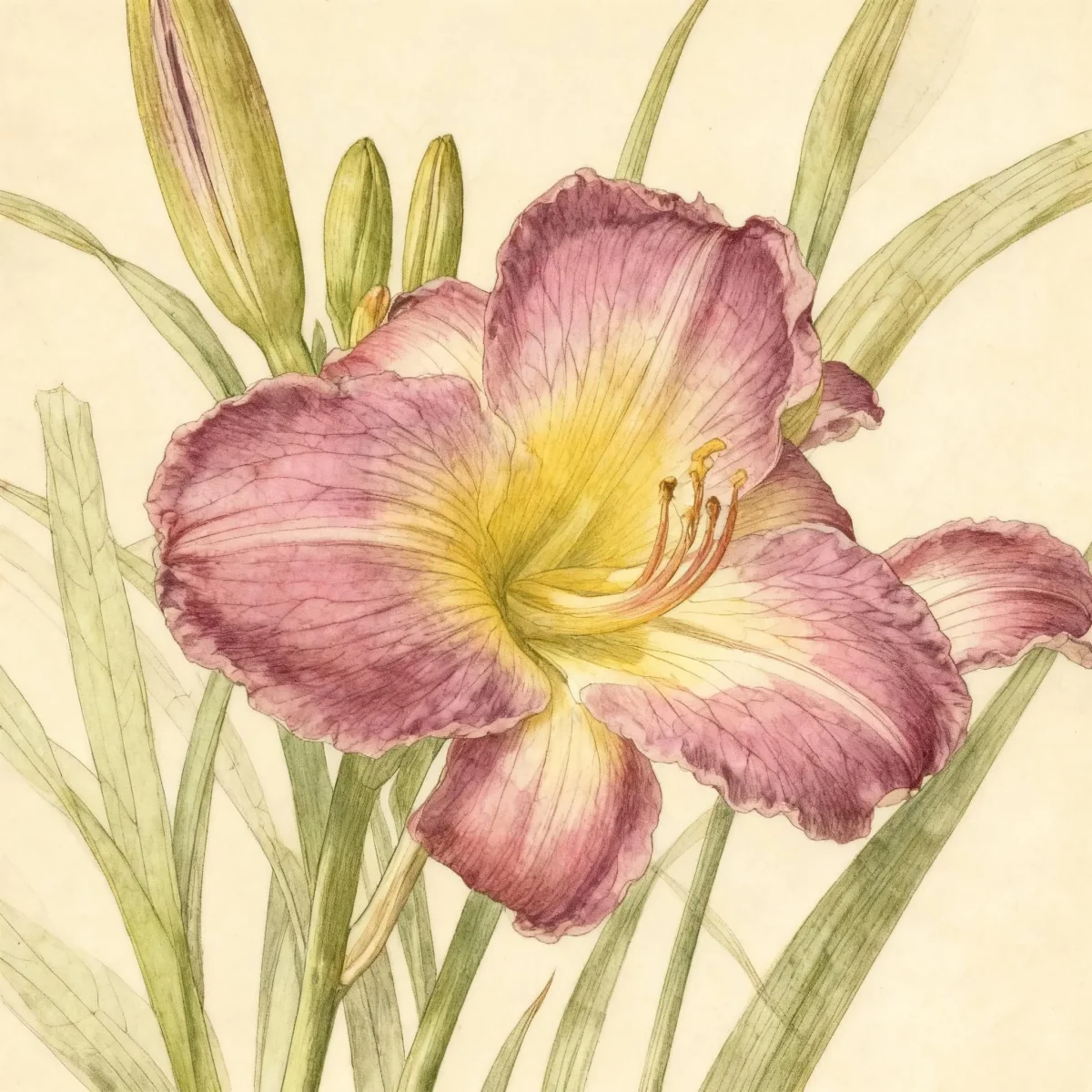
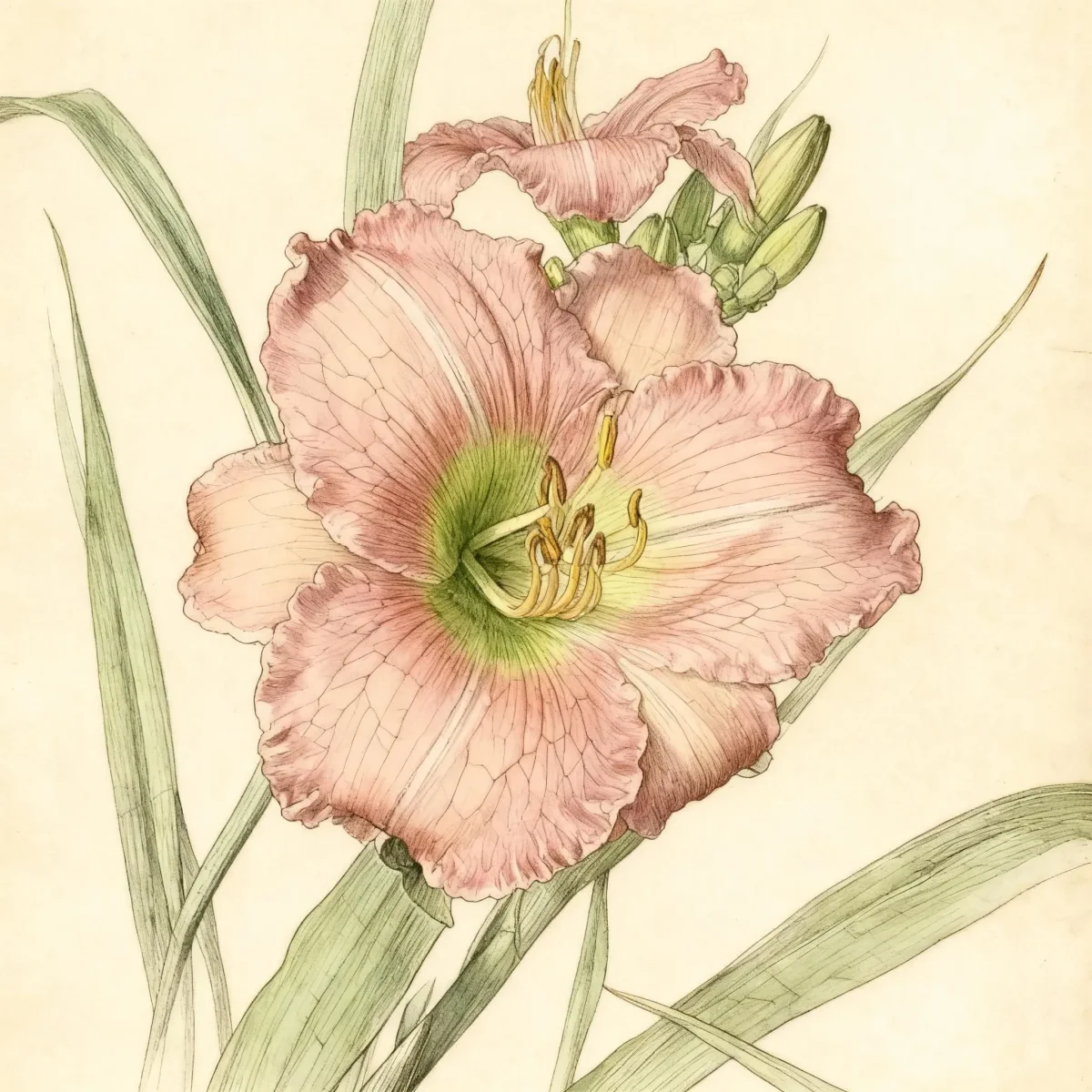
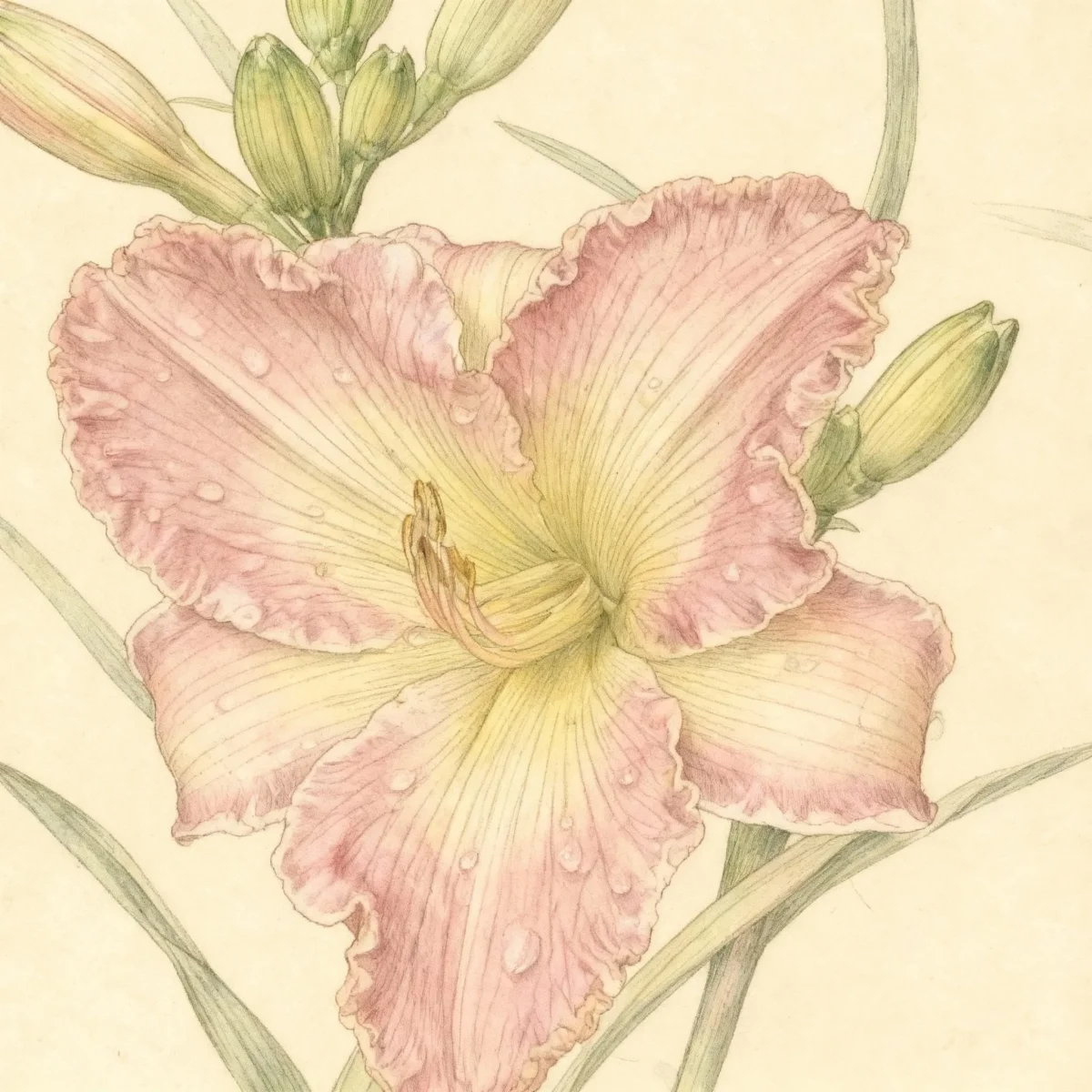
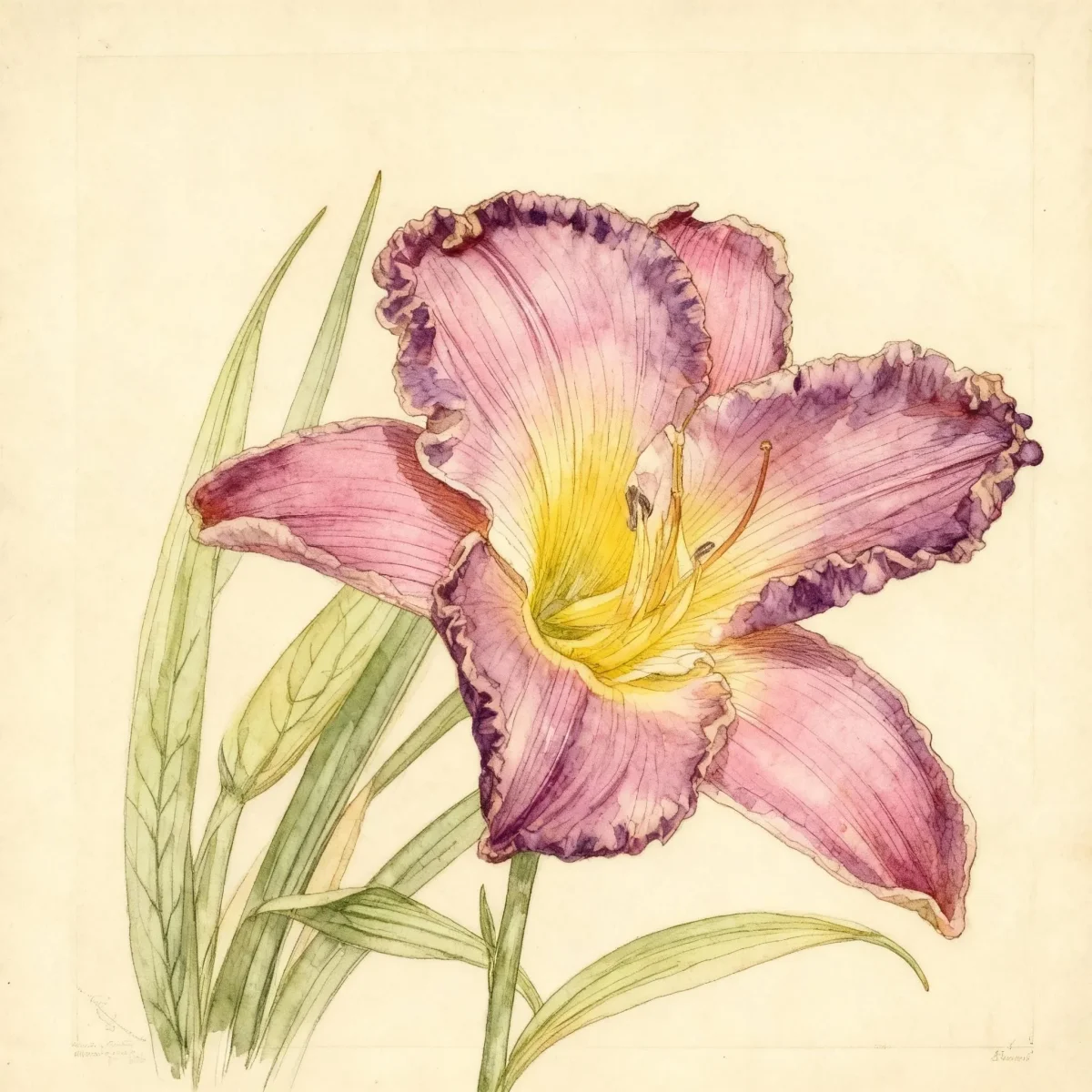
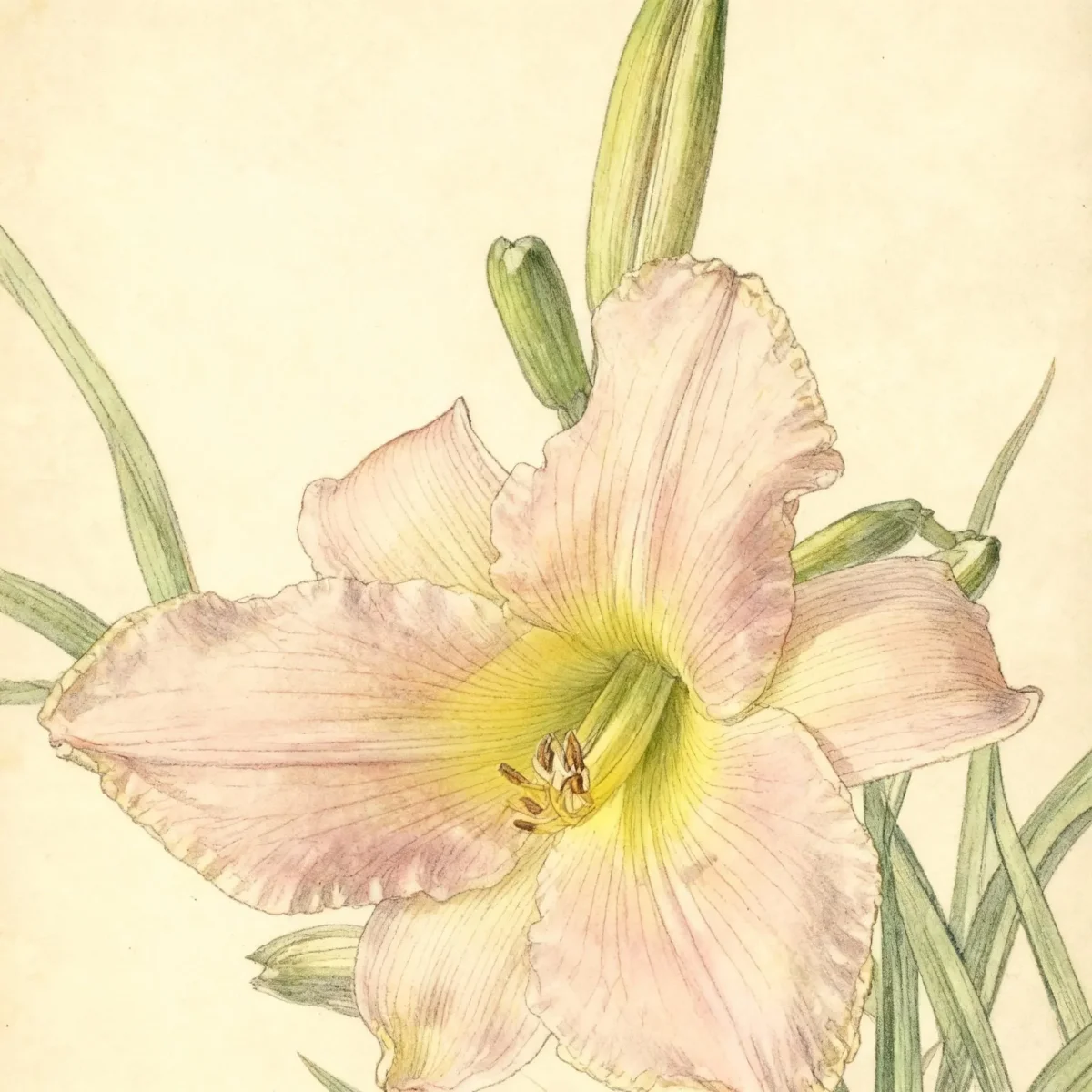
Tetraploid daylily (Hemerocallis 'Call To Worship')
Hemerocallis 'Call To Worship' is a striking Tetraploid daylily featuring rose blooms with gold edges. Easy to grow and low maintenance.
Scroll down to discover growing tips, care requirements, companion plants, and more
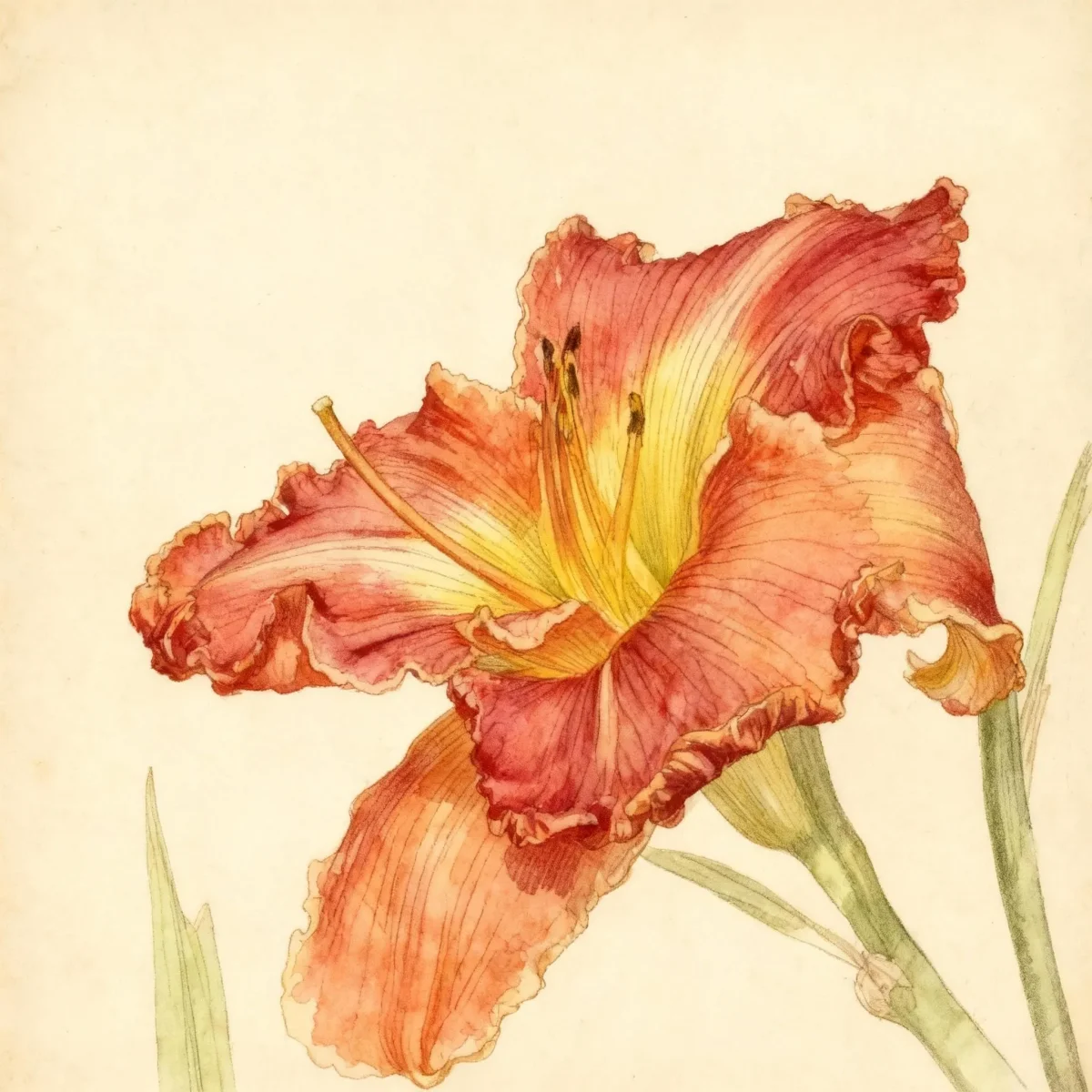
Complete Plant Information
Overview
Hemerocallis ‘Call To Worship’ is a spectacular choice for gardeners seeking reliable, vibrant color, recognized as a robust Tetraploid daylily. This variety produces distinctive flowers that are rose-colored with delicate thin gold edges framing a contrasting green throat, providing excellent visual impact throughout the summer months. As an herbaceous perennial, it establishes a reliable clump of architectural foliage, returning year after year with minimal fuss. Gardeners value this cultivar for its low maintenance needs and its tolerance for various conditions, making the Hemerocallis ‘Call To Worship’ a foundation plant for sunny borders.
This type of hybrid daylily is the result of extensive breeding efforts to enhance color saturation and flower quality, distinguishing it within the vast Hemerocallis genus. The blooms appear successively over a relatively long period, maximizing the visual display from early to mid-summer. Whether used in mass plantings or as an accent, the Hemerocallis ‘Call To Worship’ delivers dependable performance across a wide range of climates suited to its robust genetic makeup.
Fast Facts
- Plant Family: Asphodelaceae
- Plant Type: Herbaceous perennial
- Hardiness Zones: USDA Zones 3-9
- Size at Maturity:
- Height: 2-2.5 ft
- Spread: 2-2.5 ft
- Bloom Time: June to July
- Bloom Description: Rose with thin gold edges and green throat
- Sun Exposure: Full sun to part shade
- Water Needs: Medium
- Maintenance Level: Low
How to Grow
Planting your Hemerocallis ‘Call To Worship’ is best done in spring or fall when temperatures are moderate. Locate it in average, well-drained soil, though these daylilies perform best in deep, fertile loams. While they tolerate part shade, full sun exposure generally yields the most prolific blooming display for this Tetraploid daylily. Ensure the crown—where the fans of leaves meet the roots—is placed just at or slightly below the soil line.
Maintenance for this low-care perennial is straightforward. Deadhead spent blossoms daily to maintain a tidy appearance and remove the entire scape once flowering has finished for the season. Though tolerant of summer heat and humidity, this plant benefits greatly from deep watering during dry spells to keep the foliage looking crisp and attractive, supporting overall plant health.
For optimal flowering performance, plan to divide your clumps every three to four years. This division process is best executed in the spring, especially in colder winter regions. Be aware that this specific hybrid will not produce true offspring if grown from seed, making division the preferred method of propagation to ensure you retain the exact features of Hemerocallis ‘Call To Worship’.
Landscape Uses
These exceptionally sturdy and easy-to-grow herbaceous perennials excel in various landscape applications. The moderate height and spread of Hemerocallis ‘Call To Worship’ make it an excellent choice for defining borders or providing structure along pathways. Planting them in large drifts creates a sweeping tapestry of color, especially effective when massed across large perennial beds.
Due to their adaptability, they work well as edging plants where their uniform clump habit provides a neat transition between lawn and taller plantings. Even if you do not have large areas, growing the Tetraploid daylily in substantial clumps provides enough visual weight to anchor smaller garden designs. Their tolerance for erosion also makes them suitable for stabilizing gentle slopes.
Standout Features
Flower Qualities
- Showy
Noteworthy Characteristics
Hemerocallis is a genus recognized for creating stunning hybrid colors, and this cultivar exemplifies that effort with its deep ruffled rose flowers reaching up to 5.75 inches across. Flowers bloom on leafless scapes that rise approximately 27 inches above the arching, blade-like foliage, offering abundant color throughout its midseason bloom period. Registered as a rebloomer, the Hemerocallis ‘Call To Worship’ extends its beauty, living up to its genus name meaning ‘day beauty.‘
Tolerances
- Rabbit
- Erosion
- Air Pollution
Potential Problems
Daylilies are famously adaptable and are generally considered pest-free when grown in suitable conditions. Occasional infestations of mites, aphids, or thrips may occur, but rarely cause serious damage to healthy Hemerocallis ‘Call To Worship’ plants. In certain climates, daylily rust can present a concern, so monitor foliage closely. Rabbits tend to leave this particular species alone, adding to its easy-care profile.
Frequently Asked Questions
What hardiness zones is Tetraploid daylily suitable for?
The Hemerocallis ‘Call To Worship’ is reliably hardy across USDA Zones 3 through 9.
How large does Hemerocallis ‘Call To Worship’ grow?
This cultivar typically reaches a mature height between 2 and 2.5 feet tall, with a similar spread of 2 to 2.5 feet.
What sun exposure does Tetraploid daylily need?
Hemerocallis ‘Call To Worship’ thrives best when exposed to full sun, but it remains highly adaptable and performs well even in locations receiving partial shade.
When does Hemerocallis ‘Call To Worship’ bloom?
This perennial produces its signature rose-colored flowers with thin gold edges from June into July, and it is noted for being a rebloomer.
Conclusion
The Hemerocallis ‘Call To Worship’ is an indispensable, low-maintenance perennial, delivering reliable summer color with its attractive rose and gold-edged blooms. As a dependable Tetraploid daylily, it brings structure and vibrancy to almost any perennial setting. Ensure your planting location offers well-drained soil and check that your specific growing region falls within USDA Zones 3-9 before planning your installation this season.
Companion Planting
When selecting partners for your vibrant Hemerocallis ‘Call To Worship’, focus on plants that appreciate similar sun and moisture conditions—full sun to part shade with medium water needs. Consider using contrasting foliage textures to highlight the linear leaves of the daylily. Tall grasses provide movement, while low-growing groundcovers can help suppress weeds around the base of the clump.
For color harmony, pair the rose tones of this cultivar with cooler blues or lavenders that bloom slightly earlier or later, such as Salvia or Catmint (Nepeta). Since the foliage can sometimes decline after the first flush of bloom, planting later-season bloomers behind the daylilies ensures the area remains interesting as the summer progresses and provides visual backdrop for the striking flowers of the Tetraploid daylily.
Propagation Tips
Since hybrid daylilies like Hemerocallis ‘Call To Worship’ do not breed true from seed, division is the exclusive method for creating identical new plants. Division should be performed during the dormant season—either early spring (preferred, especially in cold zones) or fall. To divide, dig up the entire clump and gently pull the fans of leaves apart, ensuring each new section has a substantial portion of the tuberous root structure attached.
Replant the divided sections immediately at the same depth as the original plant. Proper division every three to four years not only yields more plants but also rejuvenates the existing clump, preventing overcrowding which can lead to diminished flower production in subsequent seasons.