Ozark witch hazel (Hamamelis vernalis 'Autumn Embers')
Hamamelis vernalis 'Autumn Embers' offers showy, fragrant winter blooms of copper red, perfect for structural interest in Zones 4-8.
Scroll down to discover growing tips, care requirements, companion plants, and more
Complete Plant Information
Overview
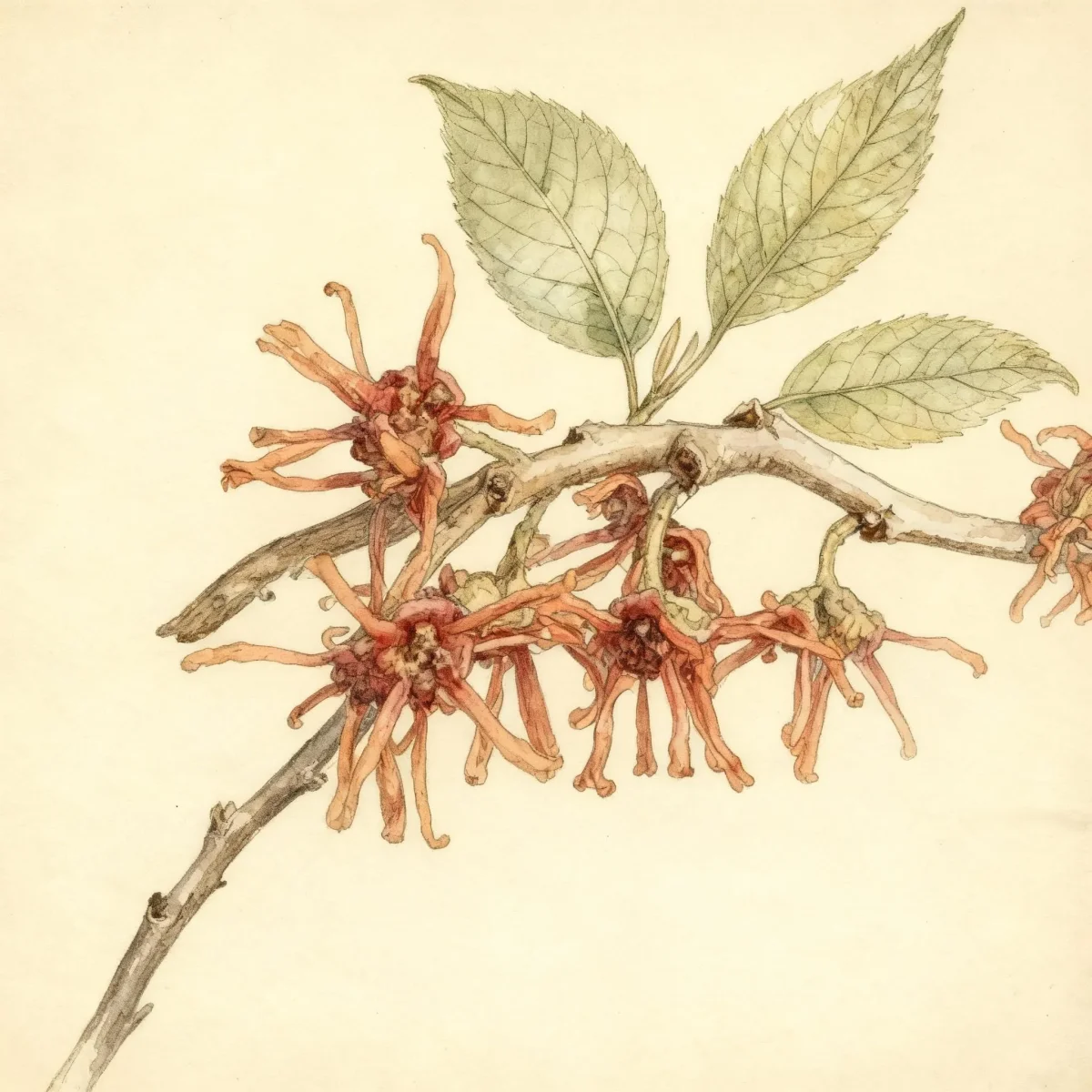
The Ozark witch hazel (Hamamelis vernalis ‘Autumn Embers’) is a spectacular choice for providing winter interest when most of the landscape is dormant. This cultivar is celebrated for its reliably fragrant, copper-red flowers that emerge in late winter, long before spring foliage appears. As a native shrub, the Ozark witch hazel contributes excellent ecological value while serving as a striking specimen.
Growing into a sturdy, deciduous shrub, Hamamelis vernalis ‘Autumn Embers’ matures gracefully to about 8 to 10 feet tall and nearly as wide. Its structure, coupled with colorful autumn foliage, ensures multi-seasonal appeal in the garden. Its low maintenance requirements make it an easy addition for gardeners seeking substantial impact with minimal effort.
The unique bloom time of Hamamelis vernalis ‘Autumn Embers’ places it perfectly for brightening the late winter landscape. Its ability to tolerate various soil conditions, including clay, combined with deer resistance, enhances its practicality across diverse garden settings.
Fast Facts
- Plant Family: Hamamelidaceae
- Plant Type: Deciduous shrub
- Hardiness Zones: USDA Zones 4-8
- Size at Maturity:
- Height: 8-10 ft
- Spread: 7-9 ft
- Bloom Time: January to March
- Bloom Description: Copper red
- Sun Exposure: Full sun to part shade
- Water Needs: Medium
- Maintenance Level: Low
How to Grow
Plant your Hamamelis vernalis ‘Autumn Embers’ in the spring or fall when conditions are mild. It thrives best when planted in full sun to maximize its brilliant winter flowering display, though it tolerates part shade. Ensure the location allows for good air circulation and access to average, medium-moisture, well-drained soils. Optimal performance occurs in organically rich, acidic soils, but this variety shows good tolerance for clay as long as drainage remains adequate.
Watering should be consistent, especially during establishment and periods of summer drought, as insufficient moisture can lead to leaf scorch. Fertilization is rarely required; focus instead on amending the soil with organic matter to maintain moisture retention and slight acidity. Because root suckers can cause colonial spread, it is important to promptly remove any shoots that emerge from the rootstock or below the graft union to maintain the desired shape of the ‘Autumn Embers’ cultivar.
Pruning is minimal for Hamamelis vernalis ‘Autumn Embers’. The best time to shape or reduce the size of this shrub is immediately in the spring after the flowers have faded but before new foliage fully emerges. This timing ensures that you maintain the excellent winter flower display for the following year.
Landscape Uses
The multi-season appeal of Ozark witch hazel makes it exceptionally versatile in landscape design. It shines as a superb solution for creating year-round structure, particularly when used in shrub borders or naturalized areas where its suckering habit can be utilized to create soft colonies. Its winter bloom provides fantastic early-season color when few shrubs are active.
Consider planting ‘Autumn Embers’ as a screen or a tall hedge where its dense branching and mid-sized height of 8 to 10 feet offers privacy. Due to its moisture needs and tolerance for heavier soils, it is an excellent candidate for rain gardens, helping manage runoff in the landscape. Placing specimens where their winter stems can be viewed from windows adds remarkable value to the overall winter garden composition.
Standout Features
Flower Qualities
- Showy
- Fragrant
Noteworthy Characteristics
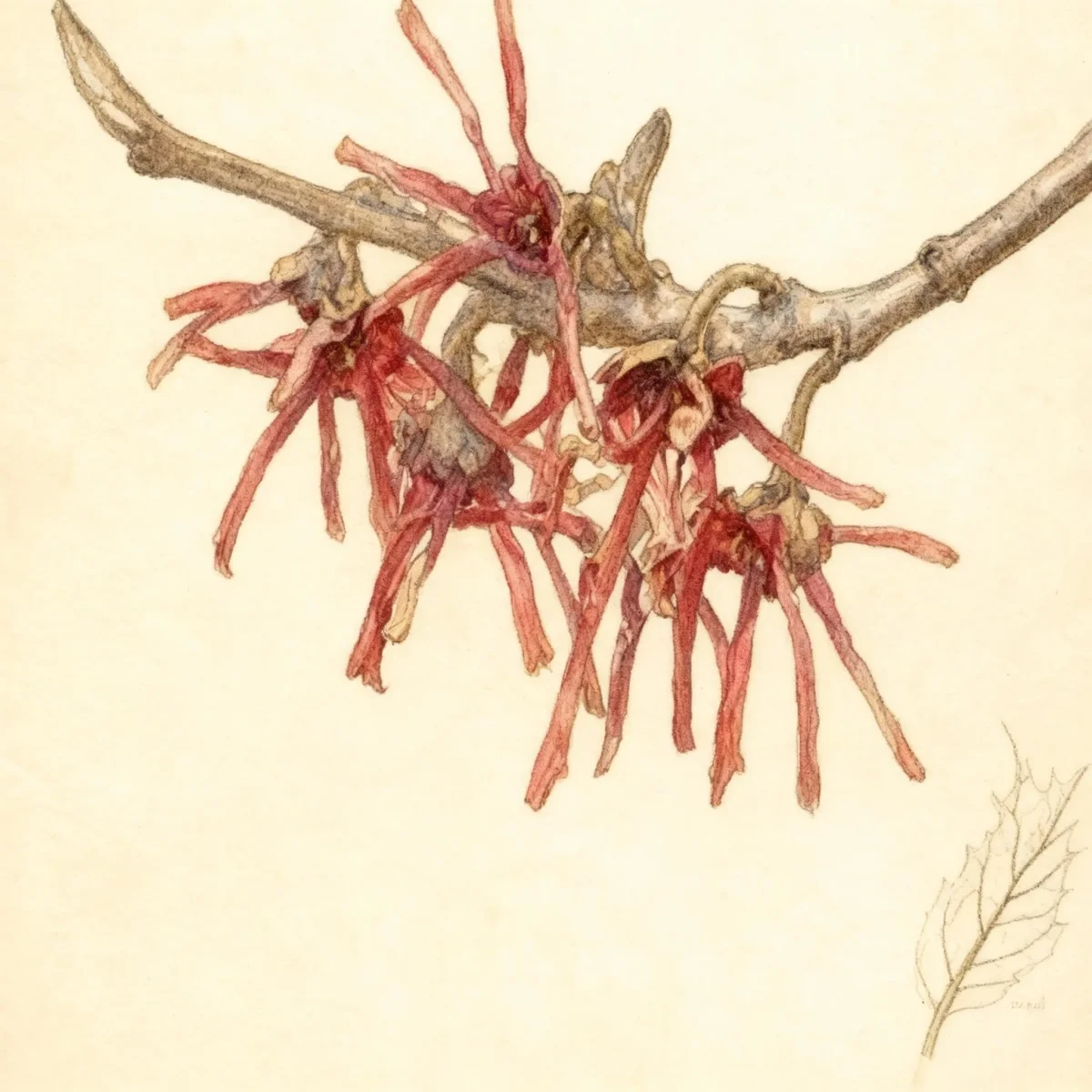
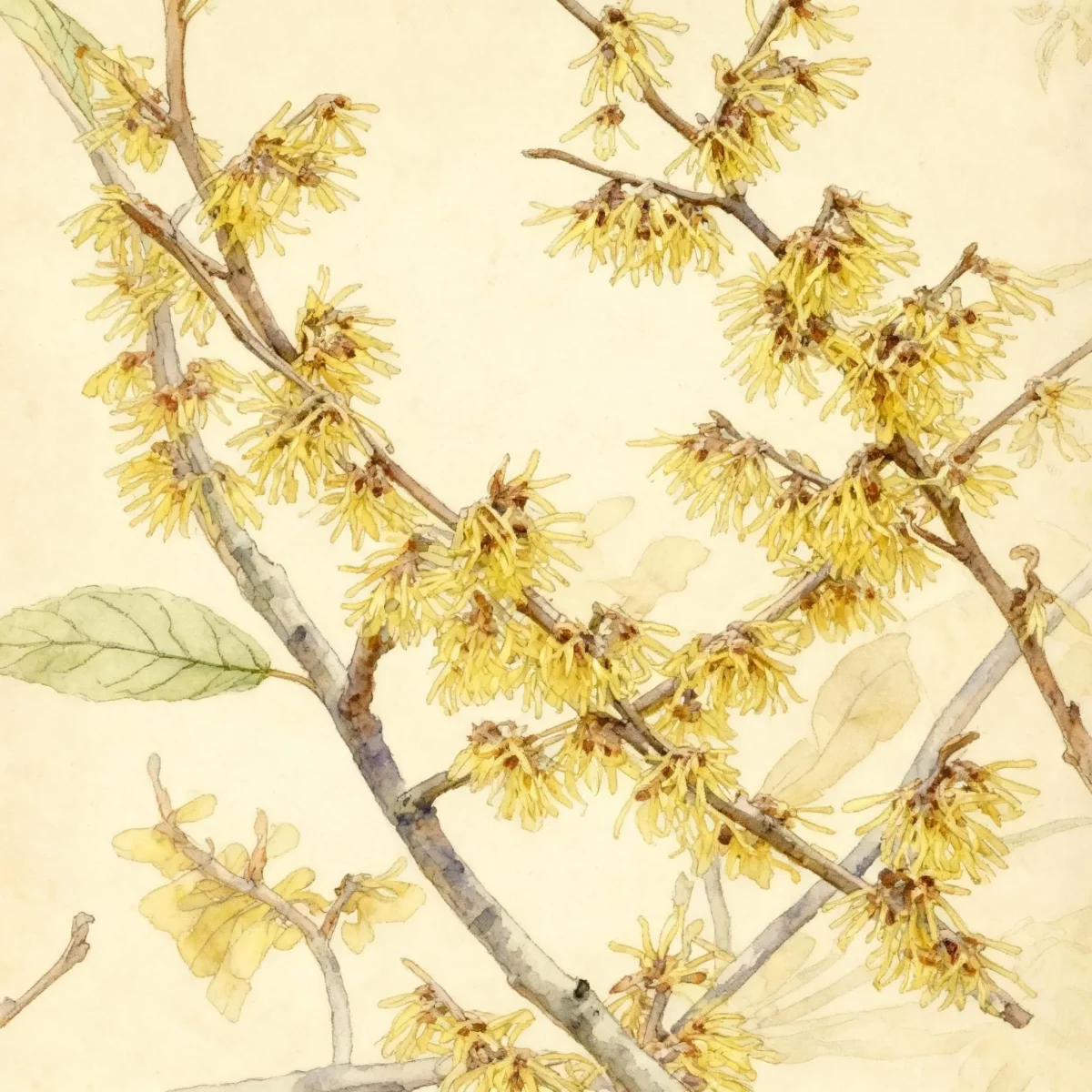
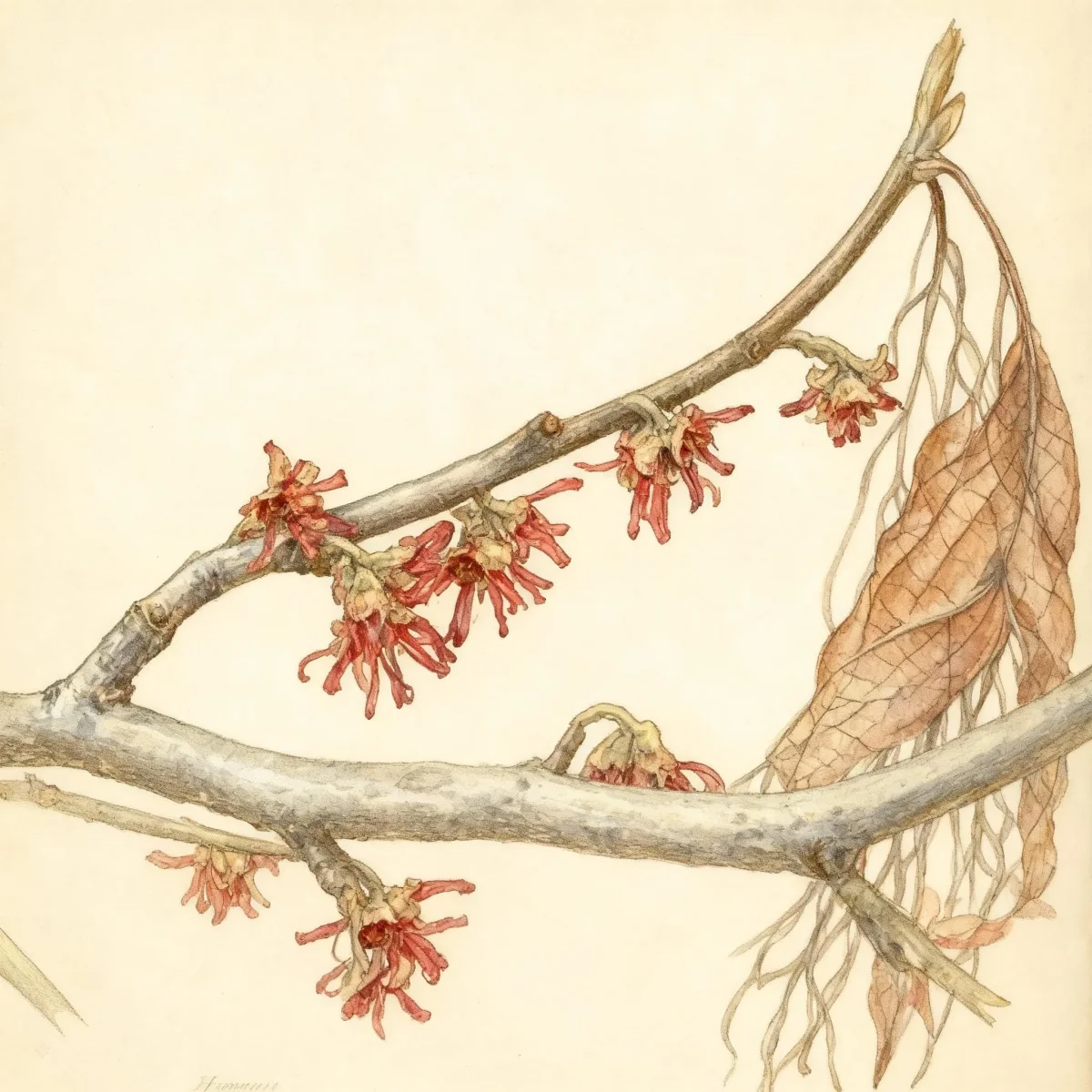
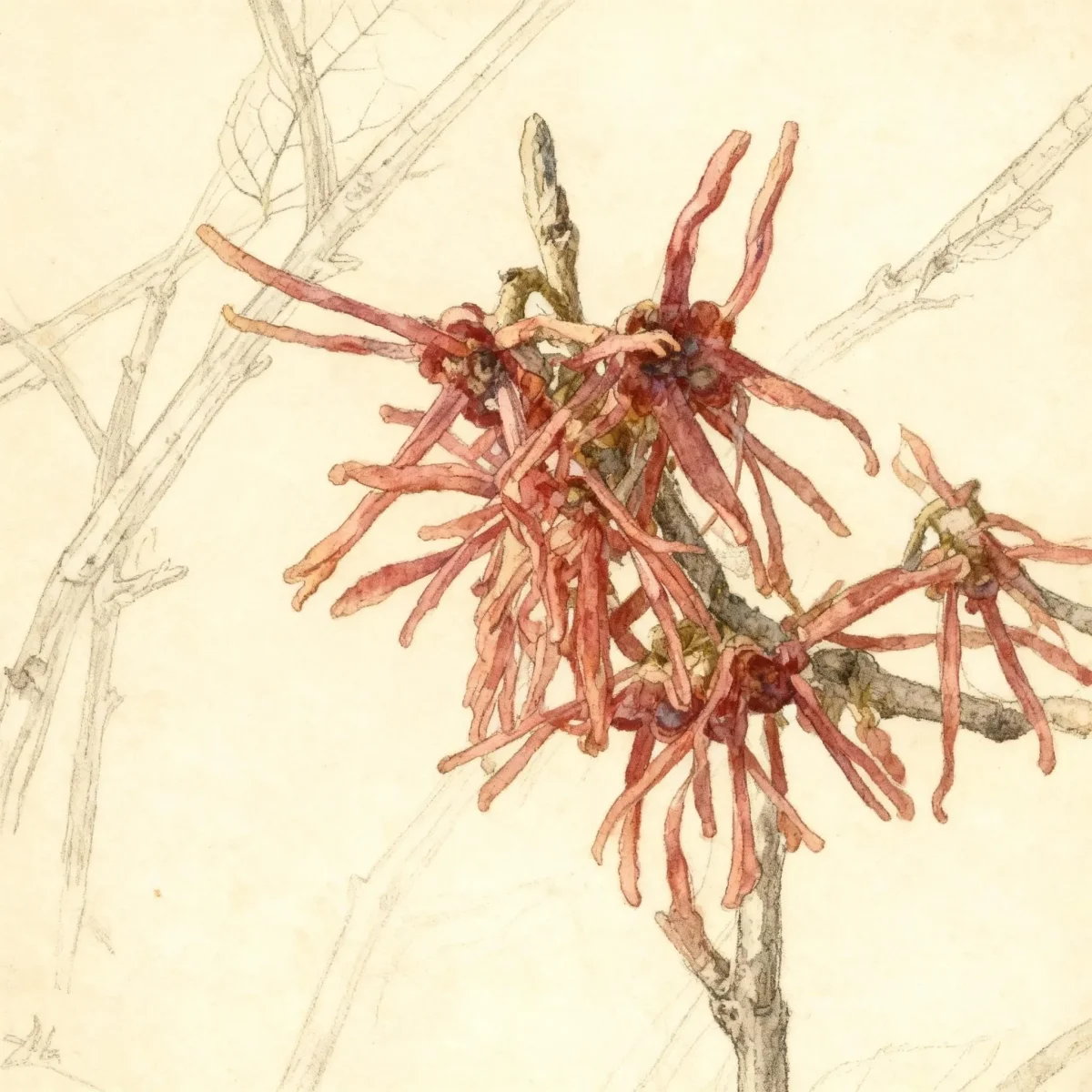
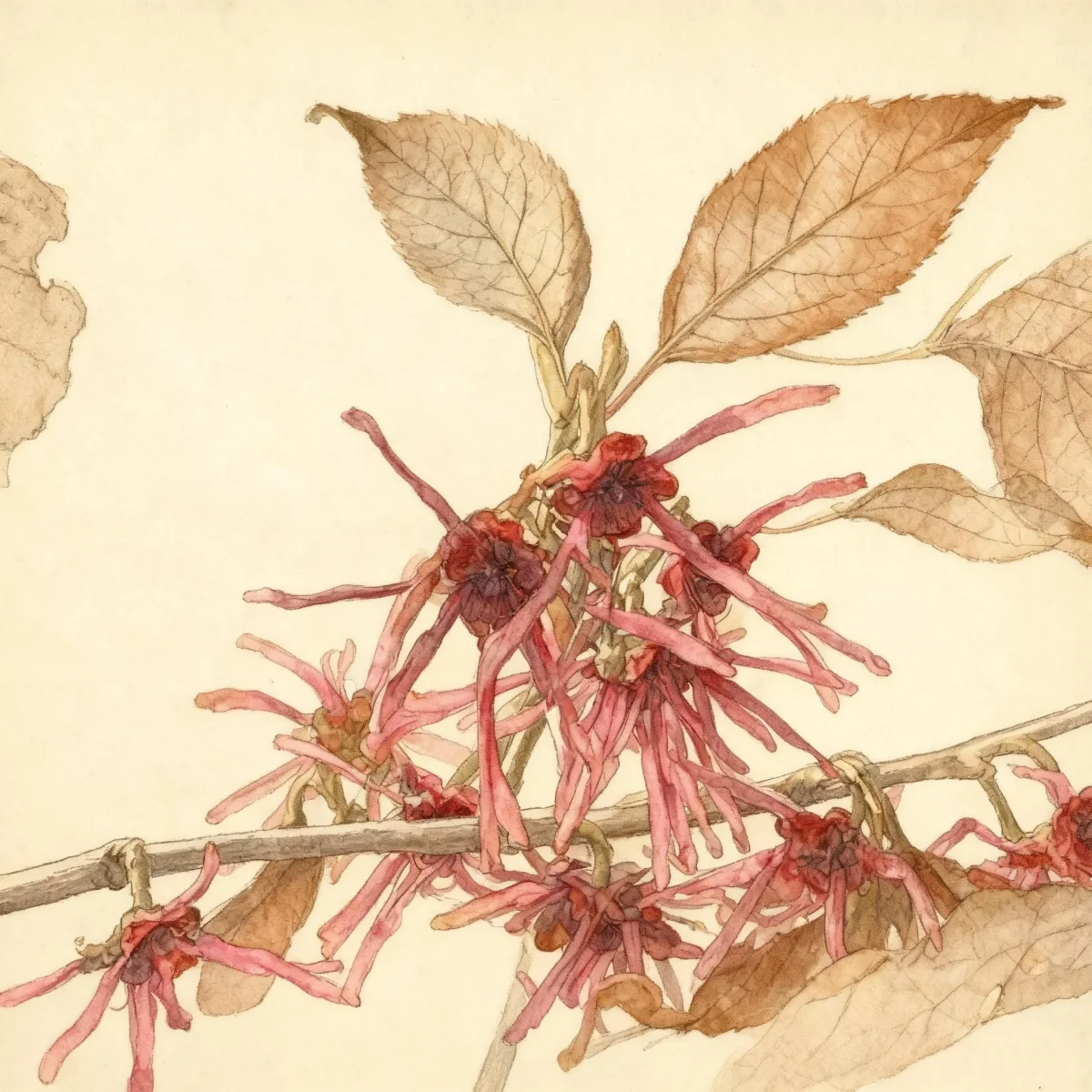
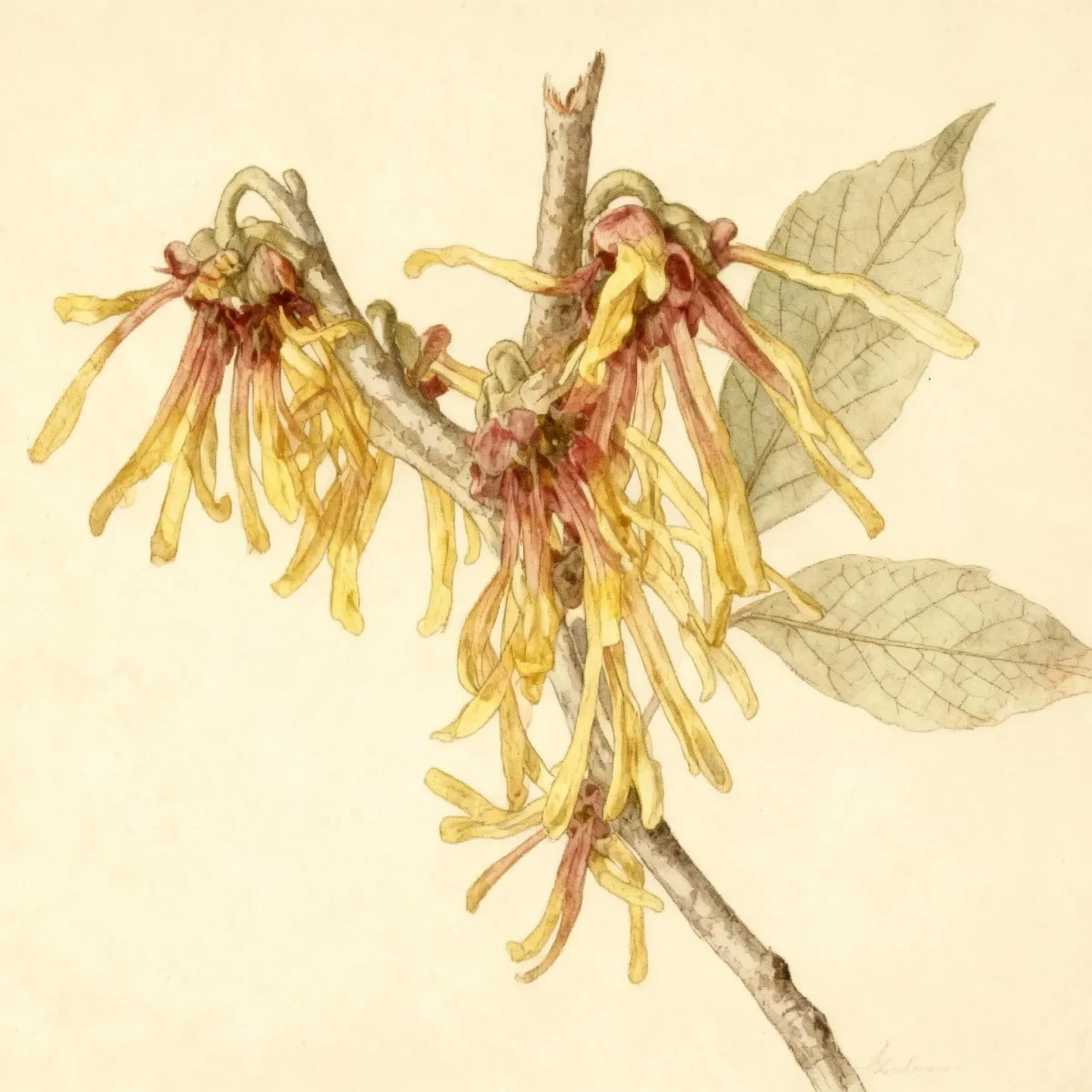
The native origin of Hamamelis vernalis is the Ozark Plateau, spanning areas like Missouri and Arkansas, where it typically grows beside stream beds. The flowers, appearing in mid to late winter, are distinctive, featuring four narrow, ribbon-like petals that transition from red at the base to copper orange at the tip. Following the blooms, the foliage emerges light green before maturing to dark green, ending the season with an excellent golden yellow to red fall display resembling glowing embers, inspiring the cultivar name.
Tolerances
- Deer
- Erosion
- Clay Soil
- Air Pollution
Potential Problems
While robust, Ozark witch hazel may occasionally face minor insect or disease challenges. Caterpillars and Japanese beetles might chew on the foliage during the growing season. Watch for sporadic issues like gall aphids, scale insects, or leafminers, and occasionally, powdery mildew may appear late in the season. Generally, these issues are minor and rarely necessitate chemical intervention for a healthy shrub like Hamamelis vernalis ‘Autumn Embers’.
Frequently Asked Questions
What hardiness zones is Ozark witch hazel suitable for?
The Ozark witch hazel (Hamamelis vernalis ‘Autumn Embers’) is suitable for USDA Hardiness Zones 4 through 8. Always confirm your local zone before planting.
How large does Hamamelis vernalis ‘Autumn Embers’ grow?
This cultivar typically matures into a spreading shrub reaching heights between 8 and 10 feet, with a spread spanning 7 to 9 feet wide.
When does Ozark witch hazel bloom?
Hamamelis vernalis ‘Autumn Embers’ provides its signature winter show from January through March, featuring copper-red flowers along the bare branches.
What sun exposure does Hamamelis vernalis ‘Autumn Embers’ need?
For the most abundant flowering, plant this cultivar in full sun. It can tolerate partial shade, though bloom production may be reduced.
Conclusion
For reliable, low-maintenance winter color and structure, Hamamelis vernalis ‘Autumn Embers’ is a superior landscape choice. Its fragrant, copper-red blooms defy the late winter chill, offering critical visual interest. Before planting your Ozark witch hazel, ensure your site offers adequate moisture and check your hardiness zone compatibility to guarantee years of enjoyment.
Companion Planting
Since Hamamelis vernalis ‘Autumn Embers’ requires consistent moisture and performs best in slightly acidic conditions, select companions who share similar needs. Spring ephemerals like native woodland wildflowers, or late-blooming shrubs with contrasting winter stems (like brightly colored dogwoods), make excellent partners. Avoid overly aggressive ground covers that will compete heavily for water resources near the base of your witch hazel.
Seasonal Care Calendar
Late Winter (January–March): Enjoy the flowers! This is the main event for your Ozark witch hazel. Keep the area clear so the blooms are visible, appreciating the fragrance on warmer days.
Spring (April–May): Prune immediately after flowering to maintain desired size or shape. Monitor new growth for signs of pests, but generally, very little intervention is needed.
Summer (June–August): Maintain consistent medium moisture levels, especially if drought occurs, to prevent potential leaf scorch common when soils dry out too much.
Fall (September–November): Observe the brilliant golden-yellow to reddish fall leaf color, paying attention to the foliage before the next winter show begins.