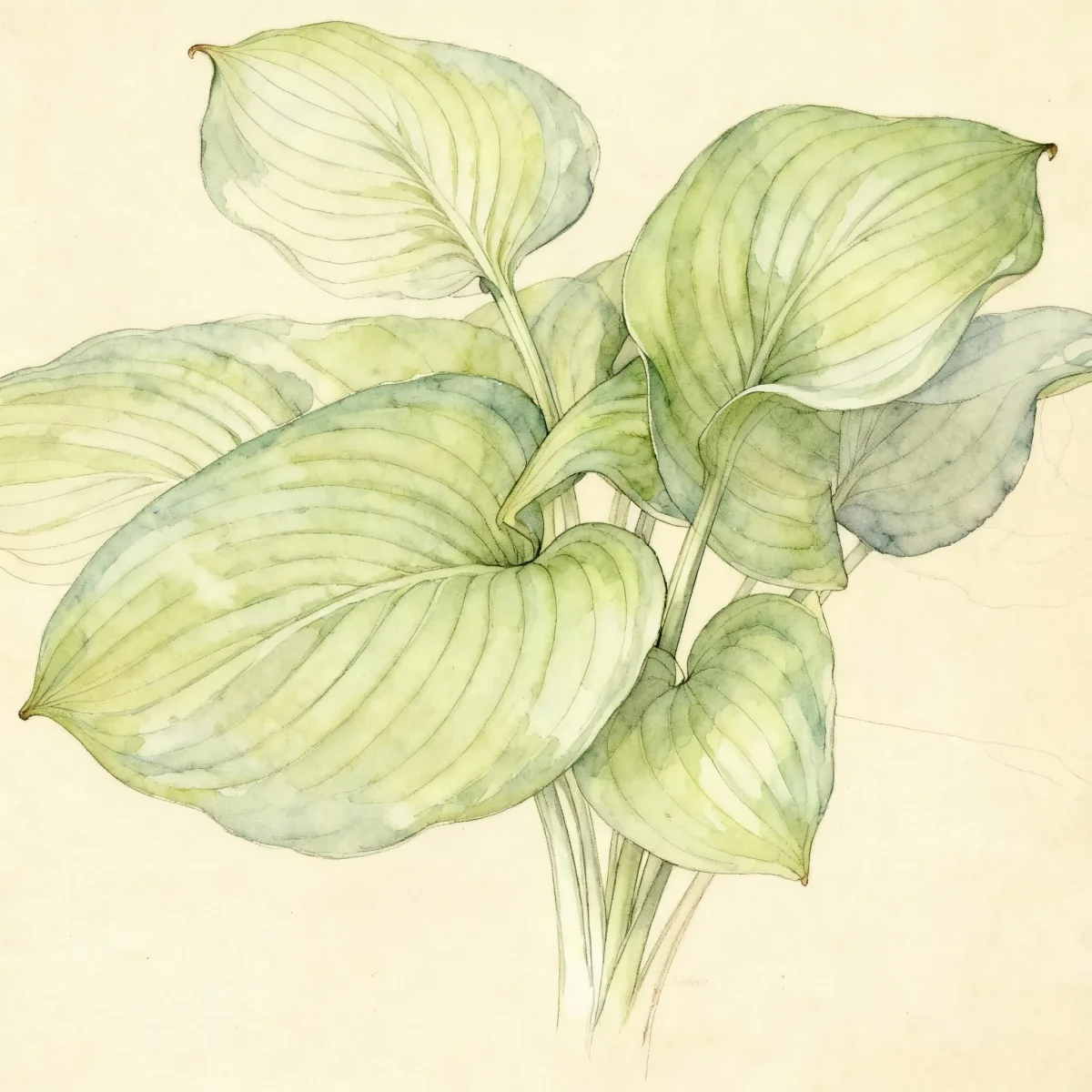
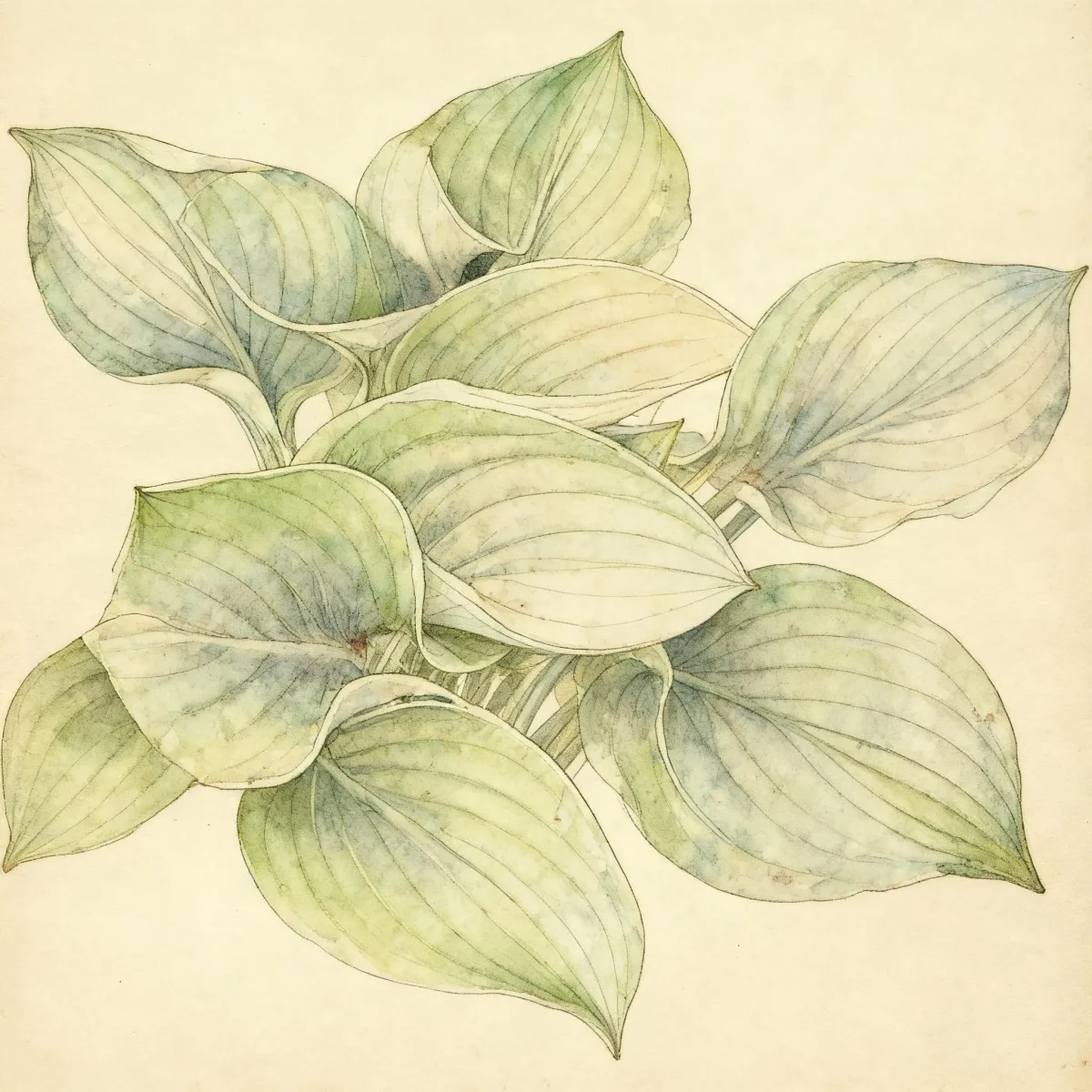
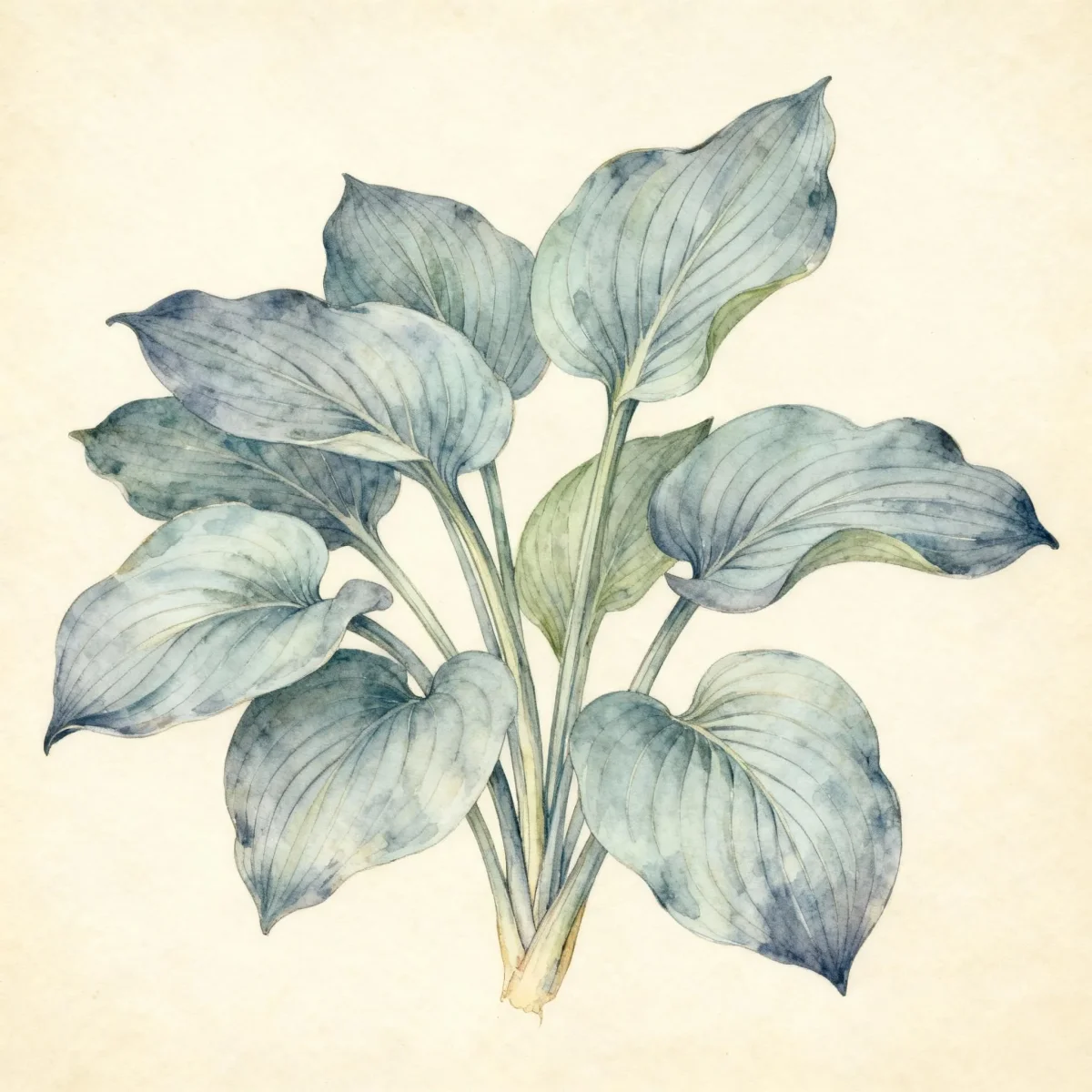
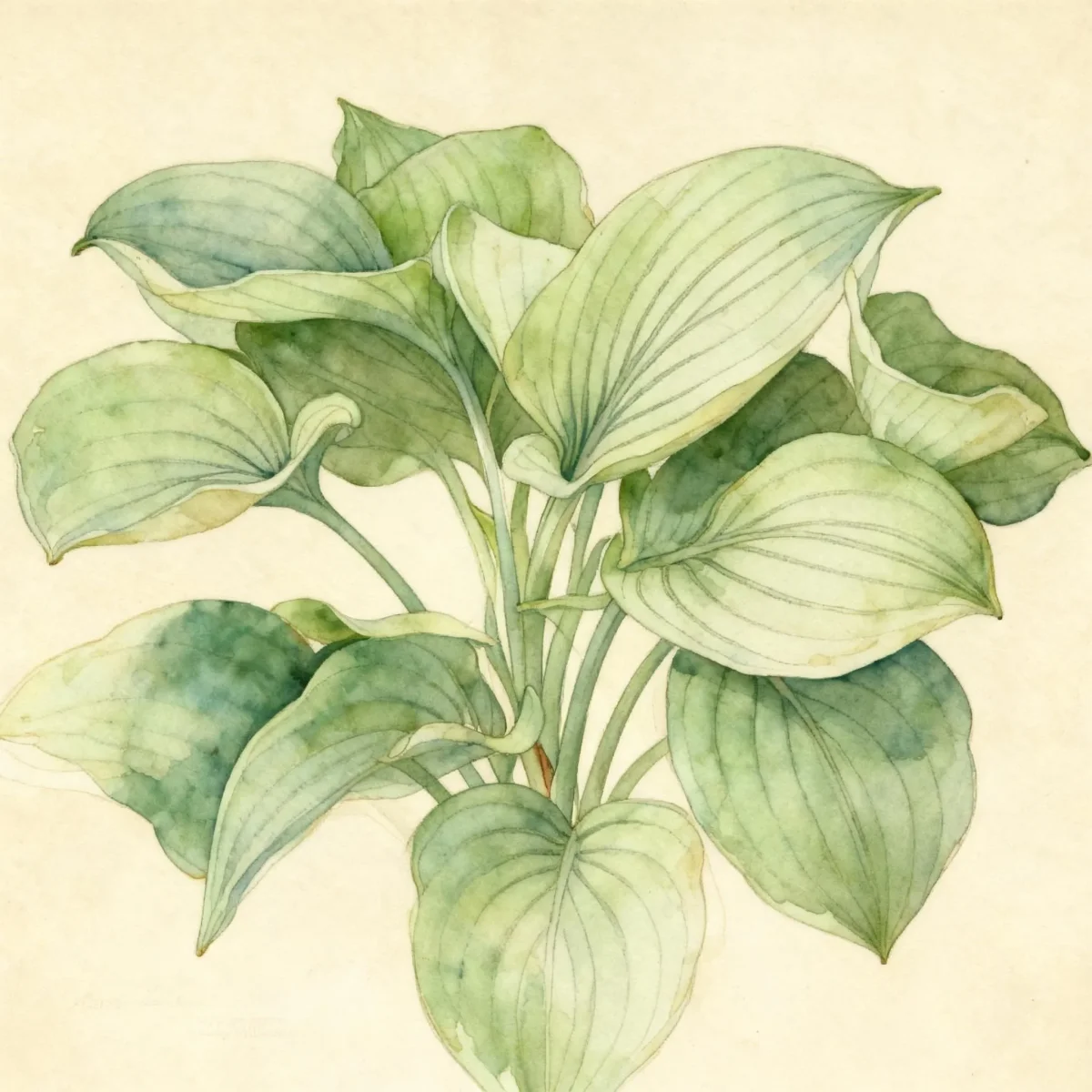
Hosta (Hosta 'Janet')
Hosta 'Janet' is a medium, low-maintenance perennial ideal for shade gardens, featuring golden yellow leaves that fade to white margins.
Scroll down to discover growing tips, care requirements, companion plants, and more
Complete Plant Information
Overview
Hosta ‘Janet’ is celebrated for its ornamental foliage, making it a cornerstone plant for any shady garden space. This cultivar is a sport of H. ‘Fortunei’ and forms an attractive mound, perfect for adding texture and color contrast where sun-loving plants struggle. Hosta are fundamentally prized for their leaves rather than their blooms.
This herbaceous perennial thrives in lower light conditions, benefiting from part shade or dappled sun, with pale lavender, funnel-shaped flowers appearing from July into August. As a generally low-maintenance perennial, Hosta ‘Janet’ offers significant aesthetic impact for minimal effort once established.
Hosta ‘Janet’ establishes quickly, providing excellent ground cover, and is known for its hardiness across USDA Zones 3 through 8. Its tolerance for various challenging conditions, including shade and dry soil, increases its utility in difficult garden pockets.
Fast Facts
- Plant Family: Asparagaceae
- Plant Type: Herbaceous perennial
- Hardiness Zones: USDA Zones 3-8
- Size at Maturity:
- Height: 1-2.5 ft
- Spread: 1-2 ft
- Bloom Time: July to August
- Bloom Description: Pale lavender
- Sun Exposure: Part shade to full shade
- Water Needs: Medium
- Maintenance Level: Low
How to Grow
Planting Hosta ‘Janet’ is best executed in spring or autumn when the soil is workable. Ensure the location provides organically rich, well-drained soil, as standing water is detrimental to the health of the crown. While Hosta ‘Janet’ performs best with consistent moisture, it exhibits better drought tolerance than many other hostas, though deep watering applied directly to the soil beneath the leaves is recommended for optimal size and form.
Routine care for this Hosta is minimal. Avoid allowing the soil to become completely dry, especially during summer months. Fertilization is rarely necessary if the soil quality is good, but a spring application of compost can boost vigor. Protect plants from strong winds which can damage foliage.
Division of Hosta ‘Janet’ clumps can be managed in the early spring before the leaves emerge, or in the autumn. Dividing overcrowded clumps helps maintain plant health and provides new specimens for other shady areas of the garden. Because Hosta are primarily grown for their leaves, pruning is limited to removing dead or damaged material.
Landscape Uses
Hostas are the undisputed mainstay of shade gardens, valued for their foliage excellence over their showy flowers. Hosta ‘Janet’, with its unique golden-yellow centers fading to white against green margins, serves beautifully in masses or grouped plantings to illuminate dark corners. They function exceptionally well as bold, textural accents along shady borders or within woodland garden settings, forming a rounded, spreading mound.
Utilize Hosta ‘Janet’ to create strong structural lines or as a dependable background plant where taller shade perennials can emerge through their foliage. They pair beautifully with shade-loving ferns, Astilbe, or Hellebores, which offer contrasting leaf textures and bloom times. Consider planting them near paths where their form can be fully appreciated, ensuring they are placed slightly away from the wind’s direct path.
Standout Features
Flower Qualities
- Showy
Noteworthy Characteristics
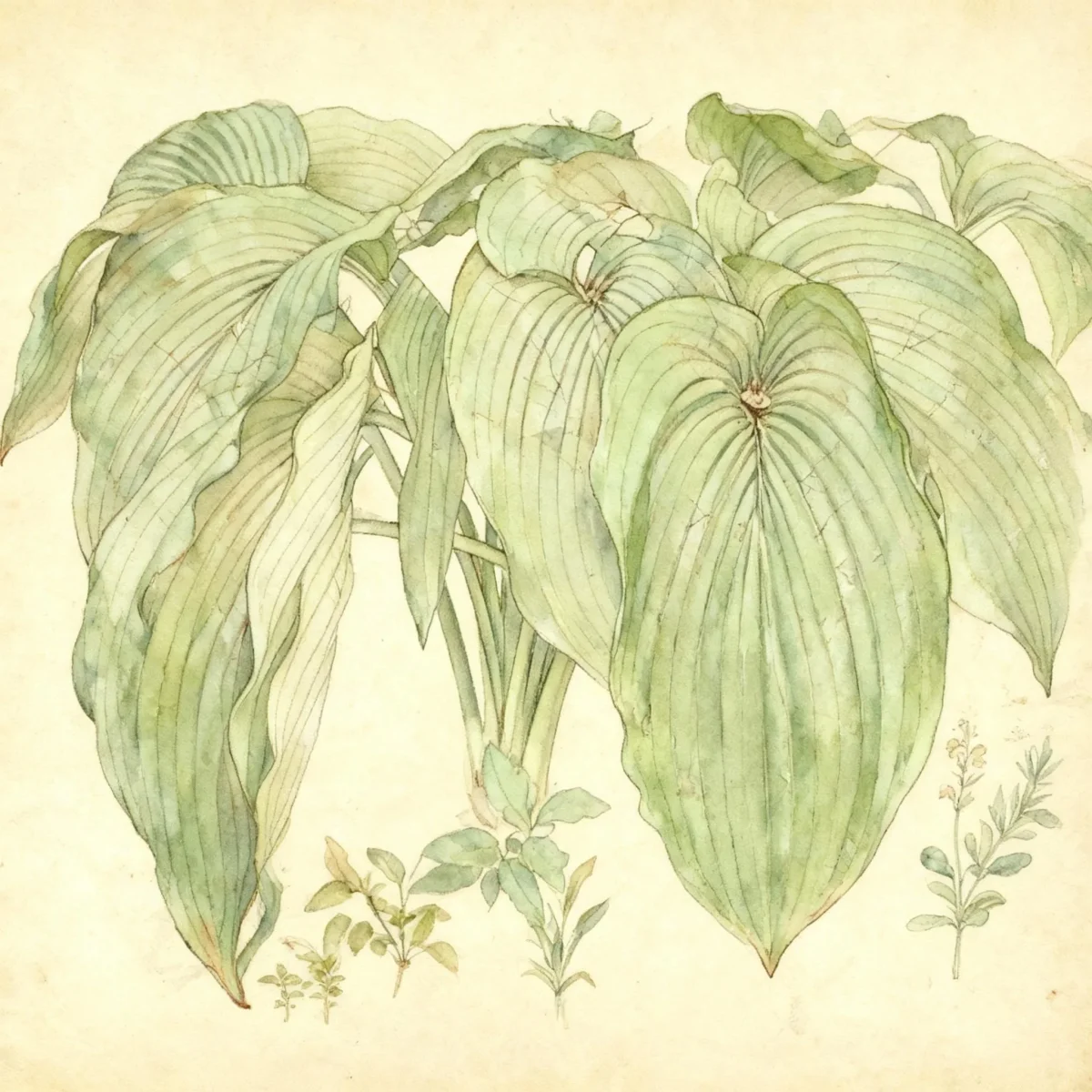
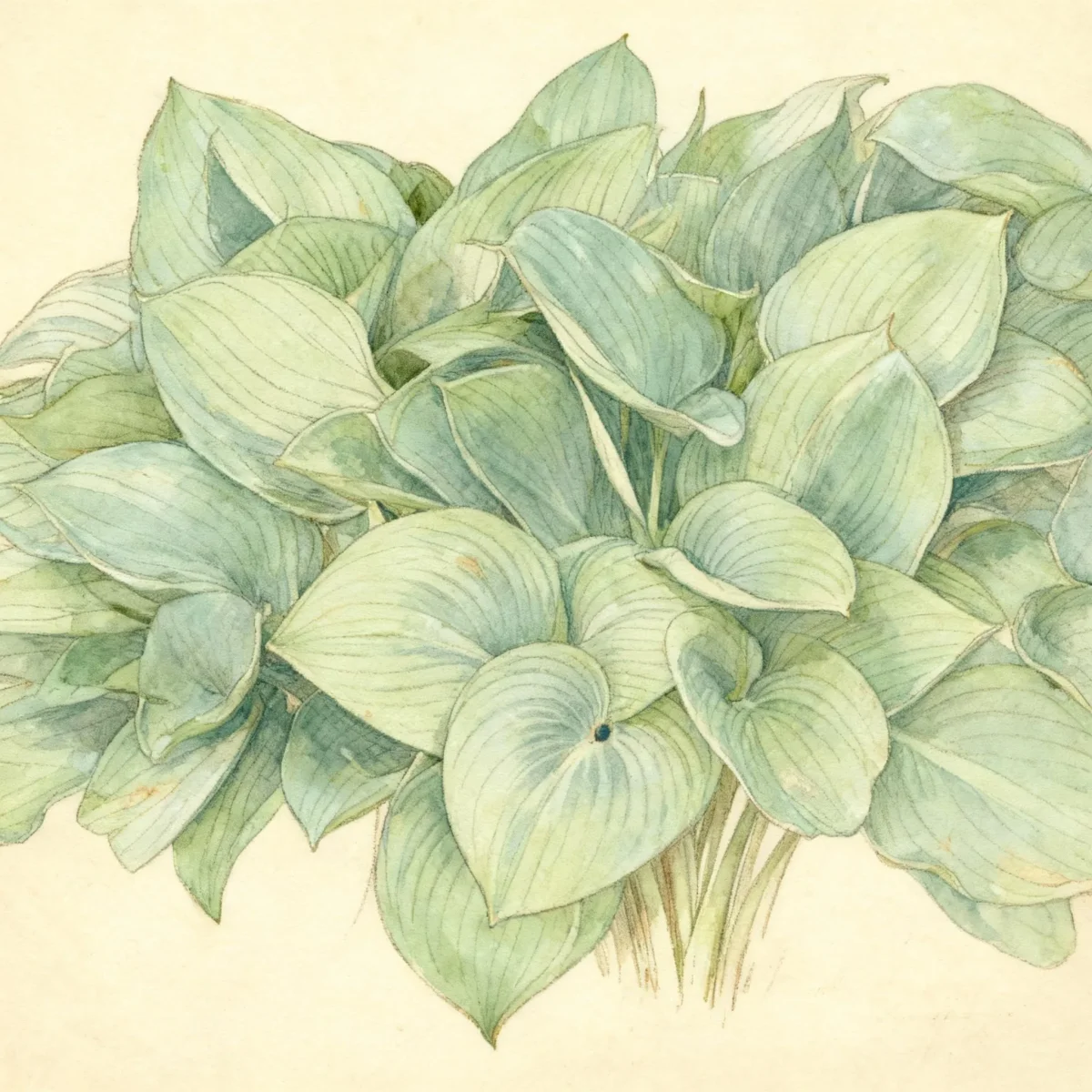
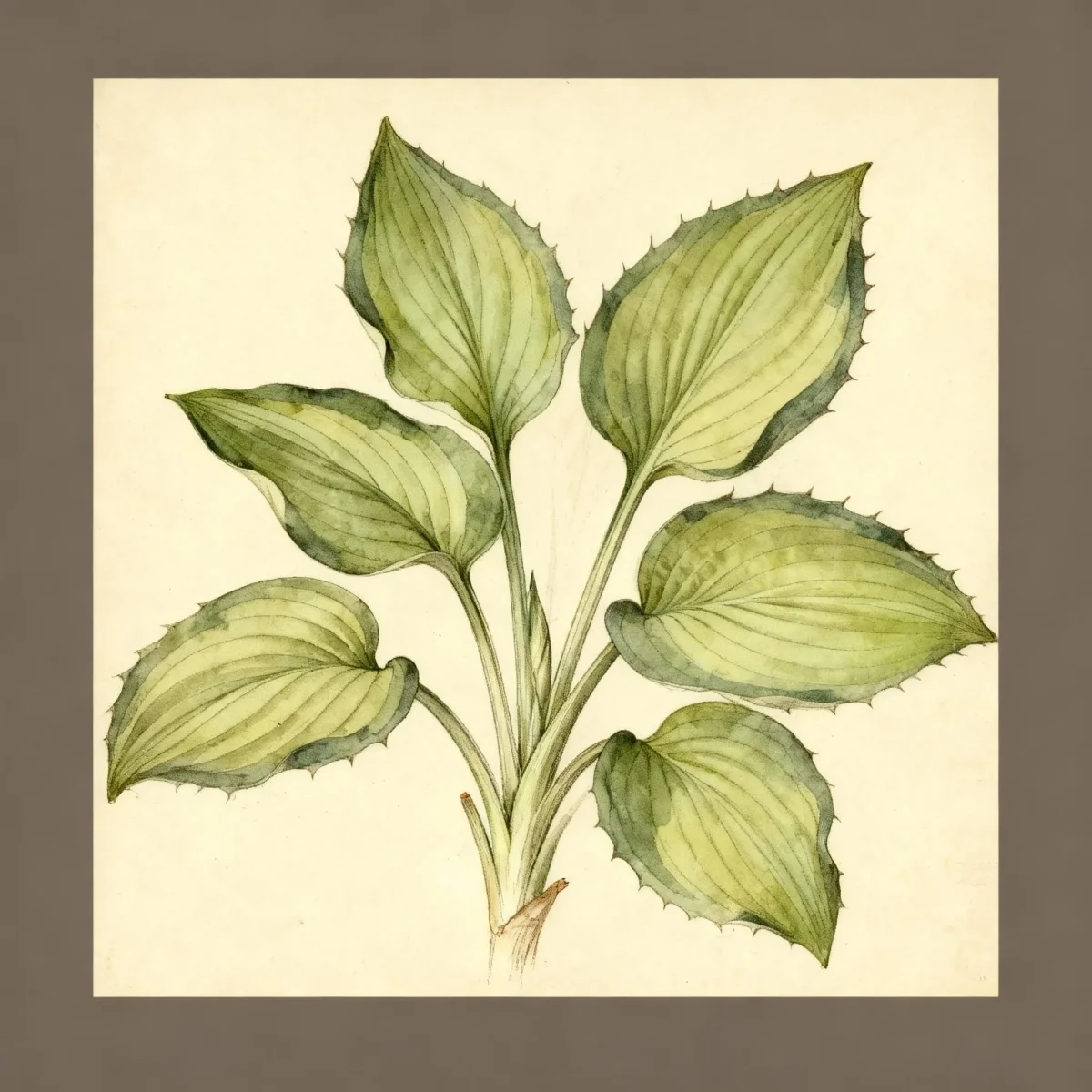
Hosta is valued for its dense, basal leaves that form a rounded mound, providing year-round ornamental interest in low-light areas. Hosta ‘Janet’ specifically features cordate, wide oval leaves displaying golden yellow centers that shift to white as the season progresses, edged in green. Funnel-shaped, pale lavender flowers bloom on tall scapes, emerging above this attractive foliage display.
Tolerances
- Drought
- Heavy Shade
- Dry Soil
- Black Walnut
Potential Problems
The primary concern for any Hosta landscape is damage from slugs and snails, which chew unsightly jagged holes in the lush foliage. Monitor plants closely during humid periods and employ preventative measures like slug bait or beer traps early in the season to prevent significant cosmetic damage. Foliar nematodes can cause interveinal browning, and infected plants should be promptly removed to prevent spread.
Watch also for viral issues such as Hosta Virus X (HVX); immediate destruction of infected specimens is necessary. Deer and rabbits frequently find Hosta foliage highly palatable, often eating it voraciously. Protecting young or prized plants, particularly Hosta ‘Janet’, through netting or repellents may be required in vulnerable locations.
Frequently Asked Questions
What hardiness zones is Hosta suitable for?
Hosta ‘Janet’ is reliably hardy throughout USDA Zones 3 through 8.
How large does Hosta ‘Janet’ grow?
This medium Hosta typically reaches heights between 1 to 2.5 feet tall, with a corresponding spread of 1 to 2 feet wide, forming a dense mound.
What sun exposure does Hosta ‘Janet’ need?
Hosta ‘Janet’ requires part shade to full shade conditions to thrive and maintain the integrity of its unique leaf coloration.
When does Hosta ‘Janet’ bloom?
The funnel-shaped flowers of Hosta ‘Janet’ generally appear from July to August, displaying a pale lavender hue.
Conclusion
Hosta ‘Janet’ remains an invaluable asset in the shade garden due to its adaptable nature and year-round foliage appeal. The striking contrast of its fading golden-white centers against the green edges provides dynamic texture unlike many other shade perennials. Before planting, confirm your site offers the part shade and consistent moisture that this beautiful Hosta demands to achieve its best form.
Companion Planting
When planning borders utilizing Hosta ‘Janet’, select companions that thrive in similar moisture and light regimes. Ferns, particularly Japanese Painted Ferns (Athyrium niponicum), offer delicate contrasting textures to the broad leaves of the Hosta. Hakonechloa (Japanese Forest Grass) provides graceful, arching movement that complements the mounding habit perfectly.
For seasonal interest, interplant Hosta ‘Janet’ with shade-tolerant spring bulbs like snowdrops or scilla, or use shade-loving perennials like bleeding hearts (Dicentra spectabilis) which finish flowering before the Hosta reaches its full summer spread. This layering ensures continuous visual appeal throughout the growing season in your shaded beds.
Propagation Tips
Propagation of Hosta ‘Janet’ is most commonly and successfully achieved through division. As an established, rhizomatous perennial, the crown of the plant can be carefully separated when dormant or in early spring. Dig up the entire clump and gently tease the roots apart, ensuring each new division retains several healthy growth buds and an adequate root system.
Since Hosta ‘Janet’ is a cultivar, growing it from seed will not reproduce the desirable traits of the parent plant due to genetic instability; true-to-type propagation relies entirely on vegetative division. Healthy divisions establish quickly, often blooming the following season, making this a straightforward method for expanding your collection of this fantastic Hosta.